Qawwali
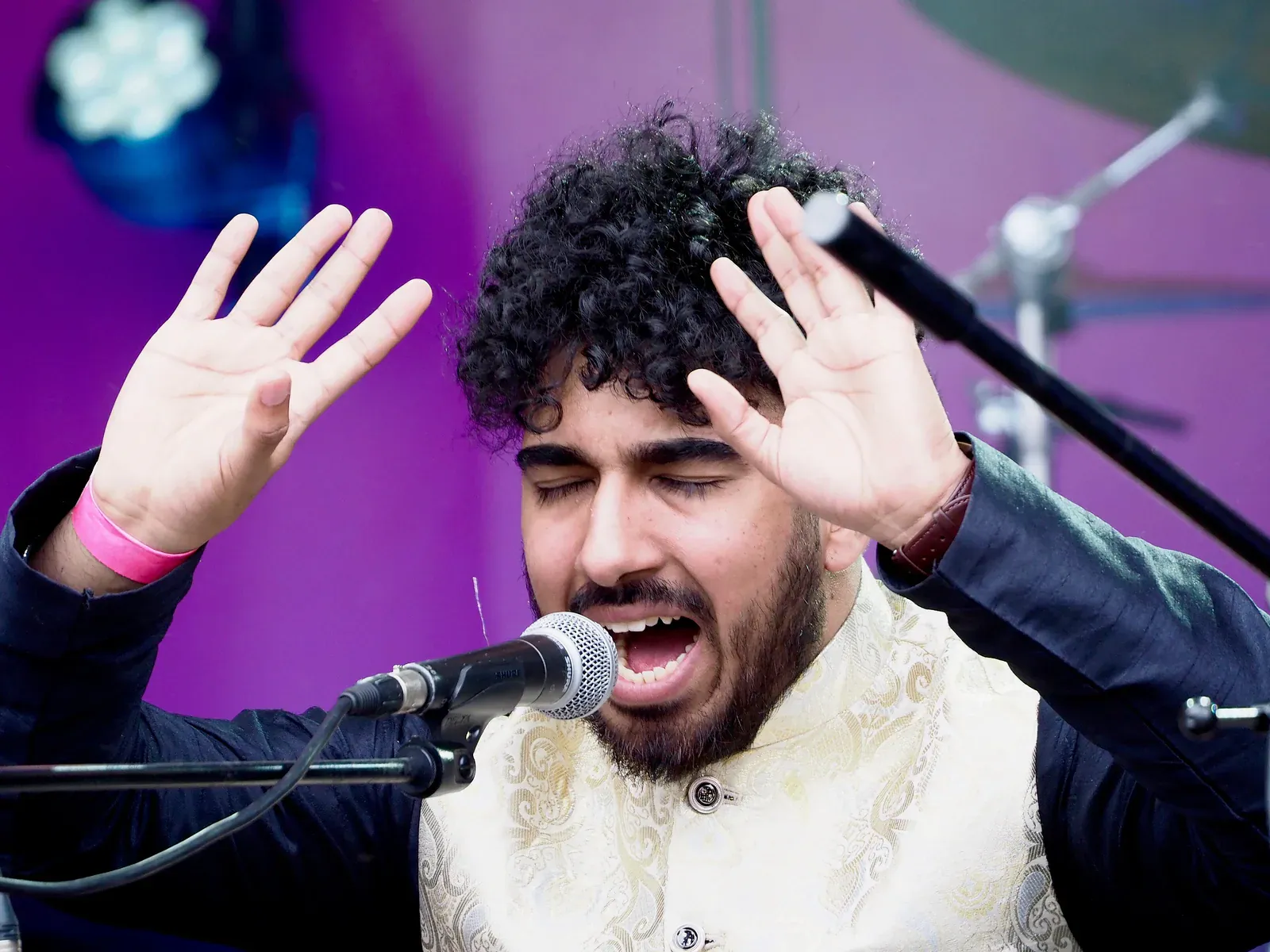
Qawwali is Sufi devotional singing from South Asia: a lead singer, chorus, harmonium and tabla building from a slow raga prelude to an ecstatic climax.
India, Pakistan, 1270
South Asian family
Born
1270
India, Pakistan
Subgenres
7
Documented branches
Links
24
Genres it drew on or shaped
Tempo
80-135 BPMLineage
Family tree
Grew out of
Influenced by
India, Pakistan, 1270
Qawwali
Led to (7)
Timeline
Era by era
From the first sparks to today. Select a dot to read the story behind it.
- Chishti shrines and the Delhi families
1270 to 1947
- After partition: radio and recordings
1947 to 1974
- Concert halls and the world stage
1975 to 1996
- After Nusrat
1997 to today
Eras
Moments
- 1 Chishti shrines and the Delhi families, 1270 to 1947
- 2 After partition: radio and recordings, 1947 to 1974
- 3 Concert halls and the world stage, 1975 to 1996
- 4 After Nusrat, 1997 to today
around 1270
Chishti shrines and the Delhi families
Amir Khusrau's Indo-Persian devotional singing for the Chishti order grew into a hereditary craft of shrine musicians, sung unaccompanied at first, with harmonium and tabla added later.
- 1270Amir Khusrau shapes the form in DelhiA disciple of Nizamuddin Auliya, he set Persian and Hindavi verse to Indian raga for assemblies at the Chishti khanqah.
1947
After partition: radio and recordings
Qawwal families settled in Pakistan and moved from shrine service to radio, record labels and festivals. The Sabri Brothers formed in 1956 and Nusrat Fateh Ali Khan took over his family party in 1965.
- 1947Partition moves the qawwal familiesHereditary parties of the Delhi gharana resettled in Pakistan and rebuilt their audiences there.
- 1956The Sabri Brothers form their ensemble
- 1965Nusrat Fateh Ali Khan leads the family partyHe became lead singer after his father died in 1964 and appeared on a Radio Pakistan festival broadcast in March.
- 1971Ni Main Jana Jogi De Naal first sung liveNusrat's Bulleh Shah setting became an early Pakistani hit, with a studio version recorded in 1973.
1975
Concert halls and the world stage
The Sabri Brothers played Carnegie Hall in 1975. Nusrat Fateh Ali Khan reached WOMAD in 1985 and Real World Records from 1989, and film and rock collaborations followed.
- 1975Sabri Brothers play Carnegie HallThey were the first qawwali party to perform in the United States and Western Europe.
- 1976Royal Albert Hall at the World of Islam FestivalThe Sabri Brothers played London on 20 June.
- 1977UNESCO recording of the qawwal partyThe Sabri Brothers recorded Pakistan: The Music of the Qawal, issued on CD in 1990.
- 1985Nusrat at WOMAD LondonHis festival set opened a Western audience before any Real World release.
- 1988Soundtrack work with Peter GabrielNusrat contributed to the score of The Last Temptation of Christ.
- 1989Nusrat joins Real World Records
- 1990Mustt MusttNusrat's collaboration with Michael Brook set qawwali against ambient guitar and later received a Massive Attack remix.
- 1994Ghulam Farid Sabri dies before a European tourHis brother Maqbool Ahmed Sabri became sole leader of the group.
- 1995Dead Man Walking soundtrackNusrat sang two songs with Eddie Vedder.
1997
After Nusrat
Nusrat died in 1997. Rahat Fateh Ali Khan, the Sabri family and other houses carried the form into film, television and shrine gatherings, until Amjad Sabri was murdered in Karachi in 2016.
- 1997Death of Nusrat Fateh Ali KhanHe died on 16 August, four days after Vande Mataram with A. R. Rahman was released.
- 2000Death of Aziz MianThe qawwal of the 115-minute Hashr Ke Roz Yeh Poochhunga died on 6 December.
- 2016Amjad Sabri murdered in KarachiGunmen shot him on 22 June after a morning television appearance.
Listening path
Start listening
A short path from an easy way in to the deep end. Thumbnails come from YouTube; the player loads only when you press play.
- 01
Nusrat Fateh Ali Khan, 1985
A live WOMAD 1985 reading of the devotional refrain, with the slow build and sargam climax.
- 02
Nusrat Fateh Ali Khan, 1989
A ghazal-style qawwali with call and response between lead and chorus.
- 03
Sabri Brothers, 1975
The EMI Pakistan recording of the Sabri Brothers' best-known plea to the Prophet.
- 04
Nusrat Fateh Ali Khan, 1990
The Real World crossover that put qawwali vocals over guitar and programmed rhythm.
- 05
Nusrat Fateh Ali Khan, 1988
The Oriental Star Agencies studio take behind the Big World Cafe fusion tracks.
Facts
| Family | South Asian |
| Origin | India, Pakistan |
| Emerged | 13th century, Delhi Sultanate |
| Status | Active |
| Tempo | 80 to 135 BPM |
| Meter | 4/4 |
| Subgenres | 7 |
Qawwali is a form of Sufi devotional singing from South Asia, sung by a lead singer and a chorus over harmonium, tabla and handclaps. It grew out of the Chishti order’s assemblies in medieval Delhi and is still performed at shrines across India, Pakistan and Bangladesh.
A performance starts slowly and rises in tempo and intensity, aiming to bring on a state of spiritual ecstasy. It belongs to the wider South Asian family and draws on Hindustani classical music and Sufi music.
Origins
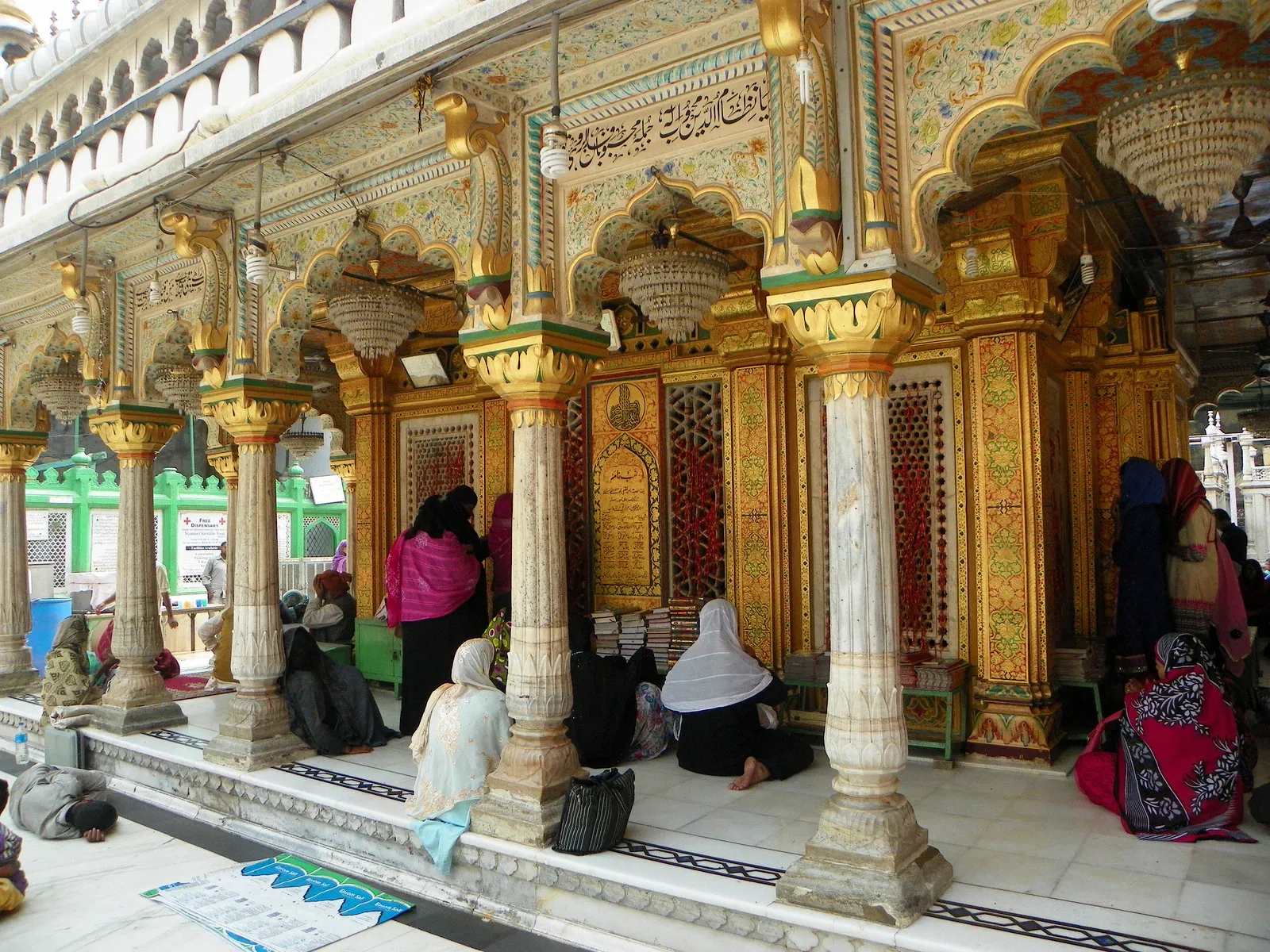
The form is credited to the poet and musician Amir Khusrau, a disciple of the Chishti saint Nizamuddin Auliya in 13th-century Delhi. At the saint’s lodge he set Persian and Hindavi verse to Indian raga for gatherings called mehfil-e-sama, “assemblies for listening”. Within the Chishti order, listening was a recognised path to remembrance of God and to divine love, and the purpose of the gathering was devotion, not entertainment.
The result was a meeting of Muslim and Hindu musical traditions. Its language of love and separation echoed the devotional poetry of the Bhakti movement, and Khusrau sometimes used Indic imagery in his verse. A saying of the Prophet about Ali, set as Man Kunto Maula, is traditionally linked to him as one of the earliest qawwalis.
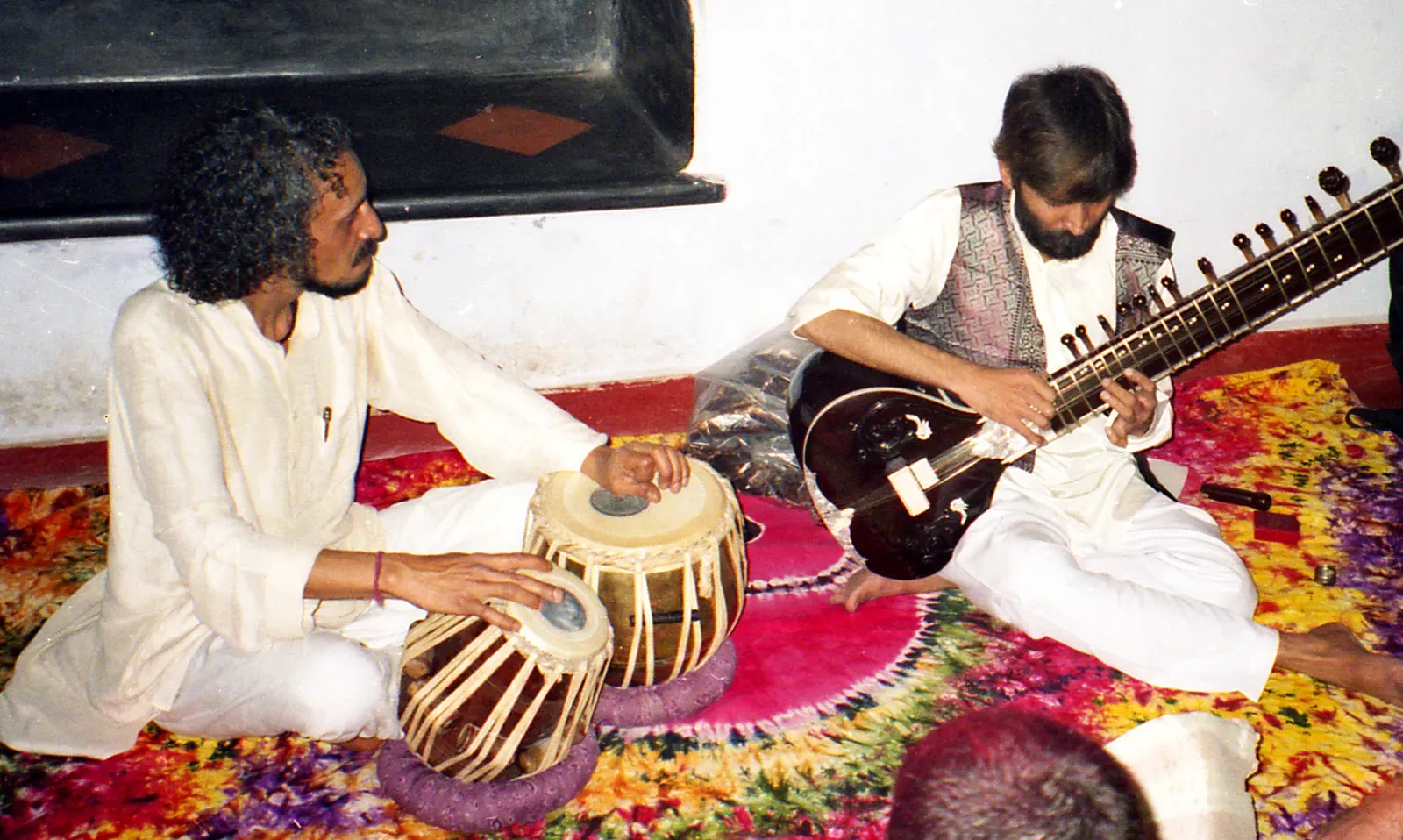
Early Chishti teachers were strict about instruments, and the first assemblies were sung without them. The harmonium, tabla and dholak entered later and are now standard. The harmonium displaced the sarangi because it does not need retuning between songs.
Hereditary shrine service
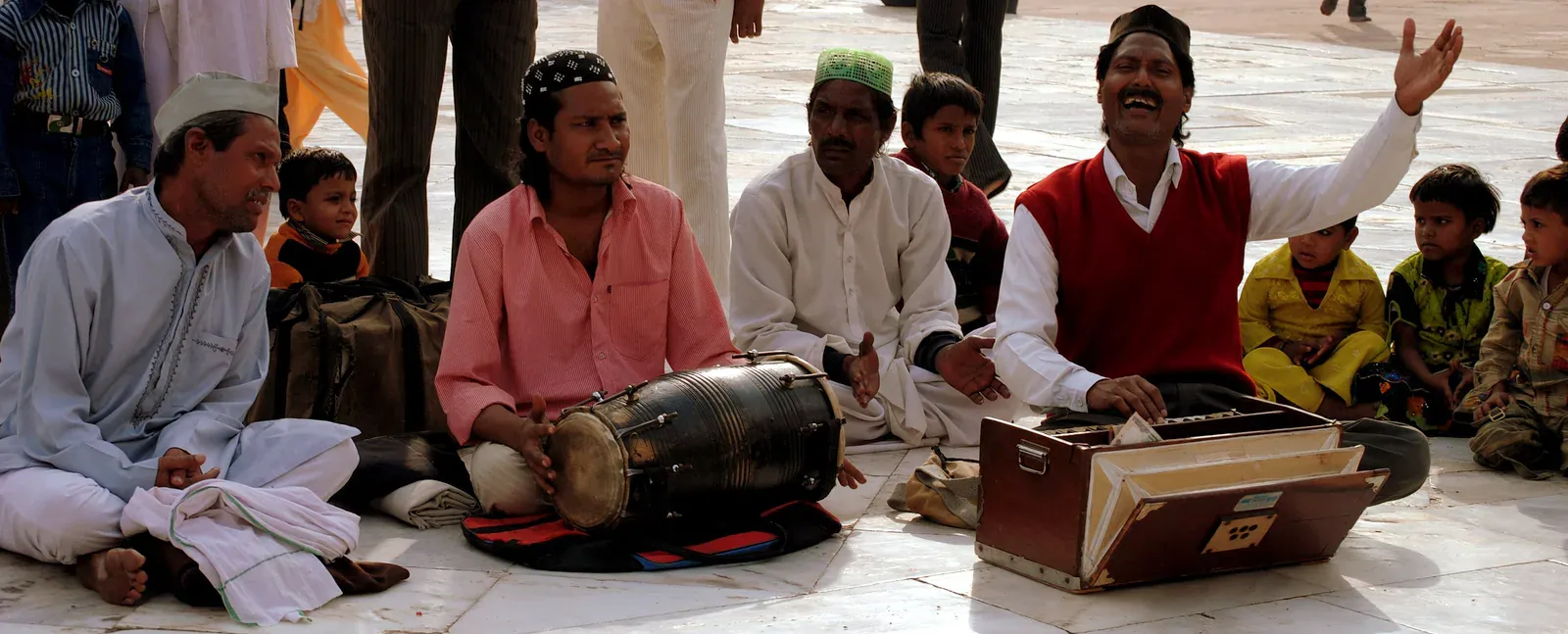
Qawwals traditionally belonged to families attached to a particular shrine, and their main duty was the Urs, the death anniversary of the saint. Training happened inside the family brotherhood, where a young singer learned the repertory and the craft of poetry. Literacy mattered because the form rests on verse. The singers themselves counted as servants of the shrine, not as its focus.
After partition, 1947-1974
After 1947 the families of the Delhi gharana, known as the Qawwal Bachchon ka Gharana, resettled in Pakistan, where radio and record companies gave them new audiences. The Sabri Brothers, Ghulam Farid Sabri and his younger brother Maqbool Ahmed Sabri, formed their group in 1956 and became one of the most famous parties in Pakistan. Nusrat Fateh Ali Khan, from Faisalabad, became lead singer of his family party in 1965, after his father died, and appeared on a Radio Pakistan festival broadcast that March.
Nusrat’s Punjabi setting of Bulleh Shah, Ni Main Jana Jogi De Naal, was first sung live in 1971 and recorded in the studio in 1973. It was one of his first major hits in Pakistan.
Going global, 1975-1996
The Sabri Brothers took qawwali to Western concert halls. In 1975 they played Carnegie Hall, and they were the first qawwali party to perform in the United States and Western Europe. A year later they played the Royal Albert Hall in London, and in 1977 they recorded a full party for a UNESCO collection. Their song Bhar Do Jholi Meri, a plea to the Prophet, reached listeners through a 1975 film as well as records.
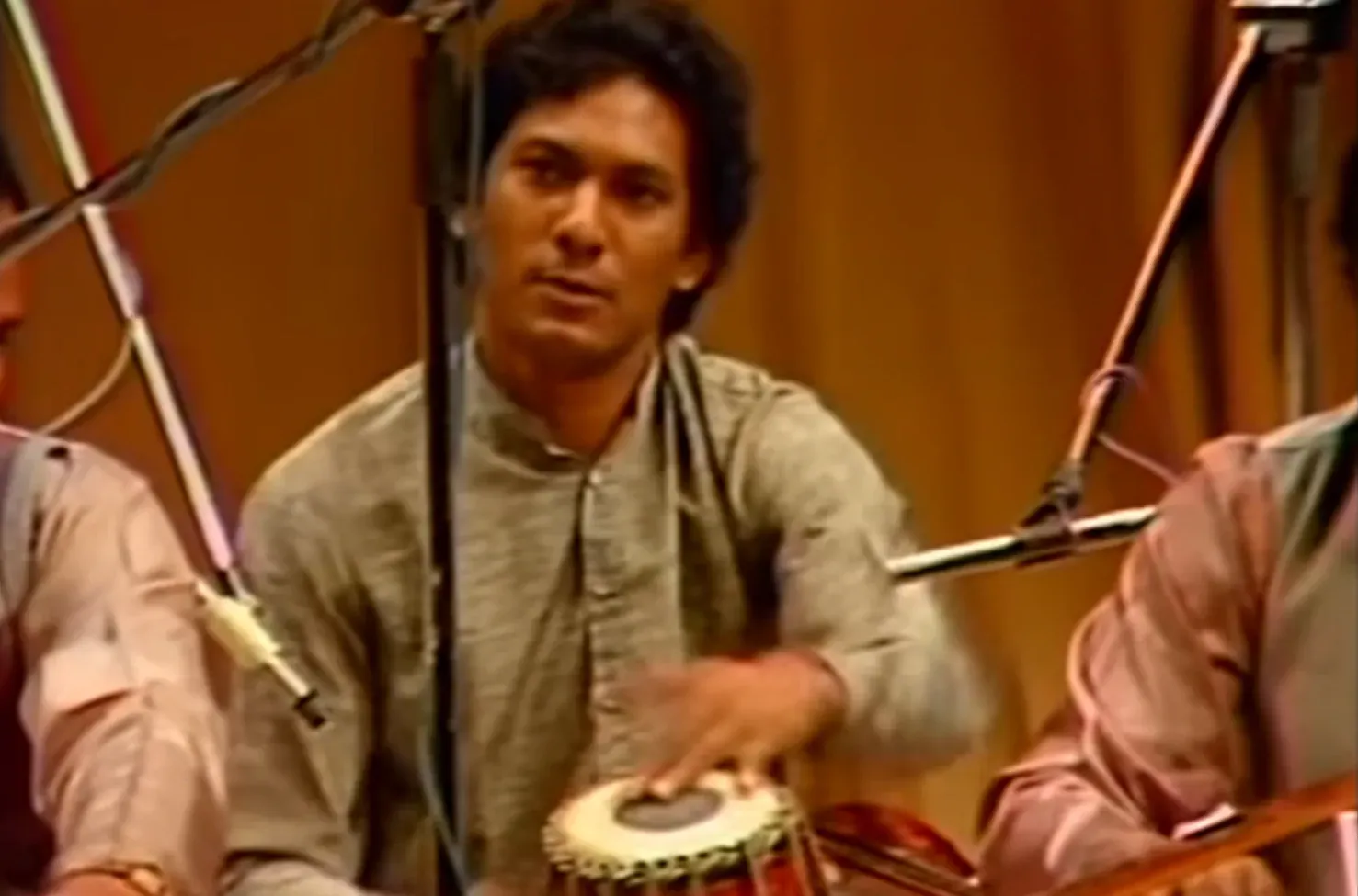
Nusrat reached a Western audience through the WOMAD festival in London in 1985. He worked on Peter Gabriel’s score for The Last Temptation of Christ in 1988 and signed to Gabriel’s Real World Records in 1989. His 1990 album Mustt Mustt paired his voice with guitarist Michael Brook, and the title track was later remixed by Massive Attack. In 1995 he sang two songs with Eddie Vedder for the soundtrack of Dead Man Walking. Real World also issued several albums of unaltered qawwali, so the crossover work never replaced the traditional repertory.
Characteristics
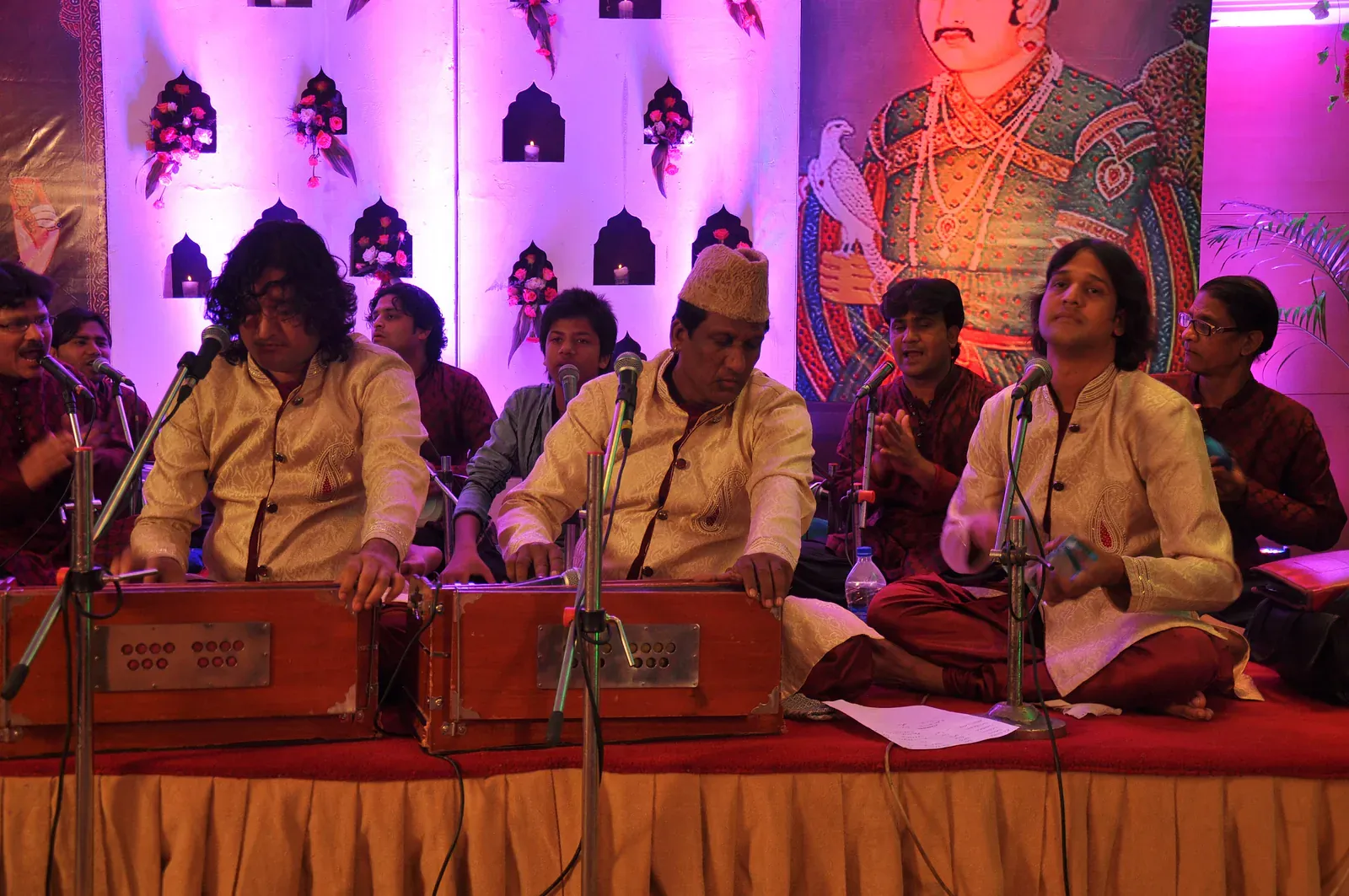
A classic performance follows a clear arc. The harmonium and tabla open with a prelude on the main melody. The singers then enter with an alap, long notes in the raga. The lead sings preamble verses without a beat, with only the harmonium behind him, and a side singer repeats each verse with his own variations.
When the main song begins, the tabla, dholak and clapping join and the whole party takes the refrain. The words of the main verses are not improvised, since they are often traditional and shared within a lineage, but the tune is varied inside the melody. The song builds in tempo and passion, with singers trading vocal runs and long stretches of sargam, improvisation on note names that Nusrat made a hallmark. It usually ends suddenly.
A party typically has eight or nine men: a lead singer, one or two side singers, one or two harmoniums, percussion, and a chorus of four or five who clap and repeat key lines. They sit cross-legged in two rows. Women have long been excluded from the tradition, and qawwali remains a mostly male craft.
Repertory
Songs are grouped by content. A qaul, built on a saying of the Prophet, opens or closes the occasion. A hamd praises God, a naat praises Muhammad, and a manqabat honours Imam Ali or a Sufi saint. A marsiya laments the deaths at Karbala and is sung at Shia gatherings. Ghazals, kafis in Punjabi or Sindhi, and the Persian-language munajaat complete the range.
The ghazal suits the form because its repetition lets a singer return to a single phrase, which doubles as remembrance of God. Wine, drunkenness and the cruel beloved serve as metaphors for the soul’s longing, so a qawwal has to keep the setting devotional. Languages include Persian, Urdu, Hindi, Punjabi and regional dialects.
Instruments and production
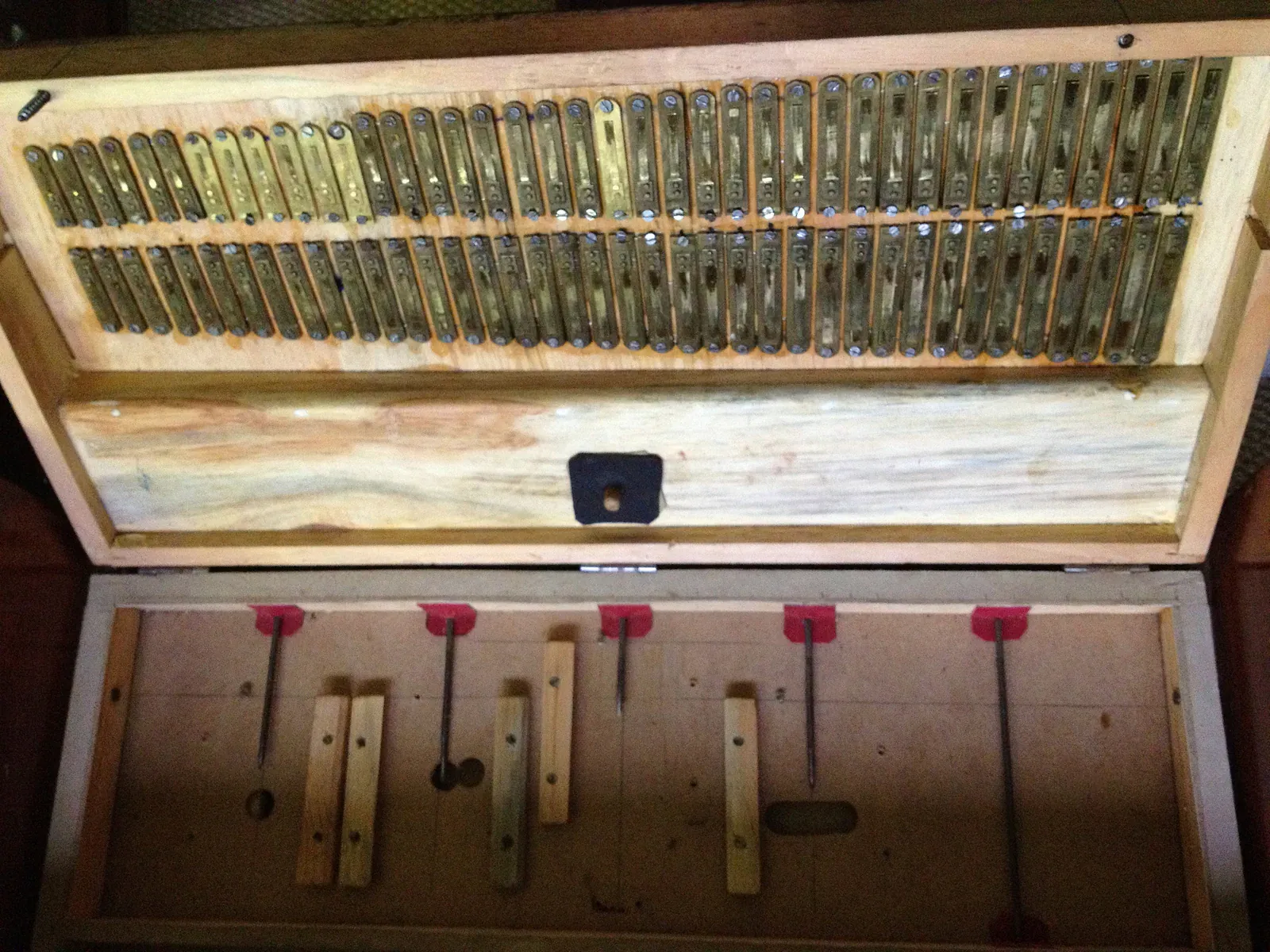
The harmonium carries the melody and the drone, and it is often played by the lead or a side singer. The tabla and dholak are played by one or two percussionists, and the clapping of the chorus works as a third layer of rhythm. Studio fusions such as Mustt Mustt add guitar and programmed rhythm to the same vocal core.
Notable recordings
Bhar Do Jholi Meri, recorded by the Sabri Brothers and released by EMI Pakistan, shows the shrine style at its most direct: a plea to the Prophet in simple lines taken up by a full chorus. Aziz Mian’s Hashr Ke Roz Yeh Poochhunga runs slightly over 115 minutes, the longest commercially released qawwali. Nusrat has at least two songs longer than an hour. Mustt Mustt and Night Song, his Real World experiments, show a qawwali singer handled by a Western producer, and Night Song earned a Grammy nomination in 1997.
Culture
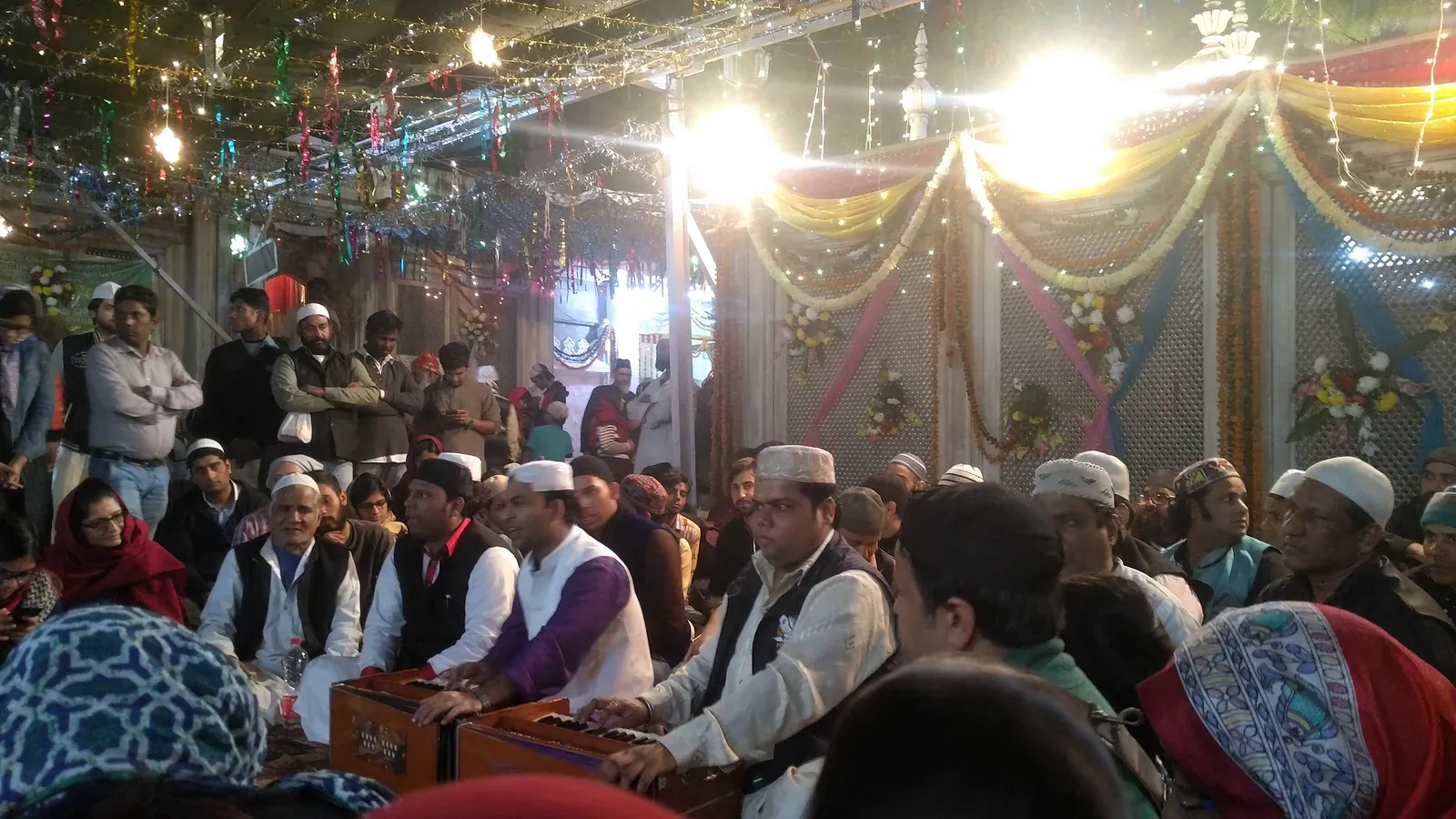
Qawwali is tied to two main occasions. The mehfil-e-sama is the listening assembly at a shrine or home, and the Urs is the saint’s death anniversary, when hereditary families sing through the night. Listeners can enter a trance state, and singers are expected to read the room and steer it. Aziz Mian was known for working his audience hard, and the form has long had both devotional and entertainment audiences.
Pakistani and Indian film also took qawwali in. Several Sabri Brothers songs entered Indian and Pakistani films in the 1970s, and Nusrat composed for Bollywood late in his life.
Legacy
After Nusrat’s death on 16 August 1997, his nephew Rahat Fateh Ali Khan became one of the best known qawwali singers, with a career that moved into film and ghazal. The Sabri family tradition passed to Amjad Sabri, son of Ghulam Farid, who was shot dead in Karachi on 22 June 2016 after a television broadcast. Tens of thousands attended his funeral. Qawwali is performed today on festival stages in Europe and North America as well as at shrines.
Misconceptions
Qawwali is not simply Pakistani. It began in Delhi and is performed at Indian shrines such as Nizamuddin and Fatehpur Sikri, and both countries have major hereditary parties.
It is not entertainment music dressed in religious language. Its rules, from the opening qaul to the wine imagery, belong to a devotional program, and the singers’ task is to keep the occasion spiritually appropriate.
It also did not begin as a loud band music. Early teachers forbade instruments, and the harmonium and drums came later, so the sound heard today is not the first one.
Frequently asked questions
What is qawwali?
Qawwali is Sufi devotional music from South Asia, sung by a lead singer and chorus with harmonium, tabla and handclaps. It builds from a slow opening to a fast, ecstatic climax.
Who invented qawwali?
Amir Khusrau, a disciple of Nizamuddin Auliya, is credited with shaping the form in 13th-century Delhi by setting Persian and Hindavi verse to Indian raga.
What language is qawwali sung in?
Mostly Urdu, Persian, Hindi and Punjabi, with Braj Bhasha, Awadhi, Saraiki and Sindhi also used for regional songs.
Who is the most famous qawwali singer?
Nusrat Fateh Ali Khan is the best known worldwide, through his Real World Records albums and festival tours. The Sabri Brothers and Aziz Mian are also major figures.
What instruments are used in qawwali?
The main ones are the harmonium, tabla and dholak, with handclapping from the chorus. The sarangi accompanied older performances.
Sound
Sound sheet
Anatomy of a track
| # | Part |
|---|---|
| 1 | Harmonium and tabla prelude |
| 2 | Alap in the raga |
| 3 | Unmetred preamble verses |
| 4 | Main song with drums and clapping |
| 5 | Faster climax with sargam |
Signature sounds
- Lead singer answered by side singers
- Chorus refrain with handclaps
- Tempo and intensity rising to a sudden stop
- Sargam improvisation between verses
Drums and percussion
- Tabla
- Dholak
Techniques
- Alap
- Sargam
- Call and response
- Held nasal m
Keys and modes
Hindustani raga. Almost every qawwali is set in a raga from the Hindustani classical tradition.
Vocals
Loud, forceful chest-voice singing in Urdu, Punjabi, Persian and Hindi, led by one singer with a chorus of four or five.
Scenes
Where it happened
Where and when the sound lived: one bar per city on a shared timeline.
Asia
Europe
Active scenes
Peak 4, 1972-2025
The khanqah of Nizamuddin Auliya, where Amir Khusrau's circle sang at the mehfil-e-sama.
Home city of Nusrat Fateh Ali Khan and Rahat Fateh Ali Khan, heirs of the Delhi gharana.
Base of the Sabri Brothers and later Amjad Sabri.
Oriental Star Agencies promoted English tours and recorded Nusrat's early albums.
Venues and places
Delhi, 1270 to today. Shrine of Nizamuddin Auliya, where the first assemblies of Khusrau's circle were held.
New York, 1975 to today. The Sabri Brothers' 1975 concert brought qawwali to an American concert stage.
London, 1976 to today. Host to the Sabri Brothers at the World of Islam Festival in 1976.
New York, 1989 to today. Nusrat played the Next Wave Festival here in 1989.
Culture
Culture markers
- Mehfil-e-sama
The listening assembly at a shrine or home, where qawwali is sung to stir remembrance of God.
Ritual - Urs
The death anniversary of a Sufi saint, the main occasion for hereditary shrine qawwals.
Ritual - Hereditary shrine service
Qawwals belong to families tied to a shrine and learn the craft within the brotherhood.
Ritual
Media
Key media
- 1977Pakistan: The Music of the Qawal
by Sabri Brothers. UNESCO collection recording of a full qawwal party.
Compilation - 1988The Last Temptation of Christ
by Martin Scorsese. Nusrat sang on Peter Gabriel's score, his first large Western film credit.
Film - 1995Dead Man Walking
by Tim Robbins. Nusrat and Eddie Vedder recorded two songs for its soundtrack.
Film
Glossary
Terms on this page
Slow unmetred melodic opening sung on long notes within the raga.
A song in praise of Imam Ali or a Sufi saint.
A Sufi listening assembly in which devotional poetry is sung.
A song in praise of the Prophet Muhammad.
A ritual opening song built on a saying of the Prophet.
A hereditary singer of qawwali, usually one of a family attached to a shrine.
Improvisation sung on note names, which Nusrat made a signature of the climax.
The state of spiritual ecstasy that qawwali aims to induce.
South Asian family