Sufi music
Sufi music is the devotional song and instrumental practice of Sufi orders in Turkey and the Arab world, from the Mevlevi ayin to dhikr and hadra gatherings.
Türkiye, Syria, Egypt, Morocco, Iraq, around 900
Middle Eastern and North African family
Born
around 900
Türkiye, Syria, Egypt, Morocco, Iraq
Subgenres
6
Documented branches
Links
9
Genres it drew on or shaped
Tempo
60-115 BPMLineage
Family tree
Grew out of
Türkiye, Syria, Egypt, Morocco, Iraq
Sufi music
Led to (6)
Timeline
Era by era
From the first sparks to today. Select a dot to read the story behind it.
- Gatherings of listening
900 to 1272
- Mevlevi and Ottoman lodges
1273 to 1924
- Ban and survival
1925 to 1970
- Concert halls and records
1971 to 1999
- Heritage and fusion
2000 to today
Eras
Moments
- 1 Gatherings of listening, 900 to 1272
- 2 Mevlevi and Ottoman lodges, 1273 to 1924
- 3 Ban and survival, 1925 to 1970
- 4 Concert halls and records, 1971 to 1999
- 5 Heritage and fusion, 2000 to today
around 900
Gatherings of listening
In khanqah lodges across Persia and the Arab lands, teachers such as Abu Said of Mayhana made sama, listening to poetry and song, part of group devotion, and critics and defenders of music in worship argued over it.
- 1000Abu Said makes sama part of lodge ritualThe Persian teacher Abu Said of Mayhana is credited with building music, poetry and movement into collective remembrance in the khanqah.
1273
Mevlevi and Ottoman lodges
After Rumi died in 1273 his followers formed the Mevlevi Order in Konya. Lodges in Anatolia and Istanbul fed Ottoman court music, and composers such as Ismail Dede wrote the ayin for the whirling ceremony.
- 1273Rumi dies and the Mevlevi Order formsHis followers in Konya organise around his teaching and the sama, the origin of the whirling ceremony.
- 1491Galata Mevlevi Lodge opens in IstanbulThe oldest Mevlevi lodge in the city becomes a centre of the order's music and literature.
1925
Ban and survival
Turkey outlawed Sufi orders in 1925 and turned the Konya lodge into a museum in 1927. Ceremonial music lived on in private circles, in ritual hymn singing, and in the repertoire of singers such as Kani Karaca.
- 1925Turkey bans Sufi ordersLodges close; ceremonies continue only privately or as cultural events.
- 1927Konya lodge opens as a museumThe Mevlevi lodge and Rumi's mausoleum open to visitors on 2 March; it is renamed the Mevlana Museum in 1954.
- 1969Kudsi Erguner begins at Istanbul RadioThe ney player, son of Ulvi Erguner, starts a career of research and recording of Mevlevi repertoire.
1971
Concert halls and records
Mevlevi musicians toured London and North America from 1971, and ensembles led by Kudsi Erguner and Julien Weiss recorded Turkish and Syrian ritual repertoire for European labels, taking Sufi music onto stages and into record shops.
- 1971Mevlevi musicians perform in London with Kani KaracaThe singer, known as the Voice of Turkey, leads the music; North American tours follow in 1972.
- 1977Kudsi Erguner records Turquie - Musique SoufiAn early European release of Turkish Sufi music.
- 1983Julien Weiss founds Al-Kindi Ensemble in AleppoThe group later teams with Damascus singer Sheikh Hamza Shakkur on dervish and liturgical repertoire.
- 1990Sufi Music of Turkey releasedKudsi and Suleyman Erguner record ney preludes and ceremonial music for a German label.
- 1991Kalan Muzik founded in IstanbulHasan Saltik's label issues Turkish classical and religious music, including Kani Karaca's recordings.
- 1994Omar Faruk Tekbilek releases WhirlingAn album that places the ney in an ambient world music setting.
- 1996Kani Karaca records the Saba AyiniDede Efendi's ceremony set in makam Saba appears on Kalan's Mevlana album.
- 1998Doublemoon founded as a world fusion labelThe Istanbul label becomes the home of Mercan Dede's studio albums.
2000
Heritage and fusion
UNESCO listed the Mevlevi sema ceremony in 2005 while Mercan Dede, Omar Faruk Tekbilek and others set the ney and frame drum against electronic and ambient production, drawing a world music audience.
- 2004Mercan Dede's Su tops European world music chartsThe album stays at number one on European World Music Charts for two months.
- 2005UNESCO proclaims the Mevlevi sema ceremonyThe ceremony of Turkey is recognised as a masterpiece of intangible heritage.
- 2016Kudsi Erguner named UNESCO Artist for Peace
Listening path
Start listening
A short path from an easy way in to the deep end. Thumbnails come from YouTube; the player loads only when you press play.
- 01
Kudsi Erguner and Suleyman Erguner, 1990
Solo ney in the Mevlevi style, the instrument that carries the ceremony.
- 02
Kani Karaca, 1996
Listen for the kudum cycle and the cantor's long phrases in makam Saba.
- 03
Omar Faruk Tekbilek, 1994
Ney and percussion in a studio setting that moves the ceremony toward world music.
- 04
Mercan Dede, 2006
Ney, frame drum and electronic beats from the Nefes album.
- 05
Mercan Dede, 2006
A breath-centred title track from the album on Doublemoon.
Facts
| Family | Middle Eastern and North African |
| Origin | Türkiye, Syria, Egypt, Morocco, Iraq |
| Status | Active |
| Tempo | 60 to 115 BPM |
| Meter | Usul cycles of 14, 8 or 6 beats |
| Subgenres | 6 |
Sufi music is the sung and played devotion of Sufi orders, used to turn the mind toward remembrance of God.
This page covers the Turkish and Arab traditions, among them the sama listening practice, the Mevlevi ayin of the whirling dervishes, the dhikr and hadra gatherings of North Africa and the Levant, and the ilahi hymns of Turkish lodges. South Asian qawwali belongs to the South Asian family, while this tradition sits inside the Middle Eastern and North African family and shares its modal system with Turkish classical music.
Origins
The term sama means listening, and it names the ritual in which singing, instruments, poetry and movement serve dhikr, the repeated remembrance of God. Teachers in Persian and Arab lodges used it from the early centuries of Sufism. Abu Said of Mayhana, who lived across the tenth and eleventh centuries, is credited with giving music, poetry and movement a place in the collective ritual of the khanqah. The practice was never accepted by everyone: some scholars defended chant as an aid to spiritual growth, while others condemned it as an innovation.
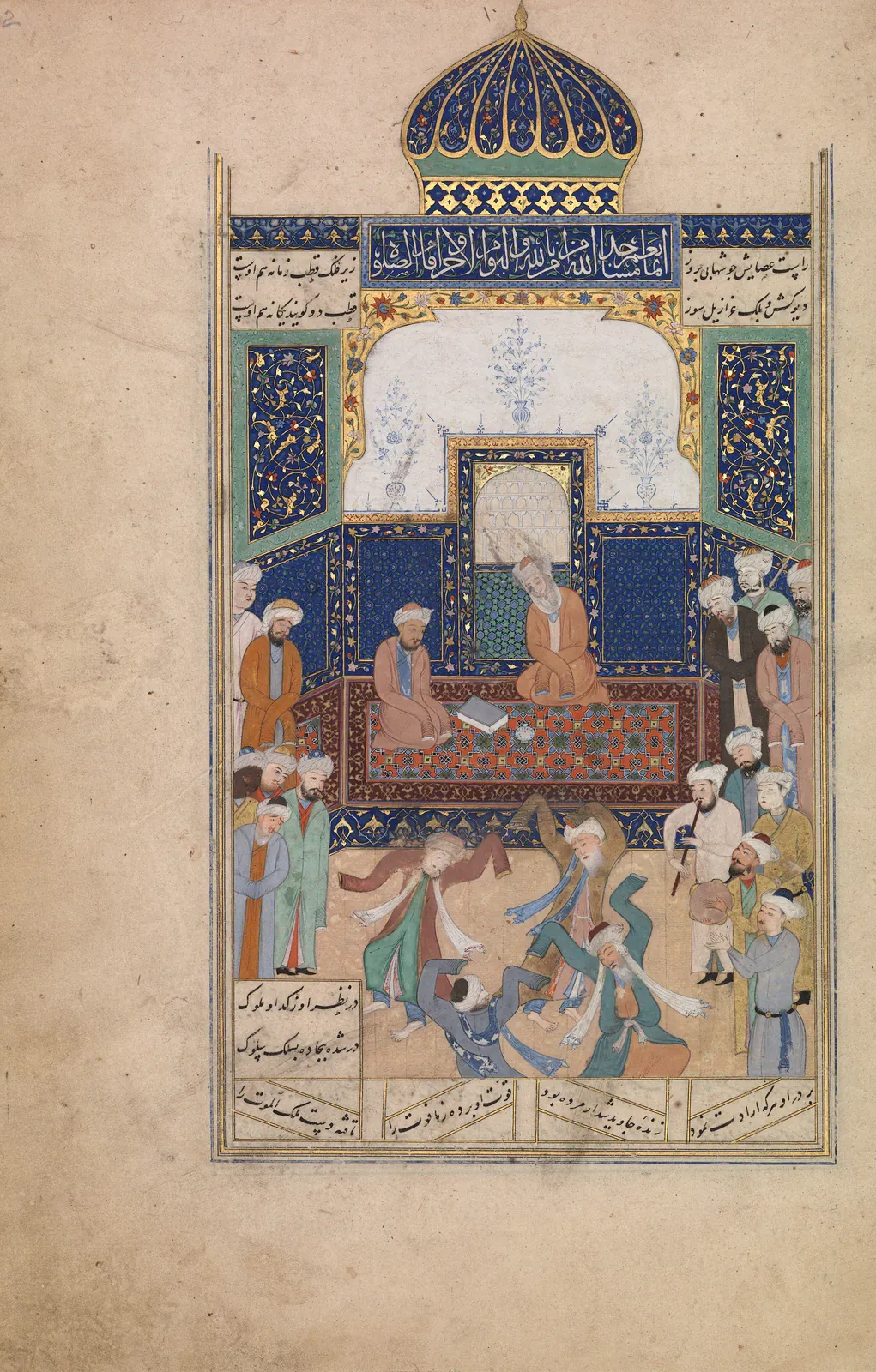
The best-documented line begins with Jalaluddin Rumi. After his death in Konya in 1273, his followers formed the Mevlevi Order and shaped the sama into a formal ceremony. A story told within the order has Rumi hearing the name of God in the hammering of goldbeaters and starting to turn.
Mevlevi lodges and the Ottoman court
Mevlevi lodges spread through Anatolia and the Ottoman capital, and the Galata lodge in Istanbul, opened in 1491, became the oldest in the city. The order produced a great deal of vocal and instrumental music, and several of the most celebrated Turkish musicians were Mevlevis. Ismail Dede, who lived from 1778 to 1846, wrote ayins, the compositions that carry the ceremony, and Ottoman court music drew on the lodges as well as the palace.
The ayin follows a set order. A naat in praise of the Prophet and an improvisation on the ney open the ceremony, followed by an instrumental peşrev and the four selams, each a distinct movement. A last peşrev and a closing Yürük Semai round it off before a recitation from the Quran. The selams often use rhythmic cycles such as the 14-beat Devr-i Revan, and the player of the kudüm sets the tempo and marks the change from one section to the next. Four instruments are central: the ney, the kudüm, the rebab and the halile cymbals.
Ban and survival, 1925-1970
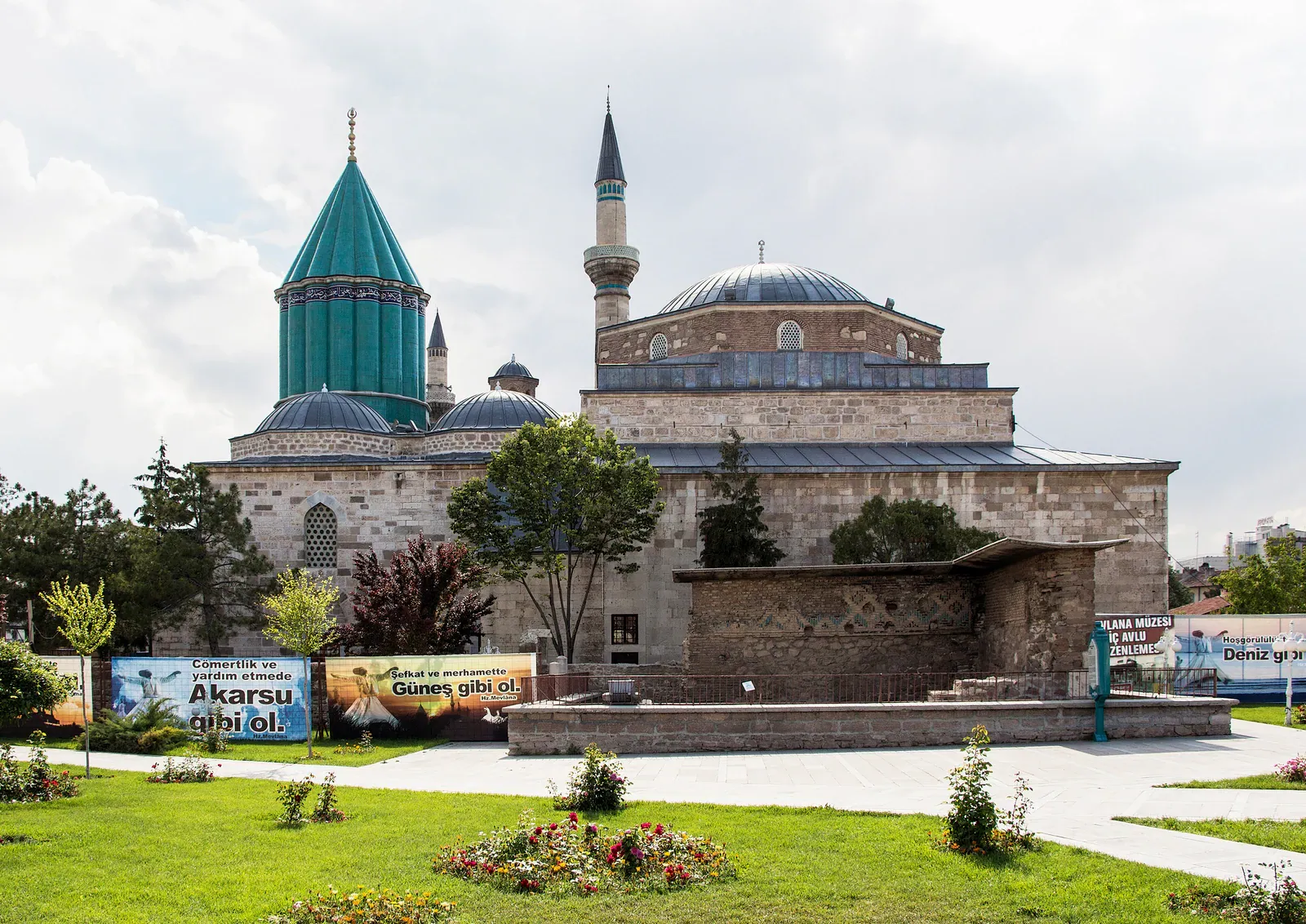
Turkey outlawed Sufi orders in September 1925. The Konya lodge became a museum, which opened on 2 March 1927 at Rumi’s tomb, and the ceremony continued in private or as a staged cultural event rather than as worship. Singers who trained in the religious tradition kept the repertoire alive. Kani Karaca, born in 1930 and blind from infancy, memorised the Quran as a child, moved to Istanbul in 1950 and became one of the most respected voices of Mevlevi and religious music.
Concert halls and records, 1971-1999
From the early 1970s the ceremony reached Western audiences. In 1971 Mevlevi musicians performed in London with Kani Karaca as lead singer, and a North American tour followed in 1972. Records came next. Kudsi Erguner, a ney player born in 1952 who studied with his father Ulvi Erguner, began at Istanbul Radio in 1969 and moved to Paris, where he founded the Mevlana Institute and recorded a long series of albums of Ottoman and Sufi music. His Sufi Music of Turkey, made with his brother Süleyman in 1990, reached many European listeners.
In Syria the story ran differently. The French musician Julien Weiss founded Al-Kindi Ensemble in Aleppo in 1983 and worked with Sheikh Hamza Shakkur, a Damascus singer who led a community of whirling dervishes. Their recordings of Syrian liturgy and Sufi songs reached the European market, among them The Whirling Dervishes of Damascus on Le Chant du Monde. In Istanbul, Kalan Müzik, founded by Hasan Saltık in 1991, issued Turkish religious and classical music, including Karaca’s Saba Ayini in 1996.
Characteristics
Sufi music works inside the makam system, with its microtonal intervals, and in the case of the Turkish ayin inside the usul rhythmic cycles. The Mevlevi ayin takes its name and character from its mode: Dede Efendi’s Saba ayin is a staple of the repertoire, and other ayins are set in modes such as Ferahfeza and Uşşak. A soloist or cantor leads, a chorus answers, and the texts are poems by Rumi and other Sufi poets in Turkish, Arabic or Persian. Verses of the Quran are recited plainly and are not ornamented.
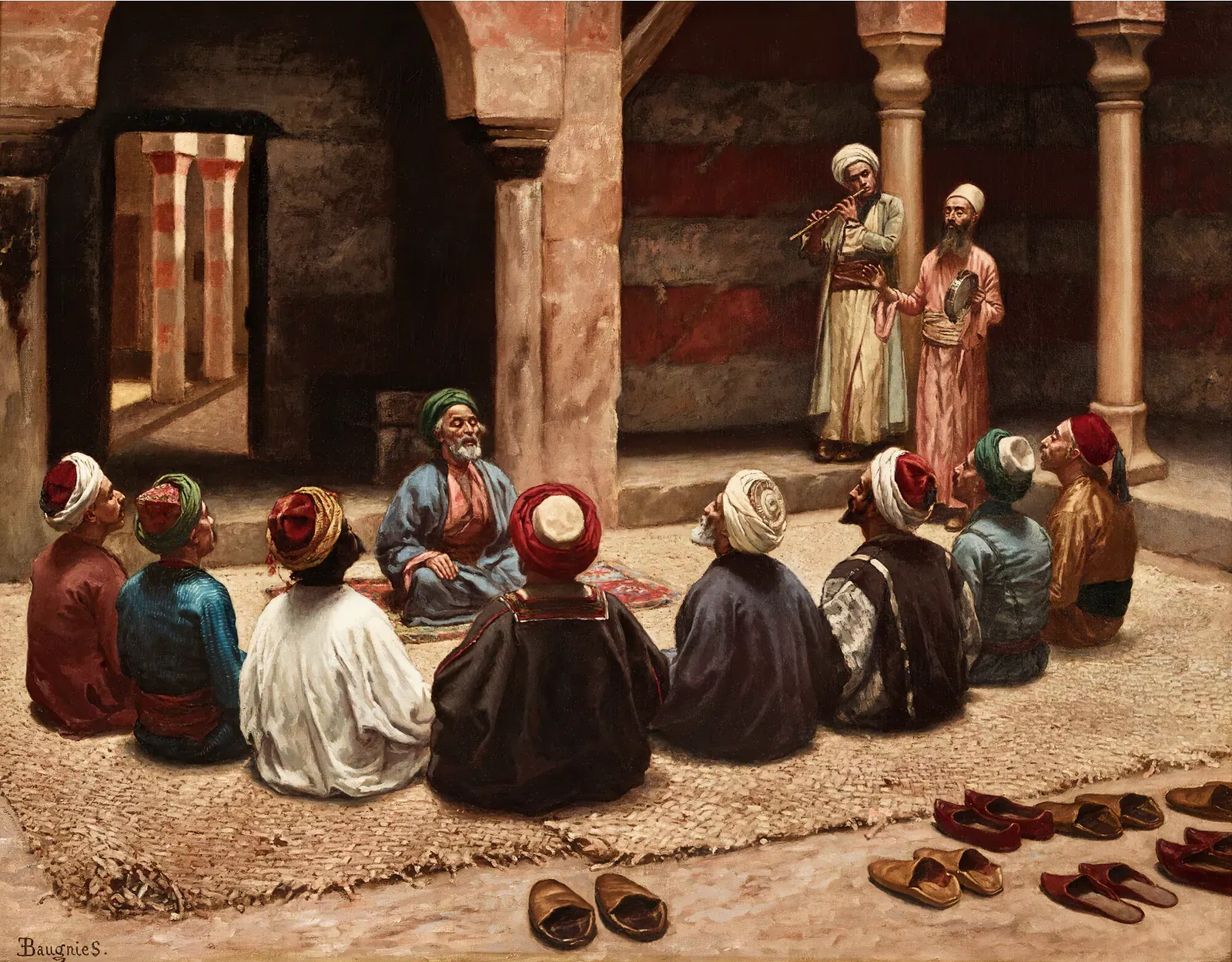
The hadra and dhikr gatherings of North Africa, the Levant and Turkey are looser. A sheikh directs a ritual that can last for hours, and the soloist sings over a repeated invocation of divine names. In some conservative orders no instruments are used or only the daf, and in others a wide range of instruments is used. The ritual often accelerates, and one documented Tunisian dhikr peaked at several hundred beats a minute, which is an extreme case rather than a typical one.
Instruments and production
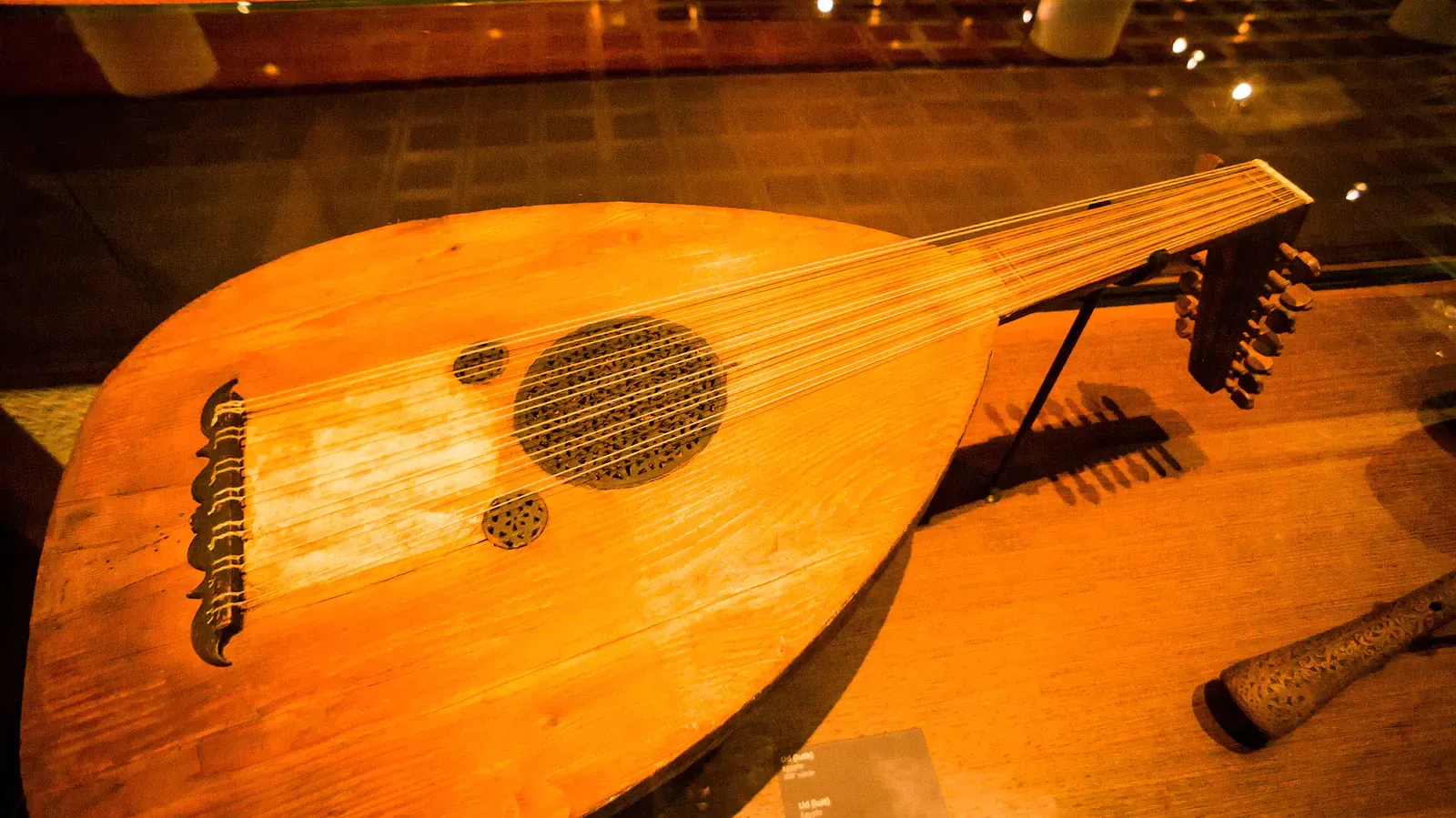
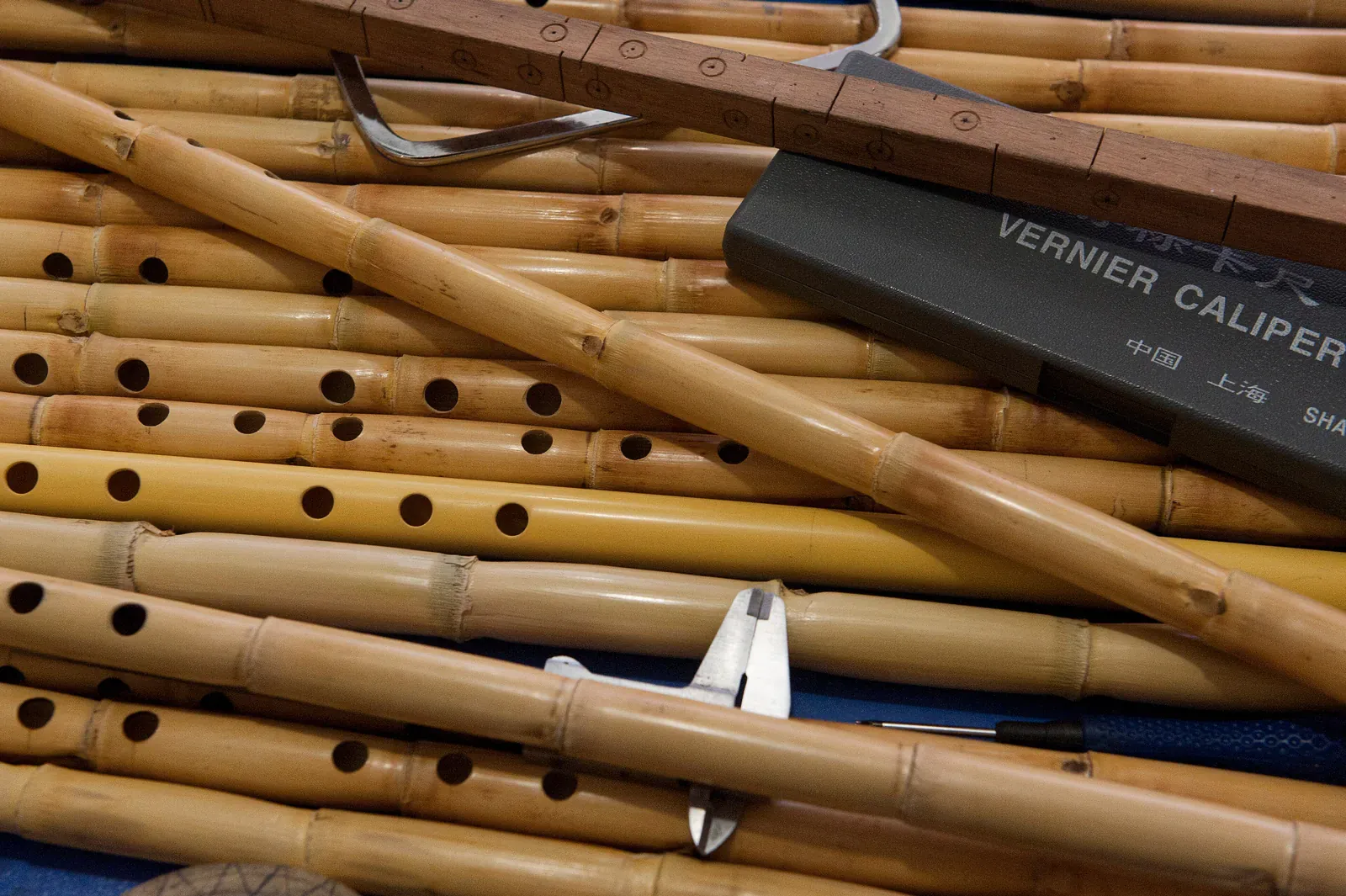
The ney, a cane flute with a smooth, breathy tone, leads the Turkish ensemble, and its player opens the ceremony with a free taksim. The kudüm, a pair of copper kettle drums, carries the rhythmic cycle. Ensembles may add the rebab, the long-necked tanbur and the oud, while Syrian groups such as Al-Kindi Ensemble use the qanun, riqq and spike fiddle.
Mainstream success and crossover
Sufi music has never been a chart genre, but it found steady audiences through world music labels. Mercan Dede, born in Bursa in 1966, moved to Montreal and then built a catalogue that pairs ney and bendir with electronic beats. His 2004 album Su stayed at number one on European world music charts for two months, and Nefes followed in 2006 on the Istanbul label Doublemoon. Omar Faruk Tekbilek, a multi-instrumentalist from Adana, built his Whirling album of 1994 and later records on traditional Sufi themes with ambient electronic inspiration.
Notable recordings
Kudsi Erguner’s Tales from the Ney, from the Sufi Music of Turkey album, presents the ney in the Mevlevi manner. Karaca’s Saba Ayini, recorded for Kalan in 1996, sets Dede Efendi’s ceremony for voice and the Mevlevi ensemble, and its first and second selams show the cantor working against the drum cycle. Tekbilek’s Whirling Dervish, from 1994, moves the ceremony into the studio at a moderate pulse. Mercan Dede’s Nefes, from 2006, carries the ney into electronic production.
Culture
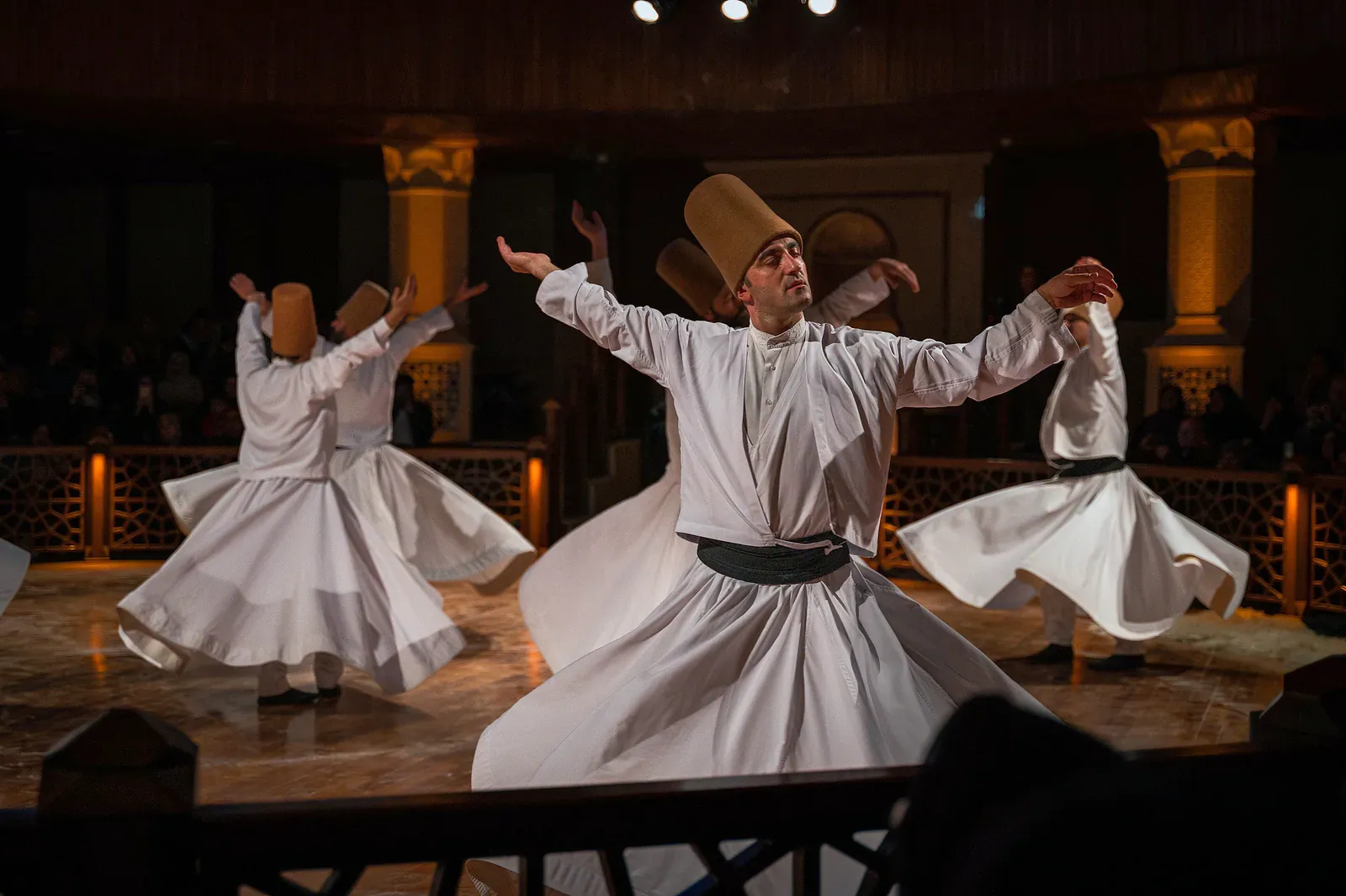
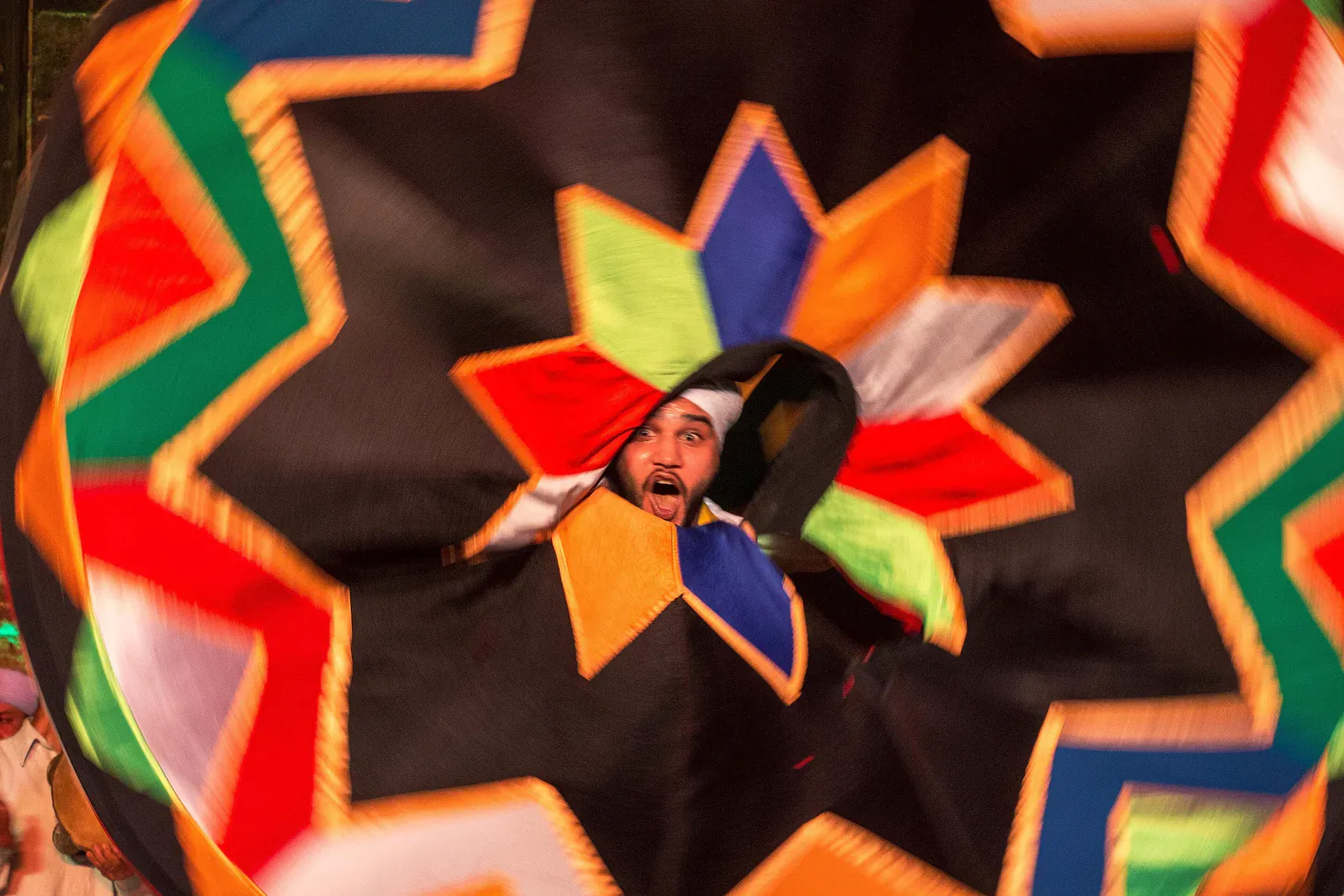
The semazens wear white skirts and tall felt hats. The ceremony is a ritual, and in Turkey it is officially presented as a cultural event. UNESCO proclaimed the Mevlevi sema ceremony a masterpiece of intangible heritage in 2005. In Egypt the Mevlevi form is known as tanoura and is also performed as a folk and concert dance. Orders outside the Mevlevis, such as the Khalwati, Shadhili, Qadiri and Rifai, practise the hadra across Turkey and the Balkans, each with its own chants.
Legacy
Much of the repertoire survived the 1925 ban because singers and ney players passed it on by ear. The museums of Konya and Istanbul now host public ceremonies, and artists such as Erguner, named a UNESCO Artist for Peace in 2016, teach the repertoire.
Misconceptions
Whirling is often described as a dance, but within the order it is worship, and its musical accompaniment is liturgy. Sufi music is also sometimes treated as the same thing as qawwali, which is the best-known form in South Asia, while the Mevlevi ayin, the Syrian hadra and the Turkish ilahi are separate traditions with separate repertoires and instruments. A third assumption is that all Sufis welcome music. Many Sufis of Sunni and Shia backgrounds support it, while critics, particularly among Salafis and Wahhabis, treat it as a forbidden innovation.
Frequently asked questions
What instruments are used in Sufi music?
The Turkish Mevlevi tradition centres on the ney flute, the kudüm kettle drums, the rebab and small cymbals called halile. Syrian and Egyptian ensembles add the qanun, oud, riqq and daf, and conservative gatherings may use only a frame drum or voices alone.
What is the difference between sama, dhikr and hadra?
Sama is the practice of listening to music and poetry as devotion. Dhikr is the remembrance of God through repeated phrases, and hadra is a group ritual in which dhikr, chant and sermon are performed under a sheikh. The Mevlevi ceremony is a form of sama set to the ayin.
Who are the best-known Sufi musicians from Turkey and Syria?
Kudsi Erguner and Kani Karaca are leading names of the Mevlevi tradition, Sheikh Hamza Shakkur and Al-Kindi Ensemble represent Syrian liturgy, and Mercan Dede and Omar Faruk Tekbilek lead the fusion side.
Is Sufi music the same as qawwali?
No. Qawwali is a South Asian devotional tradition with its own singers, harmonium and clapping, covered under the South Asian family, while this page treats Turkish and Arab Sufi traditions. Both belong to the broader world of Sufi devotion.
Sound
Sound sheet
Anatomy of a track
| # | Part |
|---|---|
| 1 | Naat in praise of the Prophet |
| 2 | Ney taksim |
| 3 | Pesrev, instrumental overture |
| 4 | Four selams in an usul such as Devr-i Revan |
| 5 | Son pesrev and Yuruk Semai |
| 6 | Quran recitation |
Signature sounds
- Ney over a steady kudum cycle
- Soloist and chorus over repeated divine names
- Gradual tempo build across a ritual
- Ney taksim before the ceremony
Drums and percussion
- Kudum
- Daf
- Bendir
- Riqq
Techniques
- Taksim
- Usul cycles
- Dhikr repetition
- Call and response
Keys and modes
Makam Saba. Dede Efendi's Saba ayin is a staple of Mevlevi repertoire.
Makam Ferahfeza. Used for a Mevlevi ayin recorded by Kudsi Erguner's ensemble.
Makam Ussak. The mode of the Mevlana Ussak ayin.
Tuning
Makam system with microtonal intervals, not 12-tone equal temperament
Vocals
Solo cantor with a chorus singing poetry by Rumi and other Sufi poets in Turkish, Arabic or Persian; Quran verses are recited plain, never ornamented.
Scenes
Where it happened
Where and when the sound lived: one bar per city on a shared timeline.
Asia
Active scenes
Peak 3, 1983-2025
Seat of the Mevlevi Order and home of the Rumi mausoleum, where the sema ceremony took shape.
Ottoman capital of Mevlevi lodges, court-linked composers, and later of Kalan and Doublemoon.
Base of Al-Kindi Ensemble, which recorded Syrian Sufi and classical Arab repertoire.
Venues and places
Istanbul, 1491 to today. Oldest Mevlevi lodge in Istanbul, now a museum that hosts whirling performances.
Konya, 1927 to today. Former Mevlevi lodge and Rumi's tomb, opened as a museum on 2 March 1927.
Culture
Culture markers
- Sema ceremony
The Mevlevi whirling ritual set to the ayin, led by a sheikh and ending with a Quran recitation.
Ritual - Tanoura
Egyptian form of Mevlevi sama danced in a weighted multicoloured skirt, also staged as a folk and concert dance.
Dance - Hadra
Collective dhikr of Khalwati, Shadhili, Qadiri and Rifai orders with chant, sermon and rhythmic invocation.
Ritual
Glossary
Terms on this page
The vocal and instrumental suite performed for the Mevlevi sema ceremony.
Remembrance of God through repeated phrases and divine names, chanted or spoken.
A collective dhikr ritual of North African, Middle Eastern and Turkish orders, with a sheikh guiding its intensity.
A devotional hymn of Turkish Sufi lodges, sung in unison or by a small group.
Listening: the Sufi practice of devotion through song, instruments, poetry and movement.
One of the four main musical movements of the Mevlevi ayin.
A rhythmic cycle of Turkish music, such as the 14-beat Devr-i Revan.
Middle Eastern and North African family