Rabindra Sangeet
Rabindra Sangeet is the repertoire of about 2,232 Bengali songs by Rabindranath Tagore, blending Hindustani, folk and Western tunes in an art-song style.
Bengal, 1880
South Asian family
Born
1880
Bengal
Subgenres
1
Documented branches
Links
5
Genres it drew on or shaped
Tempo
70-120 BPMLineage
Family tree
Grew out of
Influenced by
Bengal, 1880
Rabindra Sangeet
Led to (1)
Timeline
Era by era
From the first sparks to today. Select a dot to read the story behind it.
- Opera and early songs
1881 to 1904
- Swadeshi songs and anthems
1905 to 1930
- A named repertoire
1931 to 1941
- Records, radio and film
1942 to 1970
- Two anthems and a digital archive
1971 to today
Eras
Moments
- 1 Opera and early songs, 1881 to 1904
- 2 Swadeshi songs and anthems, 1905 to 1930
- 3 A named repertoire, 1931 to 1941
- 4 Records, radio and film, 1942 to 1970
- 5 Two anthems and a digital archive, 1971 to today
1881
Opera and early songs
Tagore stages the opera Valmiki Pratibha at Jorasanko in 1881 and publishes the Brajabuli lyrics of Bhanusimha in 1884, mixing classical, folk and European strains in his first songs.
- 1861Tagore is born in CalcuttaRabindranath Tagore is born on 7 May into the Jorasanko branch of the Tagore family.
- 1881Valmiki Pratibha is stagedTagore's opera is first performed at Jorasanko on 26 February 1881 with Tagore as Valmiki; its music mixes classical, folk and European strains.
- 1884Bhanusimha Thakurer Padabali is publishedTwenty-two Brajabuli songs in the Vaishnava manner appear under the pseudonym Bhanusimha; only nine survive with notation in the Swarabitan.
1905
Swadeshi songs and anthems
Songs written around the 1905 Partition of Bengal, including Ekla Chalo Re, and the 1911 hymn Bharat Bhagya Bidhata, tie the repertoire to Bengali public life.
- 1905Swadeshi songs of the PartitionEkla Chalo Re is printed in Bhandar magazine in September 1905, the year Bengal is partitioned; Amar Sonar Bangla also appears in print that month.
- 1911Bharat Bhagya Bidhata is first sungThe hymn, later known as Jana Gana Mana, is first sung publicly on 27 December 1911 at the Calcutta session of the Indian National Congress.
1931
A named repertoire
The term Rabindra Sangeet appears in print in 1931 and the Gitabitan songbook follows in 1931 and 1932. Tagore dies in 1941 with notation still being published.
- 1931The name Rabindra Sangeet is coinedDhurjati Prasad Mukherjee uses the term in an essay of 27 December 1931 for Tagore's 70th birthday; the first Gitabitan volumes follow in 1931 and 1932.
- 1935Rabindrasangeet printed on a record labelKanak Das's disc P11792 of January 1935 is the first to carry the word Rabindrasangeet on its label.
- 1936Swarabitan notation volumes beginThe 64-volume Swarabitan, with staff-free notation for 1,721 songs, is published between 1936 and 1955.
- 1941Tagore diesTagore dies on 7 August 1941 in Calcutta; the revised Gitabitan, arranged by theme, appears the same year.
1942
Records, radio and film
Singers such as Hemanta Mukherjee, Kanika Banerjee, Suchitra Mitra and Debabrata Biswas carry the songs onto discs and into Bengali cinema, while the Swarabitan notation volumes appear to 1955.
- 1944Hemanta Mukherjee records Tagore songsHis first recorded Rabindra Sangeet is Pather Sesh Kothaye in the film Priya Bandhabi, and the same year he records a non-film album for Columbia.
- 1948Suchitra Mitra records Ekla Chalo ReShe first records the song in 1948 for the film Sandipan Pathshala, and records it again in 1984 and in 1988.
- 1950India adopts Jana Gana ManaThe Constituent Assembly adopts the first stanza of Bharat Bhagya Bidhata as the national anthem on 24 January 1950.
- 1964Debabrata Biswas adds Western instrumentsHe adds Spanish guitar, saxophone, clarinet, piano and cello to sitar and esraj; critics say he departs from the notation, and some of his records are reportedly withdrawn by the late 1960s.
1971
Two anthems and a digital archive
Amar Sonar Bangla becomes the anthem of Bangladesh in 1971. Debates over fidelity to the notation continue in Kolkata and Dhaka, and by 2016 Saregama had digitised 7,864 songs.
- 1971Bangladesh adopts Amar Sonar BanglaThe Provisional Government of Bangladesh takes the first ten lines of Tagore's poem as the national anthem during the Liberation War.
- 2016Saregama's digital archiveAs of July 2016, Saregama had digitised 7,864 Rabindra Sangeet recordings for online download.
Listening path
Start listening
A short path from an easy way in to the deep end. Thumbnails come from YouTube; the player loads only when you press play.
- 01
Kanika Banerjee, 1966
A gentle entry point: unhurried phrasing and clean note placement, the style critics call faithful to the notation.
- 02
Suchitra Mitra, 1968
A Puja-category song sung with the firmer, bolder delivery that set Suchitra Mitra apart.
- 03
Kanika Banerjee, 1984
A late recording that shows her melancholy, soul-stirring tone.
Facts
| Family | South Asian |
| Origin | Bengal, India |
| Emerged | 1880s-1941, formalized as a named genre in 1931 |
| Status | Active |
| Tempo | 70 to 120 BPM |
| Subgenres | 1 |
Rabindra Sangeet, also called Tagore songs, is the repertoire of about 2,232 songs that Rabindranath Tagore wrote and set to music in Bengali from the 1880s until his death in 1941.
It draws on Hindustani and Carnatic classical music, Bengali folk including Baul, and Western melody, and it is sung in Bengal in both India and Bangladesh. Its hallmarks are a poem-first approach, restrained ornament and a style guarded by notation. Two songs became national anthems, those of India and of Bangladesh.
Origins
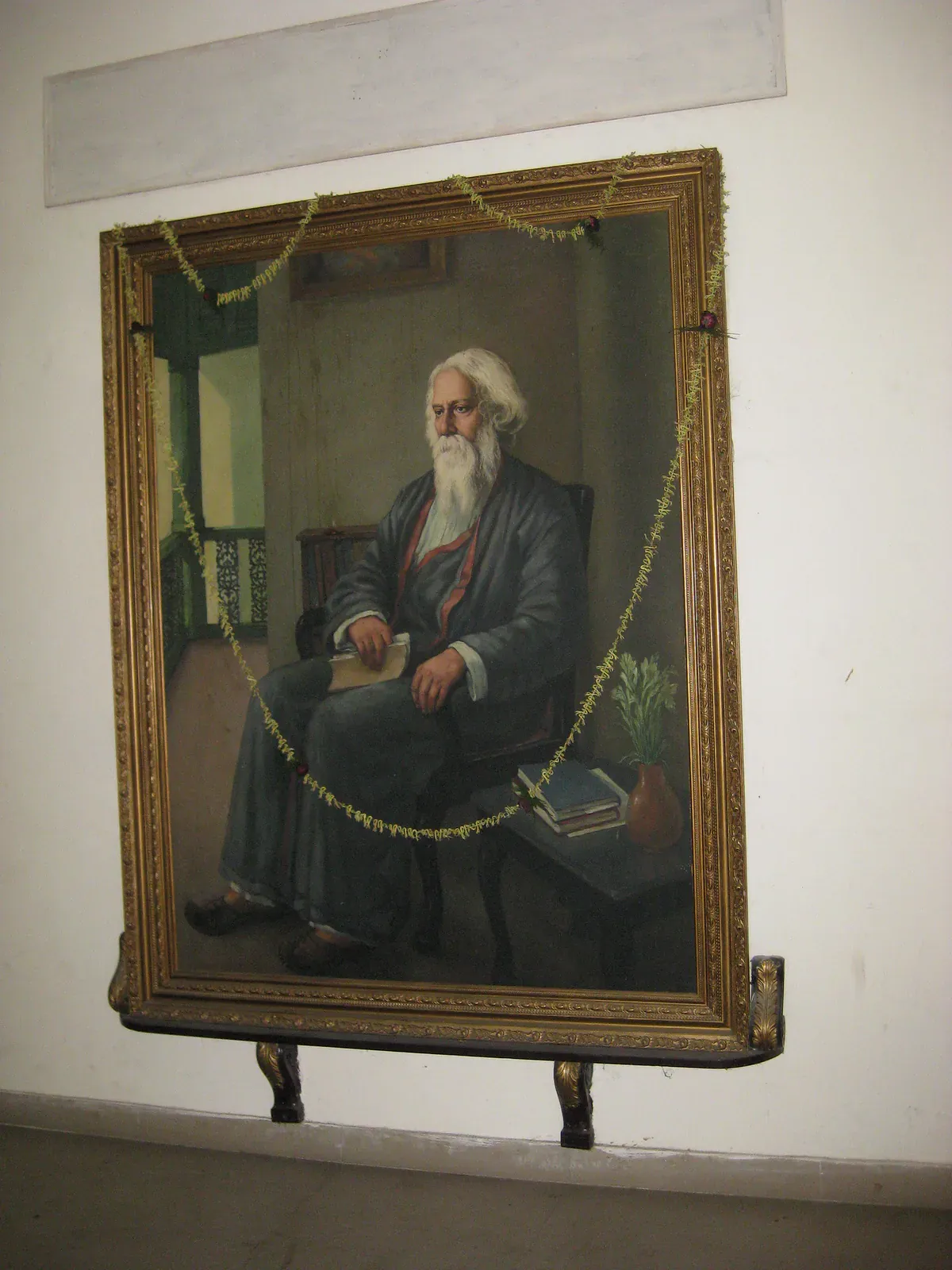
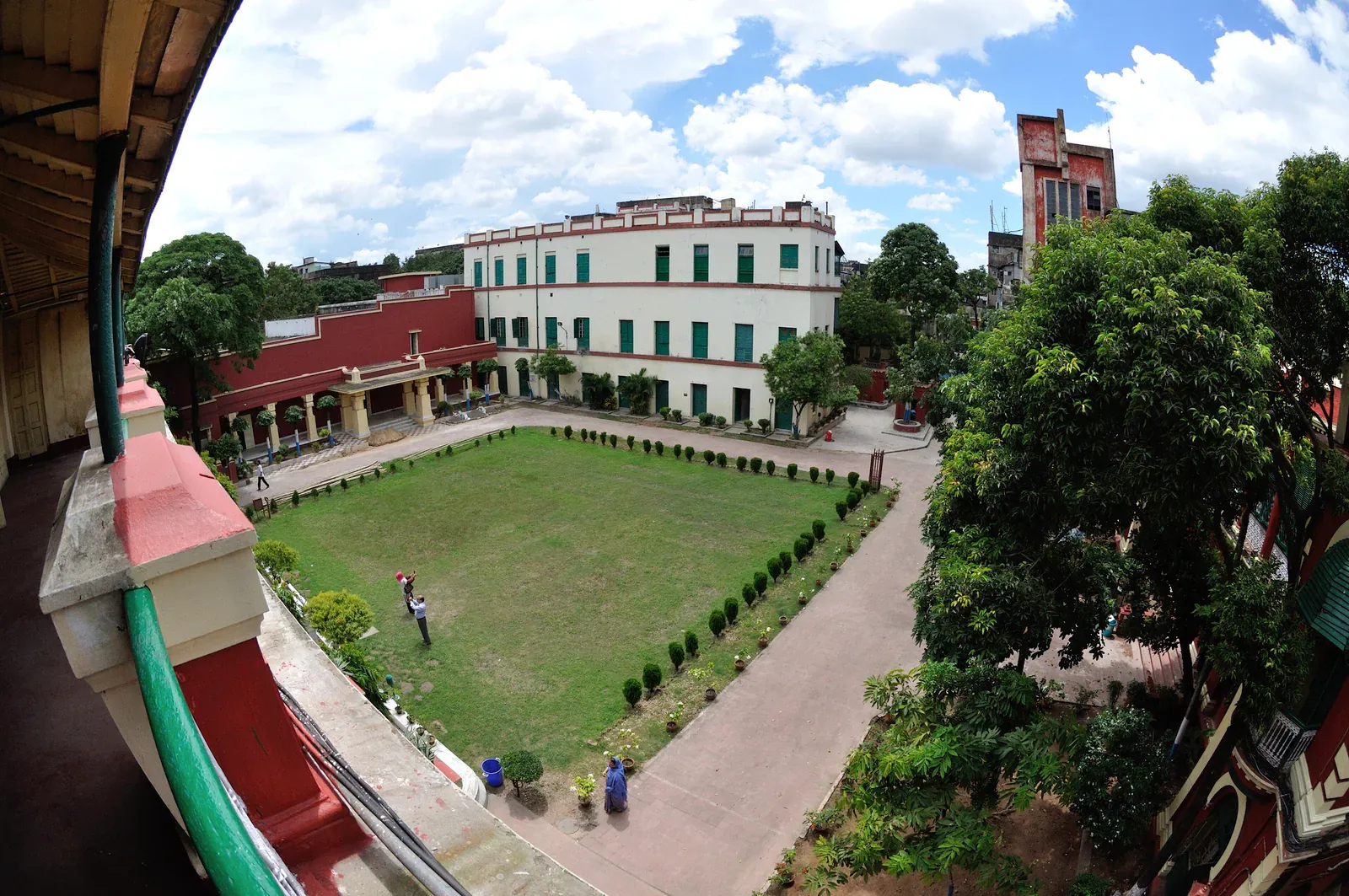
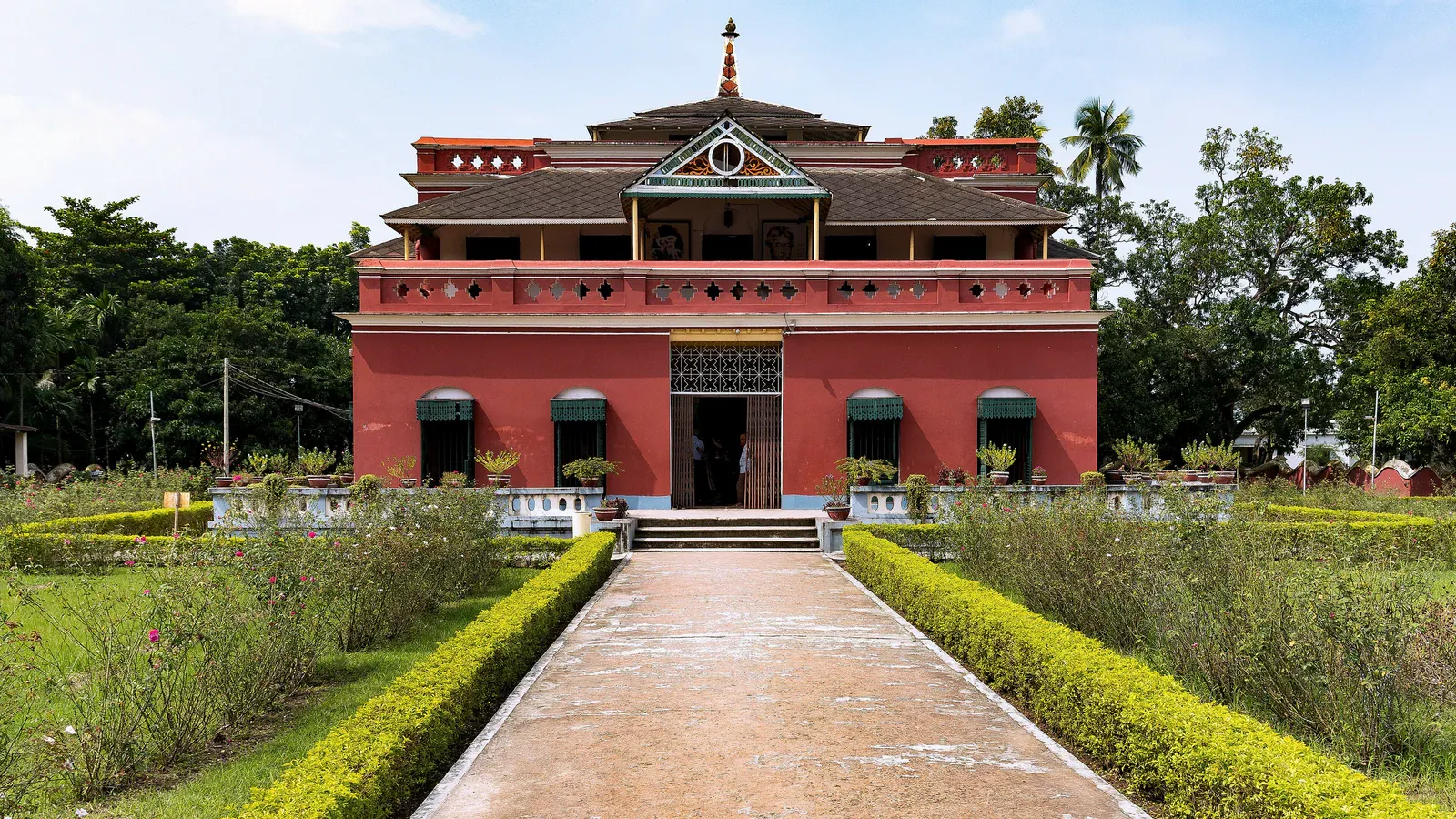
Tagore was born into the Jorasanko branch of the Tagore family in Calcutta. His first extended musical work was the opera Valmiki Pratibha, performed at the house on 26 February 1881 with Tagore himself as Valmiki; its music mixed classical, folk and European strains. In 1884 he published Bhanusimha Thakurer Padabali, 22 lyrics in the Brajabuli language of Vaishnava devotional poetry, of which only nine survive with notation.
The songs that followed were not a single style. They were influenced by the thumri of Hindustani music, covered the range from early Brahmo devotional hymns to near-erotic love songs, and imitated the tonal colour of ragas to varying degrees. Some copy a raga’s melody and rhythm closely; others blend elements of several. About one tenth of the repertoire is bhanga gaan, tunes reworked from Western, Hindustani, Bengali folk and other regional models, among them an adaptation of a Scottish ballad as Purano Sei Diner Katha.
Swadeshi songs and anthems, 1905-1930
The partition of Bengal in 1905 pushed Tagore’s songs into public life. Ekla Chalo Re, a call to keep walking when no one follows, was printed in Bhandar magazine in September 1905 and was influenced by a Dhap kirtan, a Vaishnava devotional song. Amar Sonar Bangla also appeared in print that month. Its melody derives from a Baul song by Gagan Harkara, set to the Dadra taal. The exact date of composition is not settled, because the original manuscript was never found.
In 1911 Tagore wrote Bharat Bhagya Bidhata, a Brahmo hymn in a Sanskritised register of Bengali. It was first sung in public on 27 December 1911 at the Calcutta session of the Indian National Congress. The Constituent Assembly adopted its first stanza, as Jana Gana Mana, on 24 January 1950 as the anthem of India.
A named repertoire, 1931-1941
The label Rabindra Sangeet entered print on 27 December 1931, when the writer Dhurjati Prasad Mukherjee used it in an essay for Tagore’s 70th birthday. The first Gitabitan, the songbook of all the songs, followed in three volumes in 1931 and 1932, arranged by date. Tagore revised it by theme, and the revised first two volumes came out in 1941, the year he died. A single-volume edition was issued in 1960.
The Gitabitan groups the songs under Puja (worship), Prem (love), Prakriti (nature, by season), Swadesh (homeland), Anushthanik (occasions) and Bichitra (miscellaneous), with the dance-dramas as a separate part. Tagore made no such divisions himself; they were added after his death to organise the archive. In January 1935 a disc by Kanak Das, number P11792, became the first to print the word Rabindrasangeet on its label. A few recordings of Tagore’s own singing from the 1930s survive.
Records, radio and film, 1942-1970
After Tagore’s death the songs reached listeners through a generation of singers. The Swarabitan, 64 volumes of notation for 1,721 songs, was published between 1936 and 1955 and gave singers a fixed text. Hemanta Mukherjee made his first Rabindra Sangeet recording, Pather Sesh Kothaye, for the film Priya Bandhabi in 1944 and cut a non-film Columbia album the same year. He later sang the songs in many Bengali films and stayed the leading male voice in Bengal. Suchitra Mitra first recorded Ekla Chalo Re in 1948 for the film Sandipan Pathshala, and she was later head of the Rabindra Sangeet department at Rabindra Bharati University.
Kanika Banerjee, a regular on Calcutta’s All India Radio from 1943, became a professor at Visva-Bharati and made over 300 gramophone discs. Her style is often set against Mitra’s: Banerjee plaintive and melancholy, Mitra bold and strong. Both are tied to the school Tagore founded at Santiniketan, whose Sangit Bhavana codified instruction in the style.
Two anthems and a digital archive, 1971 onward
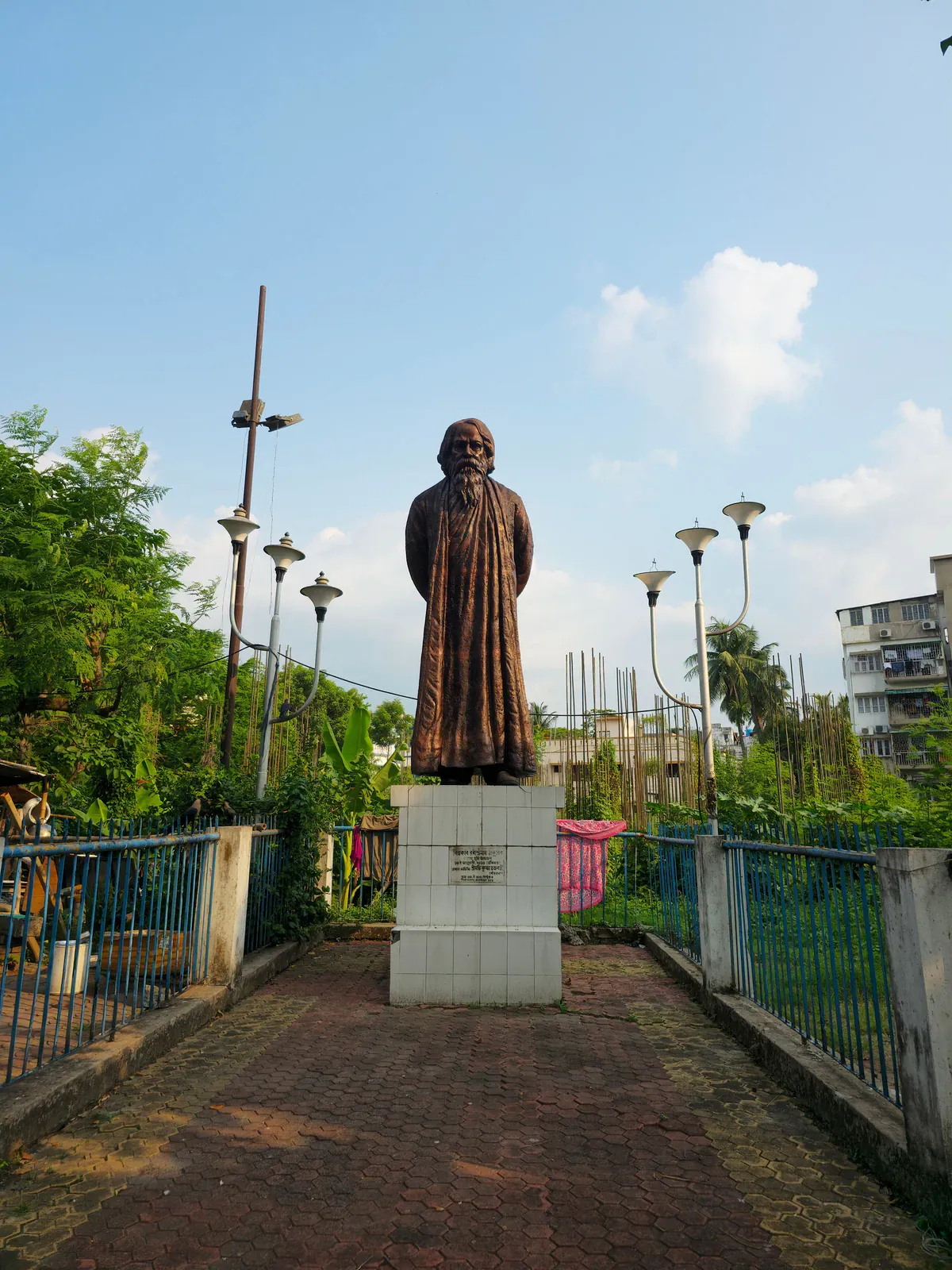
During the Bangladesh Liberation War in 1971 the first ten lines of Amar Sonar Bangla were adopted as the national anthem, a choice confirmed during the drafting of the 1972 constitution, which weighed it against another song by Dwijendralal Roy. The poem is linked to protest against the 1905 partition, so a song of Bengali unity now serves a state whose territory was once cut off by that partition. Exponents in Bangladesh such as Rezwana Choudhury Bannya, born in 1957, hold the Independence Day Award of 2016 and, from India, the Padma Shri of 2024.
Recording and archiving continued. As of July 2016 Saregama had digitised 7,864 Rabindra Sangeet recordings for online listening.
Characteristics
The words come first. Lyrics and melody carry about equal weight, and the singer is expected to leave the poem audible rather than bury it in display. The singing style uses a good deal of ornament, mainly meend (glides between notes) and murki (quick turns).
Structure often follows the four parts of dhrupad: sthayi, antara, sanchari and abhog. Rhythm leans on short, light cycles. As Tagore aged he favoured Dadra (six beats) and Kaharwa (eight), and he devised cycles for his verse, among them Jhampak and Rupakra, reportedly inspired by Carnatic talas.
Instruments and production
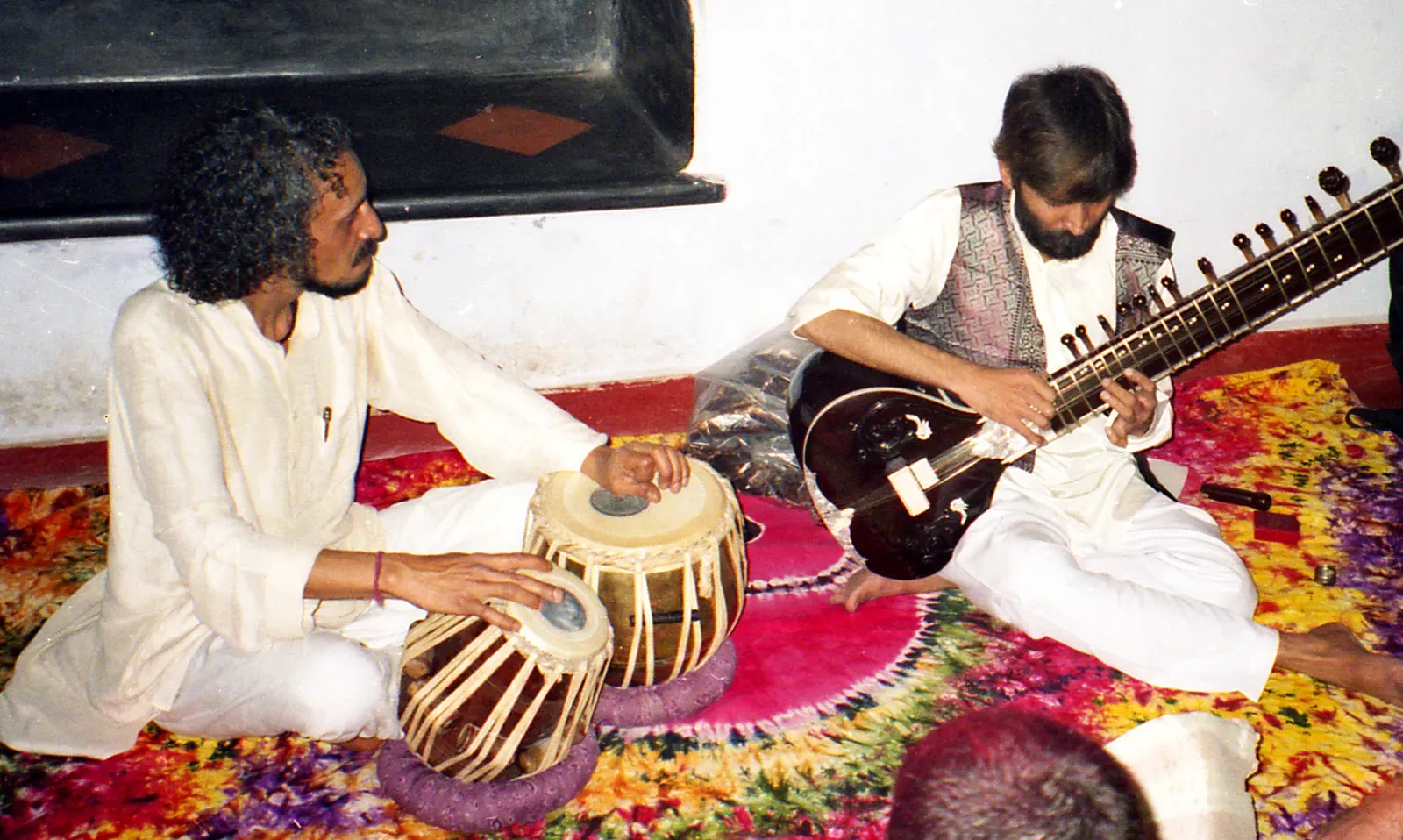
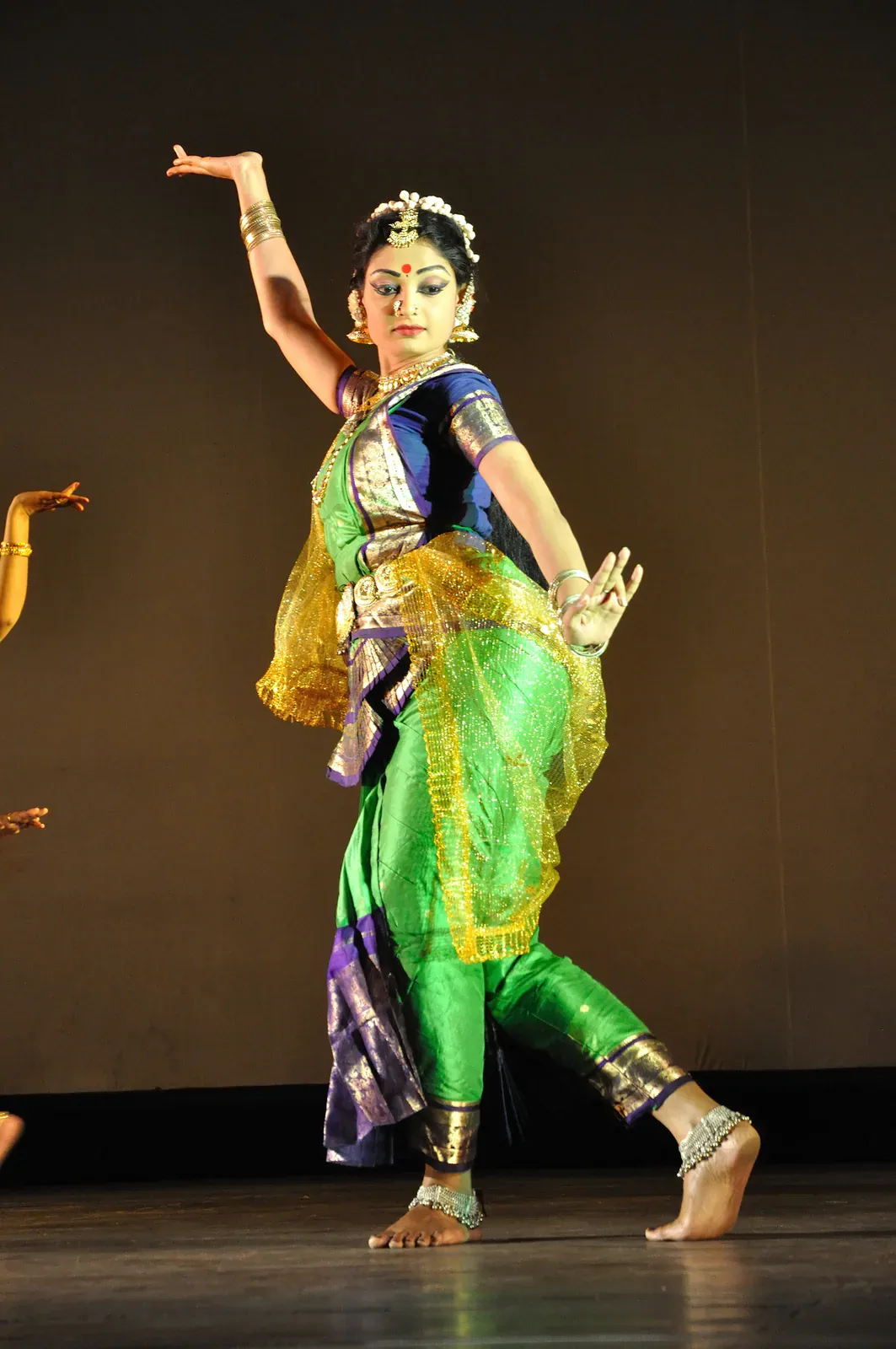
Most performances are a solo voice with light accompaniment. A harmonium or tanpura holds the pitch, a tabla pair keeps the cycle, and strings such as esraj, sitar or sarod add colour. Debabrata Biswas stretched this in 1964 by adding Spanish guitar, saxophone, clarinet, piano and cello to Indian instruments, and some of his records were reportedly withdrawn by the late 1960s. Tagore’s own recordings were made with the voice alone.
Notable recordings
Ekla Chalo Re shows how far one song travels. Suchitra Mitra recorded it first in 1948, then in 1984 and again in 1988. It was recorded later by Hemanta Mukherjee in 1989, and Amitabh Bachchan sang it in the 2012 Hindi film Kahaani. Aguner Parashmani, a Puja song, is tied to the Suchitra Mitra and Hemanta Mukherjee duet in the film Mahasweta and to Mitra’s album Tagore Dukhe Tomay. A modest entry point is Kanika Banerjee’s Aar Keno Aar Keno, in which the phrasing stays unhurried.
Culture
Commentators describe Bengal as a place where few cultured homes lack Tagore’s songs, and in many households the songs are sung, not only heard. Fidelity matters: new interpretations have drawn sharp criticism in both West Bengal and Bangladesh. Debabrata Biswas published his autobiography, Bratya Janer Ruddha Sangit, in 1979 and retired from singing in 1971 because of asthma.
Legacy
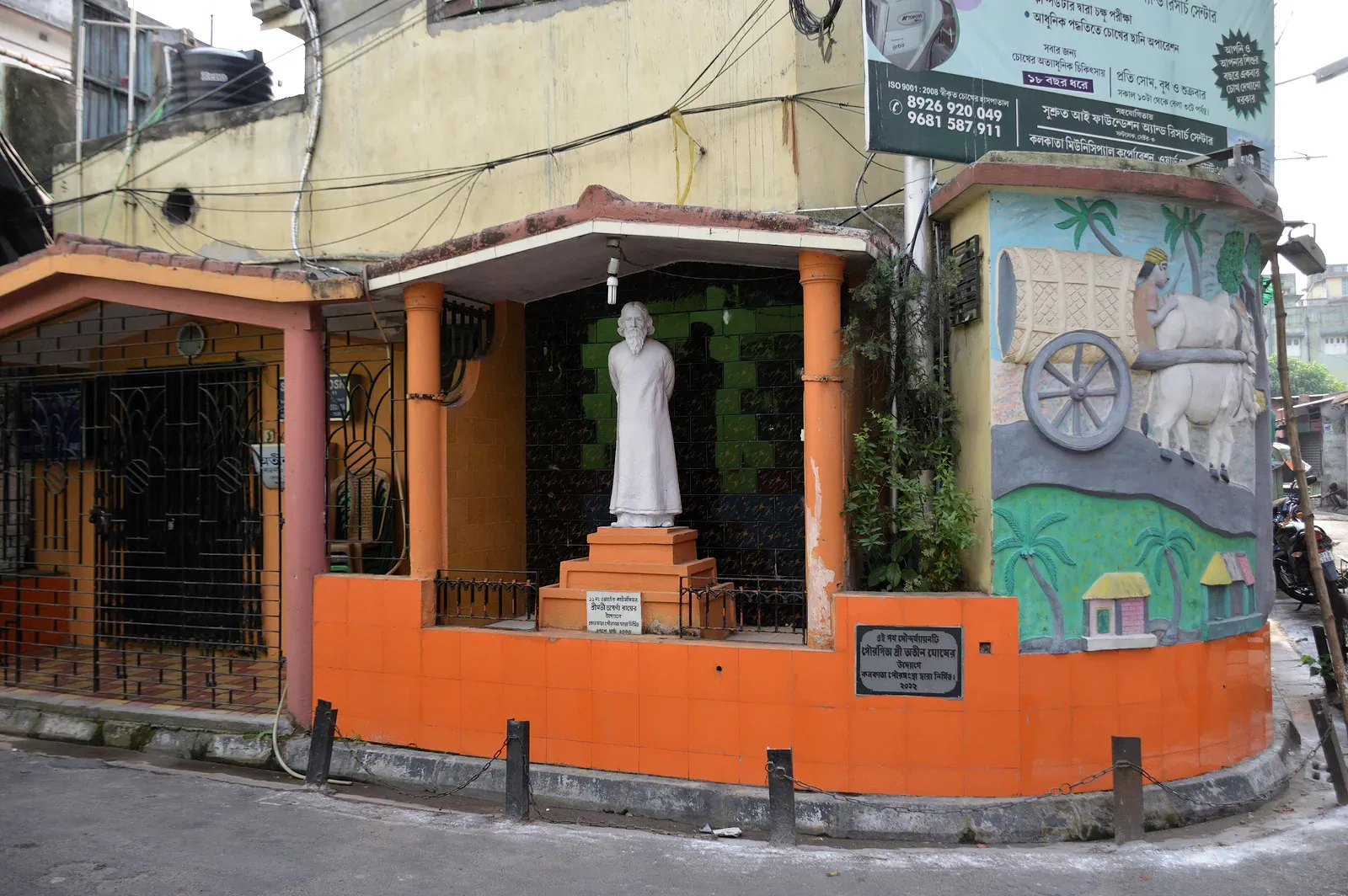
Tagore influenced the sitar player Vilayat Khan and the sarod players Buddhadev Dasgupta and Amjad Ali Khan, and Swami Vivekananda composed in the style, among other pieces Gaganer Thale in raga Jaijaivanti. Sri Lanka’s national anthem was inspired by his work. Rabindra Sangeet sits close to Hindustani classical music and Carnatic music in technique, and it forms part of the wider South Asian music family.
Misconceptions
Rabindra Sangeet is sometimes called a form of classical music. About nine tenths of the songs are original, with the melodies taking raga colour without following raga grammar strictly, and the songs borrow from folk and Western sources as well.
Amar Sonar Bangla is often said to have been written in 1905 for the partition. It did appear in print that year, but the original manuscript was never found, so the exact date of composition is unverified.
Rabindra Sangeet is not only an Indian tradition. It is central to music in Bangladesh as well, where the national anthem is a Tagore song.
Frequently asked questions
What is Rabindra Sangeet?
Rabindra Sangeet is the repertoire of about 2,232 songs by Rabindranath Tagore, sung in Bengali and collected in the Gitabitan.
How many songs did Tagore compose?
Estimates are about 2,230, and the Gitabitan lists 2,232. The Swarabitan carries notation for 1,721 of them.
Who first used the name Rabindra Sangeet?
Dhurjati Prasad Mukherjee used the name in an essay of 27 December 1931, for Tagore’s 70th birthday.
Which Tagore songs are national anthems?
Jana Gana Mana, from Bharat Bhagya Bidhata, is India’s anthem since 1950, and Amar Sonar Bangla has been the anthem of Bangladesh since 1971.
Who are the leading Rabindra Sangeet singers?
Early exponents include Kanika Banerjee, Suchitra Mitra, Hemanta Mukherjee, Debabrata Biswas, Sagar Sen and Santidev Ghosh.
Sound
Sound sheet
Anatomy of a track
| # | Part |
|---|---|
| 1 | Sthayi (opening refrain) |
| 2 | Antara (second phrase, higher range) |
| 3 | Sanchari (development) |
| 4 | Abhog (closing section) |
Signature sounds
- Bengali poetry set line by line to the melody
- Meend and murki ornaments
- Raga colouring without strict raga grammar
- Tagore's own taals beside Dadra and Kaharwa
Techniques
- Meend
- Murki
- Bhanga gaan
- Rabindrik taal
Keys and modes
Raga colouring. Songs borrow the mood of ragas such as Bhupali, Purabi, Kanara and Paraj without always following their grammar.
Vocals
Solo Bengali singing with clear diction, restrained ornament and the words given equal weight with the melody.
Scenes
Where it happened
Where and when the sound lived: one bar per city on a shared timeline.
Asia
Active scenes
Peak 3, 1971-2025
Home of the Jorasanko Tagore family, the first recordings and most of the major exponents.
Tagore's school, later Visva-Bharati, whose Sangit Bhavana trained generations of singers in the tradition.
Capital of Bangladesh, whose anthem is a Tagore song and where exponents such as Rezwana Choudhury Bannya sing.
Venues and places
Kolkata, 1881 to today. The Tagore family house where Valmiki Pratibha was first performed in 1881.
Santiniketan, 1901 to today. Tagore's school town in Birbhum, later home of Visva-Bharati's Sangit Bhavana.
Culture
Culture markers
- Singing at home
Commentators describe Bengal as a place with few cultured homes where Tagore's songs were not sung or attempted.
Ritual - Dance-dramas (nrityonatya)
Tagore's lyrical plays and dance-dramas form a Gitabitan section of their own.
Dance - Fidelity to the notation
New interpretations draw sharp censure in both West Bengal and Bangladesh, and some singers are known for strict adherence.
Ritual
Media
Key media
- 1931Gitabitan
by Rabindranath Tagore. The songbook of all 2,232 songs, published in three volumes in 1931 and 1932 and as one volume in 1960.
Book - 1936Swarabitan
by Rabindranath Tagore. Notation volumes, 64 in all, for 1,721 songs; the reference text for faithful performance.
Book - 1979Bratya Janer Ruddha Sangit
by Debabrata Biswas. Biswas's autobiography, The Stifled Music of an Outcast, on his musical ideas and the controversy over them.
Book - 2012Kahaani
by Sujoy Ghosh. Amitabh Bachchan sings Ekla Cholo Re in the Hindi thriller, taking the song to a wider audience.
Film
Glossary
Terms on this page
Songs whose tunes were reworked from Western, Hindustani, folk or other regional models; about one tenth of the repertoire.
The songbook of all 2,232 Tagore songs, first issued in 1931 and 1932 and rearranged by theme in 1941.
A glide between notes and a quick ornamental turn; the characteristic ornaments of the singing style.
Gitabitan sections for worship, love, nature and patriotism, a grouping made after Tagore's death.
Rhythmic cycles devised for Tagore's verse, such as Jhampak, Rupakra and Nabataal.
The 64-volume set of notation for 1,721 songs, published between 1936 and 1955.
South Asian family