Rara
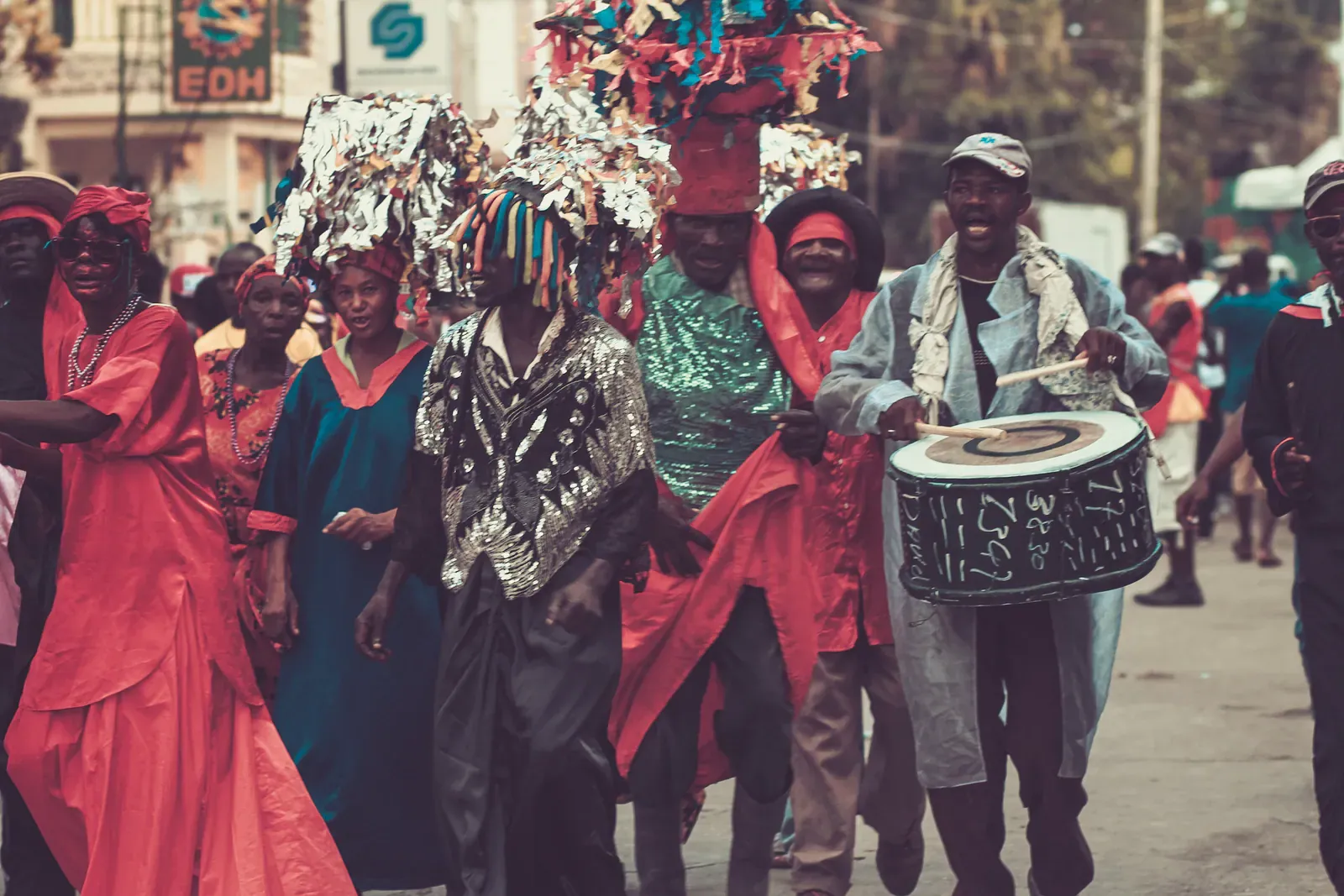
Rara is Haitian Lenten street-procession music tied to Vodou, played by marching bands of bamboo horns, drums and singers between Ash Wednesday and Easter.
Haiti, around 1750
Caribbean family

Born
around 1750
Haiti
Links
6
Genres it drew on or shaped
Tempo
100-155 BPMLineage
Family tree
Timeline
Era by era
From the first sparks to today. Select a dot to read the story behind it.
- Easter parades under slavery
1750 to 1803
- Peasant bands and first recordings
1804 to 1985
- Roots bands and politics
1986 to 1999
- Diaspora, scholarship and fusion
2000 to today
Eras
Moments
- 1 Easter parades under slavery, 1750 to 1803
- 2 Peasant bands and first recordings, 1804 to 1985
- 3 Roots bands and politics, 1986 to 1999
- 4 Diaspora, scholarship and fusion, 2000 to today
around 1750
Easter parades under slavery
Enslaved Africans and Afro-Creoles in Saint-Domingue paraded with drums and instruments at Easter, the one time of year when mixing between plantations was tolerated. The 1791 Bois Caïman ceremony fell in this world.
- 1750Easter processions in Saint-DomingueEvidence shows enslaved people parading with drums and instruments on Easter Sunday, and maroon troupes marching with drummers, horns and singers.
- 1791Bois Caïman ceremonyA Vodou ceremony in the woods near Le Cap becomes the symbolic start of the Haitian Revolution, remembered in rara and roots songs.
1804
Peasant bands and first recordings
After independence rara bands grew into militarized rural societies with colonels, queens and presidents. Field researchers documented the bamboo-trumpet bands from the mid-1930s, and Duvalier-era politics drew bands into public life.
- 1804Haiti declares independenceDessalines proclaims independence at Gonaïves on 1 January; rara bands later mark the victory in the streets.
- 1936Lomax documents rara bandsAlan Lomax mid-1930s Haiti work records rara orchestras with many percussion instruments, not only vaksin.
- 1941Courlander writes on vaksin bandsHarold Courlander 1941 article describes rara bands that seldom use drums and depend on the bamboo trumpets.
- 1978Boukman Eksperyans foundedLolo and Mimerose Beaubrun and others found the band that launches the mizik rasin movement in Port-au-Prince.
- 1978Verna Gillis field recordingsVerna Gillis records rara in the streets, plazas and cemeteries of Haiti between 1976 and 1978.
1986
Roots bands and politics
After Jean-Claude Duvalier fled in 1986, Boukman Eksperyans, RAM and others took rara horns and Vodou songs into electric bands. Ke M Pa Sote in 1990 and Fèy in 1992 were censored or banned.
- 1986Duvalier flees HaitiJean-Claude Duvalier leaves for France in February after an uprising, and musicians turn Vodou and rara sounds into a new roots style.
- 1990Ke M Pa Sote at CarnivalBoukman Eksperyans play the song at the Port-au-Prince Carnival; soldiers try to stop the performance and it becomes a protest hymn.
- 1990RAM begins performingRichard A. Morse and RAM start playing Vodou roots rock in Port-au-Prince.
- 1991Vodou Adjae earns a Grammy nominationBoukman Eksperyans debut album is nominated for a Grammy Award.
- 1991Caribbean Revels issuedFolkways releases Verna Gillis recordings of Haitian rara and Dominican gaga.
- 1992Fèy banned under the juntaRAM Vodou-derived song becomes an unofficial Aristide anthem; by summer military authorities ban it and threaten Richard Morse.
2000
Diaspora, scholarship and fusion
Rara reached scholars and world-music audiences through a 2002 monograph and groups such as Lakou Mizik, formed in 2010, while rara tech later fused it with house.
- 2002McAlister publishes Rara!Elizabeth McAlister book on Vodou, power and performance in Haiti and its diaspora appears from University of California Press.
- 2010Lakou Mizik formsNine Haitian musicians form the band after the 12 January earthquake, which also devastated Léogâne, a rara stronghold.
- 2016Wa Di YoLakou Mizik release their debut album on Cumbancha.
Listening path
Start listening
A short path from an easy way in to the deep end. Thumbnails come from YouTube; the player loads only when you press play.
- 01
Verna Gillis (field recording), 1991
A street-procession recording from the Folkways collection; listen for hocketed vaksin and drums.
- 02
Boukman Eksperyans, 1990
The 1990 Carnival protest song that made rara-based roots music a national voice.
- 03
Boukman Eksperyans, 1992
Title track of the album that took Vodou roots music abroad.
- 04
RAM, 1993
The Vodou-derived song banned under the 1992 junta.
- 05
Lakou Mizik, 2013
A recent band bringing rara and Vodou rhythms to world-music stages.
Facts
| Family | Caribbean |
| Origin | Haiti |
| Status | Active |
| Tempo | 100 to 155 BPM |
| Meter | 4/4 |
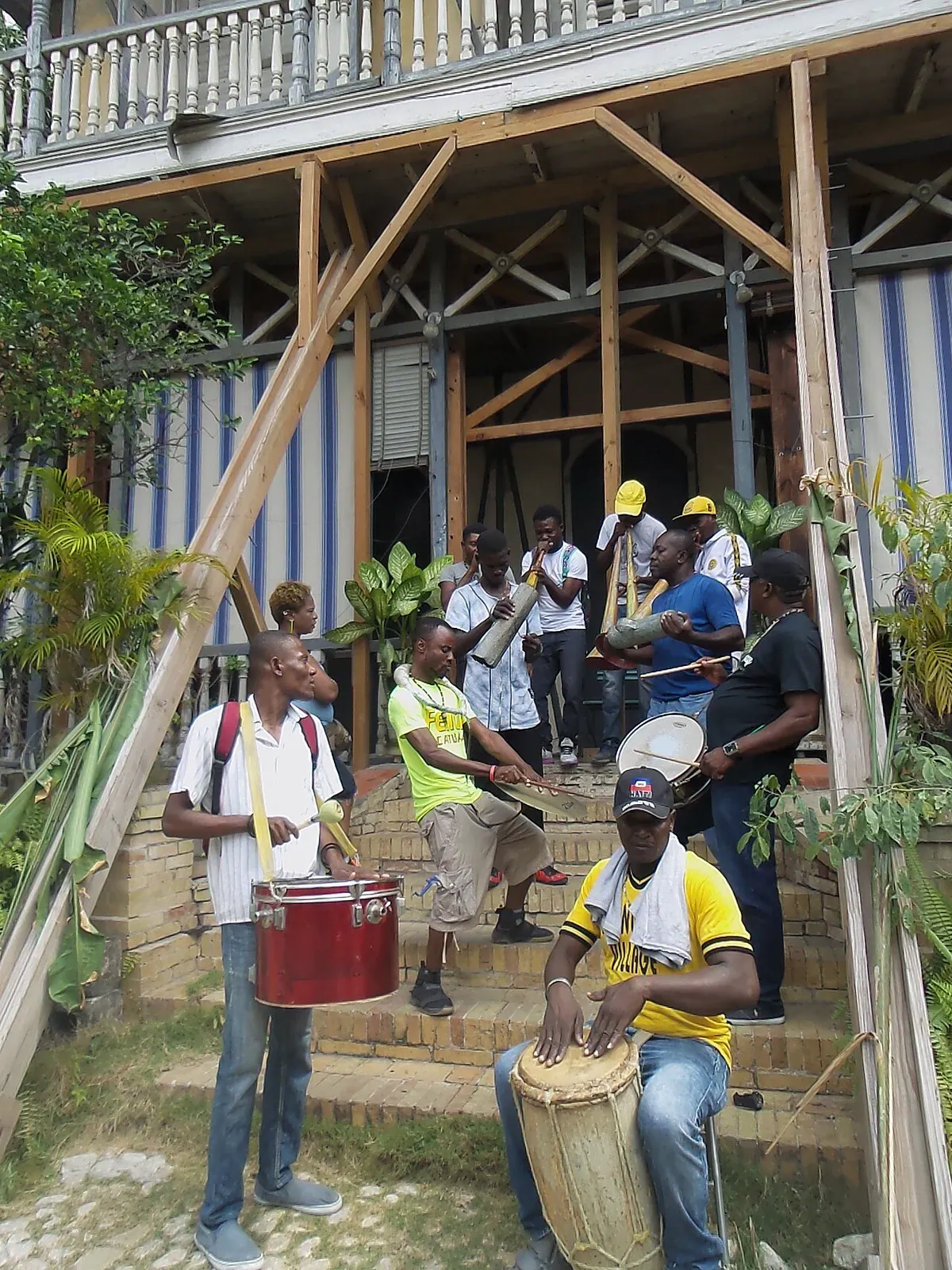
Rara is a Haitian festival music played by marching bands on the roads of Haiti during Lent, from Ash Wednesday to Easter. Its core is a set of single-note bamboo trumpets called vaksin, played in interlocking patterns over drums, percussion and a chorus of Creole songs.
Rara is closely tied to Vodou, and Haitians describe it as Vodou taken on the road. It belongs to the Caribbean family of folk and popular traditions.
Origins
Rara most likely formed under colonial slavery in Saint-Domingue. Enslaved Africans and Afro-Creoles are recorded parading with drums and instruments on Easter Sunday, and troupes of maroons marched with drummers, horns and singers in a similar way. Easter mattered because it was the one time of year when enslaved people could leave their plantation, to attend church, and so mix with people from other estates. A tradition holds that Africans of different nations used the rhythm of marching feet to pass messages between plantations, feeding the planning of revolt.
The 1791 Vodou ceremony at Bois Caïman, remembered as the start of the Haitian Revolution, sits in the same world, and rara bands later marked independence in 1804 with processions of their own. The music keeps this memory: its songs honour African ancestry, and its bands are organised like small armies.
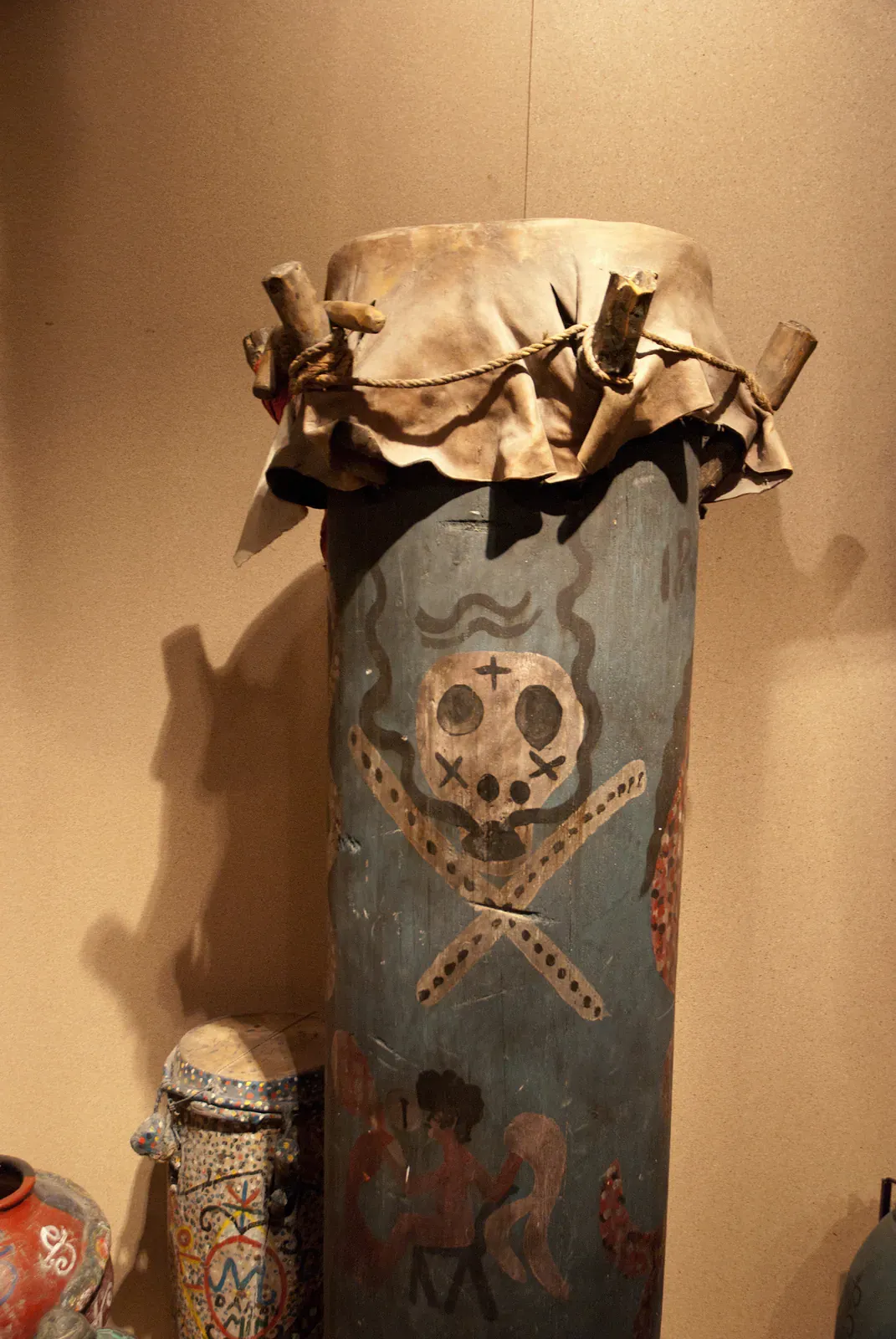
Easter parades and peasant bands, 1750-1985
After independence rara grew out of the countryside around Port-au-Prince, built on peasant Easter customs. Bands became militarized rural societies. A colonel leads with a whistle and whip, behind him come drums, the bamboo horns, metal horns, percussion and a chorus, and the central performers are baton majors or kings and queens (wa and renn). Costumes take in presidents, colonels and other ranks, mirroring the hierarchy of the community they walk through. Members of a band believe they have made a contract with the spirits and owe 18 years of service; if they stop, the spirits are said to punish them.
A procession is a ritual as much as a parade. Before a band leaves, Gede may possess a Vodou priest or priestess, blessing the players and wishing them a safe journey. Bands stop at crossroads, cemeteries and the homes of community leaders, who give money to the band’s leaders. They walk for miles, sometimes on mountain paths.
Alan Lomax’s mid-1930s Haitian recordings found rara orchestras with many percussion instruments, and in 1941 Harold Courlander wrote that bands seldom used drums and relied almost entirely on vaksin. During the Duvalier decades rara was also a political vehicle: bands and singers who named injustice were banned or exiled, among them the folk singer Manno Charlemagne, later elected mayor of Port-au-Prince.
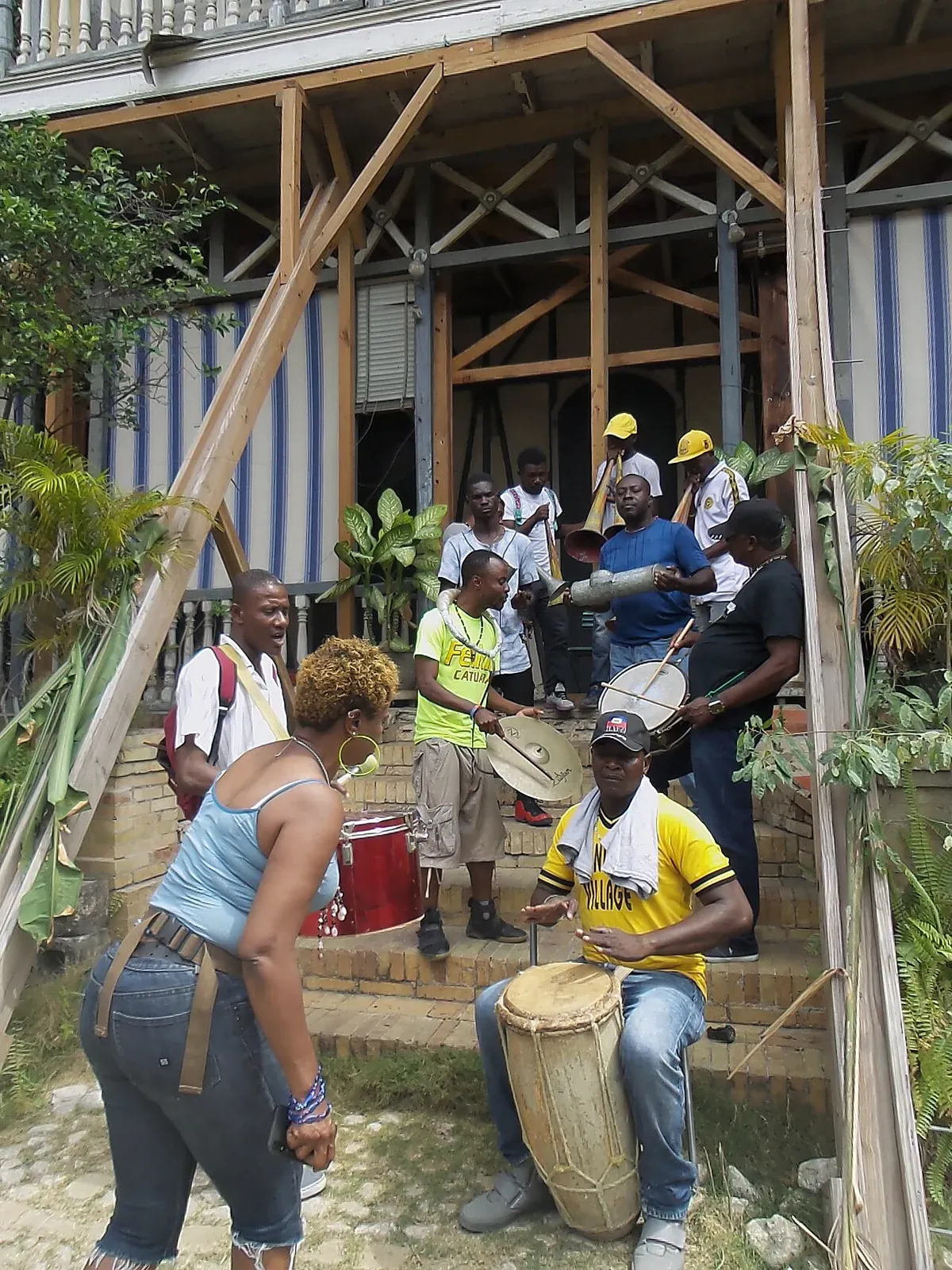
Roots bands and politics, 1986-1999
When Jean-Claude Duvalier fled Haiti in February 1986, musicians who had been unable to separate Vodou music from the regime began to take its rhythms, songs and instruments into a new electric style. Mizik rasin, or Haitian roots music, adds rock, jazz and funk to Vodou drums and rara horns, and its bands often use rara horns beside electric guitars and keyboards.
Boukman Eksperyans, founded in Port-au-Prince in 1978, were its best-known group. Their song “Ke M Pa Sote” was the most popular piece at the 1990 Carnival and was widely read as a rebuke to the military government of General Prosper Avril; soldiers tried to stop their performance. The band’s debut album, Vodou Adjae, was nominated for a Grammy in 1991. RAM, led by Richard A. Morse, began performing in 1990, and their folk-derived song “Fèy” became an unofficial anthem of support for President Aristide after the 1991 coup, until the military banned it in 1992.
In the same year as the Grammy nomination, Folkways issued Verna Gillis’s 1976 to 1978 field recordings as Caribbean Revels: Haitian Rara and Dominican Gaga. Smithsonian Folkways made them the best-known archive of rara bands in the street, in the plaza and at the cemetery.
Diaspora and revival, 2000-present
An academic study of rara and Vodou in Haiti and its diaspora appeared in 2002, and bands now play in the Haitian communities of New York and other cities abroad. In Léogâne, west of Port-au-Prince, rara bands have a national reputation for adding brass players from konpa dance bands and for a loud, melodic sound that carries far. The Union des Rara de Léogâne coordinates the town’s bands and the passing of repertoire.
After the earthquake of 12 January 2010, which also devastated Léogâne, nine Haitian musicians formed Lakou Mizik, who draw on rara, Vodou and folk songs. Their debut album, Wa Di Yo, came out in 2016. A later hybrid, rara tech, fuses rara with house music.
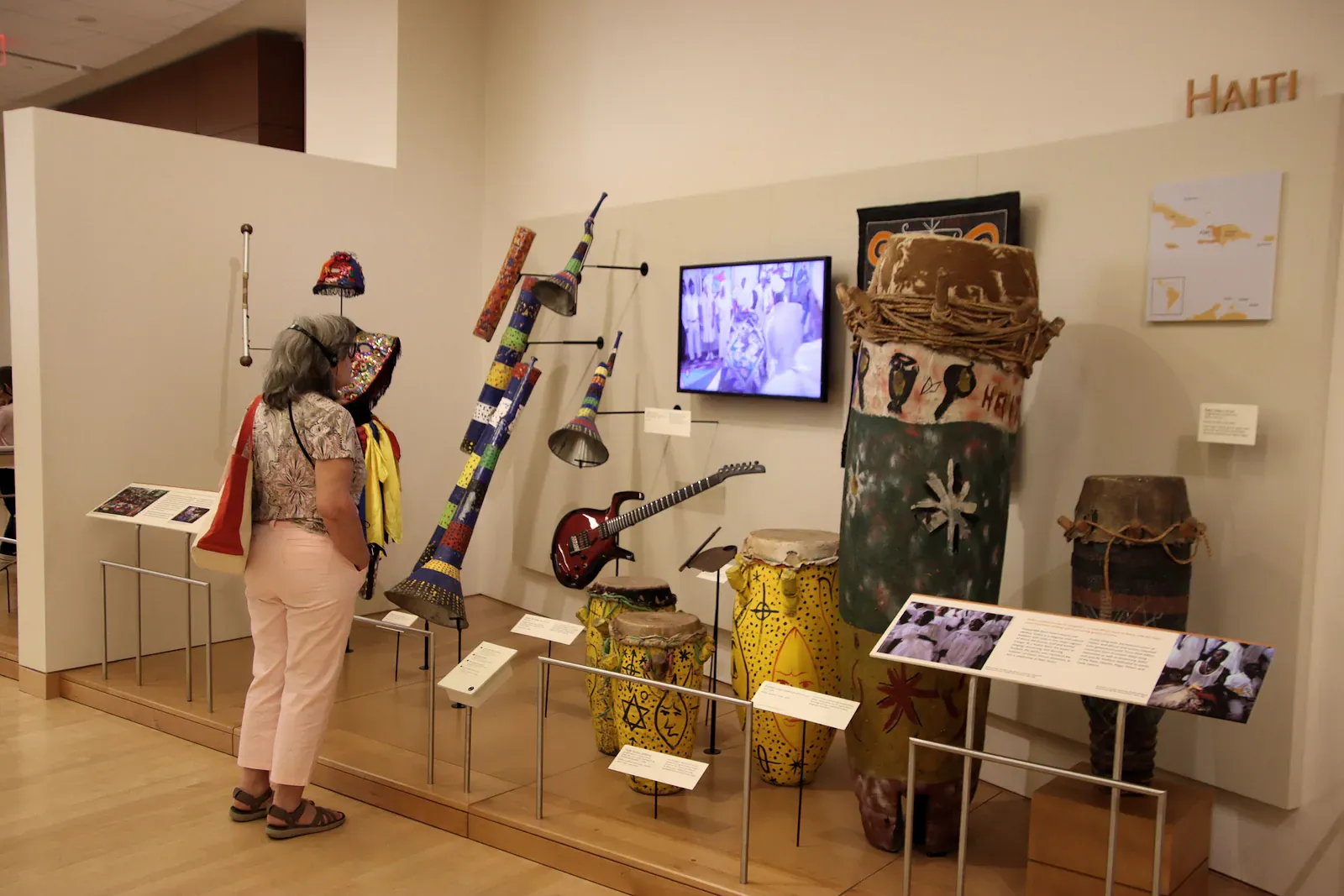
Characteristics
Rara is built from interlocking repetition rather than a single melody line. Three to five vaksin players march side by side, each blowing one note in a pattern called hocketing, and together the notes form a repeating ostinato. These motifs are composed by group improvisation. A player also strikes a rhythmic timeline, the kata, on the side of a tube with a long stick, so the horn is both melodic and percussive. The tones stack in rough thirds, producing tritones and outlines of diminished chords, with the two highest tubes often a semitone apart.
The songs are in Haitian Creole. They honour African ancestors and spirits, and they also criticise. Satire lets a band name an injustice without confronting anyone directly, and politicians have commissioned songs praising themselves.
Instruments and production
The vaksin, also called banbou, is a plain tube of bamboo with a mouthpiece, or sometimes tin. Bass tubes are long and treble tubes short, and each player is called a banboulyè. Alongside them stand konèt, metal horns with a harder tone, double-headed goatskin drums played with sticks, and shakers and scrapers: maracas and the güira show the Taino element in an otherwise Afro-Haitian sound. Some percussion is made from recycled metal, and modern bands may add trumpets and saxophones. Simple foot bands rely on singing and stamping feet.
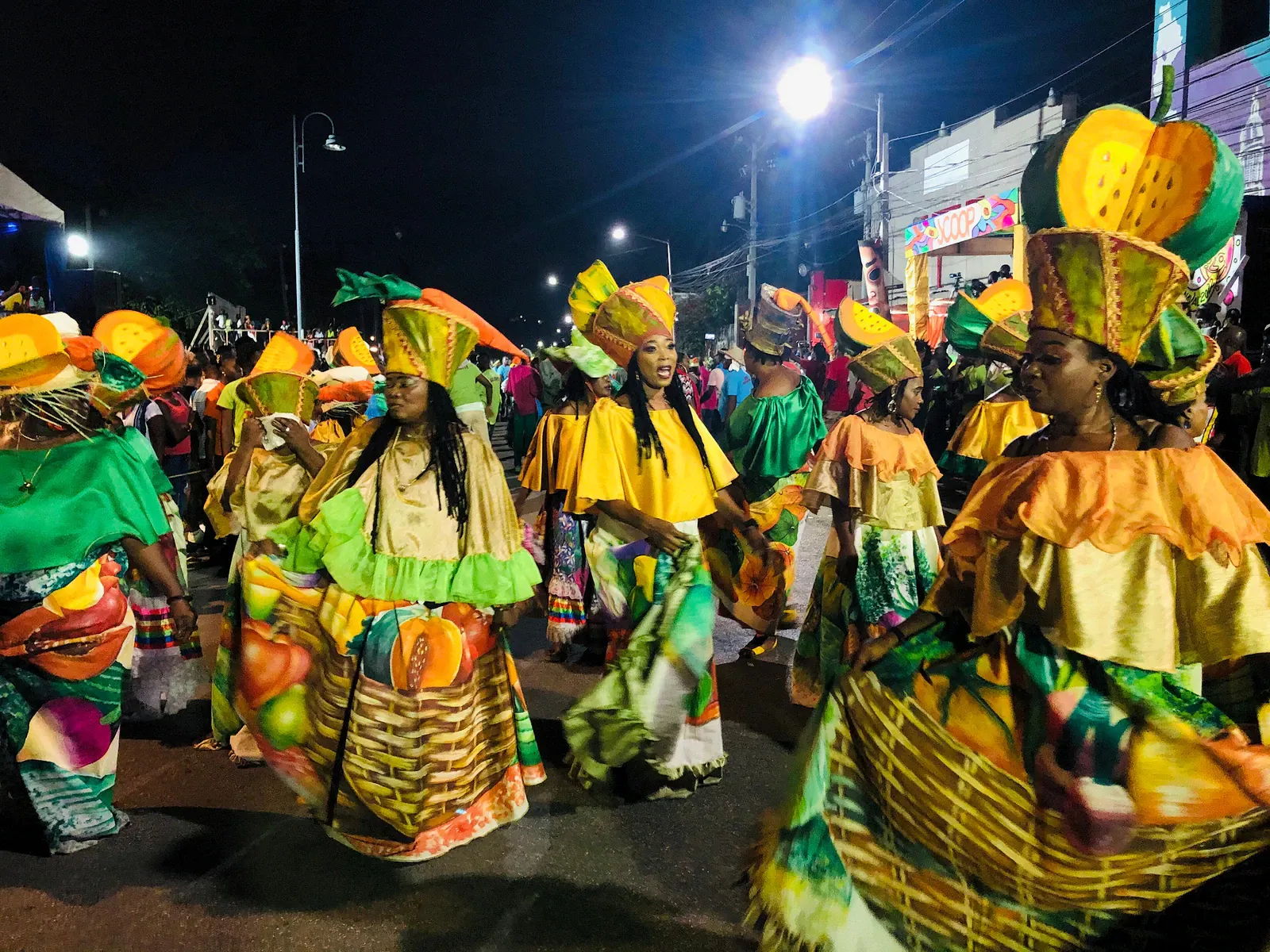
Mainstream success
Rara itself stayed a rural and neighbourhood tradition, and its route to wider audiences ran through other bands. “Ke M Pa Sote” at the 1990 Carnival and the Grammy nomination of Vodou Adjae brought rara-flavoured roots music to Haitian and foreign listeners. Lakou Mizik later reached world-music festivals, and a 2019 album, HaitiaNola, was recorded partly in New Orleans and partly in Haiti.
Notable recordings
“Rara in Haiti: Carrefour,” from the Caribbean Revels collection, is among the few widely heard field documents of an actual procession; its hocketed horns and drums are the sound the roots bands later amplified. “Ke M Pa Sote” met a Carnival crowd in 1990, and a refrain meaning “my heart does not leap” became a public statement of defiance. “Fèy” carried no overt political reference, yet the song spread across the country and the military banned it.
Culture
Dance is part of the procession. Twirlers with metal batons lead the marchers, and participants dance for contributions along the route. Costumes borrow military ranks and uniform-style dress. The cost of instruments, transport and costumes is a real burden for small communities. Rara also belongs to the wider Caribbean habit of protest song, with drum-led neighbours such as gwo ka from Guadeloupe.
Legacy
Rara gave Haitian roots music its horns and its sense of ritual, and it still carries the memory of 1791 and 1804. Mizik rasin and rara tech both borrow from it, and it remains a living practice, repeated every Lent along Haitian roads and in the diaspora.
Misconceptions
Rara is not the same as Carnival. Both put costumed crowds in the streets, but Carnival is the pre-Lenten celebration, while rara belongs to Lent and ends at Easter, and its roots lie in rural peasant culture rather than the carnival of the capital.
It is not a secular street entertainment, either. Band members make contracts with spirits, processions halt at crossroads and cemeteries, and a priest may be possessed before the band leaves. The religious side is the reason the bands exist.
Nor is it a drum band with a fixed line-up. Courlander found bands almost without drums in 1941, while later researchers found many percussion instruments, and the brass of Léogâne’s bands comes from konpa. The vaksin are the constant; the rest depends on the band.
Frequently asked questions
What is rara music?
Rara is a Haitian Lenten festival music played on bamboo trumpets called vaksin, drums and percussion, with Creole songs, by bands that march through the streets between Ash Wednesday and Easter.
When is rara played in Haiti?
Rara runs through Lent, after the end of Carnival, and culminates in a week of celebration at Easter. Some parts of Haiti continue to Easter Monday.
What is the difference between rara and mizik rasin?
Rara is the processional tradition of peasant bands. Mizik rasin is a roots-music style from the late 1970s that puts Vodou songs and rara horns into bands with electric guitars and keyboards.
What instruments are used in rara?
The main instrument is the vaksin, a single-note bamboo trumpet. Bands also use metal horns, goatskin drums, maracas, güiras and recycled metal percussion, and some add trumpets or saxophones.
What language are rara songs in?
Rara songs are sung in Haitian Creole. They celebrate African ancestry and often comment on politics, poverty and community life.
Sound
Sound sheet
Signature sounds
- Hocketed vaksin ostinato, one note per player
- Kata timeline struck on the bamboo with a stick
- Creole songs with coded political or satirical lyrics
- Marching band led by a colonel with whistle and whip
Drums and percussion
- Kès
Techniques
- Hocketing
- Kata stick timeline
- Group improvisation
- Satirical coded lyrics
Tuning
Vaksin pitches stack in rough thirds, often tritones and arpeggiated diminished shapes, with the top two about a semitone apart; no fixed concert pitch.
Vocals
Haitian Creole songs sung by a chorus over the band, often praising ancestors and spirits or commenting on politics.
Scenes
Where it happened
Where and when the sound lived: one bar per city on a shared timeline.
Caribbean
Active scenes
Peak 1, 1978-2025
Capital where roots bands took rara horns and Vodou rhythms into Carnival and recordings.
Culture
Culture markers
- Crossroad and cemetery stops
Bands halt at crossroads, cemeteries and community leaders homes, saluting ancestors and spirits.
Ritual - Military ranks and costumes
Colonels, presidents and queens (renn) mirror community hierarchy in uniform-style dress.
Fashion - Baton twirling and procession dance
Twirlers with metal batons lead dancers who move while the band marches.
Dance
Media
Key media
- 1991Caribbean Revels: Haitian Rara and Dominican Gaga
by Verna Gillis. Folkways release of 1976-78 field recordings with notes by Verna Gillis and Gage Averill.
Compilation - 2002Rara! Vodou, Power, and Performance in Haiti and Its Diaspora
by Elizabeth McAlister. The standard scholarly study of rara bands and their religious and political role.
Book
Glossary
Terms on this page
A player of the vaksin.
Rhythmic timeline struck with a long stick on the side of the bamboo tube.
Baton major who leads the dancing and marching of a band.
Haitian roots music from the late 1970s that mixes Vodou music with rock, jazz and funk.
Single-note bamboo or tin trumpet, also called banbou, at the centre of rara bands.
Caribbean family