Bal folk
Bal folk is a European folk-dance movement and its live music, grown from the French folk revival after 1968 and played for bourrees and mazurkas.
France, Belgium, 1969
European folk family
Born
1969
France, Belgium
Subgenres
1
Documented branches
Links
6
Genres it drew on or shaped
Tempo
80-125 BPMLineage
Family tree
Grew out of
Influenced by
France, Belgium, 1969
Bal folk
Led to (1)
Timeline
Era by era
From the first sparks to today. Select a dot to read the story behind it.
- Collecting the dances
1941 to 1968
- Folk clubs and first bals
1969 to 1979
- Festivals and networks
1980 to 2008
- Young audiences
2009 to today
Eras
Moments
- 1 Collecting the dances, 1941 to 1968
- 2 Folk clubs and first bals, 1969 to 1979
- 3 Festivals and networks, 1980 to 2008
- 4 Young audiences, 2009 to today
1941
Collecting the dances
Researchers such as Jean-Michel and Helene Guilcher documented French folk dances between 1941 and 1976, saving steps that industrialisation and rural-to-urban migration had thinned out.
- 1941Guilcher dance research beginsJean-Michel and Helene Guilcher begin documenting French folk dances, work that continues to 1976.
1969
Folk clubs and first bals
After 1968 the folk revival moved into clubs such as Le Bourdon in Paris, and bands like Melusine, Malicorne and Tri Yann played for dancers.
- 1969Le Bourdon opens in ParisThe folk club becomes one of the first places to organise bals folk on a regular basis.
- 1969Tri Yann founded in NantesThe medieval-leaning Breton folk band forms around three men named Jean.
- 1972Alan Stivell at the OlympiaThe live album brings the Breton harp and bagpipe revival to a Paris audience.
- 1973First event named Bal FolkOrganised at ENSEA in Clichy with Grand Mamou Folk, Catherine Perrier and John Wright, and Phil Fromont.
- 1973Melusine and Malicorne formTwo acoustic and folk-rock groups of the revival, both formed in 1973.
- 1975Melusine first albumRecorded in July 1975 and released that September on Polydor.
- 1977Leve-toi et danse!Melusine third Polydor album, titled as a call to dance.
- 1979Un bal renaissanceMelusine and La Maurache record dance music from the Renaissance repertoire.
1980
Festivals and networks
Large gatherings grew, led by the Grand Bal de l'Europe from 1990, while regional bals in places such as Nouvelle-Aquitaine fell back after 1990.
- 1990Grand Bal de l'Europe createdThe festival at Gennetines in Allier grows into the largest traditional dance festival in Europe.
2009
Young audiences
A new generation of bands and student organisers spread bal folk across Western Europe, while the Breton fest-noz gained UNESCO recognition in 2012.
- 2009Ciac Boum forms in PoitouThe band becomes a reference for dancers across France and Europe.
- 2012Fest-noz on the UNESCO listAdded to the Representative List of the Intangible Cultural Heritage of Humanity on 5 December 2012.
- 20181,130 fest-noz in one yearBetween October 2018 and September 2019, showing the scale of the Breton night festival.
Listening path
Start listening
A short path from an easy way in to the deep end. Thumbnails come from YouTube; the player loads only when you press play.
- 01
Alan Stivell, 1972
Breton song that Stivell first recorded in the early 1970s; listen for the revived Celtic harp and bagpipe sound.
- 02
Tri Yann, 1985
Live version of a song first recorded in 1976, showing the folk-rock side of the revival.
Facts
| Family | European folk |
| Origin | France, Belgium |
| Emerged | 1960s onward, accelerating after 1968 |
| Status | Active |
| Tempo | 80 to 125 BPM |
| Meter | 3/4, 2/4 |
| Subgenres | 1 |
Bal folk, also written balfolk and known as bal trad or folk bal, is a social dance event and the live folk music played for it.
It grew out of the French and Belgian folk revival of the 1960s and 1970s and is now practised across Western Europe, with dances drawn mainly from French regional traditions and added to from all over the continent. The dancers are participants, not performers: the steps are simple, partners change often, and the music comes from live bands.
Origins
The dance repertoire has two layers. Branles, gavottes and farandoles go back to the Renaissance and to popular regional cultures in France. The waltz, polka and mazurka belong to the urban ballroom and salon culture of the nineteenth century. Industrialisation and the move from villages to cities left much of the rural repertoire fading in the nineteenth century, and its steps and techniques were saved partly through archivists and researchers. Jean-Michel and Hélène Guilcher were among the most active, documenting French folk dances between 1941 and 1976.
The social setting came later. In the wake of the May 1968 protests, dancing to folk music gained ground as part of a wider folk revival that included Mélusine and Malicorne, Tri Yann and Alan Stivell in Breton, and Nadau in Occitan. The Paris folk club Le Bourdon, opened in 1969, was one of the first places to organise bals folk regularly, and La Chanterelle in Lyon was another early centre. The first event to carry the name Bal Folk in France was held in 1973 at ENSEA in Clichy, with the groups Grand Mamou Folk, Catherine Perrier and John Wright, and Phil Fromont.
Collecteurs, musicians and dancers who gather dances and tunes and then transmit or recreate them, pass the repertoire on mostly by example, in workshops and regular classes.
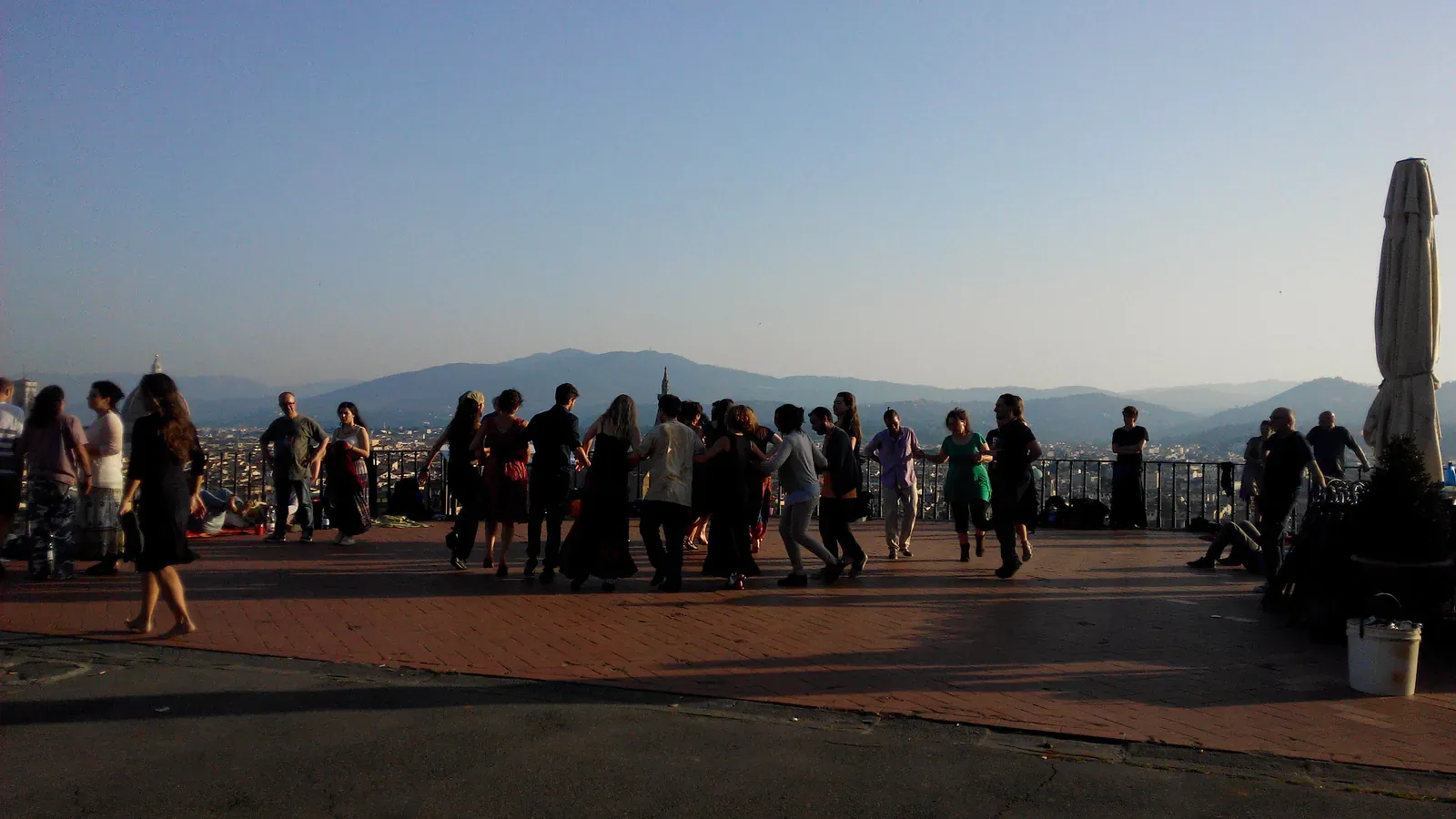
The revival bands, 1969-1979
The bands of the first decade were acoustic or folk-rock groups, and they played concerts as well as dances. Mélusine formed in May 1973 in the circle of the Paris club Le Bourdon. Its original line-up included Jean-François Dutertre, Jean-Loup Baly, Dominique Regef and Emmanuelle Parrenin, and from September 1974 it became a trio with Yvon Guilcher. The group played concerts, bals, tours and workshops for nearly two decades, took part in the emergence of the bal folk, and released its first album on Polydor in September 1975, followed by La Prison d’amour in 1976 and Lève-toi et danse in 1977. Its repertoire drew on France, Belgium, Quebec and Acadia and stayed deliberately acoustic. In 1979 Mélusine and the group La Maurache recorded Un bal renaissance.
Malicorne formed in the late summer of 1973 around Gabriel and Marie Yacoub with Laurent Vercambre and Hughes de Courson, mixing acoustic and electric guitar, hurdy-gurdy, violin, bouzouki and crumhorn. Its early albums include Almanach in 1976 and Le Bestiaire in 1979. Tri Yann, from Nantes, had its founders together by 1969 and made folk rock from traditional Breton ballads, with La Découverte ou l’Ignorance in 1976 and Les Filles des forges in 1979. Alan Stivell’s Olympia concerts of 1972 brought the Breton harp and bagpipes to a Paris stage.
Festivals and spread, 1980-2008
Bal folk moved from clubs to festivals. The Grand Bal de l’Europe, created in 1990 by the European Association of Lovers of Traditional Dances, is held each summer for fifteen days in the hamlet of Gauthiers in the commune of Gennetines, in Allier. With eight dance floors, workshops by day and bals late into the night, it is the largest traditional dance festival in Europe.
Growth was uneven. In Nouvelle-Aquitaine, interest in the local bals grew between 1975 and 1980 and dropped after 1990, though bals continue with around a hundred dancers each; they are known there as bal occitan or bal gascon. In Flemish Belgium, the organisation Boombal made the term Boombal better known in Ghent than balfolk itself.
Young audiences, 2009 to the present
The scene was once feared to be heading for disappearance. Today older dancers share the floor with a surge of young adults and students. Poitou band Ciac Boum, formed in 2009 and a reference for dancers across France and Europe, released its first album in 2010. In Brittany, the fest-noz, a night festival with group dancing and live music, was added to the UNESCO Representative List of the Intangible Cultural Heritage of Humanity on 5 December 2012. Some 1,130 fest-noz took place between October 2018 and September 2019 alone.
Characteristics
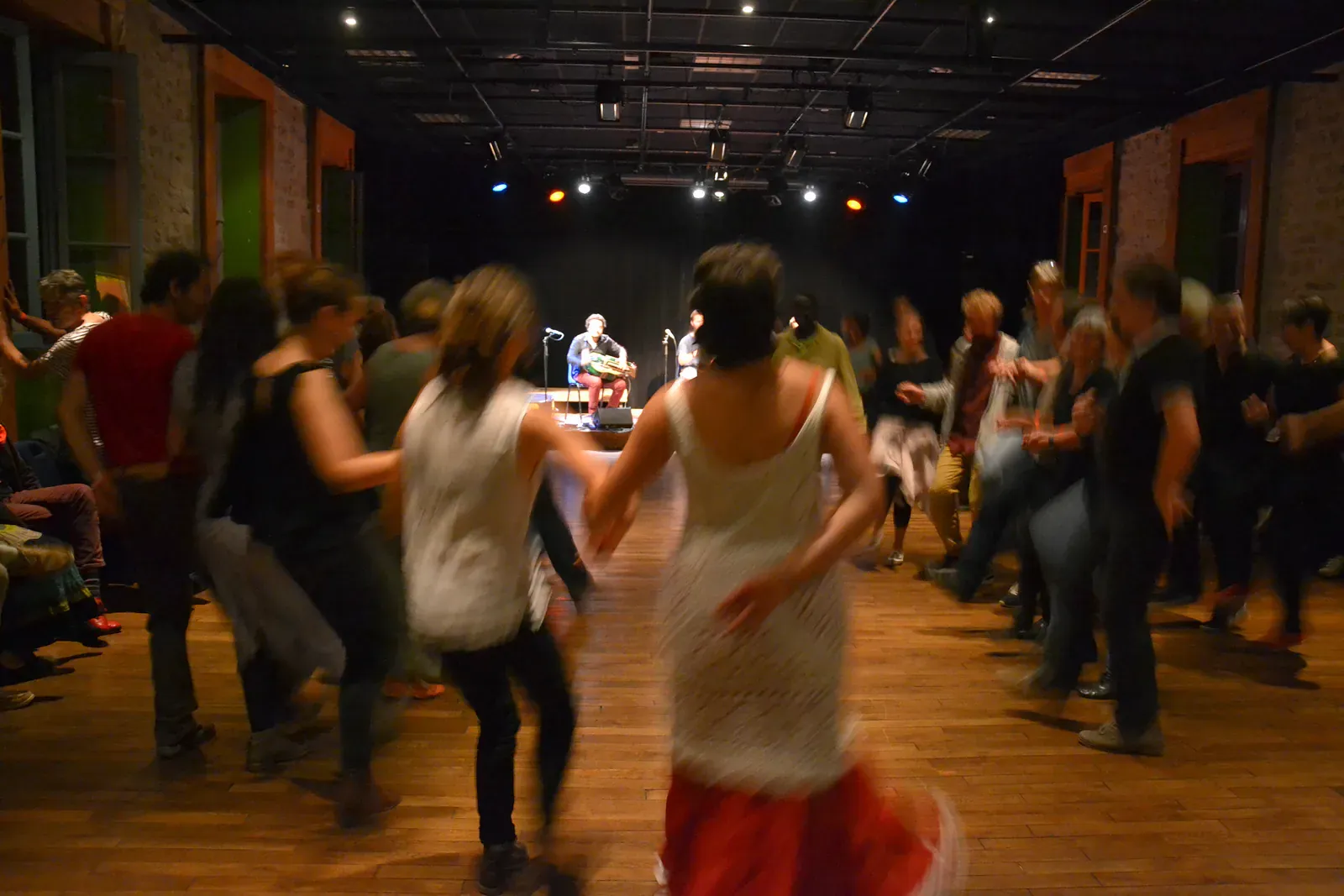
A bal folk evening has a recognisable shape. It may begin with a workshop for beginners or intermediates, often with live music. The bal follows, with one or more groups playing for dancers, and the sequence of dances is shared in advance or announced by microphone before each one. Unless the evening has a theme, such as a mazurka night, dances are alternated rather than repeated. Some evenings end with a jam, in which dancers with instruments play tunes in the middle of the floor.
Dances in the common repertoire include the schottische for couples, the bourrée in double or triple time, the waltz and the polka, the circle or line dance known as the branle, the contra dance, the Belgian or Flemish mazurka, the Scandinavian polska, the chapelloise (also called gigue) and the Circassian circle, a mixer in which partners change throughout. Breton dances such as the an dro and hanter dro are danced in lines linked by hands or little fingers. Farandoles come from Provence and rounds from Brittany, Occitania and Poitou. The metres are mostly triple (waltz, mazurka, three-time bourrée) and duple (polka, two-time bourrée).
Bal folk is not staged folk-dance presentation, which has formal choreography, regional dress and an audience kept apart. At a bal, participation matters more than refined movement, improvisation is common, and strangers may ask each other to dance.
Instruments and production
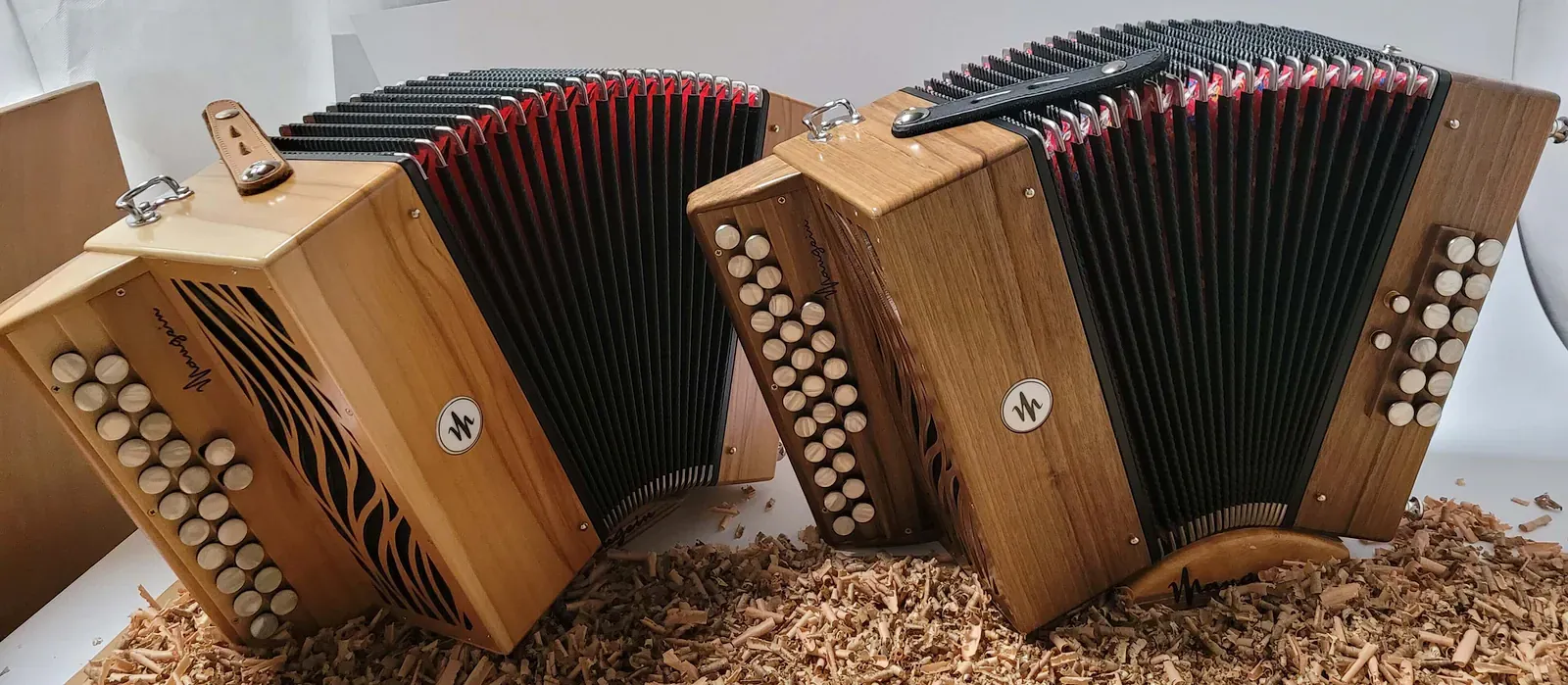
The line-up mixes traditional and modern instruments. Violin, diatonic accordion or melodeon, bagpipes, hurdy-gurdy, graïle and flutes are the traditional core, while electric and folk guitar, bass guitar, drums, brass and electronics are common additions. In central France the hurdy-gurdy and bagpipe pairing recalls instrument practice settled in the late nineteenth century. In Brittany, the older fest-noz instruments were the talabard (a shawm) and the Breton bagpipes, chosen for volume before microphones, beside the diatonic accordion and clarinet. After the Second World War the Scottish bagpipes became common there through the pipe bands called bagadoù. Singing includes the Breton kan ha diskan, a cappella call and response.
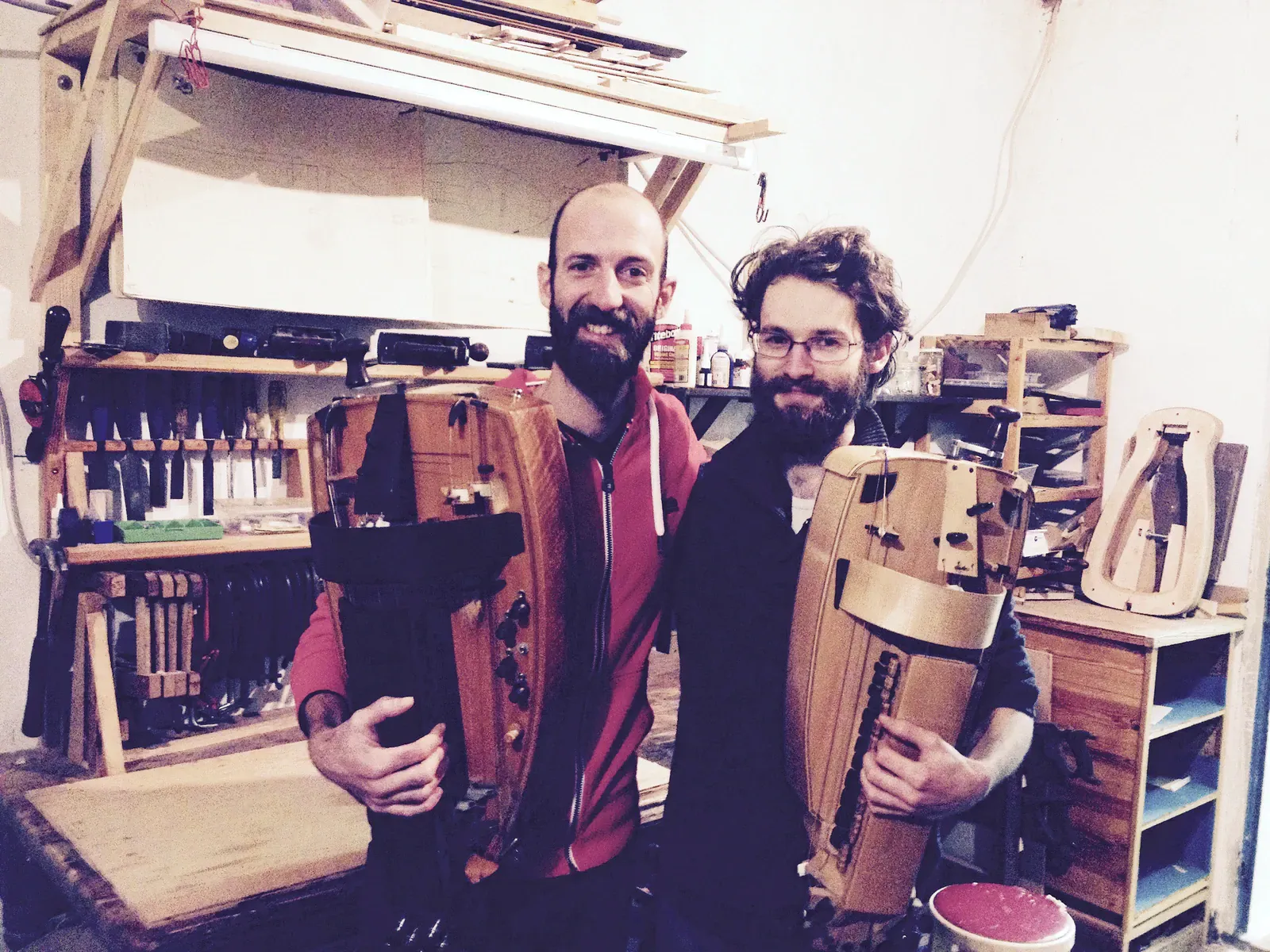
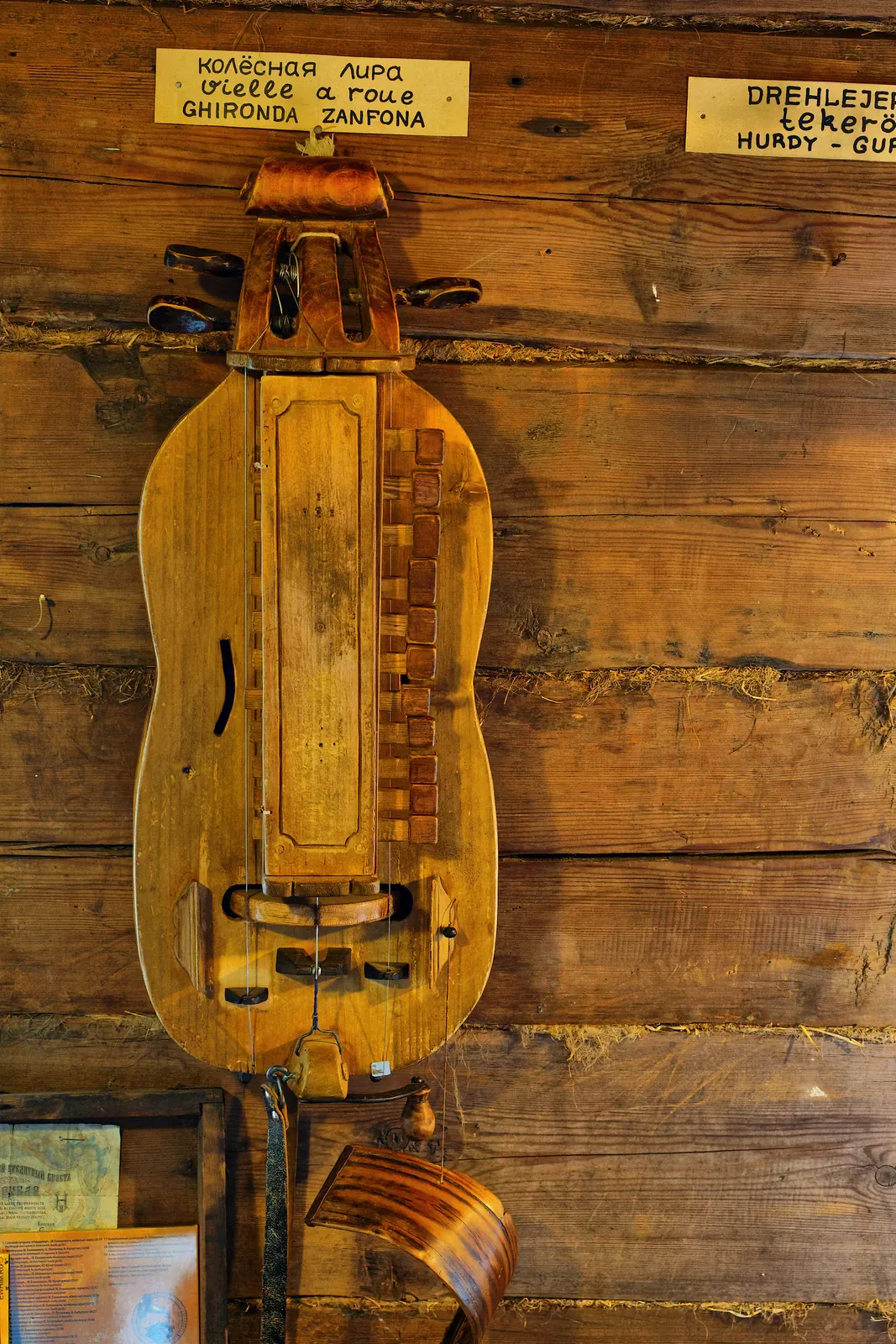
The hurdy-gurdy makes sound with a hand-cranked rosined wheel rubbed against strings, with melodies played on a keyboard of tangents. Most instruments carry several drone strings, which give an accompaniment close to a bagpipe, and a trompette string can pass over a buzzing bridge called the chien to produce a percussive buzz.
Culture
Numerous organisations arrange bals monthly, and websites and social-media groups let dancers find them. Events range from small evenings to vast outdoor gatherings, and at many folk festivals both concerts and dances are on the programme. The fest-noz in Brittany ties closely to the Breton-language revival and mostly features groups that sing in Breton. Its dances are largely traditional, some dating back to the Middle Ages.
Legacy
The movement kept a large body of dances in living use that might have passed into the archive. The Breton tradition won recognition through the UNESCO listing, and the bal has spread to the Netherlands, Germany, Spain, Portugal, Italy, Switzerland, Poland and the United Kingdom. Within the continent’s folk music, bal folk sits in the European folk family alongside the Breton and wider Celtic revival.
Misconceptions
One common idea is that bal folk is the same as folk dancing in costume. It is not: that staged form has fixed choreography, regional dress and an audience kept apart from the dancers, whereas the bal is open to anyone. A second is that the repertoire is purely ancient: the waltz, polka and mazurka entered via nineteenth-century ballrooms, and bands also write new music for dancing.
Frequently asked questions
What is bal folk?
Bal folk is a dance event and the live folk music played at it, with simple traditional dances from France and elsewhere in Europe. It is also called balfolk, folk bal and bal trad.
When did bal folk start?
It took shape in the 1970s, after May 1968, as part of the folk revival. The first event named Bal Folk in France took place in 1973 at ENSEA in Clichy, and the Paris club Le Bourdon had been holding bals since 1969.
What dances are played at a bal folk?
Common dances are the bourrée, mazurka, waltz, polka, schottische, branle, chapelloise, polska and the Circassian circle, plus Breton dances such as the an dro and hanter dro.
What is the difference between bal folk and a fest-noz?
A fest-noz is the Breton form of the bal, with mainly Breton dances and groups that sing in Breton. Bal folk is the wider term, covering French regions and other countries.
Sound
Sound sheet
Signature sounds
- Dances alternate rather than repeat, unless an evening has a theme
- Partners change between dances, and in mixers during a dance
- Acoustic folk instruments beside electric guitar, bass and drums
- Workshop, bal and jam as the shape of an evening
Techniques
- Kan ha diskan
- Drone accompaniment
- Alternating dance sets
- Post-bal jam
Vocals
Sung in French, Breton, Occitan and other regional languages, or instrumental dance sets.
Scenes
Where it happened
Where and when the sound lived: one bar per city on a shared timeline.
Europe
Active scenes
Peak 3, 1973-2025
Home of Le Bourdon, among the first clubs to hold bals folk regularly.
Where Tri Yann formed.
Site of the first event named Bal Folk, at the ENSEA school.
Venues and places
Paris, 1969 to today. Folk club that held bals folk regularly from 1969.
Clichy, 1973 to today. Engineering school that hosted the first event named Bal Folk.
Culture
Culture markers
- Asking strangers to dance
Changing partners every dance and approaching strangers is accepted practice.
Ritual - Circassian circle
Mixer in which partners change throughout the dance.
Dance - Hanter dro and an dro
Breton dances in lines or chains linked by hands or little fingers.
Dance - Fest-noz
Breton night festival tied to the Breton-language revival.
Ritual
Glossary
Terms on this page
Synonym of bal folk, not the staged presentation of traditional folk dance.
A musician or dancer who collects and transmits or recreates traditional dances.
Breton night festival with group dancing and live musicians.
Session after a bal in which dancers with instruments play tunes in the middle of the floor.
Breton a cappella call-and-answer singing used at fest-noz.
A dance in which partners change during the dance, such as the Circassian circle.
European folk family