Canadian folk music
Canadian folk music is the fiddle, song and dance tradition of French, British, Irish and Métis communities in Canada, plus the songwriters who grew from it.
Canada, 1608
Folk family
Born
1608
Canada
Subgenres
6
Documented branches
Links
3
Genres it drew on or shaped
Tempo
85-140 BPMLineage
Family tree
Grew out of
Derived from
Derived from
Canada
Canadian folk music
Led to (6)
Timeline
Era by era
From the first sparks to today. Select a dot to read the story behind it.
- Settler song
1608 to 1927
- Collectors and radio
1928 to 1959
- Revival and songwriters
1960 to 1989
- Roots bands and awards
1990 to today
Eras
Moments
- 1 Settler song, 1608 to 1927
- 2 Collectors and radio, 1928 to 1959
- 3 Revival and songwriters, 1960 to 1989
- 4 Roots bands and awards, 1990 to today
1608
Settler song
French settlers brought songs and dances from Normandy, Brittany and Poitou; Scots, Irish and English arrivals added jigs, reels and ballads, all passed on by ear.
- 1645First recorded fiddle in CanadaA fiddle is recorded at a wedding in Quebec on 27 November.
- 1865Gagnon's song collectionErnest Gagnon publishes 100 French Canadian songs, one of the first such collections printed in Canada.
1928
Collectors and radio
Helen Creighton collected songs across Nova Scotia from 1928, Edith Fowke hosted CBC Radio's Folk Song Time from 1950, and fiddle bands reached national audiences.
- 1928Creighton starts collecting in Nova ScotiaHelen Creighton begins gathering songs, tales and customs, later over 4,000 items.
- 1943Squid-Jiggin' GroundArt Scammell's song is the first hit from a Newfoundland-born performer.
- 1950Folk Song Time on CBC RadioEdith Fowke hosts the programme until 1963.
- 1959Don Messer's Jubilee beginsThe CBC television series of down-east fiddling runs to 1969.
1960
Revival and songwriters
Mariposa in 1961 and Winnipeg in 1974 started the festival circuit, while Lightfoot, Ian & Sylvia, Mitchell, Stan Rogers and the McGarrigles made Canadian songwriting known abroad.
- 1961First Mariposa Folk FestivalHeld in Orillia, Ontario, with only Canadian performers.
- 1963Four Strong WindsIan & Sylvia release Ian Tyson's first song on Vanguard; it reaches the Canadian top 10 that October.
- 1965Songs of the Newfoundland OutportsKenneth Peacock's three-volume collection becomes a source for later Newfoundland bands.
- 1974Winnipeg Folk Festival foundedStarted for Winnipeg's centennial in Birds Hill Provincial Park; it later passes 70,000 attendees.
- 1976La Bottine Souriante formsFounded in Joliette, Quebec, the band builds on boot-stomping traditional Québécois music.
- 1981Northwest PassageStan Rogers records the song a cappella, with a chorus of three voices.
1990
Roots bands and awards
Horn-driven Quebec bands, Cape Breton and Newfoundland ensembles and folk-rock acts toured widely; the Canadian Folk Music Awards began in 2005.
- 1990La Bottine adds a horn sectionA four-piece brass section joins fiddle, accordion and double bass for a jazz element.
- 2005Canadian Folk Music Awards foundedIndependent labels, presenters and artists create awards for traditional and contemporary folk.
Listening path
Start listening
A short path from an easy way in to the deep end. Thumbnails come from YouTube; the player loads only when you press play.
- 01
Ian & Sylvia, 1963
The 1963 song chosen by CBC listeners in 2005 as the greatest Canadian song.
- 02
Kate & Anna McGarrigle, 1975
Anna McGarrigle's song from the sisters' debut album.
- 03
Gordon Lightfoot, 1970
A defining singer-songwriter performance.
- 04
Stan Rogers, 1981
A cappella verses with a three-voice chorus.
- 05
The Rankin Family, 1990
Cape Breton family harmonies on a Jimmy Rankin song.
Facts
| Family | Folk |
| Origin | Canada |
| Emerged | 17th century onwards |
| Status | Active |
| Tempo | 85 to 140 BPM |
| Meter | 2/4, 4/4 and 6/8 |
| Grew out of | European folk, Celtic music |
| Subgenres | 5 |
Canadian folk music is the traditional music of the country’s settler communities, French Canadian, Acadian, Scottish, Irish, English and Métis, together with the contemporary singer-songwriters who grew out of the mid-20th-century revival.
Its core is the fiddle, accompanied by accordion, spoons and tapping feet, and songs in French and English passed on by ear. The tradition dates from the 16th and 17th centuries and was carried by Indigenous musical practice long before that.

Origins
French settlers came first. After Samuel de Champlain founded Port Royal and Québec in the early 17th century, colonists brought songs and dances from Normandy, Brittany, Poitou, Picardy and the Île-de-France. The earliest recorded fiddle in Canada appears at a Quebec wedding on 27 November 1645. Over the next two centuries Scottish, Irish and English settlers added jigs, reels and ballads in the Maritimes, Newfoundland, Ontario and the prairies, and those repertoires mixed with the French one.
A distinction runs through the field between traditional and contemporary folk. Traditional music was transmitted orally in homes, at weddings and at dances. The contemporary strand uses guitar-based song forms, often with the same material, and emerged with the revival that began after the Second World War.
Regional traditions
Quebec. Québécois music rests on jigs, reels, quadrilles, brandys and cotillions, played on fiddle, accordion, harmonica, jaw harp and spoons. Its best-known trait is podorythmie, foot tapping by seated musicians that works as a percussion line. Many tunes are crooked, with phrases of 5, 7 or 9 bars instead of the symmetrical 8 of Irish dance tunes, and syncopation falls just off the expected pulse. A collection of one hundred songs published by Ernest Gagnon in 1865 was among the first of its kind in Canada. In the 1920s and 1930s Mary Rose-Anne Bolduc, known as La Bolduc, became the first widely known Quebec singer-songwriter with comic songs in an Irish-influenced folk style.
The Maritimes. Cape Breton fiddling preserves the Scottish Highland and Hebridean style brought by emigrants during the Highland Clearances, and it is widely held that the tradition has lasted better there than in Scotland. It faced decline between the 1920s and the 1970s and returned through festivals and dance. The tradition is tied to step dancing, square dancing and Highland dancing. Helen Creighton, who began collecting in Nova Scotia in 1928, gathered more than 4,000 songs, tales and customs from Gaelic, English, German, Mi’kmaq, African and Acadian singers.
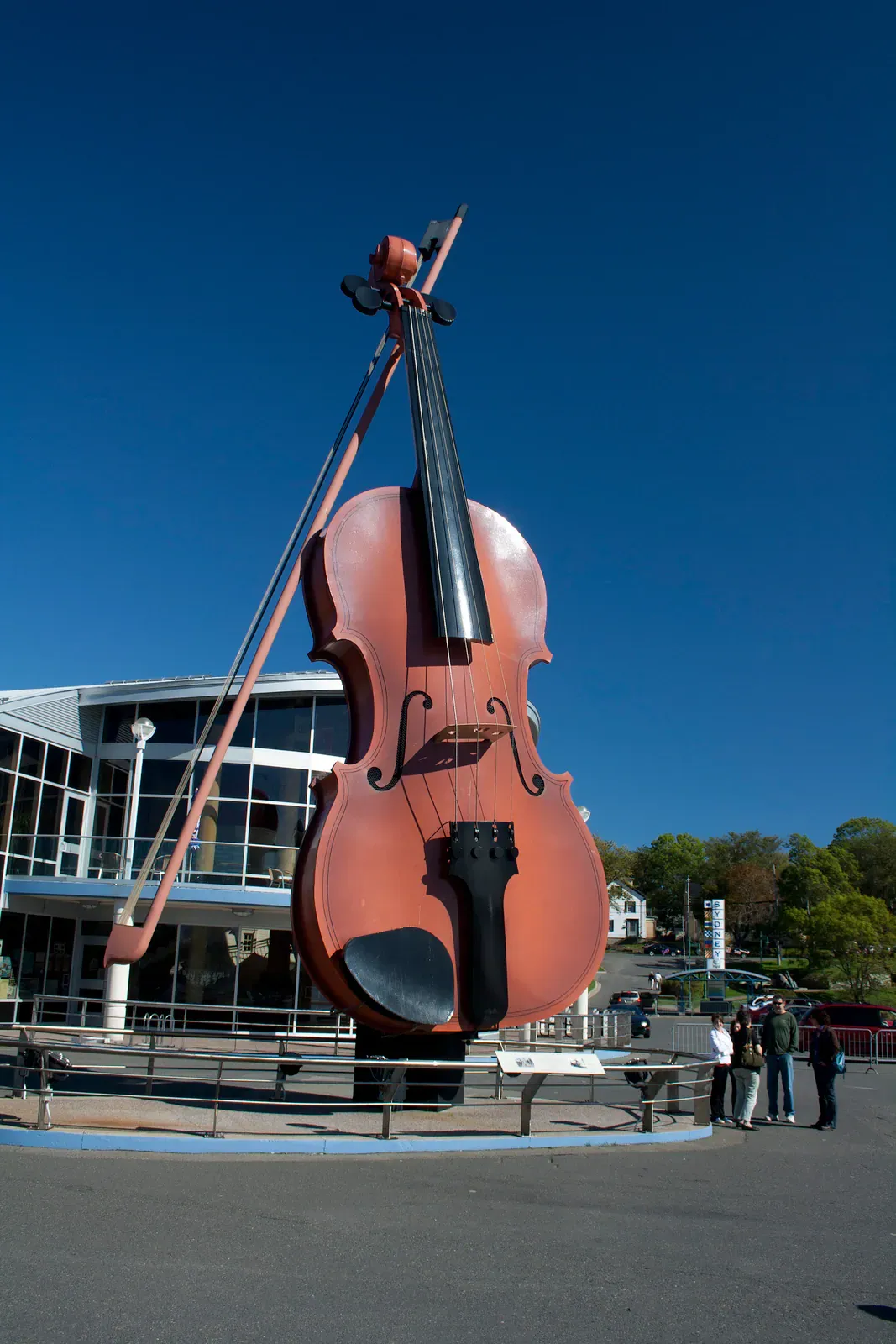
Newfoundland and Labrador. Songs here draw on Irish, English and Cornish repertoire, and the themes are the sea and outport life. Art Scammell’s Squid-Jiggin’ Ground, from 1943, was the first hit by a Newfoundland-born performer, and Otto Kelland’s Let Me Fish Off Cape St. Mary’s followed in 1947. Kenneth Peacock’s 1965 collection, Songs of the Newfoundland Outports, later gave the band Figgy Duff its material for what it called trad-rock.
The prairies. Métis fiddling blends First Nations, Scottish and French Canadian rhythms with its own beat. The Red River Jig is its central tune and is usually played in a duple meter rather than true jig time. Players choke up on the bow for a sharp bite, and the meter can change from measure to measure. The dancing, called jigging, involves precise footwork.
The revival and the singer-songwriters
Radio and print carried the tradition outward. Edith Fowke published Folk Songs of Canada with Richard Johnston in 1954 and hosted Folk Song Time on CBC Radio from 1950 to 1963. Don Messer’s Jubilee, a CBC television series of down-east fiddling and old-time songs, ran from 1959 to 1969 and was among the most popular Canadian programmes of the decade.
The festival circuit followed. The first Mariposa Folk Festival was held in Orillia, Ontario, in 1961 with only Canadian performers; after the 1963 edition drew over 8,000 advance ticket buyers the town obtained an injunction, and the festival moved around Ontario before returning in 2000. The Winnipeg Folk Festival began in 1974 for the city’s centennial and now draws more than 70,000 attendees.
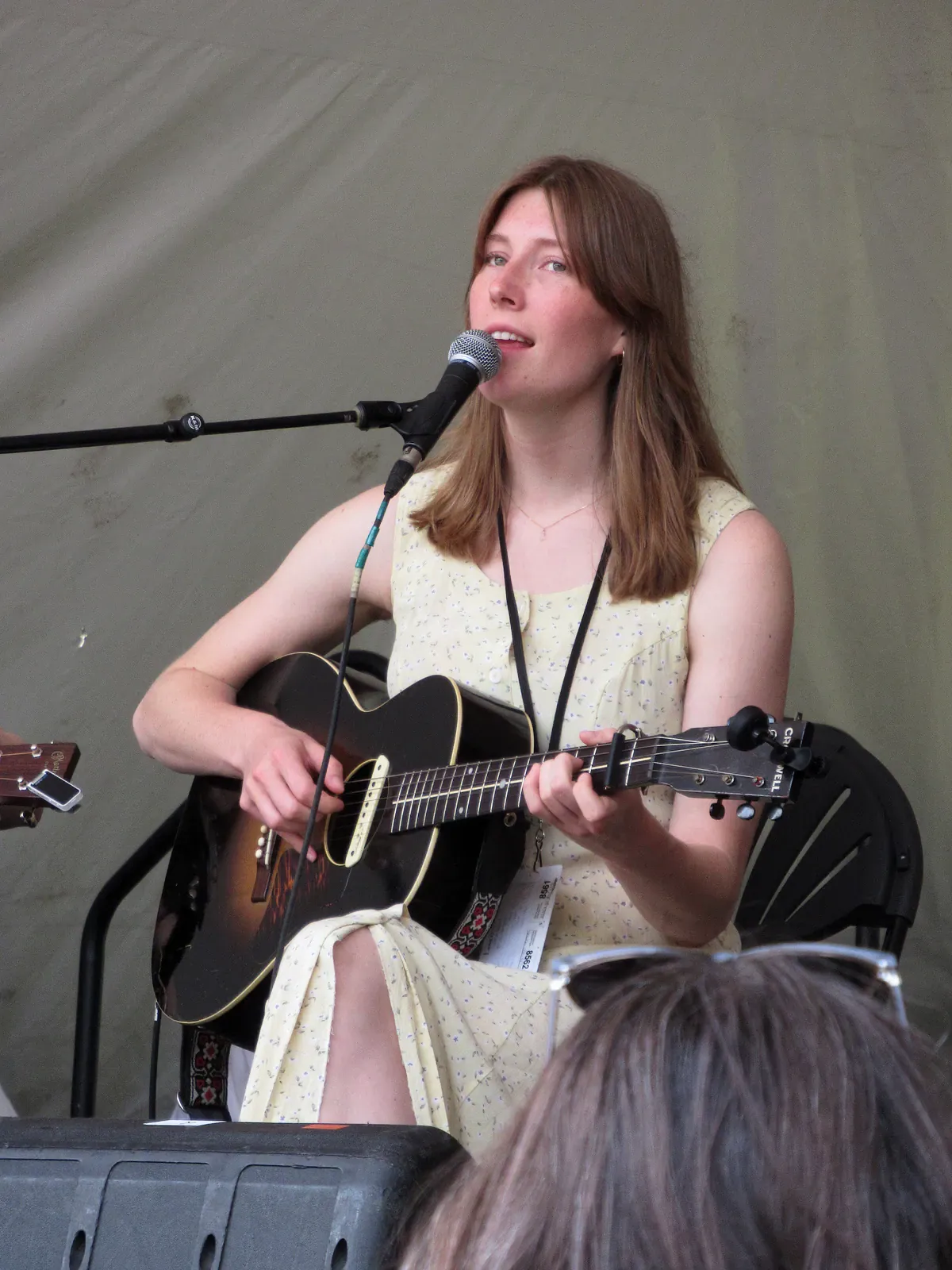
Songwriters rose with the festivals. Ian and Sylvia Tyson played together from 1959, and Four Strong Winds, released on Vanguard Records in 1963, reached the Canadian top 10 that October and was chosen by CBC listeners in 2005 as the greatest Canadian song. Gordon Lightfoot, Leonard Cohen, Buffy Sainte-Marie, Bruce Cockburn, Stan Rogers, Kate and Anna McGarrigle and the Rankin Family are among the figures of the contemporary strand. Joni Mitchell, from Fort Macleod, Alberta, recorded Clouds for Reprise in 1969.
Characteristics
The music is dance-oriented and fiddle-led, with duple and compound meters (2/4, 4/4 and 6/8) and tunes that run from slow ballads to fast reels. Measured recordings of canonical songs fall between roughly 85 and 140 beats per minute. Song lyrics concern work, travel, the sea and love, with strophic forms, group choruses and refrains that invite the audience to join. Home gatherings, where nearly everyone in the community played an instrument, were the usual setting, and the same social habit lives on in the kitchen party.
Instruments and production
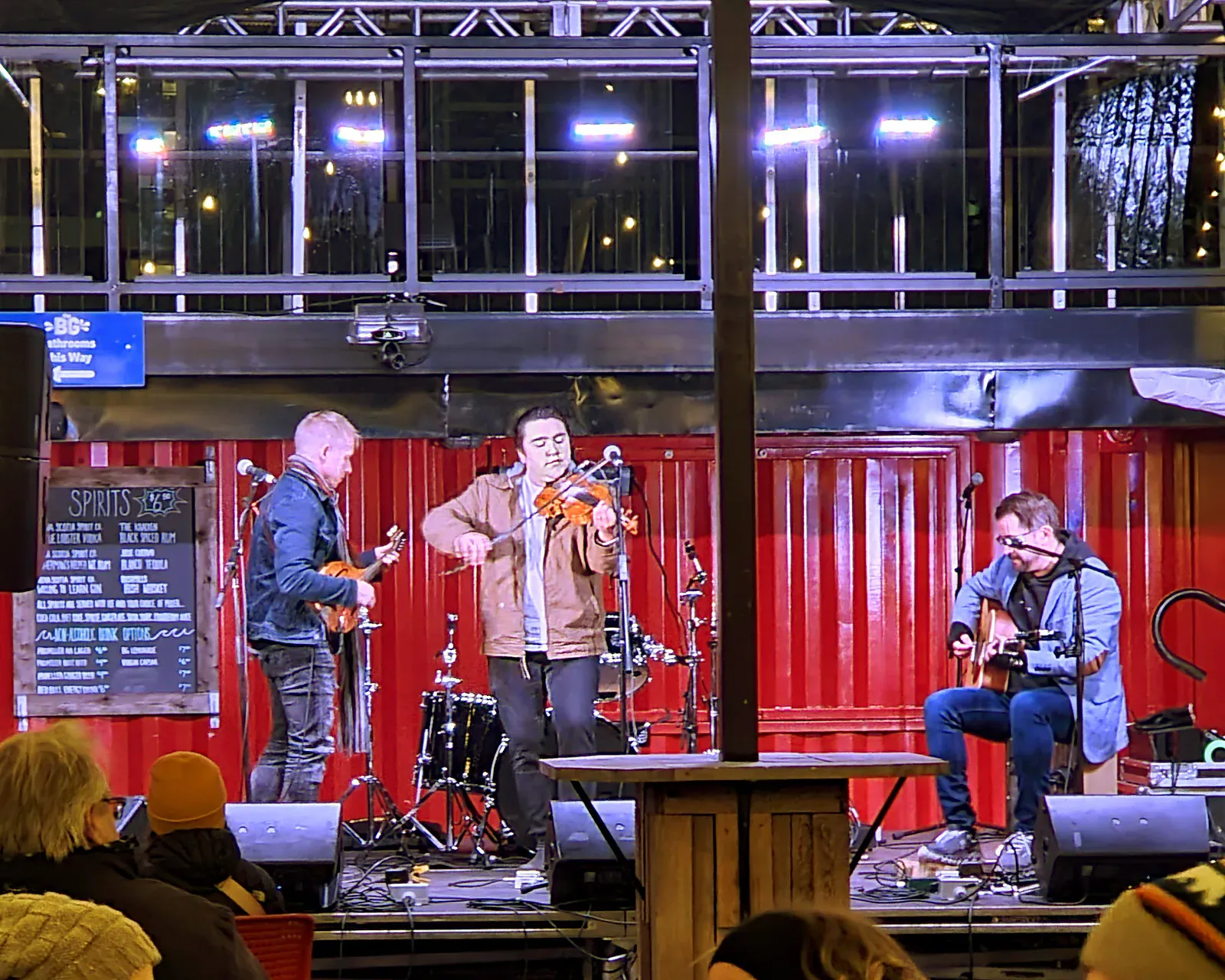
The fiddle is the principal instrument. Accordion and guitar provide chords and rhythm, spoons and the feet add percussion, and the harmonica and jaw harp appear in Quebec playing. Recordings of the songwriters tend toward a single acoustic guitar with voice; band recordings add double bass and a drum kit. In 1990 La Bottine Souriante, formed in Joliette in 1976, added a four-piece horn section to its fiddle, accordion, guitar, piano and bass line-up for a jazz element, while keeping its boot-stomping rhythm.
Mainstream success
The singer-songwriters reached the widest audiences. Lightfoot’s If You Could Read My Mind appeared in 1970, and Stan Rogers recorded Northwest Passage a cappella in 1981 with a three-voice chorus; it is often described as an alternative national anthem. Rogers died in 1983,’s Privateers, from the 1976 album Fogarty’s Cove, remains a pub favourite. The Rankin Family from Mabou, Nova Scotia, has won six Juno Awards and 15 East Coast Music Awards. Folk-rock acts such as The Band, Neil Young and Great Big Sea, the last known for rock arrangements of Newfoundland sea songs, widened the audience further.
Culture
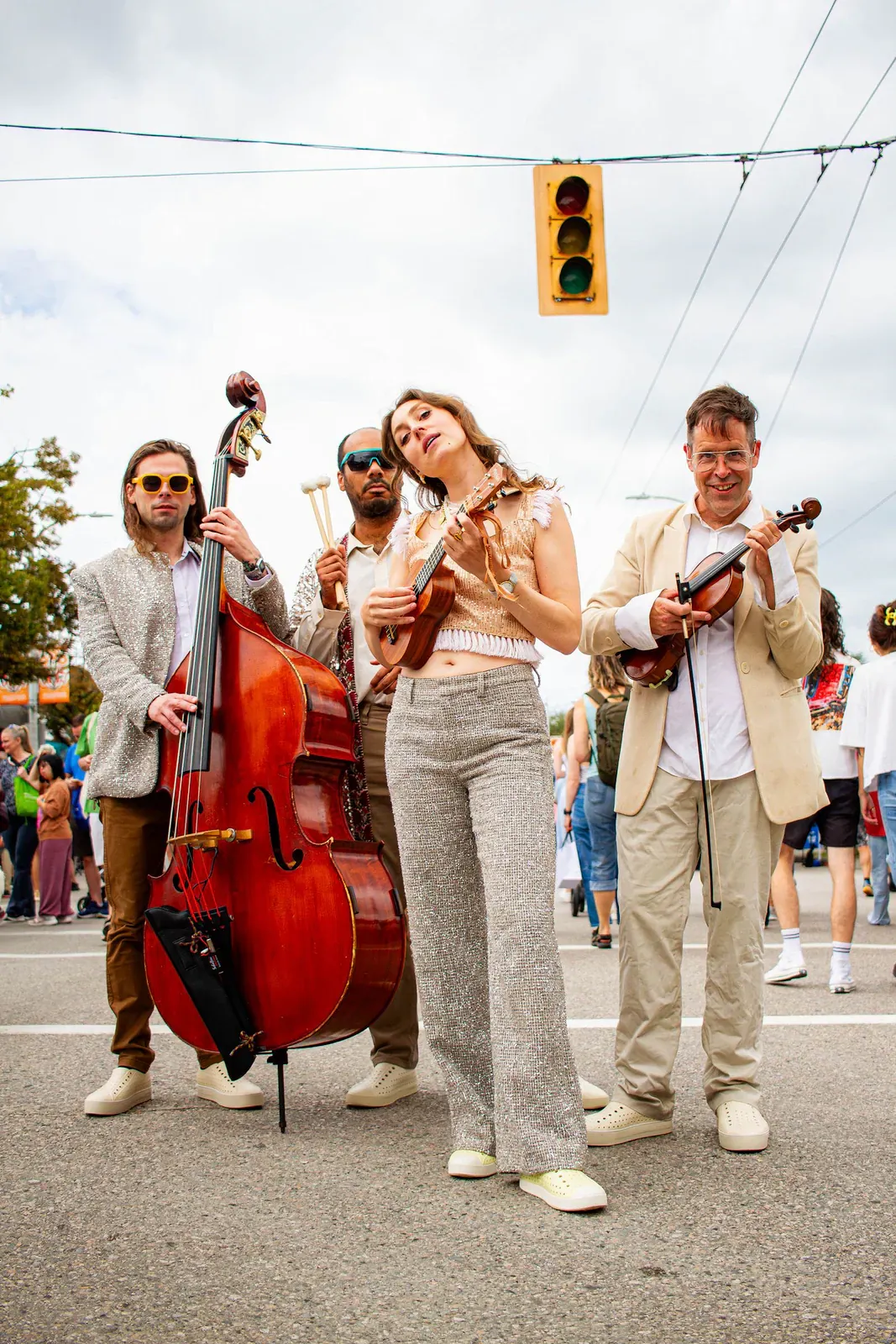
Dance carries the tradition as much as song. Métis jigging, Cape Breton step dancing and Quebec foot tapping all link the body to the fiddle. In the Maritimes and Newfoundland the kitchen party remains a social form. Since 2005 the Canadian Folk Music Awards, created by independent labels, presenters and artists, have recognised both traditional and contemporary work.
Legacy
The tradition feeds Celtic-inflected acts, folk rock and the country of Atlantic Canada, and the song archive assembled by collectors like Fowke, Creighton and Peacock remains a resource for new bands. Related pages cover the wider Folk family, Celtic music and Canadian country.
Misconceptions
One common belief is that Canadian folk is only singer-songwriter music from the 1960s. The fiddle tradition predates it by centuries, and the first fiddle on record is from 1645. Another is that it is a copy of Irish or Scottish music. Quebec’s crooked tunes, Métis rhythm and Newfoundland’s own song repertoire differ clearly from their sources. A third is that Cape Breton fiddling is a Canadian invention; it is widely considered a preserved form of Highland Scottish playing.
Frequently asked questions
What is the main instrument of Canadian folk music?
The fiddle. Its first documented use in Canada is a Quebec wedding in 1645, and it leads dance music in Quebec, the Maritimes and Métis communities.
What is podorythmie?
Podorythmie is the French Canadian method of tapping the feet while seated, common in Québécois and Acadian music and used especially during fiddle performances.
When did Canadian folk festivals begin?
The Mariposa Folk Festival began in Orillia, Ontario, in 1961, and the Winnipeg Folk Festival followed in 1974.
Which artists define contemporary Canadian folk?
Gordon Lightfoot, Joni Mitchell, Leonard Cohen, Stan Rogers, Ian and Sylvia and Kate and Anna McGarrigle are among the most widely cited, with the Rankin Family and Great Big Sea representing later Maritime acts.
Sound
Sound sheet
Signature sounds
- Seated foot percussion
- Asymmetrical phrase lengths
- Fiddle-led reels and jigs
- Unaccompanied chorus refrains
Techniques
- Podorythmie
- Crooked tunes
- Choked-bow bite
- Variable bar meter
Keys and modes
A Mixolydian and D major. The Red River Jig uses both; Cape Breton tunes also sit in G major.
Vocals
French and English songs, solo or in family and group harmony, with unaccompanied choruses in sea songs.
Scenes
Where it happened
Where and when the sound lived: one bar per city on a shared timeline.
North America
Active scenes
Peak 5, 1989-2025
Home base of the McGarrigle sisters and a chansonnier circuit.
Birthplace of La Bottine Souriante.
Host of the first Mariposa Folk Festival.
Site of the Winnipeg Folk Festival and a centre of Métis fiddling.
Hometown of The Rankin Family, in Cape Breton fiddle country.
Venues and places
Orillia, 1961 to today. Moved around Ontario after Orillia banned it in 1963, and returned in 2000.
Winnipeg, 1974 to today. Four-day July festival in Birds Hill Provincial Park.
Culture
Culture markers
- Jigging
Métis dancing to the Red River Jig, with Irish-style footwork at a high level of skill.
Dance - Cape Breton step dancing
Accompanies Scottish-derived fiddle music, alongside square and Highland dancing.
Dance - Home gatherings
Music was made in houses, where nearly everyone played an instrument.
Ritual
Media
Key media
- 1950Folk Song Time
by CBC Radio. Fowke's programme brought collected songs to a national audience.
Radio - 1954Folk Songs of Canada
by Edith Fowke and Richard Johnston. A standard printed collection, followed by volumes for Quebec.
Book - 1959Don Messer's Jubilee
by CBC. One of the most popular Canadian television programmes of the 1960s.
Radio - 1965Songs of the Newfoundland Outports
by Kenneth Peacock. Source for Figgy Duff's trad-rock.
Book
Glossary
Terms on this page
A Quebec singer-songwriter performing in the folk clubs of the mid-20th-century revival.
A Quebec dance tune with asymmetrical phrases of 5, 7 or 9 bars instead of a regular 8.
Métis step dancing performed to fiddle tunes.
French Canadian foot tapping by seated players, common in Québécois and Acadian music.
The central Métis dance tune, in duple time despite its name.
Folk family