Canadian country
Canadian country is Canada's country tradition, shaped by Maritime fiddling, Wilf Carter and Hank Snow in the 1930s and 1940s, and later pop-country stars.
Maritime Provinces, 1925
Country family

Born
1925
Maritime Provinces
Subgenres
1
Documented branches
Links
8
Genres it drew on or shaped
Tempo
80-135 BPMLineage
Family tree
Grew out of
- Appalachian music
Derived from
Influenced by
Maritime Provinces, 1925
Canadian country
Led to (1)
Timeline
Era by era
From the first sparks to today. Select a dot to read the story behind it.
- Fiddles and early radio
1925 to 1932
- Carter, Snow and Victor
1933 to 1949
- Nashville and television
1950 to 1969
- Crossover and institutions
1970 to 1989
- Pop-country stars
1990 to today
Eras
Moments
- 1 Fiddles and early radio, 1925 to 1932
- 2 Carter, Snow and Victor, 1933 to 1949
- 3 Nashville and television, 1950 to 1969
- 4 Crossover and institutions, 1970 to 1989
- 5 Pop-country stars, 1990 to today
around 1925
Fiddles and early radio
Scottish, Irish and Appalachian tunes took root in the Maritimes, Ontario and British Columbia. Fiddlers such as Don Messer and George Wade spread the style on radio from the late 1920s.
- 1929Carter's first radio broadcastWilf Carter performs on CFCN in Alberta, then on CFAC and nationally on the CRBC.
1933
Carter, Snow and Victor
Wilf Carter's 1933 records for RCA Victor's Canadian arm made the first Canadian country hit. Hank Snow signed with the same company in 1936.
- 1933My Swiss Moonlight LullabyCarter's first recording becomes the first hit record by a Canadian country performer, on the Canadian branch of RCA Victor.
- 1934Montana Slim on CBSCBS renames Carter Montana Slim for American listeners and gives him a New York radio show that runs to 1940.
- 1936Snow signs with RCA Victor CanadaHank Snow auditions in Montreal and gets a recording contract, then builds a weekly CBC radio show.
- 1949Snow moves to NashvilleHe records for RCA Victor as the Singing Ranger.
1950
Nashville and television
Snow's Opry debut and chart run took Canadian country south, while CBC shows such as Don Messer's Jubilee and Singalong Jubilee made it national at home.
- 1950I'm Moving On tops the country chartAfter his Grand Ole Opry debut, the song stays at number one for 21 weeks.
- 1959Don Messer's Jubilee begins on CBCThe down-east fiddle show runs until 1969 and becomes one of Canada's most popular programmes.
- 1961Singalong Jubilee beginsThe CBC show from Halifax runs to 1974 and features Anne Murray and Gene MacLellan.
- 1963Four Strong WindsIan and Sylvia record the Alberta song Ian Tyson wrote in 1961; it later becomes an unofficial Alberta anthem.
- 1967Stompin' Tom is namedOn 1 July, Canada's centennial, a Peterborough waiter introduces Tom Connors as Stompin' Tom and the name is registered a week later.
1970
Crossover and institutions
Anne Murray's Snowbird crossed to American pop charts in 1970, the Canadian Country Music Association formed in 1976, and a Toronto roots scene grew around Queen Street West.
- 1970Snowbird goes gold in the USAnne Murray's single reaches number 8 on the Billboard Hot 100 and is certified gold.
- 1976Country music association foundedThe group is formed after a 1973 meeting at the Horseshoe Tavern and later becomes the Canadian Country Music Association.
- 1982First Canadian Country Music AwardsThe association holds its first awards ceremony.
- 1985Blue Rodeo's first showThe band plays The Rivoli in Toronto on 8 February, a week before they play Handsome Ned's Honky Tonk Heart night.
1990
Pop-country stars
Shania Twain's mid-1990s albums made Canadian country a global pop force, and later acts such as Paul Brandt, Dean Brody and Brett Kissel work mainly in a country-radio format.
- 1997Come On OverShania Twain's third album becomes the best-selling country album ever and the best-selling album by a Canadian.
Listening path
Start listening
A short path from an easy way in to the deep end. Thumbnails come from YouTube; the player loads only when you press play.
- 01
Hank Snow, 1950
The record that took Canadian country to the top of the US chart; listen for the clear, unforced delivery.
- 02
Stompin' Tom Connors, 1969
A plain-spoken Canadian story song driven by acoustic guitar and a stomped beat.
- 03
Anne Murray, 1970
The crossover hit that put a Canadian country-pop voice on the US pop top ten.
- 04
Shania Twain, 1999
The pop-country peak: country instruments under rock production and a global audience.
Facts
| Family | Country |
| Origin | Maritime Provinces, Canada |
| Emerged | 1920s to 1930s |
| Status | Active |
| Tempo | 80 to 135 BPM |
| Meter | 4/4 |
| Grew out of | Appalachian music |
| Subgenres | 1 |
Canadian country is the country music tradition of Canada, which took shape from the 1920s in the Maritime provinces, Ontario, Alberta and British Columbia.
It grew from Scottish, Irish and Appalachian settler music and country blues, and it is marked by fiddle heritage, a clearer and less nasal singing voice, and a long attachment to ballads and story songs. It is a regional variant of the country family with its own stars, television shows and trade bodies.
Origins
Parts of Ontario, British Columbia and the Maritimes shared a musical inheritance with the Appalachian region: largely Scottish and Irish, with a strand of African American country blues. Country caught on quickly there. Fiddlers such as Don Messer and George Wade helped popularise the style on radio from the late 1920s.
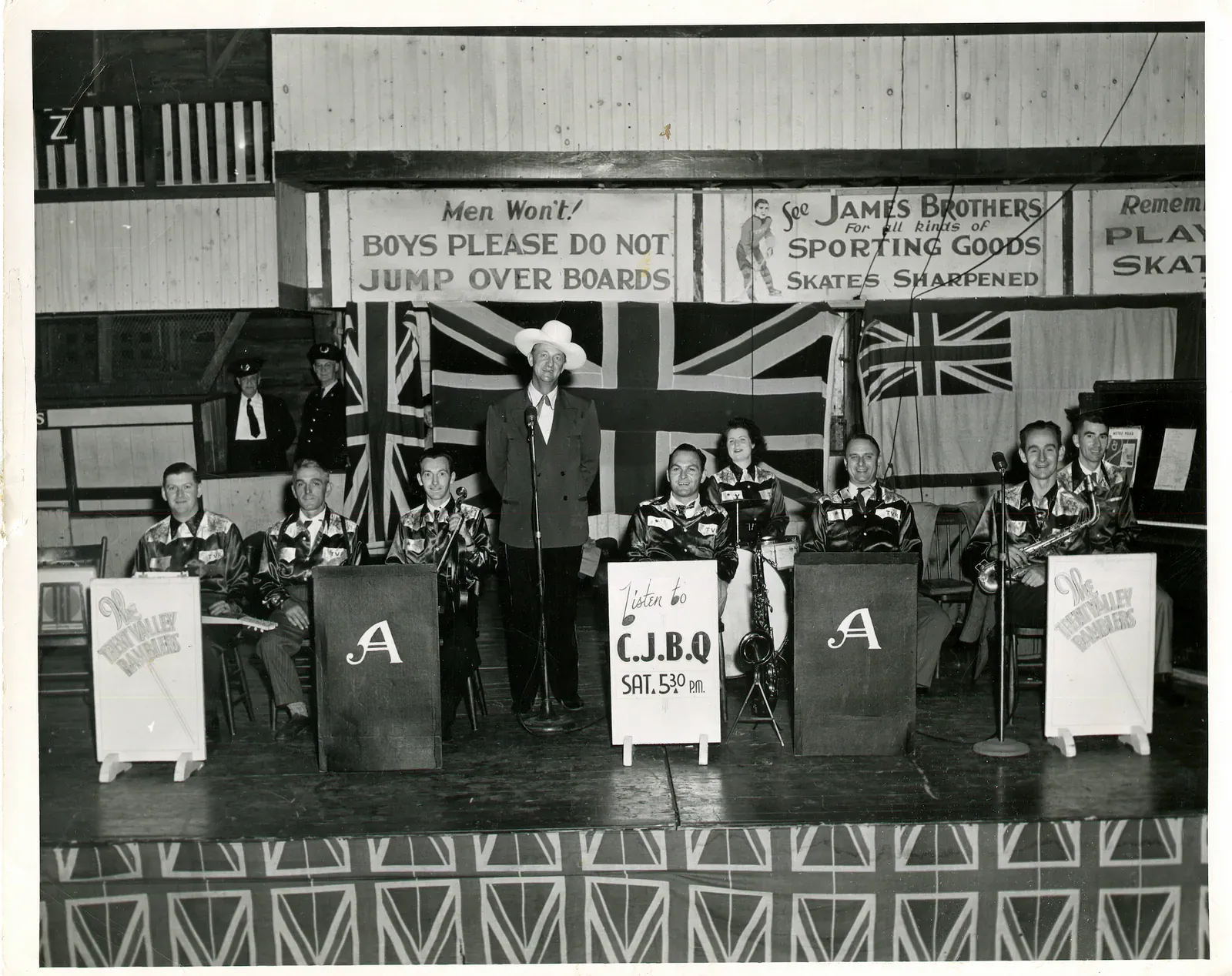
The break into recording came through Alberta. Wilf Carter gave his first radio broadcast on CFCN in 1929, then appeared locally on CFAC and nationally on the CRBC, and worked as a trail rider and entertainer for the Canadian Pacific Railway in the Rockies. Victor Records, the label behind much early country, signed Wade, Hank Snow and Hank LaRiviere after Carter’s success.
Carter, Snow and Victor, 1933-1949
Carter recorded for the first time in Montreal in 1933. After he signed with the Canadian branch of RCA Victor, “My Swiss Moonlight Lullaby” became the first hit record by a Canadian country performer. That year he also wrote and recorded “Pete Knight, The King of the Cowboys”, another hit. From 1934 to 1940 he hosted his own CBS country radio programme in New York, where the network billed him as Montana Slim to suit American listeners. A 1940 car accident in Montana kept him off stage for much of the next decade. He is widely called the father of Canadian country music.
Snow auditioned for the Canadian division of RCA Victor in Montreal in 1936 and won a contract. His weekly CBC radio show and touring made him a national figure, and by the late 1940s his records were reaching American country stations. Carter, Snow and contemporaries such as Otto Wilke, Earl Heywood and Stu Davis used a more distinctly pronounced, less nasal vocal than American country and kept to traditional ballads and narratives while US country moved toward songs about bars and quarrelling lovers. The style stayed very popular in Canada for decades.
Nashville and television, 1950-1969
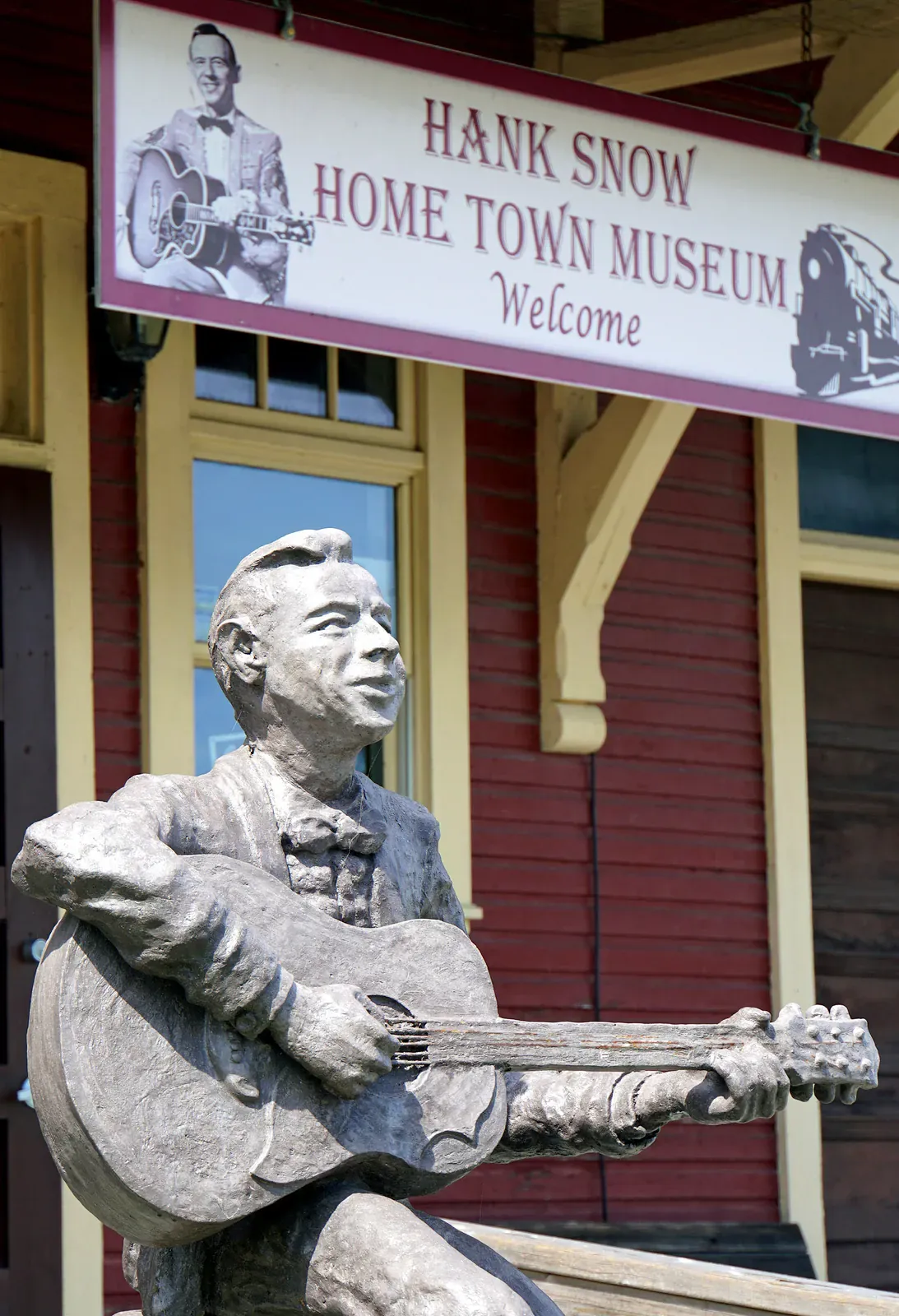
Snow moved to Nashville in 1949 and recorded as the Singing Ranger. His 1950 Grand Ole Opry performance brought wide attention, and “I’m Moving On” held the top of the US country chart for 21 weeks. “The Golden Rocket” and “The Rhumba Boogie” also reached number one, and his version of Geoff Mack’s “I’ve Been Everywhere” popularised that song in North America. He charted more than 85 country singles between 1950 and 1980.
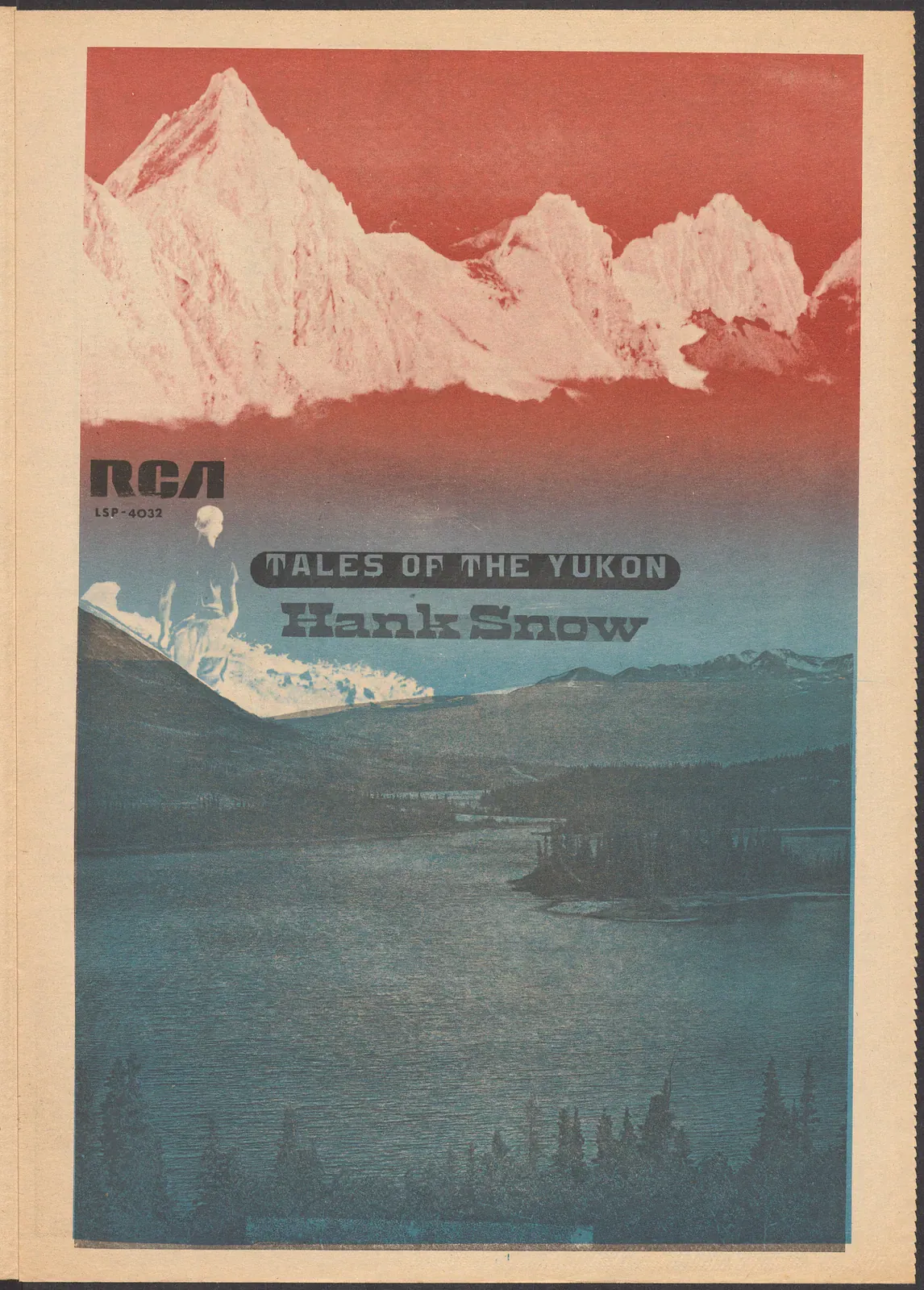
At home, television did the work radio had begun. Don Messer’s Jubilee ran on CBC from 1959 to 1969 and put down-east fiddling in front of a national audience. Singalong Jubilee, made in Halifax from 1961 to 1974, gave early exposure to Anne Murray and the songwriter Gene MacLellan. In 1963 Ian and Sylvia recorded “Four Strong Winds”, which Ian Tyson had written two years earlier and which became an unofficial anthem of Alberta.
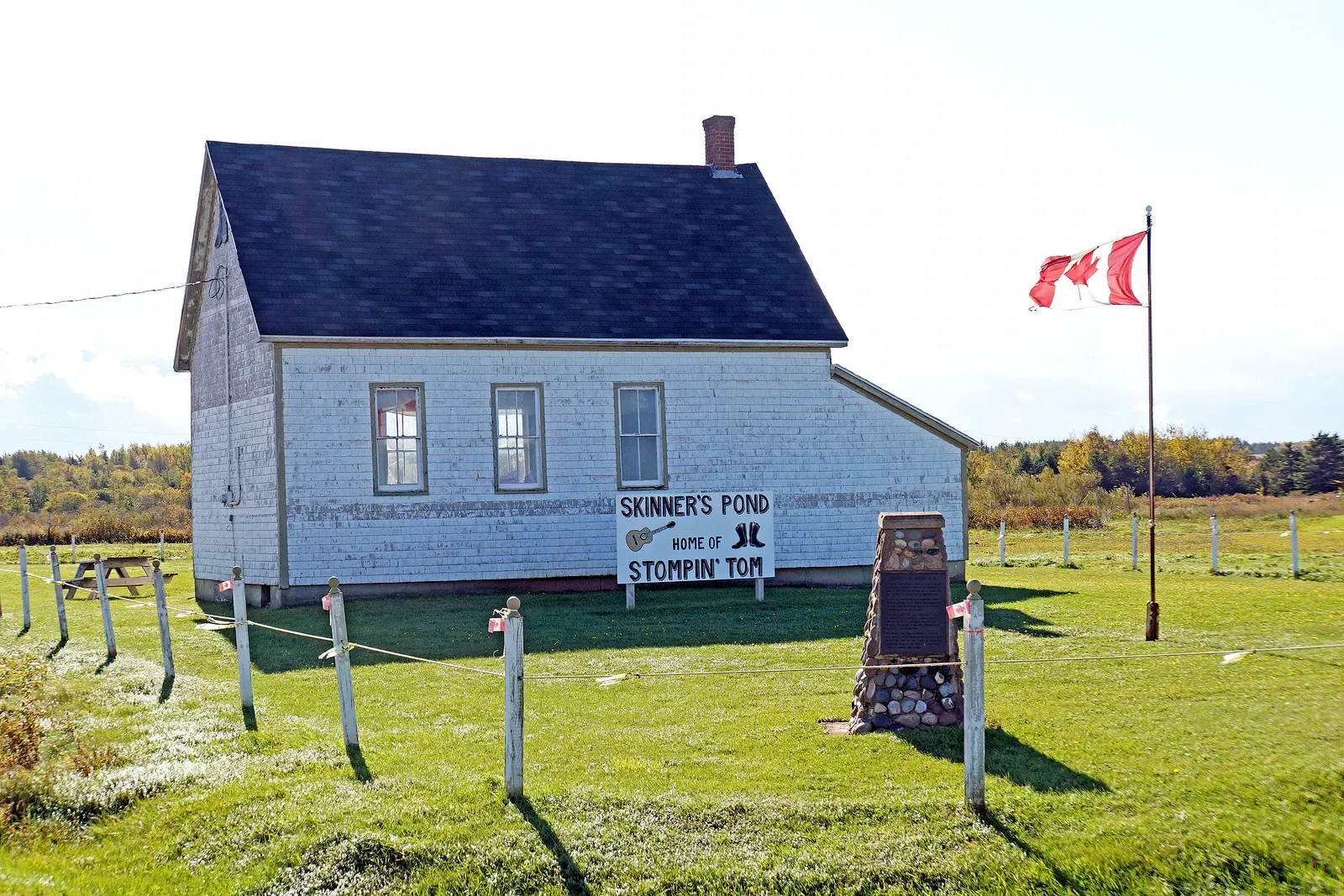
Stompin’ Tom Connors turned the decade’s close into a nationalist moment. After a long period of hitchhiking and odd jobs he landed a residency at the Maple Leaf Hotel in Timmins, Ontario. He was introduced as Stompin’ Tom at a Peterborough tavern on Canada’s centennial, 1 July 1967, and registered the name a week later. His songs of Canadian places and people, among them “Bud the Spud”, reached record shops from 1969.
Crossover and institutions, 1970-1989
Murray’s “Snowbird”, written by MacLellan, reached number 8 on the Billboard Hot 100 in 1970, topped the Canadian country chart and won a gold certificate in the United States. Murray went on to sell more than 55 million albums while charting on pop and country lists at once.
The industry built its own structures in the same years. A group of entertainers, promoters and broadcasters met at the Horseshoe Tavern in Toronto on 3 June 1973, and the body they formed became the Canadian Country Music Association in 1976, then took that name in 1987. The first Canadian Country Music Awards followed in 1982. Toronto’s Queen Street West produced a further branch. Handsome Ned, a Toronto singer who died in 1987, is credited with starting an early-1980s revival of country and roots rock that paved the way for Blue Rodeo, Prairie Oyster, Skydiggers and Cowboy Junkies. Blue Rodeo played their first show at the Rivoli on 8 February 1985, and “Try” from the debut album Outskirts followed in 1987.
Pop-country stars, 1990-present
Shania Twain, who grew up in Timmins, signed with Mercury Nashville in the early 1990s. After her debut sold poorly in 1993, she worked with producer Robert John “Mutt” Lange on The Woman in Me (1995) and Come On Over (1997). The latter has sold more than 40 million copies and is the best-selling country album and the best-selling album by a Canadian. It mixes acoustic guitars, fiddles and pedal steel with rock riffs.
Later country-radio acts include Paul Brandt, Dean Brody, Brett Kissel and Jess Moskaluke, and a small Francophone scene sings in the joual dialect.
Characteristics
The vocal style is the most consistent marker: clear and distinctly pronounced rather than nasal. Lyrics lean toward narrative ballads and place-bound stories, from Carter’s cowboy and mountain songs to Connors’ portraits of Canadian towns and work. Yodelling, a Carter trademark, is the heritage of the early cowboy repertoire. Typical recordings run from about 80 to 135 beats per minute.
Instruments and production
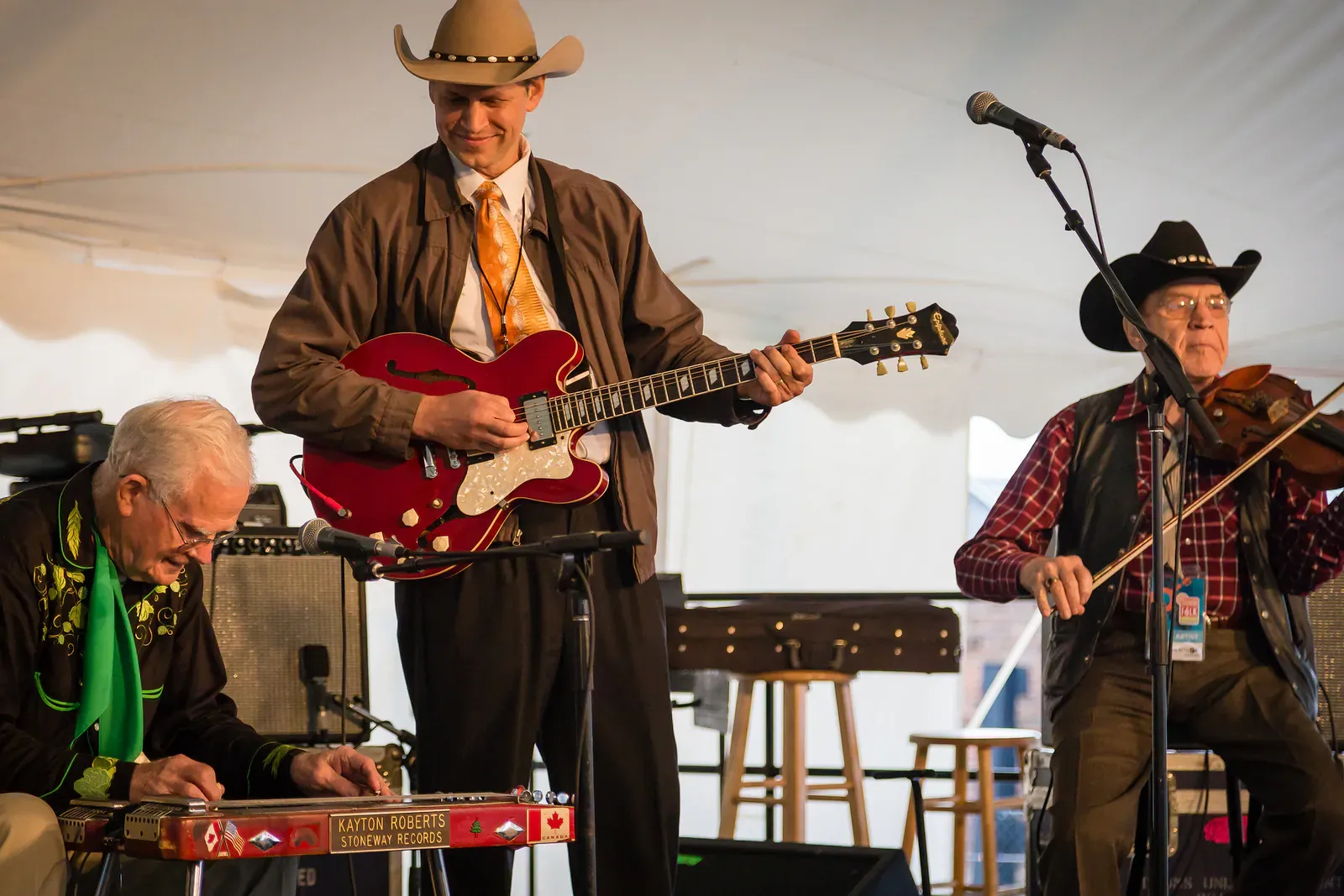
The fiddle carries the Celtic and down-east dance inheritance, as in Messer’s band. Acoustic guitar anchors the singer-songwriters: Connors played a Gibson Southern Jumbo that he bought in Ohio in 1956. In the pop-country period, pedal steel and electric guitar sit under producer-led arrangements.
Mainstream success
Canadian country has crossed over more than once. Snow’s 1950s chart run made him a Nashville fixture, and he later entered the Country Music Hall of Fame as well as its Canadian counterpart. Murray’s 1970 hit opened pop radio to Canadian country-pop, and Twain’s late-1990s albums made the sound a global product.
Notable recordings
“My Swiss Moonlight Lullaby” (1933) marks the start of Canadian country on record: Carter wrote it and cut it in Montreal.
“I’m Moving On” (1950) made Snow a star in the United States, with 21 weeks at number one.
“Bud the Spud” (1969) shows the other pole of the genre, a plain-spoken story song driven by acoustic guitar and a stomped beat, and it became Connors’ signature.
Culture
Connors gave the tradition its best-known ritual. He stamped on a plywood board to keep time in noisy bars, sometimes held up a board with a hole in it for the audience, and auctioned boards for charity. His “The Hockey Song” is played at NHL games, including every Toronto Maple Leafs home game.
Legacy
The tradition left a standard route for later performers: radio and television at home, a record deal, then a move south. Carter influenced Ian Tyson and mentored Stu Davis, and Snow’s songs have been covered by artists from Elvis Presley to Johnny Cash. Toronto’s roots-country wave fed the alternative-country scene, and pop-country, with Twain as its largest figure, became the form that reaches most listeners today. Related styles include country pop, country rock and honky-tonk, and the Celtic roots are covered in Celtic music. The early records came from RCA Records and Capitol Records.
Misconceptions
Canadian country is not simply American country sung in Canada. The two share roots, but the Canadian line, led by Carter and Snow, kept the ballad and narrative repertoire when American country moved toward barroom and relationship songs. It is also not only a small-town or rural sound: Toronto’s Queen Street West scene drove the roots revival of the 1980s.
Another myth is that Shania Twain was the first Canadian country star. Carter’s 1933 records and Snow’s chart run in the 1950s came more than 40 years earlier, and Anne Murray had already crossed over in 1970.
Frequently asked questions
What is Canadian country music?
Canadian country music is country music made in Canada. It draws on Scottish, Irish and Appalachian traditions and country blues, and it is known for a clear vocal style, ballads and fiddle.
Who was the first Canadian country star?
Wilf Carter is widely called the father of Canadian country music. His 1933 record “My Swiss Moonlight Lullaby” was the first hit by a Canadian country performer.
Which Canadian country artist sold the most records?
Shania Twain, whose album Come On Over has sold more than 40 million copies, is the best-selling female artist in country music history.
What is the Canadian Country Music Association?
The Canadian Country Music Association is the trade body formed in 1976 after a 1973 meeting in Toronto. It has held the Canadian Country Music Awards since 1982.
Sound
Sound sheet
Signature sounds
- Clear, less nasal vocal with distinct pronunciation
- Traditional ballad and narrative lyrics
- Fiddle or acoustic guitar over a steady backbeat
- Yodelling in the early cowboy repertoire
Techniques
- Yodelling
- Foot stomping for time
- Down-east fiddling
- Narrative ballad singing
Keys and modes
Major keys on guitar. Key readings for Bud the Spud (E), The Hockey Song (C) and Four Strong Winds (G) sit in common guitar keys.
Vocals
A clearer, less nasal and more distinctly pronounced delivery than American country.
Scenes
Where it happened
Where and when the sound lived: one bar per city on a shared timeline.
North America
Active scenes
Peak 4, 1973-2025
Home of Wilf Carter's first radio broadcast on CFCN and later of the Canadian Country Music Hall of Fame collection.
CBC's Singalong Jubilee studio, where Anne Murray and Gene MacLellan became regulars.
Queen Street West hosts the 1980s roots-country revival and the 1973 meeting that led to the country music association.
Stompin' Tom Connors' hotel residency began here, and Shania Twain grew up in the town.
Venues and places
Toronto, 1947 to today. Queen Street West tavern open since 1947 that hosted the 1973 founding meeting and Connors' 1971 live album.
Timmins, 1964 to today. Where Connors played a 14-month run after a bartender asked him for a few songs.
Toronto, 1985 to today. Blue Rodeo played its first show here on 8 February 1985.
Culture
Culture markers
- Stompin' board
Connors stomped a plywood board to keep time and held up the holed board to joke with audiences.
Ritual - The Hockey Song at the arena
Connors' song plays at NHL games, including every Toronto Maple Leafs home game.
Ritual
Media
Key media
- 1989The Ballad of Handsome Ned
by Handsome Ned. Archival release by the Toronto singer credited with starting the city's country revival.
Compilation
Glossary
Terms on this page
Canadian content rules that require broadcasters to play a set share of Canadian-made music.
The Maritime dance-fiddle style popularised by Don Messer and His Islanders.
The plywood sheet Stompin' Tom Connors stamped on to keep tempo.
A vocal break between chest and head voice, the trademark of Wilf Carter's cowboy songs.
Country family