Christian country
Christian country is country music with Christian lyrics, grown from gospel numbers on country shows, sold as a format after the Mercy River Boys' 1979 debut.
Southern United States, 1950
Country family
Born
1950
Southern United States
Subgenres
1
Documented branches
Links
9
Genres it drew on or shaped
Tempo
75-160 BPMLineage
Family tree
Timeline
Era by era
From the first sparks to today. Select a dot to read the story behind it.
- Gospel on country stages
1950 to 1971
- Quartets cross over
1972 to 1978
- A marketed format
1979 to 1999
- Hit songs and hymn albums
2000 to today
Eras
Moments
- 1 Gospel on country stages, 1950 to 1971
- 2 Quartets cross over, 1972 to 1978
- 3 A marketed format, 1979 to 1999
- 4 Hit songs and hymn albums, 2000 to today
around 1950
Gospel on country stages
Country shows closed with gospel numbers: The Tennessee Ernie Ford Show and Ozark Jubilee did so from 1956 to 1960, and Hee Haw later followed. The International Country Gospel Music Association formed in 1957.
- 1956Gospel closes network country showsFrom 1956 to 1960 The Tennessee Ernie Ford Show and Red Foley's Ozark Jubilee usually ended with a gospel number that viewers liked.
- 1957International Country Gospel Music Association foundedThe oldest of the Christian country organizations, formed to further artists' careers as the GMA, NARAS or CMA did for their fields.
- 1968Johnny Cash releases Daddy Sang BassThe gospel-flavoured single came out in November 1968.
1972
Quartets cross over
Gospel quartets reached country charts: the Oak Ridge Boys charted with Johnny Cash in 1972 and turned to country by 1977, while Dolly Parton and Kris Kristofferson placed devotional songs on the mainstream charts.
- 1972Oak Ridge Boys chart with Johnny CashThe gospel quartet joined Cash and the Carter Family on Praise the Lord and Pass the Soup, their first country chart entry.
- 1973Kristofferson's Why MeOne of the gospel and Christian-themed songs that earned mass mainstream appeal.
- 1975Dolly Parton releases The SeekerA devotional song that reached a mainstream country audience.
- 1977Oak Ridge Boys break through in countryY'all Come Back Saloon, their first ABC Records album, made them a country act while they kept religious material in their shows.
1979
A marketed format
The Mercy River Boys' 1979 debut Breakout on Canaan Records established a distinct Christian country product. Cristy Lane's One Day at a Time followed in 1980, and The Country Gospel Countdown began broadcasting in 1984.
- 1979Mercy River Boys release BreakoutTheir Canaan Records debut, a Grammy nominee, firmly established Christian country as a genre.
- 1980Cristy Lane's One Day at a TimeA gospel-themed song that earned mass mainstream appeal.
- 1984The Country Gospel Countdown beginsThe radio program began broadcasting in 1984 and was syndicated from 1988.
2000
Hit songs and hymn albums
Randy Travis, Josh Turner, Carrie Underwood and Brad Paisley took faith songs to the top of mainstream country charts, and Alan Jackson's hymn album Precious Memories topped three Billboard charts in 2006.
- 2002Randy Travis releases Three Wooden CrossesLead single of Rise and Shine; the song became a mainstream hit in 2003.
- 2005Carrie Underwood releases Jesus, Take the WheelSingle from Some Hearts, released in October 2005.
- 2006Alan Jackson's Precious Memories tops three chartsThe hymn album, released 28 February 2006, topped Top Country Albums, Top Christian Albums and Top Christian and Gospel Albums in its first week.
Listening path
Start listening
A short path from an easy way in to the deep end. Thumbnails come from YouTube; the player loads only when you press play.
- 01
Dolly Parton, 1975
A devotional song that reached mainstream country listeners in the mid-1970s.
- 02
Randy Travis, 2002
A storytelling gospel song that became a mainstream country hit.
- 03
Josh Turner, 2003
A warning-song hit built on a deep baritone voice.
- 04
Carrie Underwood, 2005
A faith-themed single that earned mass mainstream appeal.
- 05
Alan Jackson, 2006
A classic hymn from the Precious Memories project in a live arrangement.
Christian country is country music whose lyrics express Christian belief and give listeners a faith-based alternative to mainstream country. It is also sold as country gospel, gospel country, positive country or inspirational country.
It grew in the American South from the hymns and gospel numbers that country stars recorded and performed from the 1950s, and it became a marketed format after the Mercy River Boys released their debut album in 1979. It counts as a form of both gospel and country.
Origins
Country music and gospel shared a region, a vocal tradition and a congregation long before anyone sold the combination as a genre. Southern gospel quartets sing four-part harmony with a high tenor and baritone, and their repertoire of hymns and devotional songs supplied much of what country artists later recorded. Hymnody and gospel are the older streams. Christian country is the point where they run through country instrumentation and country performers.
The commonest theme is praise, worship or thanks to God and to Christ. The music is composed and performed for several purposes: aesthetic pleasure, religious or ceremonial use, or as an entertainment product for the marketplace. Definitions shift with culture and social context, so the label covers a wide range, from a hymn sung with a piano and a guitar to a radio single built for the country charts.
Gospel on country stages, 1950-1971
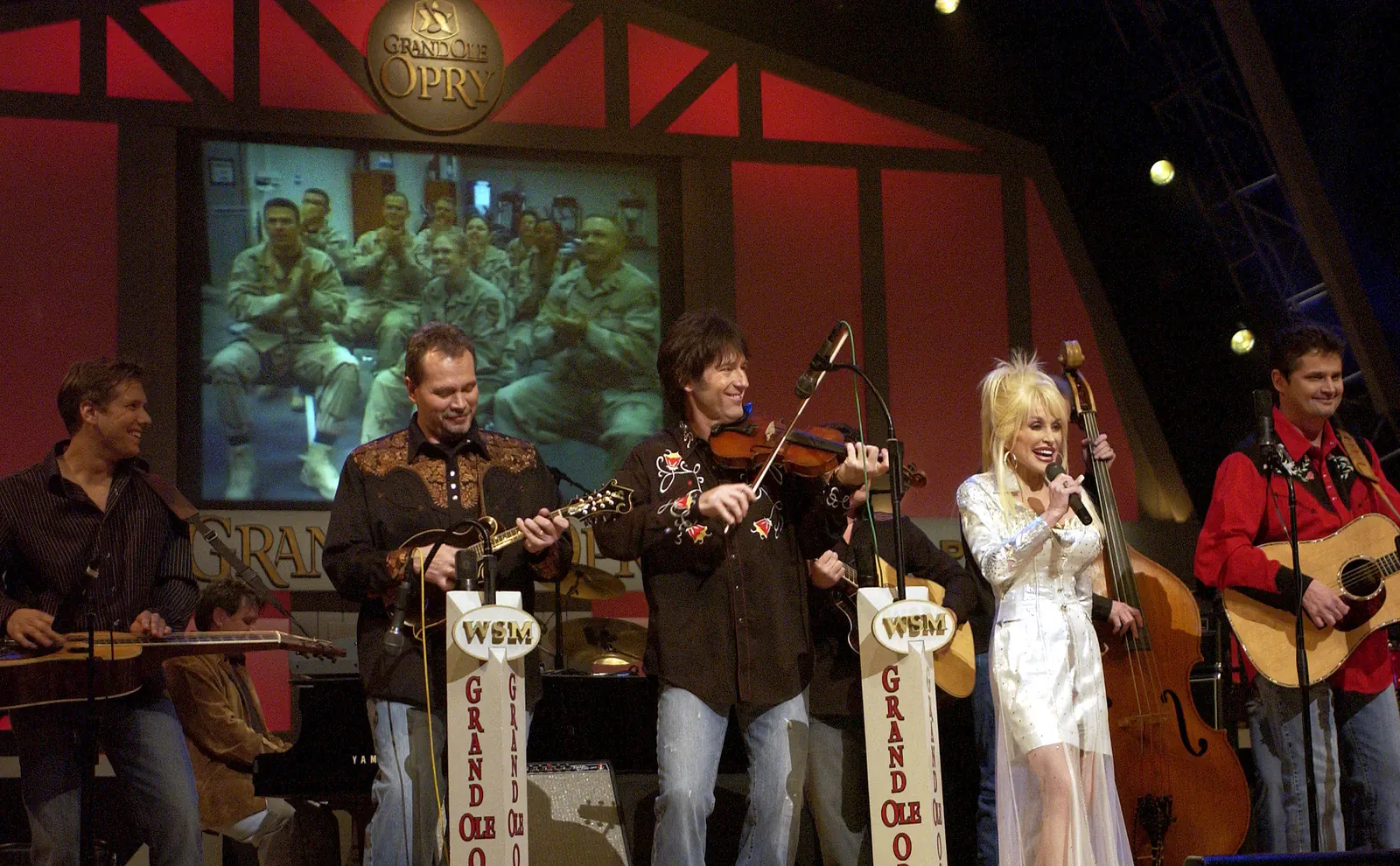
For two decades the music lived mostly as a segment inside secular country shows. From 1956 to 1960 two network programs, The Tennessee Ernie Ford Show and Red Foley’s Ozark Jubilee, usually ended with a gospel number, and viewers liked it. Hee Haw later used the same pattern: each episode closed with a gospel song or a hymn sung by stars such as Roy Clark, Buck Owens, Grandpa Jones and Kenny Price, which balanced the show’s broad humour. The Grand Ole Opry, the longest-running radio show in country, includes gospel music as part of its programming.
Organisations appeared in the same period. The International Country Gospel Music Association, founded in 1957, is the oldest of them, and it was set up to further artists’ careers in the way the Gospel Music Association, the recording academy and the Country Music Association did for their own fields.
Much of the early recorded material came from artists with a Southern gospel manner, among them the Oak Ridge Boys, Grandpa Jones, Webb Pierce, Red Sovine, the Mercy River Boys, the Louvin Brothers and the Carter Family. Webb Pierce put out an album titled Faith, Hope and Love that included “I Love Him Dearly”. Johnny Cash’s single “Daddy Sang Bass” came out in November 1968, one of the best-known gospel-flavoured recordings by a secular star of the decade.
Quartets cross over, 1972-1978
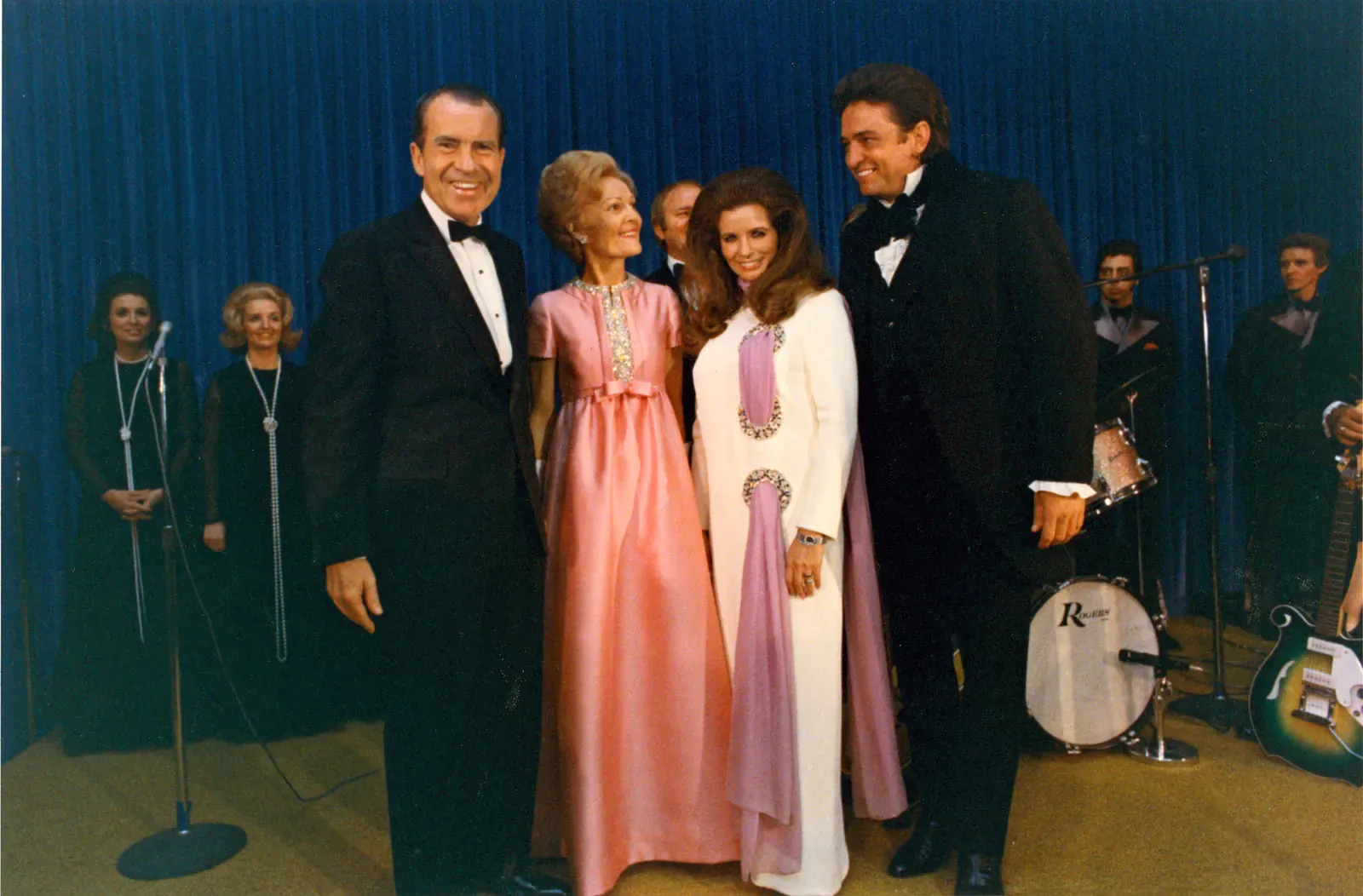
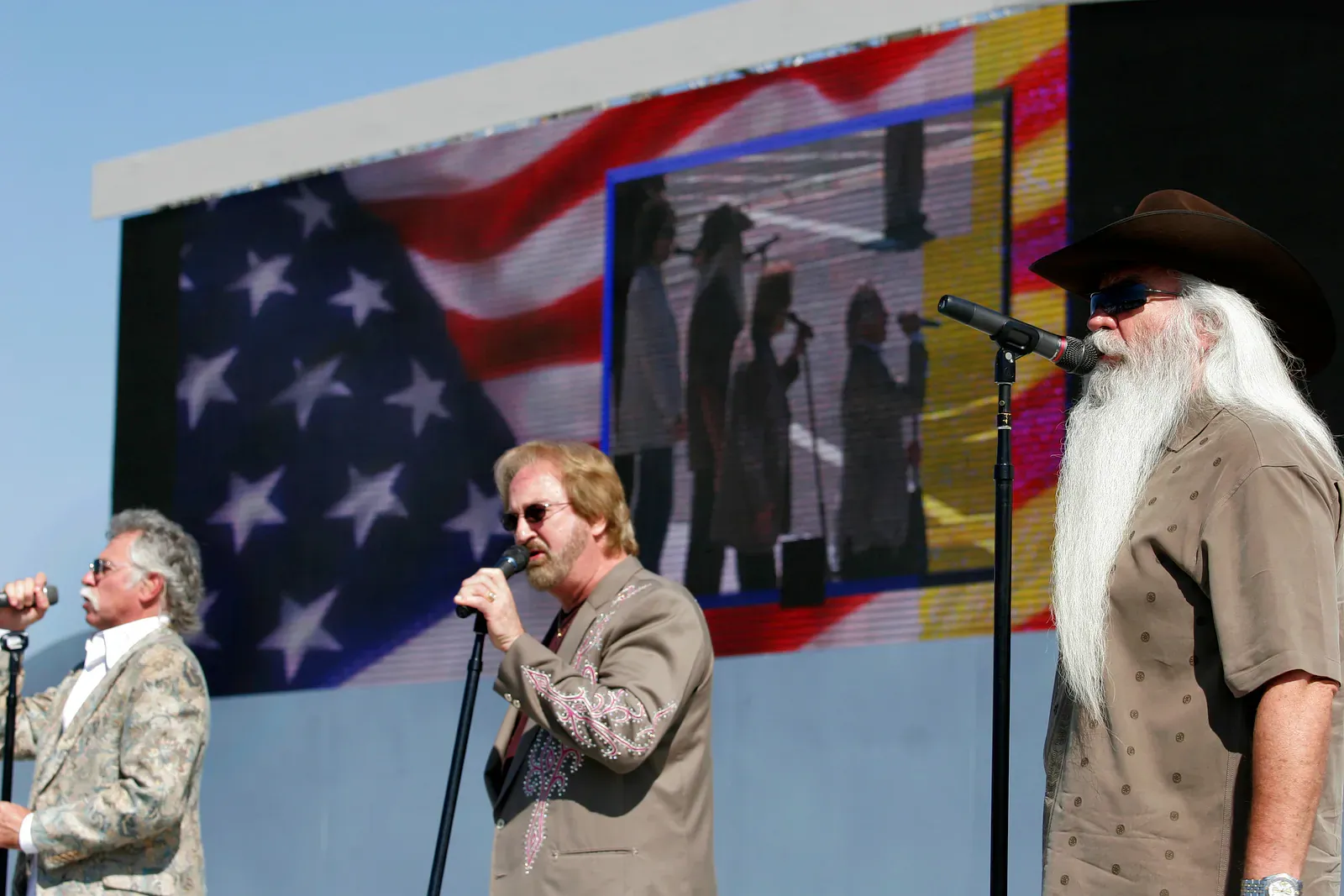
In the 1970s gospel groups began to reach country charts. In 1972 the Oak Ridge Boys, then appearing on Hee Haw, joined Johnny Cash and the Carter Family on the single “Praise the Lord and Pass the Soup”, their first country chart entry. By 1975 the group had signed with the promoter Jim Halsey, who encouraged them to leave gospel behind and present themselves as a country quartet rather than an eight-man band. Their first ABC Records album, Y’all Come Back Saloon (1977), made them a country act. They did not drop the repertoire entirely: they kept religious material in their concerts and recorded songs that stressed Christian values and family unity.
Devotional songs by individual stars also reached mass audiences in these years. Kris Kristofferson’s “Why Me” (1973) and Dolly Parton’s “The Seeker” (1975) are among the songs that earned mainstream appeal. Together they show the two routes into the format: gospel groups moving toward country, and country stars carrying faith into pop-sized hits.
A marketed format, 1979-1999
The Mercy River Boys released their debut album, Breakout, on Canaan Records in 1979. It was nominated for a Grammy Award and was a finalist for the Gospel Music Association’s Dove Award for Album of the Year for 1979-80. The album is credited with firmly establishing Christian country as a genre. A Billboard writer credited Canaan with building a band to cross over into country, improving a good product, gospel, until it became commercially viable. The Mercy River Boys charted in country, Southern gospel and traditional gospel formats, and other gospel groups followed them and the Oak Ridge Boys into the genre. The group performed from 1979 to 1985.
Cristy Lane’s “One Day at a Time” (1980) became another faith song with mass mainstream appeal. Radio built the infrastructure for the format. Bob Wilson was among the first radio personalities to see its potential, with his weekly Gospel Country Round-up. The Country Gospel Countdown has been broadcast since 1984 and syndicated since 1988, and further syndicated shows, including The Country Parson, Today’s Cross Country and The Radio Hour, joined it in the 1990s and after. Few terrestrial stations play a strictly Christian country format, and many mainstream country stations carry only a weekly Sunday country gospel show, so much of the audience has moved to internet stations.
Hit songs and hymn albums, 2000-present
After 2000 faith songs repeatedly reached the top of the mainstream country charts. Randy Travis’s “Three Wooden Crosses” came out in 2002 as the lead single of Rise and Shine and became a hit in 2003. Josh Turner’s “Long Black Train” was released in July 2003, Carrie Underwood’s “Jesus, Take the Wheel” in October 2005, and Brad Paisley’s “When I Get Where I’m Going”, a duet with Dolly Parton, in 2005.
Alan Jackson’s Precious Memories, released on 28 February 2006 on Arista Nashville, was his first gospel album. It collected classic hymns, and began as a recording made as a Christmas gift for his mother, with only piano and acoustic guitar. It topped three Billboard charts in its first week, Top Country Albums, Top Christian Albums and Top Christian and Gospel Albums, and sold more than a million copies in the United States, earning a platinum certification.
Characteristics
The sound is country with devotional words. Steel and rhythm guitars form the base, with acoustic guitars, banjos and fiddles around them, and the harmonic language is the basic I-IV-V progression with occasional ii and vi chords. Vocals come in two forms: solo country voices, and Southern gospel quartet harmony. The repertoire mixes hymns, Southern gospel standards and new songs of testimony or warning. The format is also defined by distribution: Christian radio, Christian country organisations, and awards. The organisation that ran the Christian Country Music Association awards was sued by the Country Music Association over the name, and after a federal judge ruled against the use, the awards were renamed the ICM Music Awards, for Inspirational Country Music.
Misconceptions
Christian country is sometimes treated as an invention of the late 1970s. Gospel numbers had been closing country television shows since the 1950s, and the Mercy River Boys’ 1979 debut is better described as the point where the combination became a marketed format.
It is also assumed that only gospel artists make it. Many secular country artists have recorded country gospel songs or performed them on their radio and television programs, from Loretta Lynn and Dolly Parton to Alabama and Alan Jackson, while continuing to record secular music.
A third assumption is that it is the same thing as contemporary Christian music. Religious versions of a secular genre are treated here as part of the secular family, with a related link to contemporary Christian music rather than a place inside it.
Frequently asked questions
What is Christian country music?
Christian country music is country music with lyrics that express Christian belief, offering a faith-based alternative to mainstream country. It is also marketed as country gospel, gospel country, positive country or inspirational country.
When did Christian country begin?
Country artists were recording gospel material and ending television shows with gospel numbers from the 1950s. The Mercy River Boys’ 1979 debut album Breakout, on Canaan Records, is credited with firmly establishing it as a genre.
Who are the best-known Christian country artists?
The Oak Ridge Boys, the Mercy River Boys, Johnny Cash, Dolly Parton and Alan Jackson are all tied to the style, and Randy Travis, Josh Turner, Carrie Underwood and Brad Paisley had large hits with faith songs in the 2000s.
What is the difference between Christian country and Southern gospel?
Southern gospel is a quartet tradition built on four-part harmony with a high tenor. Christian country draws on it but sits in the country family, with country instrumentation and country radio and chart placement.
What did Alan Jackson’s Precious Memories achieve?
Released in February 2006, it topped Top Country Albums, Top Christian Albums and Top Christian and Gospel Albums in its first week and sold more than a million copies in the United States.
Sound
Sound sheet
Signature sounds
- Country instrumentation with devotional lyrics
- Hymn and Southern gospel repertoire
- Quartet and solo formats
Techniques
- Four-part quartet harmony
- Steel and rhythm guitar foundation
- Sparse hymn arrangement
- Country rhythm pattern
Keys and modes
Major keys. Basic I-IV-V progressions with occasional ii and vi chords.
Vocals
Solo country voices or four-part quartet harmony with devotional lyrics.
Scenes
Where it happened
Where and when the sound lived: one bar per city on a shared timeline.
North America
Active scenes
Peak 2, 1950-2025
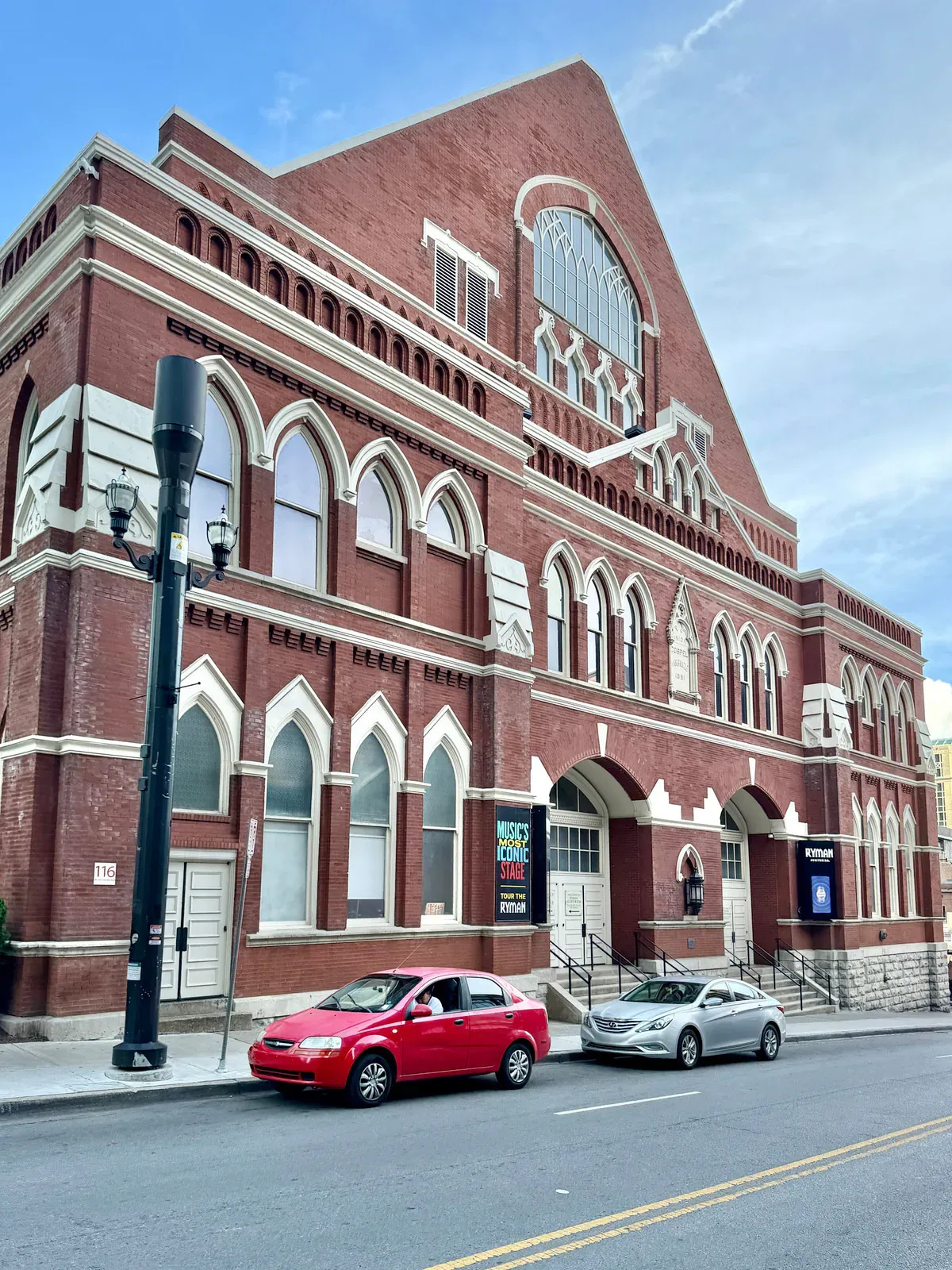
Home of the Grand Ole Opry, whose program includes gospel music, and of the country industry that marketed the format.
Tennessee town where the Oak Ridge Boys, a gospel quartet that became a country act, formed.
Culture
Culture markers
- Gospel closing numbers
Hee Haw ended each show with a gospel song sung by stars such as Roy Clark and Buck Owens.
Ritual - Sunday country gospel shows
Many mainstream country stations air only a weekly Sunday country gospel programme.
Ritual
Media
Key media
- 1984The Country Gospel Countdown
by Syndicated radio program. A weekly syndicated show for the format, syndicated from 1988.
Radio
Glossary
Terms on this page
A name for Christian country music; also gospel country.
A label for country with Christian lyrics, used by the ICM Music Awards.
A marketing label for country music with uplifting, faith-based lyrics.
Quartet gospel built on four-part harmony with a high tenor, a major source of Christian country.
Country family