Contemporary folk music
Contemporary folk music is newly composed, acoustic-led song that grew from the mid-20th-century folk revivals in the US, Britain and Canada.
United States, United Kingdom, Canada, 1960
Folk family
Born
1960
United States, United Kingdom, Canada
Subgenres
8
Documented branches
Links
14
Genres it drew on or shaped
Tempo
85-135 BPMLineage
Family tree
Grew out of
- American folk music revival
Derived from
- British folk revival
Derived from
United States, United Kingdom, Canada, 1960
Contemporary folk music
Led to (9)
Timeline
Era by era
From the first sparks to today. Select a dot to read the story behind it.
- Guthrie, Seeger and the first revival
1930 to 1957
- The folk boom
1958 to 1964
- Protest, fusion and the singer-songwriters
1965 to 1972
- Singer-songwriters and later waves
1973 to today
Eras
Moments
- 1 Guthrie, Seeger and the first revival, 1930 to 1957
- 2 The folk boom, 1958 to 1964
- 3 Protest, fusion and the singer-songwriters, 1965 to 1972
- 4 Singer-songwriters and later waves, 1973 to today
around 1930
Guthrie, Seeger and the first revival
Woody Guthrie sang traditional songs and wrote his own in the 1930s and 1940s; Pete Seeger, the Weavers, Burl Ives and Harry Belafonte carried the repertoire to wider audiences.
- 1940Woody Guthrie's Dust Bowl Ballads
- 1950Sing Out! magazine beginsSing Out!, with Broadside and The Little Sandy Review, spread traditional and newly composed songs.
- 1950Lomax meets Lloyd and MacColl in BritainThe meeting is credited with starting the second British folk revival; the Ballads and Blues Club followed in London.
1958
The folk boom
The Kingston Trio's Tom Dooley in 1958 opened a commercial boom of campus groups, folk clubs and the 1963-64 Hootenanny television series.
- 1958The Kingston Trio's Tom DooleyA commercial hit that some date the commercial phase of the revival from.
- 1958Elizabeth Cotten's first albumFreight Train and Other North Carolina Folk Songs and Tunes, made with Mike Seeger's help, showed the Cotten fingerpicking style.
- 1958Miramichi Folksong FestivalFirst of the specialised Canadian folk festivals.
- 1963Bob Dylan's The Freewheelin' Bob DylanCarries Blowin' in the Wind, which became a civil rights anthem.
- 1963ABC's Hootenanny seriesThe network show ran 1963-1964 and had its own magazine.
1965
Protest, fusion and the singer-songwriters
Dylan's electric turn, folk rock, British electric folk and a Canadian wave led by Joni Mitchell, Leonard Cohen and Gordon Lightfoot widened and split the genre.
- 1965Barry McGuire's Eve of DestructionRecorded after he left the New Christy Minstrels; a hit of topical folk protest.
- 1969Joni Mitchell's CloudsIncludes Both Sides, Now, one of the songs that moved folk from protest toward the personal.
- 1971Juno Award for Folk Artist of the YearCanadian folk was formalised with its own award and radio presence.
1973
Singer-songwriters and later waves
From the 1970s John Prine, Emmylou Harris and Suzanne Vega kept the form going; Mumford & Sons brought a folk-based sound back to the mainstream around 2010.
- 1975Joan Baez's Diamonds & Rust
- 2010Mumford & Sons reach prominenceThe folk rock and indie folk band formed in 2007.
Listening path
Start listening
A short path from an easy way in to the deep end. Thumbnails come from YouTube; the player loads only when you press play.
- 01
Bob Dylan, 1963
The song that became a civil rights anthem; listen for the bare guitar and harmonica.
- 02
Simon & Garfunkel, 1964
A folk-inflected duo song of the mid-1960s; listen for the paired voices.
- 03
Joni Mitchell, 1969
The personal turn: a songwriter's own reflective lyric.
- 04
Joan Baez, 1975
A revival singer writing her own material; listen for the fingerpicked guitar.
Facts
| Family | Folk |
| Origin | United States, United Kingdom, Canada |
| Emerged | 1960s onwards |
| Status | Active |
| Tempo | 85 to 135 BPM |
| Grew out of | American folk music revival, British folk revival |
| Subgenres | 8 |
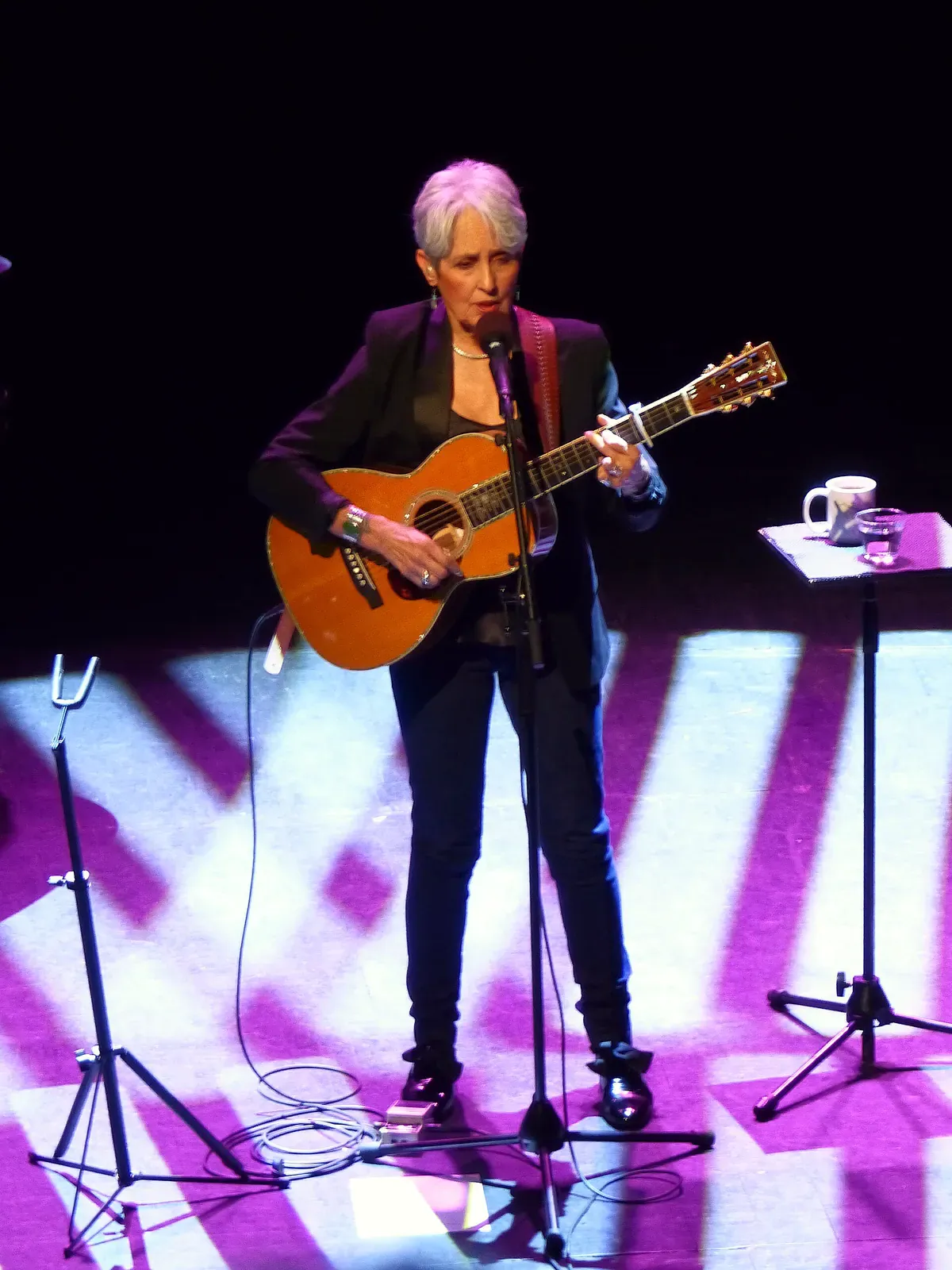
Contemporary folk music is the body of newly composed, acoustic-led song that grew out of the mid-20th-century folk revivals, mainly in the United States, Britain and Canada.
It is usually called simply folk music, and sometimes folk revival music, which is how it is told apart from the traditional repertoire it borrows from. Its marks are original songs, a guitar at the centre and lyrics that are topical or personal. It sits under the folk family.
Origins
The term covers a loose set of styles with a variable definition. In the American folk scene it is generally taken to mean music that is called folk but is not traditional folk: a set of genres that began with the revival of the mid-20th century and then developed from it.
The shift began after the Second World War, when folk revivals appeared in Europe, Canada and the United States and took on the political and social climate of each place. The American revival began as a north-eastern urban phenomenon, spread from city to city and crossed to Western Europe, and its enthusiasts were generally middle-class university students. Where the earlier, romantic-nationalist revival had mostly influenced art music, this second revival produced a popular genre, with artists marketed through concerts, recordings and broadcasting.
One of the earliest figures was Woody Guthrie, who sang traditional songs in the 1930s and 1940s as well as composing his own. His songs from the Great Depression described poverty and the powerlessness of ordinary people in plain language, often with humour and satire, and they set the pattern for later topical writing. Pete Seeger was his friend and follower as collector, performer and composer, and Seeger’s group the Weavers was among the early commercial acts. Guthrie’s Dust Bowl Ballads dates from 1940.
Other figures of the American revival include Elizabeth Cotten and Odetta. Cotten, whose fingerpicking style carries her name, released Freight Train and Other North Carolina Folk Songs and Tunes in 1958 with help from Mike Seeger, and her use of guitars tuned to open keys became a common element of folk playing. Odetta blended an operatic voice with blues and folk songs.
The folk boom, 1958-1964
A commercial phase is often dated from the Kingston Trio’s “Tom Dooley” in 1958. Burl Ives, the Weavers and Harry Belafonte had reached wide audiences earlier. Magazines such as Sing Out! (from 1950), Broadside and The Little Sandy Review, together with record companies tied to the revival, spread both traditional and composed songs. ABC television aired the Hootenanny series in 1963 and 1964 and published a companion magazine.
Labels in New York gave the scene a catalogue. Vanguard, founded in 1950, issued the Weavers at Carnegie Hall in 1957 and Joan Baez’s debut album in 1960. Elektra, also founded in New York in 1950, issued the Even Dozen Jug Band’s first record in 1963.
Britain followed its own path. In 1950 the American collector Alan Lomax came to Britain and met A. L. Lloyd and Ewan MacColl, a meeting credited with starting the second British revival. In London they opened the Ballads and Blues Club, later the Singers’ Club and possibly the first folk club in the country, which closed in 1991. The revival there fostered the Watersons, Martin Carthy, Roy Bailey and singer-songwriters such as Bert Jansch, Ralph McTell, Donovan and Roy Harper, all prominent in the 1960s. See also English folk and American folk for the traditional repertoires behind the revival.
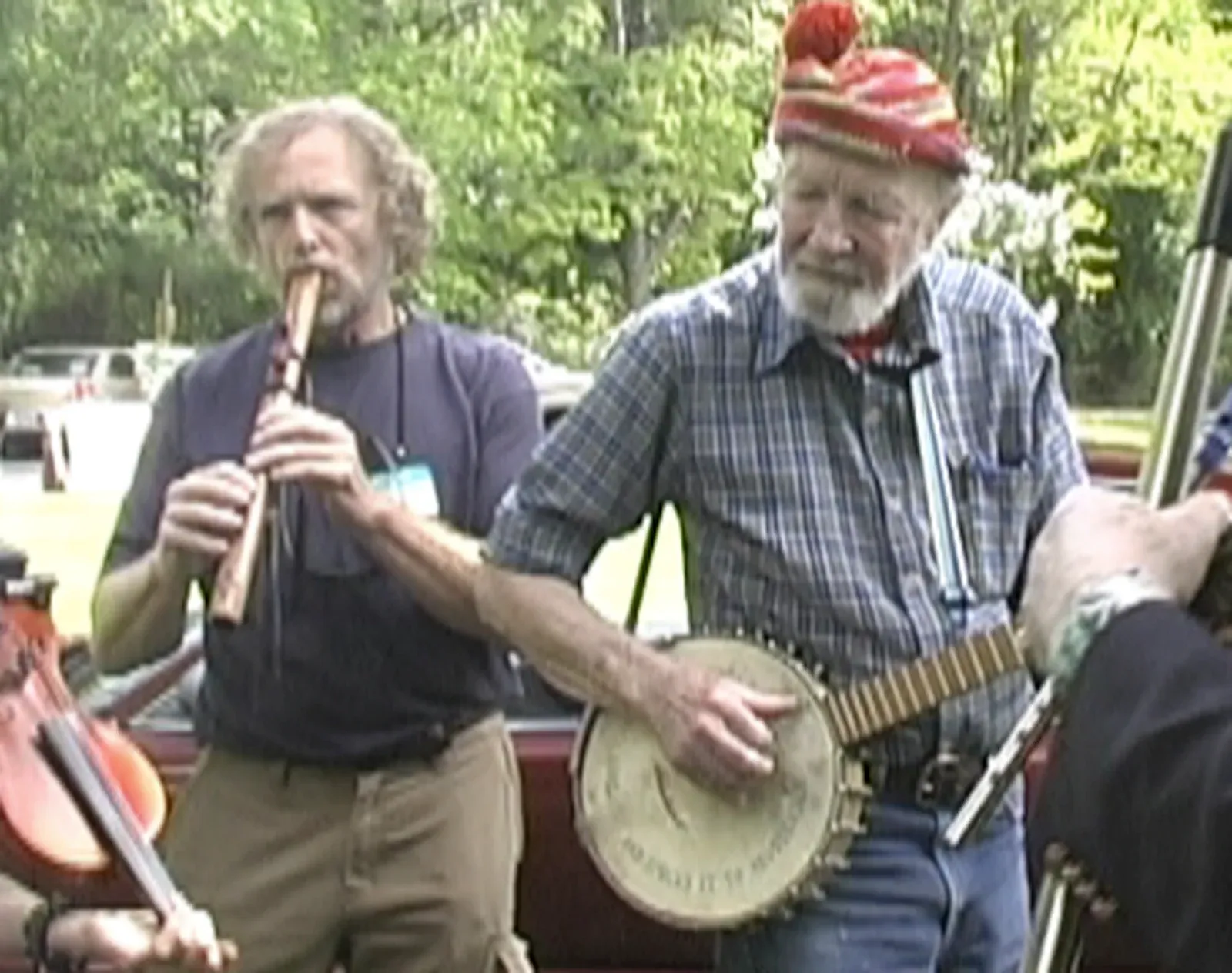
In Canada the Miramichi Folksong Festival began in 1958, the first of the specialised folk festivals, and the early 1960s were perhaps the zenith of non-fusion folk.
Protest, fusion and singer-songwriters, 1965-1972
The second half of the 1960s brought rapid expansion and diversification. Established performers such as Bob Dylan, Joan Baez, Judy Collins, the Seekers and Peter, Paul and Mary evolved, and new fusions with rock and pop appeared. Greenwich Village in New York was one crucible. The convergence of the civil rights movement and folk on college campuses made Dylan’s protest songs popular, and “Blowin’ in the Wind” became an anthem of the movement, while “A Hard Rain’s a-Gonna Fall” addressed the Cuban missile crisis. Phil Ochs, Buffy Sainte-Marie, Arlo Guthrie and Tom Paxton followed Woody Guthrie in writing topical songs against the Vietnam War and for civil rights.
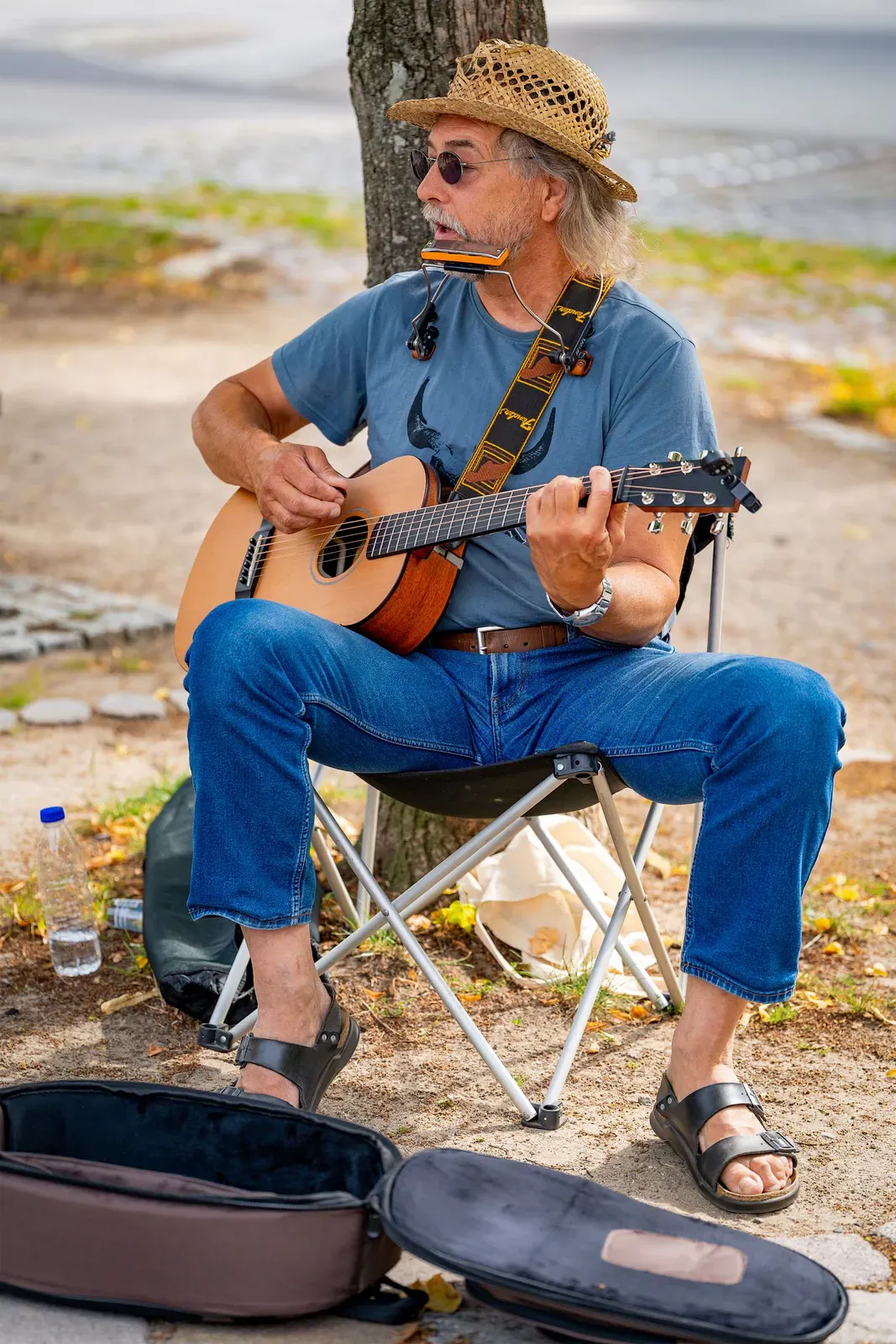
Dylan’s use of electric instruments helped start folk rock and country rock. The Byrds, with Seeger’s “Turn! Turn! Turn!”, Simon & Garfunkel and the Mamas & the Papas made folk-inflected music that is hard to classify; those branches are covered on the folk rock page. British folk rock turned to indigenous songs: Fairport Convention’s Liege & Lief was a key moment, Richard Thompson called for a matching “English Electric” style, and Ashley Hutchings formed Steeleye Span for a more traditional repertoire.
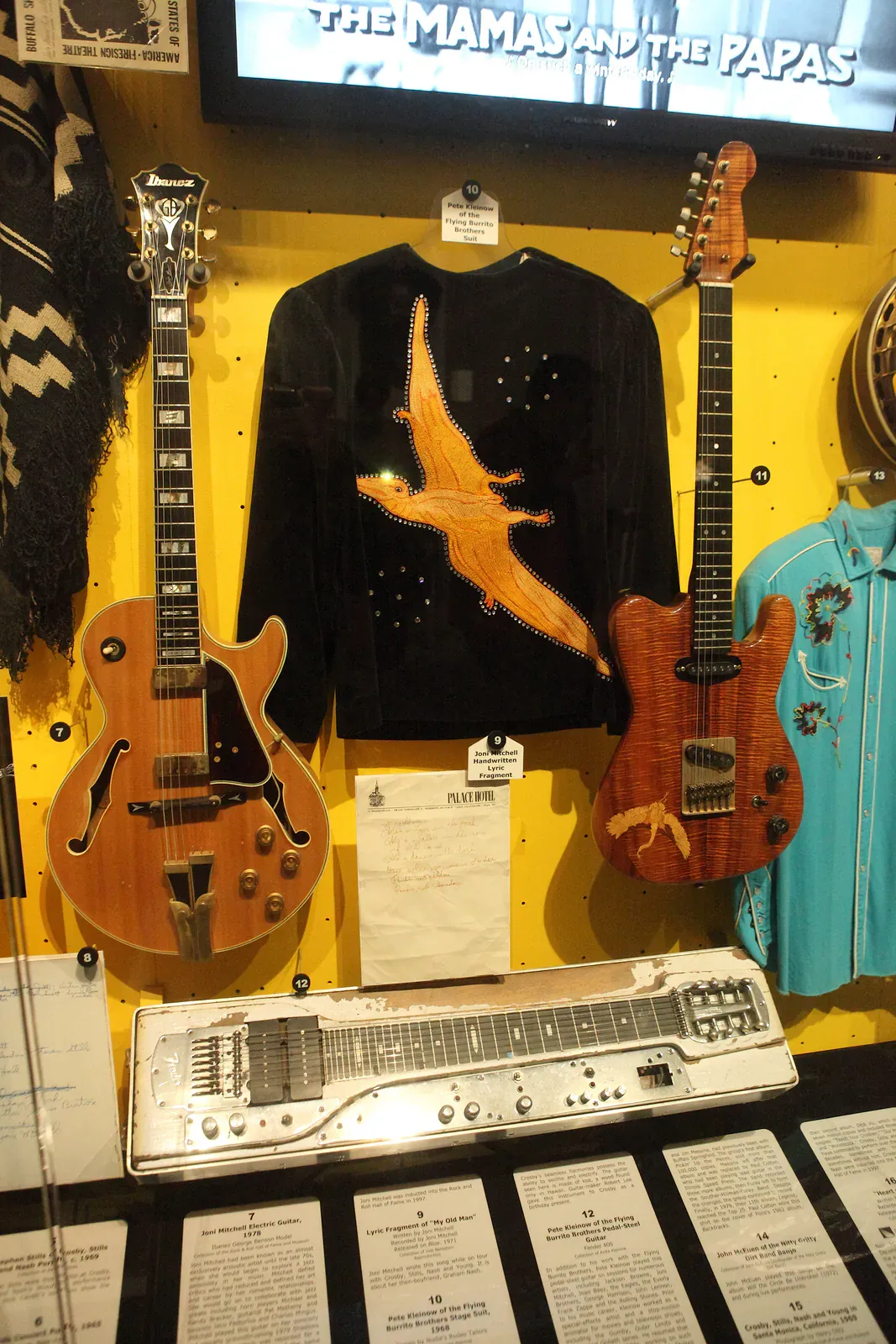
A Canadian wave followed. Gordon Lightfoot, Leonard Cohen, Ian & Sylvia, Neil Young, Joni Mitchell, Bruce Cockburn and Buffy Sainte-Marie reached the United States and beyond, and Lightfoot, Cohen, Cockburn and Mitchell were later invested with the Order of Canada. The Juno Award for Folk Artist of the Year began in 1971.
Singer-songwriters and later waves, 1973 onward
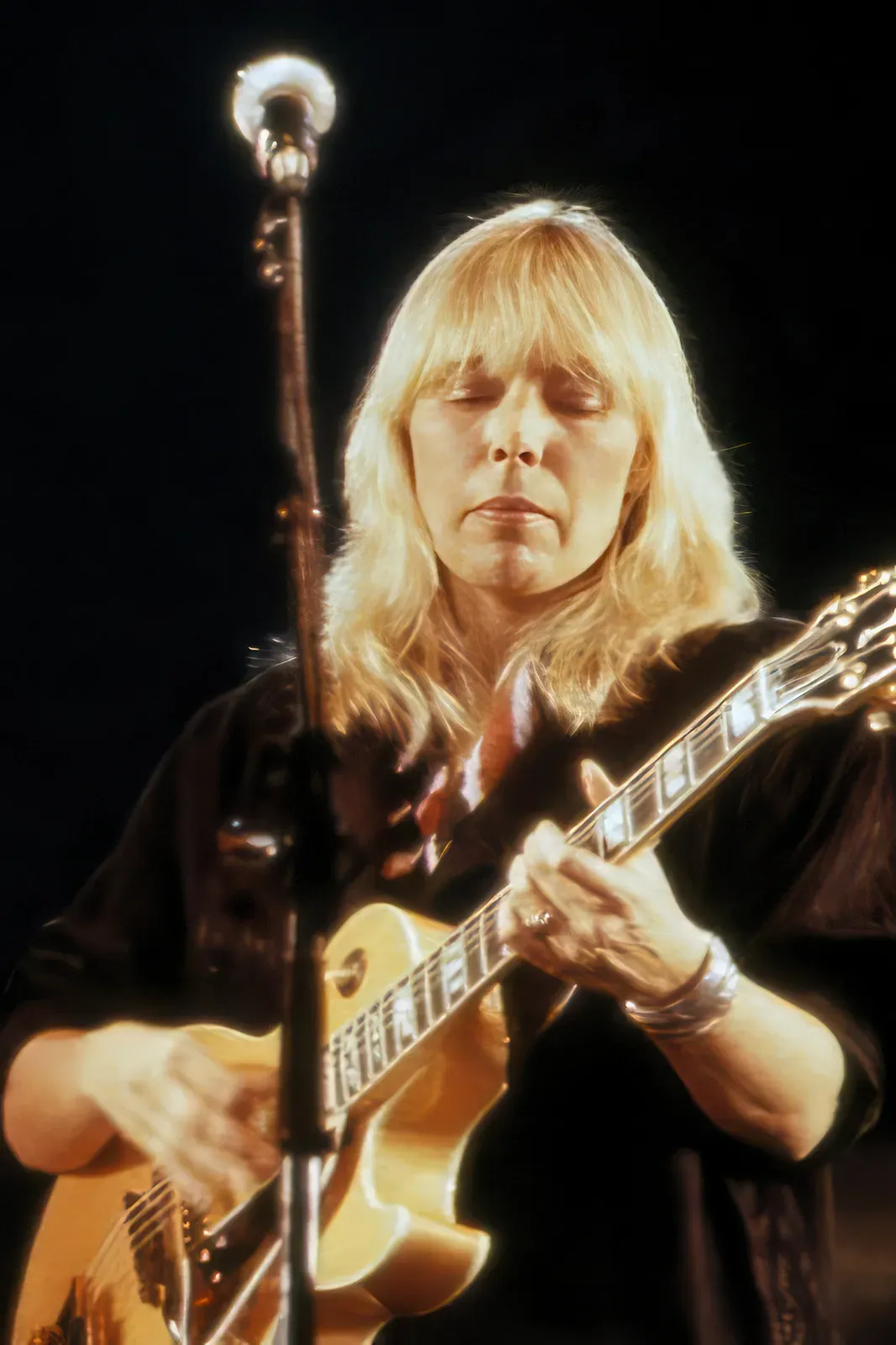
From the 1970s new singer-songwriters such as Steve Goodman, John Prine, Emmylou Harris, Joni Mitchell, John Denver and Harry Chapin carried the form on. The label “country folk”, in use since at least the mid-1970s, describes gentler, acoustic-led post-Dylan writing that readmitted mandolin, banjo, fiddle and steel guitar; John Prine, Kate Wolf and Nanci Griffith are among its early artists.
The Pogues in the early 1980s and the Corrs in the 1990s brought traditional tunes back to the album charts in the British Isles. In the later 1990s Eliza Carthy, Kate Rusby and Spiers and Boden reached the mainstream, and the Newfoundland group Great Big Sea sold four platinum albums in Canada. Mumford & Sons, formed in 2007, achieved prominence in 2010.
Characteristics
The sound centres on acoustic guitar, often fingerpicked or flatpicked and sometimes in open tunings such as DADGAD, open D or drop D. The instruments of the North American revival were acoustic guitar, harmonica, banjo, mandolin, autoharp, violin and accordion. Songs tend to be verse-led, with the melody repeating while the lyric advances the story, and they often have no chorus. The keys of G and D are common on guitar. Lyrics range from protest to personal confession.
Notable recordings
“Blowin’ in the Wind” on The Freewheelin’ Bob Dylan (1963) put a self-written topical song in front of a mass audience and became a civil rights anthem. Joni Mitchell’s Clouds (1969) includes “Both Sides, Now”, an example of the move from protest to the personal, and her open tunings and confessional lyrics shaped the next generation of songwriters. Joan Baez’s “Diamonds and Rust” (1975) shows a revival singer turning to her own writing.
Culture
Folk fans were mostly students and city dwellers, and the scene gathered in coffeehouses, folk clubs, hootenannies and festivals. Its politics were open: civil rights, opposition to the Vietnam War and, in the Great Depression, the hardship of workers. The term protest music was applied to topical folk in these years.
Legacy
The revival produced folk rock, country rock and a long line of singer-songwriters. Fusions include folk rock, folk metal, neofolk and electronic folk (folktronica), which uses acoustic instruments alongside mechanical dance beats; Ultramarine’s 1991 album Every Man and Woman Is a Star is credited as a progenitor. Filk, anti-folk, chamber folk, indie folk, psychedelic folk and progressive folk are catalogued as offshoots.
Misconceptions
It is often assumed that contemporary folk is the same thing as traditional folk. The two share a name, performers and venues, but contemporary folk is generally a distinct genre made of new songs, even where individual pieces blend old and new material.
The revival is sometimes described as purely American. The American revival was the centre, yet Britain, Canada and Europe had their own revivals, and Canadian and British artists made up a large part of its internationally successful names.
A third assumption holds that the revival was a purely amateur, anti-commercial movement. It had commercial markers early: the Kingston Trio’s 1958 hit, a network television series, a magazine and specialised record labels all show a marketed genre.
Frequently asked questions
What is contemporary folk music?
Contemporary folk music is newly composed, acoustic-led song that grew from the folk revivals of the mid-20th century. It is distinct from traditional folk music, though the two share a name and performers.
Who are the main contemporary folk artists?
Woody Guthrie and Pete Seeger started the lineage, followed by Bob Dylan, Joan Baez, Peter, Paul and Mary, Phil Ochs, Tom Paxton and, from Canada, Joni Mitchell, Leonard Cohen and Gordon Lightfoot.
How does contemporary folk differ from folk rock?
Contemporary folk music is mainly acoustic and song-based. Folk rock is the electrified offshoot that began with the Byrds and Dylan’s electric turn and sits in the rock family.
Sound
Sound sheet
Signature sounds
- Acoustic guitar as the core accompaniment
- Newly composed topical or personal lyrics
- Verse-led narrative form, often without a chorus
Techniques
- Fingerpicking
- Open tunings
- Topical songwriting
- Verse-led narrative
Keys and modes
G major, D major. G is favoured for open-string resonance on acoustic guitar; D is common too.
Tuning
Standard, with open tunings such as DADGAD, open D and drop D
Vocals
Solo singer-songwriter voice, or harmony trios such as Peter, Paul and Mary
Scenes
Where it happened
Where and when the sound lived: one bar per city on a shared timeline.
Europe
North America
Active scenes
Peak 3, 1960-2025
Greenwich Village was a performance crucible for the 1960s evolution of folk.
The Ballads and Blues Club, possibly the first British folk club, opened here and closed in 1991 as the Singers' Club.
Lightfoot, Cohen and Mitchell led the first internationally successful Canadian folk wave.
Culture
Culture markers
- Hootenanny
Informal communal sing-along gatherings of campus and coffeehouse folk fans.
Ritual - Protest music
Label for topical folk in the civil rights and Vietnam War years.
Slang
Media
Key media
- 1950Sing Out!
by Sing Out!. Magazine that spread traditional and composed songs of the revival.
Zine - 1963ABC-TV Hootenanny
by ABC. Magazine published with the network folk series.
Zine
Glossary
Terms on this page
Gentle acoustic singer-songwriter music that readmitted mandolin, banjo, fiddle and steel guitar.
An informal folk sing-along gathering, borrowed for a 1963-1964 network television series.
Guitar tuned to a chord, common in folk fingerpicking.
A topical folk song supporting civil rights, anti-war or other causes.
The post-war wave in which folk songs, old and new, were marketed through concerts, records and broadcasting.
Folk family