Country and Irish
Country and Irish is an Irish genre that grew out of the 1950s showband circuit, mixing American country with Irish themes for rural dancehalls.
Irish Midlands, 1955
Country family
Born
1955
Irish Midlands
Links
6
Genres it drew on or shaped
Tempo
80-145 BPMLineage
Family tree
Grew out of
- Irish showband
Derived from
Influenced by
Irish Midlands, 1955
Country and Irish
Timeline
Era by era
From the first sparks to today. Select a dot to read the story behind it.
- Showbands and London Irish
1953 to 1963
- Dancehall country stars
1964 to 1974
- Records, television and the showband decline
1975 to 1999
- Revival
2000 to today
Eras
Moments
- 1 Showbands and London Irish, 1953 to 1963
- 2 Dancehall country stars, 1964 to 1974
- 3 Records, television and the showband decline, 1975 to 1999
- 4 Revival, 2000 to today
1953
Showbands and London Irish
Dance orchestras shrank into showbands from the mid-1950s, while Johnny McCauley wrote country songs about Ireland for London's Irish dancehalls.
- 1953Johnny McCauley turns professional in LondonMcCauley starts singing professionally with the Westernaires at the Galtymore Club in Cricklewood.
- 1955Showband name coinedDave Glover renames his group the Dave Glover Showband, pioneering the word.
- 1958Royal Showband turns professionalThe Waterford band becomes a crowd-drawing success and the first showband with an Irish chart entry.
- 1961Larry Cunningham joins the Mighty AvonsHe leaves part-time bands to front the Cavan group, which began with Jim Reeves covers.
- 1963Avons play on after Jim Reeves leaves the stageSupporting Reeves at Lifford, the band takes over when he walks off over a poor piano, earning publicity.
1964
Dancehall country stars
Larry Cunningham, Big Tom and Margo built rural followings in ballrooms, and Irish country records began reaching the charts.
- 1964Tribute to Jim Reeves reaches BritainCunningham and the Avons chart in Britain and appear on Top of the Pops, both firsts for an Irish act.
- 1965Lovely Leitrim tops the Irish chartThe song stays at number one for four weeks in September.
- 1966Gentle Mother on the Showband ShowBig Tom's performance on RTE television on 21 May precedes a number 7 Irish hit.
1975
Records, television and the showband decline
Showbands declined as hotel lounges and discos grew, so singers pivoted to records and RTE shows; Ritz Records took Daniel O'Donnell abroad.
- 1975Blanket on the Ground outsells the original in IrelandPhilomena Begley's version reaches number four in Ireland, above Billie Jo Spears' number 11.
- 1975Showbands in declineDiscos, hotel lounges and changing tastes erode the showband circuit.
- 1983Daniel O'Donnell records My Donegal ShoreHis first single, a Johnny McCauley song, is paid for and sold by himself after recording on 9 February.
- 1985Ritz Records manager spots Daniel O'DonnellMick Clerkin introduces him to his manager Sean Reilly.
2000
Revival
Nathan Carter's debut in 2007 and his 2012 Wagon Wheel brought a younger audience back to Irish country.
- 2012Nathan Carter releases Wagon WheelThe cover of the American country song tops Irish charts and wins an RTE country award.
- 2016Big Tom inducted into the Irish Country Music Hall of FameHe is the first artist inducted, in June, as the Gentle Mother anniversary tour runs.
Listening path
Start listening
A short path from an easy way in to the deep end. Thumbnails come from YouTube; the player loads only when you press play.
- 01
Big Tom and The Mainliners, 1966
The 1966 showband ballad that made Big Tom a star.
- 02
Philomena Begley, 1975
The 1975 version that outsold the original in Ireland.
- 03
Daniel O'Donnell, 1994
A smooth country-and-folk single from the biggest Irish country seller.
- 04
Nathan Carter, 2012
The cover that revived the genre for a younger audience.
Facts
| Family | Country |
| Origin | Irish Midlands, Ireland |
| Emerged | 1950s to 1970s |
| Status | Active |
| Tempo | 80 to 145 BPM |
| Meter | 4/4 |
| Grew out of | Irish showband |
Country and Irish, also called Culchie and Western, is a genre of Ireland formed by mixing North American country music with Irish material and Irish subjects.
It emerged from the showband circuit of the 1950s and 1960s and is strongest in the rural Midlands and the North-West, with a second audience among the Irish in Britain. It was built for dancing, mostly jives and waltzes in ballrooms and hotel function rooms.
Origins
The roots lie in the Irish showband, a dance band format of seven to ten players with a rhythm section, a brass section and a lead singer. In the 1940s and 1950s Irish dance orchestras of ten to fifteen musicians played sitting down from sheet music. As audiences preferred singers to instrumentals, they shrank into smaller groups, and in 1955 Dave Glover renamed his group the Dave Glover Showband, a pioneering use of the word. The repertoire of these bands ran from rock and roll to Dixieland, céilí dances and country and western.
Country was one strand among many, and in the rural areas the bands that leaned towards country were the most popular. The showband business was especially strong in Northern Ireland and the border counties, partly because of restrictions on live music during Lent in the Republic. A reviewer of an Irish country house dance album has observed that the music was partly inspired by a desire for cultural independence.
The writer most often credited with starting the style is Johnny McCauley. Born in Myroe, near Limavady, he moved to London and began singing professionally in 1953 with his band the Westernaires at the Galtymore Club in Cricklewood. He recorded on his own Denver Records label and led a trio of guitar, drums and accordion. He is regarded as the first songwriter to compose songs in an American country style whose lyrics specifically referred to Irish subjects, among them “Destination Donegal”, “Among the Wicklow Hills” and “Four Country Roads”.
Showband country, 1958-1975
The showband boom reached its height in the mid-1960s, when as many as 800 full-time and part-time bands travelled Ireland. Brendan Bowyer, Tom Dunphy and the Royal Showband of Waterford turned professional around 1958, and the format spread through the ballrooms of every county. The country acts that followed worked a different circuit from the pop bands, playing to farming communities in the Midlands and the north-west.
Larry Cunningham was the first of these to become a national name. Raised in County Longford, he worked as a carpenter in England and then joined the Grafton Showband before becoming the full-time singer of the Mighty Avons from Cavan in 1961. The band began with covers of Jim Reeves songs. In 1963 they supported Reeves on his Irish tour, and when Reeves left the stage in Lifford over the condition of a piano, the Avons took over the show and earned a wave of publicity. In December 1964 “Tribute to Jim Reeves” reached the Irish top ten and entered the British charts, the first time an Irish artist had done so, and led to a Top of the Pops appearance. “Lovely Leitrim” followed in September 1965 and stayed at number one for four weeks.
Big Tom McBride, from Castleblayney, fronted the Mainliners as singer, saxophonist and rhythm guitarist alongside a line-up that included a fiddle, a trombone, keyboards and a rhythm section. On 21 May 1966 his performance of “Gentle Mother” on RTE television’s Showband Show drew wide praise and preceded a recording that reached number 7 in the Irish charts. His 1980 album Blue Wings was recorded in Nashville, which he reached by sea because of a fear of flying.
Women had a place on the circuit too. Margo, from Kincasslagh in County Donegal, began performing in 1964 with the local showband the Keynotes and made her first single in 1968. Philomena Begley, from Pomeroy in County Tyrone, sang with the Old Cross Ceili Band, later the Country Flavour, and had her first chart hit in 1970 with “Here Today, Gone Tomorrow”, which reached number seven in Ireland.
Records and decline of the showbands, 1975-1999
By the mid-1970s the showband phenomenon had peaked. Discotheques, hotel lounges and cabaret rooms with drinks licences drew crowds away from the ballrooms, and many bands shrank to small local outfits. The murder of three members of the Miami Showband in July 1975 cut cross-border touring sharply. Country acts were better placed than most to adapt, because the business model of recorded music suited a repertoire of songs that listeners knew. McCauley’s songs, recorded by Big Tom and Larry Cunningham, supplied some of that repertoire while the dancehall trade declined.
Philomena Begley’s version of “Blanket on the Ground” in 1975 reached number four in Ireland, outselling the original by Billie Jo Spears, which stopped at number 11 there. The success earned her the title Ireland’s Queen of Country, and she toured the United States in 1977 and sang at the Grand Ole Opry in 1978 at the invitation of Porter Wagoner.
Many country singers had shows on RTE One during the 1980s, such as The Sandy Kelly Show and The Red Hurley Show, though by the 1990s most of them had been dropped. RTE also carried Country Music Television on RTE Two in the 1990s, and the Irish-language service TG4 later aired programmes such as Glór Tíre.
A London label helped carry the style abroad. Mick Clerkin, who had worked as a roadie for Larry Cunningham before managing him, relaunched Ritz Records in 1981. In 1985 he saw Daniel O’Donnell perform and introduced him to the manager who still works with him. O’Donnell, from Kincasslagh, had recorded his first single, McCauley’s “My Donegal Shore”, on 9 February 1983 with his own money, then sold the copies himself. His first British chart hit came in 1992 with “I Just Want to Dance With You”, and he has since had an album in the British charts every year for 36 years, a run that ended in 2024.
Characteristics
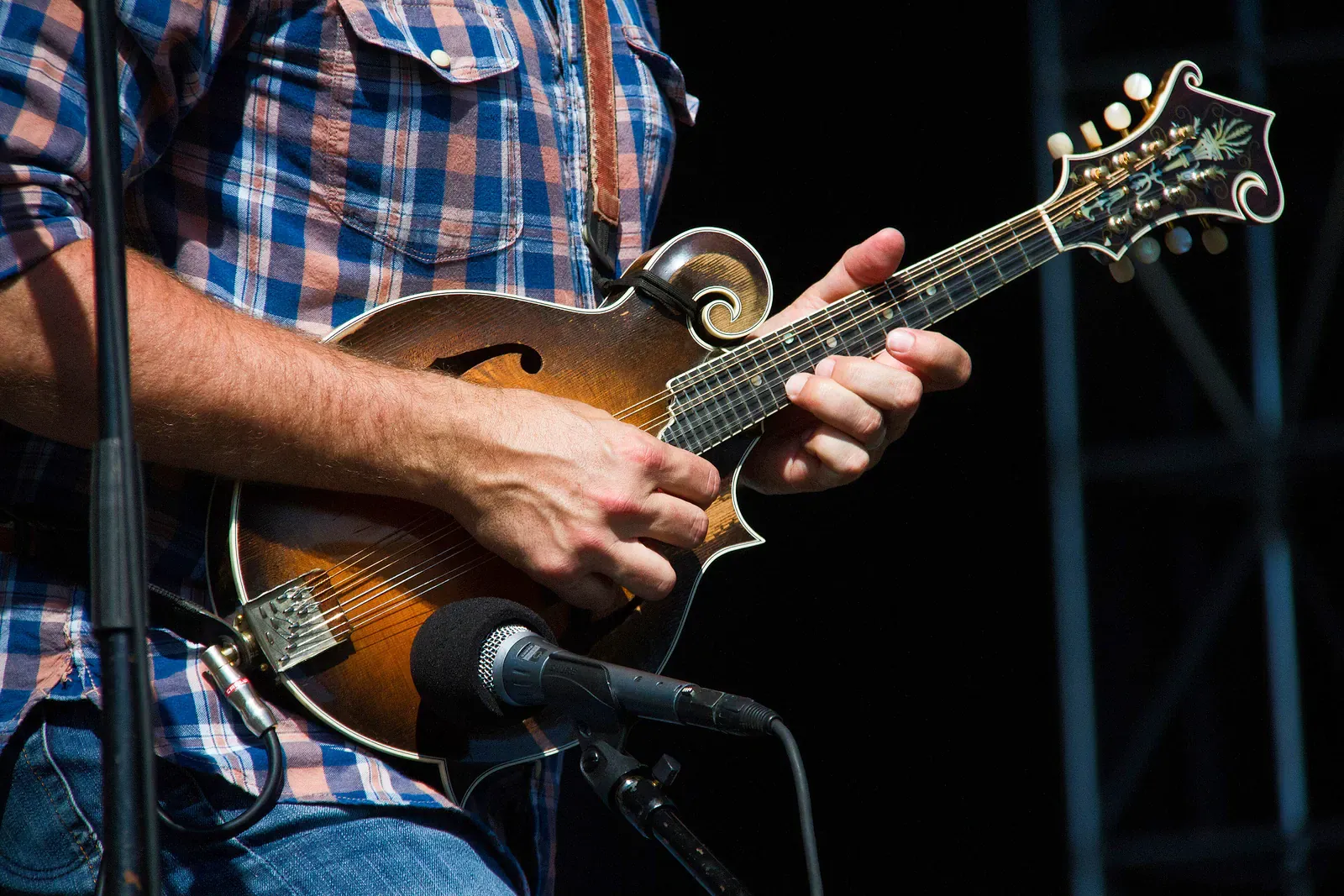
The sound is dance music for couples. Showband instrumentation, with guitars, keyboards and a bass and drum rhythm section, sits under brass and lead vocals, and waltz and jive tempos suit the ballroom. A typical recording runs at a measured 80 to 145 beats per minute, from the slow ballad feel of “Gentle Mother” to the faster pace of recent hits. The texts are the main difference from American country: songs about emigration, the homeland, counties and villages, where Nashville songs spoke of Southern places. Material was often borrowed from the United States and adapted, as with the Reeves covers, but the Irish-subject song became the staple.
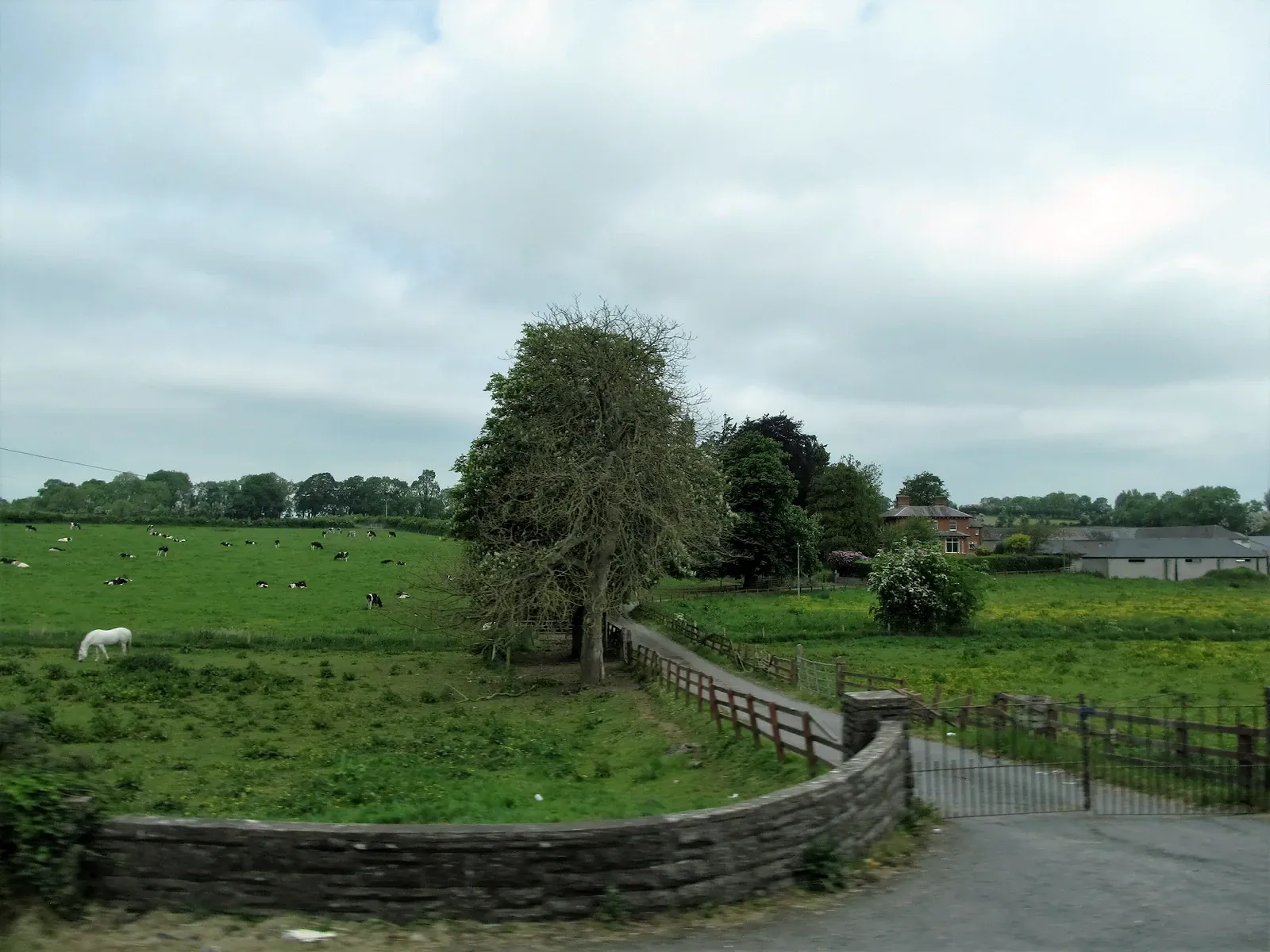
Album covers developed a style of their own. In most cases the artist is superimposed over a pastoral landscape, a distinctive convention of the genre.
Revival and legacy
The style went through a revival in the late 2000s. Nathan Carter, born in Liverpool to parents from Newry, won the All Ireland title for traditional singing at ten and moved to Ireland at 18. His debut album Starting Out in 2007 helped revive the genre in Ireland and Britain, and his 2012 version of “Wagon Wheel” topped the Irish charts and was voted Ireland’s all-time favourite country song at the RTE awards.
Recognition has caught up with the older generation. In June 2016 Big Tom became the first inductee to the Irish Country Music Hall of Fame, and in 2020 Philomena Begley was the first inductee to the ICMA Hall of Fame. Related styles are covered under country, and the American tradition that Irish singers answered is described in Nashville sound and country pop.
Misconceptions
Country and Irish is sometimes taken for Irish traditional music with a guitar. The instrumentation and repertoire come from the showband and from American records, and the Irish element is mostly in the lyrics and the singing, although a fiddle or accordion appears in some line-ups.
It is also assumed that the genre vanished with the showbands. The showband circuit declined from the mid-1970s, but acts such as Big Tom kept touring for decades, television and radio carried the songs, and artists such as Daniel O’Donnell and Nathan Carter sell large numbers of recordings.
Frequently asked questions
What is Country and Irish music?
Country and Irish is an Irish genre that mixes North American country style with Irish subjects and influences, performed by showband-style groups and singers for dancing. It is best known in the Midlands, the North-West and among the Irish in Britain.
Who are the best-known Country and Irish artists?
Big Tom and the Mainliners, Larry Cunningham, Philomena Begley, Margo, Daniel O’Donnell and Nathan Carter are among the most prominent. Johnny McCauley wrote many of the early songs.
Who wrote the first Irish country songs?
Johnny McCauley, a Londonderry-born singer in London, is regarded as the first songwriter to write American-style country songs with lyrics about Irish subjects. Larry Cunningham and Big Tom recorded his songs.
Sound
Sound sheet
Signature sounds
- Showband instrumentation
- Emigration and homeland lyrics
- Waltz and jive dance tempos
- Pastoral album artwork
Techniques
- Irish-subject country songwriting
- Showband covers of country hits
- Dancehall set pacing
Vocals
Lead singer fronting a band, in country ballad style with Irish themes of emigration and home.
Scenes
Where it happened
Where and when the sound lived: one bar per city on a shared timeline.
Europe
Active scenes
Peak 3, 1966-2025
Home of Big Tom and the Mainliners; the Glencarn Hotel hosted their live shows.
The Galtymore in Cricklewood hosted McCauley and later Big Tom for the Irish in Britain.
Donegal village of Margo and Daniel O'Donnell.
Culture
Culture markers
- Jive and waltz
Irish country was designed for jiving in rural dancehalls.
Dance - Pastoral album covers
Artist superimposed over a pastoral landscape.
Artwork
Media
Key media
- 1999The Very Best of Irish Country
by Big Tom. Compilation of Big Tom's Irish country hits.
Compilation - 2017My Life, My Music, My Memories
by Philomena Begley. Autobiography of Ireland's Queen of Country, with Emma Heatherington.
Book
Glossary
Terms on this page
Alternative name for Country and Irish.
Dance form that Irish country was designed for in dancehalls.
Smaller band hired to play before a bigger showband.
Dance band of seven to ten players with a rhythm and brass section, fronted by a lead singer.
Country family