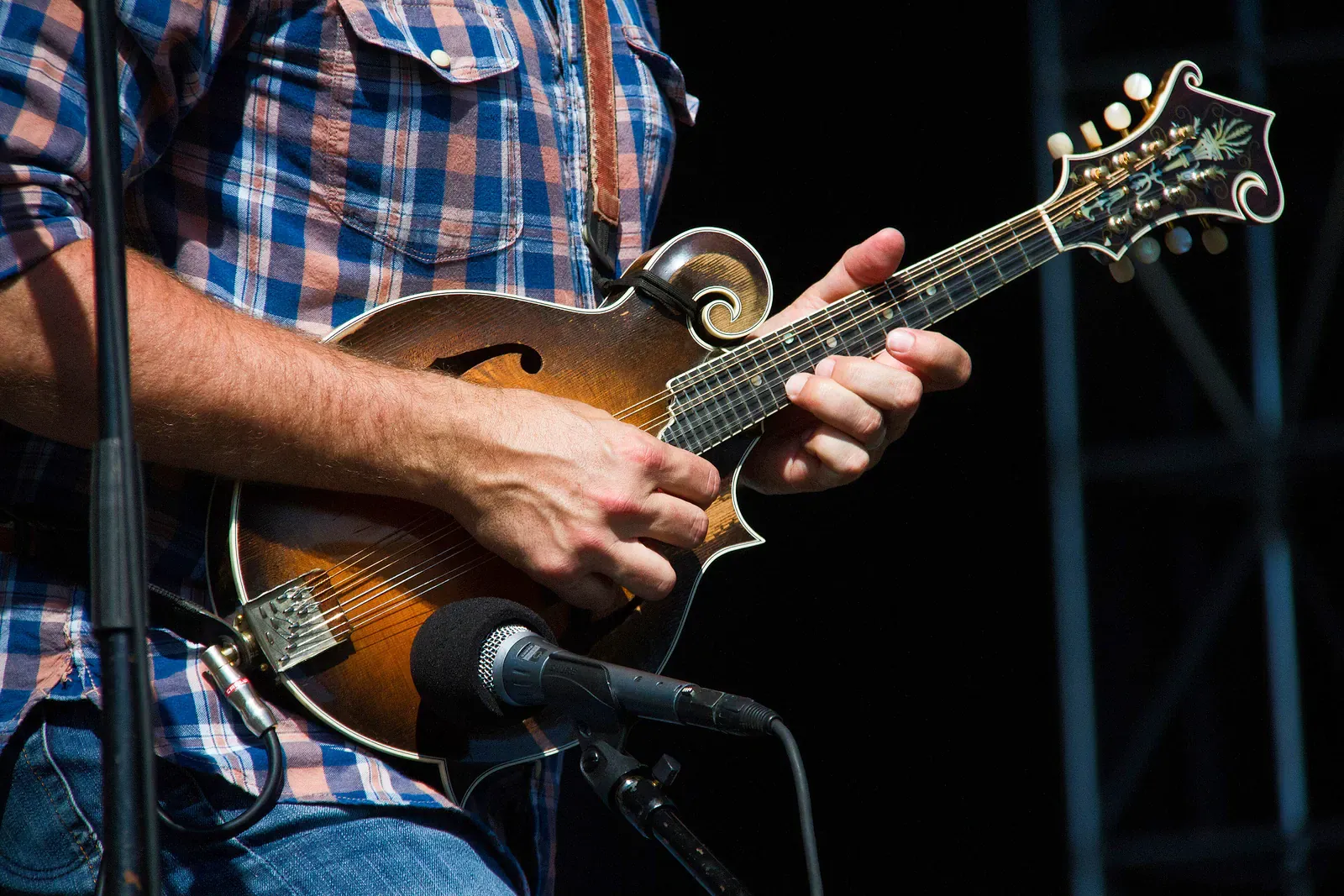
Nashville sound
The Nashville sound is the smooth, pop-oriented country style of late-1950s and 1960s Music Row, built on strings, background choruses and crooned vocals.
Nashville, Tennessee, 1957
Country family
Born
1957
Nashville, Tennessee
Subgenres
1
Documented branches
Links
11
Genres it drew on or shaped
Tempo
70-105 BPMLineage
Family tree
Grew out of
Derived from
Influenced by
Pushed back against
Nashville, Tennessee, 1957
Nashville sound
Led to (2)
Timeline
Era by era
From the first sparks to today. Select a dot to read the story behind it.
- Studio B and the first records
1956 to 1959
- Peak on Music Row
1960 to 1964
- Countrypolitan
1965 to 1975
Eras
Moments
- 1 Studio B and the first records, 1956 to 1959
- 2 Peak on Music Row, 1960 to 1964
- 3 Countrypolitan, 1965 to 1975
1956
Studio B and the first records
Chet Atkins, Steve Sholes and Owen Bradley swapped fiddle and steel for strings and choruses, and records such as Four Walls set the template.
- 1956Don't Be CruelOne critic argues Elvis Presley's July 1956 recording sparked the era, as rock and roll cut into country sales.
- 1956Gone recordedFerlin Husky records Gone in November, named as a possible precursor of the style.
- 1957Four WallsJim Reeves records it in February with Chet Atkins, Floyd Cramer and the Jordanaires; one historian calls it the first Nashville sound record.
- 1957RCA Studio B opensSteve Sholes and Chet Atkins establish the RCA Victor studio that becomes the centre of Music Row.
- 1957Oh Lonesome MeDon Gibson's song, which Atkins produced, is the record he pointed to as the sound's start.
- 1958The term appears in printThe phrase Nashville sound first appears in the Music Reporter in an article on Jim Reeves.
- 1959He'll Have to GoRecorded on 15 October 1959, it spends 14 weeks at the top of the country chart in 1960.
1960
Peak on Music Row
The A-Team and background singers shaped hits for Jim Reeves and Patsy Cline while Nashville overtook Hollywood as a recording centre.
- 1960Nashville tops HollywoodTime reports that Nashville has become the second biggest US record-producing centre after New York.
- 1960Last DateFloyd Cramer records his slip-note piano instrumental at Studio B on 12 July.
- 1961CrazyPatsy Cline's Decca single, backed by six A-Team members, becomes her signature crossover ballad.
- 1962The End of the WorldSkeeter Davis's pop-leaning single reaches number 2 on the US charts.
- 1963Patsy Cline diesCline is killed in a plane crash on 5 March, a blow to the sound's biggest stars.
- 1964Jim Reeves diesReeves dies in a plane crash on 31 July, his songs continuing to chart for years.
1965
Countrypolitan
After the deaths of Cline and Reeves and the rise of Bakersfield and the British Invasion, the style grew lusher with orchestras and choirs.
- 1965Make the World Go AwayEddy Arnold's orchestral ballad shows the style turning toward countrypolitan.
- 1965Studio A opensRCA builds a larger studio next door and the original room is renamed Studio B.
Listening path
Start listening
A short path from an easy way in to the deep end. Thumbnails come from YouTube; the player loads only when you press play.
- 01
Jim Reeves, 1959
The hushed ballad that carried the sound to the pop charts.
- 02
Floyd Cramer, 1960
Listen for the slip-note piano lead.
- 03
Patsy Cline, 1961
Strings and chorus behind a slow torch-song vocal.
- 04
Eddy Arnold, 1965
The orchestral turn toward countrypolitan.
Facts
| Family | Country |
| Origin | Nashville, Tennessee, United States |
| Emerged | Late 1950s to 1960s |
| Status | Historical |
| Tempo | 70 to 105 BPM |
| Meter | 4/4 |
| Grew out of | Honky-tonk |
| Subgenres | 1 |
The Nashville sound is a smooth, pop-oriented style of country music, a branch of the country family, that took shape in Nashville, Tennessee, in the late 1950s.
Producers on Music Row replaced fiddle, steel guitar and nasal lead singing with string sections, sophisticated background choruses and crooned vocals, and built songs on pop structures. The aim was to win back record buyers lost to rock and roll.
Origins
The style was pioneered by staff at RCA Victor, Columbia and Decca in Nashville. RCA Victor’s Chet Atkins, together with producers Steve Sholes, Owen Bradley and Bob Ferguson and recording engineer Bill Porter, rebuilt country records from the pop of the 1950s. Rock and roll had cut into country sales, and three-chord songs with fiddle and steel were selling less well than the sound of Roy Orbison or the Everly Brothers. Atkins and Bradley answered by polishing the production rather than abandoning the genre. Bradley summed up the change in plain terms: the fiddle and steel guitar were gone and choruses were in.
Critics disagree on the first true Nashville sound record. Ferlin Husky’s Gone, recorded in November 1956, is a possible precursor. One historian names Jim Reeves’s Four Walls, recorded in February 1957, as the first. Atkins himself pointed to his production of Don Gibson’s Oh Lonesome Me later that year, and another writer argues that Elvis Presley’s Don’t Be Cruel of July 1956 started the era. The phrase itself first appeared in print in 1958, in a Music Reporter article about Reeves, and Time used it in 1960.
Studio B and Music Row, 1957-1964
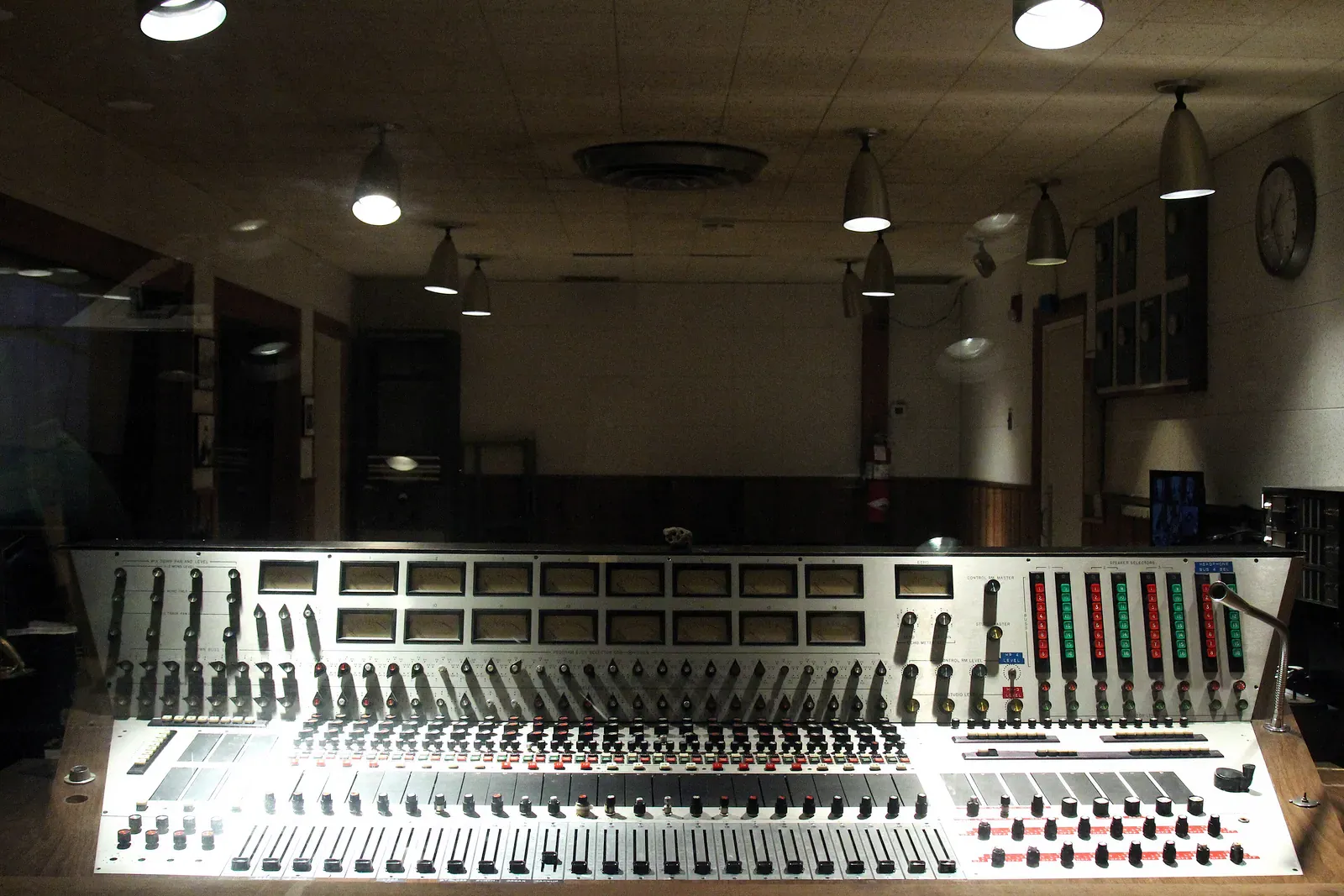
RCA Studio B was established in 1957 by Sholes and Atkins and sat in the middle of what became Music Row. Bradley’s studios stood only a few blocks away, and the two camps developed the sound in parallel. RCA later built a larger Studio A next door, which led to the original room being renamed Studio B in 1965. In 1960 Time reported that Nashville had edged out Hollywood as the second biggest record-producing centre after New York. Over the two decades it operated, Studio B produced about 60 percent of the Billboard country chart hits, and it closed in 1977.
Behind the records stood the Nashville A-Team, a rotating circle of roughly a dozen first-call session musicians. Producers valued them for learning new songs fast, playing them cleanly and never overplaying, so the singer stayed in front. The group played guitar, piano, bass and drums, with specialists and vocal groups added as needed. Backing vocals came mostly from quartets, and the Anita Kerr Quartet was the main group in the early 1960s. A chord-chart shorthand that wrote numbers instead of note names, refined at Studio B, let the players transpose songs quickly.
Characteristics
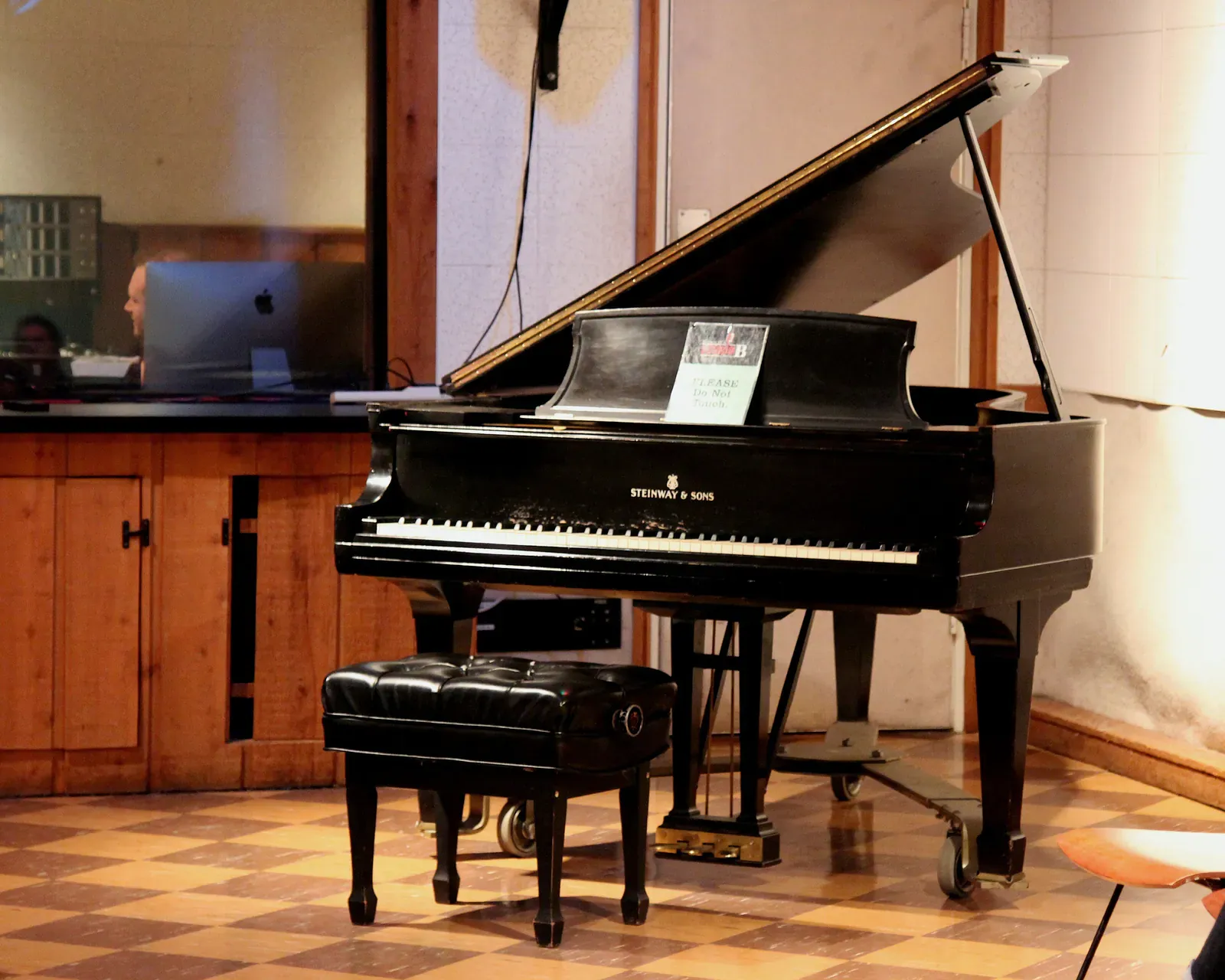
Most of the sound comes from a handful of choices. Strings replaced the fiddle, background voices sang wordless or sustained harmonies behind the lead, and the singer was recorded close and relaxed rather than pushed. Tempos in the recordings measured for this page run from about 70 to 105 beats per minute, from the slow hush of Crazy to the brisk step of Oh Lonesome Me. The arrangements follow pop forms, with the verse and chorus built around the singer rather than the band. One writer observed that the music had more in common with mainstream vocal pop of the 1950s than with western swing or rockabilly. The style drew on honky-tonk as its base and on traditional pop and vocal jazz for its polish, which is why its relatives include honky-tonk, traditional pop and vocal jazz.
Instruments and production
Piano took over many of the lead lines the fiddle once held. Floyd Cramer’s slip-note style, in which a passing note slides almost at once into a chord note, became the signature piano sound of the era. Atkins, a fingerpicking guitarist, played on many sessions, and the string section supplied sustained lines and swells. Engineer Bill Porter used echo and reverb in new ways, and RCA Studio A was designed to incorporate these techniques from the start. Atkins reportedly answered the question of what the Nashville sound was by shaking the change in his pocket and calling it the sound of money.
Mainstream success, 1959-1965
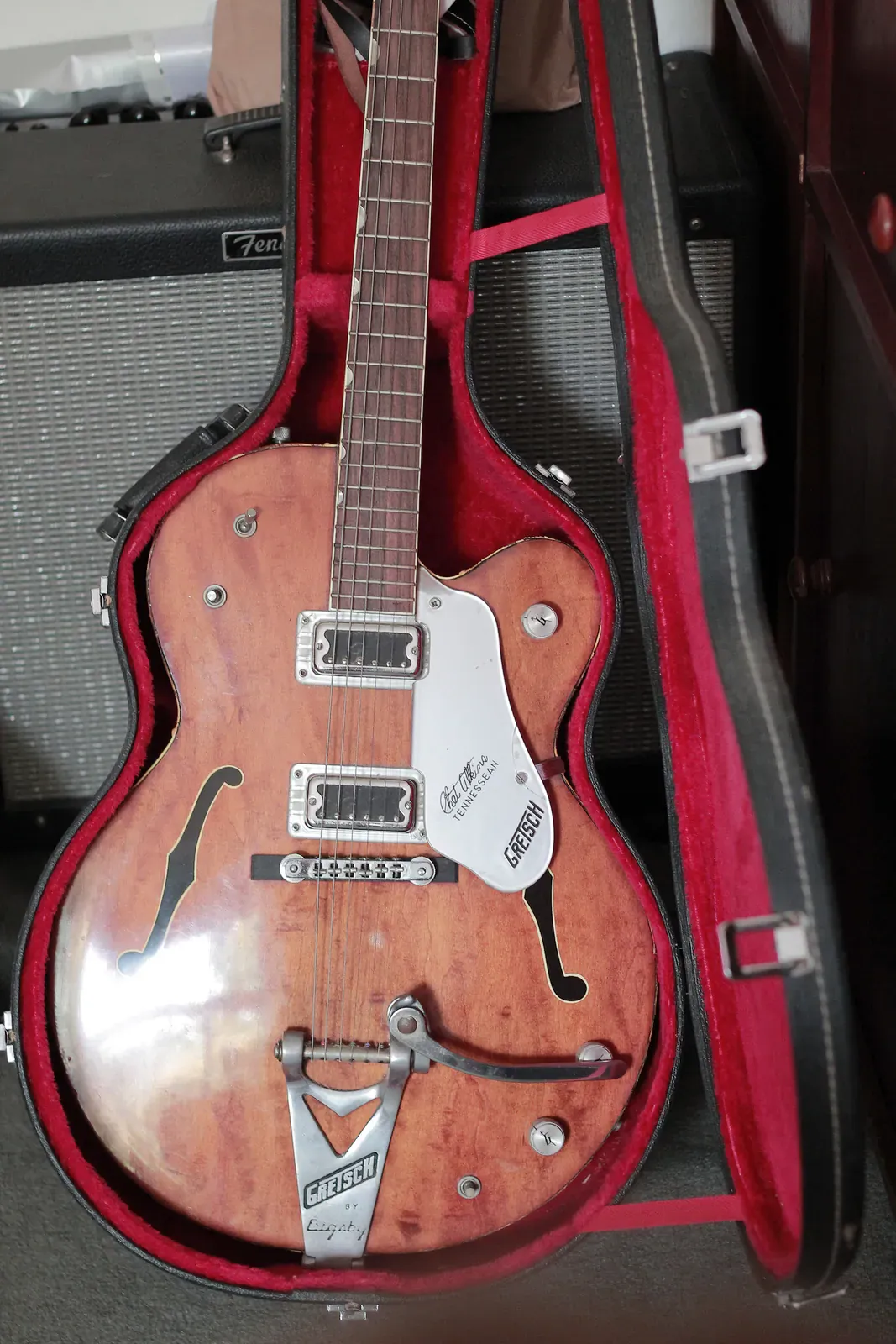
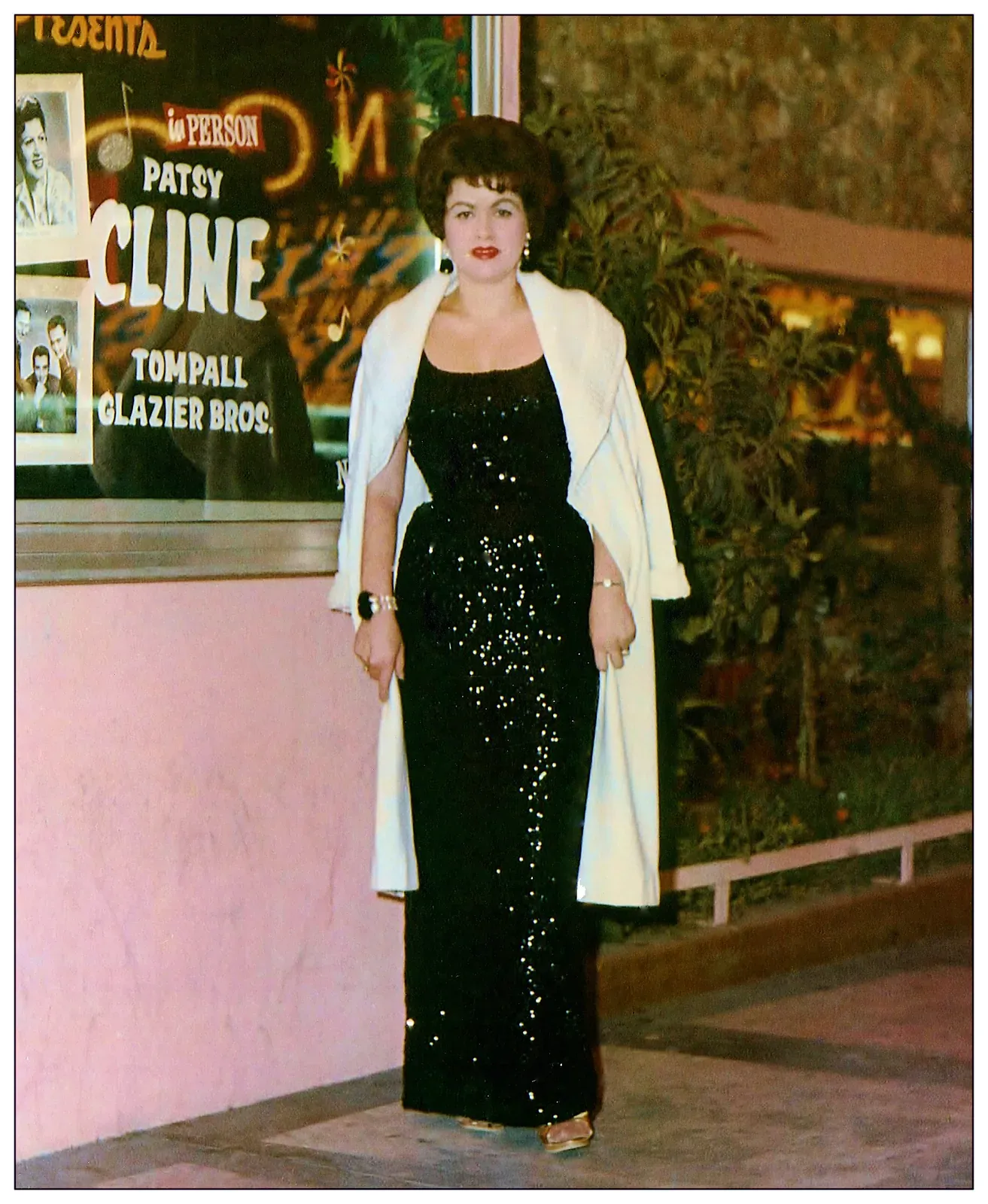
The sound’s commercial peak came with a run of crossover ballads. Reeves recorded He’ll Have to Go on 15 October 1959 as the B-side of In a Mansion Stands My Love. Disc jockeys flipped the record, and by April 1960 it was in the tenth week of a 14-week run at the top of the country chart, also climbing to number 2 on the pop chart. Cramer’s instrumental Last Date, recorded at Studio B in July 1960 and issued on RCA Victor, charted that year. Patsy Cline’s Crazy of 1961 was backed by six members of the A-Team and became her best-known recording. Skeeter Davis’s The End of the World reached number 2 on the US charts in 1962, and Eddy Arnold, who placed 147 songs on the country chart, scored with Make the World Go Away in 1965.
Notable recordings
Four Walls shows the template: Reeves sings low and close, with Atkins, Cramer, bassist Bob Moore and the Jordanaires behind him. He’ll Have to Go goes further, a hushed phone-call ballad that sold on voice and restraint rather than on instruments. Crazy shows the full formula, with a torch-song vocal over strings and a choir. Last Date shows the other path, a piano instrumental whose bent notes carry the melody that a singer would normally hold.
Countrypolitan, 1965-1975
In the early 1960s the Nashville sound was challenged on the country side by the Bakersfield sound, a rival built on electric instruments, backbeats and honky-tonk, and on the pop side by the British Invasion. Cline’s death in 1963 and Reeves’s in 1964, both in plane crashes, removed two of its biggest stars. The pop structure then became more pronounced, and the style turned into countrypolitan: lush strings from a real orchestra, often with a choir. Producers Billy Sherrill and Glenn Sutton were among its architects, and artists such as Tammy Wynette, Charlie Rich, Charley Pride, Lynn Anderson and Glen Campbell typified it. George Jones fused it with his honky-tonk style. Countrypolitan ruled the pop charts while Bakersfield and later outlaw country held the country purists.
Culture
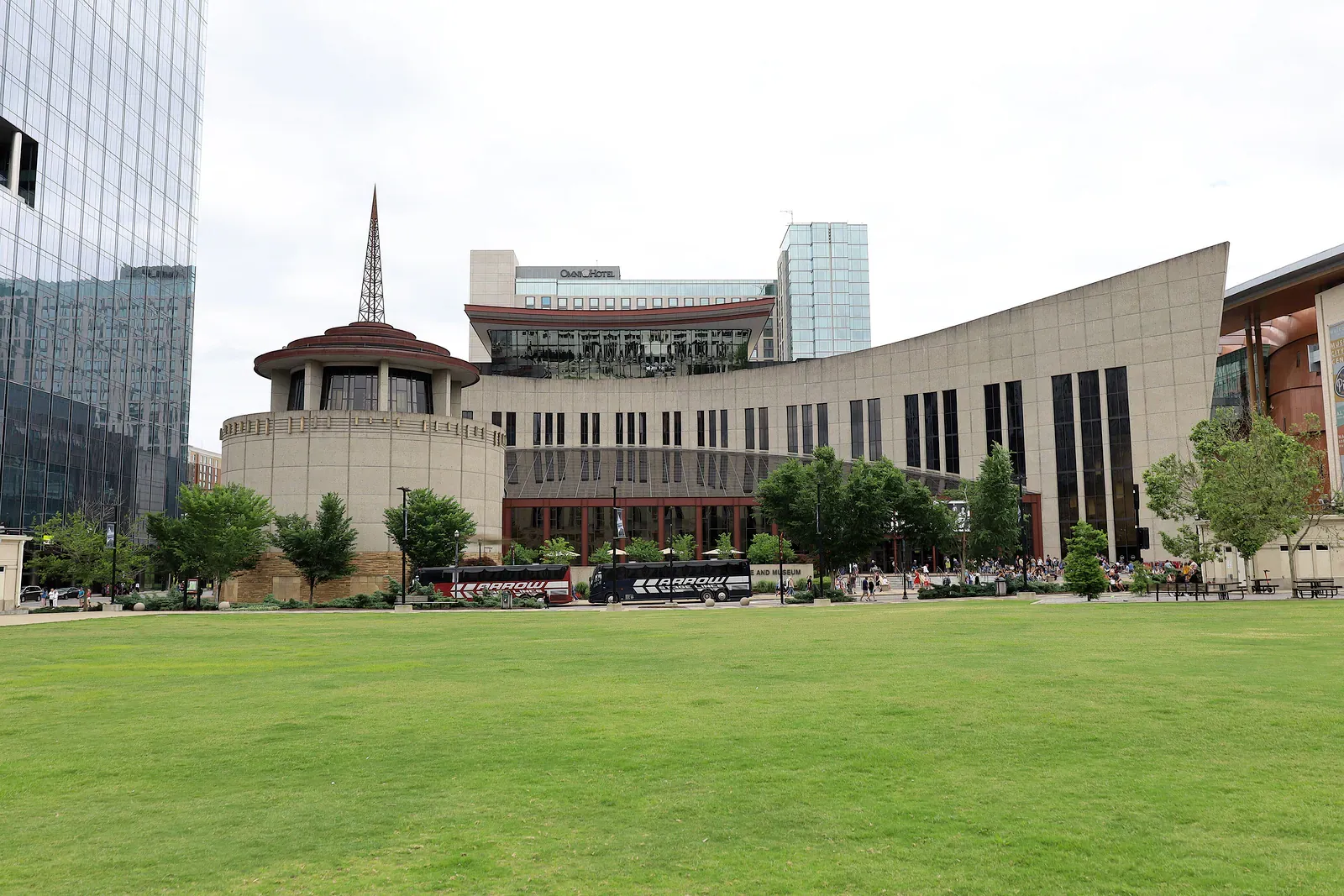
The sound is tied to place more than to a dance or a dress code. Music Row, the district around 16th and 17th Avenues South, grew into the base of Nashville’s music business, with labels, publishers and studios in a few blocks. The A-Team worked sessions almost around the clock, sometimes with little time left for family. The same tight circle of players appeared on a large share of Nashville’s commercial records. The reaction against the polish lasted: a 1999 song about the Row, recorded by George Strait and Alan Jackson, lamented the rise of country pop and the decline of the traditional country sound.
Legacy
The Nashville sound made Nashville a record-making centre to rival Hollywood and showed that country could sell to adult pop listeners. Its practice of polished production, session players and background choruses stayed in country long after the original style ended, and its successor, country pop, carried the same pop-leaning approach into later decades. The Studio B room is now a landmark, and Chet Atkins, Owen Bradley and Reeves remain the names most tied to it.
Misconceptions
The first myth is that the term covers all country music made in Nashville. It names a specific production style of the late 1950s and 1960s, and honky-tonk and bluegrass were also recorded in the city in those years. A second myth credits the sound to one inventor. Atkins, Bradley, Sholes, Ferguson and Porter all shaped it, and the A-Team musicians shaped it at least as much through their arrangements as the producers did. A third myth treats Bakersfield and the Nashville sound as the same thing under different names. Bakersfield was a reaction against the orchestra-laden Nashville records, built on electric guitars and backbeats.
Frequently asked questions
What is the Nashville sound?
The Nashville sound is a pop-oriented style of country music from late-1950s Nashville. It uses string sections, background choruses and crooned lead vocals instead of fiddle, steel guitar and nasal singing.
Who created the Nashville sound?
Chet Atkins, Owen Bradley, Steve Sholes, Bob Ferguson and Bill Porter are the producers and engineers most often credited, working at RCA Victor, Columbia and Decca. The session players known as the Nashville A-Team shaped the records as much as the producers.
What is the difference between the Nashville sound and countrypolitan?
Countrypolitan developed from the Nashville sound in the mid-1960s. It is lusher, with a real orchestra and often a choir, and it aimed squarely at mainstream pop markets.
What is the Nashville sound’s tempo?
The recordings measured here run from roughly 70 to 105 beats per minute, mostly slow to mid-tempo ballads.
Who were the Nashville sound’s biggest artists?
Jim Reeves, Patsy Cline, Eddy Arnold, Floyd Cramer and Skeeter Davis were among its best-known voices. Reeves and Cline both died in plane crashes in the early 1960s.
Sound
Sound sheet
Signature sounds
- Strings and sustained choir pads
- Slip-note piano fills
- Crooned, close-miked lead
Techniques
- Slip-note piano
- Background choruses
- String arrangements
- Echo and reverb
- Nashville number system
Keys and modes
Major keys. Measured recordings sit mostly in major keys such as A, B-flat and C.
Vocals
Crooned, relaxed leads over soft group choruses.
Scenes
Where it happened
Where and when the sound lived: one bar per city on a shared timeline.
North America
Active scenes
Peak 1, 1954-1977
Music Row, where RCA Victor and the Bradley studios clustered and the A-Team worked sessions daily.
Venues and places
Nashville, 1957 to 1977. RCA Victor's studio, built in 1957, which produced 60 percent of the country chart hits in its two decades.
Culture
Culture markers
- The sound of money
Atkins shook change in his pocket when asked what the Nashville sound was.
Slang - Nashville number system
Chord charts written as numbers, refined at Studio B, speed up transposition in sessions.
Ritual
Glossary
Terms on this page
The rotating circle of about a dozen first-call session musicians behind most Nashville recordings.
A smoother, orchestral development of the Nashville sound aimed at mainstream pop markets.
The Nashville district around 16th and 17th Avenues South where the labels and studios sit.
Chord-chart shorthand using numbers instead of note names to ease transposition.
Floyd Cramer's piano device where a passing note slides almost at once into a chord note.
Country family