Emo rap
Emo rap fuses trap beats with emo and pop-punk sensibilities and sing-rapped confessional lyrics. It emerged on SoundCloud in the early 2010s, peaking by 2019.
United States, 2012
Hip Hop family
Born
2012
United States
Subgenres
2
Documented branches
Links
14
Genres it drew on or shaped
Tempo
65-95 BPMLineage
Family tree
Grew out of
Derived from
Derived from
Influenced by
United States, 2012
Emo rap
Led to (2)
Timeline
Era by era
From the first sparks to today. Select a dot to read the story behind it.
- Rap meets emo and pop-punk
1995 to 2011
- SoundCloud origins
2012 to 2016
- Popularity and deaths
2017 to 2019
- Second wave
2019 to today
Eras
Moments
- 1 Rap meets emo and pop-punk, 1995 to 2011
- 2 SoundCloud origins, 2012 to 2016
- 3 Popularity and deaths, 2017 to 2019
- 4 Second wave, 2019 to today
around 1995
Rap meets emo and pop-punk
Critics label confessional rappers emo, while Zebrahead, Gym Class Heroes, DCD2 Records and Kanye West's Fall Out Boy remix mix hip-hop with emo and pop-punk.
- 2005DCD2 Records foundedPatrick Stump and Pete Wentz found a label that signs both emo and hip-hop artists who tour and collaborate together.
- 2006Kanye West remixes Fall Out BoyWest remixes This Ain't a Scene, It's an Arms Race by the emo pop band.
2012
SoundCloud origins
Bones, Black Kray, GothBoiClique and Yung Lean build an underground of trap beats, witch-house and emo samples, shared through SoundCloud and VHS-style videos.
- 2013Yung Lean's Unknown Death 2002The Swedish rapper's debut mixtape and Ginseng Strip 2002 lead to the Sad Boys collective, later cited as an influence on emo rap.
- 2013GothBoiClique forms in Los AngelesWicca Phase Springs Eternal, Cold Hart, Ghoste and Horse Head form the collective that Lil Peep and Lil Tracy later join.
- 2016GothBoiClique's Yeah It's TrueThe collective releases its first mixtape.
2017
Popularity and deaths
XO Tour Llif3, 17 and Lucid Dreams reach the charts; Lil Peep, XXXTentacion and Juice WRLD die young, and emo rap becomes Spotify's fastest-growing genre of 2018.
- 2017XO Tour Llif3 becomes a hitLil Uzi Vert's song about suicide and emotional breakdown peaks at number seven on the Billboard Hot 100.
- 2017Pitchfork calls Lil Peep the future of emoIn January the outlet names the rapper, then still underground, the future of emo.
- 2017XXXTentacion releases 17The August debut album, led by Jocelyn Flores, and Luv Is Rage 2 both chart high and mark emo rap's mainstream arrival.
- 2017Lil Peep diesThe rapper dies of a fentanyl overdose in November; Come Over When You're Sober, Pt. 1 and Awful Things chart soon after.
- 2018XXXTentacion is murderedAfter his death in June, SAD! reaches number one on the Billboard Hot 100.
- 2018Fastest-growing genre on SpotifyEmo rap records the highest streaming growth on the platform this year.
- 2018Lucid DreamsJuice WRLD's single peaks at number two on the Billboard Hot 100.
2019
Second wave
Powfu, 24kGoldn and iann dior score hits in 2020, and a pop-punk and rap merger feeds the 2020s pop-punk revival and hyperpop.
- 2019Juice WRLD diesThe rapper dies in December after a seizure induced by an overdose; Lucid Dreams returns to number eight.
- 2020Powfu's Death BedThe single with beabadoobee reaches number one on the Hot Rock and Alternative Songs chart.
- 2020Mood tops the charts24kGoldn and iann dior's single is certified quadruple platinum.
Listening path
Start listening
A short path from an easy way in to the deep end. Thumbnails come from YouTube; the player loads only when you press play.
- 01
XXXTENTACION, 2018
The number-one hit that carried the genre's mood to a mass audience.
- 02
Lil Uzi Vert, 2017
The sleeper hit with a suicidal hook that became a defining moment for the genre.
- 03
Lil Peep, 2015
An early GothBoiClique-era song by the artist most tied to the genre's emo side.
- 04
Powfu, 2020
A second-wave hit with beabadoobee that topped the rock and alternative chart.
Emo rap, also called sad rap or emo trap, is a subgenre of hip-hop that joins trap-style beats with the melodies and emotional openness of emo and pop-punk.
It emerged in the early 2010s through the SoundCloud rap scene and is sing-rapped over guitar samples, with lyrics on depression, addiction and heartbreak. It reached the mainstream between 2017 and 2019.
Origins
Before the genre had a name, critics applied the word emo to rappers with confessional lyrics, among them Joe Budden, Eminem, Kanye West and Drake. Hip-hop and the emo and pop-punk scenes also met repeatedly between the 1990s and the early 2010s. Zebrahead has put rapping over pop-punk instrumentals since 1995. MC Lars sampled emo and pop-punk songs from his 2004 debut. In 2005 Patrick Stump and Pete Wentz founded DCD2 Records, which signed both emo and hip-hop acts who toured and collaborated together. Kanye West remixed Fall Out Boy in 2006, and in 2008 Fearless Records released Punk Goes Crunk, with emo and pop-punk bands covering hip-hop songs.
None of this made emo rap a genre, because the beats and the audience were still those of two separate scenes. The shift came from an online underground, where young producers and rappers shared work on SoundCloud and built a style from trap production, witch-house and the guitar music they grew up on.
SoundCloud origins, 2012-2016
Bones, whose VHS-recorded videos and dark production influenced the underground of the time, is credited as a pioneer of the style and as the founder of the TeamSESH collective. Black Kray and 90’s Bambino also drew on witch-house. Around 2012 and 2013 the collective GothBoiClique formed in Los Angeles, with Wicca Phase Springs Eternal, Cold Hart, Ghoste and Horse Head among its founders and the aim of linking the emo, trap, dark wave, black metal and indie rock scenes. Lil Peep and Lil Tracy later joined it, and artists such as Lil Lotus named it as an influence. The group released its first mixtape, Yeah It’s True, in 2016.
In Sweden, Yung Lean released the mixtape Unknown Death 2002 and the video Ginseng Strip 2002 in 2013 and founded the Sad Boys collective, whose name later became the nickname for emo rap fans. Retrospective coverage has recognised him as an influence on the genre.
The scene ran on a do-it-yourself ethos. When Shinigami put his debut album Luna on Spotify, parts of the audience called him a sellout, since the service could monetise it.
Popularity and deaths, 2017-2019
In 2017 Lil Uzi Vert’s XO Tour Llif3, a song with lyrics about suicide and emotional breakdown, became a sleeper hit and peaked at number seven on the Billboard Hot 100. In August XXXTentacion released his debut album 17, led by Jocelyn Flores, a song about a friend’s suicide, while Lil Uzi Vert released Luv Is Rage 2. Both albums charted high and became defining moments for emo rap in the mainstream. Pitchfork had called Lil Peep the future of emo in January of that year.
Three deaths shaped this period. Lil Peep died of a fentanyl overdose in November 2017, and Come Over When You’re Sober, Pt. 1 and its single Awful Things charted soon afterwards. XXXTentacion was murdered in June 2018, and his single SAD! reached number one on the Billboard Hot 100. Juice WRLD died in December 2019 after a seizure induced by an overdose of oxycodone and codeine. His Lucid Dreams, which peaked at number two in 2018, returned to the chart at number eight. Emo rap was the fastest-growing genre on Spotify in 2018.
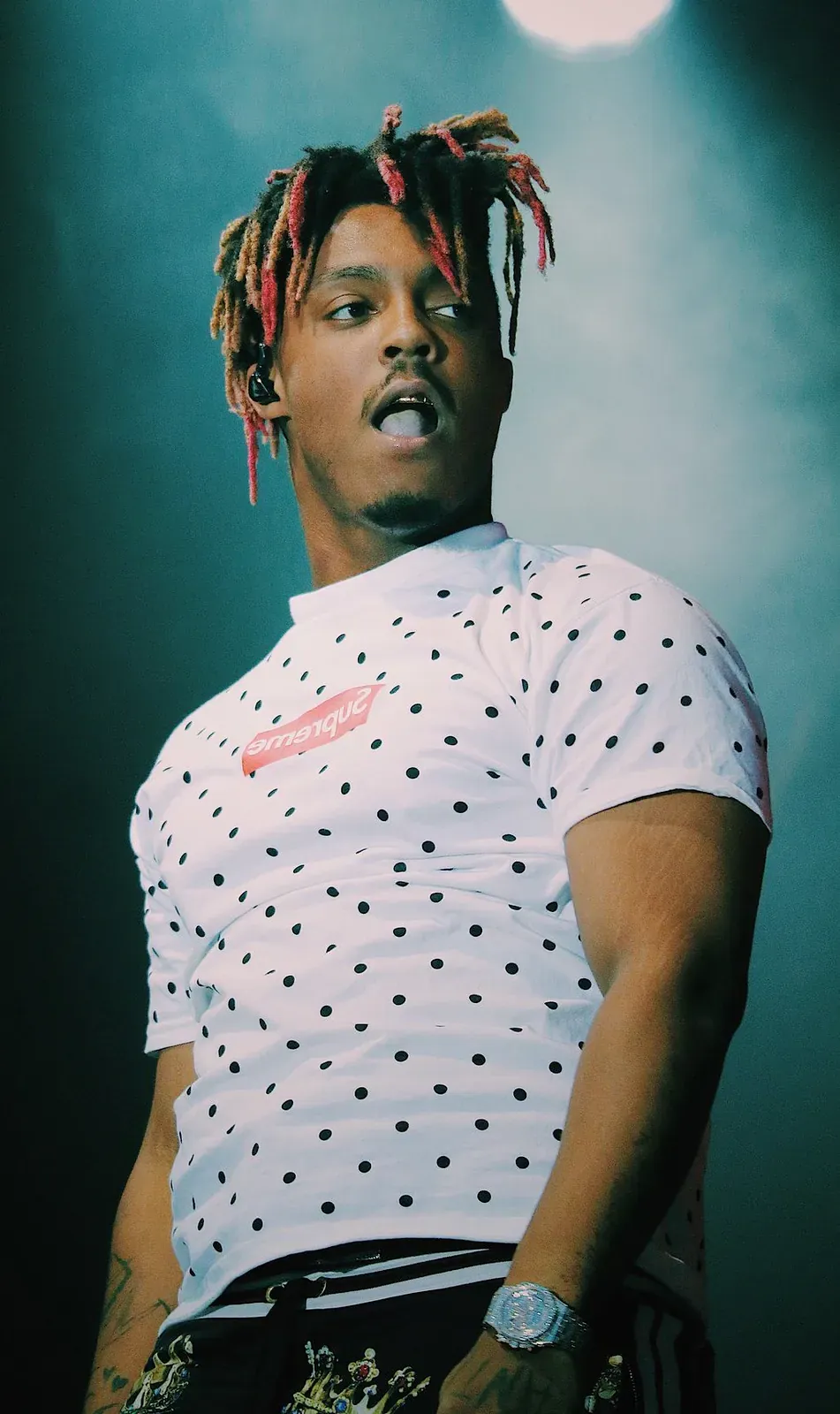
Second wave, 2019-2022
In the early 2020s Powfu, 24kGoldn, the Kid Laroi, Poorstacy and iann dior signed to labels and released their first EPs. Powfu’s death bed (coffee for your head) with beabadoobee reached number one on the Hot Rock and Alternative Songs chart in 2020, and 24kGoldn and iann dior’s Mood became a chart-topping song later that year and was certified quadruple platinum. Nothing,Nowhere, whose album Reaper appeared in 2018, was described by Revolver as a leading star of the movement. Lil Bo Weep died in March 2022 after a long struggle with depression.
Characteristics
Emo rap leaves the usual themes of mainstream hip-hop for personal and emotional lyrics: depression, loneliness, anxiety, drug and alcohol use, nihilism, suicide, heartbreak and self-medication. Vocals move between rapping and singing, often with pitch correction. Much of the sampling draws on 2000s pop-punk and emo songs, influenced by bands such as Mineral, Underoath and the Postal Service, and some artists play original guitars. The tempo sits mostly in a slow, half-time feel, and the sound sheet above shows the measured range.
Instruments and production
Production starts from trap drum programming and treats the guitar sample as the main melodic element. The rapper’s voice carries the rest, usually tuned and layered into short, repeated hooks. Because the beats are built mainly from samples, a producer can turn an old emo or pop-punk record into a trap track without playing an instrument.
Notable recordings
Lucid Dreams was released as a single in 2018, and its chart run made Juice WRLD the clearest example of an emo rap artist reaching the broad audience of pop radio. SAD! followed the same path after XXXTentacion’s death. Both songs use bright melodic hooks over slow beats and words about heartbreak and pain, a mix that explains how a niche underground sound filled playlists. Star Shopping, which Lil Peep made in 2015, shows the earlier, more underground side of the style.
Mainstream success
Labels moved quickly after the 2017 breakthroughs. Juice WRLD worked with Interscope Records, Lil Uzi Vert with Atlantic Records and Lil Peep and XXXTentacion with Columbia Records at different points in their careers. Forbes described 2020 as the year rap artists ruled the rock charts, and Spin called the merger of pop-punk and rap that year’s commercial juggernaut.
Culture
Fans are sometimes called sad boys, after Yung Lean’s collective. The early visual style was lo-fi: VHS-shot videos, dark clothes and self-made artwork. The deaths of several leading artists, and their drug use, drew attention to how the music treats mental health and substance use.
Legacy
Emo rap, together with cloud rap, trap, dubstep, trance, chiptune and pop, influenced the development of hyperpop. It also revived interest in pop-punk and fed the 2020s pop-punk revival. Machine Gun Kelly’s Tickets to My Downfall was described as bridging the gap between pop-punk and emo rap, and Trippie Redd, Lil Tracy, Cold Hart, Lil Aaron and 24kGoldn released pop-punk albums and songs. Justin Bieber, Ariana Grande and Miley Cyrus used elements of the style.
Misconceptions
Emo rap did not begin with Lil Peep’s death or the 2017 charts. The style was already circulating on SoundCloud in 2012 and 2013 through Bones, GothBoiClique and Yung Lean, and the 2017 success followed years of underground work.
It is also not simply a rap version of emo bands. Its core is trap production with sung hooks, and emo and pop-punk enter mainly as samples, melody and subject matter.
The mixing of rap and emo was not new either. Zebrahead, MC Lars, Gym Class Heroes and DCD2 Records had combined the scenes long before the SoundCloud generation.
Frequently asked questions
What is emo rap?
Emo rap is a hip-hop subgenre that combines trap beats with emo and pop-punk influences and sing-rapped vocals, about depression, loneliness, drug use and heartbreak.
When did emo rap start?
Emo rap emerged in the early 2010s on SoundCloud, and it became mainstream in 2017 with XO Tour Llif3 and 17.
Who are the main emo rap artists?
The artists most often tied to the genre are Lil Peep, Juice WRLD, XXXTentacion, Lil Uzi Vert and Trippie Redd, with Bones and the GothBoiClique members as early pioneers.
Is emo rap the same as sad rap?
Yes. Sad rap and emo trap are alternative names for emo rap. The related sadboy rap grew from Yung Lean’s Sad Boys collective and favours washed-out beats and a deadpan style.
Sound
Sound sheet
Signature sounds
- Sampled 2000s emo and pop-punk guitars
- Sing-rapped Auto-Tuned hooks
- Trap-style beats
- Confessional lyrics on depression, addiction and heartbreak
Techniques
- Sing-rapping
- Pop-punk and emo sampling
- Trap production
Tuning
Equal temperament; no single key
Vocals
Sung and rapped, often Auto-Tuned, on confessional topics such as depression, loneliness, drug use and heartbreak.
Scenes
Where it happened
Where and when the sound lived: one bar per city on a shared timeline.
North America
Active scenes
Peak 2, 2017-2025
Base of the GothBoiClique collective, a seed of the underground scene.
Hometown of Juice WRLD and base of Grade A Productions, the imprint that signed him.
Culture
Culture markers
- Sad boys
Nickname for fans, taken from Yung Lean's collective.
Slang - VHS-recorded videos
Bones's lo-fi, VHS-shot videos and dark look shaped the underground aesthetic.
Artwork
Media
Key media
- 2008Punk Goes Crunk
by Various. Fearless Records album of emo and pop-punk bands covering hip-hop songs, an early crossover.
Compilation
Glossary
Terms on this page
Los Angeles collective, also written GBC, that mixed trap, emo and dark wave and counted Lil Peep and Lil Tracy as members.
Building a beat from a 2000s pop-punk or emo song.
Yung Lean's collective, whose name is also used for fans of emo rap.
A vocal mix of rapped verses and sung hooks that defines the genre.
Hip Hop family