Fuji music
Fuji is Yoruba popular music from Nigeria, built on talking drums, call-and-response singing and praise verse, grown from Ramadan wéré singing.
Lagos, 1968
African family

Born
1968
Lagos
Subgenres
7
Documented branches
Links
20
Genres it drew on or shaped
Tempo
90-160 BPMLineage
Family tree
Timeline
Era by era
From the first sparks to today. Select a dot to read the story behind it.
- Wéré roots in Ibadan and Lagos
1950 to 1969
- Barrister and Kollington
1970 to 1983
- Talazo, Garbage and new brands
1984 to 1999
- Classical fuji and street pop
2000 to today
Eras
Moments
- 1 Wéré roots in Ibadan and Lagos, 1950 to 1969
- 2 Barrister and Kollington, 1970 to 1983
- 3 Talazo, Garbage and new brands, 1984 to 1999
- 4 Classical fuji and street pop, 2000 to today
around 1950
Wéré roots in Ibadan and Lagos
Muslim singers in Yoruba towns performed wéré, improvised dawn songs for Ramadan, over sákárà-style percussion. Young singers such as Ayinde Barrister and Kollington Ayinla rose through wéré groups.
- 1955Wéré groups spread through Yoruba citiesWéré singers founded performance groups in Muslim communities of Ibadan, Lagos and Ilorin, the direct root of fuji.
- 1965Barrister's first break in musicSikiru Ayinde Barrister begins his professional career, singing with the Lagos wéré group of Jibowu Barrister.
- 1966Barrister's first LPBarrister releases his first LP and plays Lagos events for Muslim clients.
around 1970
Barrister and Kollington
Barrister named and shaped fuji from wéré, apala, jùjú and afrobeat. Kollington became his rival, added bàtá drums in 1978 and launched his own label in 1982.
- 1970Barrister names fujiBarrister blends wéré with apala, jùjú and afrobeat and takes the name from an airport poster of Mount Fuji.
- 1974Kollington begins recordingAyinla Kollington starts recording for EMI Nigeria and emerges as Barrister's chief rival.
- 1978Bàtá drums enter fujiKollington adds the bàtá drum, until then fuji leaned almost entirely on talking drums, and briefly leads the market.
- 1982Kollington Records foundedKollington starts his own label and releases about 30 albums in five years.
- 1982Barrister and Kollington feudA publicised public feud between the two leading stars runs through the early 1980s.
1984
Talazo, Garbage and new brands
K1 De Ultimate's Talazo '84 and Barrister's Fuji Garbage series gave rival house sounds. Pasuma and Adewale Ayuba arrived with their own styles and touring took fuji to London and New York.
- 1984Talazo '84Wasiu Ayinde Marshal, once Barrister's protege, releases his most successful album and a style called Talazo Fuji.
- 1988Fuji Garbage seriesBarrister releases the Fuji Garbage series, the sound he later took to London shows.
- 1993Pasuma's debut RecognitionWasiu Alabi Pasuma releases his debut album and goes on to more than 30 albums.
- 1995First fuji set at WOMADK1 gives the first fuji performance at the WOMAD festival.
2000
Classical fuji and street pop
Fuji absorbed hip hop, English and Pidgin, and its hooks and rhythms fed Nigerian street pop and fuji-pop hybrids. Barrister died in 2010; K1, Pasuma and Saheed Osupa kept the genre at the centre of Lagos party life.
- 2010Barrister diesFuji's creator dies on 16 December, aged 62.
- 2022Omo OlogoPasuma and Qdot release the Afro-fuji single, a link between fuji and younger street pop.
Listening path
Start listening
A short path from an easy way in to the deep end. Thumbnails come from YouTube; the player loads only when you press play.
- 01
Sikiru Ayinde Barrister, 1988
The creator's late sound: dense talking drums and praise singing; listen for the chorus answering the lead.
- 02
K1 De Ultimate, 2020
The leading Talazo star in the streaming era, with a polished band over the percussion core.
- 03
Pasuma ft. Qdot, 2022
Afro-fuji that shows how fuji meets street pop.
Facts
| Family | African |
| Origin | Lagos, Nigeria |
| Emerged | Late 1960s to early 1970s |
| Status | Active |
| Tempo | 90 to 160 BPM |
| Meter | 4/4 |
| Grew out of | Wéré, Ajísari |
| Subgenres | 7 |
Fuji is a style of Yoruba popular music from southwestern Nigeria, led by a bank of drums and a high-pitched singer answered by a chorus.
It grew in the late 1960s and early 1970s out of wéré, the improvised songs Muslims sing before dawn during Ramadan, and it became one of the country’s leading dance musics. Its name comes from Mount Fuji in Japan.

Origins
Wéré, also called ajísari (“waking up for sari”), was invented by Muslim singers in Yoruba towns to rouse the faithful during the fast. Through the 1950s and 1960s wéré groups multiplied in Muslim communities around Ibadan, Lagos and Ilorin. They borrowed their rhythms from sákárà, a Yoruba praise-song style led by the small round sákárà drum, though without the fiddle that often joined it. Some groups also played harmonicas between the wéré passages.
Sikiru Ayinde Barrister came out of this world. Born in Ibadan in 1948, he made his first break in music in 1965 as a singer with the Lagos group of Jibowu Barrister, and released his first LP the following year. After military service in the civil war he left the army and formed a 34-piece band of percussionists and singers, the Supreme Fuji Commanders. In the late 1960s and early 1970s he reworked wéré with elements of apala, jùjú and afrobeat, and gave the result a name he said he took from an airport poster of Mount Fuji. He described the music as a mix of sákárà, apala, jùjú, aró, afrobeat, gudugudu and some highlife.
Ibadan and Lagos, 1950-1983
Barrister’s main rival came from the same circuit. Ayinla Kollington, from Ilota near Ilorin, began recording for EMI Nigeria in 1974. In 1978 he added the bàtá drum to a style that had leaned almost entirely on talking drums, and for a time the novelty put him ahead. In 1982 he founded Kollington Records and released about 30 albums on it in five years. Barrister, who first recorded for African Songs Ltd before starting his own label, answered with albums such as Iwa (1982) and Nigeria (1983).
Their feud was public in 1982, but by 1983 the two stood side by side at the funeral of the apala star Haruna Ishola, and the market had grown large enough for both. Fuji was by then outselling jùjú as the country’s most popular roots music, and by the early 1980s it was accepted across religious lines. Barrister used the music for commentary on politics and national issues, within the wider tradition of Yoruba music.
Talazo and Garbage, 1984-1999
The next generation arrived with its own house styles. Wasiu Ayinde Marshal had packed instruments for Barrister and played in the Supreme Fuji Commanders from 1975 to 1978, taking the name Ayinde with his mentor’s blessing. His 1984 album Talazo ’84 became the biggest of his career and gave its name to Talazo Fuji, and he recorded as K1 De Ultimate. Barrister answered in 1988 with the Fuji Garbage series, followed by New Fuji Garbage in 1993.
Other stars carved out lanes. Pasuma, who began writing songs in 1984 with K1 as his model, released his debut Recognition in 1993 and went on to more than 30 albums. Adewale Ayuba introduced a style called bonsue fuji and released Fuji Time in 1996. Abass Akande Obesere worked slang into his songs. Women singers meanwhile developed Islamic and wákà fuji, especially around Ilorin, performing at weddings and for returning pilgrims.
Characteristics
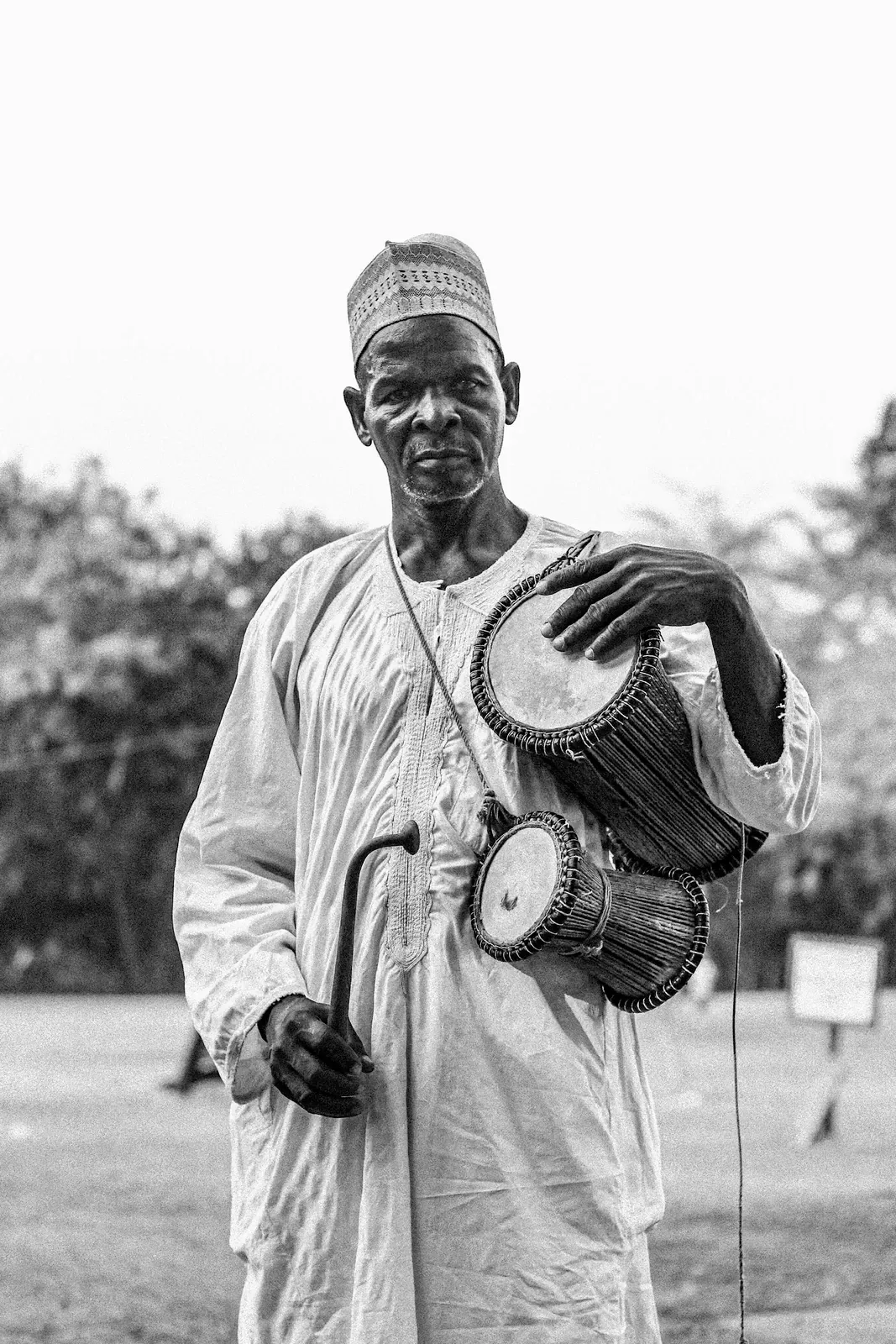
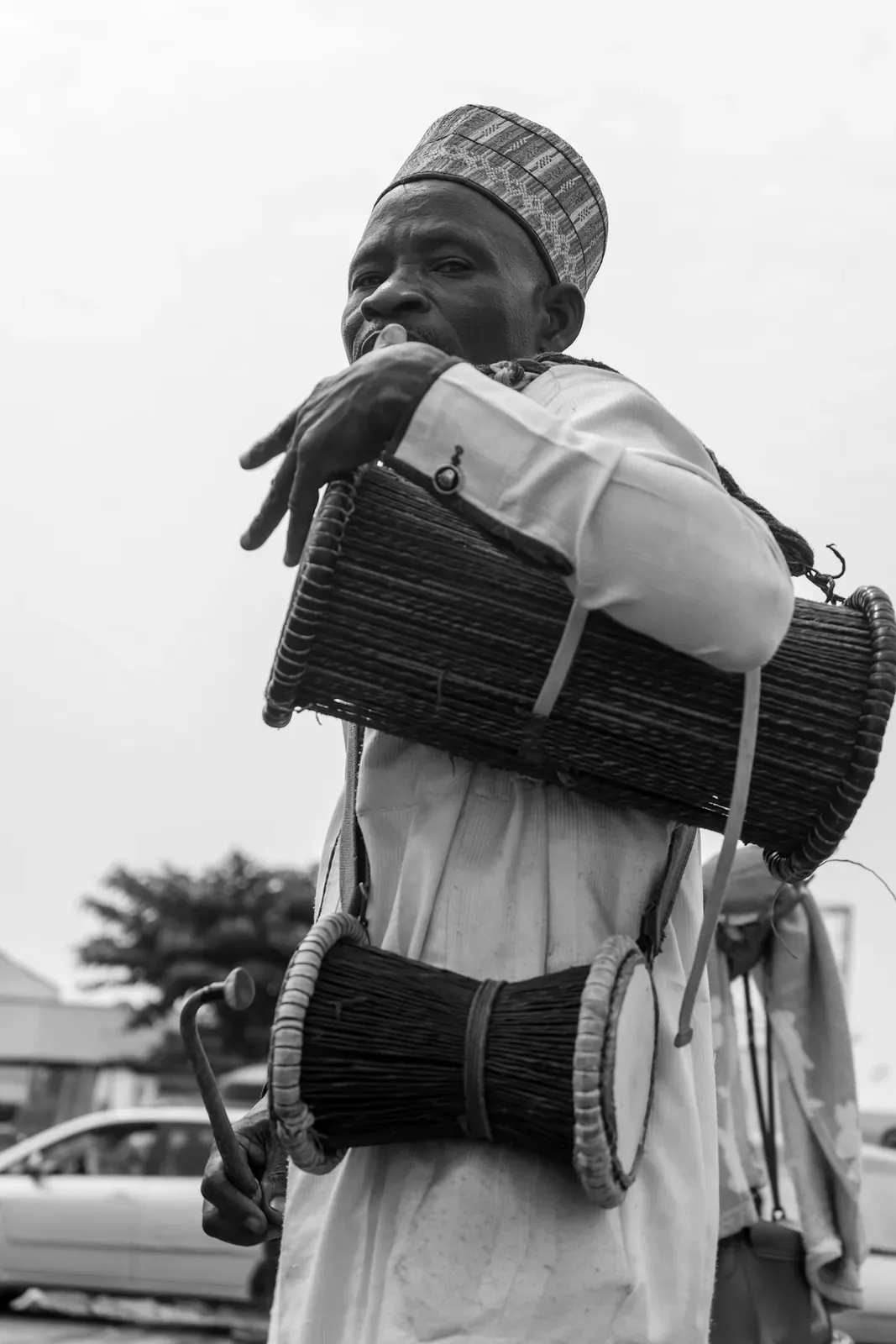
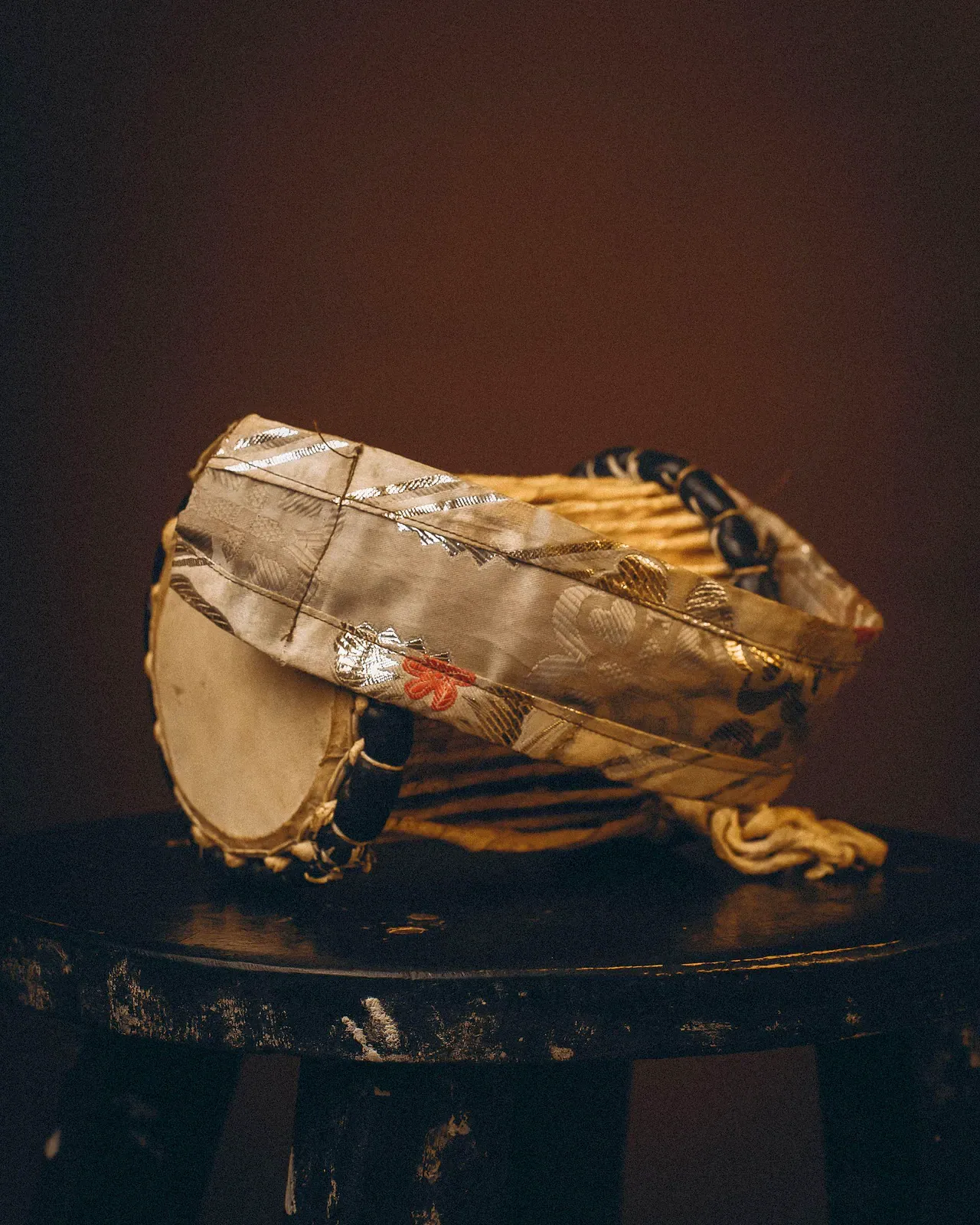
Classic fuji dropped the electric guitars that characterise jùjú and relied on percussion: sákárà, dùndún talking drums, gbèdu and, after 1978, bàtá. The rhythms are complex and energetic, and the vocal arrangement is call and response, with the lead singer’s phrases answered by backing singers. Barrister was known for praise singing and for commentary on national issues, themes that run through the genre; lyrics stay mostly in Yoruba, with English and Nigerian Pidgin added over time. Keyboards and Hawaiian guitar entered later bands, softening the all-percussion sound.
Mainstream success
Fuji’s reach grew through touring. Barrister played England in the 1970s and the United States in the 1980s, and had well-received London shows in 1990 and 1993. K1 began touring North America and Europe in 1986, played Hammersmith Town Hall in 1987, performed in New York with the full Talazo band in September 1990, and in 1995 gave the first fuji set at the WOMAD festival. At home, the 2000s brought a crowded field around Pasuma and Saheed Osupa, who is credited with a hip-hop-influenced strand of fuji.

Notable recordings
Barrister’s Fuji Garbage series, issued in 1988, is the clearest statement of his late sound, with the talking drums and praise singing at full density. K1’s Talazo ’84 fixed a rival house style while its maker was still in his twenties. In 2020 K1 released the EP Fuji The Sound, evidence that the style still has an audience in the streaming era. Pasuma and Qdot’s Omo Ologo in 2022, described as Afro-fuji, shows the current exchange with younger pop.
Culture
Fuji is party music. It is played at weddings and celebrations, where singers name and flatter patrons and guests in verse. Stage names double as titles: Barry Wonder, Baba Alatika, K1 De Ultimate. Its religious roots are still visible in the Ramadan wake-up singers who gave rise to it, and women singers have kept an Islamic and wákà tradition alive beside the male-dominated mainstream.
Legacy
Barrister died on 16 December 2010. In 2024 a documentary series on his life, The Fuji Documentary, released its first episode, titled Mr. Fuji: Barry Wonder. The genre’s influence is audible in twenty-first century Nigerian street pop, whose hooks and rhythms draw heavily on fuji; fujipiano, neo-fuji and fuji-fusion are attributed to artists including Olamide, Asake and Qdot. A strand called classical fuji, credited to K1, merged fuji with American hip hop. Fuji sits in the wider tradition of African music and counts afrobeat among its ingredients; the later afrobeats is a separate pop scene.
Misconceptions
One common error is that the name is Yoruba. It is not related to the words fúja (“to flee”) or fáàjì (“leisure”); it refers to the Japanese mountain. A second is that fuji is a form of jùjú. Fuji grew from wéré, with apala and sákárà influences, and in its classic form it dispensed with the guitars at the centre of jùjú. A third holds that it is only music for Muslims. It began in Muslim Ramadan singing, but by the early 1980s it had been accepted by all religions in Nigeria.
Frequently asked questions
What is fuji music?
Fuji music is a Yoruba popular style from Nigeria built on dense percussion, call-and-response vocals and praise singing. It developed from Ramadan wéré singing in the late 1960s and early 1970s.
Who created fuji music?
Sikiru Ayinde Barrister is credited as the pioneer and gave the style its name. Ayinla Kollington, his contemporary and rival, was equally important in making it popular.
Why is fuji called fuji?
Barrister named it after Mount Fuji in Japan, which he said he saw advertised on a poster at an airport.
Is fuji the same as jùjú?
No. Both are Yoruba popular styles, but fuji grew from wéré and, in its classic form, uses percussion without the guitars that define jùjú.
Sound
Sound sheet
Signature sounds
- Dense talking-drum and bàtá percussion with no guitars in classic form
- High-pitched lead voice answered by a chorus
- Praise singing of patrons and listeners
Drums and percussion
- Dùndún
- Bàtá
- Sákárà drum
Techniques
- Call and response
- Praise singing
- Layered talking-drum rhythms
Tuning
Mostly 12-tone keyboards beside pitch-bending dùndún talking drums.
Vocals
High-pitched lead in Yoruba with a chorus, later with English and Nigerian Pidgin.
Scenes
Where it happened
Where and when the sound lived: one bar per city on a shared timeline.
Africa
Europe
Active scenes
Peak 4, 1970-2025
A wéré centre and the birthplace of Barrister.
Home of Barrister's Supreme Fuji Commanders and the market that made fuji a national dance music.
A wéré city and the base of women's Islamic and wákà fuji.
The overseas hub where Barrister toured from the 1970s and K1 played Hammersmith in 1987.
Culture
Culture markers
- Ramadan wake-up singing
Wéré and ajísari singers walk neighbourhoods before dawn during the fast, the source of fuji.
Ritual - Women's wákà at weddings
Women singers perform Islamic and wákà fuji at weddings and for pilgrims returning from Mecca.
Ritual - Stage titles
Stars carry honorifics such as Barry Wonder, Baba Alatika and K1 De Ultimate, part of a praise culture.
Slang
Media
Key media
- 2024The Fuji Documentary: Mr. Fuji, Barry Wonder
by Saheed Aderinto. Documentary series whose first episode tells the life of Barrister.
Film
Glossary
Terms on this page
Another name for wéré, from waking up for sari, the pre-dawn meal.
The style introduced by Adewale Ayuba.
Fuji merged with American hip hop, a term credited to K1.
Barrister's name for his late 1980s sound and album series.
K1 De Ultimate's brand of fuji, built on Barrister's model.
Improvised Yoruba Muslim music sung to wake the faithful before dawn during Ramadan.
African family