Jùjú music
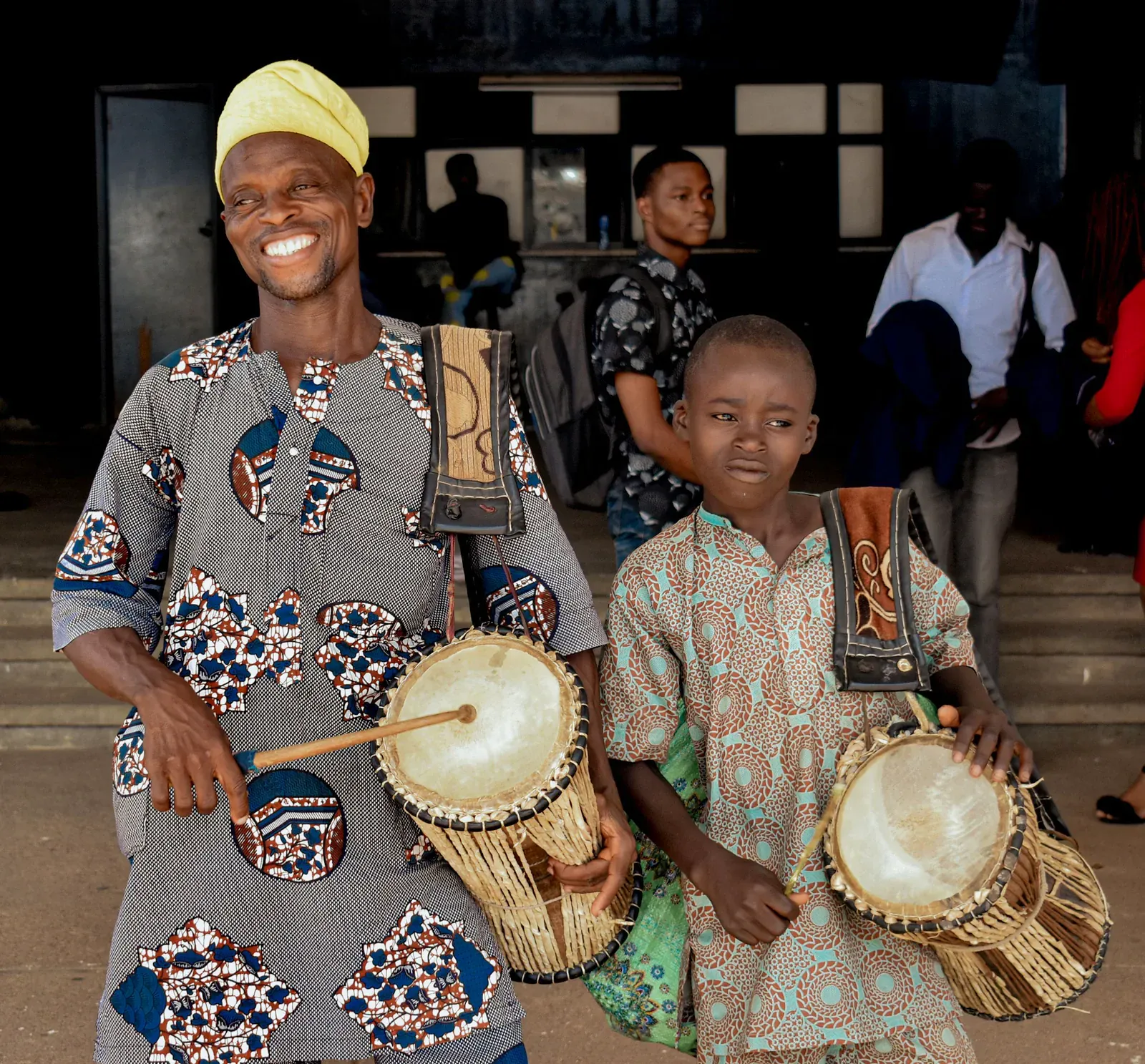
Jùjú is Yoruba popular music born in 1920s Lagos from palm-wine guitar and aṣíkò drumming, later built on talking drums, electric guitars and praise-singing.
Lagos, 1929
African family
Born
1929
Lagos
Subgenres
8
Documented branches
Links
16
Genres it drew on or shaped
Tempo
90-150 BPMLineage
Family tree
Timeline
Era by era
From the first sparks to today. Select a dot to read the story behind it.
- Lagos beginnings
1929 to 1947
- Talking drums and I. K. Dairo
1948 to 1963
- Obey, Adé and amplification
1964 to 1979
- Fuji competition, Island and afro-jùjú
1980 to today
Eras
Moments
- 1 Lagos beginnings, 1929 to 1947
- 2 Talking drums and I. K. Dairo, 1948 to 1963
- 3 Obey, Adé and amplification, 1964 to 1979
- 4 Fuji competition, Island and afro-jùjú, 1980 to today
around 1929
Lagos beginnings
Tunde King and the Olowogbowo area boys turn palm-wine guitar and aṣíkò drumming into small guitar, tambourine and ṣẹ̀kẹ̀rẹ̀ groups, first recorded in 1936.
- 1929Area boys in OlowogbowoTunde King improvises asiko tunes and folk songs with friends at Lagos gatherings, laying the base of jùjú.
- 1936Tunde King records for ParlophoneKing and his group become the first jùjú musicians to be recorded.
1948
Talking drums and I. K. Dairo
The gángan talking drum joins the band in 1948. I. K. Dairo adds an amplified accordion and takes jùjú into the independence years.
- 1948The talking drum joins the bandAkanbi Ege Wright brings the gángan into jùjú groups, which had played without it until then.
- 1960Dairo plays at an independence partyI. K. Dairo's band wins Ibadan patrons at a party during the independence celebrations.
- 1962SalomeI. K. Dairo's Salome appears on Decca's West African series and becomes a major hit.
1964
Obey, Adé and amplification
Ebenezer Obey and King Sunny Adé build large amplified bands with electric guitars, talking drums and praise-singing, and make jùjú Nigeria's leading party music.
- 1964Obey forms the International BrothersEbenezer Obey starts a band playing a highlife and jùjú mix that grows into the Miliki sound.
- 1967Sunny Adé forms the Green SpotsKing Sunny Adé leaves a highlife band to found the group that becomes the African Beats.
- 1972Board MembersEbenezer Obey's Board Members appears with his International Brothers Band.
1980
Fuji competition, Island and afro-jùjú
Fuji takes much of jùjú's audience, King Sunny Adé reaches Europe and North America through Island Records, and Shina Peters revives the home market with afro-jùjú in 1989.
- 1980Fuji takes over the marketCompetition from fuji music pushes jùjú down the Nigerian charts through the decade.
- 1982Juju Music on IslandKing Sunny Adé's international debut brings jùjú to critics in Europe and North America.
- 1983Grammy nomination for Synchro SystemSynchro System makes King Sunny Adé the first Nigerian nominated for a Grammy.
- 1989Ace and afro-jùjúShina Peters' Ace fuses jùjú with afrobeat, goes double platinum in Nigeria and revives the style.
Listening path
Start listening
A short path from an easy way in to the deep end. Thumbnails come from YouTube; the player loads only when you press play.
- 01
I. K. Dairo, 1962
The accordion-led hit of the independence years; listen for the talking drum answering the vocal.
- 02
Ebenezer Obey, 1972
Obey's unhurried Miliki groove with proverbs and praise-singing.
- 03
King Sunny Adé, 1982
The slow-building track that opened Western ears to the African Beats' layered guitars.
- 04
King Sunny Adé, 1983
Pedal steel, synthesizers and talking drums in the style marketed abroad.
- 05
Shina Peters, 1989
The faster, keyboard-driven afro-jùjú sound of the early 1990s.
Facts
| Family | African |
| Origin | Lagos, Nigeria |
| Emerged | 1920s to 1930s |
| Status | Active |
| Tempo | 90 to 150 BPM |
| Meter | 4/4 |
| Grew out of | Palm-wine music, Asiko, Dùndún |
| Subgenres | 8 |
Jùjú is a style of Yoruba popular music that began in Lagos, Nigeria, in the 1920s and 1930s. It grew out of palm-wine guitar music and the aṣíkò dance drumming of the city’s Yoruba Christian communities.
Its core is call-and-response singing, praise lyrics and polyrhythmic percussion, carried by guitars and, since 1948, by the talking drum.
Origins
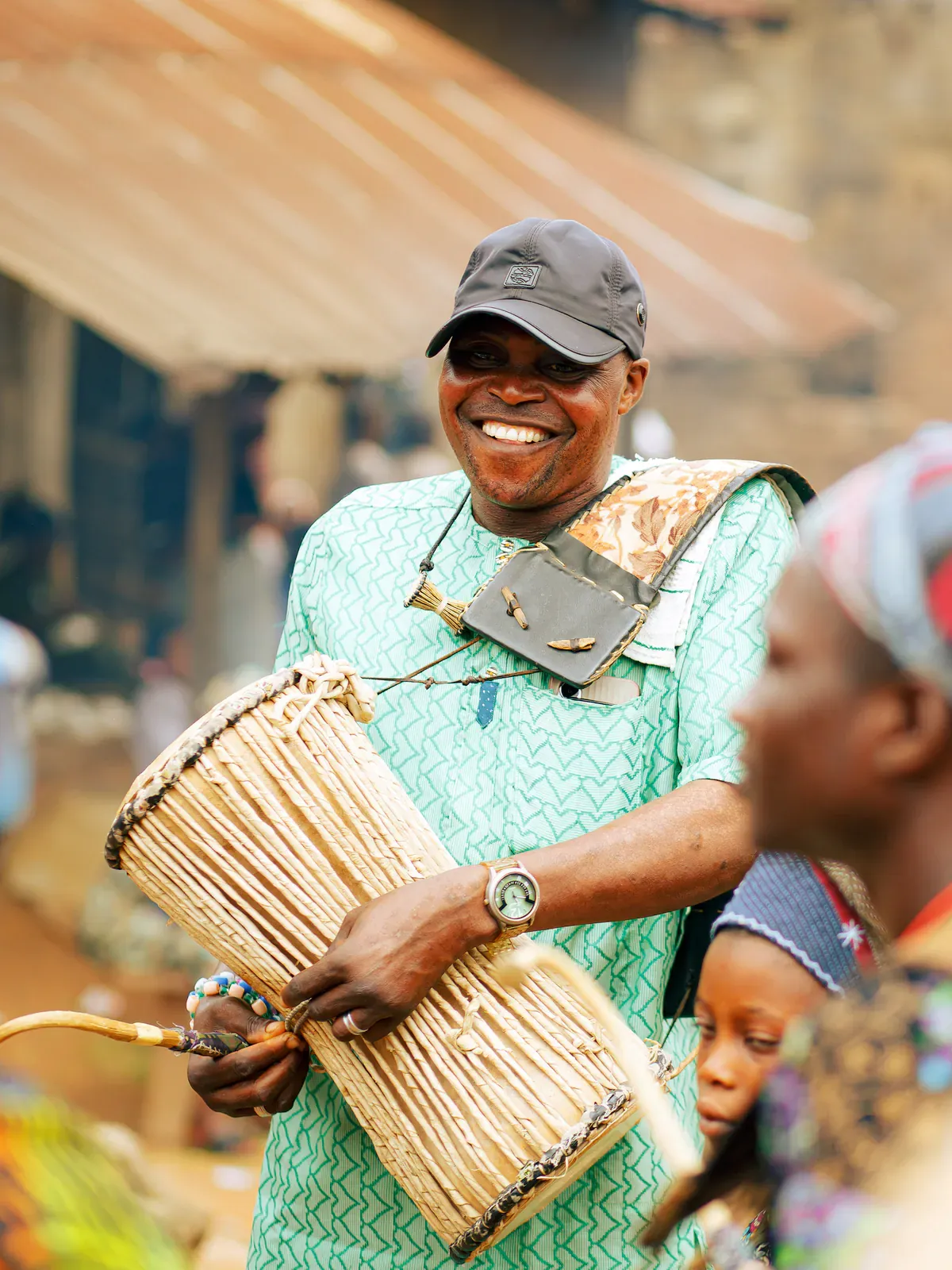
Lagos in the 1920s mixed local Yoruba people with returnees from the New World, including Brazil. Their music was palm-wine guitar playing, and the dance drumming called aṣíkò was popular in the Christian Olowogbowo quarter. A group of young men there, known as area boys, met in workshops and compounds to drink and make music. Tunde King, born in 1910, improvised on aṣíkò tunes and folk songs among them, and he is credited as the founder of jùjú.
The church shaped the sound as much as the street. The area boys preferred Christian wake-keeping ceremonies to formal services and learned hymn tunes with Yoruba words. That is where jùjú’s diatonic melodies, parallel thirds and free combination of voices come from. A recognizable genre emerged in Lagos in 1932. The name refers to the tambourine, not to magic, and the first line-up was a trio: a singer on banjo or guitar, a tambourine player and a sèkèrè (gourd rattle) player.
Music was not a respectable job for a Yoruba family at the time. King often played with a cap pulled over his face and only in family compounds, never on the street. In 1936 he and his group became the first jùjú musicians to be recorded, on Parlophone. King later said his recording earnings were small beside what live work paid, and that recordings mostly went to groups with ties to Lagos elites.
Talking drums and I. K. Dairo, 1948-1963
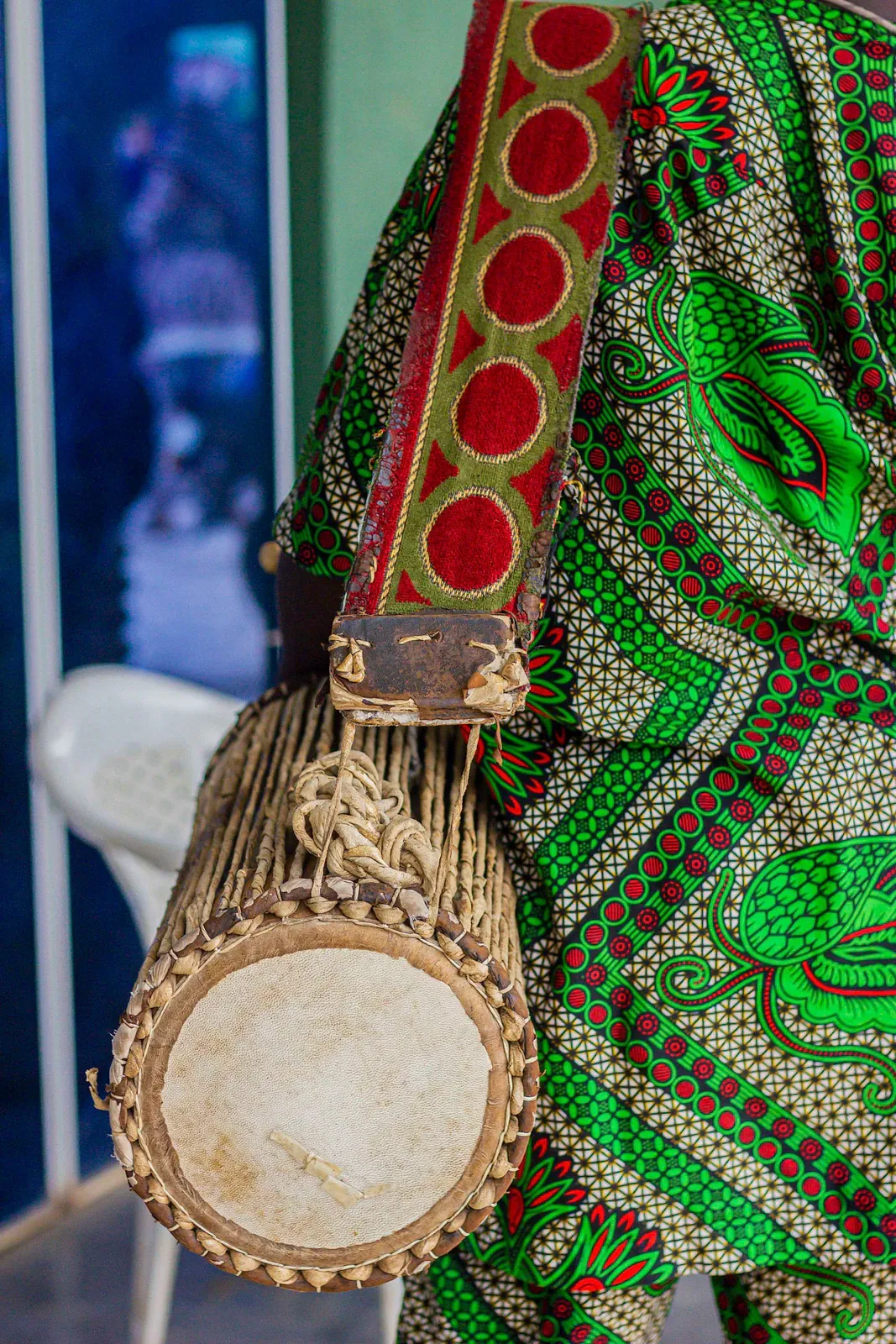
After the Second World War, jùjú bands were mostly quartets, and rival groups began to add instruments. Akanbi Ege Wright brought the gángan into jùjú in 1948. Sunday Harbour Giant added the penny whistle, the organ and the mandolin.
The larger change came with Isaiah Kehinde Dairo. He formed the ten-piece Morning Star Orchestra in 1957 and renamed it the Blue Spots in the early 1960s. His band played at a party hosted by an Ibadan lawyer during the independence celebrations of 1960, in front of prominent Yoruba patrons who then hired it for their own events. Dairo played an amplified accordion, a first for a high-profile jùjú musician, and drew on the singing, rhythms and verses of the Ijebu-Ijesha region rather than on the cosmopolitan style of Lagos bands. He also used Latin American-influenced dance rhythms and lyrics in several Nigerian languages. His 1962 record “Salome”, issued by Decca West Africa, was a major hit, and he received an MBE in 1963.

Obey and Adé, 1964-1979
Dairo’s time at the top was short. By 1964 Ebenezer Obey was gaining ground, and by the end of the decade Obey and King Sunny Adé were the leading acts. Obey began his professional career in Lagos in the mid-1950s, trained under Fatai Rolling-Dollar, and formed the International Brothers in 1964 to play a highlife and jùjú mix. The band later became the Inter-Reformers and filled the West African Decca catalogue with hits. Obey put drum kits, extra guitars and talking drums behind his singing, set proverbs in his lyrics and called the result Miliki, or enjoyment music.
Sunny Adé began in the highlife band of Moses Olaiya and formed the Green Spots in 1967. The group was renamed the African Beats and later Golden Mercury. Adé built a style on layers of electric guitars that work like a percussion section, talking drums, and a steel guitar that stands in for the African violin.
With independence, jùjú shifted from recreational music that marked events into highly popular urban dance and party music.
Characteristics
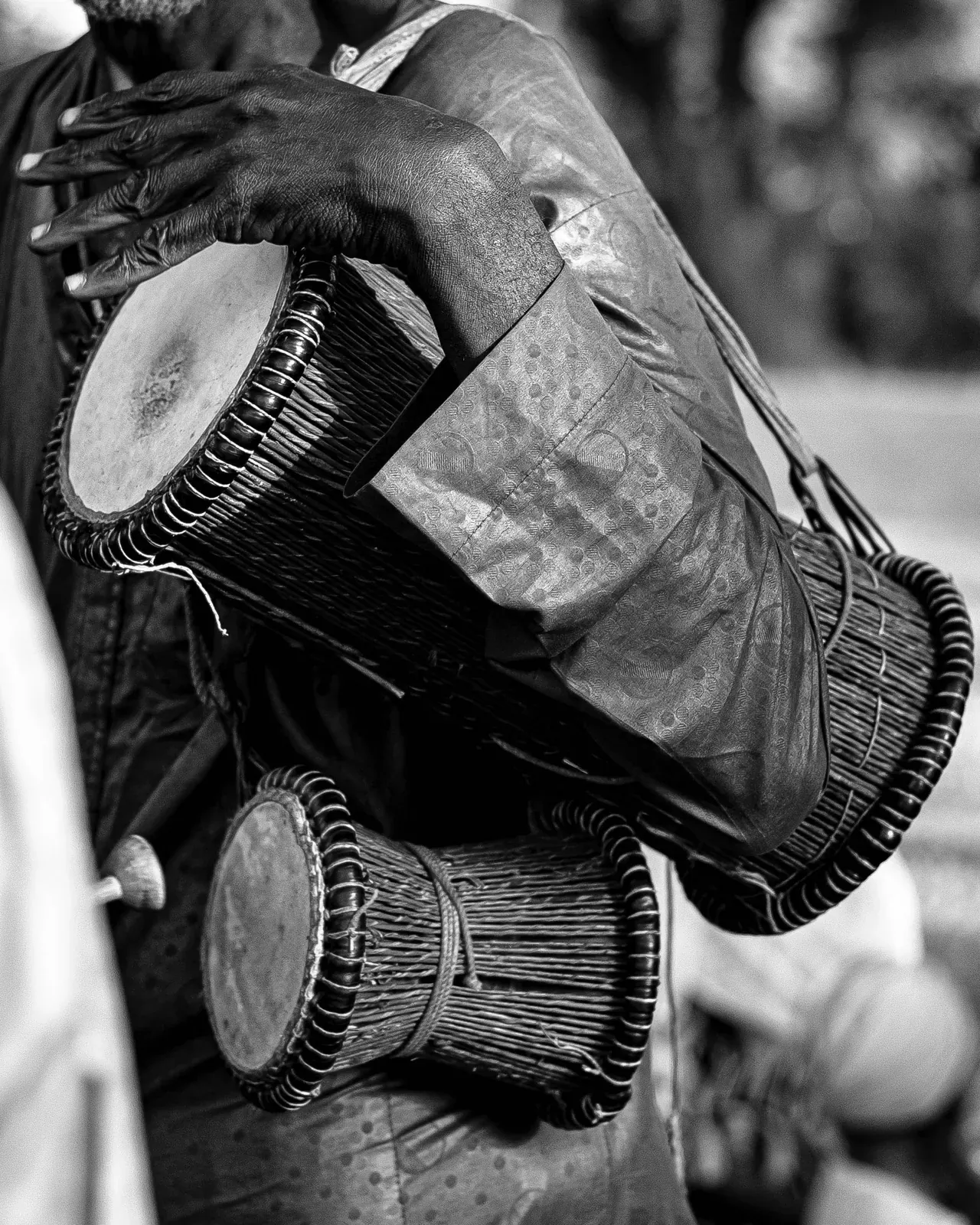
A jùjú song is organized around the singer. The bandleader sings solo lines, often with praise names (oríkì) and personal details about the host or an honoured guest, and a chorus answers in short responses. The talking drum repeats the phrases, sometimes with proverbs. Voices are high, slightly nasal and nearly free of vibrato.
Melodies are mostly diatonic and often harmonized in parallel thirds. Early songs followed an A-B-A or A-A-B-A form known as the “Johnny Walker” and moved on a I-IV-V7 harmony. Early recordings ran at roughly 130 to 150 beats per minute, fast for Yoruba social dance drumming of the time, and the large-band recordings measured for this page run slower.
Performances were long: groups played for hours without breaks from a repertoire they knew by heart, and the leader read the crowd.
Instruments and production
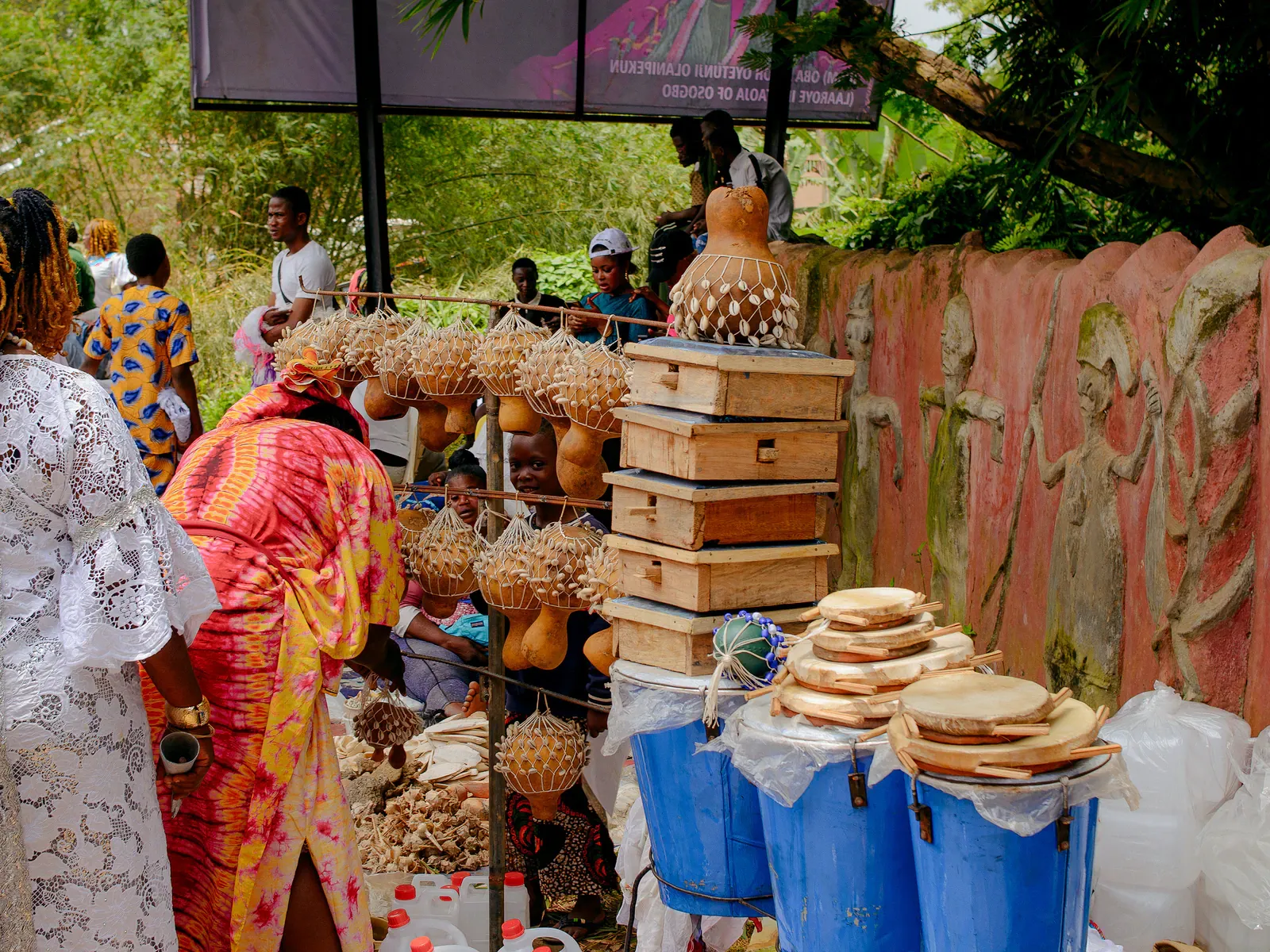
The earliest bands used a banjo or acoustic guitar, a tambourine, a gourd rattle and sometimes a small drum. Electric amplification in the 1960s let bands grow beyond ten members, with talking drums close-miked and loud, several guitars playing interlocking patterns, a drum kit and bass guitar, and a battery of hand percussion. Adé’s African Beats took this furthest. His group added pedal steel guitar, synthesizers, clarinet, vibraphone and tenor guitar. Adé said he used them partly as substitutes for traditional instruments that were hard to find and impractical on tour. The pedal steel, for instance, took the place of the African violin.
Mainstream success
Adé signed to Island Records in 1982, after the death of Bob Marley left the label looking for another artist from outside the Anglo-American market. The album Juju Music, released that year through Island Records, won enthusiastic reviews in Europe and North America, and Adé was billed as the African Bob Marley. His live shows ran well beyond the two hours then normal in North America. The follow-up, Synchro System (1983), earned the first Grammy nomination for a Nigerian artist. At home, jùjú faced competition from fuji in the 1980s. In 1989 Sir Shina Peters, who had played in Obey’s band, released Ace on CBS Records of Nigeria. The album mixed jùjú with afrobeat, used keyboards, saxophone and guitar over fast percussion, and went double platinum. The style, called afro-jùjú, became the dominant jùjú sound of the early 1990s. Obey turned to gospel music in the early 1990s.
Notable recordings
“Salome” (1962) is the clearest example of Dairo’s mix of local and city themes, with the accordion in front of the percussion. Obey’s “Board Members” (1972) is an early Miliki groove, Adé’s “Ja Funmi” shows layered guitars building slowly, and “Synchro System” adds pedal steel and synthesizer lines.
Culture
Jùjú supported a hierarchy of audiences. Higher-status and lower-status groups played for civil servants, artisans and daily paid labourers, and most bands stayed semi-professional so that members could keep another income. Recordings later carried jùjú across class lines, and its audience grew to include different religions and ages. The most successful groups are based in Lagos, with Ibadan as the supporting hub.
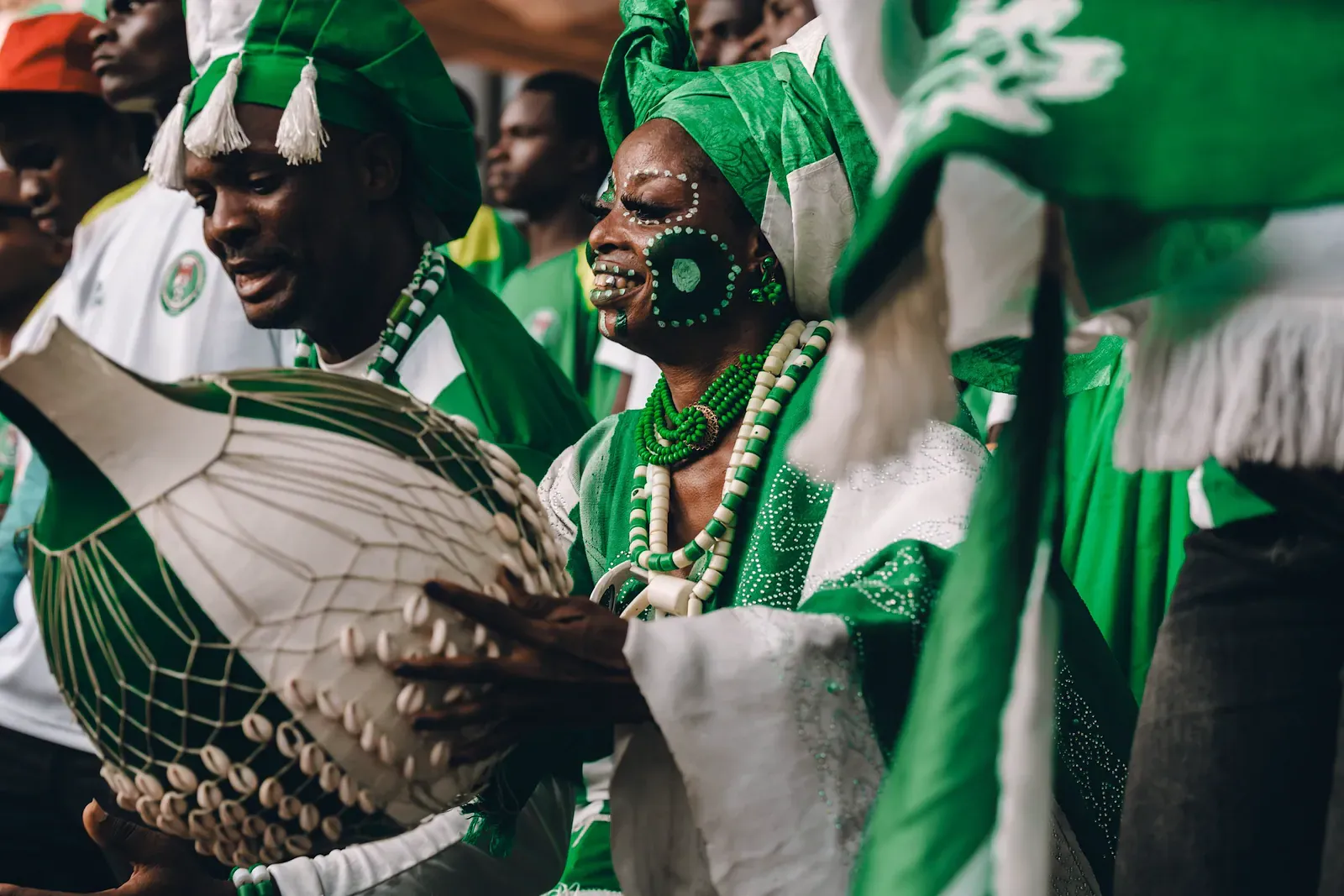
Another name for the more performance-oriented side of jùjú is tombo bar music.
Legacy
Jùjú linked the older Lagos guitar traditions to later Nigerian pop. Afrobeat counts it among its influences, and its party format survives in fuji and in the Yoruba gospel style tungba. Its larger systems include Obey’s Miliki, Adé’s Synchro system, Segun Adewale’s yo-pop and Peters’ afro-jùjú.
Related styles on this site include fuji, highlife, afrobeat and the wider Yoruba music tradition, all part of the African family.
Misconceptions
Jùjú is often assumed to mean magic. The name refers to the thrown tambourine, so it is a sound word and not a supernatural claim. It is also taken for a product of the 1980s world-music market, but it dates from the 1920s and 1930s, and Adé’s international success came half a century after Tunde King’s first recording. A third mix-up equates it with fuji or afrobeat. Fuji is a separate Yoruba style that overtook jùjú in the 1980s, and afrobeat is another distinct style, although they share some history.
Frequently asked questions
What is jùjú music?
Jùjú is a Yoruba popular music from Lagos, Nigeria, built on guitars, tambourine, talking drums, praise-singing and call and response. It started in the 1920s and became a dance and party style in the 1950s and 1960s.
Who invented jùjú music?
Tunde King, a Lagos guitarist born in 1910, is credited as its founder. He made the first jùjú recordings in 1936.
What instruments are used in jùjú music?
Early groups used banjo or acoustic guitar, tambourine and a gourd rattle. Talking drums arrived in 1948, and later bands added electric guitars, accordion, pedal steel guitar, synthesizers, saxophones and drum kits.
How fast is jùjú music?
Early jùjú ran at about 130 to 150 beats per minute. Measured across landmark recordings from the 1960s to the 1980s, tempos fall between roughly 90 and 150 beats per minute.
Who are the best-known jùjú musicians?
Tunde King, I. K. Dairo, Ebenezer Obey, King Sunny Adé and Shina Peters are the central names, one for each stage of the style.
Sound
Sound sheet
Anatomy of a track
| # | Part |
|---|---|
| 1 | Instrumental opening: guitars and talking drum |
| 2 | Lead vocal with praise lines and proverbs |
| 3 | Call-and-response chorus |
| 4 | Extended groove and drum break |
Signature sounds
- Talking drum echoing the vocal
- Interlocking electric guitars acting as a percussion section
- Call-and-response praise singing
- Harmony in parallel thirds
Drums and percussion
- Gángan talking drum
- Tambourine
- Drum kit
Techniques
- Call and response
- Drummed proverbs
- Interlocking guitars
- Krusbass two-finger guitar
Keys and modes
Major with I-IV-V7 harmony. Diatonic melodies in parallel thirds, drawn from church hymn practice.
Vocals
Lead singer with a high male register, slightly nasal and with little vibrato, answered by a chorus; texts of praise, proverbs and social commentary in Yoruba.
Scenes
Where it happened
Where and when the sound lived: one bar per city on a shared timeline.
Africa
Active scenes
Peak 2, 1957-2025
Birthplace of jùjú in the Olowogbowo quarter and still its main centre of bands and recording.
Secondary hub of jùjú, where Dairo's patrons and the party circuit of the early 1960s were based.
Culture
Culture markers
- Àríyá party performance
Bands play for hours without a break at social events, with the leader reading the crowd.
Ritual - Praise singing for the host
The bandleader adds personal details about the host and guests to oríkì lines, and the talking drum repeats them.
Ritual - Christian wake-keeping
Wake-keeping hymn singing in Olowogbowo supplied early jùjú with melodies and parallel-thirds harmony.
Ritual - Tombo bar music
Another name for the more performance-oriented side of jùjú.
Slang
Glossary
Terms on this page
Dance drumming of Lagos Yoruba Christian communities, a direct forerunner of jùjú.
Yoruba hourglass talking drum, whose pitch follows the tones of speech.
Name of the style, taken from the tambourine and not from magic.
Ebenezer Obey's label for his sound, meaning enjoyment music.
Yoruba praise names and poetry that the bandleader sings to the host and guests.
Gourd rattle wrapped in a net of beads.
African family