Goan music
Goan music is the Konkani-language song of Goa, joining Indian folk melody to Portuguese and Western harmony in the mando, dulpod, deknni and tiatr.
Goa, around 1800
South Asian family
Born
around 1800
Goa
Subgenres
4
Documented branches
Links
5
Genres it drew on or shaped
Tempo
80-160 BPMLineage
Family tree
Timeline
Era by era
From the first sparks to today. Select a dot to read the story behind it.
- Mando and deknni
1800 to 1891
- Tiatr and the Bombay stage
1892 to 1957
- Jazz-age Konkani pop
1958 to 1973
- Film, pop and revival
1977 to today
Eras
Moments
- 1 Mando and deknni, 1800 to 1891
- 2 Tiatr and the Bombay stage, 1892 to 1957
- 3 Jazz-age Konkani pop, 1958 to 1973
- 4 Film, pop and revival, 1977 to today
around 1800
Mando and deknni
Goan Catholics in Salcete and Bardez turn Konkani verse and Western melody into the deknni and the mando, accompanied by guitar, violin and the ghumat.
- 1869Early deknni KuxttobaOne of the earliest dated deknni mocks a rebel against Portuguese rule, which shows the form's political edge.
1892
Tiatr and the Bombay stage
Konkani musical theatre is born in Bombay in 1892, and song interludes between scenes grow into a form of their own.
- 1892First tiatr staged in BombayItalian Bhurgo opens on 17 April at the New Alfred Theatre and is later marked as Tiatr Day.
- 1952Goa Symphony Orchestra foundedAntonio Fortunato de Figueiredo founds the orchestra, an early home for Western art music in Goa.
- 1956Khell moves onto the stageAntonio Moraes stages Sandlolo Put with a backdrop, turning a street play into stage theatre.
1958
Jazz-age Konkani pop
Chris Perry's band and Lorna's voice bring brass arrangements to Konkani songs in the nightclubs of Bombay and Calcutta and on His Master's Voice records.
- 1958Chris Perry's first singlesPerry issues his first singles on Columbia, early records of a trumpeter who later joins jazz to Konkani song.
- 1969Bebdo releasedChris Perry Presents Lorna Bebdo puts the Konkani song about a drunken husband on an EP.
- 1973Lorna and Perry partLorna leaves music for 23 years after a dispute with her bandleader.
1977
Film, pop and revival
Konkani cinema, Remo Fernandes's Konkani and Portuguese albums, Lorna's 1995 return and a 2015 film on Perry and Lorna keep the older song types in circulation.
- 1977First Konkani colour filmBhuierantlo Munis carries Perry's songs, including the dulpod Undrea Mhojea Mama.
- 1985Old Goan GoldRemo Fernandes records Konkani and Portuguese songs on his own label, playing every instrument himself.
- 1995Lorna returns to the stageLorna comes out of retirement and records new albums.
- 2007Tiatr Academy of Goa createdThe state government starts an academy to support tiatr.
- 2015Nachom-ia Kumpasar filmA Konkani musical drama on Perry and Lorna re-records more than 20 songs from the 1960s and 1970s.
Listening path
Start listening
A short path from an easy way in to the deep end. Thumbnails come from YouTube; the player loads only when you press play.
- 01
Lorna, 1969
The song that made Lorna known, composed by Chris Perry.
- 02
Alfred Rose, 1966
An Alfred Rose Konkani song with music by Chris Perry.
- 03
Lorna, 1971
A Lorna and Perry track from the Lisboa Concanim EP.
- 04
Alfred Rose, 1977
A late 1970s Alfred Rose recording.
Facts
| Family | South Asian |
| Origin | Goa, India |
| Emerged | Developed over 450 years of Portuguese rule |
| Status | Active |
| Tempo | 80 to 160 BPM |
| Meter | 6/8 or 2/4 (dulpod) |
| Subgenres | 4 |
Goan music is the song tradition of Goa, on the west coast of India, sung mostly in Konkani. It grew over more than 450 years of Portuguese rule, when local folk melody met European harmony and instruments such as the violin, guitar and piano.
The result ranges from women’s ritual songs to the ballroom mando, the stage songs of tiatr and the jazz-flavoured Konkani pop of the 1960s. It belongs to the wider South Asian music family and has a long link with fado.
Origins
Konkani songs are usually grouped by how much they borrow. The oldest forms, such as the fugdi and the dhalo, draw on the older local style in music and verse. The deknni blends Western and native music but keeps Konkani lyrics. The dulpod mixes native and Western music and language, and the mando leans most on Western music, with some borrowed Portuguese words. About 35 types of Konkani song have been classified, among them the banvarh (a mourning song), the duvallo (a pregnancy song), the ovi, the zagor and the tiatr song.
Portuguese rule left a Western core in the music. Schools taught pupils at least one instrument, and the piano, mandolin and violin spread alongside the guitar, drums and trumpet. Live bands became part of Catholic weddings and celebrations, and the Portuguese corridinho dance survives at them. Goa has been part of India since 1961, but its music still uses Western styles, notes and instruments more than most regional traditions in Asia.
Mando and deknni, 19th century
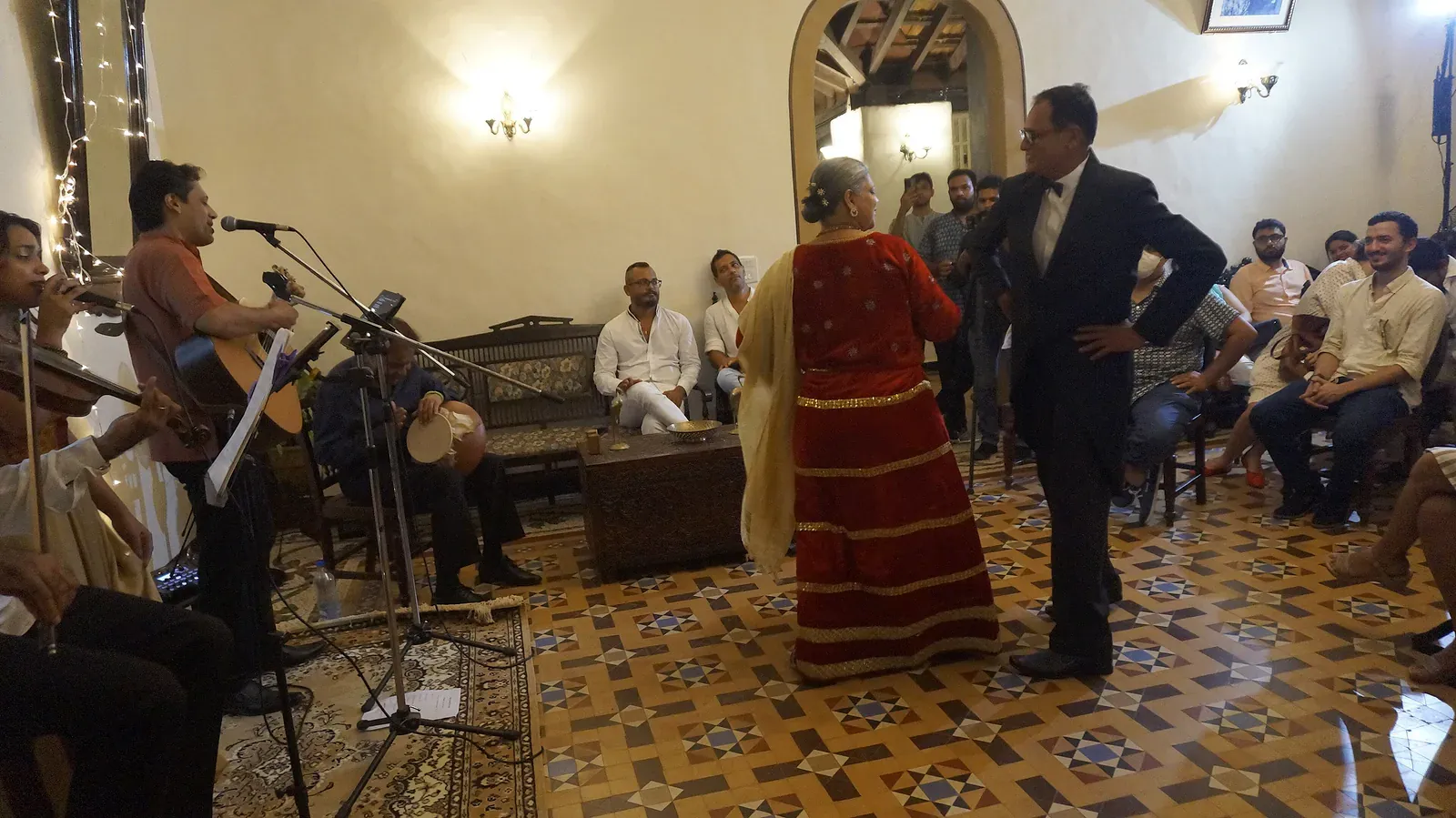
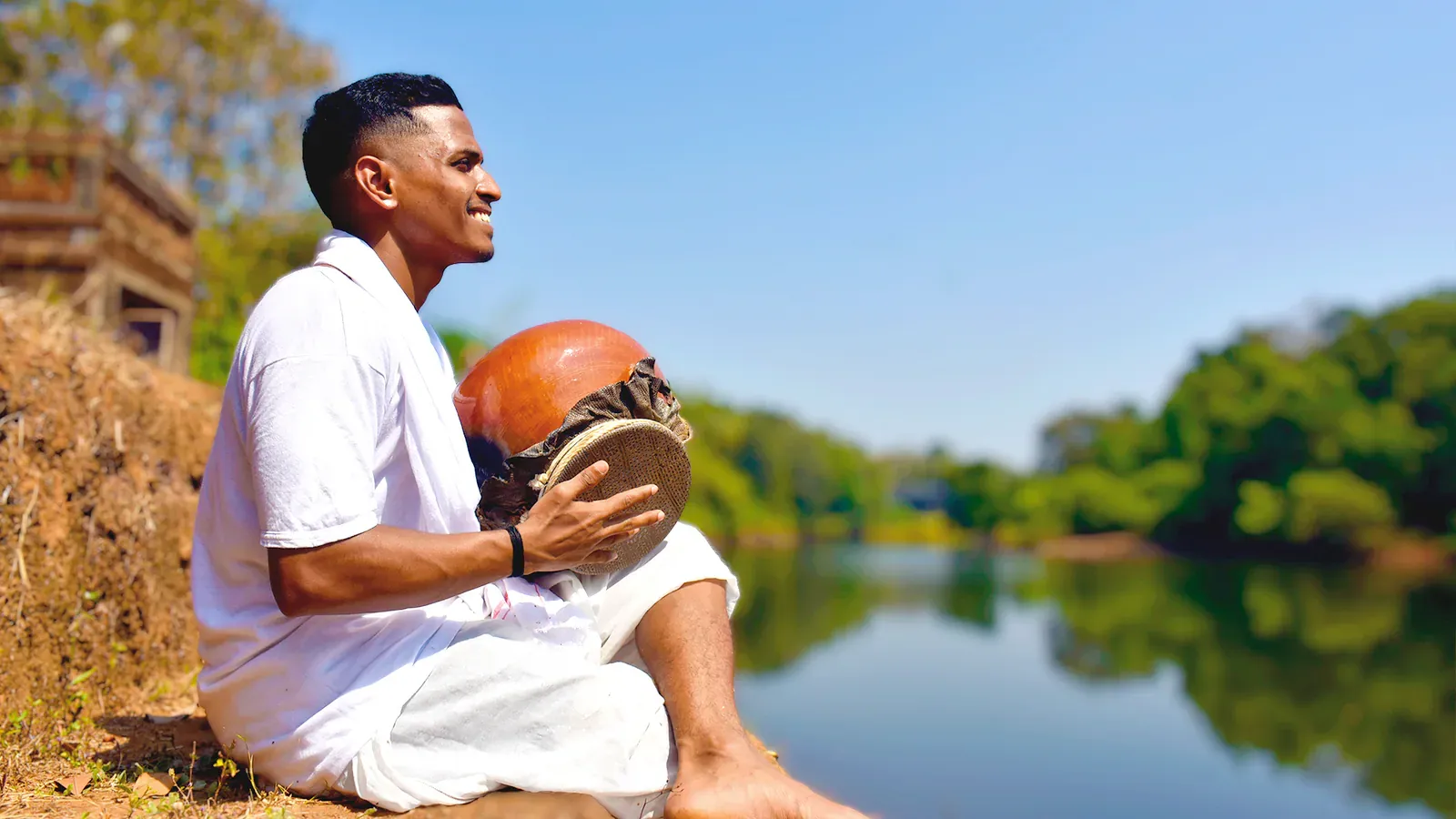
The mando took shape among Goan Catholics in the 19th and 20th centuries as a meeting point of local and Western music. Its main theme is love, though some mandos record historical grievance and resistance to Portuguese rule. Most of the classic mandos come from the villages of Salcete, such as Benaulim, Curtorim and Loutolim, and they are sung in the Salcete dialect, which adds vowels to words so that they stretch over the melody. A mando is mostly a monologue in the first person, and the singers turn gently to the rhythm while ensembles play guitars, violins and the ghumat.
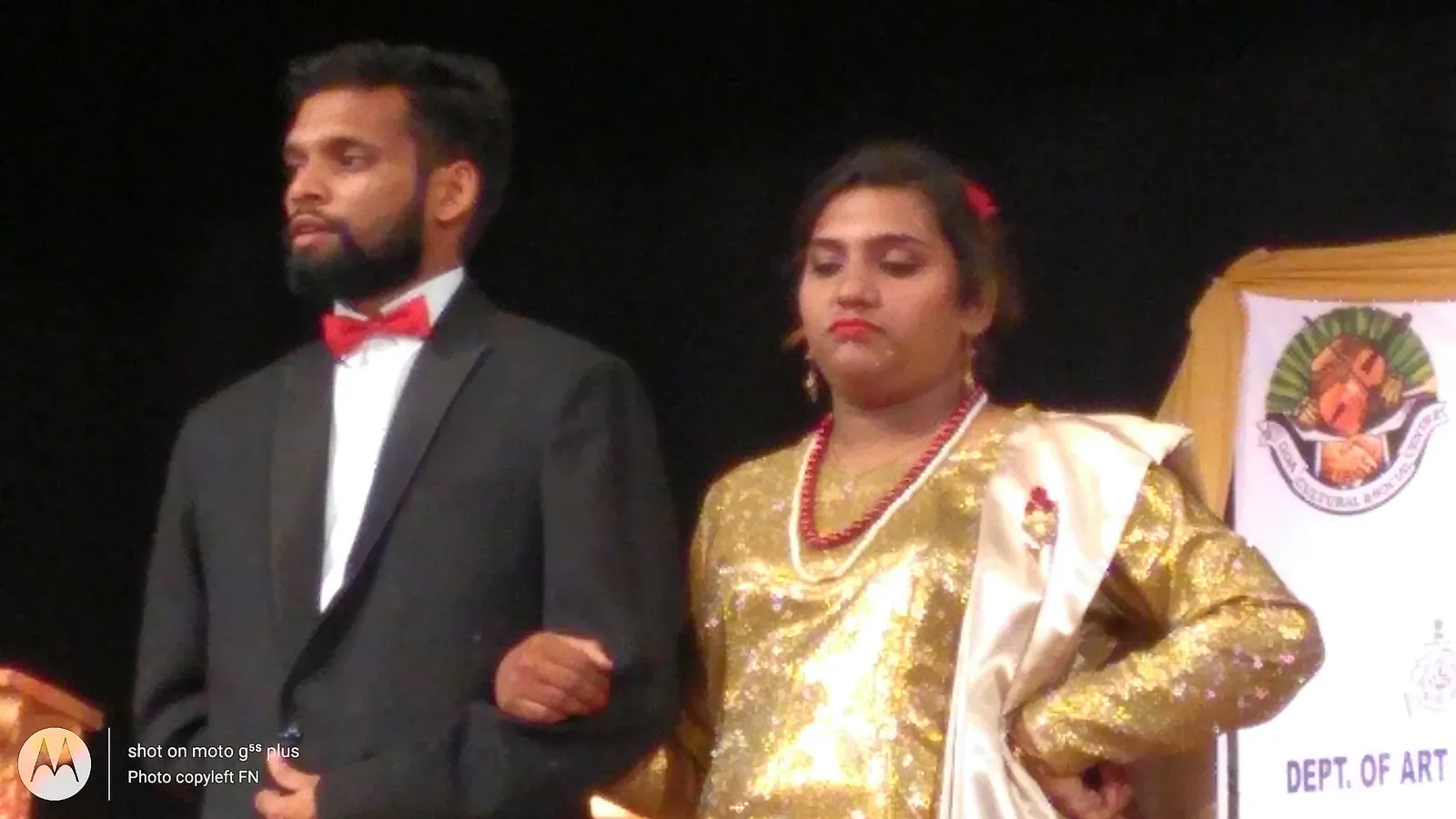
The deknni is an older semi-classical song and dance. One of the earliest dated examples, Kuxttoba, from around 1869, calls its hero the terror of Goa and hints at resistance to Portuguese rule. The best-known deknni, Hanv Saiba Poltoddi Voitam, by Carlos Eugenio Ferreira, was published in Paris in 1895 and in Goa in 1926, and Raj Kapoor later adapted it for the Hindi film Bobby. The dulpod is the quick partner of the mando. It is a folk dance song, anonymous and freely improvised, usually in six-eight and sometimes in two-four, and it follows a mando in performance.
Tiatr and the Bombay stage, 1892-1957
Tiatr, from the Portuguese word for theatre, began in Bombay. A Goan named Lucasinho Ribeiro had worked for a touring Italian opera troupe, bought its costumes when it left, and staged the first tiatr, Italian Bhurgo, at the New Alfred Theatre on 17 April 1892. Because the scenes needed different sets, the cast dropped a curtain and sang and danced in front of it while the stage was changed. Those songs had no link to the plot, and they became the kantaram, comic or topical songs that are often satirical about Goan politicians. Songs that belong to the plot are called kants.
The first original tiatr script followed in 1895, and the plays spread from Bombay to Goa and to Goan communities in the Middle East and Britain. In 1956 Antonio Moraes took the older street play, the khell, onto a stage. Tiatrists also helped keep Konkani alive in a period when it was suppressed, and they took part in the campaign to make it the official language of Goa. The state created the Tiatr Academy of Goa in 2007. M. Boyer, who wrote and directed more than 35 plays and sang more than 1,000 songs, and Alfred Rose, known as the Melody King of Goa, are two of its best-known names.
Jazz-age Konkani pop, 1958-1973
In the late 1950s Bombay and Calcutta were cosmopolitan cities with jazz bands in their best restaurants and hotels. Goan bandleaders gathered each morning at a Calcutta restaurant, where anyone with an event that evening could order musicians. The trumpeter Chris Perry, born in Margao, began as a tiatr performer and issued his first singles in 1958. By 1960 his band had a regular engagement at Venice, a Bombay nightclub. He took traditional Goan songs and set them in jazz and cha-cha-cha arrangements, switching between trumpet and saxophone mid-song.
His singer was Lorna Cordeiro, known as the Nightingale of Goa. She joined his band when she was 15, and her first song, Bebdo, a satire of a drunken husband, shocked its audience when she sang it at Miramar Beach. The Bebdo EP was released in 1969 on His Master’s Voice, the label now known as Saregama. Perry wrote most of her songs, including Abghat, Lisboa and Sorgar Rajeant, and he bound her by contract to sing with no other bandleader. She left music in 1973 after a dispute with him and returned only in 1995. Alfred Rose recorded in the same decade, with songs such as Paka Paka, which was also composed by Perry.
Film, pop and revival
By the mid-1970s the Bombay jazz scene was dying after a rise in entertainment tax, and Perry moved into film work. In 1977 he co-founded a film company that produced Bhuierantlo Munis, the first colour film in Konkani, and he wrote its songs, among them the dulpod Undrea Mhojea Mama.
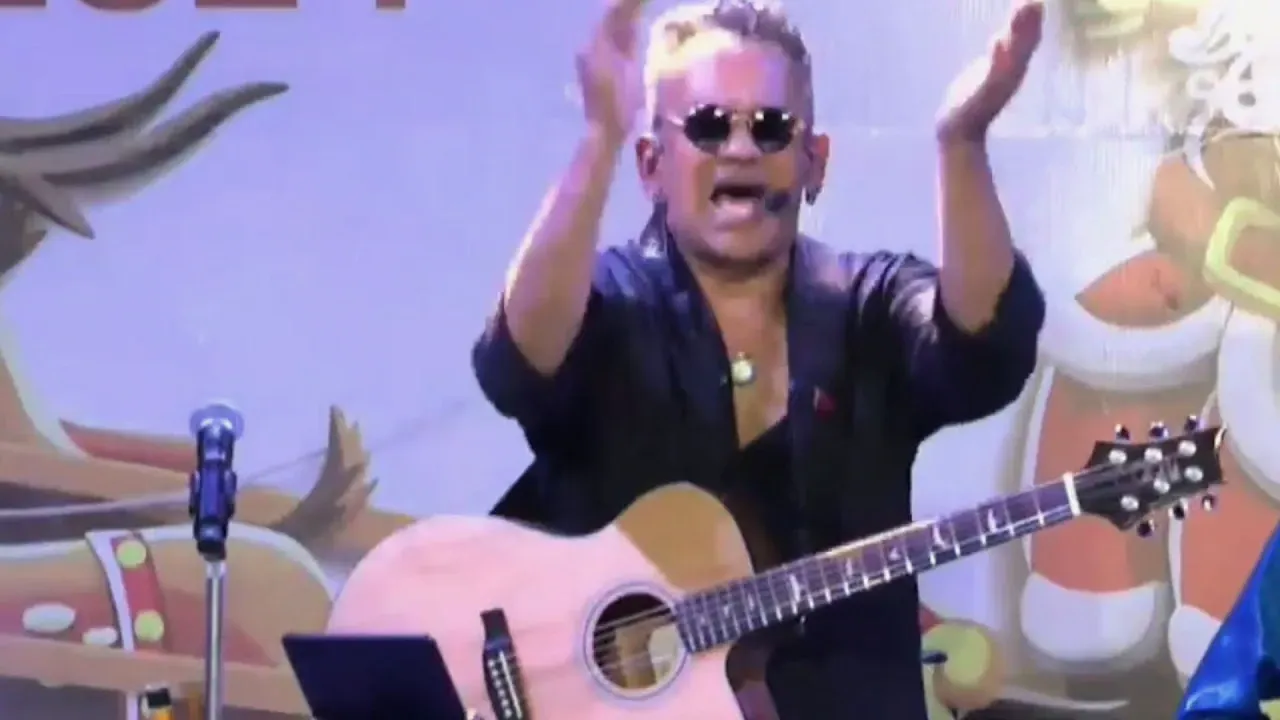
Remo Fernandes brought Goan song to a national pop audience in the 1980s. His album Old Goan Gold, released in 1985, collects Konkani and Portuguese songs he grew up hearing on the radio and in his father’s record collection, plus four originals, including a mando for a Shyam Benegal film and a theme song for the Konkani language movement of 1985. He recorded it at home on a four-track cassette recorder and played every instrument himself. In 2015 the Konkani film Nachom-ia Kumpasar, named after a Lorna and Perry song, retold their story with more than 20 re-recorded songs from the 1960s and 1970s.
Characteristics
Goan song is lyric-led. Konkani lyrics sit over Western harmony, often with English or borrowed Portuguese words, and a mando keeps to one voice speaking about a love or a grievance. The tunes of a dulpod run in six-eight or two-four, and recorded Konkani songs run from slow numbers near 80 to fast dance numbers near 160 beats per minute. Performance is tied to occasion: a mando and dulpod sequence at a wedding or a ball, a kantaram before the curtain in a tiatr, a dhalo during a winter festival, a hymn in church.
Instruments and production
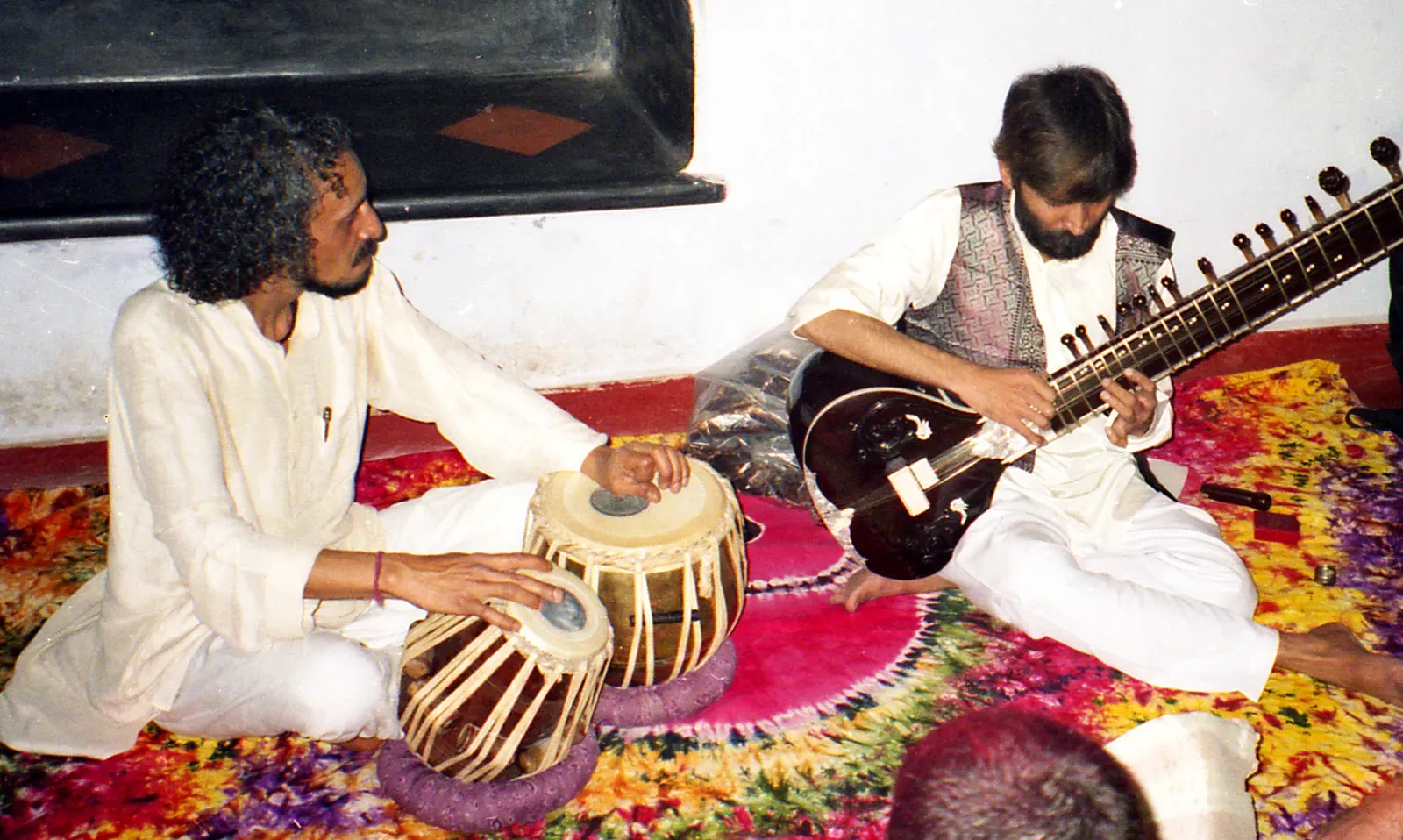
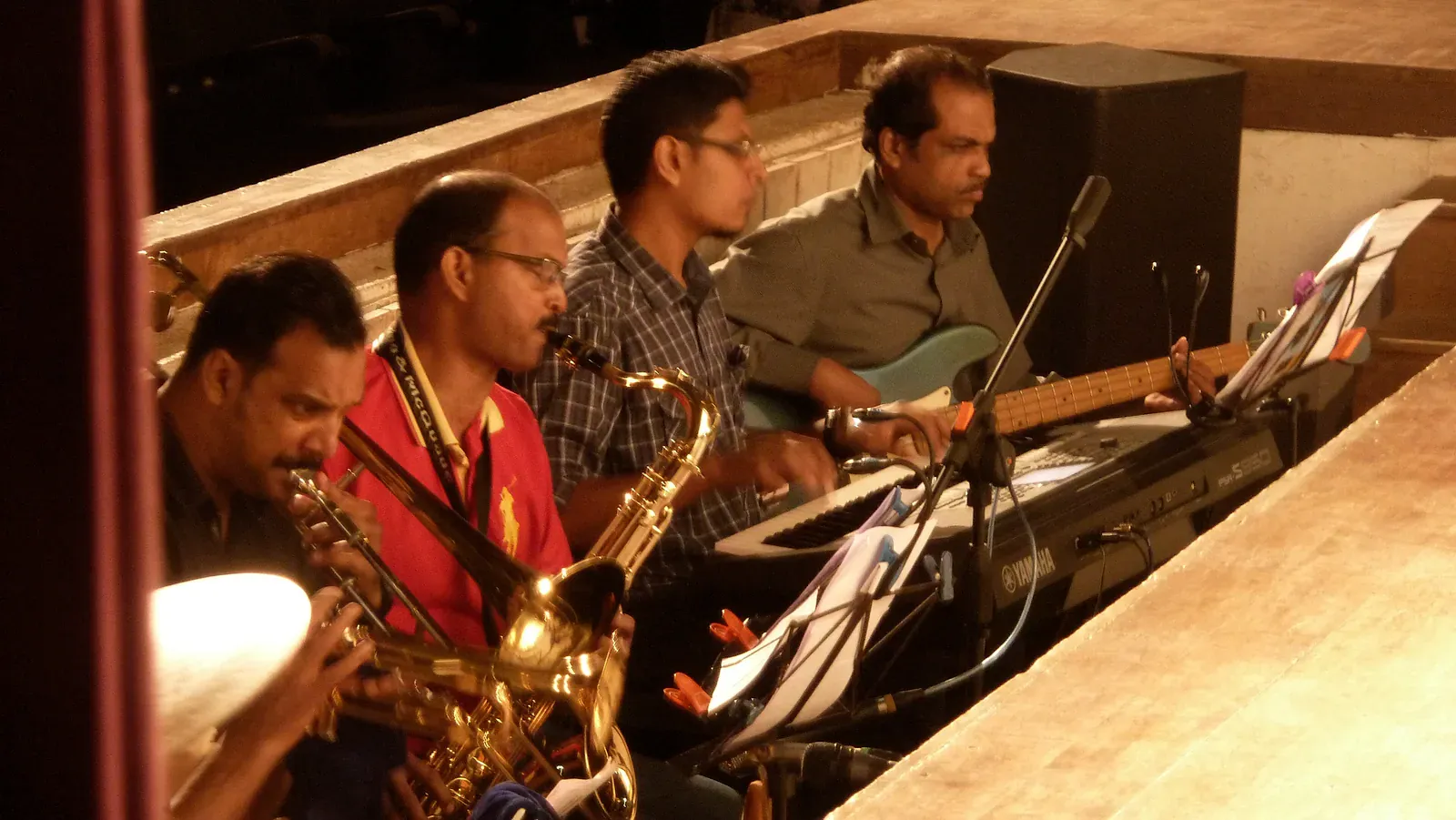
Goan music holds two instrument families side by side. The older local ones include the ghumat, dhol, mridanga, tabla, dholak, shehnai and the bamboo flutes of the shepherd communities, while Portuguese rule added the violin, guitar, mandolin, piano and trumpet. The ghumat is essential at Hindu festivals, temple rituals and mando performances. Tiatr bands have used keyboard, trumpet, saxophone, bass guitar and drums, and the 1960s Konkani records were made with the brass arrangements of dance bands.
Perry’s records came out on His Master’s Voice and EMI, while Remo Fernandes recorded Old Goan Gold alone at home on cassette.
Culture
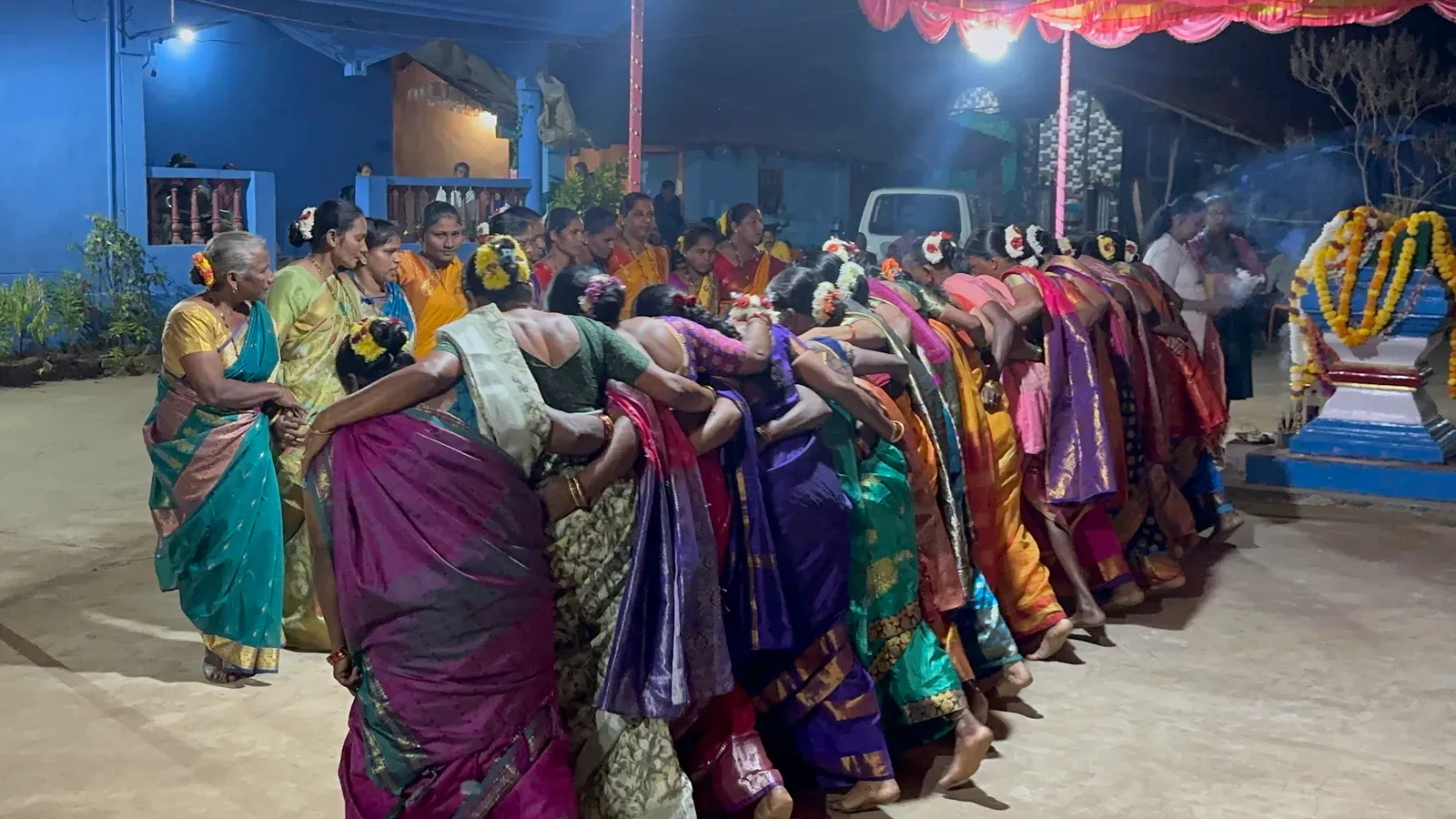
The dhalo, a ritual song and dance performed by women, runs for a week in the month of Pausha at the start of winter and works as a prayer for the protection of their households. Women of the Kunbi, Bhandari, Nayak, Gabit and Gawdi communities perform it, and it closes with women dressing in costumes and caricaturing men. The related fugdi is danced at the Dhalo festival and before Ganesha during Ganesh Chaturthi.
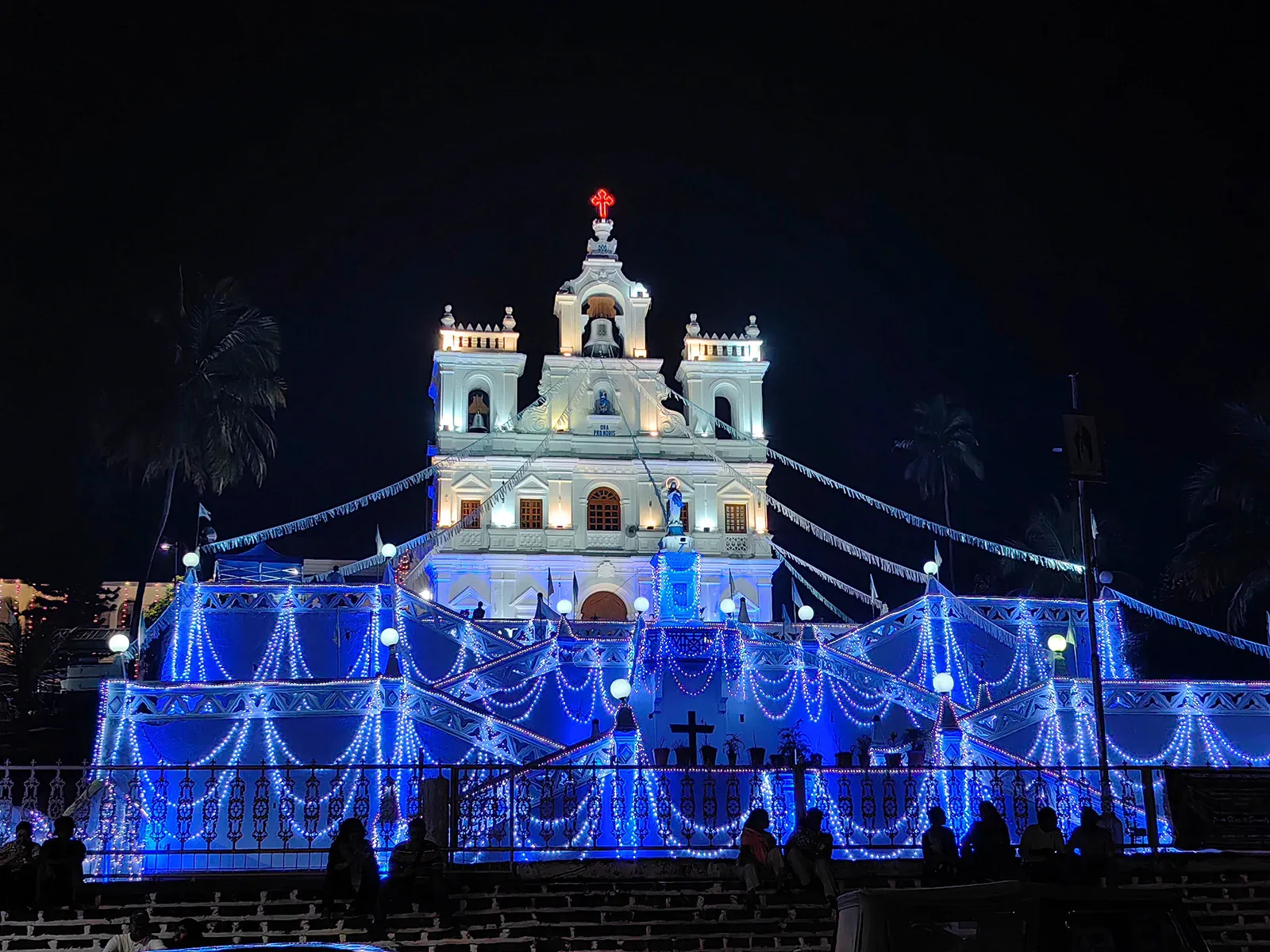
Catholic culture shaped the other side of the tradition. Churches across Goa keep choirs, and the standard hymnal of the Archdiocese of Goa and Daman is Gaionancho Jhelo, with all church music written in the Latin script. Goa also has Western art music: António Fortunato de Figueiredo founded the Goa Symphony Orchestra in 1952, and the Monte Music Festival mixes Indian and Western classical music each year. Electronic music also arrived on the beaches of Goa, where trance parties gave rise to Goa trance in the late 1980s and early 1990s. It is a separate genre and not a form of Konkani song.
Legacy
The mando, dulpod and tiatr songs remain in use in Goa, in Bombay and among Goan communities abroad. Tiatr remains independent of government control, and attempts to bring it under control have met strong opposition because of fears over political content. Konkani pop owes its shape to Perry, Lorna, Alfred Rose and Remo Fernandes, and Chris Perry is remembered in a road in Margao renamed Chris Perry Street in 2019. The Goan violinist and arranger Anthony Gonsalves, who worked in the filmi studios of Bombay, gave his name to a hero of the film Amar Akbar Anthony.
Misconceptions
Goan music is not the same as Goa trance. Goa trance is an electronic dance style that grew among foreign visitors on the beaches, while Goan music proper is Konkani song. It is also not simply a copy of Portuguese music. Konkani lyrics, Indian folk melody, the ghumat and the Salcete dialect make the mando and dulpod local forms, even though they use Western harmony. A third belief is that all of it is Christian music. The dhalo and fugdi belong to village communities such as the Kunbi and Gawda, the banvarh is usually sung by Hindus, and the ghumat is used in Hindu temple rituals as well as in mando performances.
Frequently asked questions
What language is Goan music sung in?
Goan music is sung mostly in Konkani, and popular songs also use English. Catholic songs are often written in the Roman script, and mandos borrow a few Portuguese words.
What is a mando?
A mando is a Konkani love song and dance of the Goan Catholics, developed in the 19th and 20th centuries from Goan and Western musical traditions. It is usually followed by a dulpod, a quicker dance song.
What is tiatr?
Tiatr is Konkani musical theatre that began in Bombay on 17 April 1892. Its songs are sung in front of the curtain between the scenes and often comment on politics and daily life.
Who is the Nightingale of Goa?
Lorna Cordeiro, the Konkani singer best known for Bebdo and other songs composed by Chris Perry in the 1960s and 1970s.
Does Goan music come from Portuguese fado?
Fado has some importance in Goa, but Goan music is a separate group of Konkani song forms. The Portuguese influence appears most in its harmony, instruments and some borrowed words.
Sound
Sound sheet
Anatomy of a track
| # | Part |
|---|---|
| 1 | Mando on a love or historical theme |
| 2 | Dulpod, a quick dance song |
| 3 | Closing dulpod such as Ya, ya, maya ya |
Signature sounds
- Konkani lyrics over Western harmony
- Ghumat drum beside violin and guitar
- Salcete dialect with extra vowels added to fit the tune
- Jazz trumpet arrangements in 1960s Konkani pop
Drums and percussion
- Ghumat
- Drum kit
Techniques
- Vowel stretching
- Topical kantaram
- Brass-to-reed switch
- Mando into dulpod
Tuning
Western tuning and scales, with older song types in Indian folk melody
Vocals
Konkani lyrics, often with English or borrowed Portuguese words, mostly in the first person.
Scenes
Where it happened
Where and when the sound lived: one bar per city on a shared timeline.
Asia
Active scenes
Peak 2, 1892-2025
Salcete villages around Margao gave the classic mandos and the Salcete Konkani dialect they are sung in.
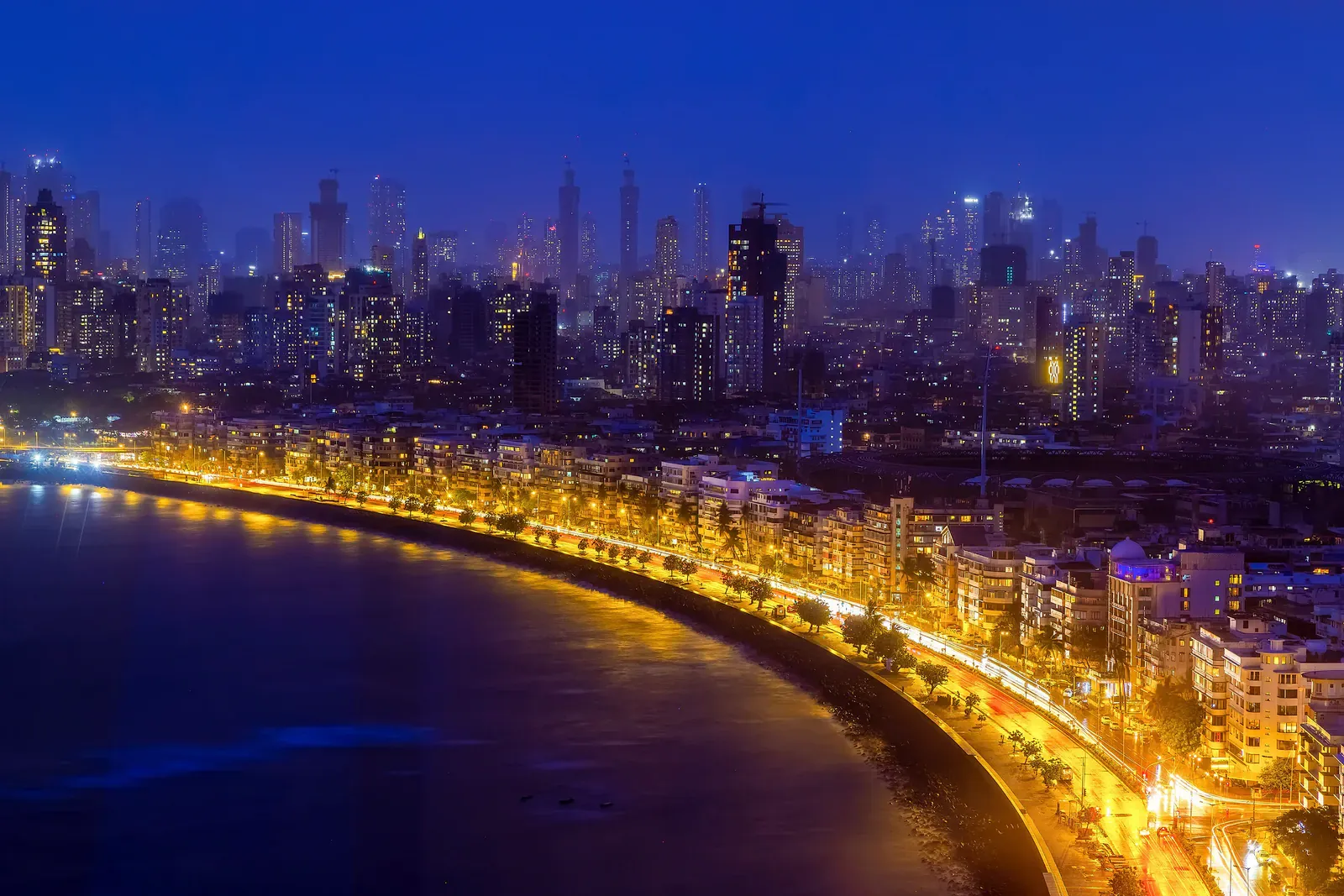
Where the first tiatr was staged, and later home of the jazz clubs that hired Goan bands.
Venues and places
Mumbai, 1960 to today. Nightclub in the Astoria Hotel where Chris Perry's band held a regular gig.
Culture
Culture markers
- Mando
Couples dance in formal coats and velvet or silk dresses, with a fan, turning gently to the rhythm.
Dance - Dhalo
Women dance for a week in the month of Pausha as a prayer for their households.
Ritual - Catholic wedding bands
Live bands or DJs play Western and Portuguese-derived music at Goan Catholic weddings.
Ritual
Media
Key media
- 1977Bhuierantlo Munis
by Chris Perry (music). First colour film in Konkani, scored by Chris Perry.
Film - 2015Nachom-ia Kumpasar
by Bardroy Barretto. Konkani musical drama on Chris Perry and Lorna, told through re-recorded 1960s songs.
Film
Glossary
Terms on this page
Semi-classical Goan song and dance blending local and Western music with Konkani lyrics.
Winter ritual song and dance performed by women.
Quick dance song on everyday themes, usually sung after a mando.
Comic or topical song sung between scenes of a tiatr, independent of the plot.
Konkani love song and dance of the Goan Catholics, with Western harmony and Salcete dialect.
Konkani musical theatre whose plays are punctuated by songs.
South Asian family