Louisiana Creole music
Louisiana Creole music is the French-language folk tradition of Creoles of colour in southwest Louisiana, built on juré and la la, and the root of zydeco.
southwest Louisiana, around 1817
Folk family
Born
around 1817
southwest Louisiana
Subgenres
3
Documented branches
Links
5
Genres it drew on or shaped
Tempo
75-150 BPMLineage
Family tree
Grew out of
- African American folk music
Derived from
Influenced by
southwest Louisiana
Louisiana Creole music
Led to (3)
Timeline
Era by era
From the first sparks to today. Select a dot to read the story behind it.
- Congo Square and house dances
1817 to 1928
- The first recordings
1929 to 1945
- Post-war split and the rise of zydeco
1946 to 1965
- Festivals and heritage
1966 to today
Eras
Moments
- 1 Congo Square and house dances, 1817 to 1928
- 2 The first recordings, 1929 to 1945
- 3 Post-war split and the rise of zydeco, 1946 to 1965
- 4 Festivals and heritage, 1966 to today
around 1817
Congo Square and house dances
Free and enslaved Creoles kept African, Caribbean and French music alive in New Orleans and rural Louisiana, from Congo Square dances to juré shouts and accordion house dances.
- 1817Congo Square dances permittedEnslaved people in New Orleans were allowed to gather and dance on Sundays at Congo Square, a meeting point of African and Caribbean styles.
1929
The first recordings
Amédé Ardoin recorded Creole accordion music for Columbia in 1929 and left about thirty-four known recordings, which became core Creole and Cajun repertoire.
- 1929Ardoin and McGee record for ColumbiaOn December 9 Amédé Ardoin and fiddler Dennis McGee recorded six songs in New Orleans, among the first records of Acadiana music.
- 1934Lomax records a ring shout in JenningsAlan Lomax recorded a ring shout in Jennings, Louisiana, a relative of the French-language juré tradition.
- 1934Ardoin sessions in San Antonio and New YorkArdoin recorded with McGee in San Antonio in August and made solo recordings in New York in December.
- 1939Reported attack on Amédé ArdoinFamily and musicians told that Ardoin was beaten in a racially motivated attack near Eunice; accounts of his death differ.
- 1942Death of Amédé ArdoinArdoin died in 1942 and is now called the father of French music by many local musicians.
1946
Post-war split and the rise of zydeco
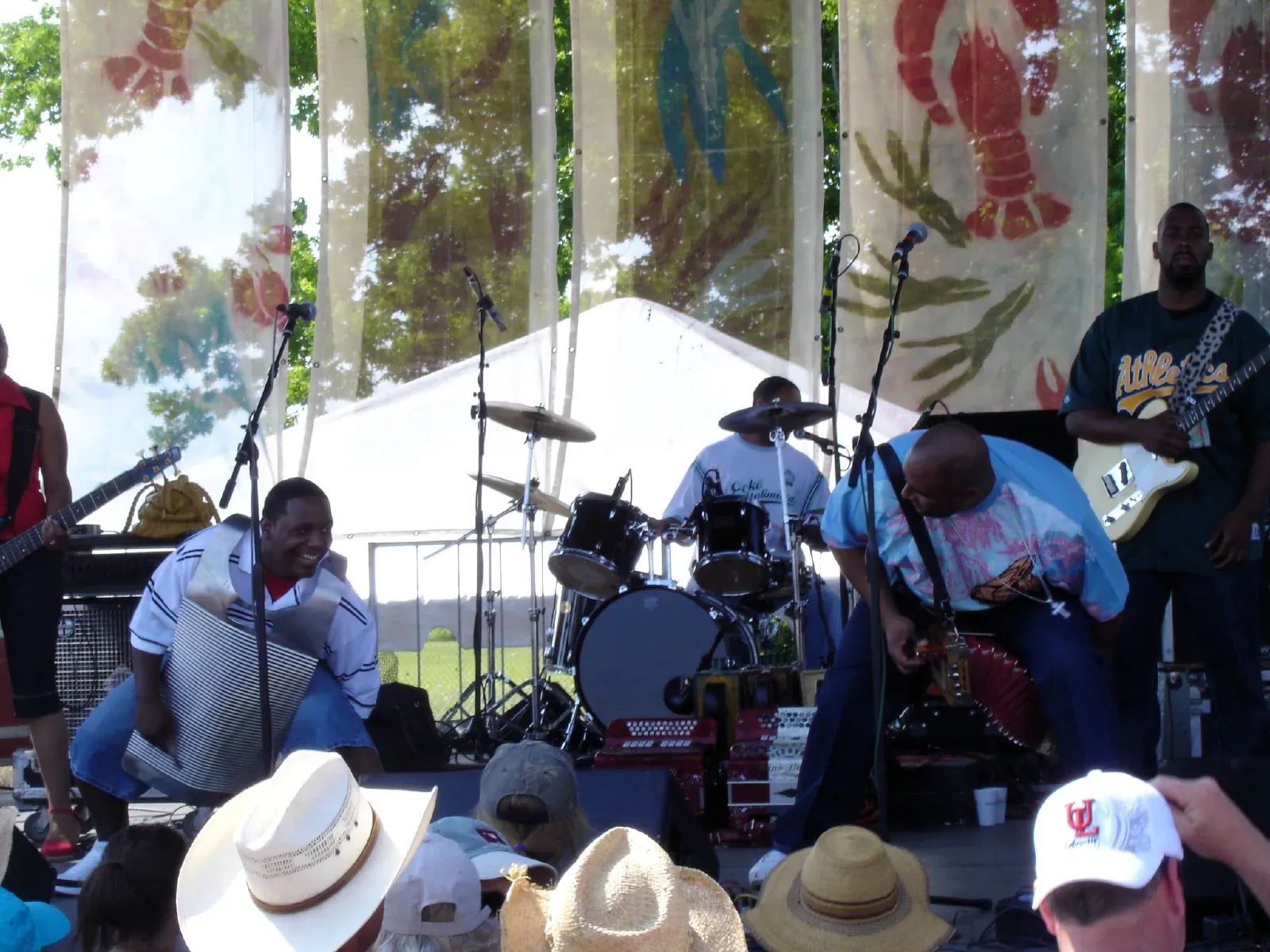
After World War II Creole and Cajun music grew apart; Clifton Chenier added the vest frottoir and blues, and zydeco grew out of the Creole tradition in the early 1950s.
- 1946First zydeco vest frottoirClifton Chenier commissioned the corrugated metal vest rubboard from welder Willie Landry at a Port Arthur refinery.
- 1948Duralde Ramblers formedCanray Fontenot and Bois Sec Ardoin formed a band that became popular in southwest Louisiana and played on KEUN radio in Eunice.
- 1955Paper in My Shoe and Zodico StompBoozoo Chavis recorded Paper in My Shoe and Clifton Chenier recorded Zodico Stomp, early commercial zydeco records.
- 1960Zydeco spelling publishedMusicologist Mack McCormick used the spelling zydeco in the liner notes of a field recording compilation.
1966
Festivals and heritage
Canray Fontenot and Bois Sec Ardoin played Newport in 1966 and toured for decades as the last Creole musicians playing the old style, earning National Heritage Fellowships in 1986.
- 1966Fontenot and Ardoin at NewportThe pair made their debut outside Louisiana at the Newport festival and recorded Les Blues du Bayou the same year.
- 1986National Heritage FellowshipsFontenot and Ardoin each received the NEA's highest honor in the folk and traditional arts.
Listening path
Start listening
A short path from an easy way in to the deep end. Thumbnails come from YouTube; the player loads only when you press play.
- 01
Canray Fontenot and Bois Sec Ardoin, 1966
Fiddle and accordion duo filmed at Newport in the old Creole style.
- 02
Clifton Chenier, 1965
The song behind the zydeco name, in Chenier's blues-inflected style.
- 03
Canray Fontenot, 1983
Solo fiddle and voice filmed at Fontenot's home in Welsh, Louisiana.
Facts
| Family | Folk |
| Origin | southwest Louisiana, United States |
| Emerged | 19th century onwards |
| Status | Active |
| Tempo | 75 to 150 BPM |
| Meter | 2/4 and 3/4 |
| Grew out of | African American folk music |
| Subgenres | 3 |
Louisiana Creole music is the French-language folk music of the Creoles of colour of southwest Louisiana, played at house dances and sung in Louisiana French and Creole.
It grew from the 19th century out of African, Caribbean and French sources, and its core forms are juré, an unaccompanied shout song, and la la, an accordion dance music. It is part of the folk family, borrows from American folk music and the blues, and gave rise to zydeco.
Origins
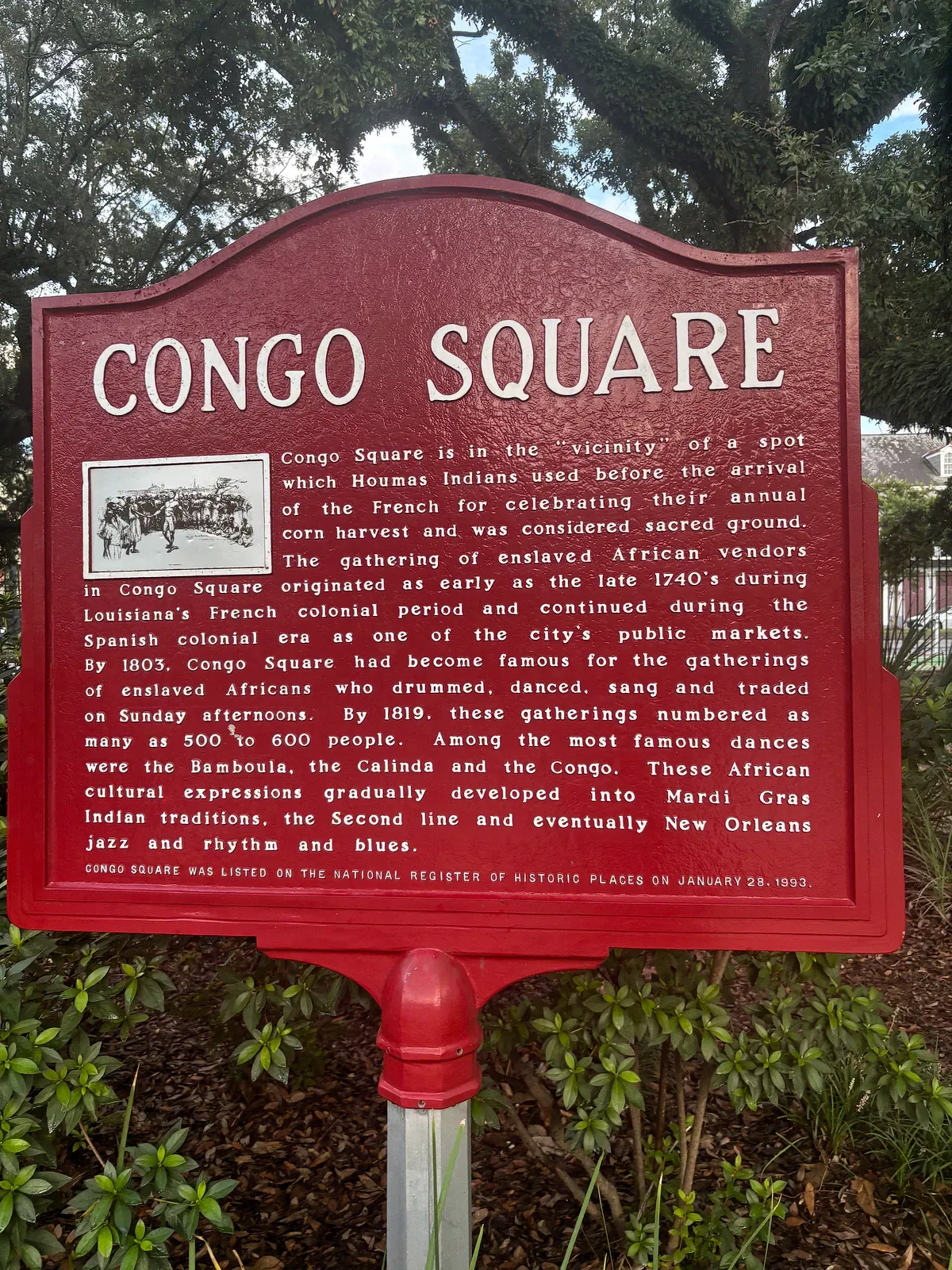
Louisiana Creoles descend from the inhabitants of colonial Louisiana under French and Spanish rule. Most were Catholic and French-speaking, and the community included many gens de couleur libres, free people of colour who could own land. In New Orleans, enslaved Africans and their descendants were not barred from performing their own music. Sunday gatherings at Congo Square were permitted as early as 1817, and the calenda, Congo, counjai and bamboula dances reached Louisiana from the Caribbean and Africa. By 1830 opposition from white residents had ended the square’s prominence.
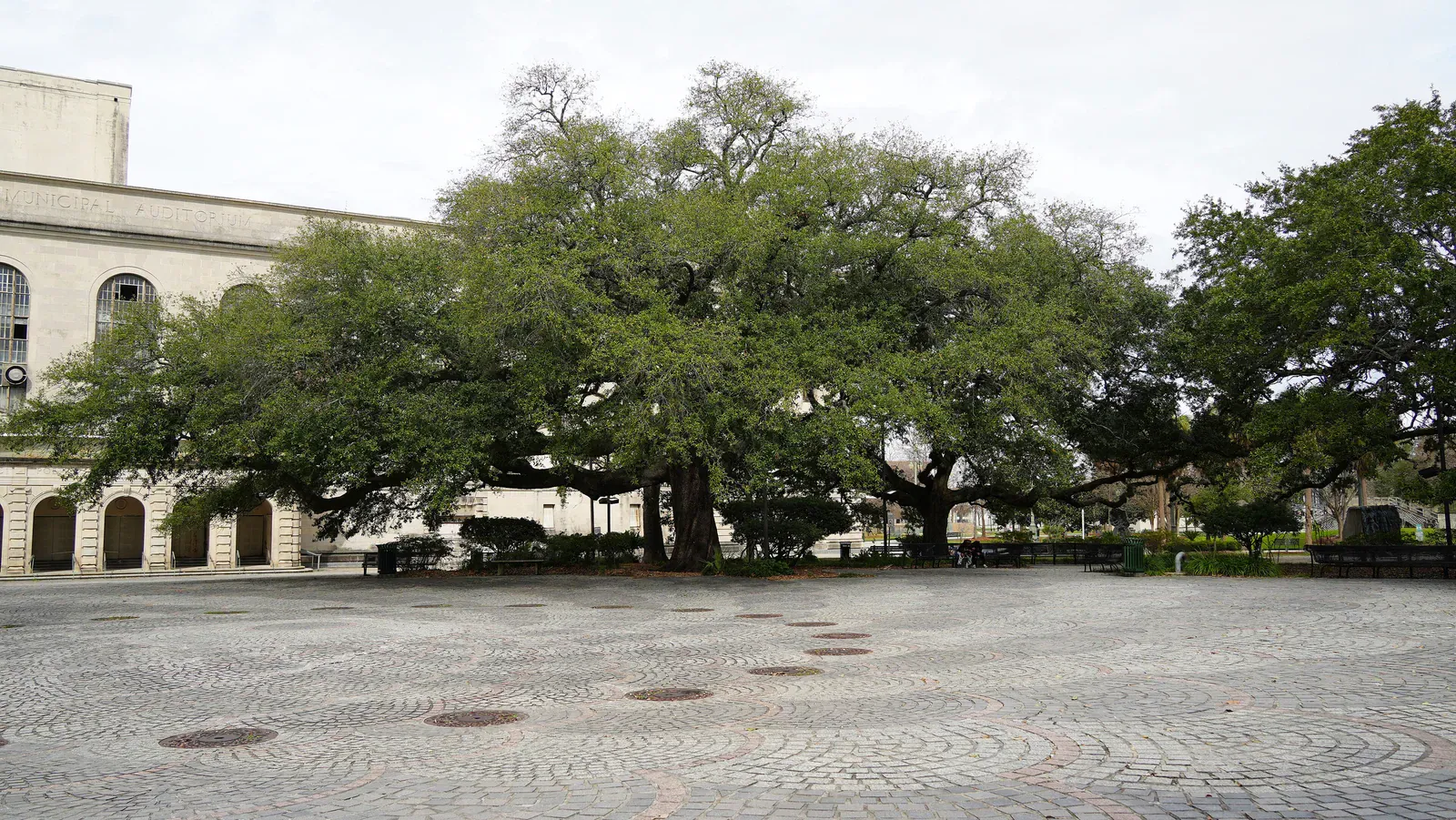
Free Creoles of the city ran dance bands, an opera company and a symphony orchestra, and produced composers such as Edmund Dede. After the Civil War many Creole musicians became teachers, passing European instruments to the newly freed. In the countryside the tradition took simpler forms. Juré is call-and-response singing driven by handclaps and foot stomps, a French-language counterpart of the ring shout. The name comes from the French for swearing or testifying, and the songs were sung in the Lenten season, when instruments and dance halls were frowned upon. Alan Lomax recorded a ring shout in Jennings, Louisiana, in 1934.
House dances and la la
Accordion music took over the community dance floor in the early 20th century. Called la la, French music, Creole music or house music, it was played at house parties and later in Catholic parish halls, rural dance halls and nightclubs. Its repertoire was one-steps, two-steps and waltzes, led by a German-made one-row button accordion that by the 1920s was built in the keys of C and D so that it could pair with the fiddle. Before the Second World War the Creole and Cajun repertoires were closely related, and Creole players often performed for white audiences.
Amédé Ardoin and the first recordings, 1929-1942
Amédé Ardoin, born in 1898 near Basile, Evangeline Parish, spoke only French and played house dances with fiddlers including Alphonse LaFleur and Douglas Bellard. His partnership with the Cajun fiddler Dennis McGee led to a Columbia session in New Orleans on 9 December 1929, when six songs were recorded among the first made of Acadiana music. More sessions followed in New Orleans in 1930 and in San Antonio in August 1934, and he made solo recordings in New York that December. About three dozen recordings with Ardoin on accordion survive, issued on Brunswick, Vocalion, Decca, Melotone and Bluebird.
His high singing voice and his mix of European song forms with African swing and syncopation set a template. Ardoin and McGee crossed the colour line in the Jim Crow South, winning listeners of both races. Family and fellow musicians later told that Ardoin was beaten in a racially motivated attack around 1939, after which he never fully recovered. Accounts of his death in 1942 differ. A life-sized statue was unveiled at the St. Landry Parish Visitor Center in 2018, and many local musicians call him the father of French music.
Post-war change and the rise of zydeco, 1946-1965
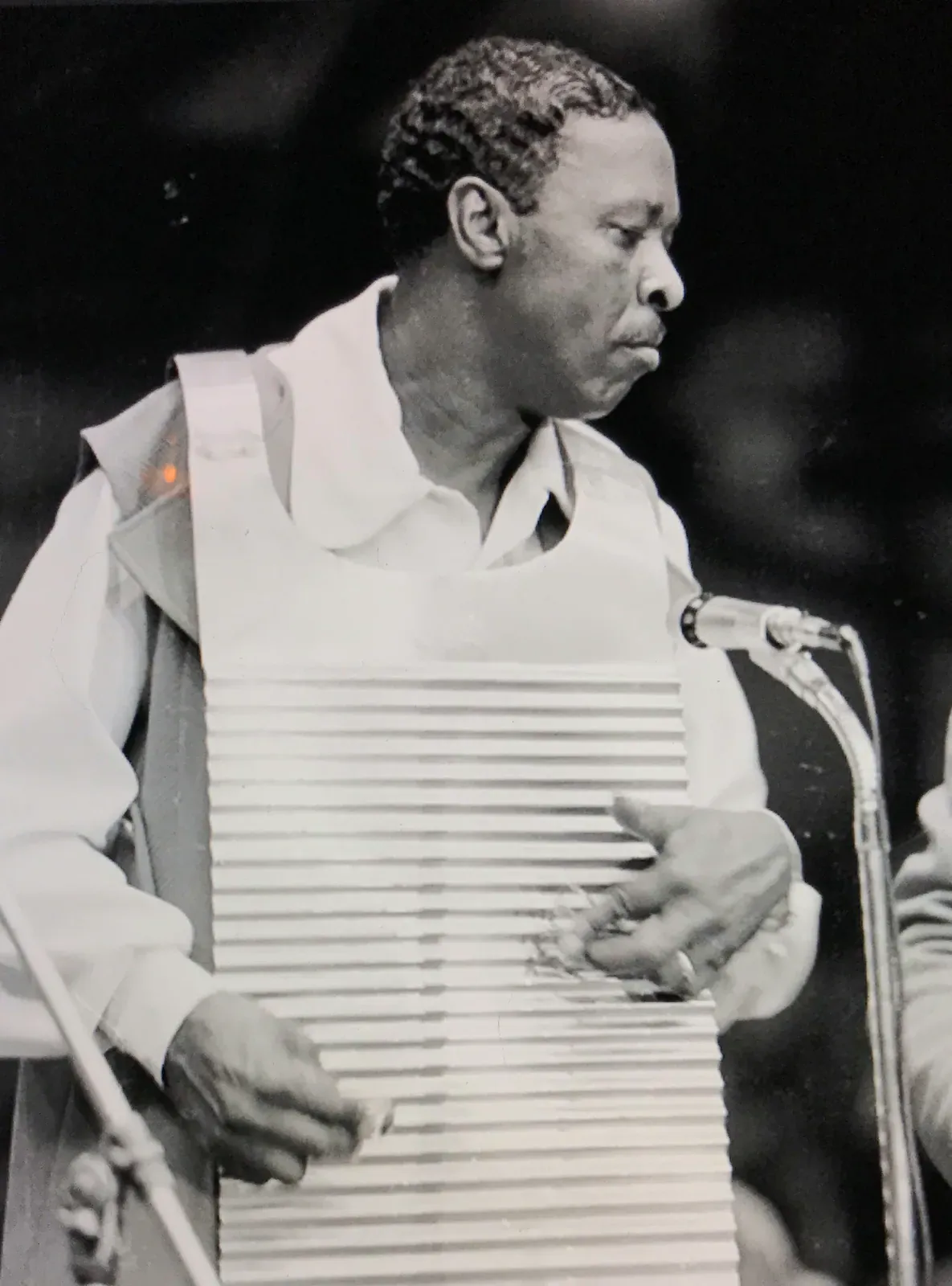
After the war the Creole and Cajun repertoires drifted apart. Many Creoles from the Marksville and Opelousas area left for Texas in search of work. In 1946 Clifton Chenier, then working at a refinery in Port Arthur, Texas, commissioned the first vest frottoir from the welder Willie Landry. The corrugated metal rubboard became the signature percussion of the new style.
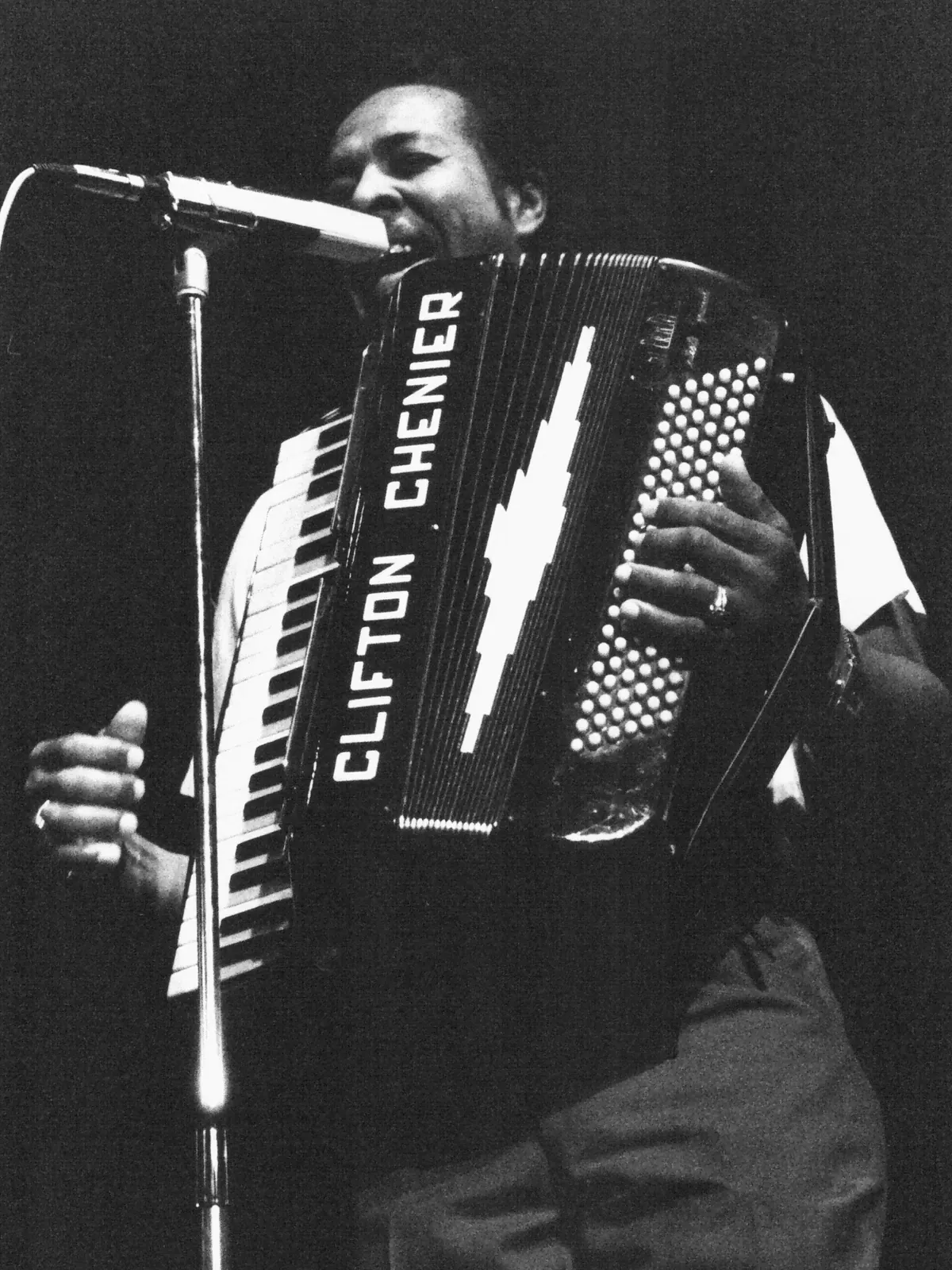
Zydeco developed in the early 1950s from la la and juré, with blues, rhythm and blues, jazz and gospel added, then electric guitar, bass, keyboards and a drum kit. Chenier signed with Specialty Records in the mid-1950s and later recorded for Arhoolie. In 1955 Boozoo Chavis made Paper in My Shoe, a regional hit for a Goldband subsidiary that became one of the first commercially released zydeco songs. The spelling zydeco spread after the musicologist Mack McCormick used it in 1960 liner notes, and the likely source of the word is the French phrase les haricots ne sont pas salés, an idiom for hardship.
Fontenot, Ardoin and the revival, 1948 onward
The older style survived in a few hands. Canray Fontenot, born in 1922, played fiddle and wrote songs including Joe Pitre a Deux Femmes and Bonsoir Moreau, now standard in both Cajun and Creole repertoires. He worked as a rice farmer rather than a professional musician. By 1934 he was playing with Amédé Ardoin. After a late 1930s string band that mixed boogie-woogie, western swing and jazz with traditional tunes, he formed the Duralde Ramblers in 1948 with Alphonse “Bois Sec” Ardoin, Amédé’s younger cousin, who had played triangle in Amédé’s band as a teenager and took up the accordion at twelve. The group became popular on radio station KEUN in Eunice through the 1950s.
In 1966 folklorist Ralph Rinzler persuaded Fontenot to play the Newport festival with Ardoin, their first appearance outside Louisiana. The pair recorded Les Blues du Bayou for Melodeon that year and spent decades at festivals, billed as the last Creole musicians playing in the old style. Ardoin formed the Ardoin Family Orchestra with three sons in the early 1970s and retired briefly after the death of his son Gustave in 1974. Both men received National Heritage Fellowships in 1986 and were named adjunct professors at the University of Southwestern Louisiana. After Fontenot died in 1995, Ardoin recorded Allons danser (1998) with Balfa Toujours. He died in 2007.
Mainstream success
Creole music itself stayed regional, heard at dances, festivals and church halls. Recognition came through folklorists, festivals and documentary film, including Les Blank’s Hot Pepper (1973) and J’ai été au bal (1989). The commercial crossover belonged to zydeco: Chenier won a Grammy Award in 1983, and Rounder Records later released Chavis in the 1980s and 1990s. Today zydeco acts appear at blues, folk and American roots festivals worldwide.
Culture
The music belonged to community life: Saturday house dances, Lenten juré and, later, Catholic church halls. The language mattered as much as the sound. Early songs were sung in Louisiana French or Creole, and Ardoin himself spoke no English. Later zydeco bands sang in English or French and often adapted blues standards, rhythm and blues hits and Cajun tunes, a habit that connects the tradition to rhythm and blues.
Legacy
Creole music supplied the repertoire, instruments and dance forms of zydeco, and its songs are now shared with Cajun music. Ardoin’s recordings are core repertoire for both communities, and the Fontenot and Ardoin duo preserved the old house-dance style on records and film. The tradition continues in the zydeco scene and in younger French-language players.
Misconceptions
Creole music and Cajun music are not the same thing. They overlapped heavily before the Second World War, but the Creole tradition, shaped by African American rhythm and the blues, split off afterward and developed its own dance band sound. Zydeco is not another name for the whole Creole tradition either. It is the later, electrified form that grew from la la and juré. Finally, the music is not accordion alone: the fiddle and the triangle were part of early house-dance bands, and juré used no instruments at all.
Frequently asked questions
What is Louisiana Creole music?
Louisiana Creole music is the French-language folk music of Louisiana Creoles of colour, centred on juré shout songs and accordion-led la la dance music. It was played at house dances in southwest Louisiana and is the direct predecessor of zydeco.
What is the difference between la la and zydeco?
La la is the early 20th-century house-dance music built on a one-row accordion and fiddle. Zydeco grew from it in the early 1950s, adding blues, rhythm and blues, the vest frottoir and electric instruments.
Who was Amédé Ardoin?
Amédé Ardoin (1898-1942) was a Creole accordionist and singer who recorded for Columbia in 1929 and made the first widely influential recordings of Creole accordion music. His songs became core repertoire for Creole and Cajun musicians.
Sound
Sound sheet
Signature sounds
- High vocal line over a one-row accordion
- Syncopation and swing against European song forms
- Fiddle and accordion duo
- Handclapped juré call and response
Techniques
- Call and response
- Handclaps and foot stomps
- Syncopation and swing
- Adapting blues and R&B
Keys and modes
Accordion in C or D. Single-row accordions of the 1920s were tuned to C and D to pair with fiddles.
Vocals
Sung in Louisiana French and Creole, with high-pitched solo lines on early records.
Scenes
Where it happened
Where and when the sound lived: one bar per city on a shared timeline.
North America
Active scenes
Peak 4, 1940-2025
Ardoin played regularly here in the late 1930s; KEUN radio carried the Duralde Ramblers in the 1950s.
Ardoin's birthplace area and the site of a club where he played in the 1920s and 1930s.
Creole community whose members migrated to Texas during and after World War II.
Congo Square dances and the site of the first Ardoin recording session in 1929.
Venues and places
New Orleans, 1817 to today. Plaza where enslaved Africans danced on Sundays, permitted as early as 1817.
Eunice, 1948 to today. Radio station that carried the Duralde Ramblers through the 1950s.
Newport, 1966 to today. Fontenot and Ardoin played here in 1966, their first date outside Louisiana.
Culture
Culture markers
- House dances
Creole music was first played at community house dances and later in Catholic church halls and rural dance halls.
Dance - Juré in Lent
Handclapped juré song filled the Lenten season, when instruments and dance halls were frowned upon.
Ritual - La musique Creole
The music was called French music, Creole music or la la before the name zydeco spread.
Slang
Media
Key media
- 1973Hot Pepper
by Les Blank. Documentary about Clifton Chenier.
Film - 1973Dry Wood
by Documentary film. Film featuring the Ardoin Family Orchestra.
Film - 1989J'ai été au bal
by Documentary film. Documentary on Cajun and Creole music featuring Ardoin and Fontenot.
Film
Glossary
Terms on this page
Corrugated metal washboard worn as a vest and scraped for rhythm in zydeco.
Free people of colour of colonial and antebellum Louisiana, with rights to own land.
Unaccompanied call-and-response Creole song with handclapping and foot stomping, tied to the ring shout.
Early 20th-century Creole accordion house-dance music, also called French music or la musique Creole.
Blues- and R&B-influenced dance music that grew out of la la and juré.
Folk family