Mizik rasin
Mizik rasin is Haitian roots music that joins Vodou rhythms and songs with rock and jazz. It began in the late 1970s and gained a protest voice in 1990.
Haiti, 1978
Caribbean family
Born
1978
Haiti
Links
6
Genres it drew on or shaped
Tempo
100-155 BPMLineage
Family tree
Timeline
Era by era
From the first sparks to today. Select a dot to read the story behind it.
- Roots groups under the Duvaliers
1978 to 1986
- After Duvalier
1986 to 1991
- Coup and exile
1991 to 1994
- Diaspora and revival
1995 to today
Eras
Moments
- 1 Roots groups under the Duvaliers, 1978 to 1986
- 2 After Duvalier, 1986 to 1991
- 3 Coup and exile, 1991 to 1994
- 4 Diaspora and revival, 1995 to today
1978
Roots groups under the Duvaliers
Musicians such as Theodore Beaubrun Jr. and Mimerose Beaubrun turned from minidjaz toward Vodou ritual music and founded Boukman Eksperyans in 1978.
- 1976Lolo Beaubrun hears Bob MarleyThe Jamaican singer convinced the future Boukman Eksperyans founder that Vodou music could carry a similar message in Haiti.
- 1978Boukman Eksperyans foundedFounded by Theodore Beaubrun Jr., Mimerose Beaubrun and others, who began with a Vodou study group called Moun Ife.
1986
After Duvalier
Once Jean-Claude Duvalier fled, bands brought Vodou rhythms and rock together; the Hotel Oloffson hosted early shows and the 1990 Carnival made the style a protest voice.
- 1986Jean-Claude Duvalier flees HaitiThe dechoukaj that followed separated Vodou from the state and opened space for roots bands.
- 1987Hotel Oloffson becomes a rasin venueRichard Morse took over the Port-au-Prince hotel, which became an early stage for rasin bands and later RAM's Thursday concerts.
- 1990Ke'm Pa Sote at the Port-au-Prince CarnivalThe Boukman Eksperyans song was the most popular of the Carnival and read as criticism of General Prosper Avril's government.
- 1990RAM formedRichard A. Morse, his wife Lunise and folkloric musicians and dancers founded RAM in Port-au-Prince.
1991
Coup and exile
After the 1991 coup against Aristide, Boukman Eksperyans went into exile and the military banned RAM's Fey; the music carried political meaning.
- 1991Vodou AdjaeThe Boukman Eksperyans debut album was nominated for a Grammy Award.
- 1991Coup against Aristide sends bands into exileBoukman Eksperyans left Haiti and spoke out against the military regime from abroad.
- 1992RAM's Fey banned by the militaryThe Vodou-rooted song became an unofficial anthem for Aristide supporters and was banned by that summer.
- 1994Aristide restored, Boukman Eksperyans returnThe band came home and resumed concerts, albums and Carnival appearances.
1995
Diaspora and revival
Bands recorded abroad and toured; Lakou Mizik formed after the 2010 earthquake and Boukman Eksperyans toured arenas in 2022.
- 2010Lakou Mizik formed after the earthquakeNine Haitian musicians formed the collective following the 2010 earthquake.
- 2016Wa Di YoThe Lakou Mizik debut album reached international audiences and a New Orleans festival stage.
- 2021Leave the BonesLakou Mizik joined electronic producer Joseph Ray for a collaborative album.
- 2022Boukman Eksperyans tour with Arcade FireThe band played a US and Europe arena tour in support of Arcade Fire.
Listening path
Start listening
A short path from an easy way in to the deep end. Thumbnails come from YouTube; the player loads only when you press play.
- 01
Boukman Eksperyans, 1992
Listen for rock guitar and bass over Vodou drum rhythms and a Creole protest chorus.
- 02
Boukman Eksperyans, 1992
Title track of the album recorded during the coup years.
- 03
RAM, 2020
A later RAM single showing the Vodou rock and roots sound.
- 04
Lakou Mizik, 2016
Post-earthquake collective singing over roots rhythms.
- 05
Lakou Mizik & Joseph Ray, 2021
Rasin voices meeting electronic production.
Facts
| Family | Caribbean |
| Origin | Haiti |
| Emerged | Late 1970s |
| Status | Active |
| Tempo | 100 to 155 BPM |
| Grew out of | Vodou jazz |
Mizik rasin, also written rasin and called musique racine in French, is a Haitian popular music that combines Vodou ceremonial and folkloric music with rock, jazz and funk. It took shape in the late 1970s and reached a wide audience after the fall of the Duvalier dictatorship.
Electric guitar and bass play over rada and petwo drum rhythms and rara horns, and most songs are sung in Haitian Creole. It belongs to the Caribbean family.

Origins
The roots of rasin lie in Vodou ceremonial music, whose rhythms divide into the cool rada family, associated with Africa, and the hot petwo family, tied to the New World. Under François Duvalier and then his son Jean-Claude, the state claimed authority over Vodou and used religious leaders to impose order, which made open use of the tradition awkward for musicians.
Boukman Eksperyans, founded in 1978, is the earliest band named with the movement. Theodore Beaubrun Jr., known as Lolo, had returned to Haiti that year after studying in the United States. The bands he heard played minidjaz, and he felt they ignored the realities in their lyrics and were seen as too close to the regime. With his wife Mimerose Beaubrun he entered Vodou lakou communities, met singers and drummers there and formed a study group called Moun Ife. A James Brown record from his father’s American tour and a 1976 encounter with Bob Marley’s music convinced him that Vodou could carry a message of its own in Haiti.
The electric line-up came next: bass guitar and two guitars, with Daniel Beaubrun as chief arranger, replaced the purely traditional roots instruments. The band took its name from Dutty Boukman, the Vodou priest who led an August 1791 ceremony that started the slave rebellion, and from the Jimi Hendrix Experience.
After Duvalier, 1986-1991
When Jean-Claude Duvalier fled in 1986, a widespread dechoukaj uprooted the most oppressive parts of his government and tried to separate Vodou from the state. Musicians adopted Vodou rhythms, lyrics and instruments into a sound that added rock and jazz, and returning members of the diaspora joined the movement.
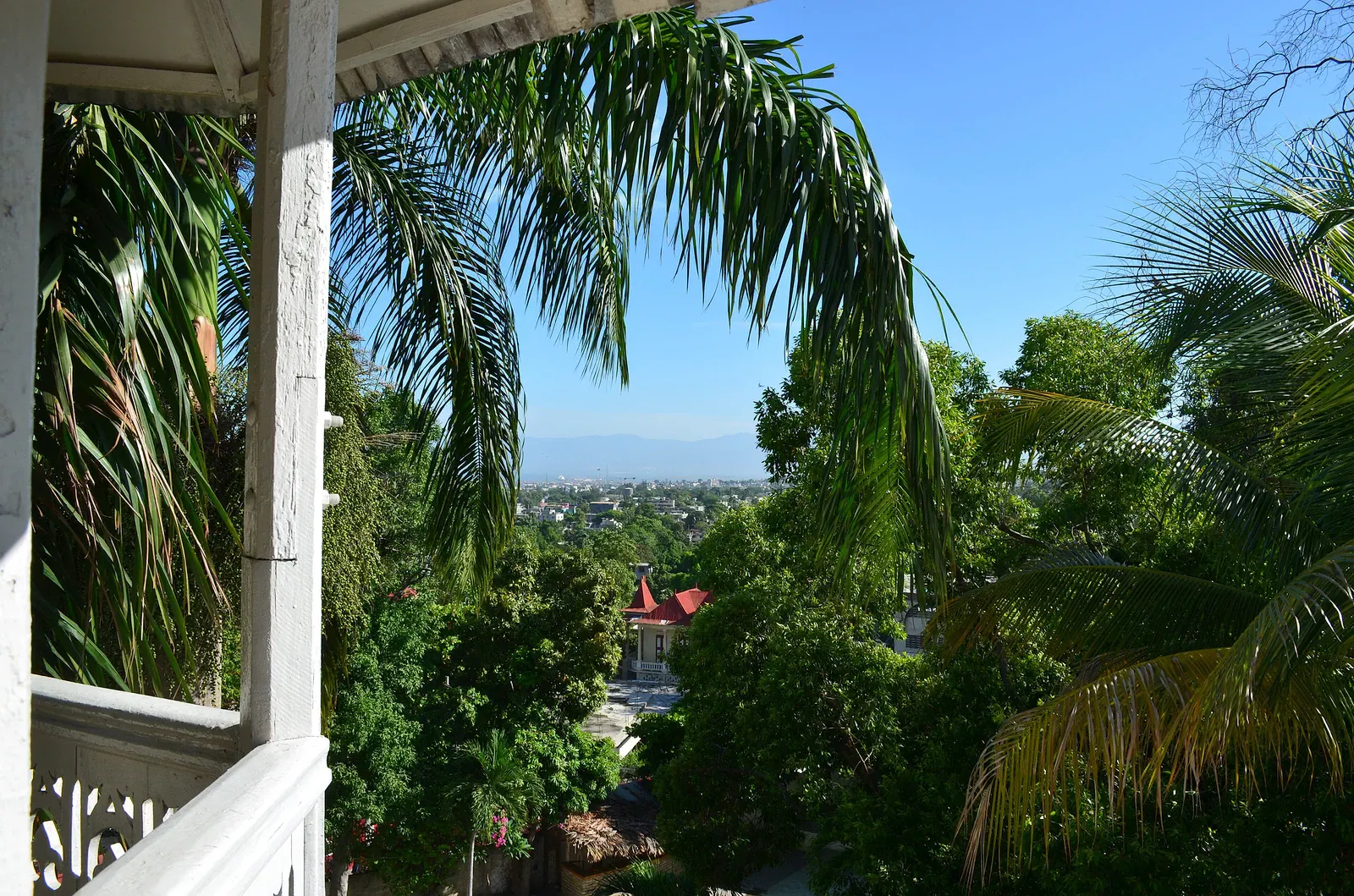
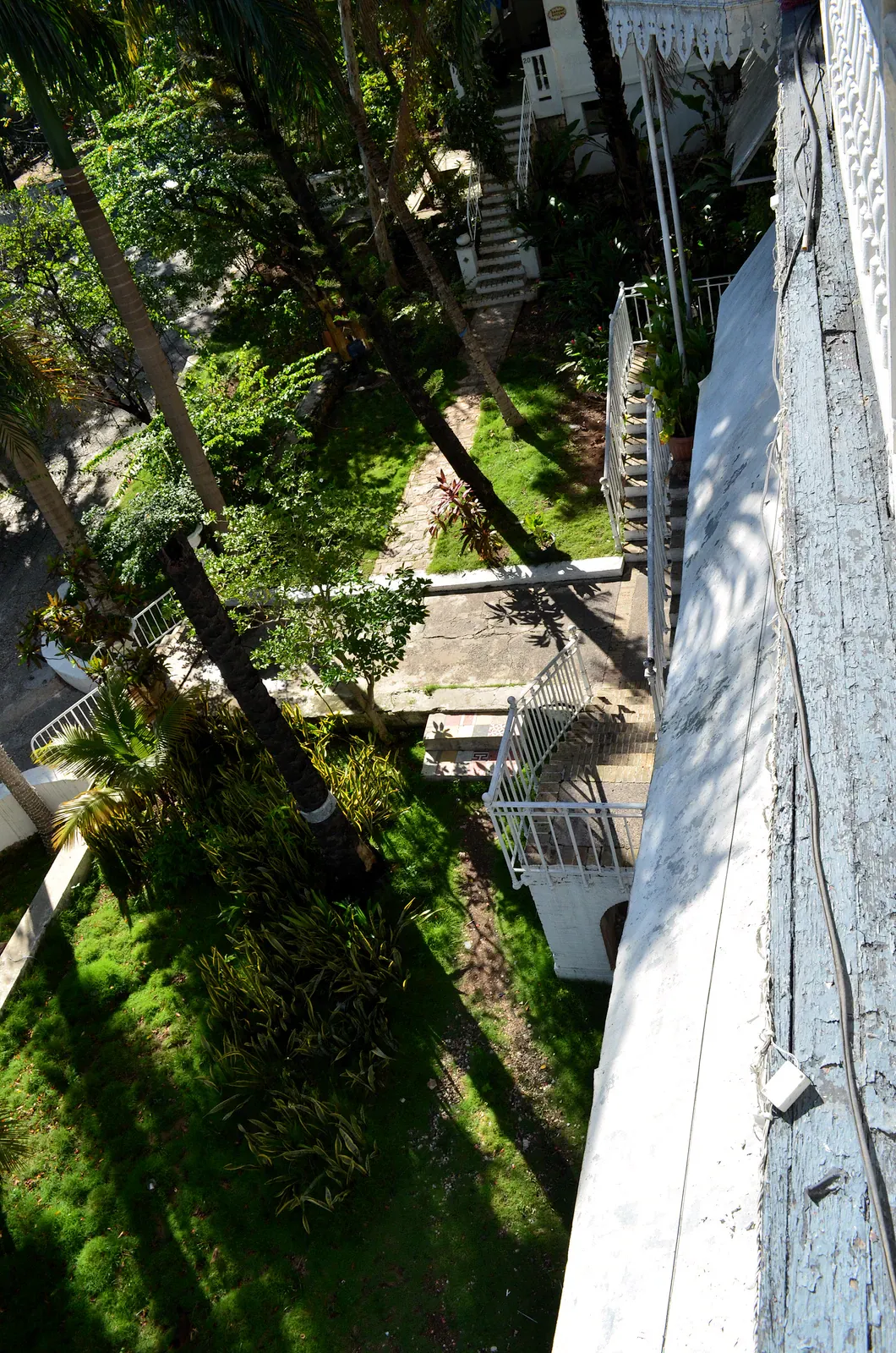
The Hotel Oloffson in Port-au-Prince became an early concert venue from 1987. Richard A. Morse, who had grown up in Connecticut and played in a New York new wave band, leased the near-ruined hotel that year and hired a folkloric dance troupe that he gradually turned into a band. RAM was formally founded in 1990 and played there every Thursday night.
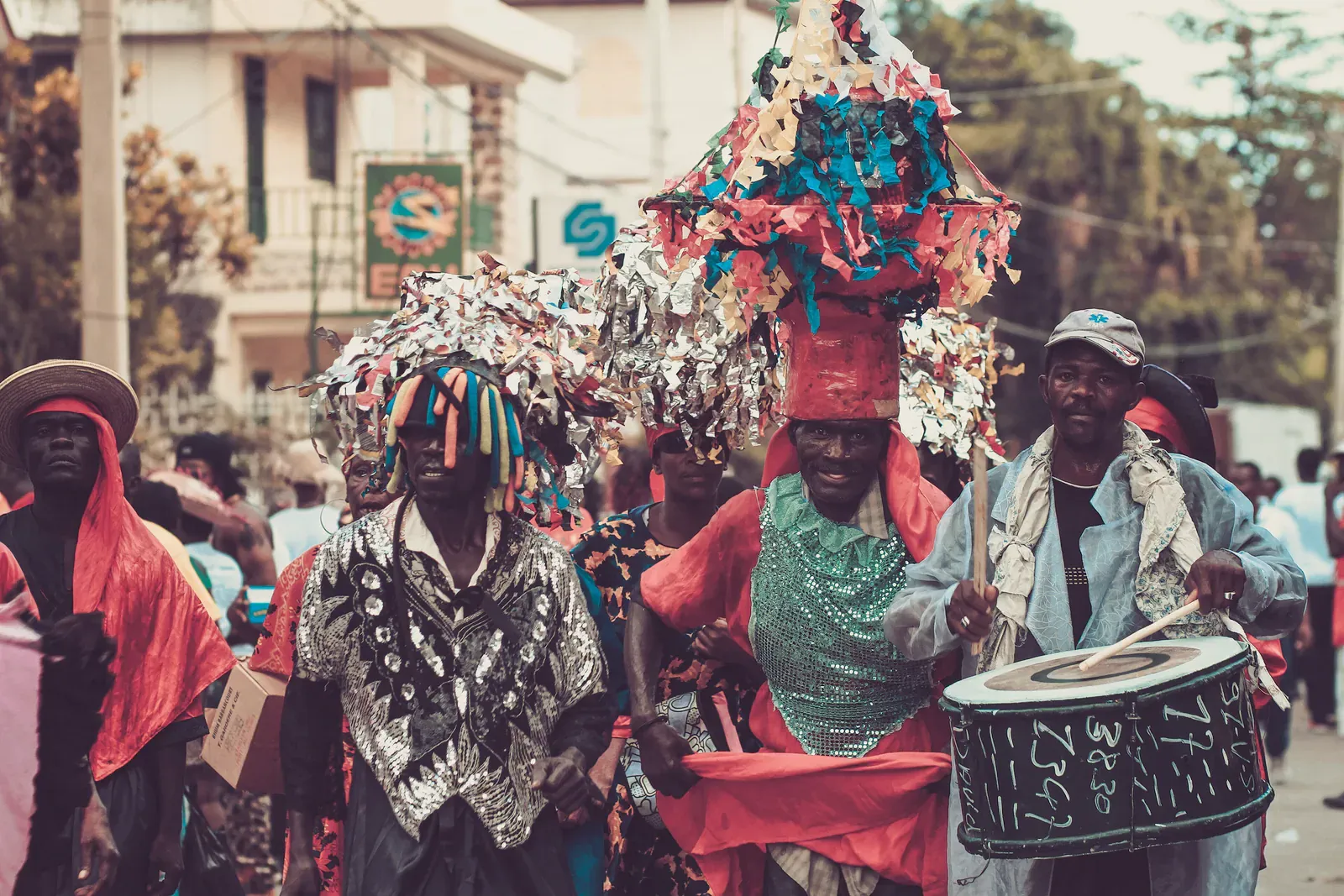
The Port-au-Prince Carnival of 1990 made the movement public. Boukman Eksperyans presented “Ke’m Pa Sote”, whose refrain says that the singer’s heart does not leap and that the listener does not frighten him. It was the most popular song of that Carnival and was widely taken as criticism of General Prosper Avril’s military government. Armed soldiers tried to stop the band from performing it and other censored songs. After a young girl was shot dead by a soldier, the song turned into a battle hymn. The band’s debut album, Vodou Adjae, was nominated for a Grammy Award.
Coup and exile, 1991-1994
The military coup against President Jean-Bertrand Aristide in 1991 split the scene between exile and defiance. Boukman Eksperyans left Haiti, performed abroad and spoke out against General Raoul Cedras’s regime, and returned in 1994 after Aristide was restored. Their album Kalfou Danjere appeared in 1992.
RAM stayed. At the 1992 Carnival the band began playing “Fèy”, the Creole word for leaf, a song of folkloric Vodou origin with no direct political reference. Radio stations played it, and listeners took it up as an unofficial anthem of support for Aristide. By the summer of 1992 the military had banned playing or singing it, and Morse received death threats. He escaped a kidnapping attempt at the hotel in 1994. RAM later recorded the album Aibobo, released in 1993, and kept playing through the junta years.
Characteristics
Rasin bands carry both Vodou drum traditions, rada and petwo, though rarely in the same song. Above the drum and horn rhythms sit melodies built on rock and jazz structures. Songs are mostly in Creole and often reuse ceremonial lyrics or poetry. Some are prayers to particular loa, others ballads about Haitian mythology, and many have several layers of meaning that can be read as social or political commentary. Typical themes include betrayal, being lost or estranged, justice and the wish to reconnect with an ancestral homeland. The music is upbeat, rhythmic and meant for dancing, like Vodou ceremonial music. Measured tempos of canonical tracks fall between about 100 and 155 beats per minute.
Instruments and production
Line-ups can include different drums in rada and petwo styles, rara horns, electric guitars, electric bass, electronic keyboards and electronic drums, one or more vocalists and extra percussionists. The sound sheet above lists the drums and techniques in detail. In production terms the movement keeps the live feel of a ceremony: horn and drum patterns stay prominent and the electric instruments fit around them instead of replacing them.
Notable recordings
“Ke’m Pa Sote” has a story larger than its recording. Its earliest release on record is the 2000 anthology Kanaval Rasin, a late date that reflects how the song first lived on stage and at Carnival, not on disc. “Jou Nou Revolte”, on Kalfou Danjere in 1992, shows the full band sound with rock guitar and bass over Vodou drumming. RAM’s “Fèy” belongs to the 1993 album Aibobo and remains the clearest example of a folk song whose meaning changed with events.
Mainstream success
Boukman Eksperyans, the best known of the bands, reached international fame in the early 1990s and is associated with Island Records, whose label page covers its reggae and Caribbean roots. The band turned to Carnival and concert stages at home and played to arena crowds on a 2022 US and Europe tour in support of Arcade Fire. Rasin remained primarily a Haitian music rather than a chart genre, and its reach abroad came through festival stages, world-music releases and tours.
Culture
Concerts blur into ceremony. Dancers at a RAM show may go into trance as the drums play, a state that, in Morse’s words, cannot be faked. Morse became a houngan, a Vodou priest, in 2002. Carnival and rara processions provide the public setting, and the sound of rara horns is one of the signatures of rasin. Public-service messages also use the style: Sanba Yo wrote “Vaksine” for a United Nations vaccination campaign.
Legacy
Lakou Mizik formed after the 2010 earthquake from nine Haitian musicians. Its debut album Wa Di Yo came out in 2016, and its second album HaitiaNola in 2019 was recorded partly in New Orleans with local brass and jazz players. In 2021 the collective worked with the electronic musician Joseph Ray on Leave the Bones. Those records show rasin moving from rock instrumentation to acoustic folk revival and electronic production, while still built on Vodou rhythms and Creole song.
Misconceptions
Rasin is sometimes described as Vodou ceremonial music itself. It is a popular band music that borrows ceremonial rhythms, texts and instruments, and the ceremonies keep their own separate repertoire.
It is also sometimes called Haitian reggae. Marley’s example inspired the founder of Boukman Eksperyans, but the music rests on rada and petwo rhythms with rock and jazz melody, not on the reggae one-drop.
A third myth holds that roots music avoids politics. Many rasin songs were written and performed with political messages, and two of the best known, “Ke’m Pa Sote” and “Fèy”, were censored or banned under military rule.
Frequently asked questions
What is mizik rasin?
Mizik rasin is Haitian roots music that mixes Vodou ceremonial rhythms and lyrics with rock, jazz and funk. The name means roots music in Haitian Creole.
Who started mizik rasin?
Boukman Eksperyans, founded in 1978 by Theodore Beaubrun Jr., Mimerose Beaubrun and others, is among the first bands of the movement. RAM and other groups followed in the late 1980s and 1990s.
What language is mizik rasin sung in?
Mostly Haitian Creole, with lyrics that often come from traditional Vodou ceremonies. Some bands, such as RAM, also use French and English.
Is mizik rasin political?
Often. Songs such as “Ke’m Pa Sote” and “Fèy” were taken as statements against military governments in the early 1990s.
Sound
Sound sheet
Signature sounds
- Rada and petwo rhythms, rarely in one song
- Rara horns over drum patterns
- Creole lyrics drawn from Vodou ceremony
- Electric guitar and bass added to Vodou drums
Drums and percussion
- Rada drums
- Petwo drums
Techniques
- Rada or petwo rhythm sets
- Rara horn layering
- Rock and jazz melodic structure
- Ceremonial lyrics
Tuning
Equal-tempered guitars, bass and keyboards over untuned Vodou drums
Vocals
Creole lead and chorus vocals, often with Vodou ceremonial lyrics, sometimes in French or English.
Scenes
Where it happened
Where and when the sound lived: one bar per city on a shared timeline.
Caribbean
North America
Active scenes
Peak 2, 2019-2025
Home of Boukman Eksperyans, RAM and the Carnival where rasin became a protest voice.
HaitiaNola was partly recorded there with local brass and jazz musicians.
Venues and places
Port-au-Prince, 1987 to today. Hotel where RAM played every Thursday night and an early rasin concert venue.
Culture
Culture markers
- Vodou ceremony and trance
Concerts can feature dancers entering trance to the drums, as in Vodou ceremonies.
Ritual - Haitian Creole lyrics
Most songs are in Creole and borrow ceremonial lyrics or poetry, with prayers to the loa.
Slang - Carnival and rara processions
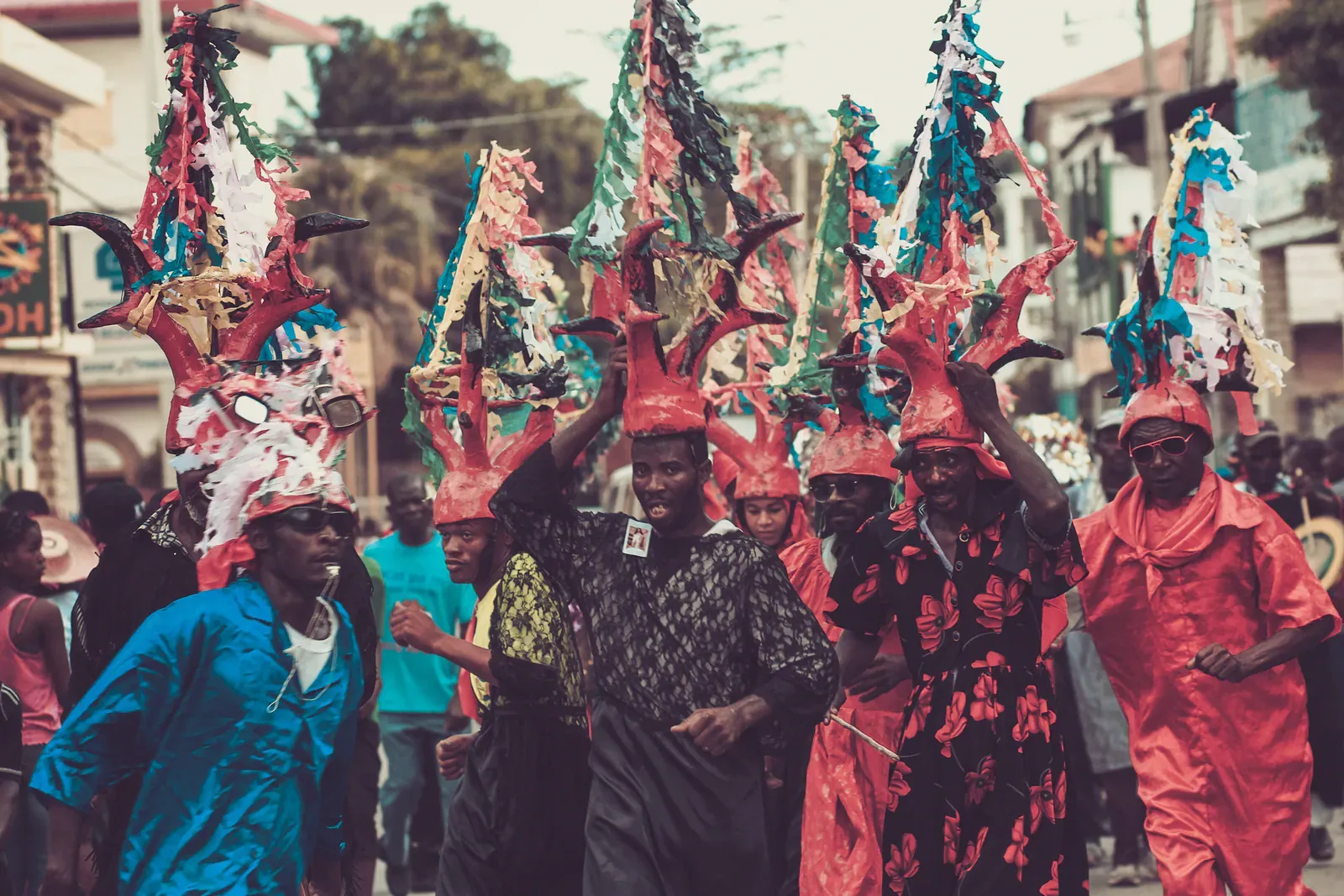
Rasin bands joined Carnival in Port-au-Prince, where rara horns and Vodou songs mix with parades.
Dance
Glossary
Terms on this page
The uprooting of the Duvalier regime's remnants after 1986.
Haitian spiritual community, where musicians met Vodou singers.
Vodou spirits addressed in many rasin song texts.
Hot Vodou rhythms linked to the New World, also spelled petro.
Cool Vodou rhythms associated with Africa.
Haitian Creole for roots; the name of the Vodou-based movement, also written racine in French.
Caribbean family