Québécois folk music
Québécois folk music is the French-Canadian fiddle, accordion and song tradition of Quebec, known for foot-tapped reels, comic songs and modern néo-trad bands.
Quebec, 1608
Folk family
Born
1608
Quebec
Links
2
Genres it drew on or shaped
Tempo
100-170 BPMLineage
Family tree
Timeline
Era by era
From the first sparks to today. Select a dot to read the story behind it.
- Songs and dances of New France
1608 to 1864
- Collections and first discs
1865 to 1973
- Revival bands
1974 to 1995
- Néo-trad and world touring
1996 to today
Eras
Moments
- 1 Songs and dances of New France, 1608 to 1864
- 2 Collections and first discs, 1865 to 1973
- 3 Revival bands, 1974 to 1995
- 4 Néo-trad and world touring, 1996 to today
1608
Songs and dances of New France
Colonists bring songs and dances from northern France, and fiddle music spreads at weddings and gatherings; Scottish and Irish settlers add reels and jigs after the Conquest.
- 1608Québec foundedSettlers from Normandy, Picardy, Poitou and Brittany bring the songs and dances that seed the tradition.
- 1645First fiddle on record at a Quebec weddingThe earliest documented fiddle playing in Canada is a Quebec wedding on 27 November.
1865
Collections and first discs
Songs are collected in print, fiddlers such as Joseph Allard record on 78s, and La Bolduc becomes a star of comic folk song in the 1930s.
- 1865Ernest Gagnon's song collectionOne hundred songs are published in one of the first such collections in Canada.
- 1908Foot-beating described in printThe essay Les violons d'autrefois calls foot-beating the required accompaniment of every popular player.
- 1928Joseph Allard signs with BluebirdThe Quebec fiddler goes on to make about seventy-five 78 rpm records.
- 1929La Bolduc's first recordingsHer first session in April is a flop, but La cuisinière in December sells over twelve thousand copies.
- 1932La Troupe du bon vieux tempsBolduc forms a touring troupe that mixes vaudeville and folk song and plays fifty shows in five months.
1974
Revival bands
Le Rêve du Diable and La Bottine Souriante turn village dance music into stage acts; the Bottine adds a horn section in 1990.
- 1974Le Rêve du Diable foundedGervais Lessard and Claude Méthé start one of the oldest folk bands in Quebec.
- 1976La Bottine Souriante forms in JolietteThe band takes its name from a worn work boot, a nod to its boot-stomping rhythm.
- 1990Bottine adds a horn sectionA four-piece horn section joins fiddle, accordion, guitar, piano and bass for a jazz element.
- 1994La MistrineThe album carries Dans nos vieilles maisons, a signature track of the horn-era Bottine.
1996
Néo-trad and world touring
Mes Aïeux and Genticorum bring the repertoire to new audiences with modern lyrics, folk-festival tours and mass foot-tapping events.
- 1996Mes Aïeux foundedThe neo-traditional group sets modern themes to folk melodies and folklore characters.
- 2000Genticorum formed in MontrealA fiddle, flute and guitar trio, each member also tapping feet.
- 2005En famille goes platinumMes Aïeux's album sells 100,000 copies by November and doubles that the next year.
- 2022La Grande Cadence355 people tap feet together in Joliette for a Guinness record.
Listening path
Start listening
A short path from an easy way in to the deep end. Thumbnails come from YouTube; the player loads only when you press play.
- 01
La Bolduc, 1930
Hear the cheerful comic song that made Bolduc a star of the Depression years.
- 02
La Bottine Souriante, 1994
Hear fiddle, accordion and horns driving a stomping reel.
- 03
Mes Aïeux, 2004
Hear a neo-trad song that mocks the Quiet Revolution and closes with a folk reel.
- 04
Genticorum, 2008
Hear a modern trio play dance tunes with fiddle, flute and clogging.
Facts
| Family | Folk |
| Origin | Quebec, Canada |
| Emerged | From 1608 |
| Status | Active |
| Tempo | 100 to 170 BPM |
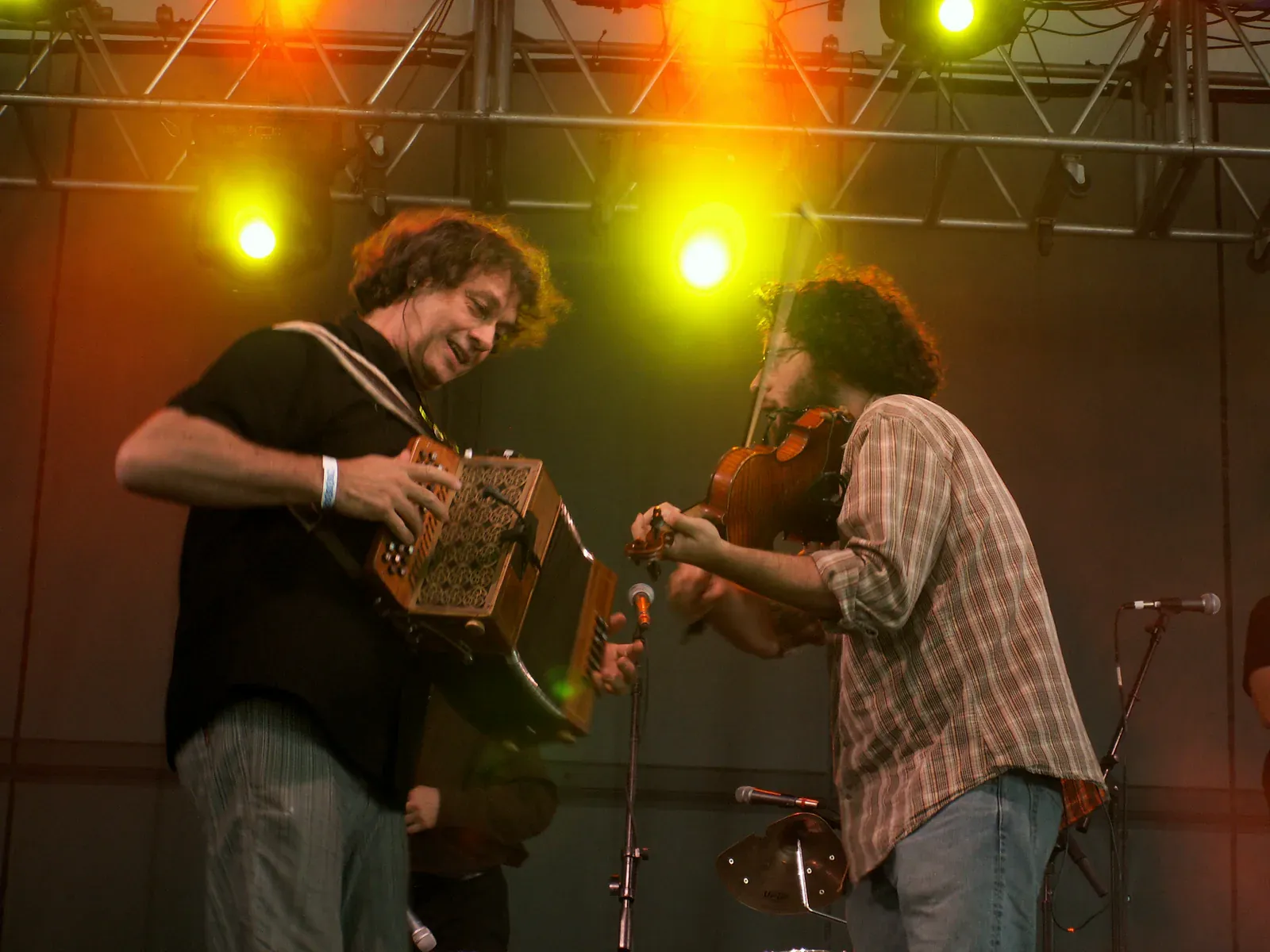
Québécois folk music is the traditional music of French-speaking Quebec: fiddle and accordion reels, jigs and quadrilles for dancing, and songs in French, all carried by the rhythm of tapped feet.
It grew from the songs and dances of colonists who arrived from northern France from 1608, absorbed Irish and Scottish tunes, and was reshaped from the 1970s by revival bands. It is a regional strand of the Canadian folk tradition within the folk family.
Origins
The colonists who settled New France came largely from Île-de-France, Picardy, Normandy, Poitou and Brittany. After a few generations they began calling themselves Canadiens, to set themselves apart from the French born in France, and their songs and dances became a local repertoire. Jigs, quadrilles, reels and line dances developed at the festivities of early colonial life.

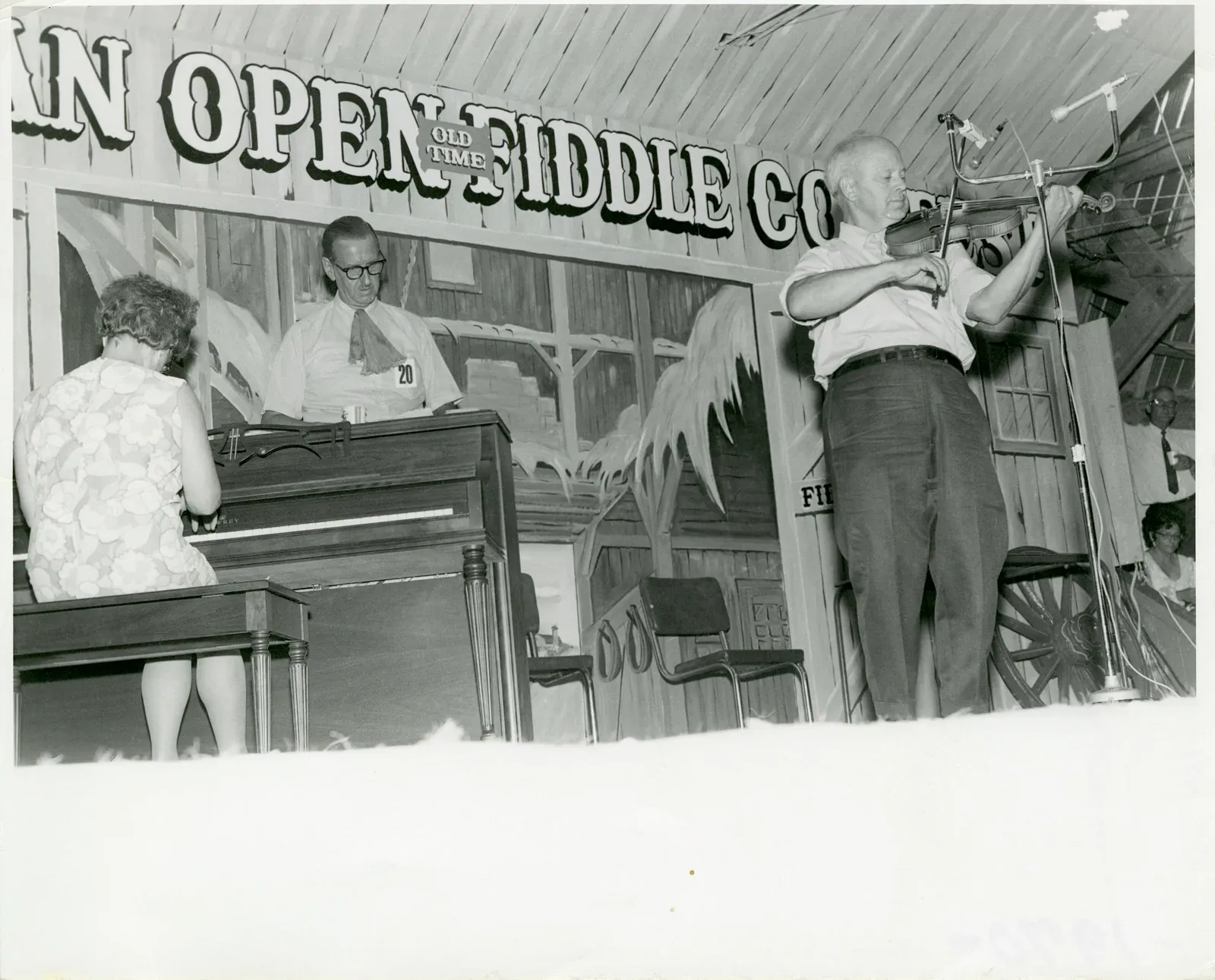
The earliest documented fiddle playing in Canada is a Quebec wedding on 27 November 1645. After the British conquest, Scottish settlers added their own tunes, and the Irish immigration of the nineteenth century brought a second wave of reels and jigs. That Irish and Scottish layer explains the Celtic link Quebec still shares with Ireland, Brittany and the Maritimes, though the French song stock and local dance habits kept the music distinct. A solo fiddle style evolved on the frontier, where cross tunings, drone notes and complex rhythms filled the gaps left by the lack of accompaniment, and clogging was often the only accompaniment available.
Collections and first records
Printed collecting began in the 1860s. Ernest Gagnon’s volume of one hundred songs, published in 1865, was among the first such collections in Canada. A 1908 essay on the old fiddlers described foot-beating as the required accompaniment of every popular player, and the same stamping can be heard on early recordings by fiddlers such as Isidore Soucy and J. O. LaMadeleine.

Joseph Allard, a fiddler who returned to Canada in 1917 and settled near Montreal, was among the first French Canadians to record commercially. In 1926 he was one of five fiddlers chosen to represent Quebec at a competition in Lewiston, Maine. In 1928 Victor’s Bluebird label signed him, and he went on to make about seventy-five 78 rpm records, besides writing some sixty tunes of his own. His pupil Jean Carignan carried that line forward: he played a repertoire of some 7,000 pieces learned from Allard, the Irish fiddler Michael Coleman and the Scottish fiddler James Scott Skinner, and was made a Member of the Order of Canada in 1974.
The best-known star of the era was a singer. Mary Rose-Anne Bolduc, called La Bolduc, played fiddle and jaw harp in Conrad Gauthier’s troupe by 1928 and was signed by Roméo Beaudry of the Compo Company for the Starr label. Her first session in April 1929 sold poorly. Her second record, released at Christmas that year, carried the original song La cuisinière and sold more than twelve thousand copies, unheard of in Quebec. By the end of 1930 she had recorded more than thirty songs. In 1932 she formed La Troupe du bon vieux temps, a touring show mixing vaudeville with folk song, and later toured New England and northern Ontario. She died of cancer in 1941.
Revival bands, 1974 to 1995
The 1970s turned village dance music into a stage act. Le Rêve du Diable, founded in 1974 by Gervais Lessard and Claude Méthé, made its first album in 1976 and is one of the oldest folk bands in the province. The same year La Bottine Souriante formed in Joliette, led by Yves Lambert, André Marchand and Mario Forest. The name means “the smiling boot”, after a work boot with a worn sole, a reference to its working-class roots and to the boot-stomping in its music.
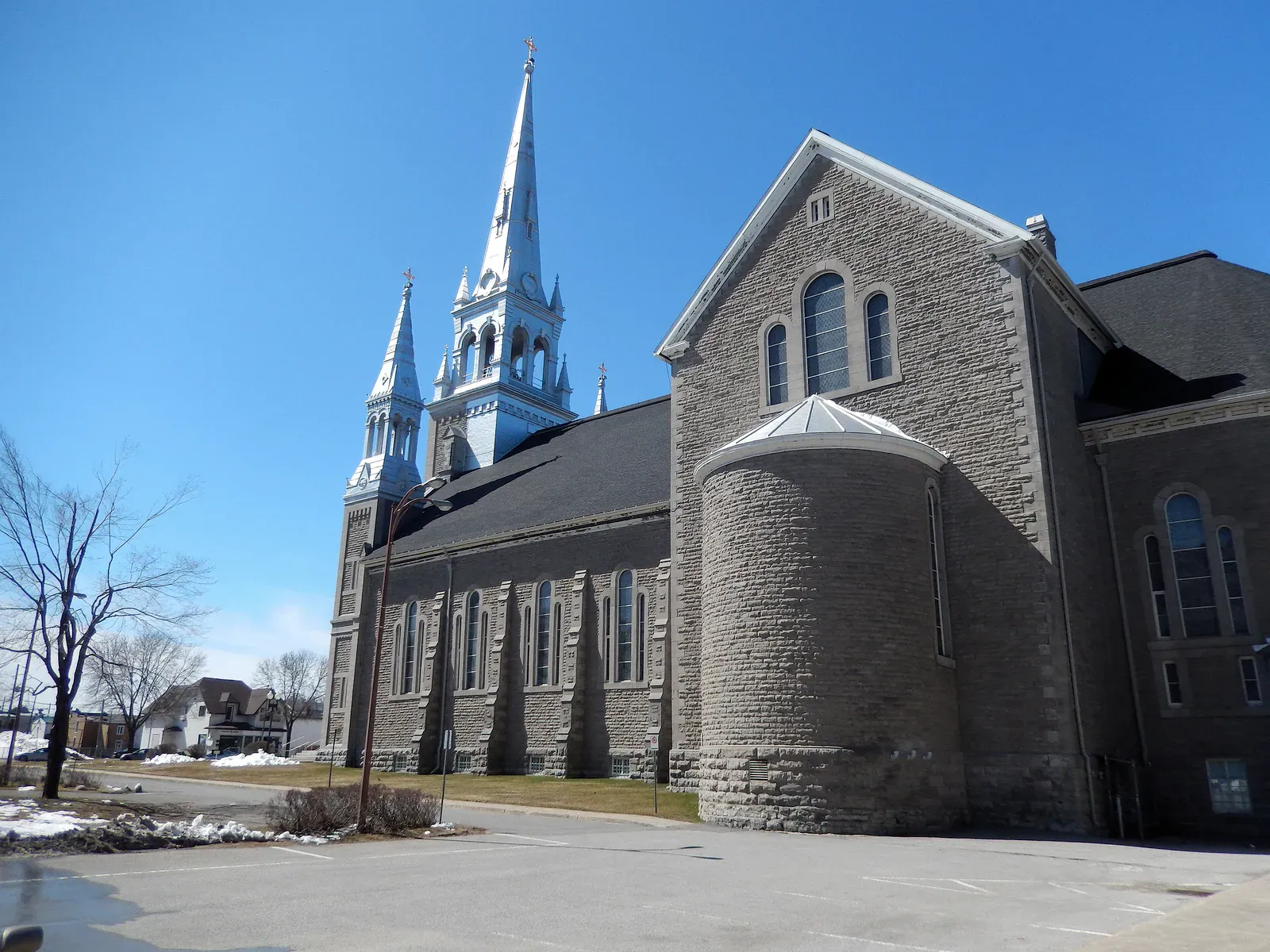
The Bottine changed the sound of the tradition in 1990, when it added a four-piece horn section to fiddle, accordion, guitar, piano and bass in order to bring in an element of jazz. The foot percussion stayed. By 1998 the band contributed a song to The Chieftains’ compilation Fire in the Kitchen. All of its founders have since left, and a new generation of players joined in 2002.
Characteristics
Rhythm marks the music more than any single instrument. The tapped-foot technique called podorythmie is used mostly for reels and duple-meter songs, and the usual pattern puts the heel or whole foot on the first eighth note of the beat and the front of the sole, right then left, on the third and fourth. Some players mark all four eighth notes about equally, and newer patterns were developed for other meters. Many tunes are crooked: their phrases run to uneven lengths rather than a symmetrical eight bars. Singing is often nasal and relaxed in pitch, and dance tunes may be sung on nonsense syllables in the Irish and Scottish manner, a technique called turlutage.
Lyrics follow French song forms: enumerative songs that list foods or tasks, dialogue songs sung as a debate between a man and a woman, and topical ballads set to known tunes. Bolduc used all three, and set her song about the Dionne quintuplets to the tune of Little Brown Jug.
Instruments and production
The fiddle leads, with the diatonic accordion, harmonica, jaw harp, spoons and bones as the old companions of the dance. Guitar and bass hold the chords in band settings. The harmonica is known in Quebec as musique à bouche, mouth music.
Mainstream success
The tradition’s biggest sales came twice. Bolduc made a household name of folk song in the 1930s, when record buyers elsewhere turned to jazz and popular music. Decades later Mes Aïeux, founded in 1996, became the leader of the néo-trad scene by writing about modern concerns such as globalization, over-medication and the pace of life, using stories and characters from folklore: the devil, the chasse-galerie flying canoe and the coureur des bois. Its album En famille went platinum in November 2005 and double platinum a year later, and the band won a Félix for best contemporary folk album in 2005 and three more in 2007, including group of the year and song of the year.
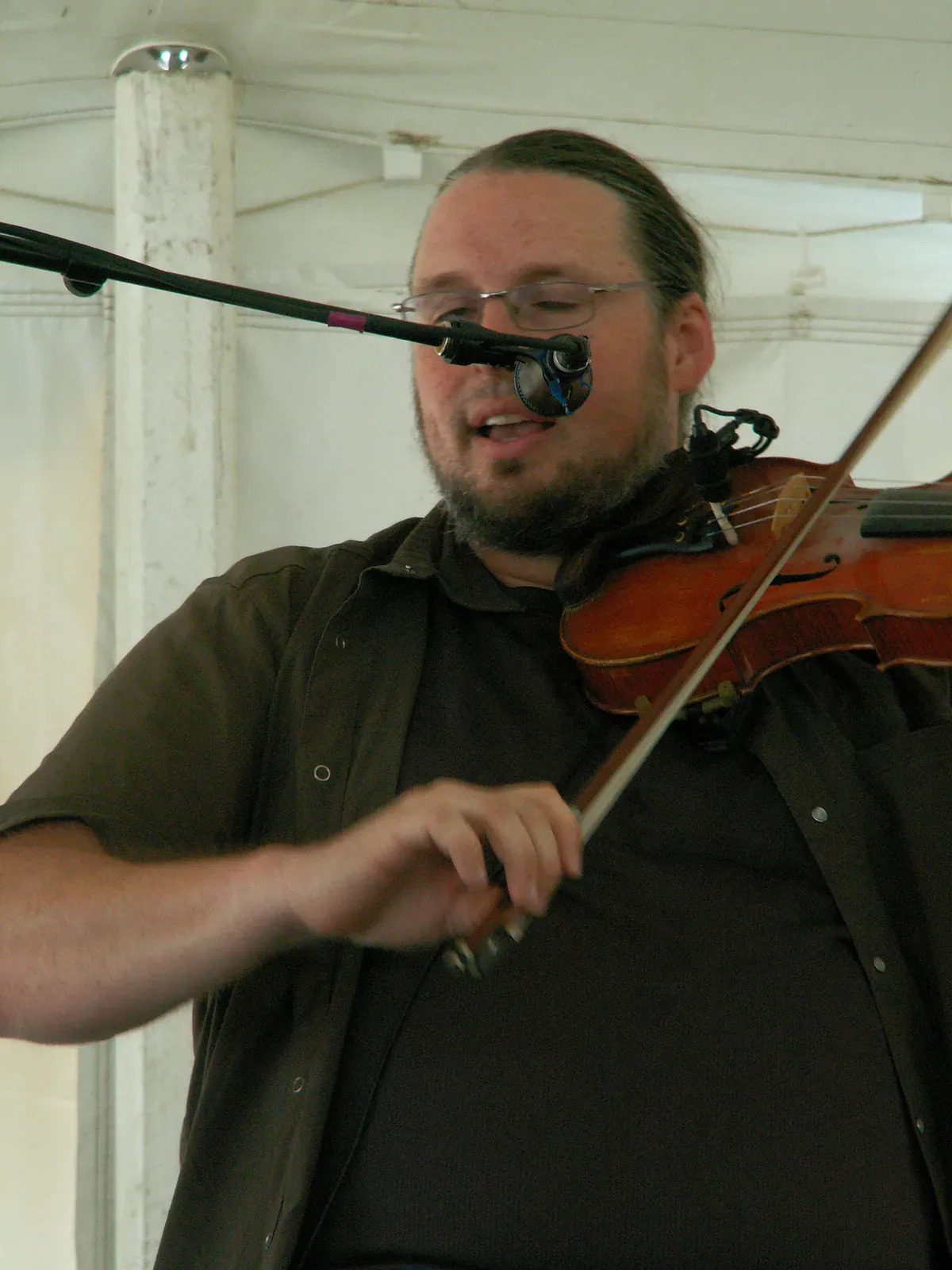
Genticorum, formed in autumn 2000, shows the other path. The trio of fiddle, wooden flute, guitar and jaw harp, with every member tapping feet, plays mostly original tunes in traditional style with French lyrics. It has toured North America, Europe, Australia, Egypt and Malaysia. Its second album Malins Plaisirs won the Canadian Folk Music Award for best ensemble.
Notable recordings
La cuisinière, recorded by La Bolduc in 1929, shows the formula that sold: an original comic song over a known folk melody, short and lively. Dans nos vieilles maisons, on the Bottine’s 1994 album La Mistrine, is the brass-and-fiddle band at full stretch. Dégénérations, from Mes Aïeux’s En famille, mocks the legacy of the Quiet Revolution and closes with a reel.
Culture
Dance carries the music. Contemporary groups play mostly at Christmas and New Year’s Eve gatherings, at the Quebec National Holiday and at local festivals. Foot-tapping has become a public event: in August 2022, 355 people tapped feet together for six minutes in downtown Joliette to set a Guinness record and raise over fifty thousand dollars for a school-perseverance foundation.
Legacy
Quebec fiddling is part of the old-time fiddle canon and has influenced New England and Northwest styles. Its bands tour internationally, and its dance repertoire sits beside Irish traditional music and other Celtic music on festival stages. Le Rêve du Diable received the Quebec Medal of the National Assembly in 2012.
Misconceptions
It is often called a copy of Irish music. The Irish and Scottish contribution is real, but the base repertoire came from northern France, and crooked tunes, foot percussion and French song forms have no direct Irish equivalent. Another belief is that foot-tapping is a modern stage effect: it appears in a 1908 description of old fiddlers and on early recordings. A third is that the tradition survives only as a museum piece, yet new bands formed in 1996 and 2000 have sold platinum records and toured the world.
Frequently asked questions
What is Québécois folk music?
Québécois folk music is the traditional music of French Canada: fiddle and accordion dance tunes, French-language songs and tapped-foot rhythm, descended from northern French song and shaped by Irish and Scottish influence.
What is podorythmie in Québécois folk music?
Podorythmie is foot-tapping percussion played by a seated musician, usually with the heel and sole, to give rhythm to reels and duple songs in Québécois, Acadian and Métis music.
Who is La Bolduc?
La Bolduc is Mary Rose-Anne Bolduc, a Gaspé-born fiddler and songwriter who became the first widely known Quebec singer-songwriter in the 1930s with comic songs in an Irish-influenced style.
Which bands play Québécois folk music today?
La Bottine Souriante, Le Rêve du Diable, Mes Aïeux and Genticorum are leading groups, together spanning the revival of the 1970s and the néo-trad scene since the 1990s.
Sound
Sound sheet
Signature sounds
- Foot-tapped pulse under the melody
- Fiddle and accordion in unison
- Reels in sets with changing keys
- Call-and-response choruses
Techniques
- Podorythmie
- Crooked tunes
- Turlutage
- Cross tuning and drones
- Enumerative song
Keys and modes
D, G and A major. Common home keys of fiddle reels; some tune sets change key mid-set.
Tuning
Standard fiddle tuning, with cross tunings such as ADAE for some tunes.
Vocals
Nasal, relaxed-pitch singing in French, with call-and-response choruses.
Scenes
Where it happened
Where and when the sound lived: one bar per city on a shared timeline.
North America
Active scenes
Peak 4, 2000-2025
Founded in 1608, the colony's capital where the repertoire took root.
Home of the Compo Company, which pressed records for Starr and other labels.
Birthplace of La Bottine Souriante and site of the 2022 foot-tapping record.
Base of Genticorum and the city where Bolduc died in 1941.
Culture
Culture markers
- Quadrille and reel
Jigs, quadrilles, reels and line dances grew out of festivities since early colonization.
Dance - Réveillon and Fête nationale
Contemporary groups play mostly at Christmas and New Year's Eve gatherings and on Quebec National Holiday.
Ritual - Foot-tapping gatherings
Mass podorythmie events such as La Grande Cadence in Joliette draw hundreds of players.
Ritual - Turlutage
Mouth music of nonsense syllables sung in place of lyrics, often in reels.
Slang
Media
Key media
- 1865Chansons populaires du Canada
by Ernest Gagnon. One of the first published collections of folk songs in Canada.
Book - 1998Fire in the Kitchen
by The Chieftains. Celtic compilation with a contribution by La Bottine Souriante.
Compilation
Glossary
Terms on this page
Tune whose phrases are not the usual 4 or 8 bars long.
Neo-traditional style that sets new lyrics to folk melodies and instruments.
Percussion made by tapping the feet while playing, used for reels and duple songs.
Fast duple-meter dance tune at the core of the fiddle repertoire.
Vocal technique of singing dance tunes on nonsense syllables, from Irish and Scottish mouth music.
Folk family