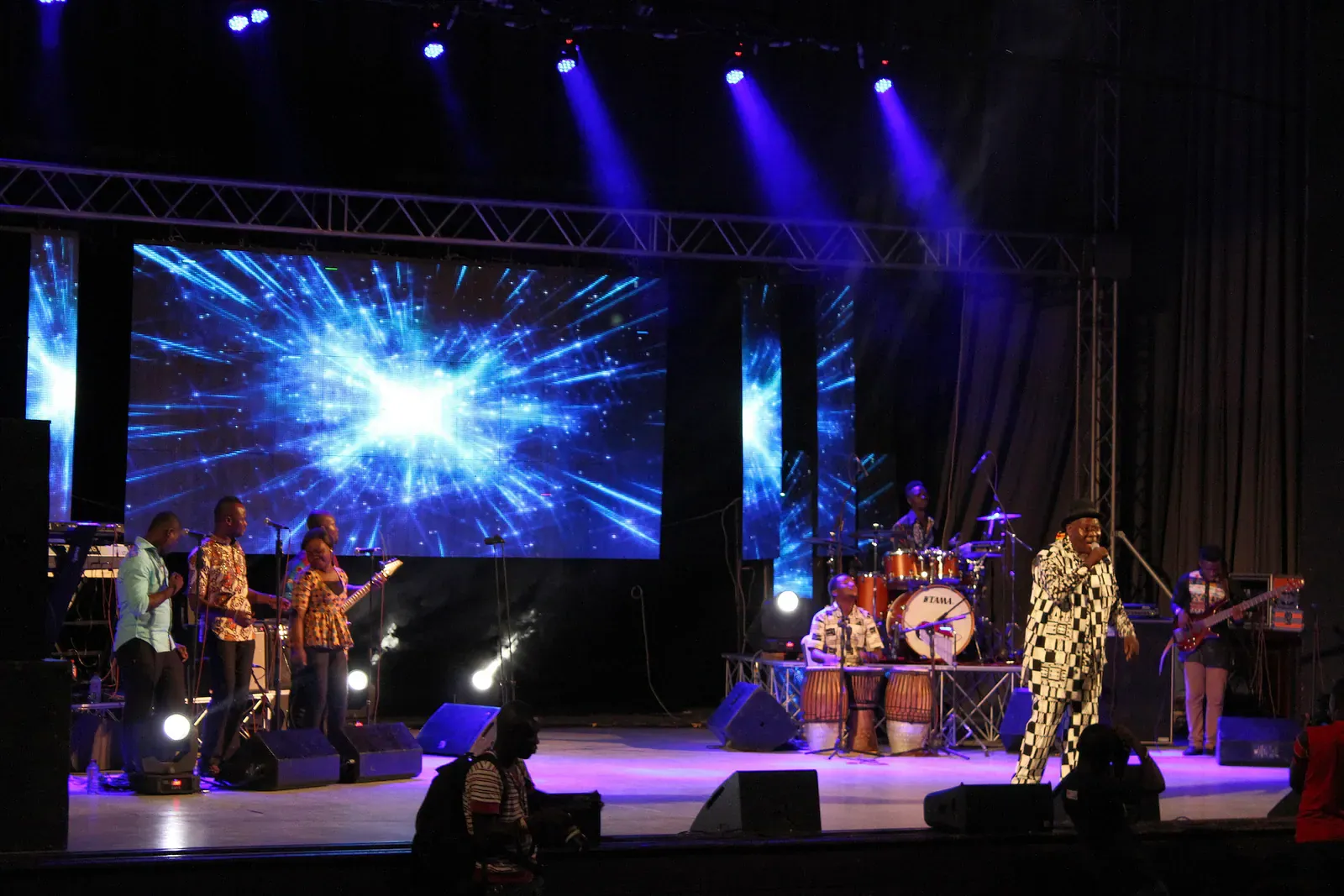
Taarab
Taarab is sung Swahili poetry from Zanzibar and the East African coast, played by orchestras of qanun, oud, violin and accordion since the 1870s.
Zanzibar, 1870
African family
Born
1870
Zanzibar
Subgenres
8
Documented branches
Links
15
Genres it drew on or shaped
Tempo
80-150 BPMLineage
Family tree
Grew out of
Influenced by
Zanzibar, 1870
Taarab
Led to (9)
Timeline
Era by era
From the first sparks to today. Select a dot to read the story behind it.
- Court and clubs
1870 to 1927
- Siti binti Saad and the record era
1928 to 1957
- Clubs and modernizers
1958 to 1999
- Modern taarab and heritage
2000 to today
Eras
Moments
- 1 Court and clubs, 1870 to 1927
- 2 Siti binti Saad and the record era, 1928 to 1957
- 3 Clubs and modernizers, 1958 to 1999
- 4 Modern taarab and heritage, 2000 to today
around 1870
Court and clubs
Tradition links taarab to Sultan Barghash's court in Zanzibar, then to musical societies such as Ikhwani Safaa, founded in 1905, which played at weddings and community events.
- 1870Barghash's court ensemblePopular tradition says Sultan Barghash brought an Egyptian ensemble to Zanzibar's Beit el-Ajab and sent Mohamed Ibrahim to Egypt to learn the qanun.
- 1905Ikhwani Safaa Musical Club foundedThe society became one of Zanzibar's leading taarab orchestras and is still active.
- 1911Siti moves to Ng'amboThe future star settled in Zanzibar Town's Ng'ambo district, where her band's songs drew on neighbourhood life.
1928
Siti binti Saad and the record era
From 1928 Siti binti Saad and her band recorded in Bombay for His Master's Voice. Records in Swahili sold in the tens of thousands and made taarab a coast-wide popular music.
- 1928First Swahili recordings in BombaySiti and her band flew to Bombay and became the first East African artists to make commercial records.
- 1929Second Bombay sessionCalled back in March, the band recorded 98 more songs; the first session's 56 songs had sold over 23,000 copies by 1931.
- 1931Record firms merge into EMIBy mid-1931 His Master's Voice had sold over 72,000 records in East Africa, mostly by Siti and a few other taarab performers.
1958
Clubs and modernizers
Culture Musical Club began in 1958, Tanga's Black Star Musical Club modernized the sound in the 1960s, and from 1988 Zanzibari groups reached international labels.
- 1958Culture Musical Club foundedIt grew out of the youth wing of a Zanzibar political party and became the largest taarab club, with up to 45 musicians.
- 1960Black Star Musical Club modernizes taarabThe Tanga group updated the sound and carried it to audiences in Burundi and Kenya.
- 1988Zanzibar clubs reach international labelsCulture Musical Club began releasing albums abroad, and Ikhwani Safaa's Taarab 2 appeared the same year.
around 2000
Modern taarab and heritage
Small keyboard-led groups such as East African Melody and Jahazi Modern Taarab brought direct lyrics and dance rhythms, while academies and festivals in Zanzibar work to preserve older styles.
- 2002Dhow Countries Music Academy opensThe Stone Town school teaches taarab, kidumbaki and ngoma and has taught over 3,000 students.
- 2005Bi Kidude wins WOMEX awardThe Zanzibari singer was honoured for her contribution to world music and Zanzibar culture.
- 2006Jahazi Modern Taarab formedMzee Yusuph's Dar es Salaam group became a leading name in keyboard-based modern taarab.
Listening path
Start listening
A short path from an easy way in to the deep end. Thumbnails come from YouTube; the player loads only when you press play.
- 01
Siti binti Saad, 1930
A recording by the first taarab star: listen for Swahili verse over a small string and drum ensemble.
- 02
Ikhwani Safaa Musical Club, 1988
Orchestral Zanzibar taarab from a club active since 1905.
Facts
| Family | African |
| Origin | Zanzibar, Tanzania |
| Emerged | Brought to Zanzibar under Sultan Barghash |
| Status | Active |
| Tempo | 80 to 150 BPM |
| Meter | 4/4 |
| Subgenres | 8 |
Taarab is a sung-poetry genre of the Swahili coast, centred on Zanzibar, Tanga and the Kenyan coast around Mombasa and Malindi.
It sets Swahili verse to melodies shaped by Arab, Indian and African Great Lakes traditions and is played by ensembles that range from a few players to orchestras of dozens. It took its popular form between the 1870s and the 1930s and is still a staple of weddings and community events.
Origins
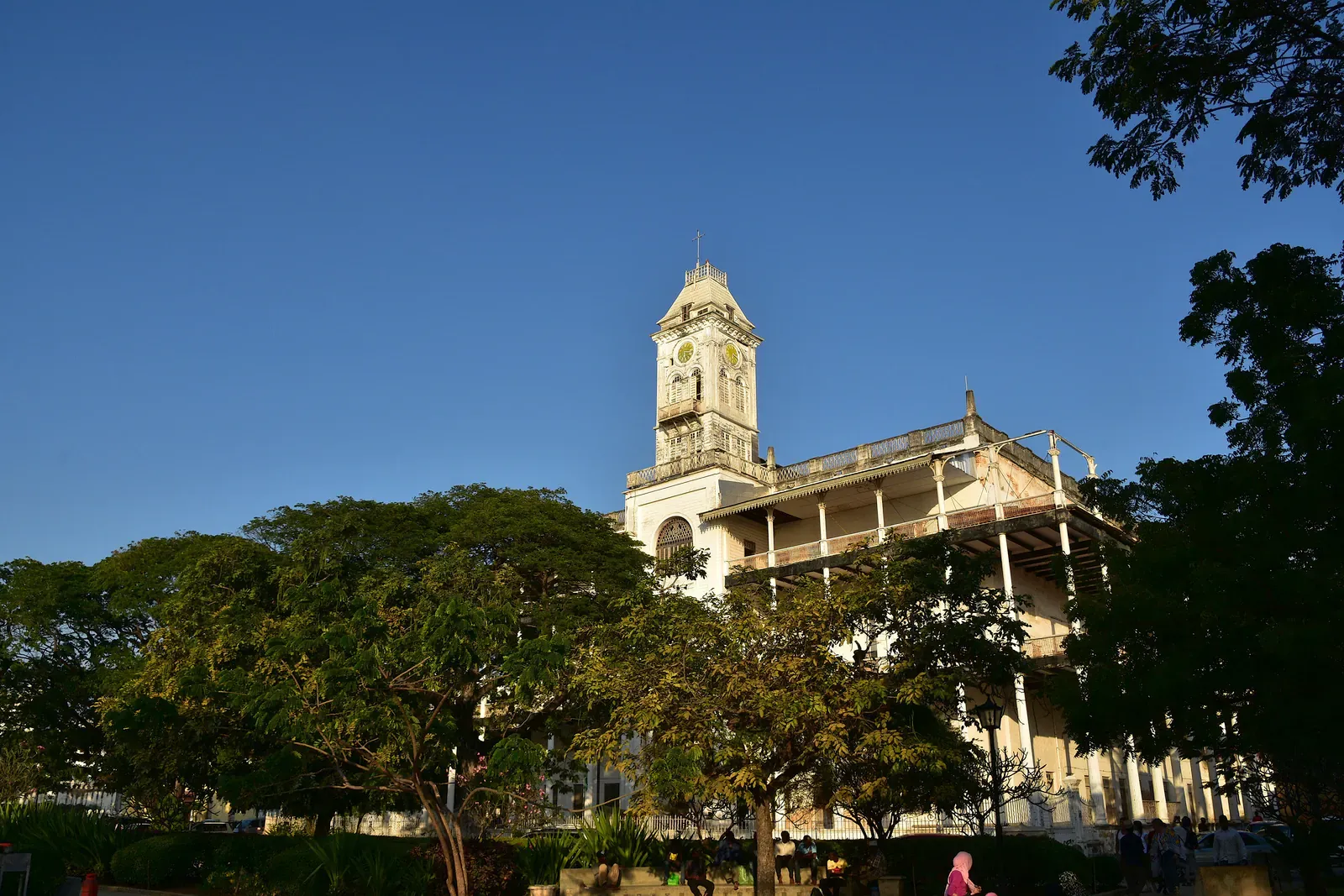
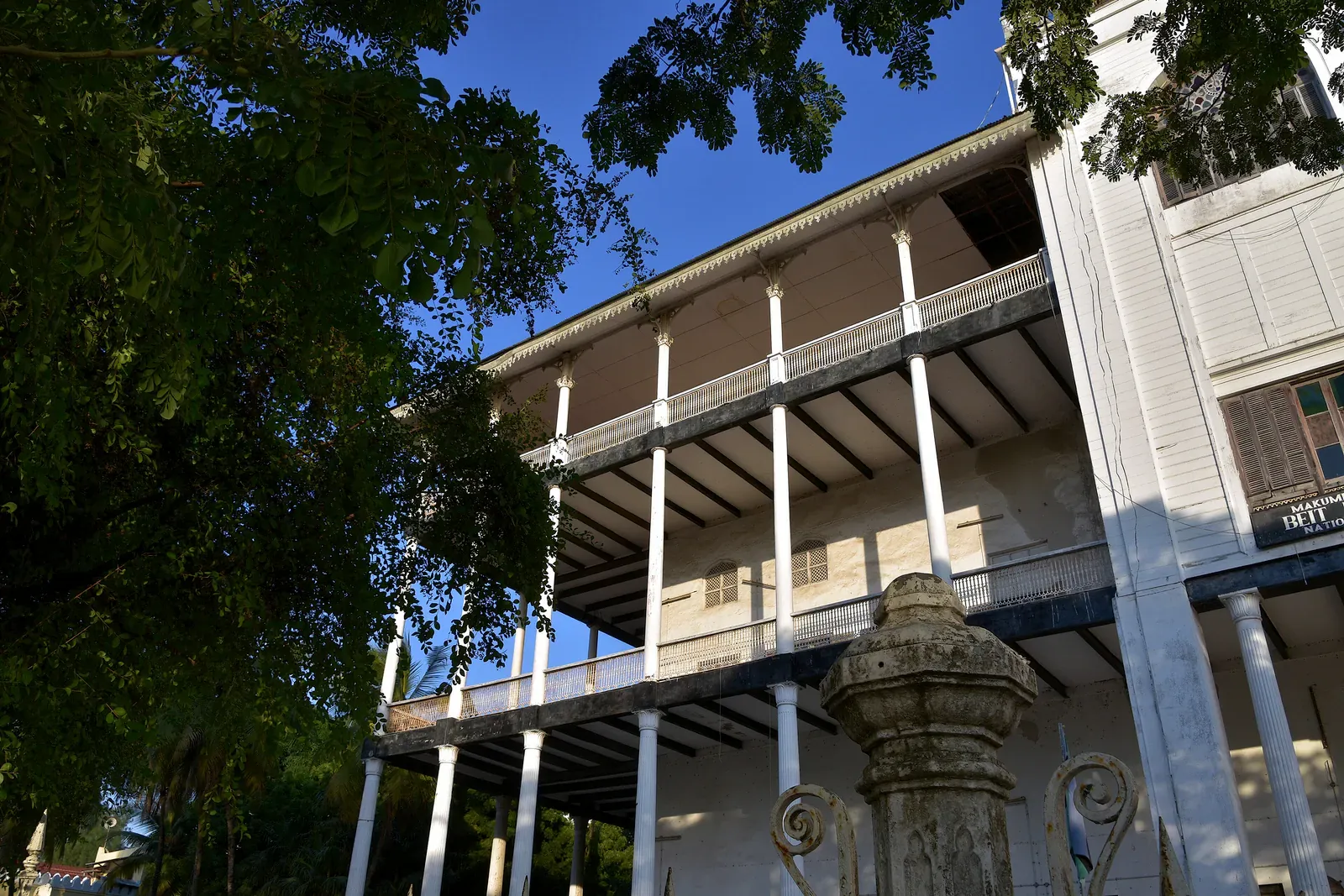
The widely told origin story ties taarab to Sultan Barghash bin Said, who ruled Zanzibar from 1870 to 1888. In this account he imported an ensemble from Egypt to play at his palace, the Beit el-Ajab, and sent a Zanzibari named Mohamed Ibrahim to Egypt to learn the qanun. On his return Ibrahim formed the Zanzibar Taarab Orchestra. Scholars treat the court story as one strand among several coastal precursors rather than a settled founding event, since Swahili sung poetry and links with Arab and Indian music were already old along the coast.
Whatever the exact route, the music left the palace for weddings and other community gatherings, and societies grew up to play it. The Ikhwani Safaa Musical Club dates from 1905 and is still active, making it one of the oldest working taarab organizations. Early ensembles were often small and closer to what is now called kidumbaki, so the later split between large orchestras and small groups is less a rupture than a growth in size.
Siti binti Saad and the record era, 1911-1950
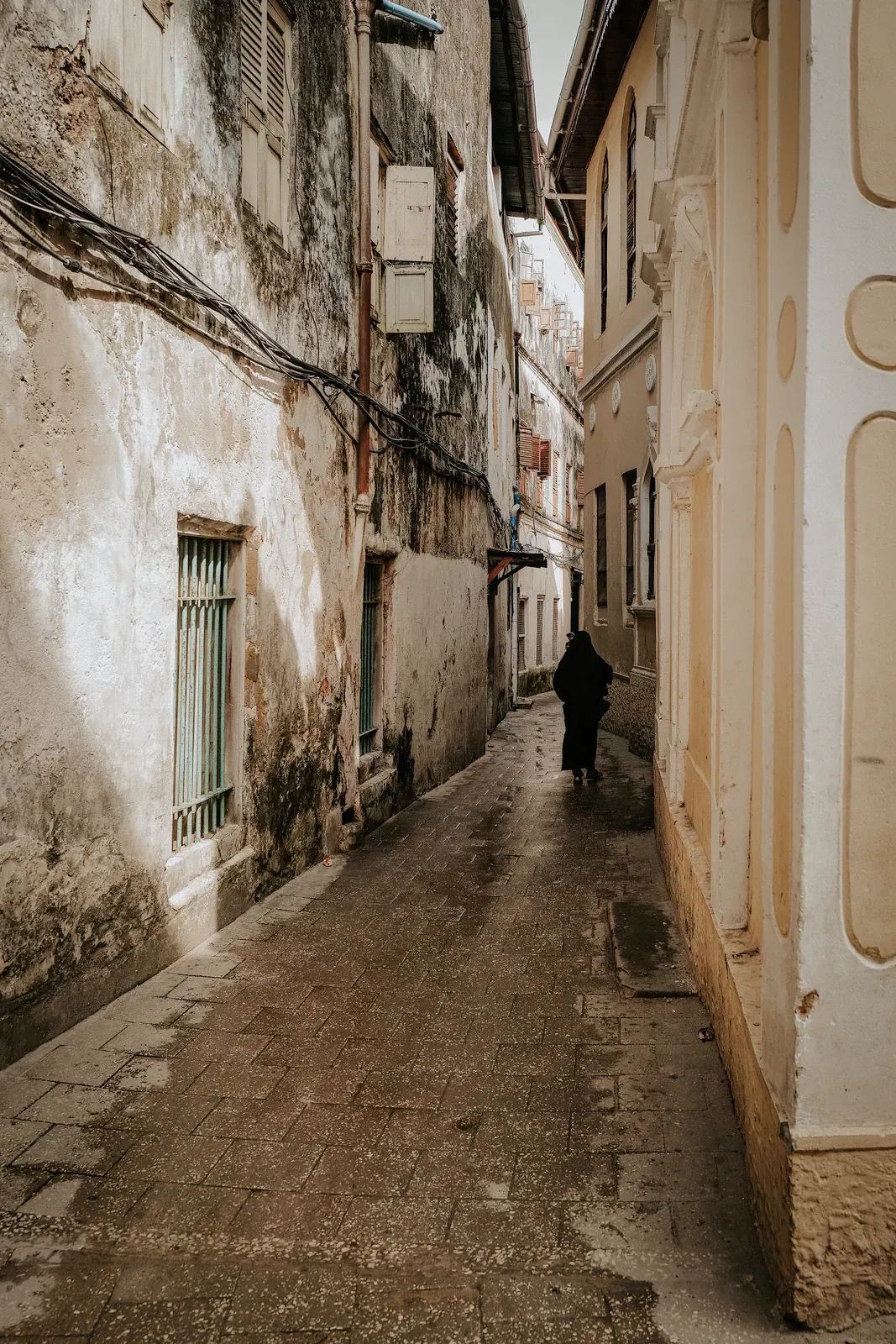
The first great taarab star came from outside the sultan’s circle. Siti binti Saad was born into a family of rural slaves around 1880 and moved to Zanzibar Town in 1911, settling in Ng’ambo, “the other side” of a tidal creek from Stone Town, whose population more than doubled between 1890 and 1930. Her reputation grew there during the First World War. She took the stage name Siti, a word that means both “lady” and “fife”, and a member of Ikhwani Safaa, Ali Muhsin, taught her singing, accompaniment and Arabic. Her fee for one wedding performance could exceed what an average urban worker earned in a year.
In 1928 the Zanzibar agent of the Gramophone Company, Abdulkarim Hakim Khan, persuaded the firm to try Swahili records. Siti and her band members Budda Swedi, Maalim Shaaban and Mbaruk Alsam travelled to Bombay and recorded for His Master’s Voice, the brand of The Gramophone Company. Until then the only records sold in East Africa were in Middle Eastern, European and Indian languages. The 56 songs from the first session sold over 23,000 copies by 1931. A second Bombay session in March 1929 produced 98 more songs, and they sold 40,666 copies over the next two years.
Rivals followed quickly. By 1930 His Master’s Voice, Odeon, Columbia and Pathe were all recording in East Africa, and by mid-1931 His Master’s Voice had sold over 72,000 records there, most by Siti and a few other taarab performers. The 1931 merger that created EMI kept the focus on Swahili. Siti recorded some songs in Arabic, but her Swahili songs earned the praise, and over 250 songs were recorded under her name for several labels. A study of one hundred song texts found about 60 percent on love, 20 percent on social and cultural issues and 2 percent on religion. The social songs, which attacked class and gender abuses and the colonial courts, are the ones that made her a lasting symbol. She died on 8 July 1950.
Clubs and modernizers, 1958-1999
Clubs carried the tradition into the independence era. Culture Musical Club began in 1958 as part of the youth wing of a political party during Zanzibar’s independence movement. It became the island’s largest taarab club, with up to 45 musicians, and works from a clubhouse in the Vuga district of Stone Town, where rehearsals and shows draw visitors. It also tours rural areas with a portable stage and a generator. Its large line-up of violins, qanun, oud, accordions, double bass and drums sits beside a smaller kidumbaki group that plays at weddings and celebrations.
On the mainland, the Black Star Musical Club of Tanga modernized the sound in the 1960s and carried it to audiences in Burundi and Kenya. Taarab also spread inland to Uganda and Rwanda, and reached the Comoros in the early twentieth century, where it is called twarab. A related offshoot, taarab ya kihindi, sets Swahili words to Hindi film melodies.
Bi Kidude became the era’s best-known voice. Her birth date is unknown, probably around 1910, and she began singing at ten. After a forced marriage at thirteen she escaped to mainland Tanganyika, sang in taarab groups in Dar es Salaam and other coastal towns, and returned to Zanzibar in the 1940s. She specialized in female-led taarab whose outspoken lyrics criticized men for sexist behaviour, and she presided over unyago, the coming-of-age ceremonies for girls. She worked as a healer and henna artist too. A television appearance in the 1980s made her a national figure, and she later toured France, England, Scandinavia, the Middle East, Southeast Asia and Japan. In 2005 she won a WOMEX award and the Tanzanian Medal for Arts and Sports. She died on 17 April 2013.
International releases began in 1988, when Culture Musical Club started issuing albums on foreign labels and Ikhwani Safaa’s Taarab 2 appeared. The club went on to play Womad in the UK and festivals in Germany, France, Belgium and Chicago, and in 2005 made Mkutano with the American bluesman Taj Mahal.
Instruments and production
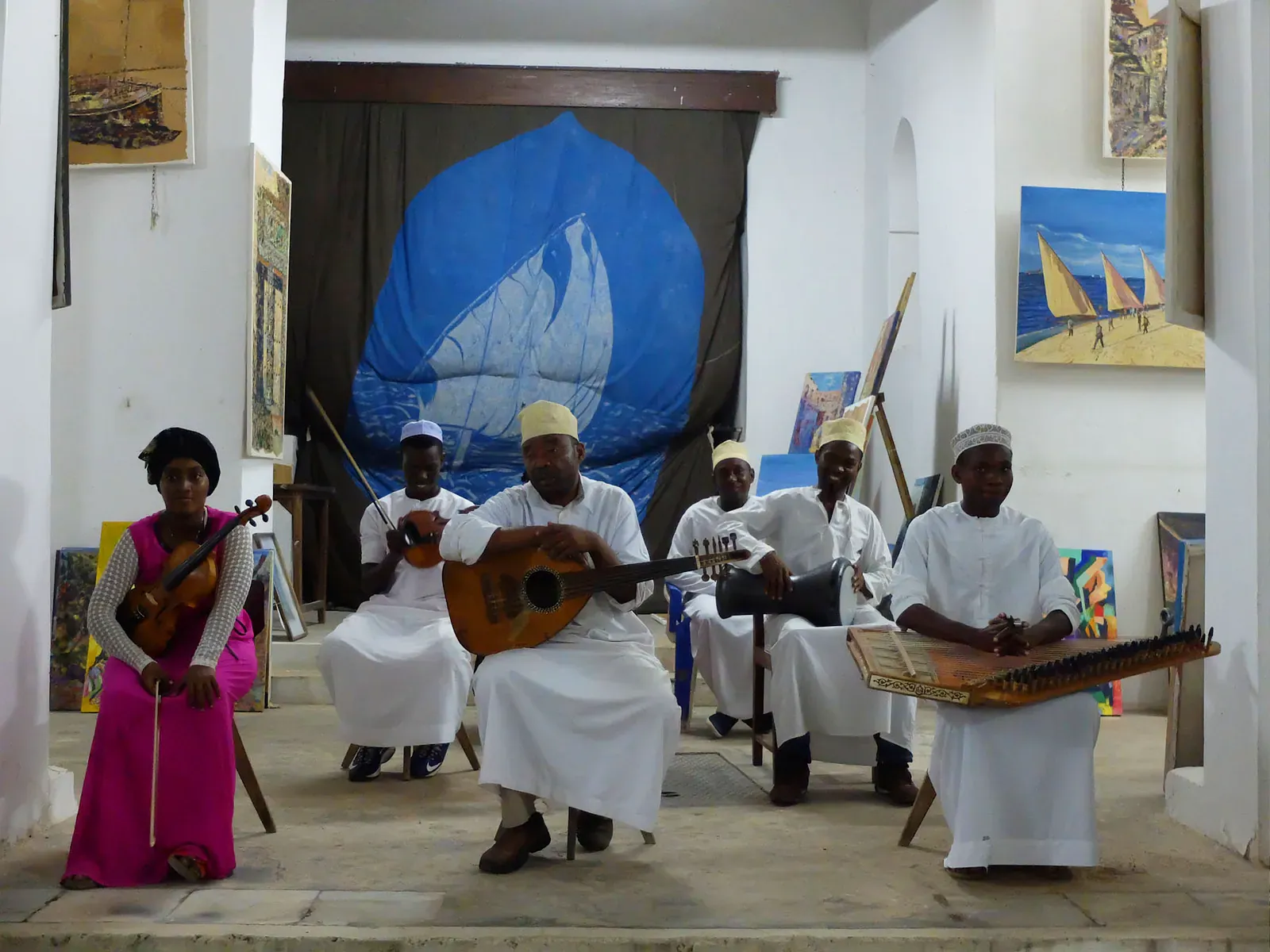
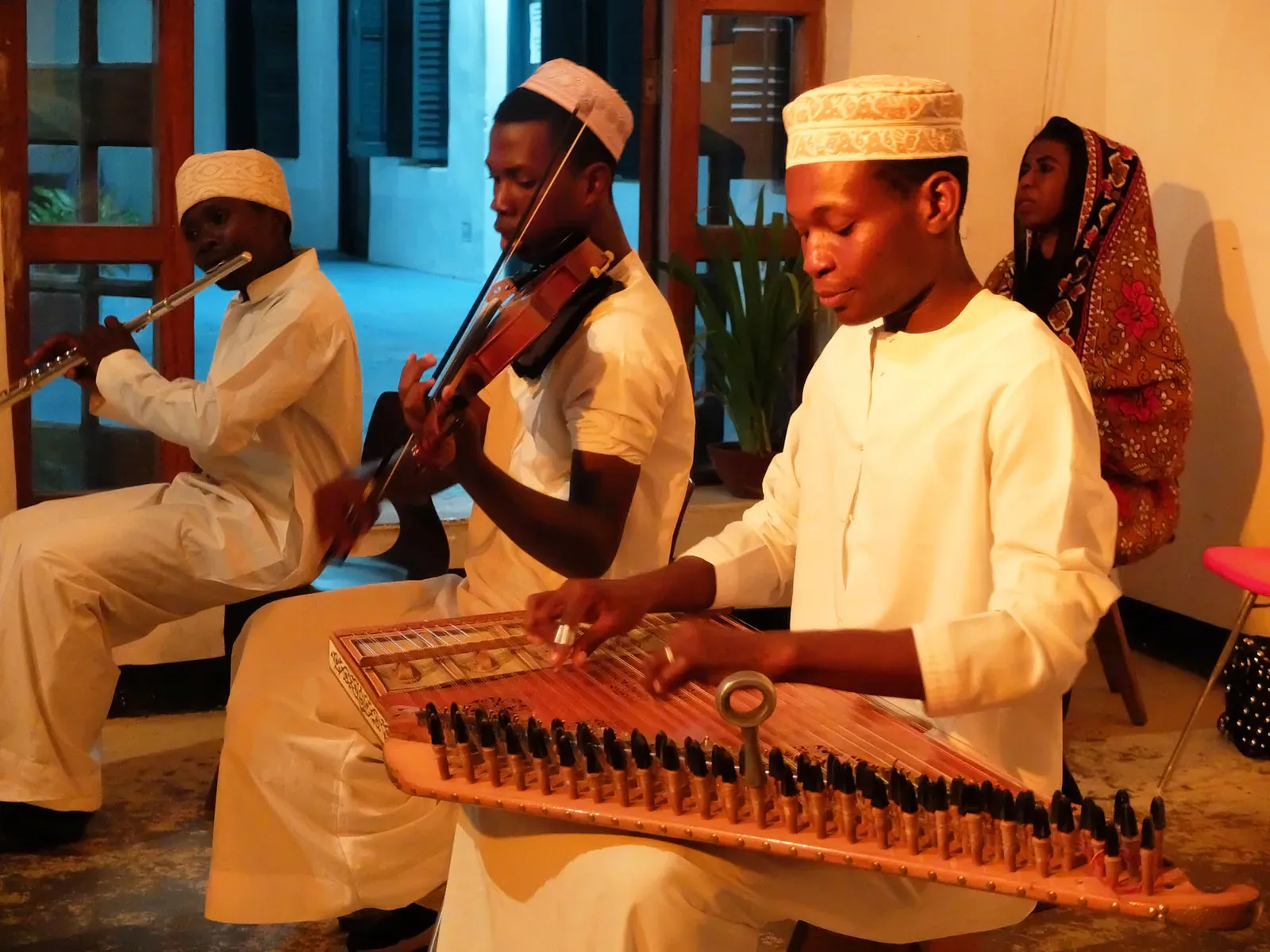
The classic ensemble pairs Middle Eastern instruments with European ones. The qanun and oud carry the melody, violins and accordions fill out the orchestra, and hand drums keep time under a female chorus. What stands out in practice is how little of it is fixed. Group size, instrument choice and tempo change with the occasion, from the full 45-piece orchestra to a kidumbaki group of fiddle, tea-chest bass and two drums, and a lone keyboard has replaced the orchestra in many modern bands.
Mainstream success
Taarab has been mainstream on the coast since the record era, so its later history is a story of format change rather than breakthrough. In the early twenty-first century, bands such as East African Melody and Muungano brought what their mostly female fans call “taarab to dance to”: keyboard-driven, in small line-ups that can tour widely, with direct lyrics instead of the older allusive style. Mzee Yusuph, who formed Jahazi Modern Taarab in Dar es Salaam in December 2006, is called the king of modern taarab. These groups also popularized mipasho, backbiting songs for women, and today’s lyrics can be sexually explicit, which fuels a continuing debate about the loss of subtlety.
Notable recordings
Siti binti Saad’s “Muhogo wa Jangombe” from 1930 is among her best-known songs and has been reprised by later singers, including Bi Kidude with Culture Musical Club. Her 1928 Bombay sessions are the landmark behind it, the first commercial recordings by East African artists. Among later releases, Ikhwani Safaa’s “Nna Zama” on the 1988 album Taarab 2 shows the orchestra style on international release, and the 2004 CD Zanzibara 1 marked a century of the club.
Culture
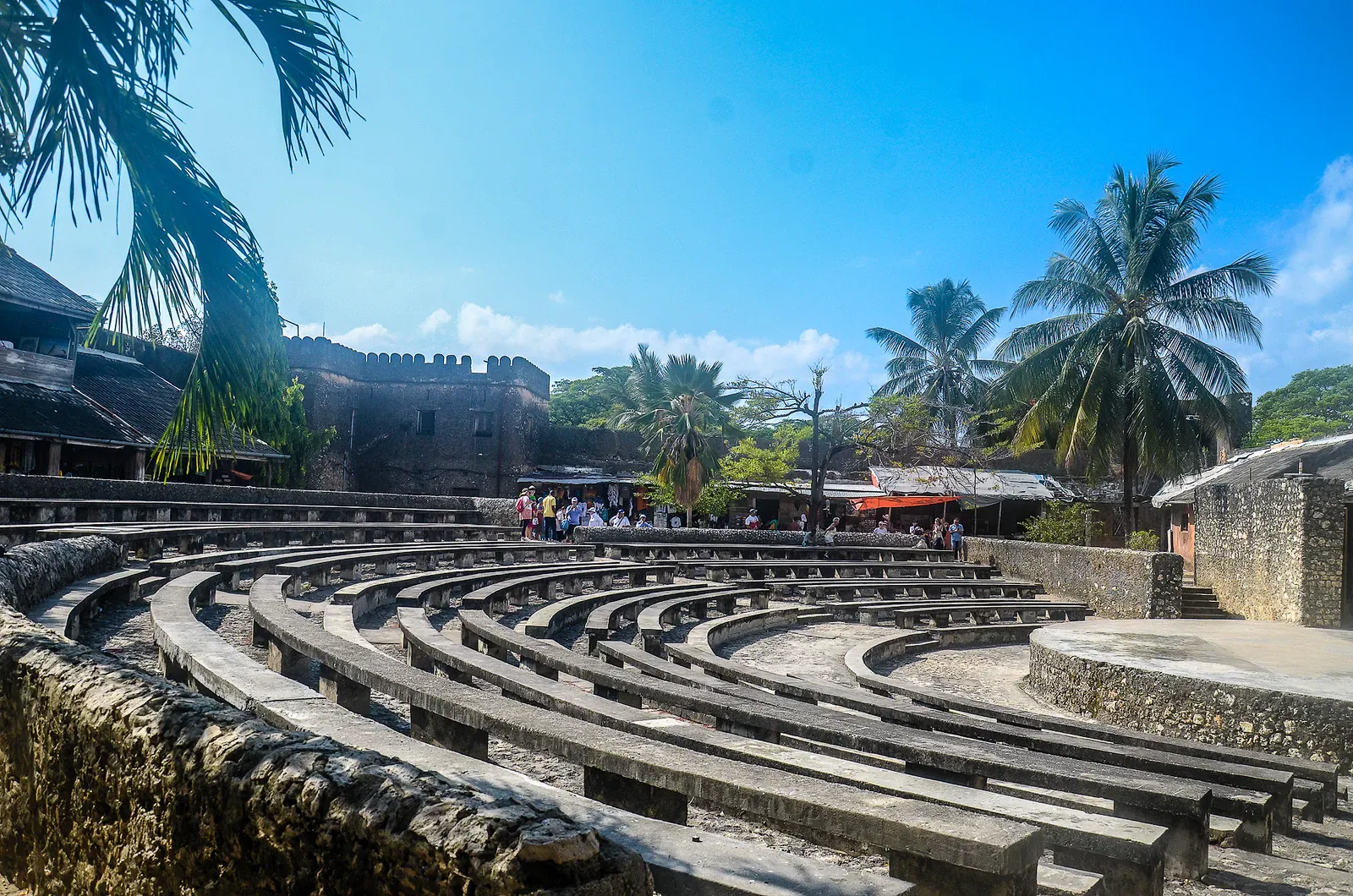
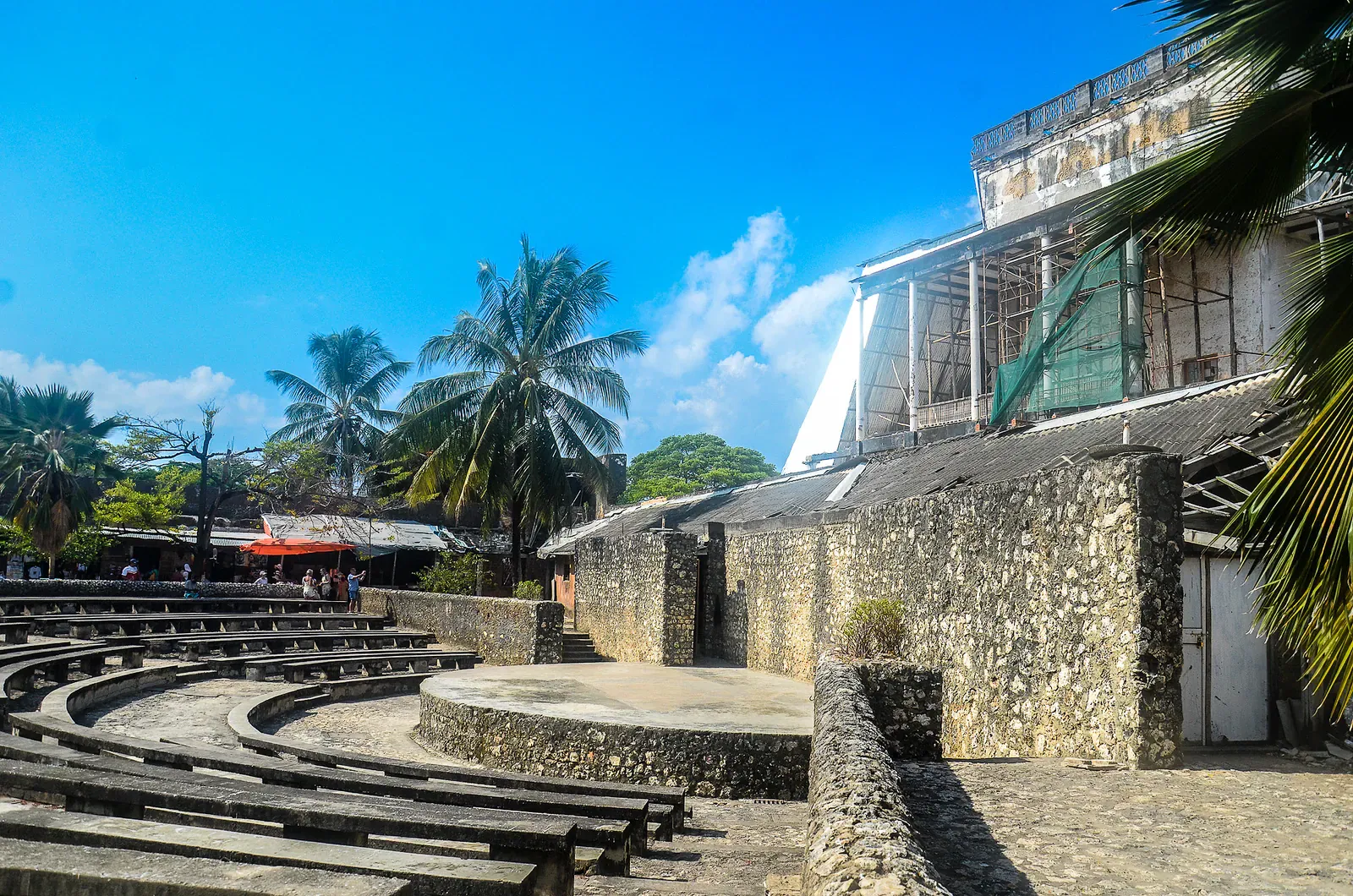
Taarab belongs to life events as much as concert stages. Weddings and community celebrations are its main settings, and older songs only allude to their meaning instead of stating it outright. Dancers with claves and maracas join the kidumbaki groups. Since 2002 the Dhow Countries Music Academy, housed in the same Vuga building as Culture Musical Club, has taught taarab, kidumbaki and ngoma to over 3,000 students. Before it opened, only a couple of traditional taarab groups remained and few young people wanted to carry the tradition. Its founding director Hildegard Kiel shared a BBC World Music Award in 2007. The Sauti za Busara festival, held each February at the Old Fort, has featured Bi Kidude and Culture Musical Club, and it ran its twelfth edition in 2015 before a funding gap cancelled 2016.
Legacy
Taarab made Swahili a language of the record industry and a source of regional pride. Siti’s records showed Zanzibaris that colonial-era firms treated their language and music as worth selling, and her example opened the way for women such as Bi Kidude. Today the genre has two living faces: the club orchestras and academies that keep older styles alive, and the keyboard bands that serve dance floors across Tanzania and Kenya.
Misconceptions
Taarab is not Arabic music sung in Swahili transliteration. Its texts are Swahili poetry, and that choice, made by Siti binti Saad and her peers, is what gave the genre its coast-wide audience. Nor is the sultan’s palace a proven birthplace. The Egyptian-ensemble story is the popular tradition, but it is one strand among several. And taarab is not only Zanzibari: the Tanga, Mombasa and Malindi scenes and the inland and Comorian spread show it travelled with Swahili speakers wherever they went.
Frequently asked questions
What is taarab music?
Taarab is a Swahili sung-poetry genre from Zanzibar and the East African coast, performed by ensembles of qanun, oud, violin, accordion and percussion, with male or female lead singers and often a female chorus.
Where does taarab come from?
Taarab is usually traced to Sultan Barghash’s Zanzibar in the 1870s, with influence from Egyptian court music, but Arab, Indian and African Great Lakes traditions all shaped it. It became a mass music through Siti binti Saad’s records from 1928.
Who is the most famous taarab singer?
Siti binti Saad is regarded as the first star of taarab, and Bi Kidude, who died in 2013, was the genre’s best-known later voice.
What is the difference between taarab and kidumbaki?
Kidumbaki is a smaller Zanzibari style, played on fiddle, tea-chest bass and two drums, sometimes called “little taarab”. Which one came first is disputed.
What is modern taarab?
Modern taarab is the keyboard-led style of groups such as Jahazi Modern Taarab and East African Melody: smaller line-ups, dance rhythms and direct lyrics.
Sound
Sound sheet
Signature sounds
- Swahili sung poetry with allusive lyrics
- Qanun, oud, violin and accordion line-up
- Female chorus answering the lead
- Kidumbaki drums and sanduku bass in small groups
- Keyboards in modern taarab
Drums and percussion
- Dumbak
- Kidumbak drums
- Bongos
Synths and software
- Keyboard
Techniques
- Allusive lyrics
- Female chorus
- Hindi film melodies
- Poetic rhythmic singing
Keys and modes
Arab- and Indian-influenced modes. Melodies draw on Middle Eastern and Indian modal traditions, carried by qanun, oud and violin.
Vocals
Swahili poetry sung by male or female leads, often answered by a female chorus.
Scenes
Where it happened
Where and when the sound lived: one bar per city on a shared timeline.
Africa
Active scenes
Peak 3, 2006-2025
Stone Town and Ng'ambo, the home of the court tradition, the clubs and Siti binti Saad.
Home of Black Star Musical Club, which modernized the sound in the 1960s.
Base of Jahazi Modern Taarab and the keyboard-led modern style.
Venues and places
Zanzibar, 1958 to today. Vuga clubhouse where rehearsals and shows have become a visitor attraction.
Zanzibar, 2002 to today. School in the same Vuga building, teaching taarab, kidumbaki and ngoma.
Zanzibar, 2004 to today. February festival at the Old Fort where Bi Kidude and Culture Musical Club played.
Culture
Culture markers
- Weddings and community events
Taarab moved from the sultan's palace to weddings and communal celebrations.
Ritual - Unyago ceremonies
Coming-of-age rites for girls, linked to Bi Kidude's singing.
Ritual - Kidumbaki dancers
Dancers play claves (mkwasa) and maracas (cherewa) with the small drum groups.
Dance - Mipasho
Backbiting songs for women, with pointed and sometimes explicit lyrics.
Slang
Media
Key media
- 2004Zanzibara 1: A Hundred Years of Taarab in Zanzibar
by Ikhwani Safaa Musical Club. Release marking a century of the club.
Compilation - 2006Zanzibara 4: The Diva of Zanzibari Music
by Bi Kidude. Collection of Bi Kidude's recordings.
Compilation
Glossary
Terms on this page
Small Zanzibari ensemble style close to taarab, built on fiddle, sanduku and two drums.
Backbiting songs for women, a modern offshoot of taarab with pointed lyrics.
Swahili for the other side, the Zanzibar Town district across the creek from Stone Town.
Indian taarab: Swahili words set to Hindi film melodies.
Coming-of-age ceremonies for girls, where Bi Kidude sang.
African family