Verbunkos
Verbunkos is a Hungarian recruiting dance and music of the 18th and early 19th century, a slow lassú and fast friss pair played by Romani bands for hussars.
Hungary, 1700
European folk family
Born
1700
Hungary
Subgenres
4
Documented branches
Links
4
Genres it drew on or shaped
Tempo
80-150 BPMLineage
Family tree
Timeline
Era by era
From the first sparks to today. Select a dot to read the story behind it.
- The recruiting dance
1740 to 1790
- Bihari and the golden age
1791 to 1830
- National theatre and Romantic turn
1831 to 1849
- Afterlife in concert music
1850 to 1940
Eras
Moments
- 1 The recruiting dance, 1740 to 1790
- 2 Bihari and the golden age, 1791 to 1830
- 3 National theatre and Romantic turn, 1831 to 1849
- 4 Afterlife in concert music, 1850 to 1940
around 1740
The recruiting dance
Under Maria Theresa recruiting parties used brass bands, but Romani violinists soon took over the music, and hussars danced in a slow-then-fast pattern to draw young men into service.
- 1750Brass bands play for recruiting under Maria TheresaCzech brass musicians supplied recruiting music, which Hungarians found foreign, so Romani musicians came to play it.
- 1784Bengraf's Ballet HongroiseThe first known verbunkos song by a trained composer, József Bengraf, appeared as music moved from Romani players to schooled musicians.
around 1791
Bihari and the golden age
A Hungarian style with dotted rhythms and virtuoso ornament formed. Bihari led a Pest band from 1801, played at the Congress of Vienna in 1814, and Haydn wrote a Hungarian-style finale in 1795.
- 1795Haydn's Gypsy RondoHaydn closed his Piano Trio in G with a Rondo in the Hungarian style, an early sign of verbunkos in Viennese music.
- 1801Bihari forms his band in PestJános Bihari assembled one cimbalom player and four violinists and toured Hungary and abroad.
- 1814Bihari plays at the Congress of ViennaThe Romani violinist performed at the court in Vienna throughout the Congress.
around 1831
National theatre and Romantic turn
The National Theatre of Pest opened in 1837, Erkel's operas followed, Liszt began his Rhapsodies in 1846, and the end of the recruiting dances gave way to the csardas and palotas.
- 1837National Theatre of Pest opensIts first director, the opera composer Ferenc Erkel, steered verbunkos toward a more refined style.
- 1844Erkel's Hunyadi László premieresThe opera became one of the most successful works of Hungarian grand opera.
- 1846Liszt starts the Hungarian RhapsodiesNineteen piano pieces built on the slow lassan and fast friska pairing of verbunkos, written between 1846 and 1885.
- 1849Conscription replaces recruiting dancesThe Habsburgs introduced conscription, ending the recruiting performances the dance was named for.
around 1850
Afterlife in concert music
Brahms published his Hungarian Dances in 1869 and Bartok opened his 1938 trio Contrasts with a movement named Verbunkos, keeping the idiom alive in art music.
- 1869Brahms publishes Hungarian DancesThe first set of the csardas-flavoured dances became the composer's most profitable works.
- 1938Bartok writes ContrastsThe trio for clarinet, violin and piano opens with a movement titled Verbunkos and premiered in 1939.
- 2008Slovacko verbunk inscribed by UNESCOA separate Moravian improvised folk dance of the same name joined the Representative List of the Intangible Cultural Heritage of Humanity.
Listening path
Start listening
A short path from an easy way in to the deep end. Thumbnails come from YouTube; the player loads only when you press play.
- 01
Joseph Haydn, 1795
An early Hungarian-style finale; listen for the fast, dancing violin and piano lines.
- 02
Ferenc Erkel, 1844
The opera aria shows verbunkos phrasing moving into Hungarian grand opera.
- 03
Franz Liszt, 1847
A slow, dotted lassan followed by a racing friska, played on piano.
- 04
Johannes Brahms, 1869
A short csardas-like dance that moves from a slow start to a quick, driving finish.
- 05
Béla Bartók, 1938
A modern rework of the recruiting dance for clarinet, violin and piano.
Facts
| Family | European folk |
| Origin | Hungary |
| Emerged | 18th century, until 1849 conscription reform |
| Status | Historical |
| Tempo | 80 to 150 BPM |
| Meter | 2/4 |
| Subgenres | 4 |
Verbunkos is a Hungarian dance and music genre of the 18th and early 19th century, used to recruit young men into the army. A typical piece pairs a slow lassú section built on a dotted rhythm with a fast friss section of virtuoso running notes.
The melodies come from Hungarian folk and popular song, and the playing was usually done by Romani musicians. It lives on in the csárdás and in concert works by Haydn, Liszt, Brahms and Bartók.
Origins
The name comes from the German word Werbung, a noun from werben, “to recruit”. The music and dance accompanied army recruiting before the Habsburg emperors, who were also kings of Hungary, introduced conscription in 1849. In the time of Maria Theresa the recruiting music was supplied mostly by brass bands, with Czech musicians prominent among them. Hungarians found that sound foreign, and Romani musicians took over the task. By the end of the 18th century a Hungarian style of music and dance had formed, drawing on Hungarian folk music.
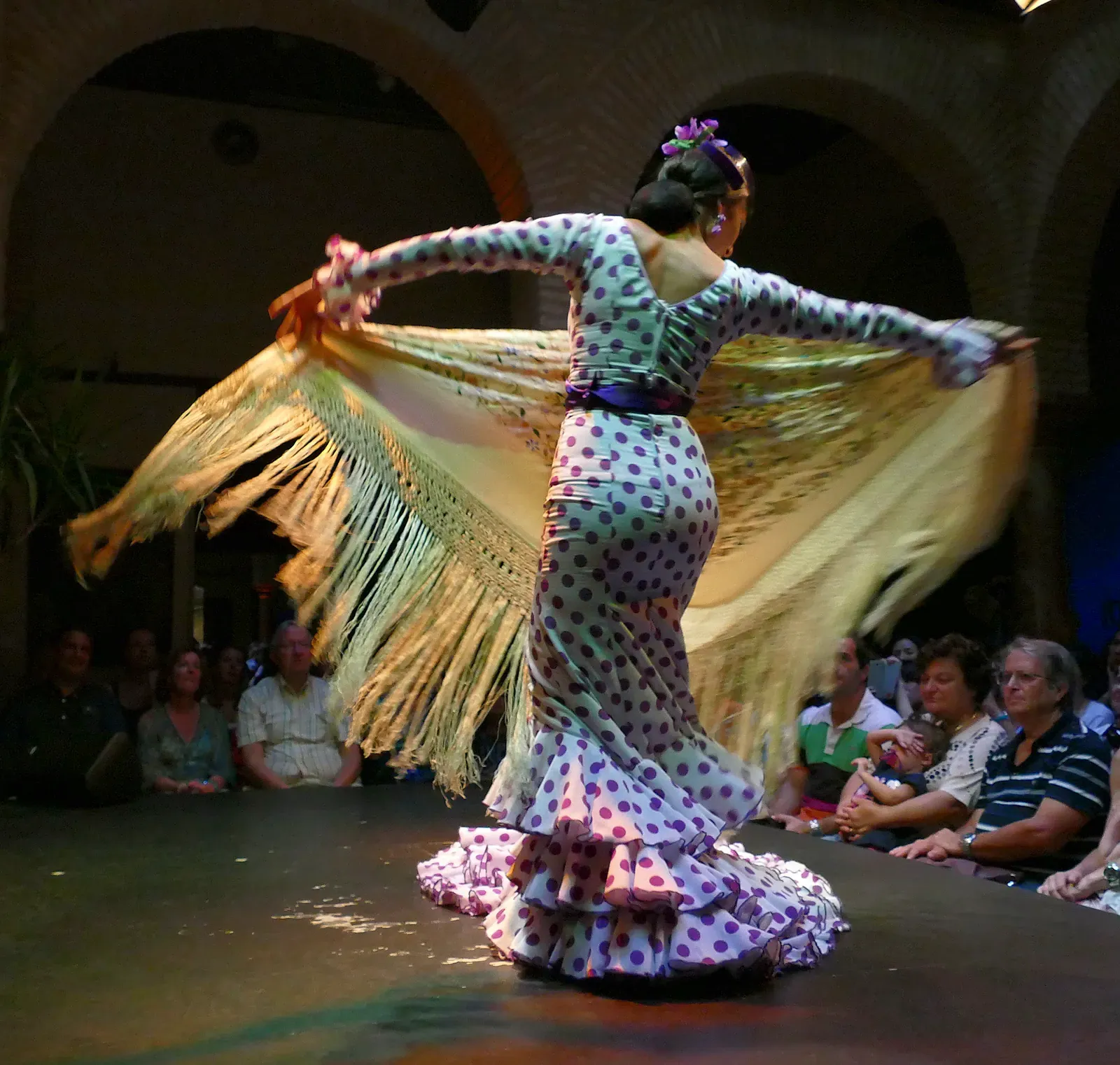
The dance itself was a group display. A dozen hussars performed it in parts: the leading sergeant opened with slow movements, the lower officers joined for more energetic figures, and the youngest soldiers finished with jumps and spur-clicking. The aim was to entice peasant lads into signing up, and the music did much of the persuading.
Romani bands and the first composers, 1770-1830
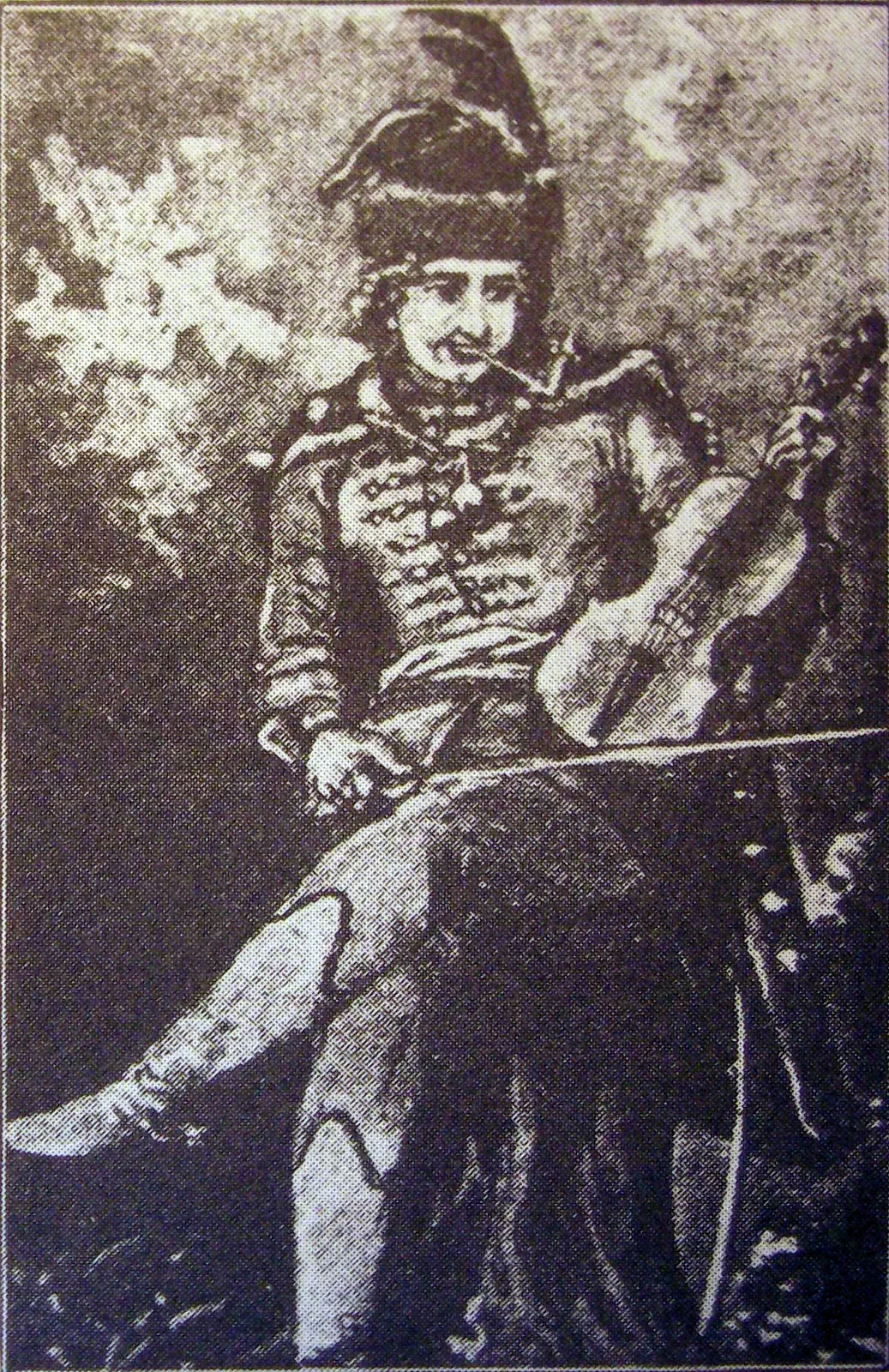
Around 1770 to 1780 the music began to pass from Romani players to trained musicians. The first known verbunkos song by a schooled composer is József Bengraf’s Ballet Hongroise of 1784. Other composers of the style include the cellist József Kossovits, János Lavotta and Antal Csermák, and many of their dances were taken for folk tunes by later composers.
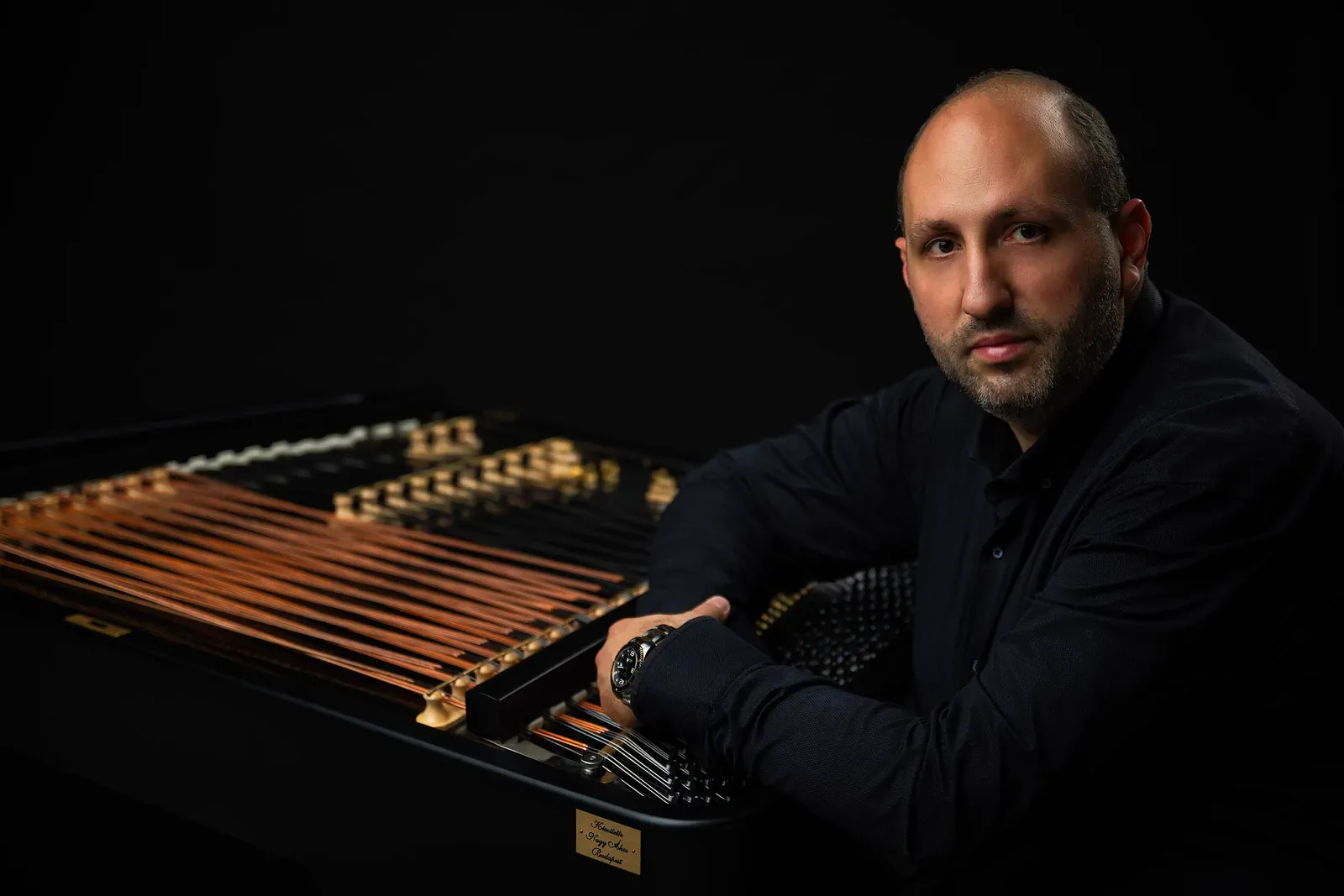
The best-known figure is János Bihari, born in 1764 into a Romani family in Nagyabony, now Veľké Blahovo in Slovakia. In 1801 he formed a band in Pest from one cimbalom player and four violinists and toured widely in Hungary and abroad. He became popular enough to live like a nobleman, and he played at the court in Vienna throughout the Congress of Vienna in 1814. Eighty-four of his compositions survive. A hand injury in 1824 cut short his career, and he died in poverty in Pest in 1827.
Viennese composers noticed the idiom early. Haydn closed his Piano Trio in G in 1795 with a Rondo all’Ongarese, known as the Gypsy Rondo. Hungarian-style touches of this kind, called ungarizmusok in Hungarian writing, also appear in the music of Hummel and Brahms.
National theatre and Romantic turn, 1831-1849
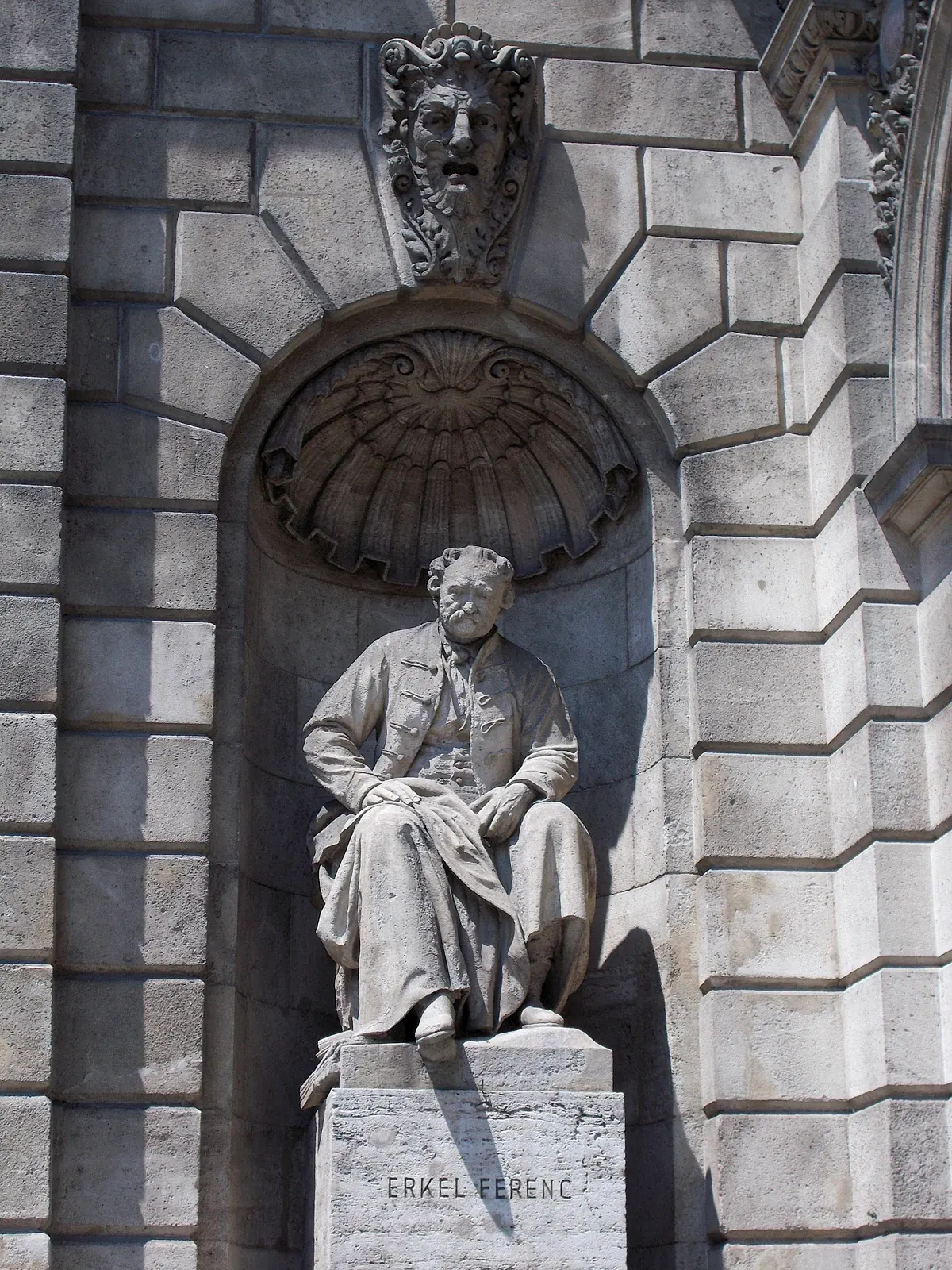
The National Theatre of Pest opened in 1837, and the verbunkos style began to change under the influence of its first director, the opera composer Ferenc Erkel. His operas Hunyadi László (1844) and Bánk bán (1861) became staples of Hungarian opera, and he composed the melody of the national anthem, adopted in 1844.
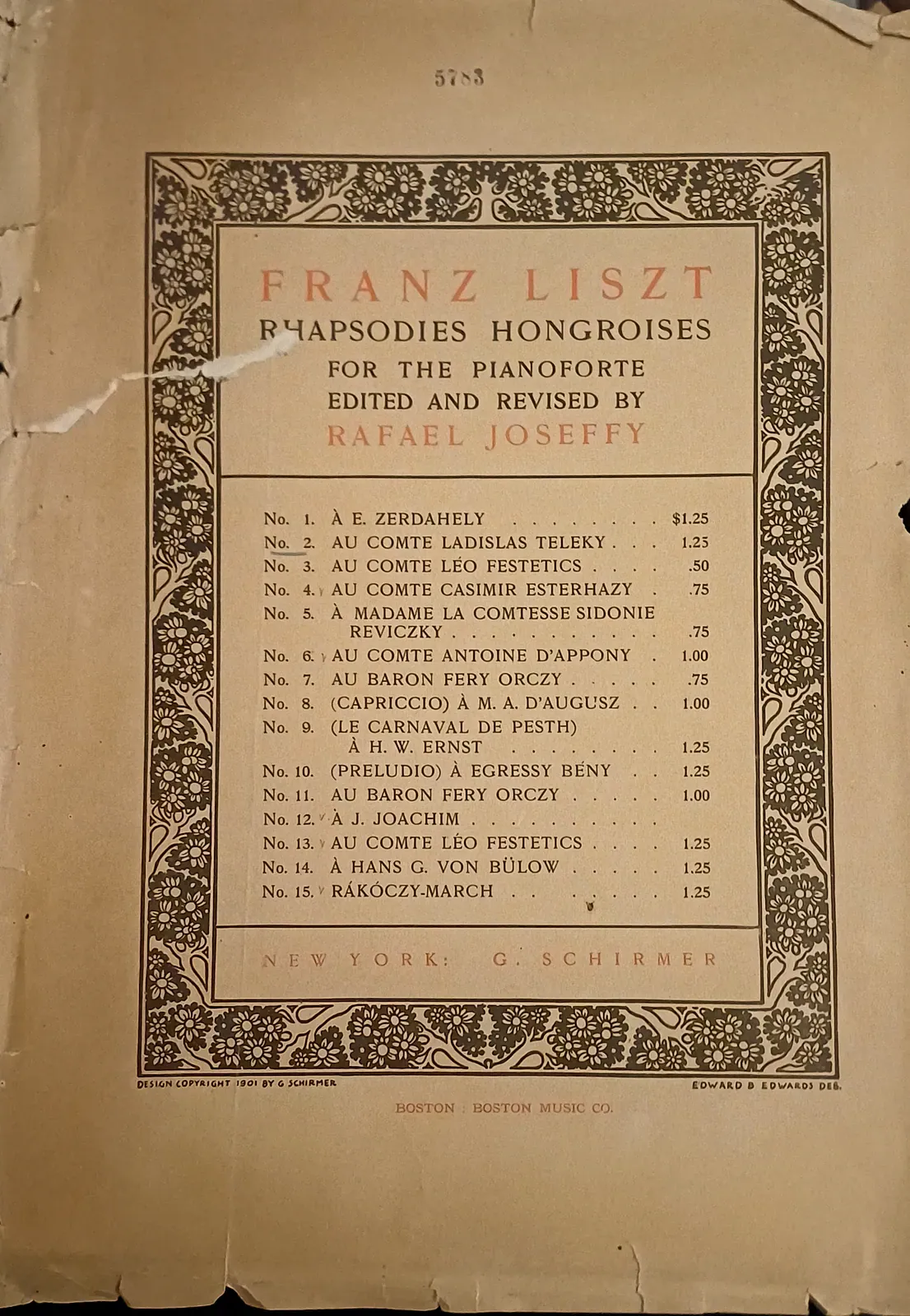
Liszt began his Hungarian Rhapsodies in 1846. The set of 19 piano pieces was written between 1846 and 1853 and again in 1882 and 1885. The large-scale form of each is shaped by verbunkos, and Liszt kept the two structural elements of typical Romani improvisation, the slow lassan and the fast friska. His piano writing also reproduces effects of the cimbalom and often uses the Hungarian minor scale.
Recruiting dances ended with conscription, and by the late 1840s the genre was changing into gentler and more atmospheric forms. The csárdás and the palotás came out of it, both keeping the violin melody, the duple beat and the slow start followed by a fast second part. Poor people danced the csárdás in the roadside inn and the rich danced the palotás in palaces.
Characteristics
Verbunkos music uses major and minor tonality, with an ornamented violin line and a dotted rhythm in which the first note is short and accented and the second long. Triplets are common, and cadences often use a spur-clicking figure called bokázó, built on upper and lower neighbour notes. Violin melodies carry technical ornaments known as cifrázás. The harmony favours the augmented second and the diminished seventh. The slow-fast pair can repeat at greater length.
Instruments and production
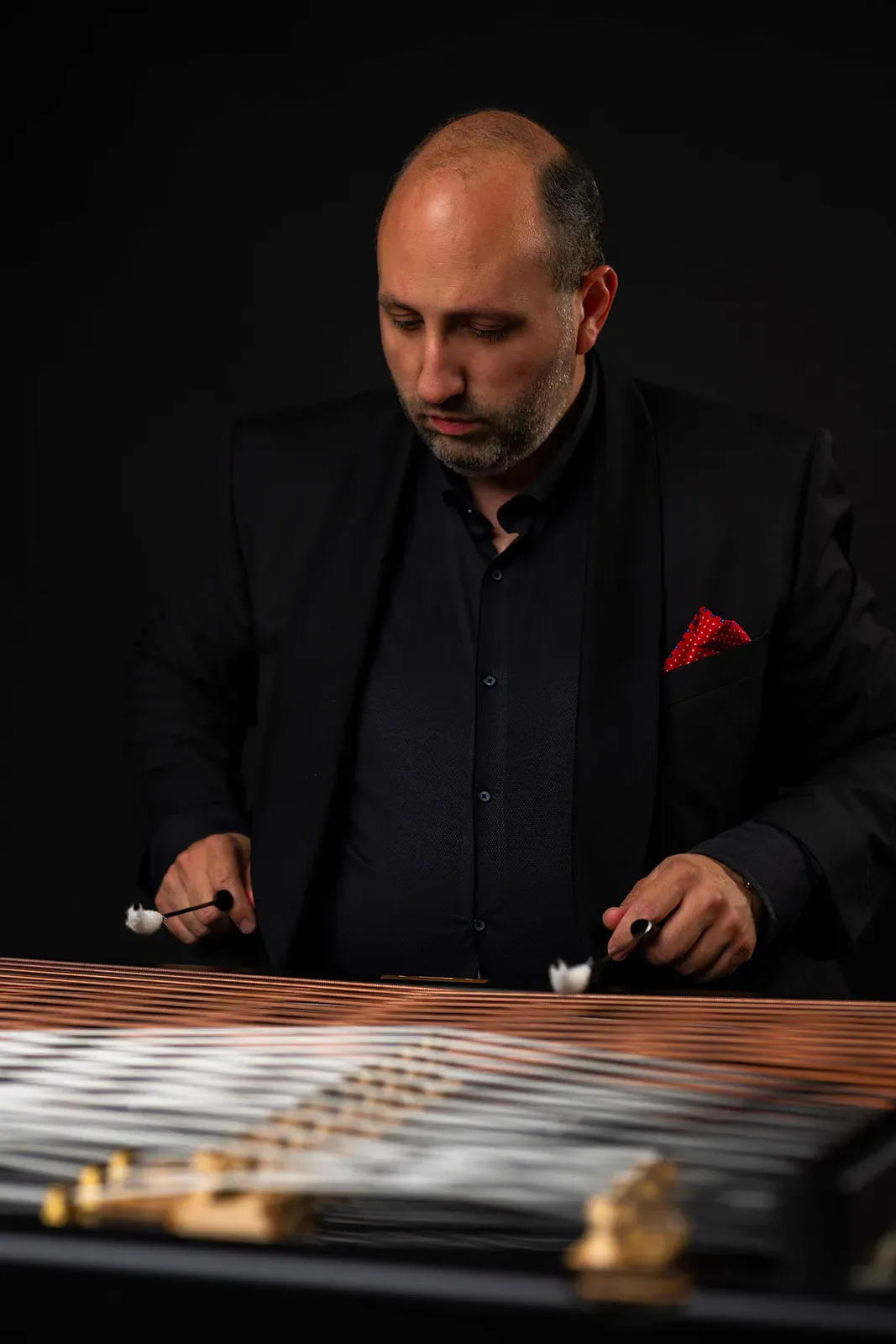
Early recruiting music was played by brass. Romani bands then centred on the violin, and Bihari’s group added a cimbalom, the hammered stringed instrument now played mainly in Hungary, Slovakia and neighbouring countries. When the style moved into concert halls, the piano took on cimbalom-like roles, and orchestras took over the dance writing. There was no recording industry in the verbunkos era, so the tradition survives through notation and later performances.
Mainstream success
Verbunkos reached a wide audience through nineteenth-century concert music. Liszt took themes he believed were folk music, though many were in fact tunes written by members of the Hungarian upper middle class or by composers such as Kossovits, often played by Romani bands. Brahms, after meeting the Hungarian violinist Ede Reményi in 1850, built the 21 Hungarian Dances on csárdás-style tunes. Two sets were published, in 1869 and 1880, and they were his most profitable works. The Dances have been arranged for many ensembles, and No. 1 and No. 5 are the best known. In the twentieth century Bartók’s Violin Concerto No. 2 drew on the style, and his Contrasts of 1938 names its first movement Verbunkos.
Notable recordings
Brahms’s Hungarian Dance No. 5 shows how far a recruiting-dance idiom travelled. It is based on the csárdás Bártfai emlék by Béla Kéler, which Brahms mistakenly took for a traditional folksong, and it moves from a slow start to a quick, driving end.
Liszt’s Hungarian Rhapsody No. 2, composed in 1847 and published four years later, is the best-known piano piece shaped by the lassan-friska layout. Its slow opening gives way to a fast section of heavy repeated chords.
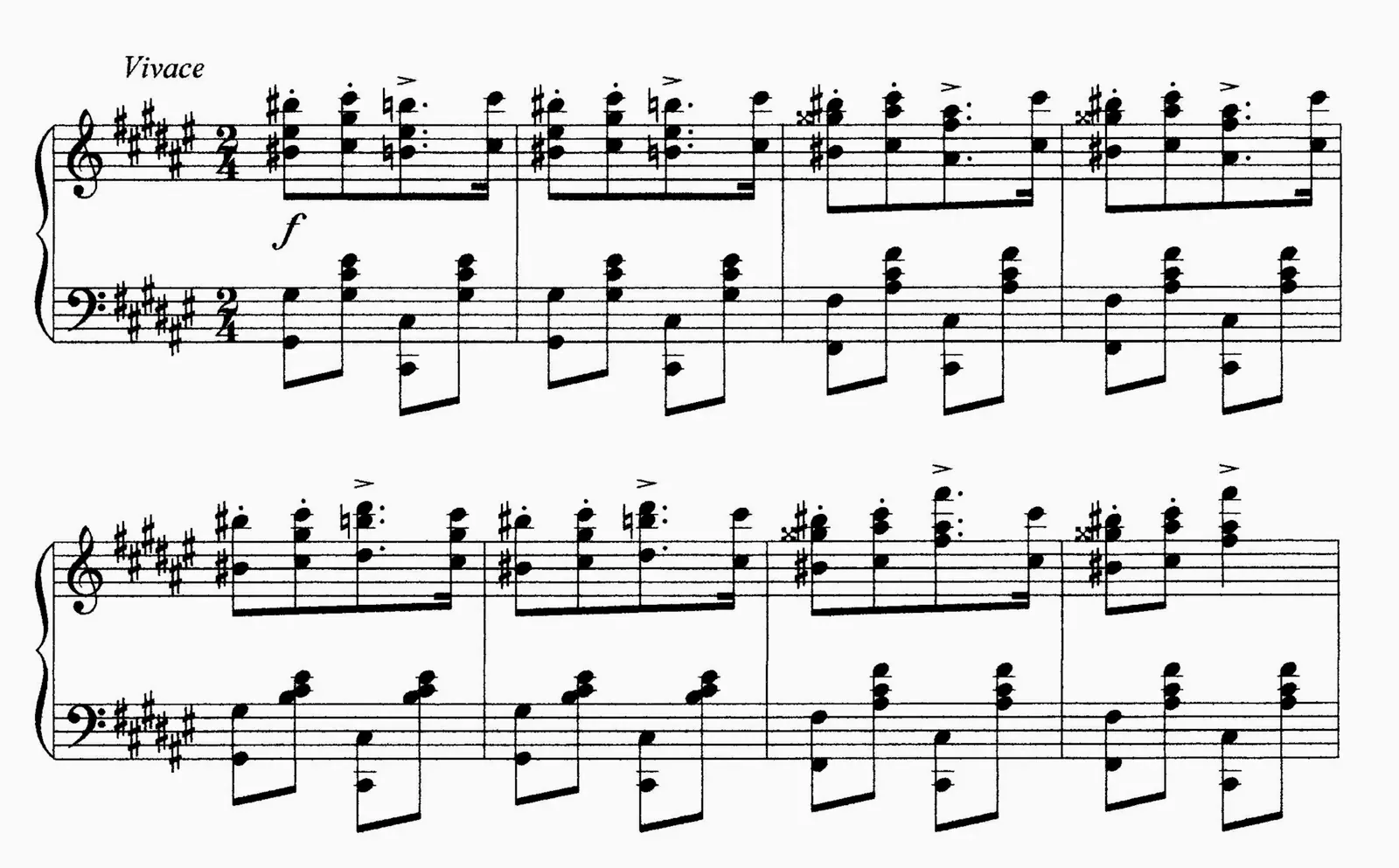
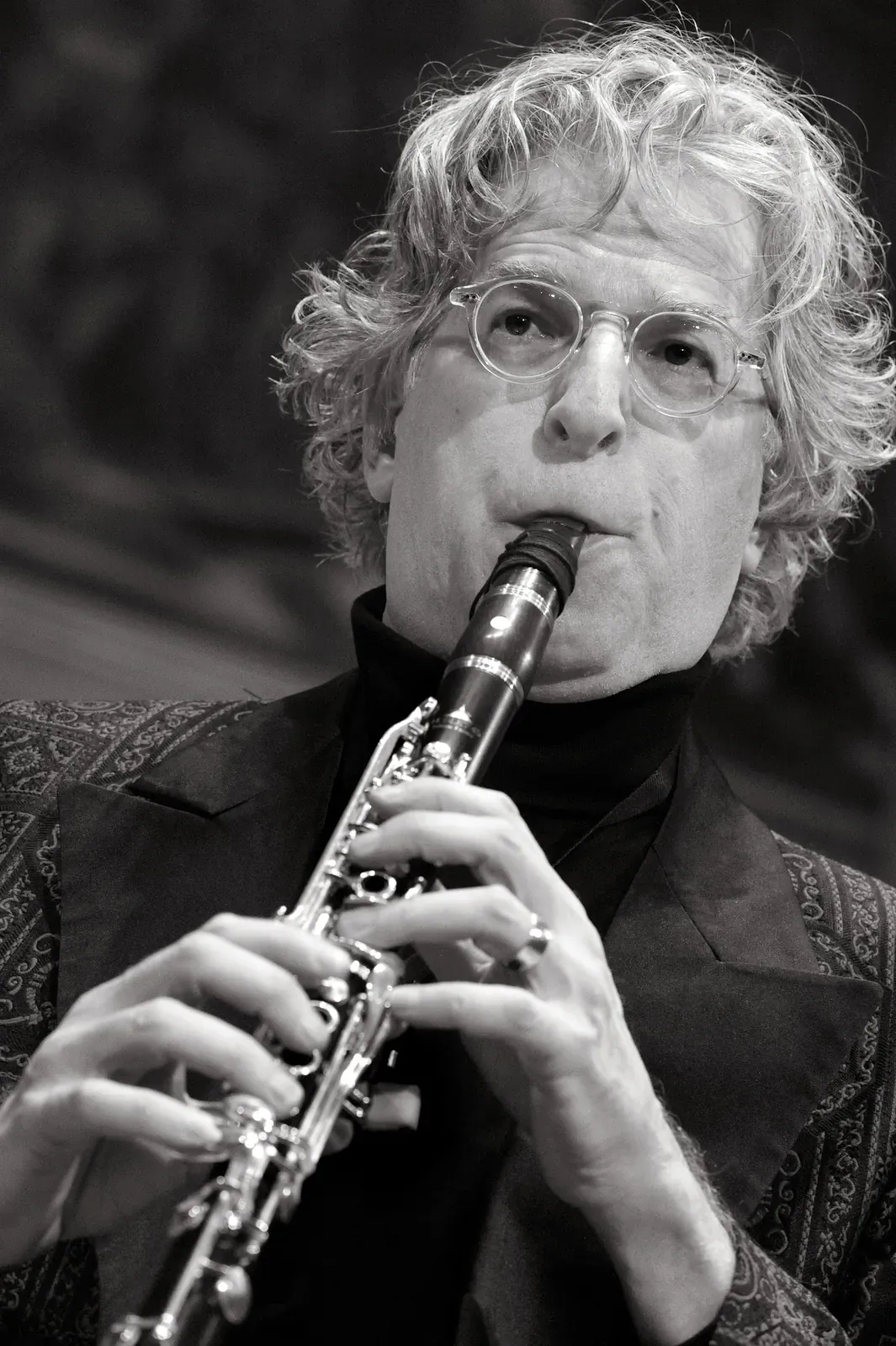
Bartók’s Contrasts began when the violinist Joseph Szigeti wrote to the composer, and the clarinettist Benny Goodman commissioned it. It first had two movements, the lively Verbunkos and Sebes, which Bartók, Szigeti and Goodman premiered at Carnegie Hall in January 1939. After the premiere Bartók added a slow middle movement, Pihenő, and the trio recorded the three-movement work in 1940.
Legacy
Verbunkos supplied much of what listeners abroad took for Hungarian music in the nineteenth century. It gave the csárdás its form, gave Liszt and Brahms their Hungarian themes, and gave composers from Haydn to Bartók a shorthand for the Hungarian style. Hungarian writers note its traces in the music of nearly every European composer who drew on Hungarian sources. It belongs to the wider story of European folk music, with Viennese echoes in the Classical period and the Romantic era. Recordings of these works appear on labels such as Deutsche Grammophon.
Misconceptions
Verbunkos is often described as Romani music, but its melodies come from Hungarian folk and popular music, and Romani musicians gave them their characteristic accompaniment, which is why some writers have credited the tunes to them.
Liszt’s Rhapsodies are not all folk songs, since many of the themes were composed by the urban Hungarian middle class or by verbunkos composers such as Kossovits and then spread by Romani bands.
The Slovácko verbuňk, inscribed by UNESCO in 2008, is a separate improvised folk dance from South Moravia and the Zlín region of the Czech Republic that shares only the name.
Frequently asked questions
What is verbunkos?
Verbunkos is a Hungarian dance and music genre used for army recruiting before conscription in 1849. It usually pairs a slow lassú section with a fast friss section.
Where does the word verbunkos come from?
It comes from the German Werbung, from werben, “to recruit”, so verbunkos means “recruiter”.
Who was the most famous verbunkos composer?
János Bihari, a Romani violinist from Pest who lived from 1764 to 1827 and left 84 compositions.
Is the csárdás the same as verbunkos?
No. The csárdás developed out of verbunkos after the recruiting dances ended, and keeps its slow start followed by a fast second part.
Sound
Sound sheet
Anatomy of a track
| # | Part |
|---|---|
| 1 | Lassú (slow, dotted rhythm) |
| 2 | Friss (fast, running notes) |
| 3 | Repeat of the slow-fast pair |
Signature sounds
- Dotted rhythm, short accented note then long
- Hungarian minor scale with augmented seconds
- Cifrázás violin ornament
- Slow-fast pairing
Techniques
- Dotted rhythm
- Running-note passages
- Cifrázás ornament
- Triplet figures
- Bokázó cadence
Keys and modes
Hungarian minor scale. Raised fourth gives two augmented seconds, often called the Gypsy scale.
Major and minor. Western tonality, in contrast to older modal folk song.
Vocals
Instrumental music led by the violin.
Scenes
Where it happened
Where and when the sound lived: one bar per city on a shared timeline.
Europe
Active scenes
Peak 2, 1801-1815
Bihari's base, and home of the National Theatre from 1837.
Court city where Bihari played during the Congress of 1814 and where Haydn wrote his Hungarian-style rondo.
Culture
Culture markers
- Hussar recruiting dance
A dozen hussars danced in parts: slow steps led by the sergeant, then lower officers, then jumps and spur-clicking from the youngest soldiers.
Dance - Recruitment gatherings
Music and dance enticed young peasant men into military service before conscription in 1849.
Ritual
Glossary
Terms on this page
Spur-clicking rhythm figure, built on upper and lower neighbour notes.
Technical ornamentation, especially in violin melodies.
The fast section with virtuoso running-note passages.
Minor scale with a raised fourth, giving two augmented seconds.
The slow opening section, marked by a dotted rhythm.
Hungarian-style elements borrowed by Haydn, Hummel, Brahms and others.
European folk family