Bedouin music
Bedouin music is the sung poetry and desert song of Arab nomadic tribes from Arabia to the Maghreb, performed unaccompanied or with the rababa fiddle.
Saudi Arabia, Jordan, Syria, Egypt, Algeria, around 1500
Middle Eastern and North African family
Born
around 1500
Saudi Arabia, Jordan, Syria, Egypt, Algeria
Subgenres
5
Documented branches
Links
7
Genres it drew on or shaped
Tempo
85-105 BPMLineage
Family tree
Grew out of
Saudi Arabia, Jordan, Syria, Egypt, Algeria
Bedouin music
Led to (7)
Timeline
Era by era
From the first sparks to today. Select a dot to read the story behind it.
- Tribal poetry and oral song
1500 to 1905
- First records and the cheikhs
1906 to 1968
- Migration and the raï crossover
1969 to 2009
- Heritage listings
2010 to today
Eras
Moments
- 1 Tribal poetry and oral song, 1500 to 1905
- 2 First records and the cheikhs, 1906 to 1968
- 3 Migration and the raï crossover, 1969 to 2009
- 4 Heritage listings, 2010 to today
around 1500
Tribal poetry and oral song
Nabati verse, rababa-accompanied recitation and group chants carried tribal news, war and love across Arabia and the Maghreb, mostly by memory and without recordings.
- 1377Ibn Khaldun records the nabati formThe Muqaddimah, first published in 1377, refers to vernacular Bedouin verse of the kind later called nabati.
- 1895Kharbusha sings the Abda revoltThe Moroccan aita singer rallies the Awlad Zayd against the qaid Isa ibn Umar al-Abdi in songs.
1906
First records and the cheikhs
Algerian bedoui singers such as Mohammed Senoussi and Cheikh Hamada reached disc from 1906 and 1920, while Moroccan shikhat and Oran's cheikhat took the rural song into towns and cabarets.
- 1906Mohammed Senoussi records bedouiThe Algerian bedoui singer is described as the first to put the style on record.
- 1920Cheikh Hamada makes his first recordingThe Mostaganem singer goes on to record in Algeria, Paris and Berlin and shapes bedoui gharbi and gasba.
- 1952Rimitti's first recordCheikha Rimitti cuts a three-track record for Pathe that includes Er-Rai Er-Rai.
- 1954Charrak Gatta scandalises AlgeriaRimitti's frank hit record outrages orthodox listeners and makes her a star of the cheikha tradition.
1969
Migration and the raï crossover
Singers settled in Paris, recorded for Western labels and fed the electric raï of Rimitti's 1994 Sidi Mansour and Khaled's 1992 Didi, while Gulf nabati poets reached radio and television.
- 1993Hikayat Kharbusha is censoredMorocco bans the song by poet Mohamed al-Batouli and singer Hayat Idrissi that retells Kharbusha's story.
- 1994Sidi Mansour albumRimitti records with Robert Fripp and Flea, inaugurating a new electric form of raï.
- 2008Film KharbouchaHamid Zoughi directs a feature on the aita singer, who had been largely left out of Moroccan heritage accounts.
2010
Heritage listings
UNESCO inscribed Al-Bar'ah (2010), Al-Taghrooda and Al-'Azi (2012), the Najdi Ardah (2015) and As-Samer (2018), turning Bedouin song and dance into protected heritage.
- 2010Al-Bar'ah inscribed by UNESCOThe drum, dagger-dance and poetry tradition of Oman's Dhofari valleys is listed as intangible heritage.
- 2012Al-Taghrooda and Al-'Azi inscribedUNESCO lists the camel-rider chanted poetry of the UAE and Oman, and Oman's sung elegy and processional poetry.
- 2018As-Samer in Jordan inscribedThe wedding ritual of singing, dancing and poetry joins UNESCO's Representative List.
Listening path
Start listening
A short path from an easy way in to the deep end. Thumbnails come from YouTube; the player loads only when you press play.
- 01
Cheikha Rimitti, 1994
The title track of her 1994 album, where the raw rural voice meets electric guitar.
- 02
Khaled, 1992
A pop-raï hit from a singer whose style grew out of the cheikh and cheikha tradition.
- 03
Cheikha Rimitti, 2005
A late recording that shows her call-and-response phrasing over drums.
Facts
| Family | Middle Eastern and North African |
| Origin | Saudi Arabia, Jordan, Syria, Egypt, Algeria |
| Status | Active |
| Tempo | 85 to 105 BPM |
| Meter | 4/4 |
| Subgenres | 5 |
Bedouin music is the music of the nomadic Arab tribes of the Arabian Peninsula, North Africa, Mesopotamia and the Levant. It is built on poetry: verses are sung unaccompanied, over claps and frame drums, or to the one-string rababa fiddle.
Regional forms include the samri of Saudi Arabia, the aita of Morocco and, through the Algerian bedoui singers, a root of raï. It belongs to the Middle Eastern and North African family.
Origins
The tradition is older than any recording, and its centre is the spoken word. Bedouin poets composed verse in the structure, theme, metre and rhyme of the pre-Islamic qasida, and later in the vernacular verse called nabati, which was already known to the historian Ibn Khaldun in the fourteenth century. Nabati took its present form from the sixteenth century, when colloquial speech replaced the classical register among poets who had little formal schooling.
Because the verse was memorised rather than written, a single singer could carry a huge repertoire; researchers have met Bedouin who could recite 20,000 poems. The poems declared war, sought peace and settled tribal disputes, so music and public life were hard to separate.
Tribal poetry before records
A migratory life discouraged carrying instruments. Saudi traditional music grew out of simple rhythms counted by clapping or striking everyday objects, and the rababa and reed pipes were often obtained in cities such as Jeddah. The samri of Najd, about three hundred years old, shows the result: poetry sung to a daf while two rows of men sit on their knees, sway and clap, and women sing a slower version with more dance.
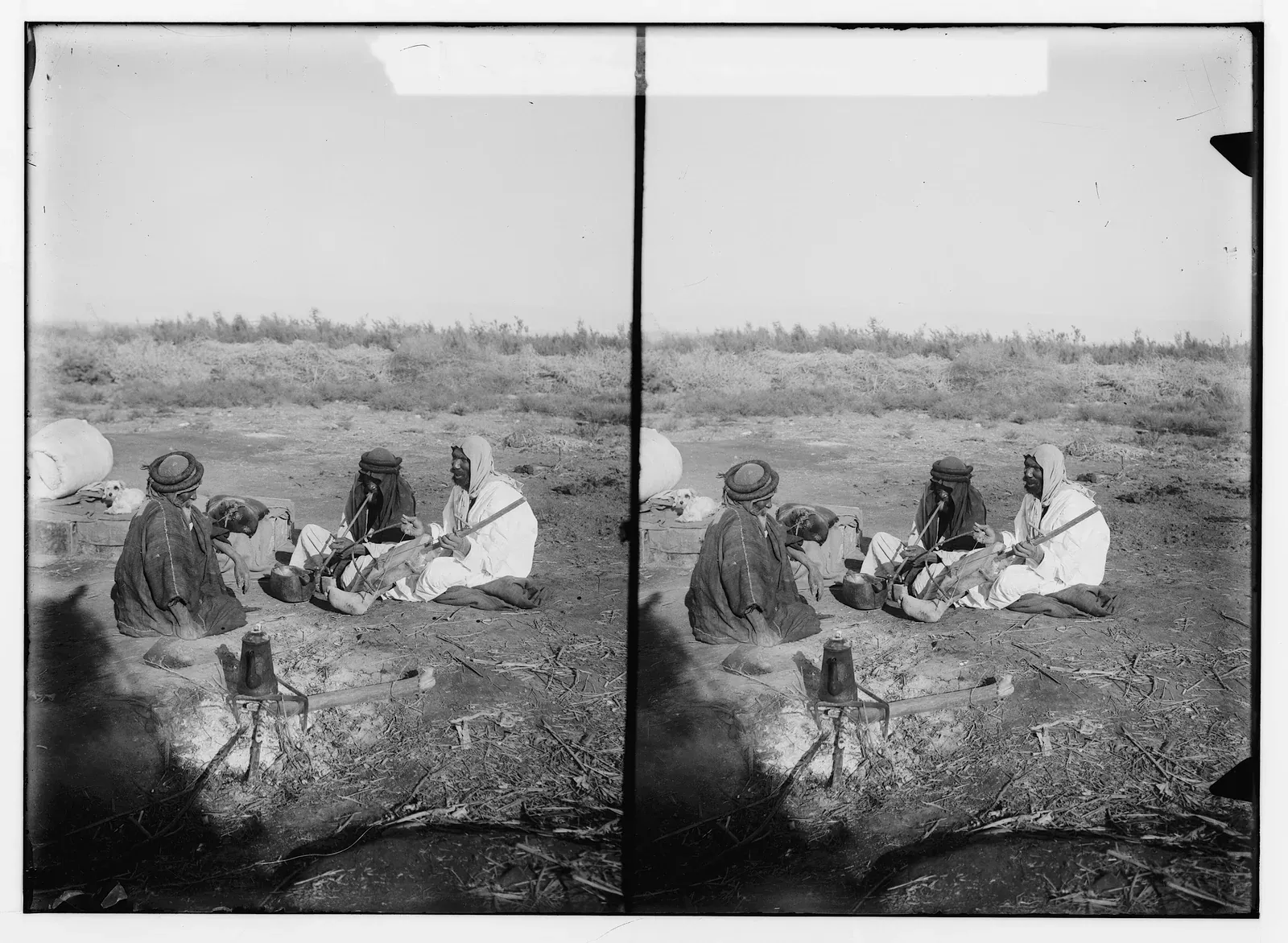
Poems were recited at coffee gatherings, where audiences echoed lines back and reciters used pauses and repetition for effect. Women’s wedding singing worked differently, in two facing lines that answered each other with short repetitive melodies and no instruments.
Records and cabarets, 1906-1968
The first recordings came from the Algerian bedoui singers. Mohammed Senoussi is described as the first to record the style, in 1906. Bedoui set malhun poetry to guellal drums and gasba flutes and was sung by cheikhs in long white jellabas and turbans. Cheikh Hamada of Mostaganem made his first record in 1920, went on to record in Paris and Berlin, created bedoui gharbi compositions and reworked the gasba repertoire, with an influence that reached chaabi.
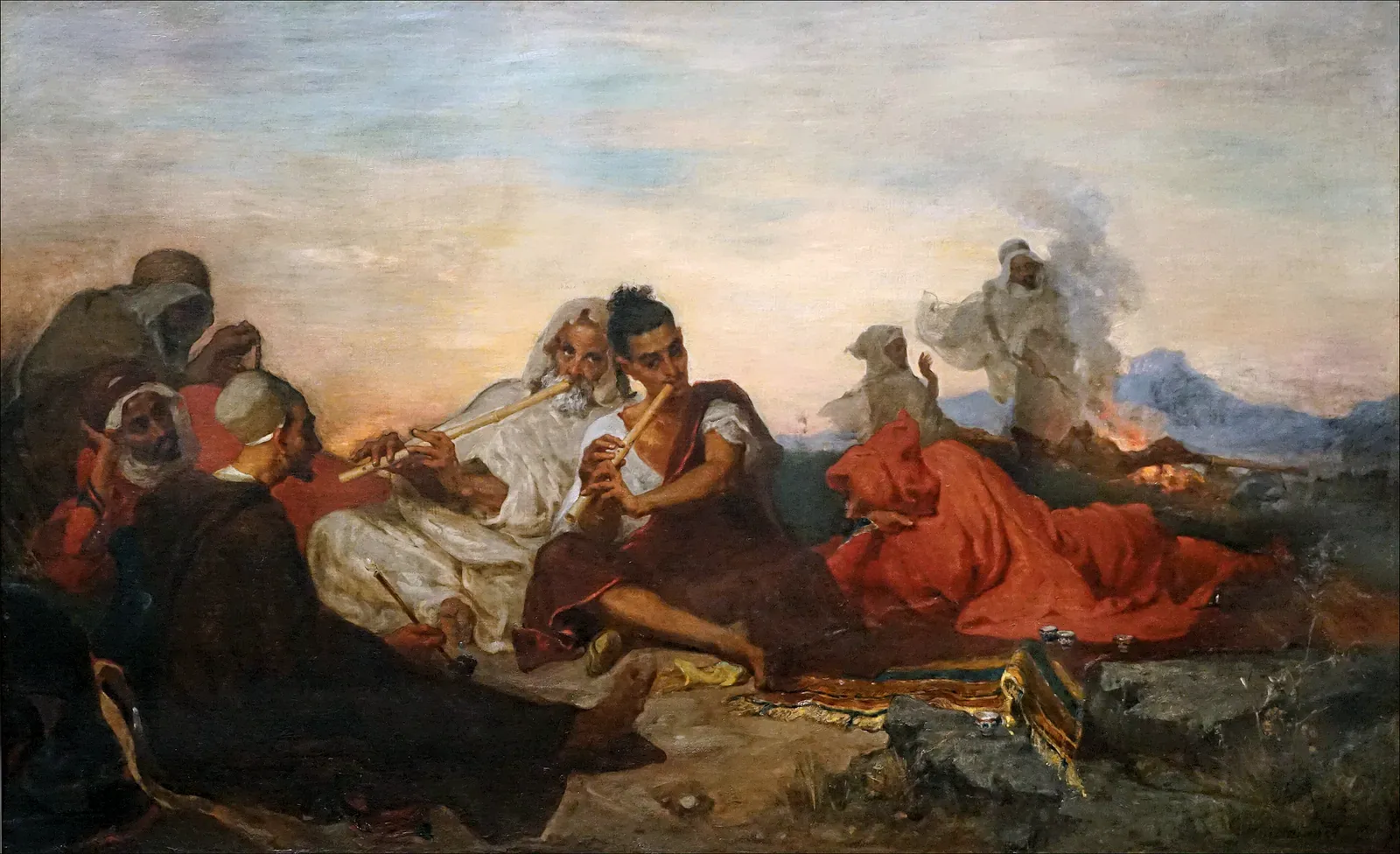
In Morocco the aita, a rural vocal style said to date from the arrival of Arab tribes such as the Banu Hilal in the twelfth century, was sung by women called shikhat with male fiddle and drum players. Its songs carried protest. Kharbusha, an Awlad Zayd woman of the Abda region, sang to rally her tribe against the qaid Isa ibn Umar al-Abdi in the revolt of 1895. Haja El Hamdaouia, who began in the 1950s with the aita marsaouia and carried a bendir on stage, performed with Cheb Khaled.
Migration and the raï crossover, 1969-2009
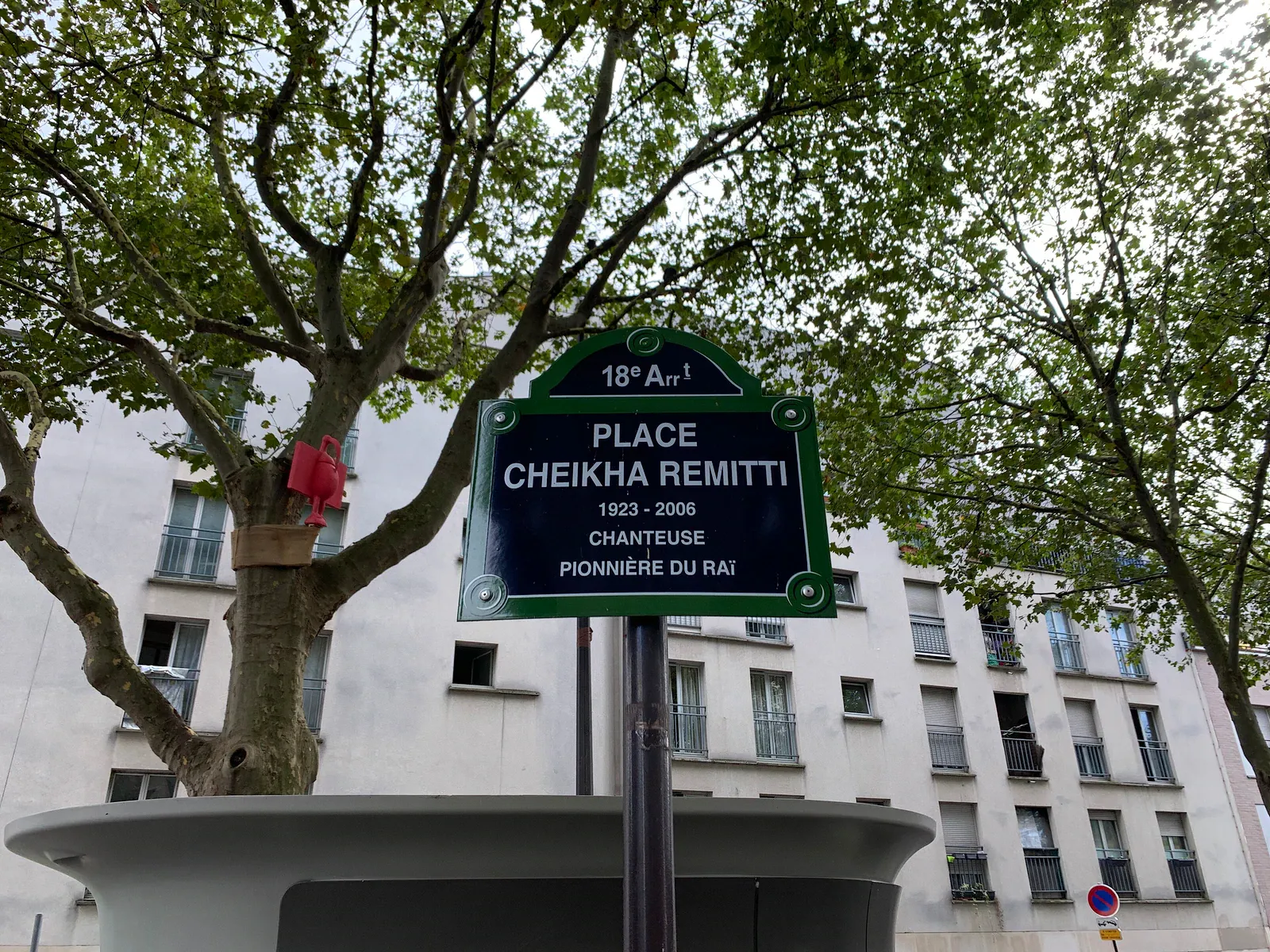
In Oran, bedoui was one of several streams, with Andalusian classical music, zendani street songs and the songs of women called cheikhat. The cheikhat sang for men and women, about wine, love and hardship. Cheikha Rimitti made her first record in 1952 and scandalised orthodox listeners with Charrak Gatta in 1954. She moved to Paris in 1978 and in 1994 recorded Sidi Mansour with Robert Fripp and Flea, an album that began a new electric form of raï. Khaled’s Didi followed in 1992 and brought the style to international charts.
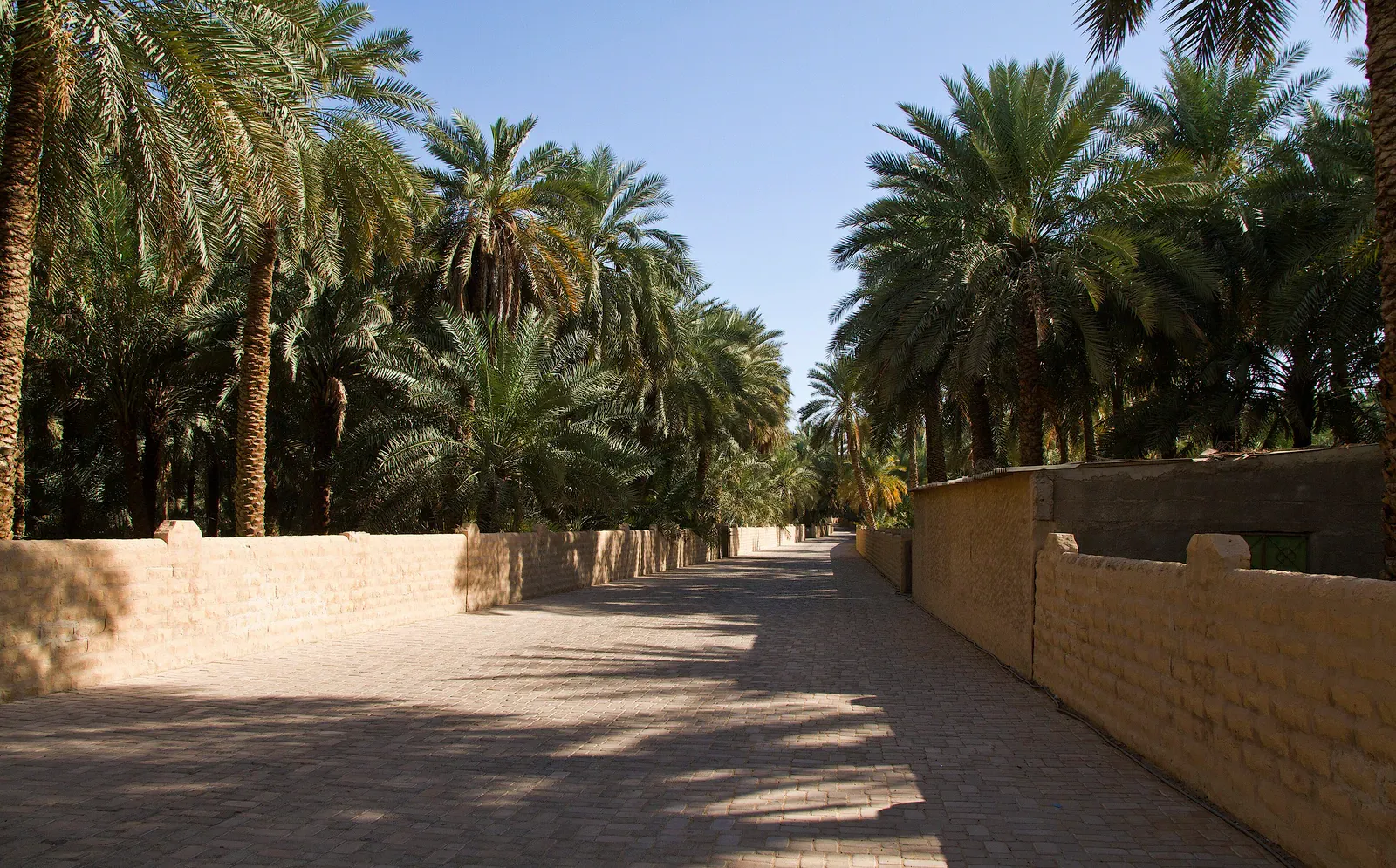
Nabati verse changed too. It faded as the Gulf was transformed by oil, then returned through radio and television, and poets such as Ousha bint Khalifa Al Suwaidi of Al Ain, called Fatat Al-Arab, became celebrated figures whose poems are sung by Emirati and Arab artists.
Characteristics
Poetry decides the form. Many Bedouin songs open with a free, unmetered melody and a cry on a syllable such as ouf, and close on a melismatic call such as ya ba. The ataaba, a four-line improvised plaint, ends its first three lines on homonyms for a pun, and about half of all ataabas use no fixed meter. Where rhythm appears it comes from clapping and hand drums rather than from a band.
Instruments and production
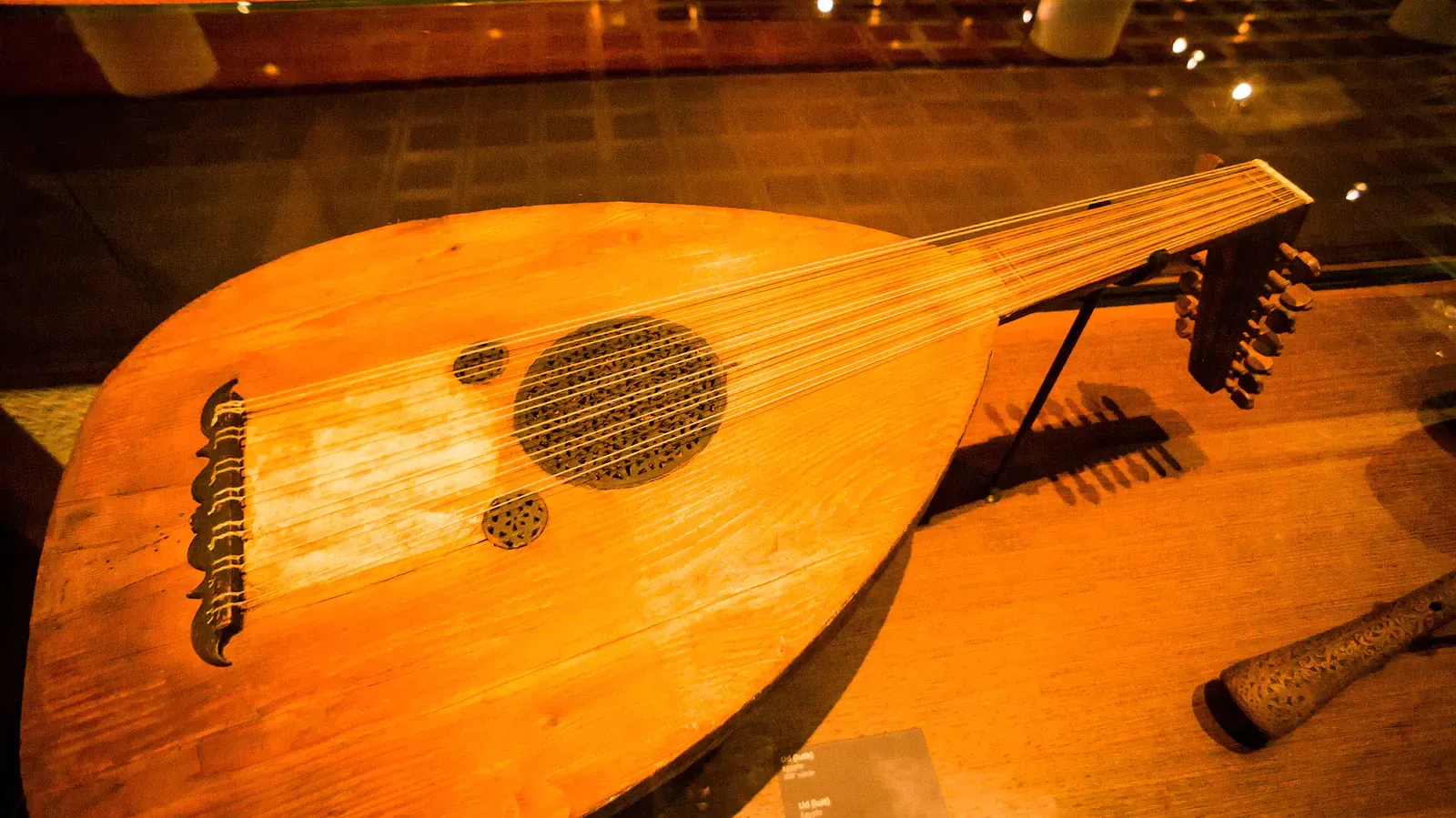
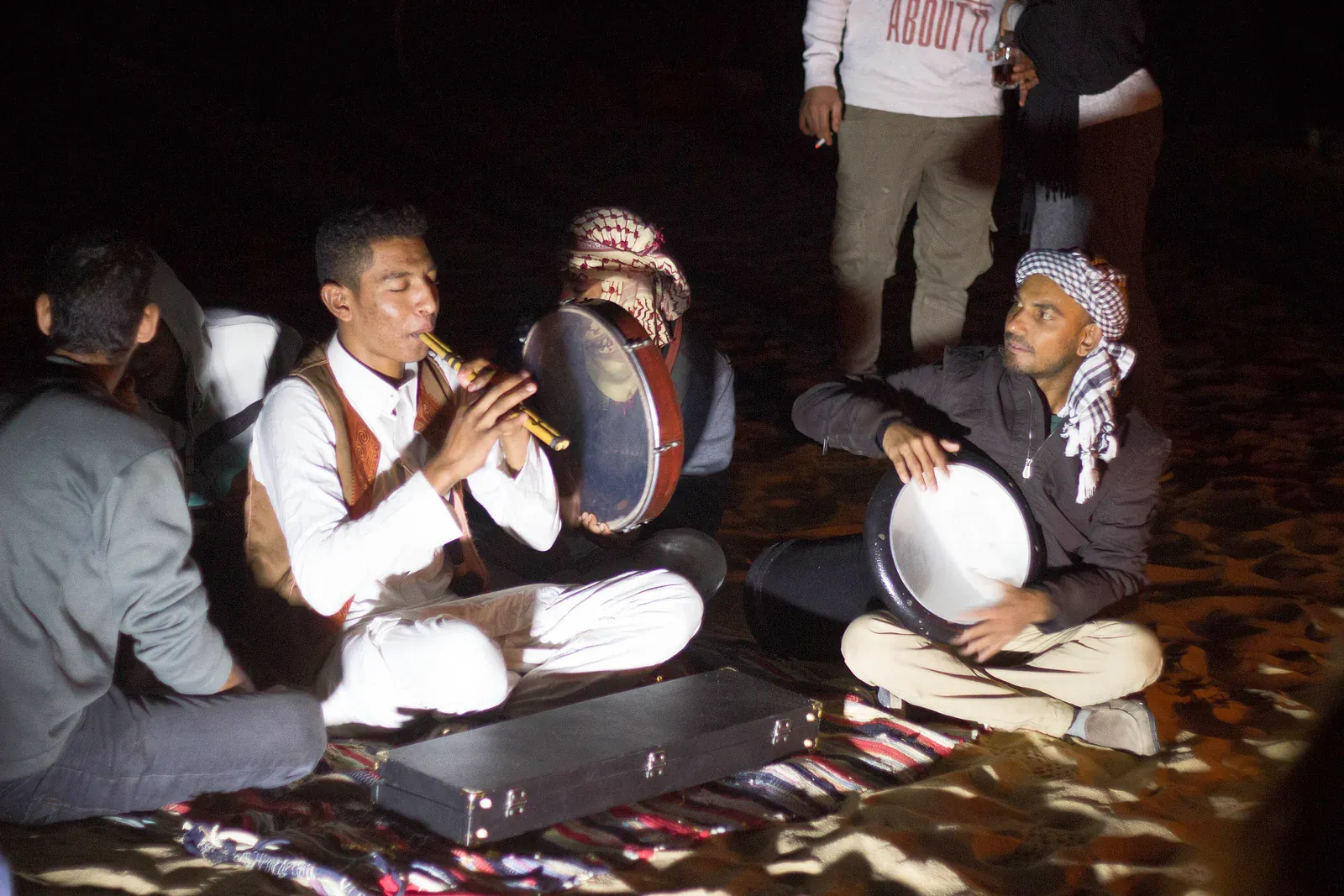
The rababa, a bowed spike fiddle with a limited range of little more than an octave, drones under the voice and is usually played by the poet-singer himself. Frame drums such as the daf and bendir, the guellal of Algeria, the gasba flute and the double-pipe mijwiz fill out the sound. Modern raï adds electric guitar and keyboards, but the traditional forms are still recorded close to the voice.
Culture
Group dances turn the poetry into public ritual. The ardah, danced by two facing rows of men with swords or canes to drums and spoken verse, began as a rite before war and is now done at weddings and national events; UNESCO listed the Najdi form in 2015. The al-samer of Jordan, a wedding ritual of singing, dancing and poetry, joined the list in 2018.
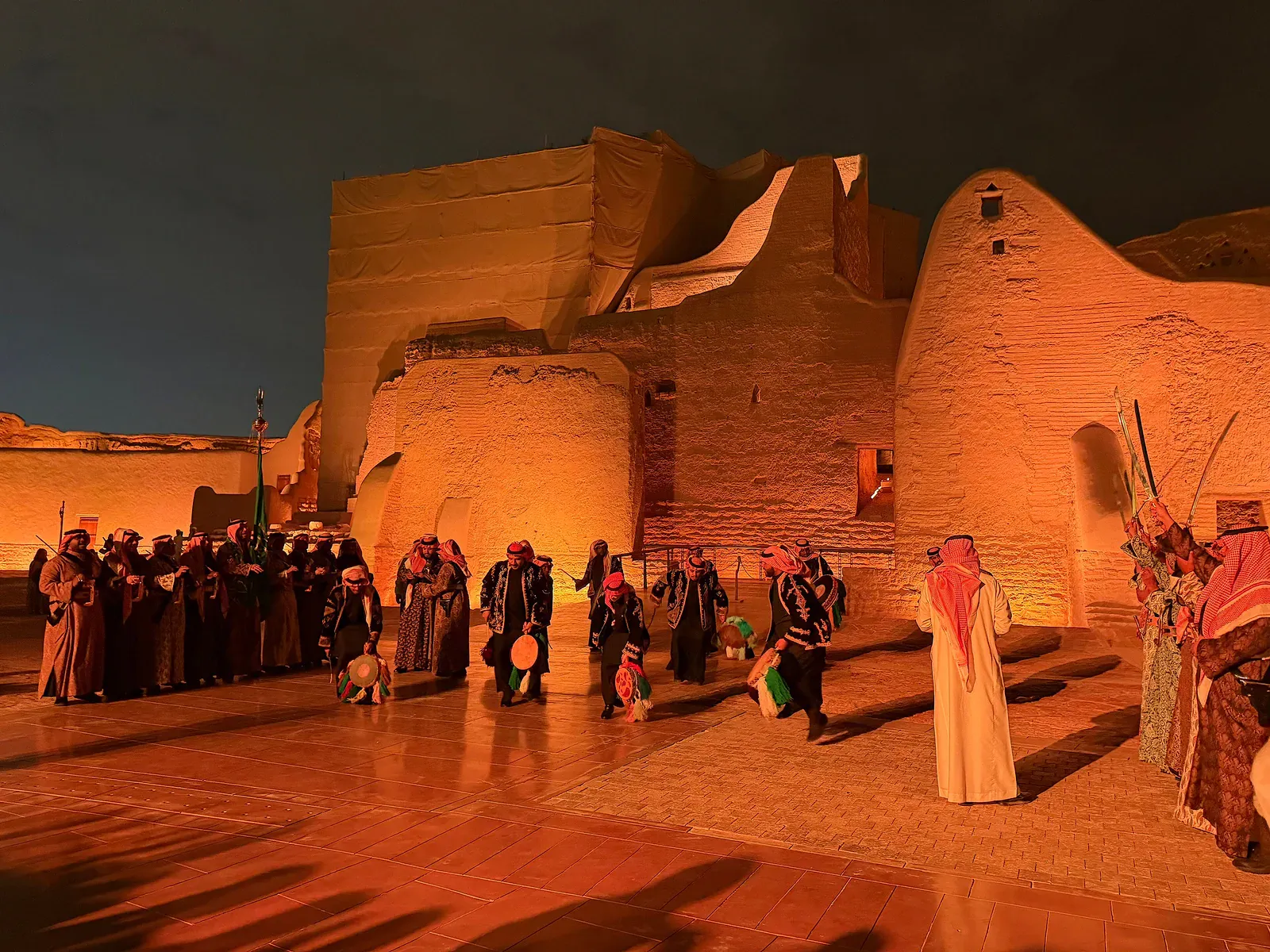
Other heritage listings followed the same logic. Al-Bar’ah, a drum and dagger dance with poetry from the Dhofari valleys of Oman, was inscribed in 2010. Al-Taghrooda, chanted by riders on camels in the UAE and Oman, and Al-’Azi, a sung poetry of northern Oman, were inscribed in 2012. Taghrooda poems of seven lines or fewer are improvised and repeated by two groups in turn.
Legacy
Bedouin song is a root of several living styles: raï in Algeria, aita in Morocco, the nabati song of the Gulf, a neighbour of Khaleeji music, and Levantine folk song such as the ataaba, covered under Levantine folk music. The countryside traditions of the Maghreb are also treated in Amazigh music. A film on Kharbusha appeared in 2008, and the song that retold her story was censored in Morocco in 1993.

Misconceptions
Bedouin music is not a single style. A Saudi samri, an Omani al-Bar’ah and an Algerian bedoui share a poetic core but differ in instruments, rhythm and dialect. It is also not mainly instrumental: even with the rababa, the instrument serves the verse. And raï is not simply Bedouin song with a beat; the bedoui tradition was one stream beside Andalusian, Spanish and cabaret influences in Oran.
Frequently asked questions
What is Bedouin music?
Bedouin music is the poetry-based song of Arab nomadic tribes, sung unaccompanied or with the rababa and frame drums, across Arabia, the Levant, Mesopotamia and North Africa.
What instruments are used in Bedouin music?
The rababa one-string fiddle is the best-known, along with frame drums such as the daf and bendir, the guellal drum, reed flutes such as the gasba and the mijwiz double pipe. Much of the repertoire uses voice and clapping alone.
What is nabati poetry?
Nabati is vernacular Arabic poetry of the Arabian Peninsula, long passed on orally and now sung and recited on radio and television.
Is raï Bedouin music?
Raï grew in Oran from several sources, and Algerian bedoui, which came from Bedouin chants, was one of them. The cheikhs and cheikhas of early raï carried over its poetry and delivery.
Sound
Sound sheet
Anatomy of a track
| # | Part |
|---|---|
| 1 | Free-rhythm opening on a syllable such as ouf or ya |
| 2 | Verse of improvised poetry in stanzas |
| 3 | Refrain or call-and-response with a chorus |
| 4 | Closing melisma such as ya ba |
Signature sounds
- Poetry carries the song and sets the melody
- Soloist improvising over a rababa drone or no instrument
- Two groups answering each other in turns
- Pulse made by clapping, frame drums and guellal
- Final melismatic cry on a word like ya ba
Drums and percussion
- Daf
- Guellal
Techniques
- Improvised verse
- Alternating groups
- Pun rhyme
- Echoing
Keys and modes
Descending melodic curve. Ataaba phrases open on the fourth or fifth and fall to the supertonic or tonic.
Vocals
Solo poet-singers and call-and-response groups; urban and cabaret voices of Oran and Morocco's shikhat.
Scenes
Where it happened
Where and when the sound lived: one bar per city on a shared timeline.
Africa
Asia
Active scenes
Peak 3, 1935-2025
Port city where bedoui chants met cabaret and gave rise to the cheikha singers and raï.
Home region of Cheikh Hamada, founder of the gasba movement and a bedoui gharbi pioneer.
Birthplace of the nabati poet Ousha bint Khalifa Al Suwaidi, known as Fatat Al-Arab.
Culture
Culture markers
- Samri
Two rows of men sit on their knees, sway and clap while the daf sets the rhythm.
Dance - Ardah
Two facing rows of men, sometimes with swords or canes, move to drums and spoken poetry; the Najdi form was listed by UNESCO in 2015.
Dance - Poetry gatherings over coffee
Tribes gathered around coffee to recite verse honouring their lineage, with listeners echoing lines back.
Ritual - Camel-race chanting
Taghrooda is chanted by riders and at camel races, weddings and festivals.
Ritual - Cheikhs' white jellaba and turban
Algerian bedoui singers performed in long white jellabas and turbans.
Fashion
Media
Key media
- 2008Kharboucha
by Hamid Zoughi. Feature film on the aita singer who defied the qaid of Abda.
Film
Glossary
Terms on this page
Four-line improvised Bedouin plaint, often with a pun on the last words of the first three lines.
Algerian style of Bedouin chant that sets malhun poetry to guellal and gasba and is sung by cheikhs.
Vernacular Arabic poetry of the Arabian Peninsula, once memorised and spoken by Bedouin poets and now also sung.
Najdi poetry, song and dance with a daf, performed late at night by seated rows of men and, more slowly, by women.
Women singers of Moroccan aita, accompanied by male fiddle and drum players.
Camel-rider chant of the UAE and Oman, in short improvised poems repeated by two groups.
Middle Eastern and North African family