Bouyon
Bouyon is a fast Dominican dance music created by WCK from 1988, fusing cadence-lypso, jing ping and lapo kabwit rhythms with keyboards and drum machines.
Roseau, 1973
Caribbean family
Born
1973
Roseau
Subgenres
4
Documented branches
Links
8
Genres it drew on or shaped
Tempo
145-160 BPMLineage
Family tree
Grew out of
Influenced by
Roseau
Bouyon
Led to (4)
Timeline
Era by era
From the first sparks to today. Select a dot to read the story behind it.
- Cadence-lypso and folk roots
1973 to 1987
- WCK and the first sound
1988 to 1999
- New bands and new blends
2000 to 2009
- Live bands, solo stars and offshoots
2010 to 2023
- The present wave
2024 to today
Eras
Moments
- 1 Cadence-lypso and folk roots, 1973 to 1987
- 2 WCK and the first sound, 1988 to 1999
- 3 New bands and new blends, 2000 to 2009
- 4 Live bands, solo stars and offshoots, 2010 to 2023
- 5 The present wave, 2024 to today
1973
Cadence-lypso and folk roots
Exile One's cadence-lypso, jing ping accordion bands, bèlè and chanté mas supply the rhythms and Creole voice that bouyon later merges.
- 1973Exile One formsGordon Henderson's band, based in Guadeloupe, coins cadence-lypso, the Dominican style that bouyon later draws on.
1988
WCK and the first sound
WCK debuts in 1988 with keyboards and drum machines over folk rhythms, and tours North America and Europe from 1995.
- 1988WCK forms in DominicaYoung Dominican musicians start fusing cadence-lypso with jing ping and keyboard rhythm patterns.
- 1988One More SwayWCK's debut album, released as Dominica marked ten years of independence.
- 1990Culture ShockThe album generally seen as WCK's defining early release.
- 1993Forever and the Conch Shell hitThe album includes Conch Shell, one of WCK's biggest hits.
- 1995Tou Cho Tou FlamWCK's most successful album, with seven hits including Balance Batty.
- 1995Bouyon-muffin beginsSkinny Banton starts chanting ragga-style vocals over WCK's bouyon rhythms.
- 1995WCK tours abroadFrom 1995 to 1998 the band plays the United States, Canada, Europe and the Caribbean.
2000
New bands and new blends
Triple Kay forms in Laudat in 2000 and solo vocalists such as Asa Bantan appear, while bouyon-muffin adds ragga and dancehall vocals.
- 2000Triple Kay formsKenan Cadette, Kurt Rolle and Kendel Laurent start the band in Laudat.
- 2001Balance Batty on Soca 101A VP Records compilation carries WCK's hit to listeners beyond the Caribbean.
2010
Live bands, solo stars and offshoots
Signal Band forms in 2010, Asa Bantan builds a solo career, and Guadeloupe and Saint Lucia develop bouyon gwada and bouyon soca.
- 2010Signal Band forms in RoseauSeven young musicians start a live band that becomes a carnival fixture.
2024
The present wave
Carnival bouyon now has its own Road March competition in Dominica and a growing audience across the Windward Islands.
- 2025First Bouyon Road MarchMas Domnik adds a bouyon competition; Signal Band wins with Rags.
Listening path
Start listening
A short path from an easy way in to the deep end. Thumbnails come from YouTube; the player loads only when you press play.
- 01
WCK, 1995
The breakthrough hit: listen for the keyboard riff and fast programmed pulse.
- 02
Asa Bantan, 2026
A current solo bouyon release showing how the sound has sped up and slicked.
Facts
| Family | Caribbean |
| Origin | Roseau, Dominica |
| Emerged | Late 1980s |
| Status | Active |
| Tempo | 145 to 160 BPM |
| Meter | 4/4 |
| Subgenres | 3 |
Bouyon is a dance music from Dominica that took shape in the late 1980s, built on fast programmed percussion, keyboard riffs and Creole-language vocals. It grew out of cadence-lypso and the folk jing ping accordion bands, and it belongs to the Caribbean family.
The Creole word means something like a gumbo-style soup, a fair picture of a music that mixes traditional and modern parts. It is called jump up in Guadeloupe and Martinique.
Origins
Two older sounds feed bouyon. Cadence-lypso, the Dominican blend of Haitian cadence and calypso, was named by Gordon Henderson, whose band Exile One formed in 1973 and was based in Guadeloupe. It was the first Dominican popular style to find an international audience, and it put synthesizers into kadans early. Jing ping is the older folk layer: an accordion band with a bamboo bass pipe called the boumboum, a scraper and a tambourine, which accompanies the quadrille and the flirtation dance. Around them sit bèlè, chanté mas masquerade songs and the lapo kabwit goatskin drum.
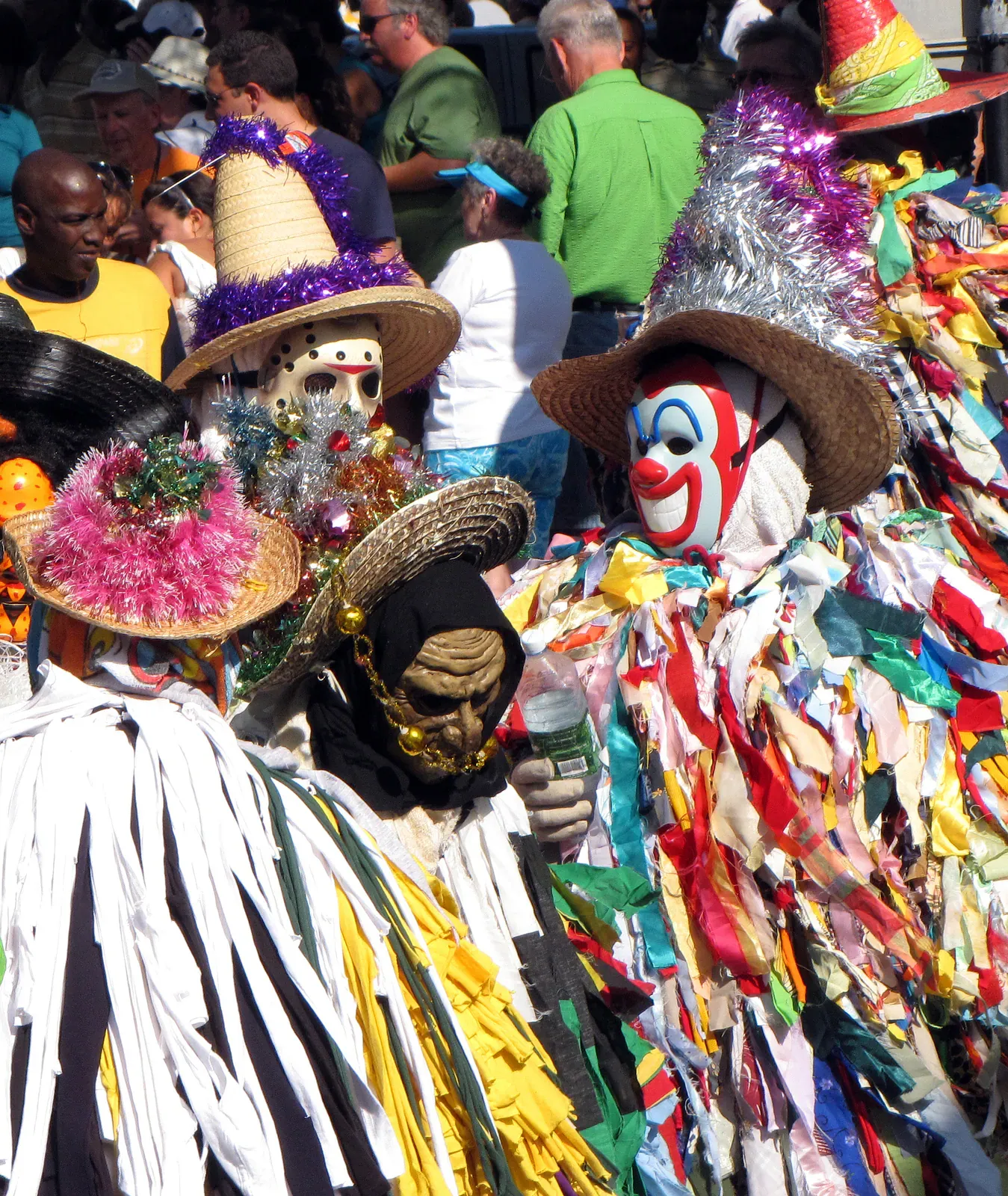
By the late 1980s several of Dominica’s best-known bands had moved abroad or broken up, and a group of young musicians formed Windward Caribbean Kulture, shortened to WCK, in 1988 to fill the gap. They kept the guitar-driven cadence-lypso as a starting point, but moved the weight onto technology, with keyboards playing the rhythmic patterns that acoustic drums and the accordion had carried before. A drum machine took over the work of the scraper and tambourine. The result was faster and more electronic than anything on the island, and it was soon given the name bouyon.
WCK and the first sound, 1988-1999
WCK’s debut album One More Sway arrived in 1988, in the year Dominica marked ten years of independence. The follow-up Culture Shock (1990), with its title track and Dance Floor, is generally treated as the record that set the style. Follow the Leader (1991) and Kannibal (1992) refined it, and Forever (1993) produced Conch Shell, nicknamed The Fish Song. The 1995 album Tou Cho Tou Flam, WCK’s most successful, spun off seven hits from eleven tracks, among them Balance Batty.
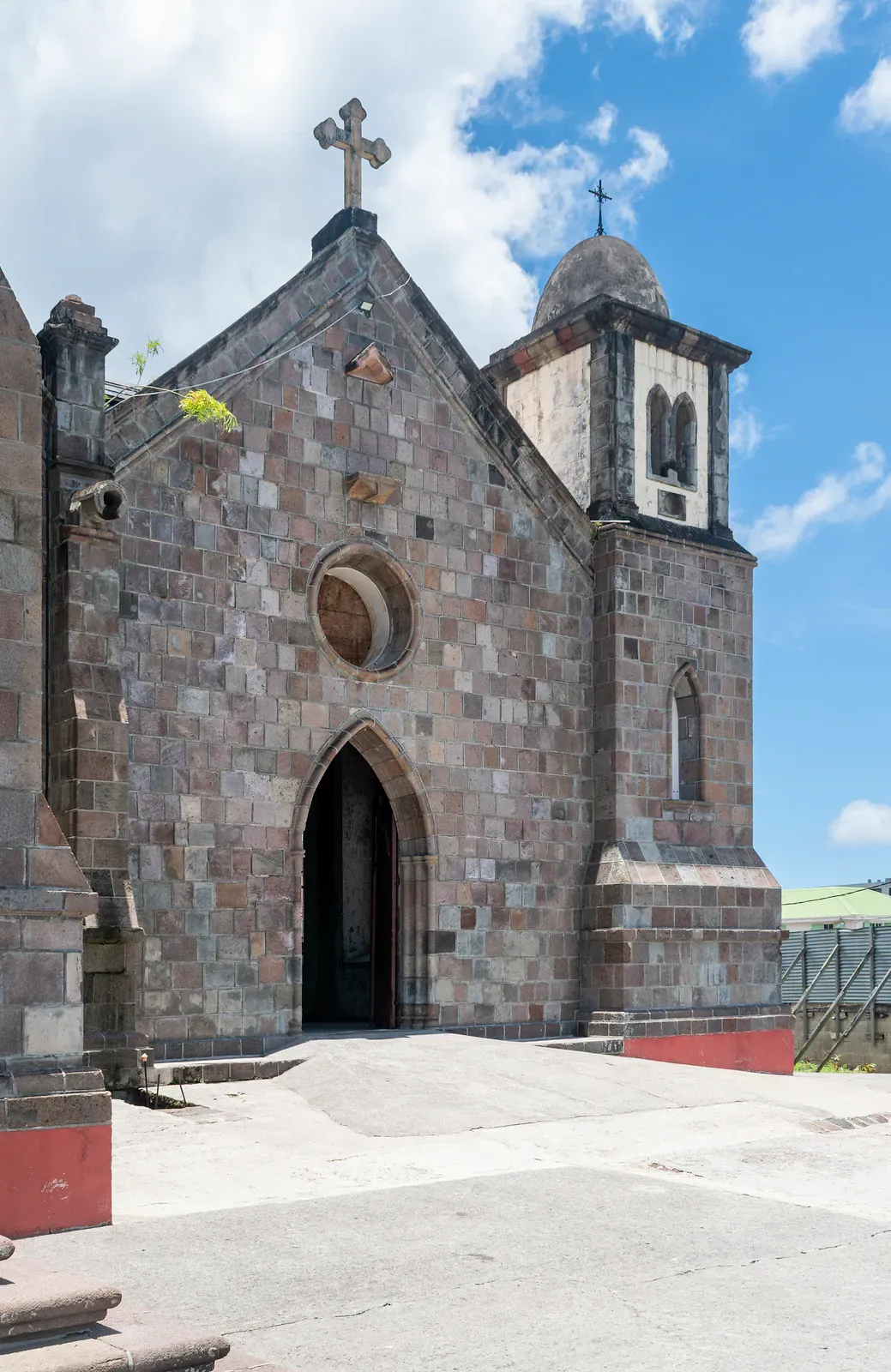
From 1995 to 1998 the band toured the United States, Canada, Europe and the Caribbean. In the same year, 1995, the vocalist Skinny Banton, later known as Shadowflow, began chanting ragga-style vocals over WCK’s rhythms, which led to bouyon-muffin, a blend with dancehall and hip hop. A branch of that line later produced reketeng, a harder variant with more hip hop in it.
New bands and new blends, 2000-2009
Triple Kay formed in 2000 in the village of Laudat, named from the first letters of founders Kenan Cadette, Kurt Rolle and Kendel Laurent. It became the best-known band to follow WCK, with a full live line-up on the carnival circuit. Solo vocalists also began to appear in this decade, among them Asa Bantan, who started as a bouyon soloist around 2000. Elsewhere in the Lesser Antilles, producers in Guadeloupe took bouyon in a rougher direction.
Live bands, solo stars and offshoots, 2010-2023
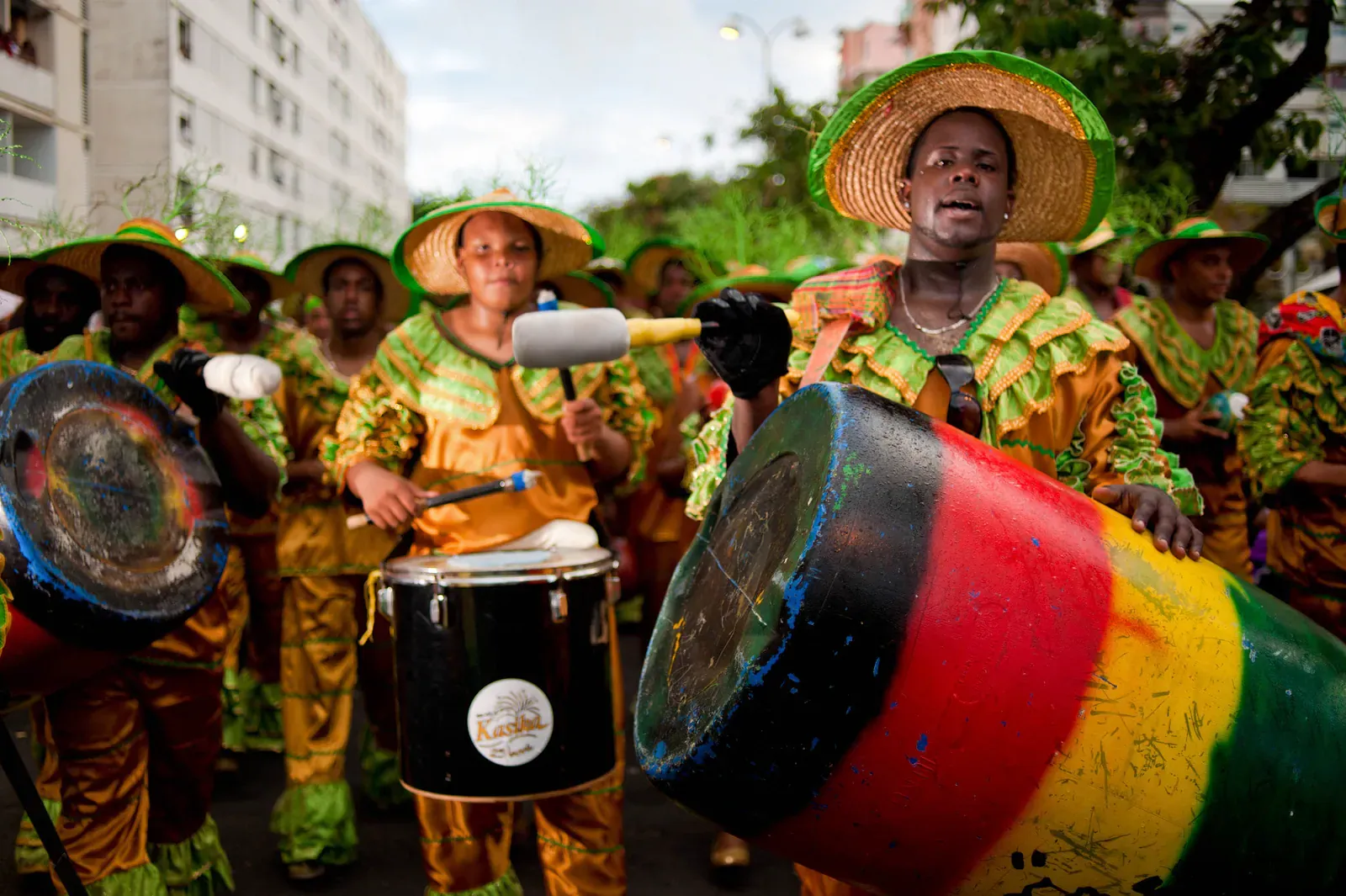
Signal Band formed in Roseau in August 2010, built around the singer Shelly, and joined Triple Kay and the older WCK as one of the three main groups of the modern scene. Asa Bantan showed that bouyon could carry a solo artist without a band, and widened its reach to Guadeloupe, Saint Martin, the Virgin Islands and Saint Lucia.
The music also split. Bouyon gwada, or hardcore bouyon, grew from collaborations between Dominicans and Guadeloupeans who share a Creole language, with raw, often explicit lyrics over heavy percussion. Bouyon soca is a name coined mainly by producers in Saint Lucia who blend old 1990s bouyon rhythms with soca. Dominican bouyon bands have kept their own style distinct from both.
The present wave
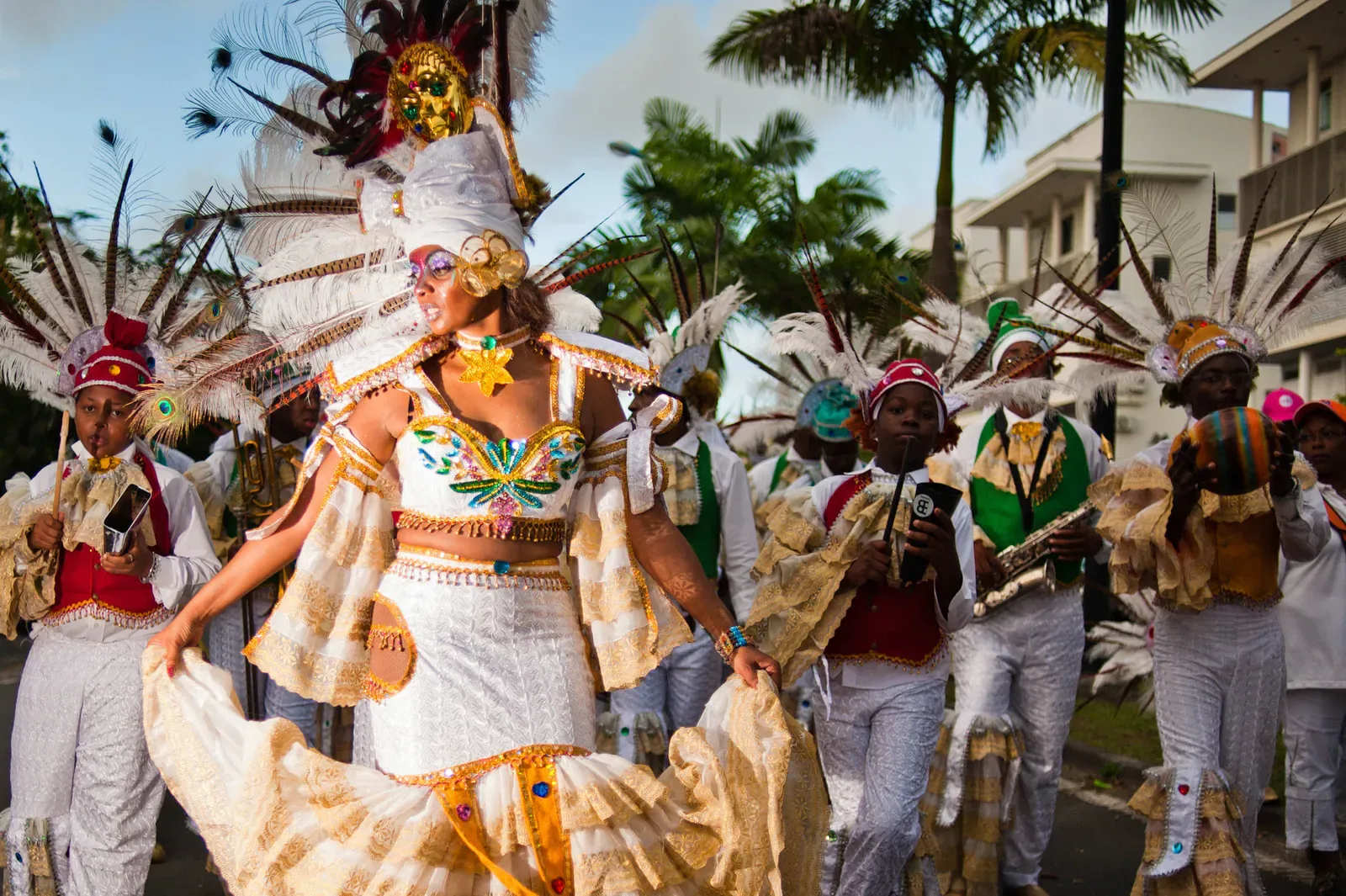
Carnival remains the home of bouyon. In 2025 Dominica’s Mas Domnik held its first official Bouyon Road March competition, and Signal Band took it with Rags. Modern releases such as Asa Bantan’s Far Away (2026) show how the sound now runs faster and cleaner than the early WCK records, with more Creole and English sung hooks and fewer folk instruments audible.
Characteristics
A bouyon track is built on a hard, quick pulse in 4/4. Classic WCK recordings measure about 145 beats per minute and recent releases reach 160. Lead parts are keyboard riffs standing in for the accordion, with the bass line doing what the boumboum did, and folk drum patterns from lapo kabwit and bèlè programmed under the electronic kit. Vocals are shouted, chanted or sung in Kwéyòl or English, and the ragga-style chant from the bouyon-muffin period is still common.
Instruments and production
The core of the sound is a keyboard and a drum machine, a switch that WCK made at the start. The folk instruments survive mostly as sounds and rhythm patterns. Live bands such as Triple Kay and Signal Band play with full instruments on stage, while soloists and Guadeloupean producers usually work from programmed riddims, instrumental backing tracks that several vocalists then record over.
Mainstream success
Bouyon reached beyond Dominica in the 1990s through WCK’s tours, and in 2001 the VP Records compilation Soca 101, Volume 1 carried Balance Batty to listeners outside the region. The label VP Records issued that compilation. Outside Dominica the music is popular in Guadeloupe, Martinique, Antigua and Saint Lucia, and it has stayed closer to carnival and live bands than to radio charts.
Notable recordings
Balance Batty, from Tou Cho Tou Flam, is the usual starting point: a keyboard riff and a fast programmed pulse that made WCK’s name in 1995. Culture Shock, five years earlier, shows the same blueprint in an earlier and rougher form. For the current state, Far Away by Asa Bantan from 2026 shows the solo style at its smoothest.
Culture
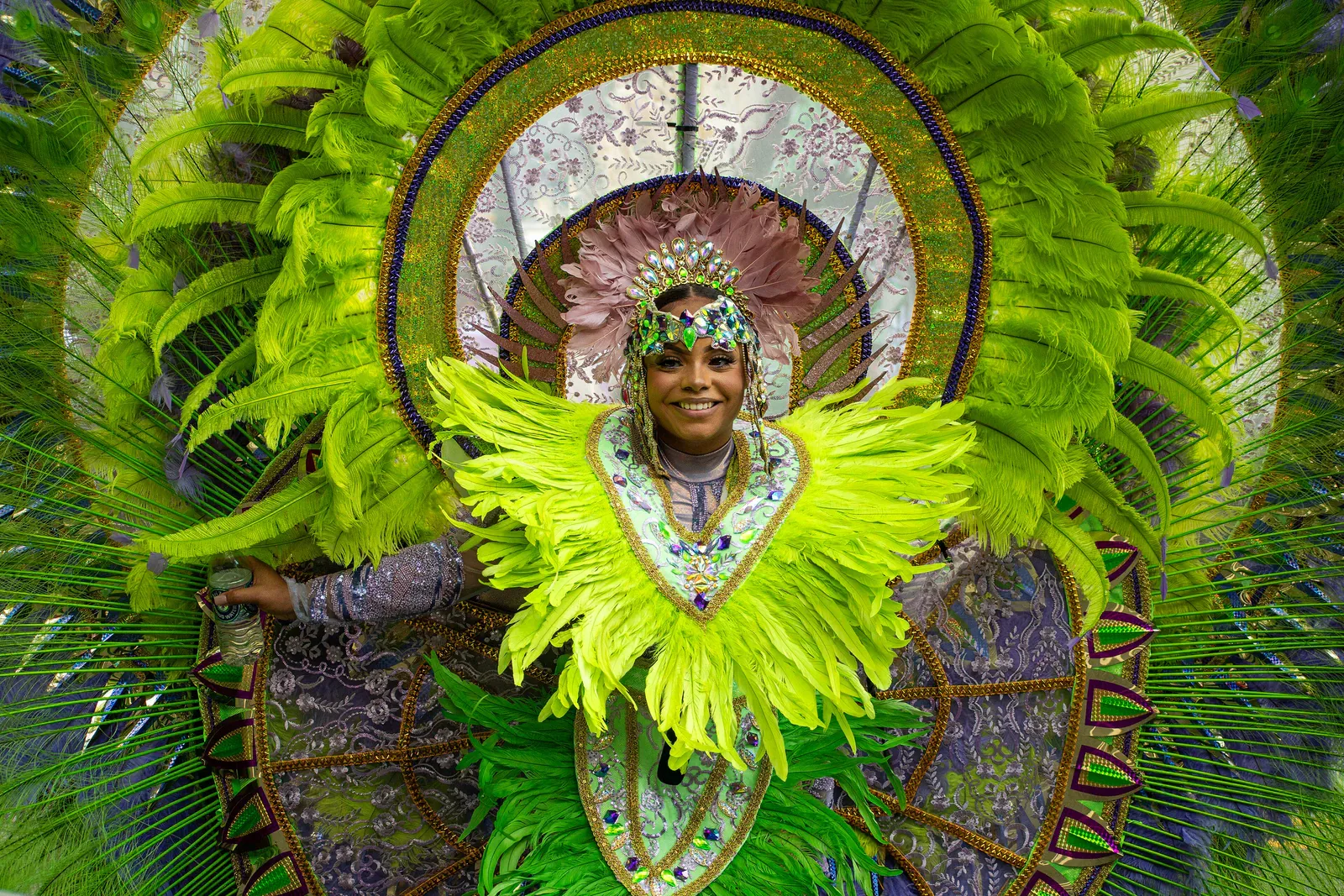
Bouyon is tied to Mas Domnik, the carnival on the Monday and Tuesday before Ash Wednesday, and to the World Creole Music Festival, held since 1997 on the last weekend of October in Roseau. Songs are mainly in Dominican Creole, a language shared with Guadeloupe and Martinique, which helped the music travel there. Carnival there was long dominated by imported calypso and soca, and bouyon is the home-grown alternative.
Misconceptions
Bouyon is sometimes treated as a kind of soca. In Dominica it has always kept a recognisable style of its own, and the combined term bouyon soca was coined elsewhere, by producers who like both genres. It is also assumed to be entirely electronic, yet its rhythms come from jing ping, lapo kabwit and bèlè, which WCK programmed instead of dropping. Finally, hardcore bouyon and Gwada bouyon are sometimes assumed to be the Dominican original, but they are Antillean offshoots with rawer lyrics, formed through Dominican and Guadeloupean collaboration.
Frequently asked questions
What does bouyon mean?
Bouyon is an Antillean Creole word for a gumbo-like soup, used for a mixed music of traditional and modern parts.
Who created bouyon?
WCK (Windward Caribbean Kulture), formed in Dominica in 1988, is credited with creating bouyon, with founders including Cornell Phillip and Derek Peters.
How fast is bouyon?
Classic bouyon such as Balance Batty runs at about 145 beats per minute, and modern releases reach 160 beats per minute.
What is the difference between bouyon and soca?
Bouyon comes from Dominica and draws on jing ping, cadence-lypso and lapo kabwit rhythms, while soca comes from Trinidad. Bouyon soca is a fusion of the two.
Sound
Sound sheet
Signature sounds
- Fast programmed percussion with lapo kabwit patterns
- Keyboard riffs standing in for the jing ping accordion
- Chanted or ragga-style vocals in Creole or English
Drums and percussion
- Lapo kabwit
- Drum machine
Techniques
- Keyboard rhythm patterns
- Folk drum rhythms
- Ragga-style chanting
Keys and modes
Minor keys. Measured tracks sit mostly in minor keys such as A minor and E minor.
Vocals
High-energy rhythmic delivery in Creole or English, from chanted ragga style to sung hooks.
Scenes
Where it happened
Where and when the sound lived: one bar per city on a shared timeline.
Caribbean
Active scenes
Peak 4, 2010-2025
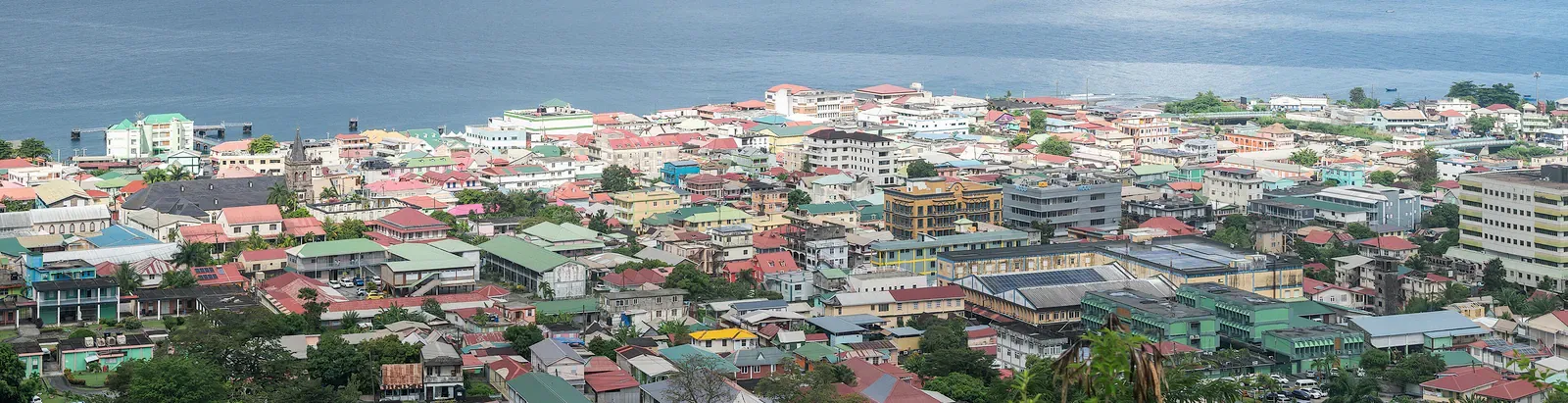
Capital of Dominica, home of WCK, Signal Band and the carnival stages.
Village where Triple Kay formed.
Guadeloupean hub of bouyon gwada, the hardcore offshoot.
Saint Lucian producers fused bouyon with soca.
Venues and places
Roseau, 1997 to today. Site of the World Creole Music Festival, held the last weekend of October.
Culture
Culture markers
- Mas Domnik carnival
Carnival on the Monday and Tuesday before Ash Wednesday, where bouyon bands compete for the road.
Ritual - Jump up
Guadeloupean and Martinican name for the music and its dance floor energy.
Slang - Kwéyòl lyrics
Songs often use Dominican Creole, the language shared with Guadeloupe and Martinique.
Slang
Media
Key media
- 2001Soca 101, Volume 1
by Various. VP Records collection that carried Balance Batty outside the region.
Compilation
Glossary
Terms on this page
Creole word for a gumbo-like soup, used for a mix of traditional and modern music.
Dominican blend of Haitian cadence and calypso, coined by Gordon Henderson.
Dominican accordion band that plays for the quadrille and flirtation dance.
Name for bouyon in Guadeloupe and Martinique.
Goatskin drum and its rhythms, from Dominican folk tradition.
Bouyon offshoot that grew from bouyon-muffin and added more hip hop and dancehall.
Caribbean family