Classic country
Classic country is the golden age of American country music, from postwar honky-tonk in the mid-1940s through the Nashville sound to the mid-1970s.
United States, 1945
Country family
Born
1945
United States
Subgenres
1
Documented branches
Links
5
Genres it drew on or shaped
Tempo
75-140 BPMLineage
Family tree
Timeline
Era by era
From the first sparks to today. Select a dot to read the story behind it.
- Postwar honky-tonk
1945 to 1952
- Hank's death, pedal steel and the shuffle
1953 to 1956
- Studio B and the Nashville sound
1957 to 1967
- Bakersfield, television and the Opry's move
1968 to 1975
Eras
Moments
- 1 Postwar honky-tonk, 1945 to 1952
- 2 Hank's death, pedal steel and the shuffle, 1953 to 1956
- 3 Studio B and the Nashville sound, 1957 to 1967
- 4 Bakersfield, television and the Opry's move, 1968 to 1975
around 1945
Postwar honky-tonk
Amplified bands, steel guitar and songs about drinking and heartbreak took over from the string-band sound. Ernest Tubb, Hank Williams, Lefty Frizzell and Kitty Wells made the Opry and the jukebox the centre of the genre.
- 1941Ernest Tubb records Walking the Floor Over YouRecorded in Fort Worth, it became a million seller and set the electric honky-tonk sound that postwar country built on.
- 1943The Grand Ole Opry moves to the RymanThe Nashville auditorium hosted the weekly broadcast until 1974 and became the mother church of the genre.
- 1947Ernest Tubb Record Shop opens in NashvilleThe Broadway shop sold country records to the Opry audience for 75 years.
- 1948Louisiana Hayride starts in ShreveportThe KWKH broadcast became a proving ground for new honky-tonk and rockabilly acts through 1960.
- 1949Hank Williams releases Lovesick BluesThe single reached the top of the country chart and made Williams a national star.
- 1950Lefty Frizzell's If You've Got the Money I've Got the TimeHis debut single on Columbia made his bending, slurred phrasing a model for later singers.
- 1952Kitty Wells tops the country chartIt Wasn't God Who Made Honky Tonk Angels made her the first woman to reach number one as a solo country singer.
1953
Hank's death, pedal steel and the shuffle
Williams died on 1 January 1953. Webb Pierce put the pedal steel up front in 1954 and Ray Price's 1956 shuffle beat set the honky-tonk template, while rock and roll began to eat into country sales.
- 1953Hank Williams dies at 29He died on 1 January 1953; Your Cheatin' Heart came out the same month and became a hit.
- 1954Webb Pierce's Slowly features pedal steelBud Isaacs's pedal steel intro spread the instrument's pitch-bending sound across country records.
- 1956Ray Price records Crazy ArmsRecorded in Nashville with a walking-bass 4/4 shuffle, it redefined honky-tonk rhythm.
1957
Studio B and the Nashville sound
RCA Studio B and Columbia's Bradley studio replaced rough honky-tonk with strings, choirs and soft rhythm. Patsy Cline, Jim Reeves and George Jones cut crossover ballads while the CMA organised the industry.
- 1957RCA Studio B opens in NashvilleChet Atkins and Steve Sholes built the studio where much of the Nashville sound was recorded.
- 1958The Country Music Association is foundedIt was the first trade body created to promote a single genre.
- 1959Jim Reeves's He'll Have to GoA low, hushed vocal over a sparse band made the song a pop crossover hit.
- 1961Country Music Hall of Fame opens its rollThe first inductees were Hank Williams, Jimmie Rodgers and Fred Rose.
- 1963Patsy Cline dies in a plane crashShe died on 5 March 1963 at 30, with her crossover recordings already a model for pop-leaning country.
1968
Bakersfield, television and the Opry's move
Merle Haggard and Loretta Lynn brought plain-spoken working-class songs to the top of the charts, Hee Haw put country on network television, and the Opry left the Ryman in 1974.
- 1968Merle Haggard's Mama TriedThe title song of his Capitol album is a signature Bakersfield-era honky-tonk record.
- 1969Hee Haw premieres on televisionThe country variety show ran until 1993 and made Opry-style music a weekly TV fixture.
- 1970Loretta Lynn's Coal Miner's DaughterHer autobiographical song and album, released through Decca, became her signature.
- 1974The Opry leaves the Ryman for OprylandThe weekly broadcast moved to a new Nashville house, ending 31 years at the Ryman.
Listening path
Start listening
A short path from an easy way in to the deep end. Thumbnails come from YouTube; the player loads only when you press play.
- 01
Ernest Tubb, 1941
The 1941 record that made the electric honky-tonk sound a hit and a template.
- 02
Hank Williams, 1949
Williams at the Opry in 1949, with the yodelling hit that launched him.
- 03
Kitty Wells, 1952
The single that made Wells the first solo woman at number one on the country chart.
- 04
Merle Haggard, 1968
A Capitol-era Haggard classic that shows the stripped Bakersfield band sound.
- 05
Loretta Lynn, 1970
A first-person story of Kentucky poverty that closes the era's run of hits.
Facts
| Family | Country |
| Origin | United States |
| Emerged | Mid-1940s to mid-1970s |
| Status | Historical |
| Tempo | 75 to 140 BPM |
| Meter | 4/4 shuffle or two-beat, with waltzes in 3/4 |
| Subgenres | 1 |
Classic country is the name given to the golden age of American country music, running from the postwar honky-tonk years of the mid-1940s to the mid-1970s.
It is an era and radio-format label rather than a single style: it covers amplified honky-tonk, the strings-and-choir Nashville sound and the Bakersfield revival, all recorded before the 1970s outlaw wave. Its core traits are fiddle and steel guitar, a plain-spoken first-person voice and the production habits of the pre-1975 studio.
Origins
The Grand Ole Opry began on 28 November 1925 as the WSM Barn Dance in Nashville and took its current name in 1927. For two decades it carried string bands, comics and gospel groups. The turn came with electric instruments and bar-room volume. Ernest Tubb recorded “Walking the Floor Over You” in Fort Worth in 1941, and its sales showed that an amplified band and a lonely, conversational vocal could fill a jukebox.
Honky-tonk bars gave the music a place to be danced to, and the trade press moved from “hillbilly” to “country and western”. That is the setting in which the classic era starts.
Postwar honky-tonk, 1945-1952
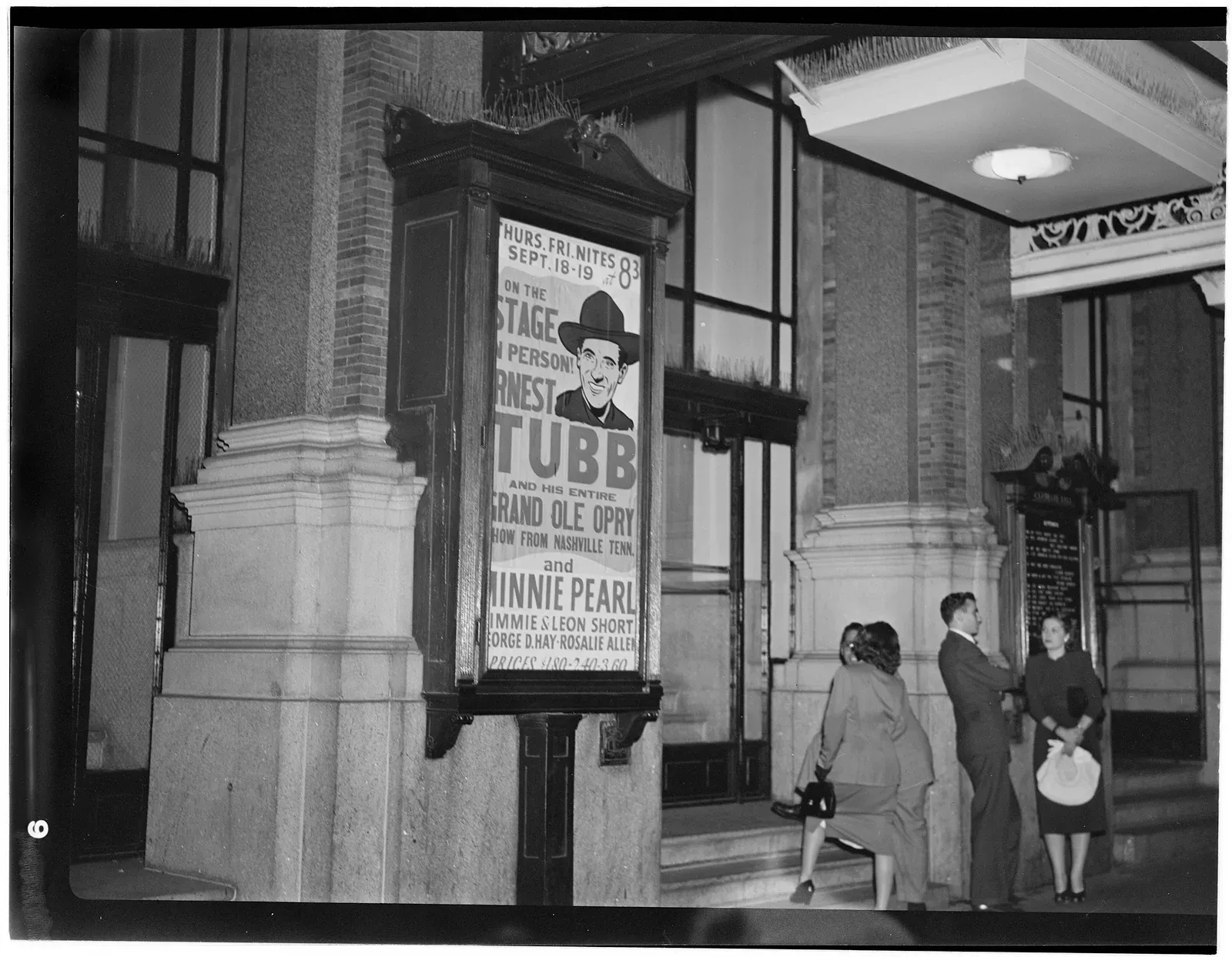
In 1947 Tubb opened a record shop on Broadway in Nashville that sold country records to the Opry crowd for 75 years. In September of that year he took an Opry show to Carnegie Hall in New York. Out of Shreveport, the Louisiana Hayride, which began in 1948, tested singers before audiences who did not wait for Nashville’s approval.
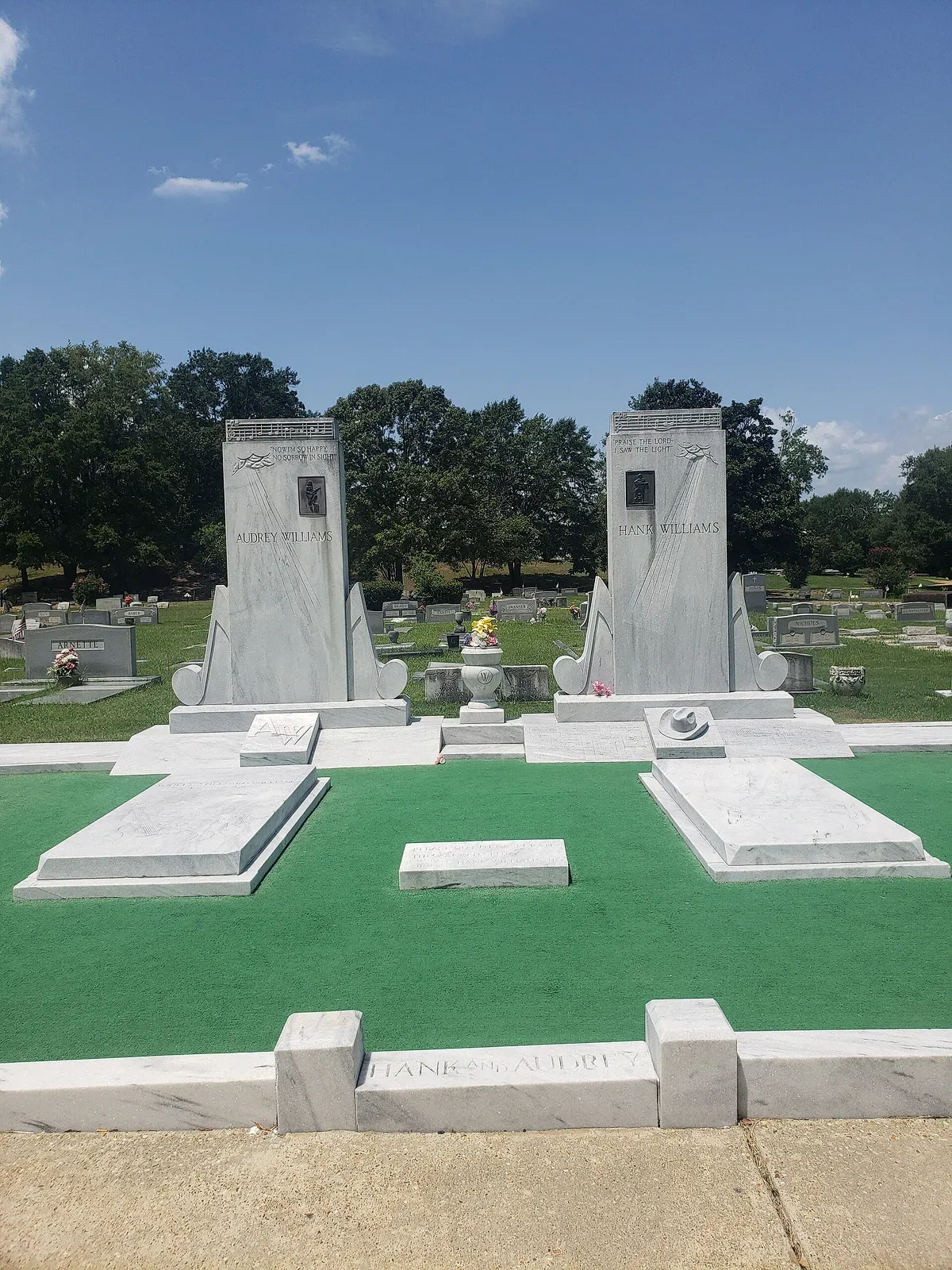
Hank Williams made the era’s central body of songs. His “Lovesick Blues” came out on MGM in February 1949 and became a national hit, and the songs that followed, among them “I’m So Lonesome I Could Cry” and “Your Cheatin’ Heart”, fused blues phrasing with gospel plainness. Fifty-five of his singles reached the country top ten. He died on 1 January 1953 at the age of 29, and in 1961 he was among the first three members of the Country Music Hall of Fame.
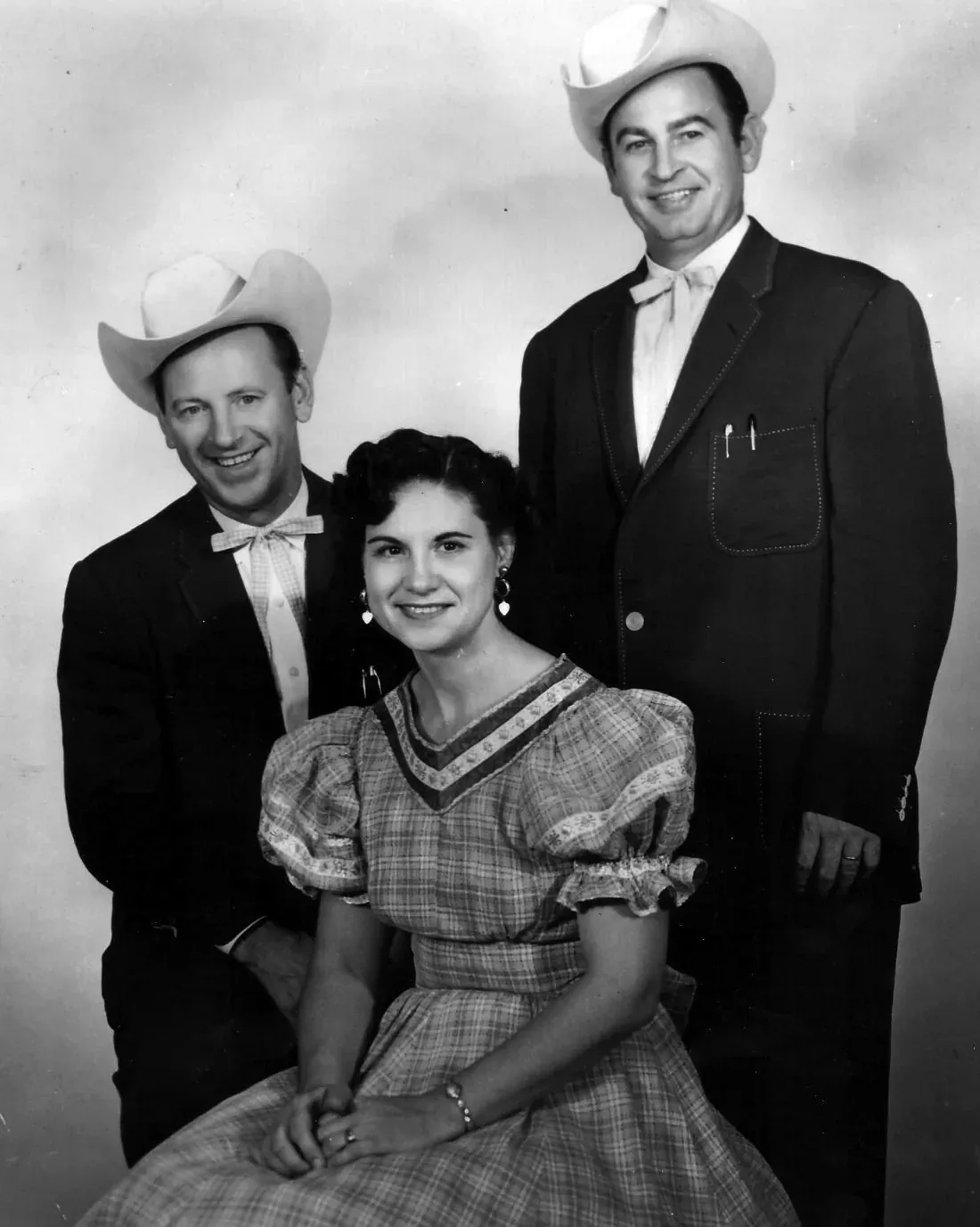
Lefty Frizzell’s “If You’ve Got the Money I’ve Got the Time” followed in 1950, with vocal phrasing that stretched a syllable across several notes and later singers copied closely. Two years later, Kitty Wells’s “It Wasn’t God Who Made Honky Tonk Angels” answered a Hank Thompson hit from a woman’s side of the bar and made her the first woman to top the country chart as a solo singer.
Pedal steel and the shuffle, 1953-1956
Williams’s death left a gap that Webb Pierce, Ray Price and others filled. Pierce’s “Slowly” (1954) put Bud Isaacs’s pedal steel guitar at the front of the record, and country bands began adding the instrument. Price took the next step. He recorded “Crazy Arms” at Bradley Studios in Nashville on 1 March 1956, a song Ralph Mooney had written in 1949, and gave it a walking-bass 4/4 shuffle that dance halls took up at once. It was his first number one and was added to the Grammy Hall of Fame in 1999.
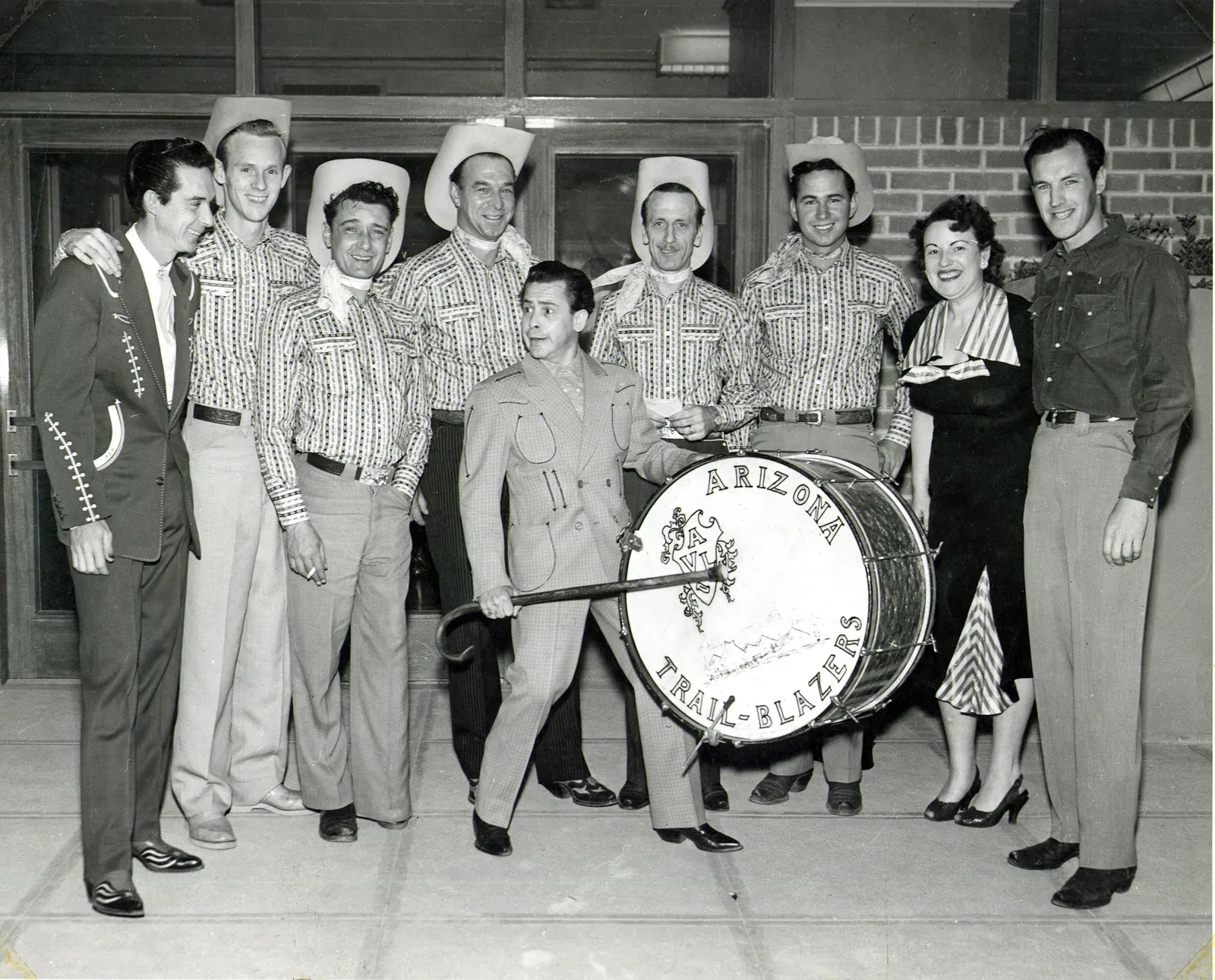
The same years brought a threat. Rock and roll took the young audience, and Elvis Presley, who had worked the Louisiana Hayride, was the visible proof. Country record sales fell, and Nashville responded by changing the sound.
Studio B and the Nashville sound, 1957-1967
RCA Studio B opened in 1957, built by Chet Atkins and Steve Sholes. Over about two decades it produced roughly 60 percent of the country chart hits of its time. Producers there and at Columbia’s studio under Owen Bradley replaced fiddles and steel with strings, a rhythm section that played softly and backing choirs, a style set out in more detail on the Nashville sound page.
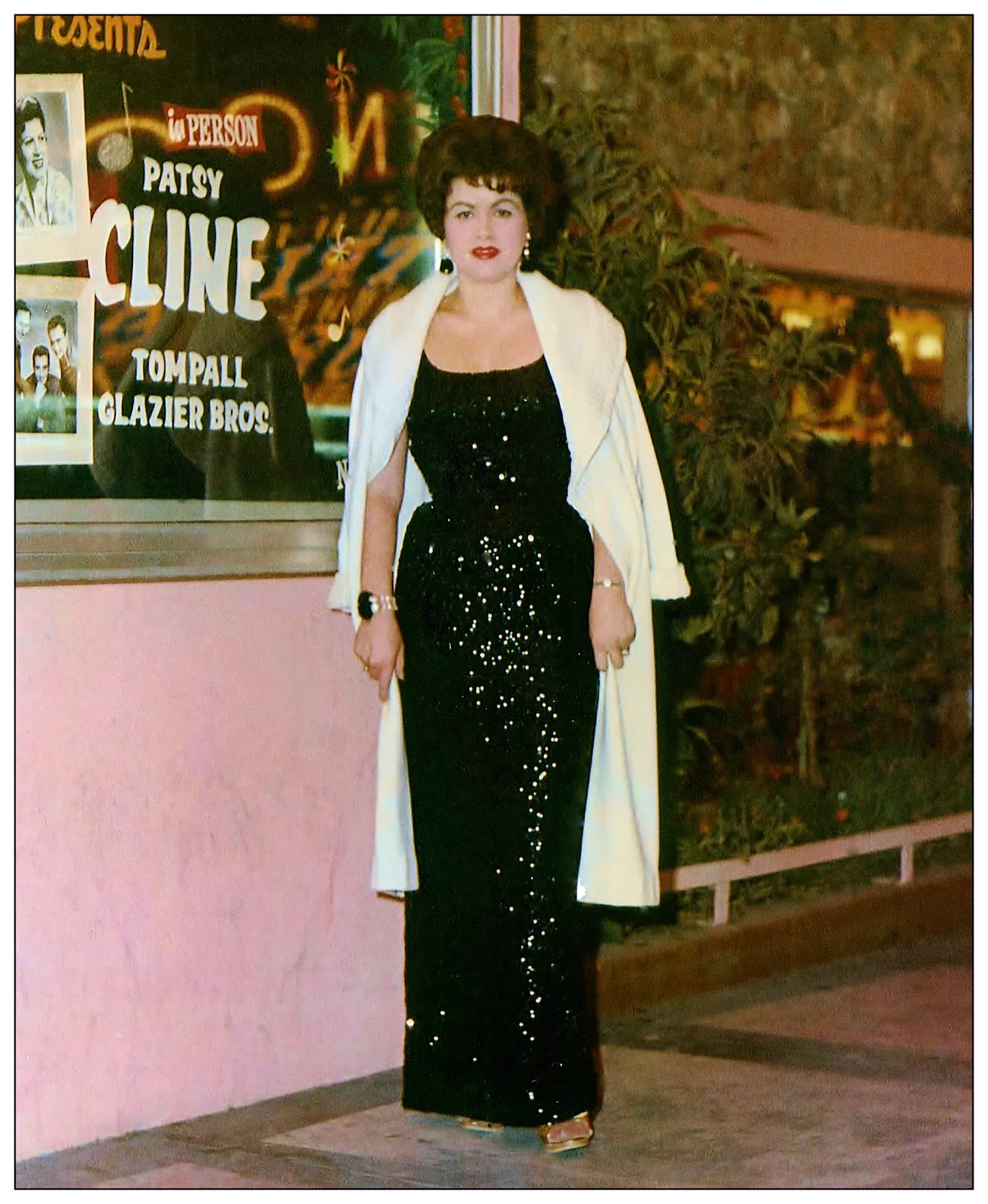
Patsy Cline’s “Walkin’ After Midnight” (1957) and “Crazy” (1961) showed how far a country voice could reach, and Jim Reeves’s hushed “He’ll Have to Go” (1959) crossed to the pop charts. Honky-tonk survived inside the system. George Jones, who recorded for Starday and then United Artists, made “She Thinks I Still Care” (1962), and the Country Music Association, founded in 1958 with 233 members, gave the business a trade body and a Hall of Fame to promote its own history. Cline died in a plane crash on 5 March 1963 at the age of 30.
Bakersfield and television, 1968-1975
On the West Coast a harder electric style grew up around Bakersfield, shaped by rock and roll and honky-tonk, with a heavy backbeat and a Telecaster-bright guitar. Buck Owens and Merle Haggard were its stars. Haggard’s “Mama Tried” (1968) was a fifth number one for him and his band, the Strangers, and it carried his time in prison into plain verse.
Loretta Lynn brought a woman’s working-class view to the same moment. “Coal Miner’s Daughter” (1970), about her childhood in Butcher Hollow, Kentucky, became her signature song. The Opry’s home changed in 1974, when it left the Ryman Auditorium, its base since 1943, for a purpose-built house at Opryland. Television had already widened the audience: Hee Haw, hosted by Buck Owens and Roy Clark, ran from 1969 to 1993.
Characteristics
The vocal comes first. Singers deliver a first-person story about love, drink, work or regret, usually in a mid-range voice with bent and slurred notes, and the band answers each line instead of competing with it. Songs are short, built on verse and chorus with an instrumental break, and the harmonic language rarely leaves a few major chords. Waltzes sit beside shuffles, and duets between a man and a woman were a standard format.
Instruments and production
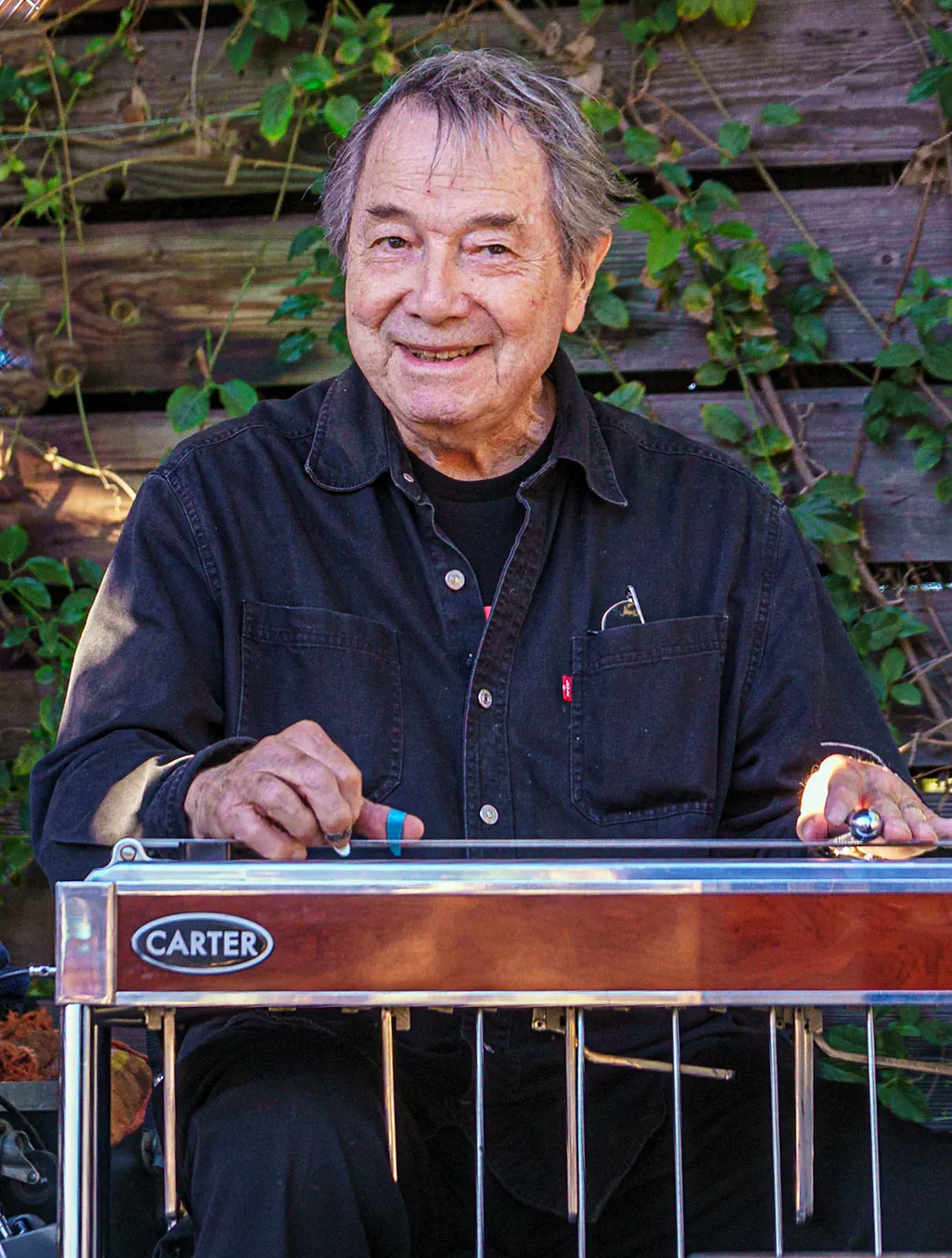
Early records were cut live in a single room and a staff producer decided the take. Fiddle and steel guitar traded fills; the upright bass kept the beat. Studio B and the Bradley studio added the Jordanaires and other vocal groups, string sections and smoother drums. The Bakersfield bands responded by going louder and thinner: electric guitars, a plain kit.
Notable recordings
“Walking the Floor Over You” holds the starting point: a restless song recorded in 1941 that set the pace of the honky-tonk band. “It Wasn’t God Who Made Honky Tonk Angels” is the record that opened the charts to women. “Crazy Arms” is the one musicians study for its rhythm. “Mama Tried” and “Coal Miner’s Daughter” close the period, one about a rebellious son and the other about a hard childhood, both written in the first person.
Culture
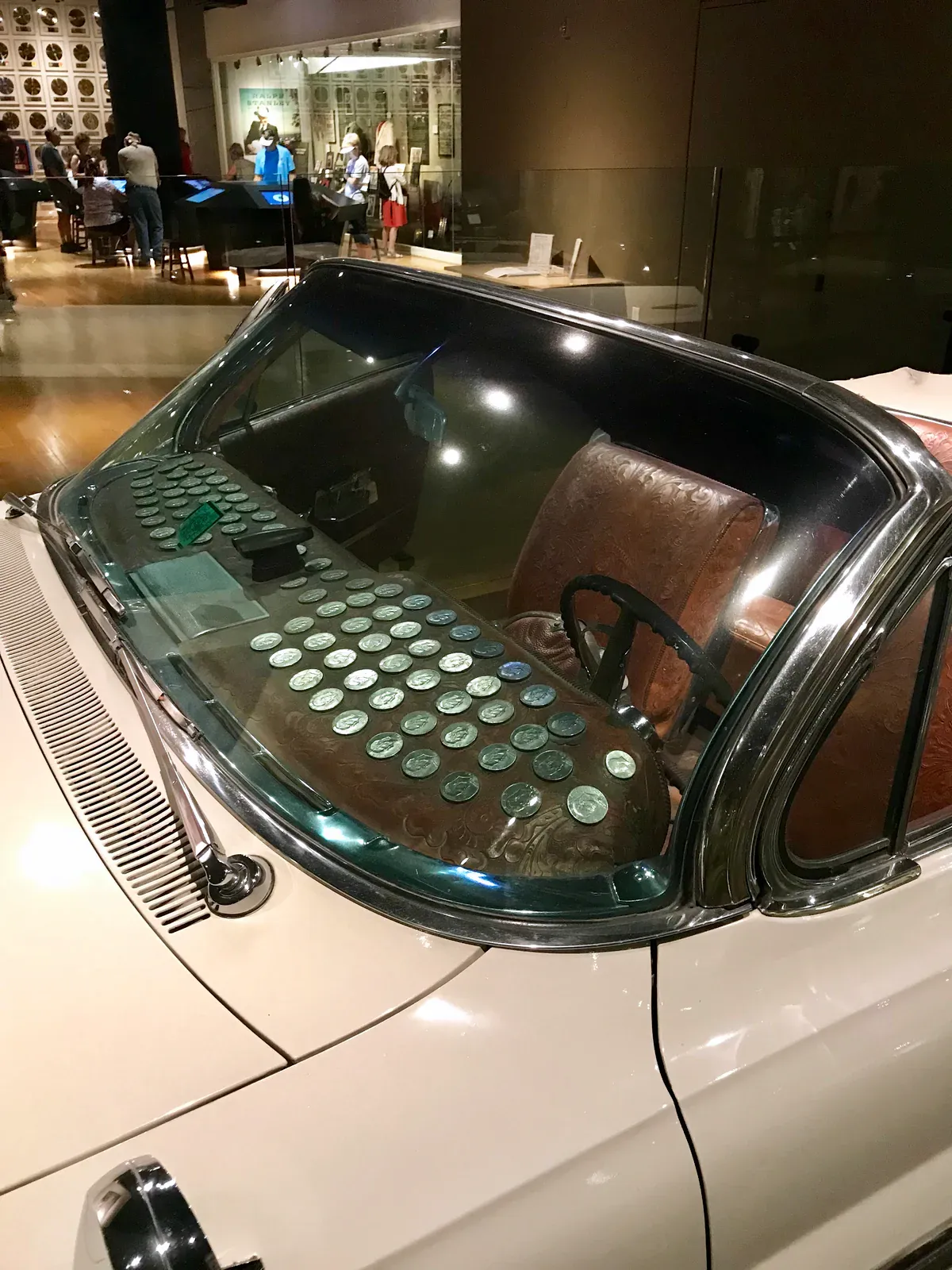
Dance came first. Honky-tonk dance floors were built for two-steps and waltzes, and the shuffle beat suited them. Stage clothes were embroidered Western suits and rhinestone shirts, many made by tailors such as Nudie Cohn. Webb Pierce’s 1962 Pontiac Bonneville convertible, customised by Cohn with silver dollars set into the dashboard, now sits in the Country Music Hall of Fame and Museum in Nashville. The Opry itself was a Saturday-night radio ritual long before it was a tourist stop.
Legacy
The sounds of the classic era came back in many ways. Honky-tonk outlived its first decades and returned as hard country. Bakersfield’s backbeat reached country rock, and the 1970s outlaw country movement defined itself as a reaction to Nashville polish while borrowing Haggard’s and Jones’s plain voice. Strings and crossover ambition continued in country pop. Radio stations and reissue labels still use “classic country” for records made before the mid-1970s, and the Hall of Fame’s first inductee, Hank Williams, remains the genre’s reference point.
Misconceptions
Hank Williams did not invent honky-tonk. Tubb’s electric-band records predate Williams’s first MGM sessions, and the word described bars and dance halls long before it described a sound. Williams’s contribution was songwriting and a voice that made the style personal.
Classic country was not a single sound. A Tubb honky-tonk record, a Patsy Cline pop-crossover ballad and a Bakersfield record by Haggard have little in common beyond the lyric stance, and the label was applied afterwards to cover them.
The Nashville sound did not simply replace honky-tonk. Price recorded “Crazy Arms” at Bradley Studios in Nashville, in the same city and scene that produced the smoother records, and Jones, Cline and Lynn made their best-known work through Nashville producers.
Frequently asked questions
What is classic country music?
Classic country is the label for American country music from the mid-1940s to the mid-1970s, including honky-tonk, the Nashville sound and the Bakersfield sound. It is an era term used by radio, reissue labels and critics, not a strict style.
Which years count as classic country?
The usual span runs from about 1945 to about 1975, from the postwar honky-tonk boom to the arrival of outlaw country. Different sources move the boundaries by a few years.
What is the difference between classic country and honky-tonk?
Honky-tonk is one style within the classic era: amplified, danceable and focused on bar-room life. Classic country also includes polished Nashville productions and the Bakersfield sound.
Who are the essential classic country artists?
Hank Williams, Kitty Wells, Patsy Cline, George Jones and Merle Haggard are the usual starting points, with Ernest Tubb, Lefty Frizzell, Ray Price and Loretta Lynn close behind.
Sound
Sound sheet
Anatomy of a track
| # | Part | Bars |
|---|---|---|
| 1 | Intro (steel or fiddle) | 4 |
| 2 | Verse | 16 |
| 3 | Chorus | 8 |
| 4 | Steel or fiddle break | 8 |
| 5 | Verse and chorus repeat | 24 |
Signature sounds
- Steel guitar or fiddle fills answering the vocal
- Walking upright bass under a shuffle beat
- First-person lyrics about love, drink and regret
- Close harmony or vocal-group backing on Nashville recordings
Drums and percussion
- Snare and brushes
Techniques
- Shuffle beat
- Steel and fiddle fills
- Vocal backing groups
- Slurred, bent phrasing
Keys and modes
Major keys such as A, D and F. Coal Miner's Daughter sits in A, Mama Tried in D and Crazy Arms in F.
Vocals
Plain first-person singing with a bent, sliding delivery, solo or in male-female duets.
Scenes
Where it happened
Where and when the sound lived: one bar per city on a shared timeline.
North America
Active scenes
Peak 2, 1948-1960
The Opry, the record labels and the studios gathered here, making it the business centre of the genre.
The Louisiana Hayride launched many honky-tonk singers before Nashville signed them.
Venues and places
Nashville, 1943 to today. Home of the Grand Ole Opry from 1943 to 1974.
Nashville, 1957 to today. RCA's Nashville studio, where much of the Nashville sound was recorded.
Shreveport, 1948 to today. KWKH radio show broadcast from the Municipal Memorial Auditorium.
Nashville, 1947 to today. Broadway record shop of Ernest Tubb, open at 417 Broadway until 2022.
Culture
Culture markers
- Two-step and waltz
Honky-tonk dance floors were the first audience for the shuffle beat.
Dance - Rhinestone Western suits
Embroidered stage suits by tailors such as Nudie Cohn marked Opry stars.
Fashion - Country and western
The trade label that replaced 'hillbilly' in the late 1940s.
Slang
Media
Key media
- 1925Grand Ole Opry
by WSM. The weekly Nashville radio broadcast that made country a national format.
Radio - 1948Louisiana Hayride
by KWKH. Shreveport broadcast that launched many honky-tonk and rockabilly careers.
Radio - 1969Hee Haw
by Buck Owens and Roy Clark (hosts). A TV variety show that ran until 1993 and made country a weekly television fixture.
Film
Glossary
Terms on this page
A twangy, electric style from California that pushed back against Nashville polish.
Both a dance bar and the amplified, drinking-and-heartbreak style played there.
A smooth studio style with strings and vocal choirs, developed from the late 1950s.
A steel guitar with foot pedals and knee levers that bend pitch.
A swung 4/4 rhythm with a walking bass, made standard by Ray Price.
The dance-floor staple of honky-tonk, set to a steady 4/4 shuffle.
Country family