Garba
Garba is the circle-dance music of Gujarat, sung during the nine nights of Navaratri to dhol and dholak, with a tempo that speeds up as the dance builds.
Gujarat, 1983
South Asian family
Born
1983
Gujarat
Subgenres
1
Documented branches
Links
2
Genres it drew on or shaped
Tempo
90-125 BPMLineage
Family tree
Timeline
Era by era
From the first sparks to today. Select a dot to read the story behind it.
- Live orchestra nights
1983 to 1997
- Pop albums and Bollywood
1998 to 2012
- Film songs, streaming and UNESCO
2013 to today
Eras
Moments
- 1 Live orchestra nights, 1983 to 1997
- 2 Pop albums and Bollywood, 1998 to 2012
- 3 Film songs, streaming and UNESCO, 2013 to today
1983
Live orchestra nights
Vadodara groups such as Atul Purohit's Rishabh, formed in 1983, and a cassette market of Gujarati garba albums grew up around the Navaratri festival grounds.
- 1983Rishabh group formed in VadodaraAtul Purohit forms the Rishabh group, the first of two bands that anchor Navaratri nights in Baroda.
- 1992Rutambara group formedAtul Purohit forms a second group, Rutambara, which tours Navaratri events.
- 1994Maa Ni ChundadiAtul Purohit's album of Gujarati garba songs, one of the earliest garba albums catalogued.
1998
Pop albums and Bollywood
Falguni Pathak's debut album in 1998 and Maine Payal Hai Chhankai in 1999 made garba a pan-Indian pop sound, while Hindi films such as Hum Dil De Chuke Sanam carried Dholi Taro Dhol Baaje to a national audience.
- 1998Falguni Pathak's debut albumYaad Piya Ki Aane Lagi opens the career of the singer later booked as Navaratri's top draw.
- 1999Maine Payal Hai ChhankaiFalguni Pathak's album and its title song, released in August 1999, become a standing request at garba nights.
- 1999Dholi Taro Dhol Baaje in Hum Dil De Chuke SanamSanjay Leela Bhansali's film puts a garba number on Hindi cinema screens nationwide.
- 2009Raas All-Stars foundedA national organisation for competitive collegiate Garba-Raas is formed in the United States.
2013
Film songs, streaming and UNESCO
Nagada Sang Dhol in 2013, Kinjal Dave's Char Bangdi Vali Gadi and Dholida in 2018 moved garba onto streaming platforms, and UNESCO inscribed Garba of Gujarat in December 2023.
- 2013Falguni Pathak's Navaratri fees reportedPress reports say she would earn about 2 crore rupees from that year's Navaratri shows.
- 2013Nagada Sang DholShreya Ghoshal and Osman Mir sing Bhansali's garba number for the film Goliyon Ki Raasleela Ram-Leela.
- 2017Char Bangdi Vali Gadi becomes a hitKinjal Dave's song brings her national fame.
- 2018Dholida from LoveyatriA film garba number sung by Udit Narayan, Neha Kakkar, Palak Muchhal and Raja Hasan, composed by Tanishk Bagchi.
- 2023UNESCO inscribes Garba of GujaratIn December 2023 the Intangible Cultural Heritage committee adds garba to its Representative List.
Listening path
Start listening
A short path from an easy way in to the deep end. Thumbnails come from YouTube; the player loads only when you press play.
- 01
Falguni Pathak, 1999
The 1999 pop-garba record that made Falguni Pathak the voice of Navaratri; start here for the sound of the era.
- 02
Kavita Krishnamurthy, Vinod Rathod, Karsan Sargathia (Hum Dil De Chuke Sanam), 1999
The film version of a traditional garba; listen for the dhol pulse and the song speeding up.
- 03
Shreya Ghoshal, Osman Mir, 2013
The 2013 film garba that took Gujarati folk singing to a mass audience.
- 04
Kinjal Dave, 2016
The streaming-era Gujarati hit that put a new singer at the head of Navaratri bills.
- 05
Udit Narayan, Neha Kakkar, Palak Muchhal, Raja Hasan, 2018
The dance-floor garba of the diaspora era, built on a steady dhol groove.
Facts
| Family | South Asian |
| Origin | Gujarat, India |
| Emerged | Traditional, performed during Navaratri |
| Status | Active |
| Tempo | 90 to 125 BPM |
| Subgenres | 1 |
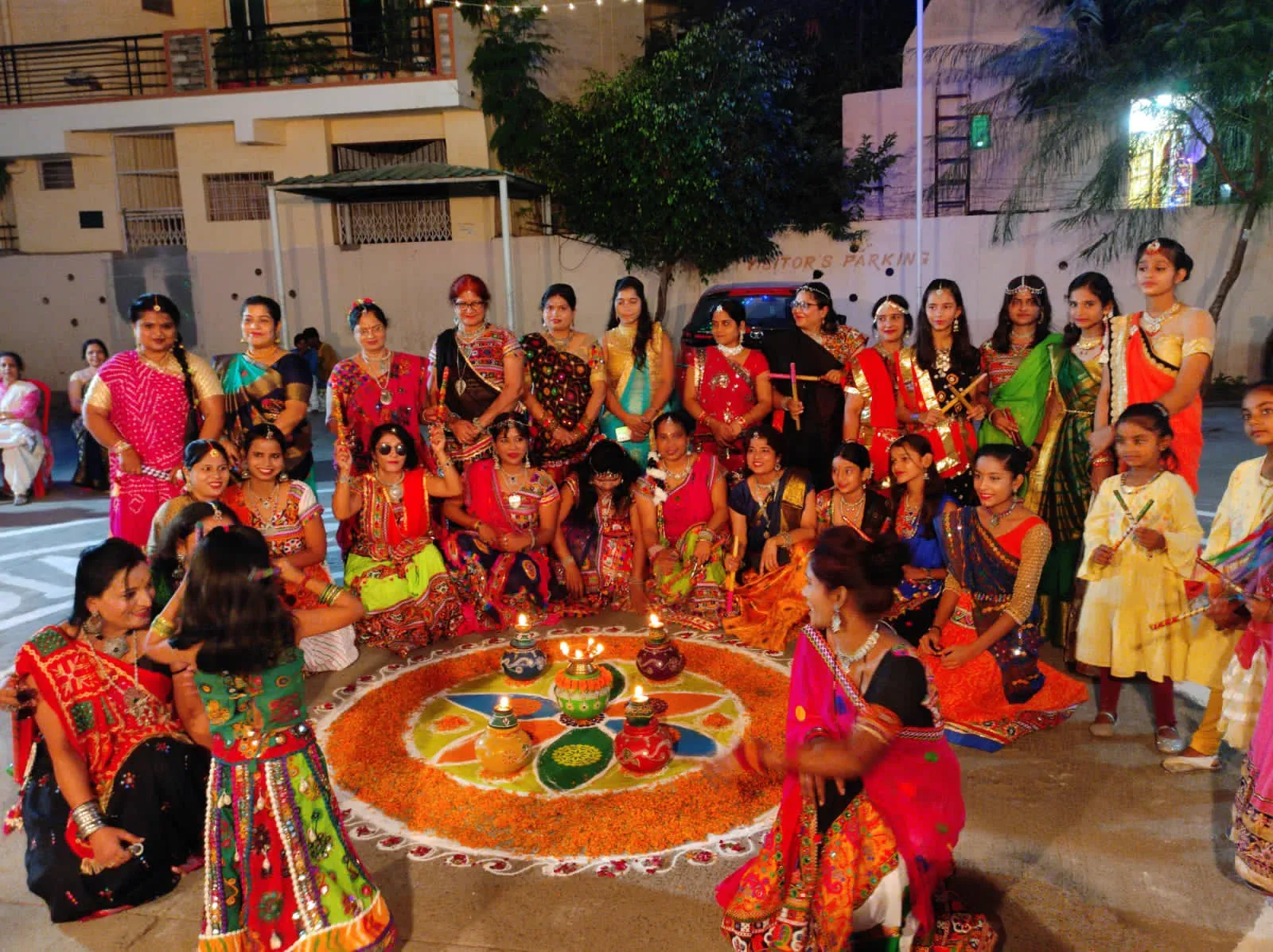
Garba is a Gujarati circle dance and the music that drives it, performed during the nine-night festival of Navaratri in honour of the goddess Durga.
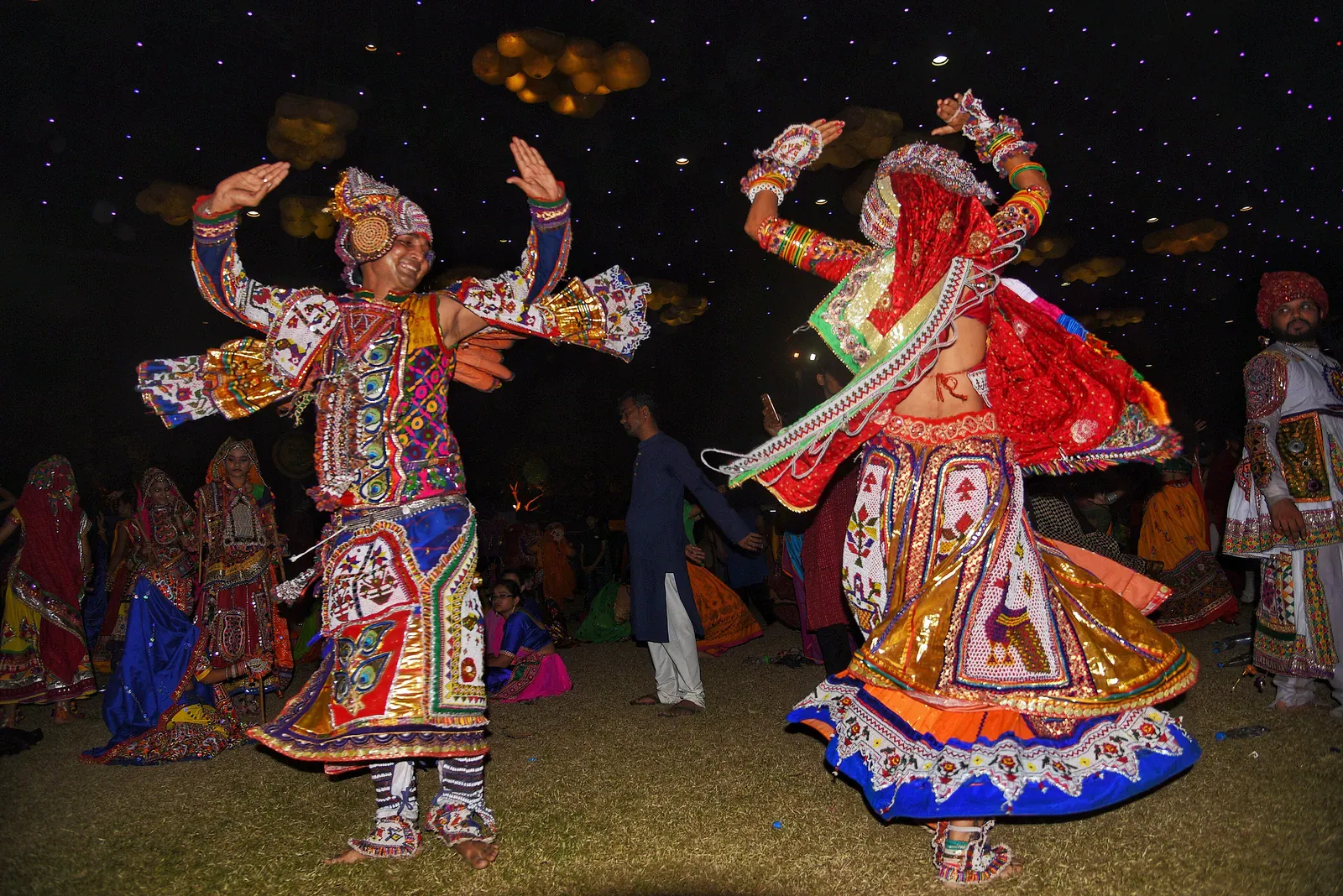
Dancers move counterclockwise around a lit clay pot or an image of the goddess while a singer leads a chorus over dhol and dholak drums, and the tempo rises as the night goes on. The word comes from the Sanskrit garbha, meaning womb, and the form belongs to the wider South Asian folk and devotional music family.
Origins
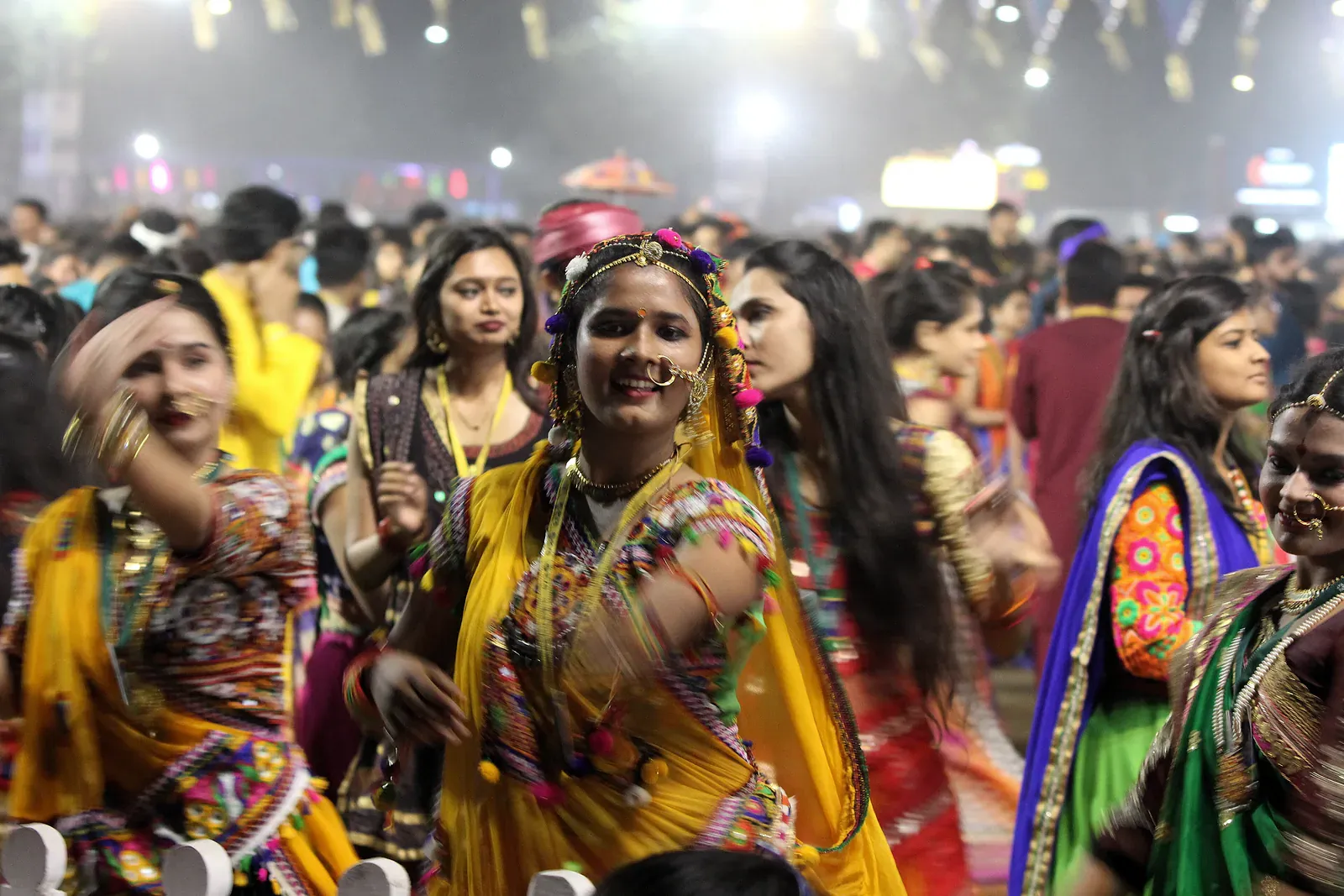
The oldest layer of garba is ritual. Gujarati households and village shrines mark Navaratri with a garbo, a perforated clay pot with a lamp burning inside. The pot is traditionally pierced with 27 holes, and the light that escapes through them is read as many souls coming from one source. Women and men form rings around it, sometimes in concentric circles that turn in opposite directions, and the rings can grow to hundreds or thousands of dancers.
The songs have their own literary line. Dayaram (1777-1853), a Gujarati devotional poet, wrote most of his work in the garbi, a lyric song form, and many of his garbi describe Krishna. Garba lyrics still follow those themes: praise of Amba or Jagdamba, retellings of Durga’s fight with the buffalo demon Mahishasura, and the longing of Radha for Krishna. Many songs name Gujarat’s own rivers, villages and temples, and the playful sanedo form carries social commentary.
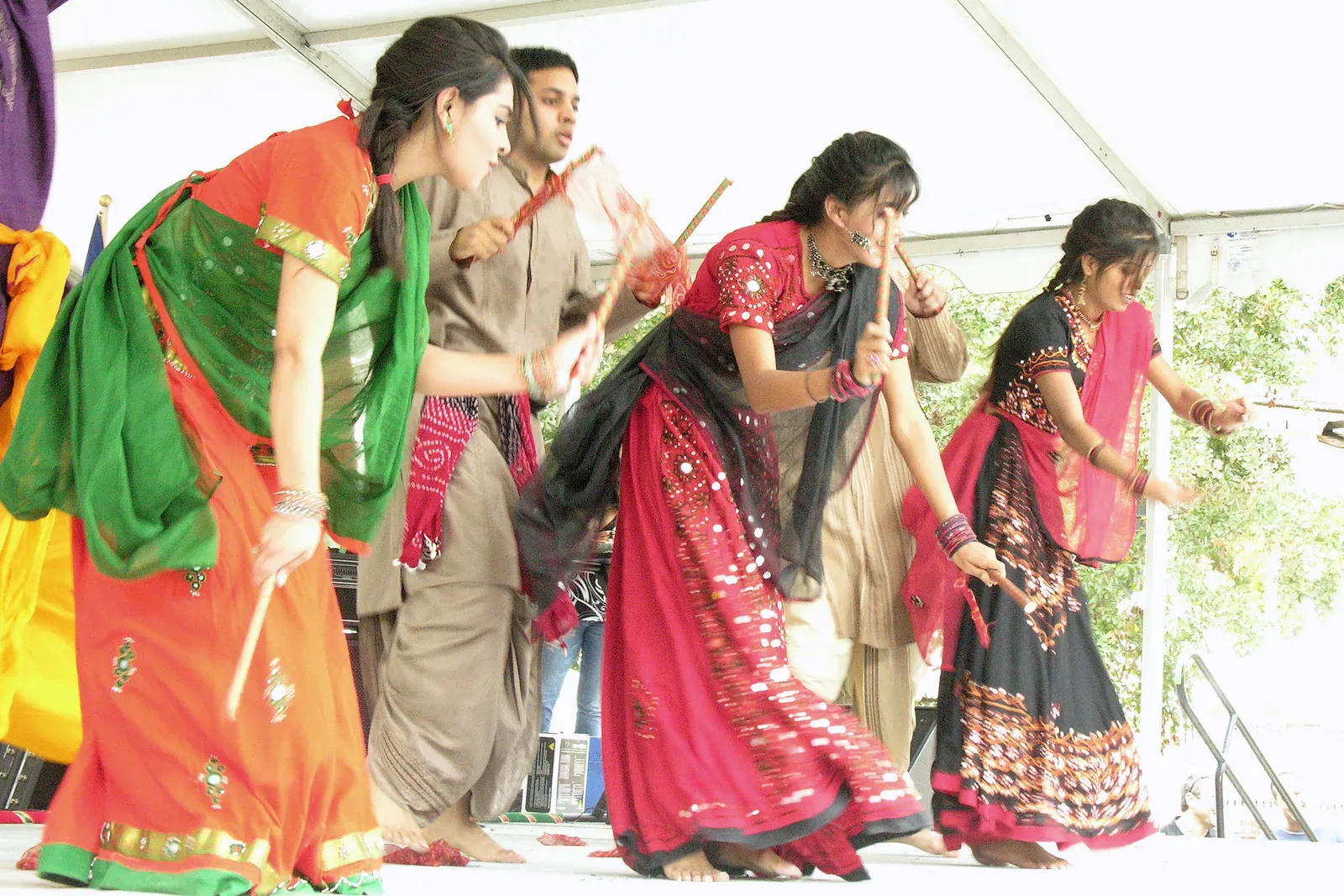
Traditional accompaniment is the dhol and dholak, cymbals and the shehnai, sometimes with a live orchestra playing to a seasonal raga or a devotional song. Its sibling dandiya raas was traditionally danced by men with a pair of sticks. The two are now played on the same nights and the modern garba owes much of its energy to the merger.
Characteristics
A garba night runs as a build-up. The music begins slowly, settles into a medium pulse and then speeds into a fast closing round, which the dancers answer with quicker steps and claps. Measured recordings of popular garba songs sit between about 90 and 125 beats per minute, with film and diaspora numbers at the upper end. A lead singer calls a line and the dancers answer, and the refrain repeats until the circle moves as one.
When the stick dance follows, the dandiya are struck in an eight-beat pattern called keherwa. Partners hit their own sticks, then their partner’s, turn, and move on to the next dancer, so the line never stops.
Costume and the festival ground
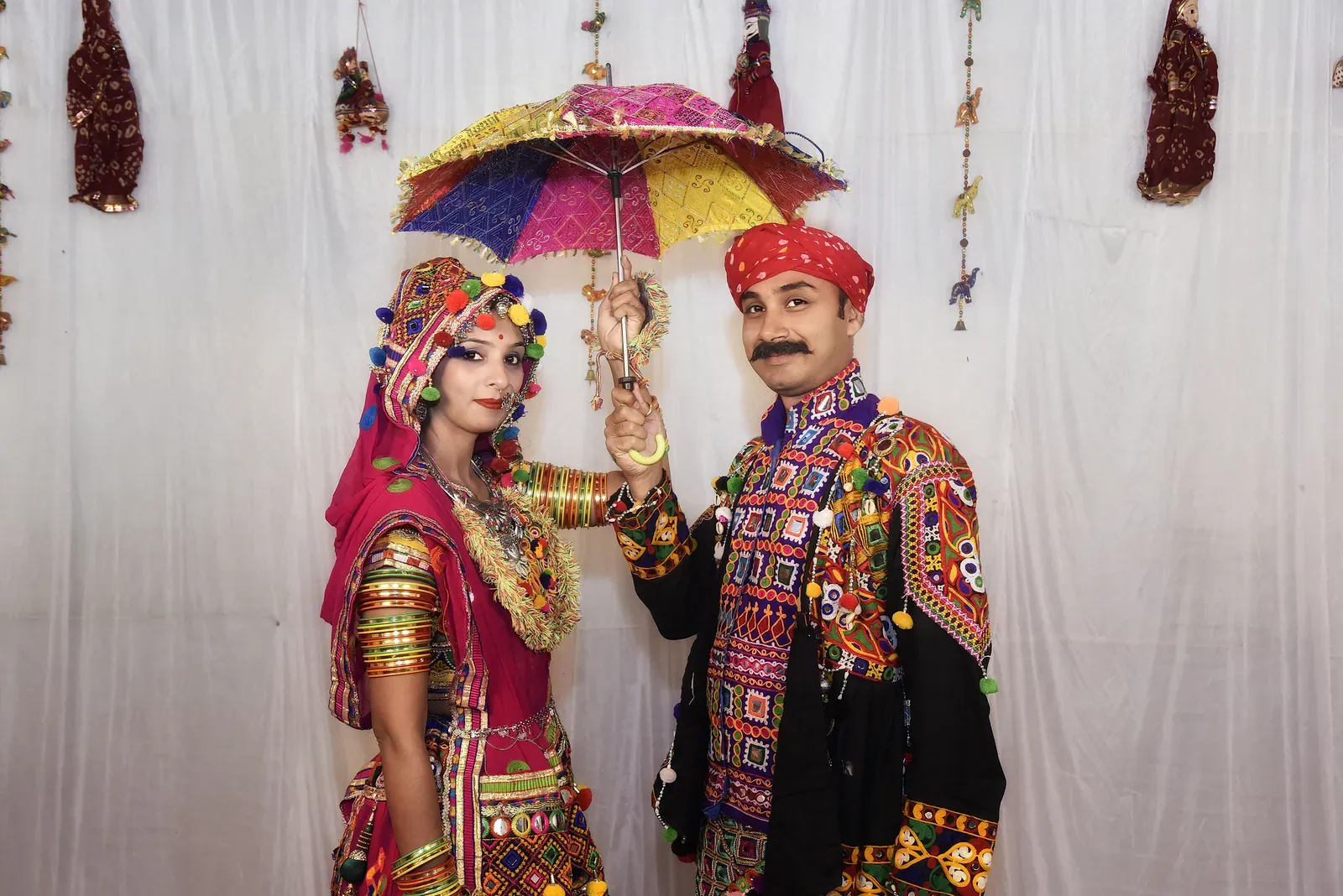
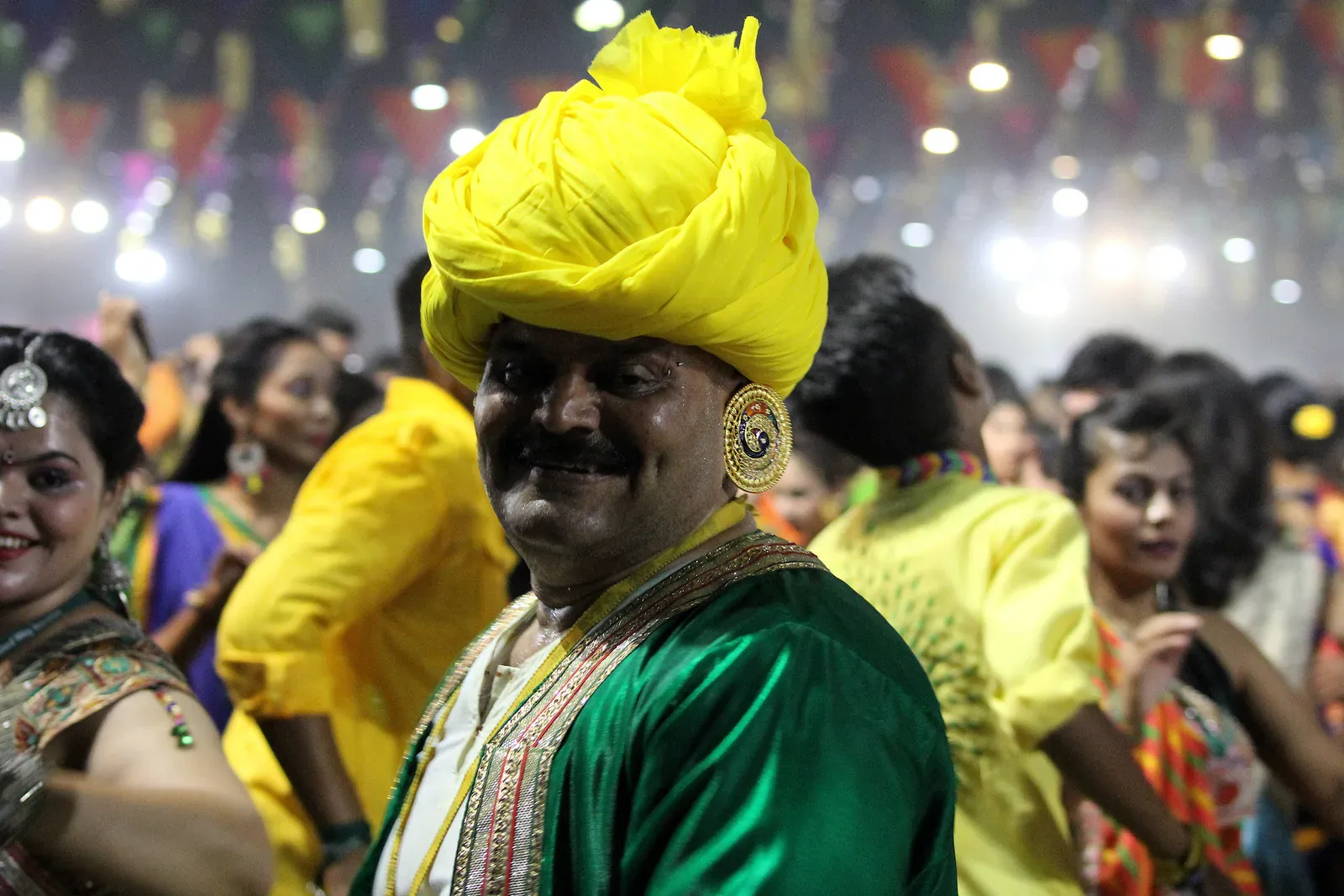
Dress is part of the form. Women traditionally wear the chaniya choli, a long flared skirt and short blouse with mirrorwork and embroidery, with an odhni or chunari veil. Men wore the kediyu, a pleated garment reaching the waist, with wide chorno trousers and a turban called the phento, and today commonly wear a kurta with a churidar. A night of garba ends with the group eating together.
Live bands and cassettes, 1983-1997
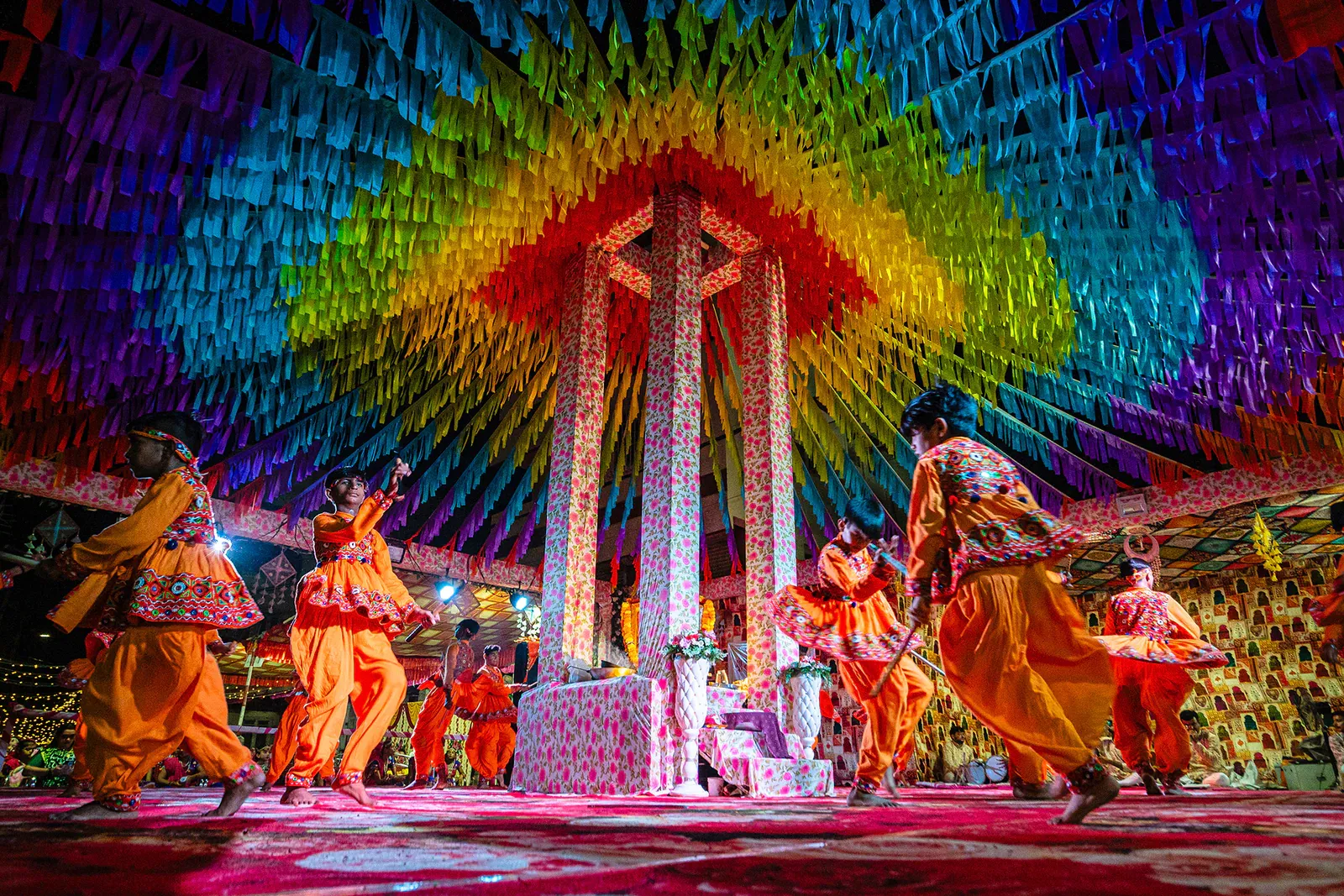
In Vadodara, then known as Baroda, the singer Atul Purohit started out performing on the street and formed the Rishabh group in 1983 and a second band, Rutambara, in 1992. Groups like these, playing on festival grounds with large orchestras, became the centre of organised Navaratri nights. Purohit recorded garba albums through the 1990s, including Maa Ni Chundadi in 1994 and Saybo - Non Stop Garba in 1998, and the non-stop garba album, a continuous medley meant for a night of dancing, became a standard format.
Pop and film, 1998-2012
Falguni Pathak, a singer based in Mumbai, released her debut album Yaad Piya Ki Aane Lagi in 1998 and followed it with Maine Payal Hai Chhankai in August 1999. Her pop songs on Gujarati folk forms turned her into the best-known voice of Navaratri; in 2013 it was reported that she would earn about 2 crore rupees from that year’s festival nights.
Hindi cinema took the same route. The 1999 film Hum Dil De Chuke Sanam, directed by Sanjay Leela Bhansali, put Dholi Taro Dhol Baaje, a garba, in front of a national audience, and Bhansali returned to the form for the 2013 film Goliyon Ki Raasleela Ram-Leela with Nagada Sang Dhol, sung by Shreya Ghoshal and the Gujarati folk singer Osman Mir.
Streaming and heritage, 2013 onward
The streaming era brought a new generation of singers. Kinjal Dave released Char Bangdi Vali Gadi in 2016 and became a national name after its success in 2017, and Aishwarya Majmudar records non-stop garba albums such as Rangtaali in 2017. Dholida, a garba number from the 2018 film Loveyatri sung by Udit Narayan, Neha Kakkar, Palak Muchhal and Raja Hasan, is an example of the steady dhol groove now typical of film garba.
In December 2023, at its 18th session in Kasane, Botswana, UNESCO inscribed Garba of Gujarat on the Representative List of the Intangible Cultural Heritage of Humanity.
Mainstream success
Garba left Gujarat with its people. Large cities such as Mumbai, Delhi, Hyderabad and Bengaluru hold public garba and dandiya nights, and Gujarati communities in the United Kingdom run their own. In the United States, first-generation Indian-American college students developed a competitive form called Garba-Raas in the early 2000s, and a national organisation, Raas All-Stars, was set up in 2009. By 2023 it had almost 50 active collegiate teams out of 66 recorded. In cities and abroad garba is often mixed with Bollywood music, a route that links it to filmi song.
Culture
Everyone is invited into the circle, and people of all ages and genders dance together. Fasting during the nine days, visits to the temples of family goddesses, and late-night feasting form the frame around the dancing. The genre sits alongside other devotional and folk forms of the region, such as bhajan and kirtan, and it shares dhol-led rhythm with Punjabi bhangra, though the circle, the pot and the goddess are specific to Navaratri.
Misconceptions
Garba and dandiya raas are often treated as the same dance. They are siblings: garba is danced in rings with hand claps around a pot or an image, and dandiya is danced in lines with sticks. They are now played on the same evenings, and modern garba has absorbed many dandiya elements.
Garba is not limited to Gujarati people. It began as a Gujarati tradition but has spread to non-Gujarati Hindus in India and abroad, including Indian Americans of Telugu, Tamil, Malayali and Marathi descent.
Garba is not only film music. Film numbers such as Dholi Taro Dhol Baaje and Nagada Sang Dhol reach the widest audience, but the devotional and folk songs sung to the goddess and to Krishna remain the core of the tradition.
Frequently asked questions
What is garba music?
Garba music is the Gujarati folk and devotional music that accompanies the garba circle dance during Navaratri. It is led by dhol and dholak drums with a lead singer and chorus, and it speeds up as the dance goes on.
When is garba played?
Garba is performed during Navaratri, the nine nights in the month of Ashvin in September or October, with nights of dancing and, usually at the end of each night, dandiya raas.
What instruments are used in garba?
Traditional garba uses the dhol, dholak, cymbals and shehnai. In cities and the diaspora, garba is often mixed with Bollywood music.
What is the tempo of garba songs?
Popular garba recordings measure from about 90 to 125 beats per minute, and the live performance starts slower and speeds up through the night.
Who are the best-known garba singers?
Falguni Pathak, Atul Purohit, Kinjal Dave and Aishwarya Majmudar are among the best-known voices, and Osman Mir is known for Nagada Sang Dhol.
Sound
Sound sheet
Anatomy of a track
| # | Part |
|---|---|
| 1 | Slow opening |
| 2 | Medium tempo verse and refrain |
| 3 | Fast closing round |
Signature sounds
- Dhol and dholak pulse
- Tempo that speeds up as the dance goes on
- Call-and-response singing
- Circle dance around a lit pot or image
Drums and percussion
- Dhol
- Dholak
Techniques
- Accelerating tempo
- Call-and-response singing
- Eight-beat keherwa cycle
- Mixing with film music
Keys and modes
Seasonal raga. Navaratri garba is sung with live orchestra to seasonal raga or devotional songs.
Vocals
Lead singer with a dancing chorus, singing of the goddess Amba and Durga, of Radha and Krishna, and of Gujarat's places.
Scenes
Where it happened
Where and when the sound lived: one bar per city on a shared timeline.
Asia
Active scenes
Peak 2, 1998-2025
Home of Atul Purohit's groups and large organised Navaratri grounds.
Base of Falguni Pathak and of the film and album industry that spread garba nationwide.
Culture
Culture markers
- Garbo clay pot
A perforated pot with a lamp inside, traditionally with 27 holes, stands at the centre of the circle.
Ritual - Counterclockwise circle
Dancers move in rings, sometimes concentric rings in opposite directions, and speed up as the music does.
Dance - Chaniya choli and kediyu
Women wear mirror-worked chaniya choli with an odhni veil, and men a kediyu with chorno or kurta.
Fashion - Dandiya raas
Stick dance in two facing lines on an eight-beat keherwa, played after garba on many nights.
Dance
Media
Key media
- 1999Hum Dil De Chuke Sanam
by Sanjay Leela Bhansali. Hindi film whose Dholi Taro Dhol Baaje scene popularised garba nationwide.
Film - 2013Goliyon Ki Raasleela Ram-Leela
by Sanjay Leela Bhansali. Bhansali film that features the garba number Nagada Sang Dhol.
Film
Glossary
Terms on this page
Mirror-worked skirt and blouse worn by women at garba, paired with an odhni veil.
Decorated stick played in pairs in the raas dance that closes a Navaratri night.
Gujarati lyric song form, developed in literary form by the poet Dayaram.
Perforated clay pot holding a lamp, placed at the centre of the circle as a symbol of the goddess.
Eight-beat rhythm cycle used for striking the dandiya sticks.
Nine-night autumn festival of the goddess Durga during which garba is danced.
South Asian family