Gasba music
Gasba music is a reed-flute tradition of Algeria, Tunisia and Morocco, central to Chaoui song and a root of raï, now heard over drum machines.
Algeria, Tunisia, Morocco, around 1910
Middle Eastern and North African family
Born
around 1910
Algeria, Tunisia, Morocco
Links
4
Genres it drew on or shaped
Tempo
90-160 BPMLineage
Family tree
Timeline
Era by era
From the first sparks to today. Select a dot to read the story behind it.
- Troupes and shellac
1910 to 1939
- Bedoui modernised
1940 to 1961
- Independence and cassettes
1962 to 1991
- Studio gasba
1992 to today
Eras
Moments
- 1 Troupes and shellac, 1910 to 1939
- 2 Bedoui modernised, 1940 to 1961
- 3 Independence and cassettes, 1962 to 1991
- 4 Studio gasba, 1992 to today
around 1910
Troupes and shellac
Travelling troupes built around a gasba player carry Aurès song across the Maghreb, and Aïssa Djermouni's 78 rpm discs from about 1930 take Chaoui poetry onto record.
- 1910Djermouni joins a gasba troupeAïssa Djermouni tours Algeria and the Maghreb with a troupe led by his cousin, the gasba player Hadj Mohamed Ben Zine.
- 1920Raï takes shape in OranGasba and guellal rhythms from Bedouin tradition become building blocks of the new urban sound.
- 1930Djermouni's first discsAïssa Djermouni records on 78 rpm in Tunis and later reaches wider Maghreb audiences on disc.
1940
Bedoui modernised
In and around Oran, gasba and guellal bedoui song is reworked by Cheikh Hamada and Blaoui Houari, laying the ground for raï.
- 1940Blaoui Houari modernises western bedouiThe Oran singer and composer updates Western Algerian Bedouin music, groundwork for modern raï.
1962
Independence and cassettes
Raï is pushed to the margins after independence while gasba survives on cassette, and singers such as Hocine Chaoui add drum machines and synthesizers.
- 1962Independence and pressure on raïPostcolonial authorities try to suppress raï, which keeps growing; gasba stays closer to rural and sacred settings.
- 1980Synthesizers and drum machines arriveA generation of cheb and chaba singers adds electronics to raï, while cassette culture keeps gasba circulating.
1992
Studio gasba
Oran producers such as Ahlem Édition record gasba singers on CD, cassette and DVD, and a younger sound of Auto-Tune, synthesizers and drum machines reaches foreign labels.
- 1992Ahlem Édition founded in OranAbdelkader Haci's production house builds a large catalogue of raï, Bedouin folk and gasba.
- 2021Ouechesma reissued on vinylOutre National reissues Hocine Chaoui's drum-machine Chaoui album for an international audience.
- 202621st-century gasba on a UK labelHive Mind Records issues a ten-track compilation of current Algerian gasba made with Ahlem Édition.
Listening path
Start listening
A short path from an easy way in to the deep end. Thumbnails come from YouTube; the player loads only when you press play.
- 01
Cheikha Djenia, 1983
Oran gasba vocals of a singer known for traditional raï; listen for the flute answering the voice.
- 02
Houcine Chaoui, 2022
Recent Chaoui track from Hocine Chaoui, a singer who put drum machines under the Aurès flute.
- 03
Houcine Chaoui, 2024
The Chaoui gasba in its current studio form, with the flute carrying the melody over programmed rhythm.
Facts
| Family | Middle Eastern and North African |
| Origin | Algeria, Tunisia, Morocco |
| Status | Active |
| Tempo | 90 to 160 BPM |
| Meter | 4/4 |
Gasba, also called tamja, is a North African musical style built on the oblique reed flute of the same name, and gasba means “reed”. It is played in eastern Algeria among the Chaoui of the Aurès, around Oran in the northwest, in the eastern Rif and Oriental regions of Morocco, and in Tunisia.
Its rasping flute line, carried over hand drums or, in recent studio work, drum machines, forms one of the building blocks that fed into raï and still runs alongside it as a rural sound.
Origins
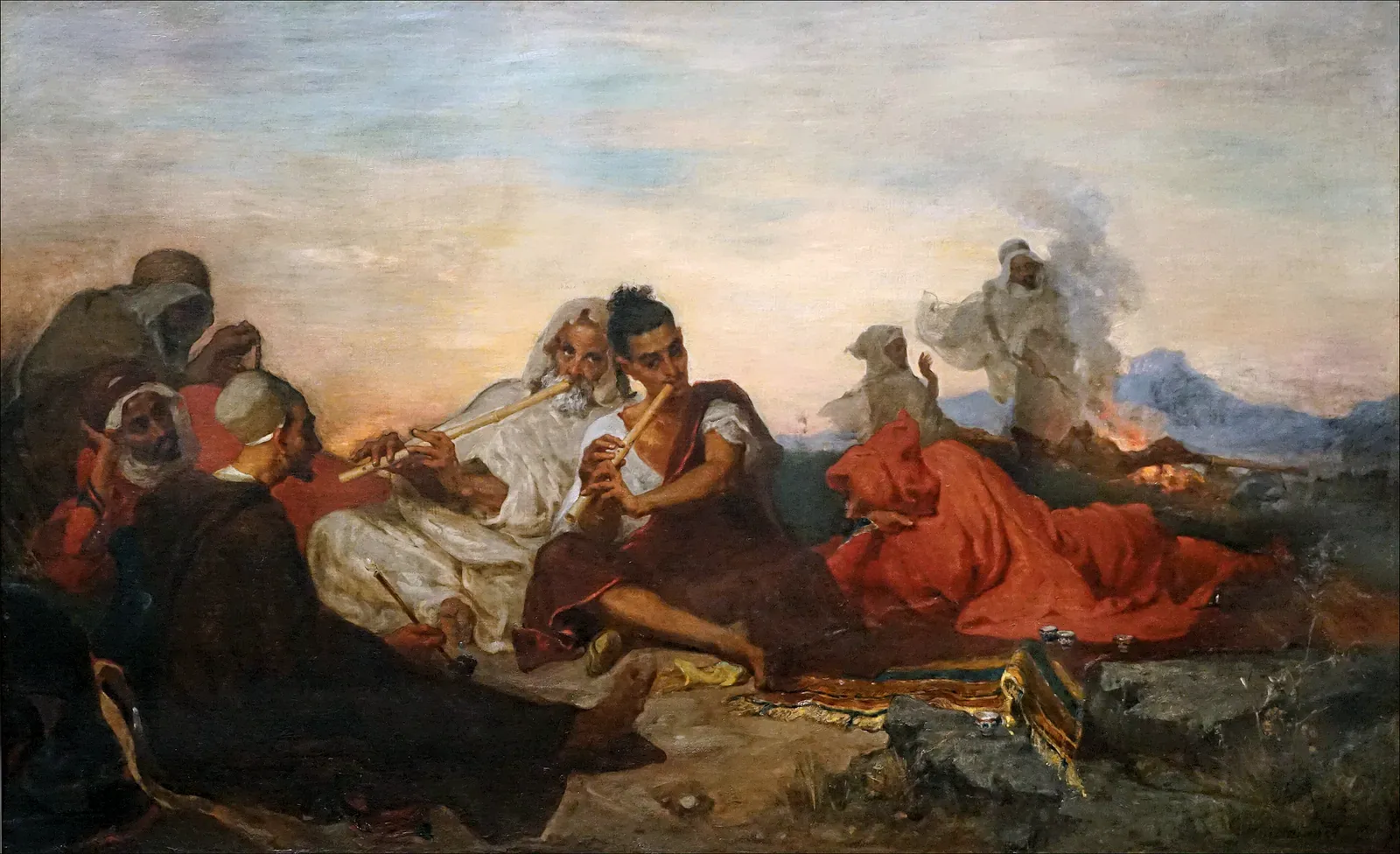
The reed flute is among the oldest wind instruments, known since high antiquity and related to the Persian nay, and the gasba is its Maghrebi folk form. The word is Arabic for cane or reed, used in Bedouin speech, and the same instrument carries Amazigh names such as tamja, tighanimt and ajewwaq. In music it has long served two roles: it backs a solo singer in pastoral and Zenete traditions, and it plays in religious ceremonies.
The tradition spreads over several regions that do not share one canon. Eastern Algeria has the Chaoui flute ensembles and the Zibans; the Oranie has Oran bedoui, and its Saharan cousin aiyai; the High Plateaus and Staifi style use it too. In Morocco it is played in the eastern Rif and the Oriental region, where the longer Rifian tamja sounds lower than the shorter Chaoui flute, and in Tunisia near the Aurès. Because these scenes grew apart, gasba is better described as a family of local styles sharing an instrument than a single genre with one founder.
Troupes and shellac, 1910-1939
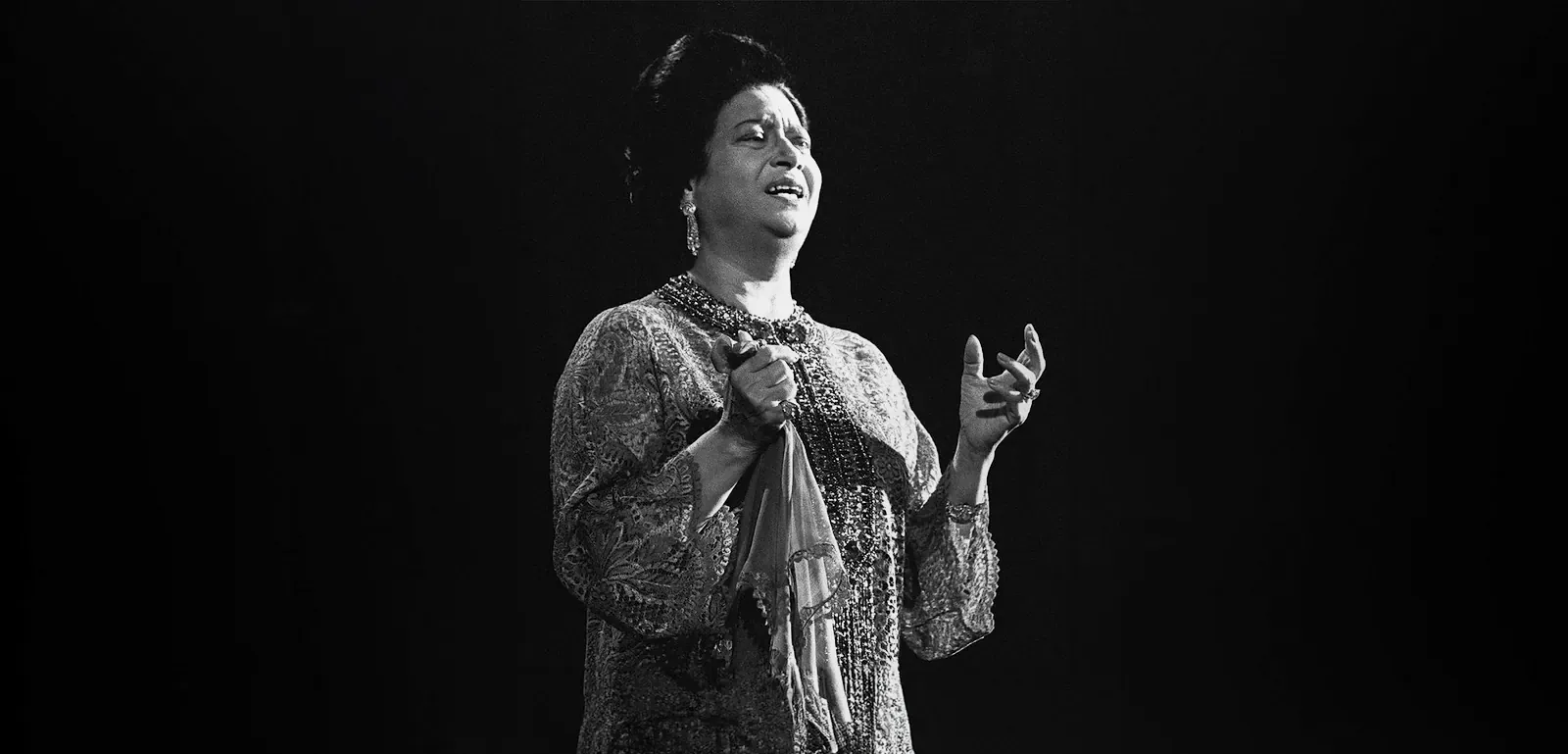
Chaoui song comes from the Aurès, a mountain region of eastern Algeria, and its early singers were poets. The best-documented of them is Aïssa Djermouni, born in 1886, who around 1910 joined a travelling troupe led by his cousin Hadj Mohamed Ben Zine, a gasba player, and toured Algeria and the Maghreb. From about 1930 he recorded 78 rpm discs, with sessions in Tunis, and carried Chaoui poetry to audiences far from the Aurès. He died in 1946 and is regarded as a founding figure of modern Chaoui song.
Oran and the road to raï, 1940-1961
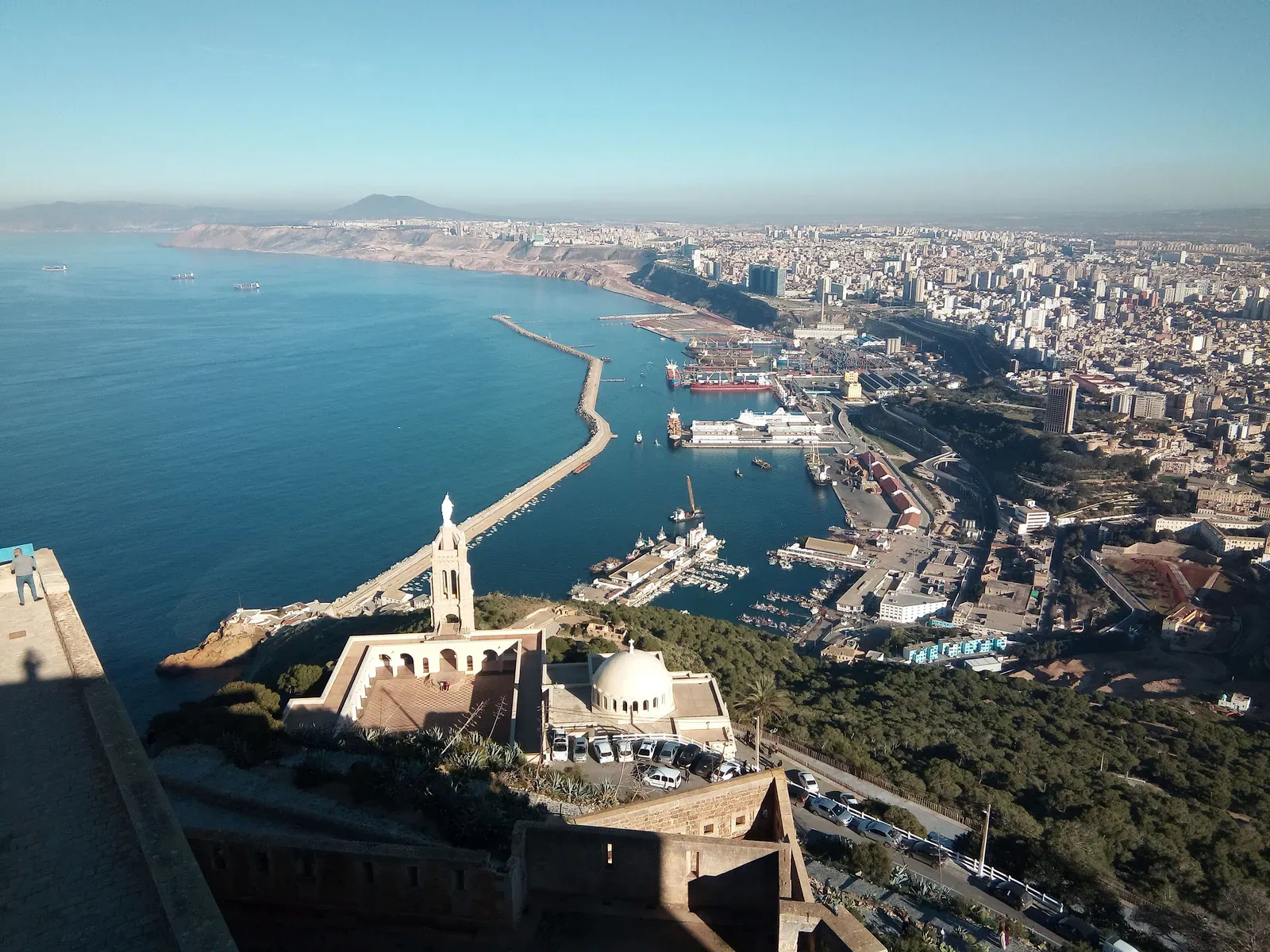
In western Algeria, gasba and guellal rhythms belong to bedoui song, the Bedouin-derived music of the Oran region. Raï took shape in Oran in the 1920s, when local traditions met sounds arriving through the port, and Cheikh Hamada of Mostaganem sang poetry in this style and reworked gasba music. In the 1940s the Oran singer and composer Blaoui Houari modernised western Algerian Bedouin music, which laid the groundwork for raï as it later developed. Gasba and raï therefore share ancestors, and their paths separated more through setting than through sound.
Independence and cassettes, 1962-1991
After independence in 1962 the Algerian authorities tried to suppress raï, which went on to flourish. In the 1980s a generation of cheb and chaba singers brought synthesizers and drum machines to raï. Gasba stayed closer to its rural roots, circulating on cassette and keeping its flute. Hocine Chaoui, a Chaoui singer and poet, took part in the modernisation of the Aurès style on a late-1980s cassette, Ouechesma, issued in France on Oriental Music: it set drum machines, synthesizers, a phased gasba and reverbed vocals against Chaoui poetry. Cheikha Djenia, whose real name was Fatna Mébarki, sang traditional raï and Oran bedoui over gasba, and a September 1983 release carries her name.
Studio gasba, 1992 to the present
In 1992 Abdelkader Haci founded Ahlem Édition in Oran, a production house and shop that built a large catalogue of raï, Bedouin folk and gasba on cassette, CD and DVD. While most labels in the 1990s concentrated on pop raï, Ahlem kept recording gasba players such as Oueld Melal and singers such as Cheikha Djenia and Cheikh Mohamed El Beydi, and the sound moved toward Auto-Tune, synthesizers and drum machines under the flute. Outre National reissued Ouechesma on vinyl in 2021, and in 2026 the British label Hive Mind Records issued a ten-track compilation of current Algerian gasba drawn from the Ahlem catalogue. Younger Chaoui singers also blend the flute into electronic music, a style increasingly called modern Chaoui.
Characteristics
Gasba is led by one solo voice or by the flute itself, over steady percussion. Lyrics run to love, hardship and devotion, and love songs are often veiled in devotional language. The playing style has a raw edge: the flute is blown obliquely with no mouthpiece, producing a hoarse tone close to the limit of vibration, and the instrument takes years to master. Where the singer leads, the flute answers and supports; in instrumental passages it carries the melody. Modern studio tracks keep these features and add programmed rhythm, funky basslines and Auto-Tuned vocals.
Instruments and production
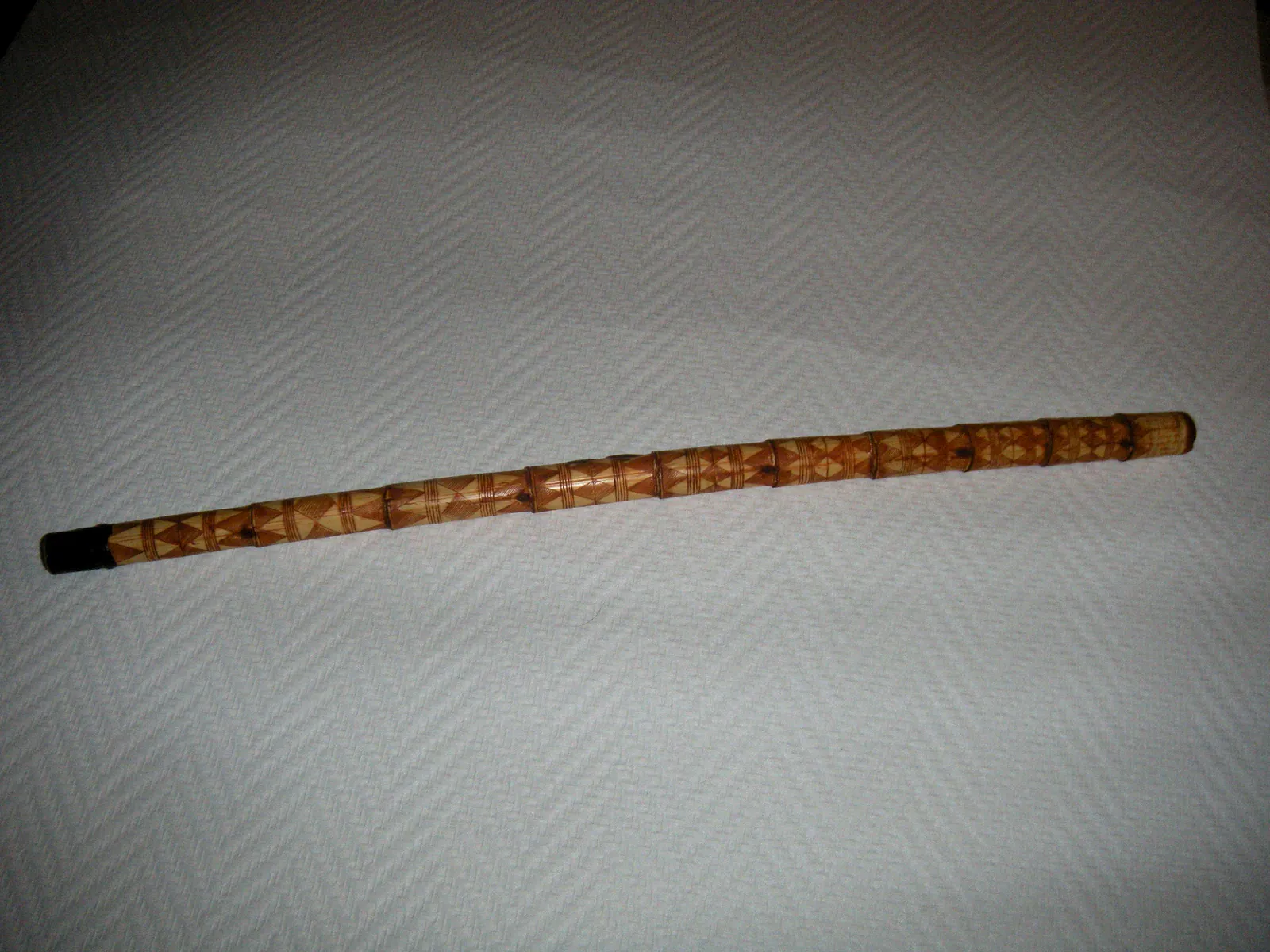
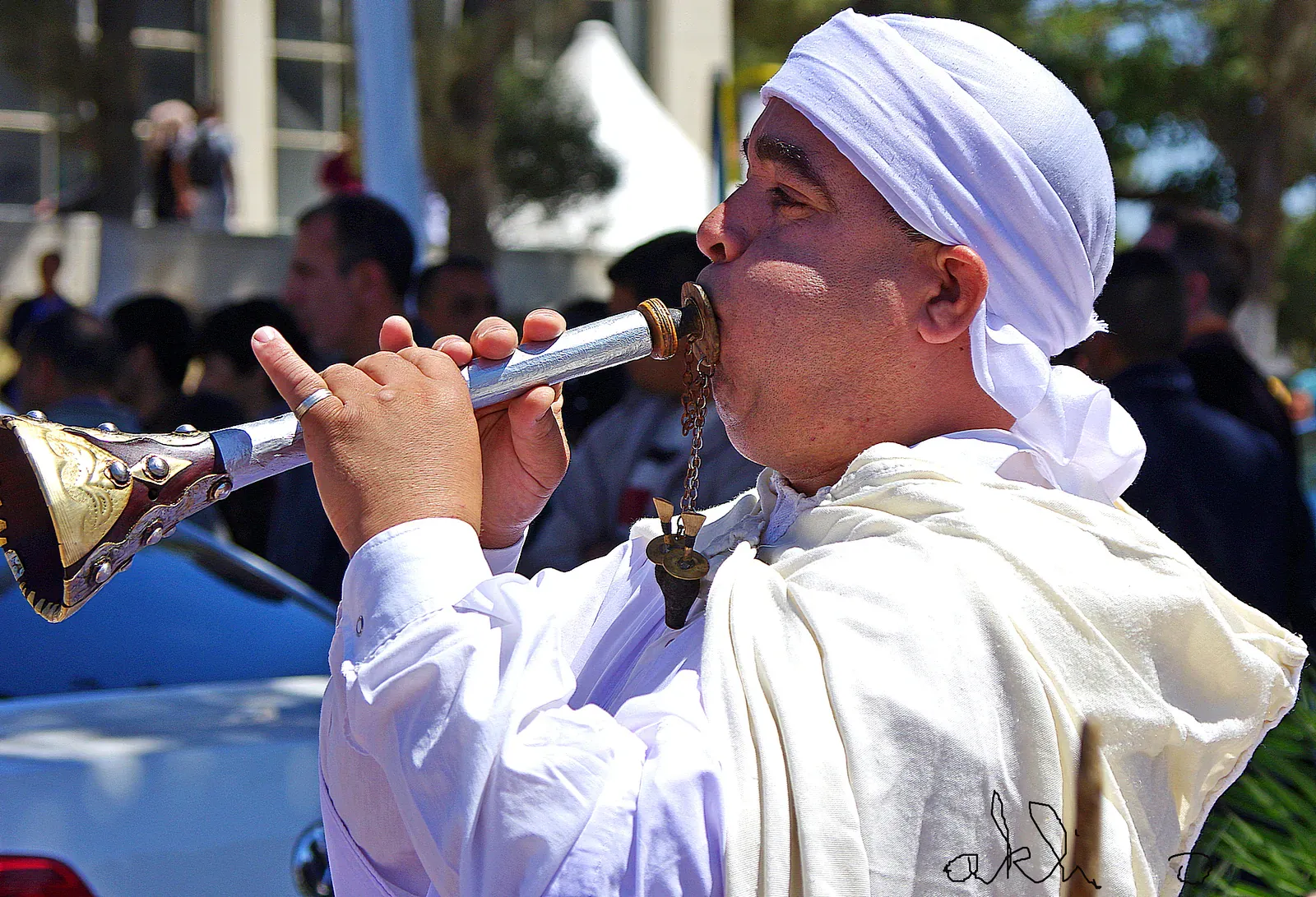
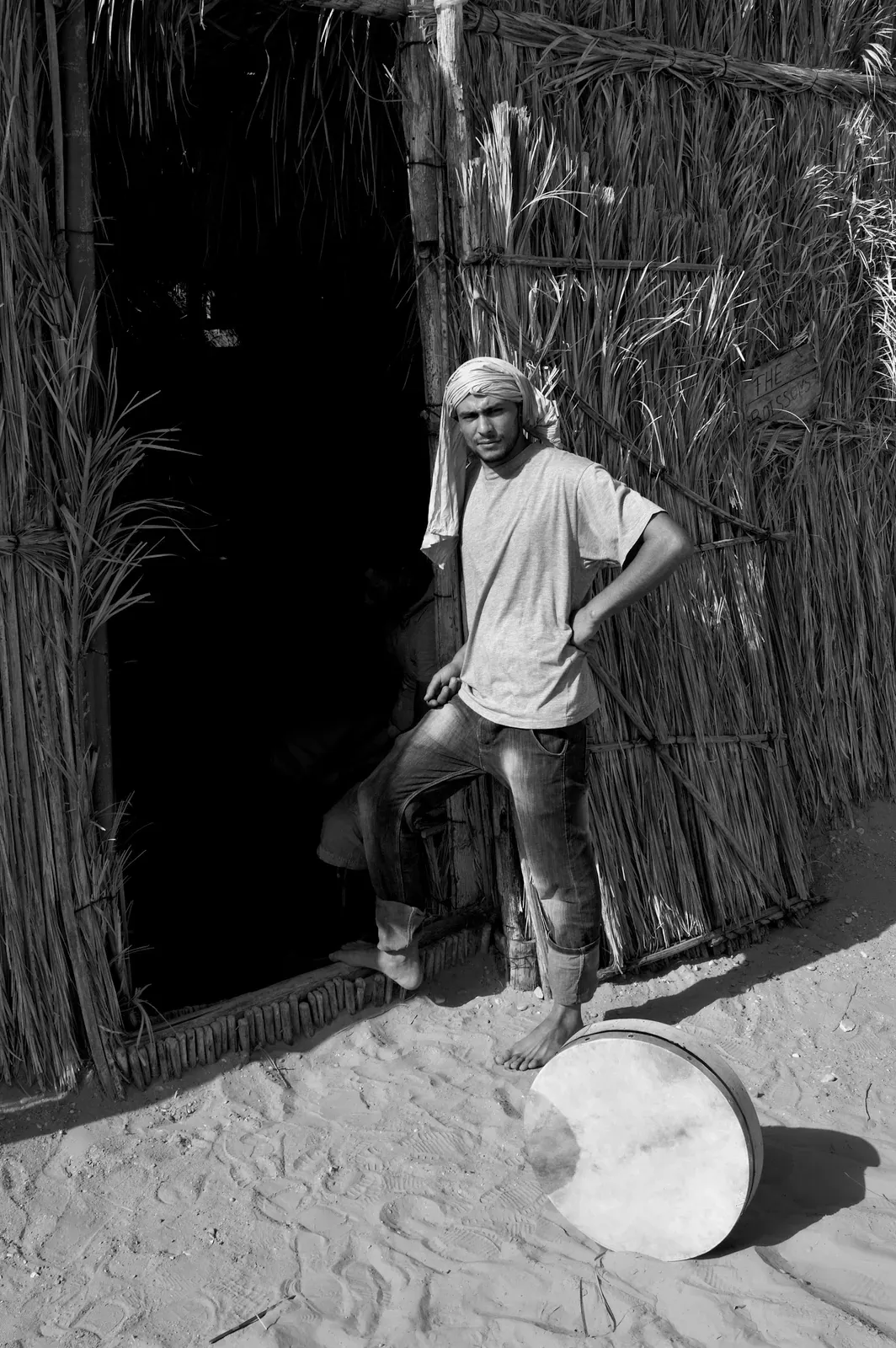
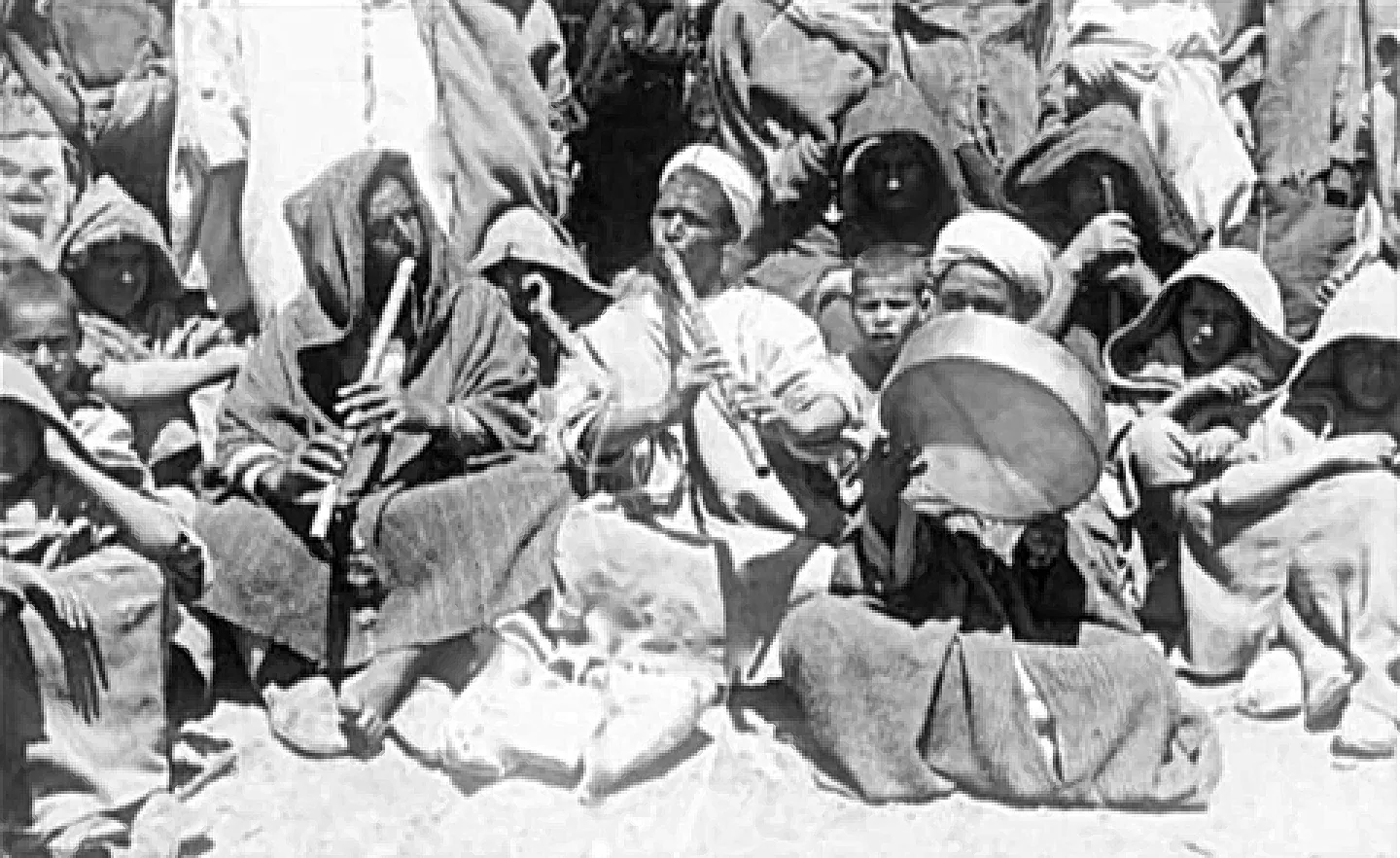
The flute is cut from a strong, supple stalk of reed, with the Aurès and the Rif known for the quality of their reeds. It usually has nine finger holes, matching the number of rings on its surface, though a flute may have fewer and seven-hole instruments are popular. A Chaoui group of three or four players usually pairs the gasba with the zorna, a reed wind instrument, and the bendir, a large frame drum. Oran bedoui adds the guellal drum. In modern productions the hand drums are replaced by drum machines.
Culture
In Morocco the gasba belongs to the Jilala, the oldest Moroccan Sufi brotherhood, named after Abdul Qadir Gilani. Its small groups, usually fewer than five, play gasba and bendir in the annual lila, a night-long trance and healing ritual that sits beside those of the Gnawa, the Hmadsha and the Aissawa. Its repertoire includes invocations of saints and songs of praise and exile, and its sound is melancholic, with paired flutes that drift in and out of phase. In Algeria gasba is part of daily life: it is heard in homes, taxis and cafes and at weddings, and some singers still wear traditional dress on album covers.
Legacy
Gasba links ritual music, rural song and urban pop across three countries. Singers such as Houria Aïchi, born in Batna, have carried the Chaoui repertoire to international stages, with songs she learned in childhood and sings to the bendir. Her albums include Chants de l’Aurès in 1990 and Chants courtois de l’Aurès in 2023. Gasba also underlies parts of the wider Bedouin music tradition of the Maghreb, and the region is surveyed on the Middle Eastern and North African family page.
Misconceptions
Gasba is sometimes said to be just another name for raï. The two overlap, since gasba and guellal rhythms fed into raï, but gasba remained a rural style, while raï grew as urban music out of cabarets and nightlife and left its traditional instruments behind for saxophones, guitars and synthesizers.
Gasba is also often called an Algerian music. The flute and its repertoire are widely used in Algeria, but the same instrument is played in the eastern Rif and Oriental regions of Morocco and in Tunisia near the Aurès, where it takes different local forms.
A third idea holds that it is an unchanging ancient folk art. The flute is old, but the music has changed on cassette, on CD and with drum machines and Auto-Tune, and a 2026 compilation presents it as a living form still evolving.
Frequently asked questions
What is gasba music?
Gasba music is a North African style named for the gasba, an oblique reed flute with usually nine finger holes. It is played in Algeria, Morocco and Tunisia and led by a singer or by the flute itself.
Is gasba the same as raï?
No. Gasba and guellal rhythms from Oran bedoui were among the roots of raï, but gasba stayed a rural sound while raï became an urban pop music, although the two share artists and producers in Oran.
Where does the gasba come from?
The gasba is a Maghrebi folk form of the old reed flute. It is common in Chaoui music in the Aurès, in Oran bedoui, in the eastern Rif of Morocco, and in Tunisia near the Aurès.
Who are the best-known gasba and Chaoui singers?
Aïssa Djermouni is regarded as a founding figure of modern Chaoui song. Hocine Chaoui, Houria Aïchi and Cheikha Djenia are among the later voices linked to the flute.
Sound
Sound sheet
Signature sounds
- Raspy oblique reed flute carrying or answering the vocal line
- Rolling hand-drum or drum-machine rhythm under a solo singer
- Reverb-heavy vocals and phased flute in modern Chaoui
- Love lyrics veiled in devotional language
Drums and percussion
- Bendir
- Drum machine
Techniques
- Oblique free-embouchure blowing
- Breath rasp
- Paired flutes
- Supporting the singer
Tuning
Set by each handmade reed, not by a fixed scale: the longer Rifian tamja sounds lower than the shorter Aurès gasba.
Vocals
Solo cheikh or cheikha lead, singing poetry of love, hardship and devotion.
Scenes
Where it happened
Where and when the sound lived: one bar per city on a shared timeline.
Africa
Active scenes
Peak 2, 1930-2025
Port city where gasba and guellal bedoui fed into raï and where the Ahlem Édition catalogue is made.
Recording city for Djermouni's early 78 rpm discs.
Culture
Culture markers
- Lila of the Jilala
Moroccan Sufi trance and healing night repeated every year, played on gasba and bendir by groups of fewer than five.
Ritual - Weddings, cafes and taxis
Gasba is still heard at weddings, in homes, cafes and taxis across western and eastern Algeria.
Ritual - Traditional dress on covers
Some gasba singers still appear in traditional costume on album covers.
Fashion
Media
Key media
- 2026My Heart Is Dust Before Him: 21st Century Gasba from Algeria
by Various. Hive Mind Records vinyl of ten current Algerian gasba tracks sourced from Ahlem Édition.
Compilation
Glossary
Terms on this page
Bedouin-derived song of western Algeria, sung over gasba and guellal and a root of raï.
Music and people of the Aurès in eastern Algeria, a main home of the gasba.
Honorific for older male and female singers, as opposed to the younger cheb and chaba.
Arabic word for reed, and the name of the oblique reed flute and of the music built on it.
Night-long trance and healing ritual of the Moroccan Jilala brotherhood, played on gasba and bendir.
Amazigh name for the gasba in the Rif of Morocco, where the flute is longer and lower-pitched.
Middle Eastern and North African family