Gnawa music
Gnawa music is Morocco's ritual trance music, descended from enslaved West Africans and led by a maâlem on the guembri lute and iron qraqab castanets.
Essaouira, around 1100
Middle Eastern and North African family
Born
around 1100
Essaouira
Subgenres
1
Documented branches
Links
6
Genres it drew on or shaped
Tempo
100-135 BPMLineage
Family tree
Timeline
Era by era
From the first sparks to today. Select a dot to read the story behind it.
- Trans-Saharan origins
1100 to 1700
- Ritual brotherhoods
1701 to 1966
- Chaabi and jazz encounters
1967 to 1986
- The world stage
1987 to 2009
- Heritage and new fusions
2010 to today
Eras
Moments
- 1 Trans-Saharan origins, 1100 to 1700
- 2 Ritual brotherhoods, 1701 to 1966
- 3 Chaabi and jazz encounters, 1967 to 1986
- 4 The world stage, 1987 to 2009
- 5 Heritage and new fusions, 2010 to today
around 1100
Trans-Saharan origins
Enslaved West Africans from the Sahel and beyond are brought to Morocco between the 11th and 17th centuries, and their songs, lutes and ritual memory become the root of gnawa.
- 1100Trans-Saharan trade brings West Africans to MoroccoBetween the 11th and 17th centuries enslaved people from regions between Senegal and Chad and from Mali to southern Nigeria arrive, forming the Gnawa community.
- 1600Gnawa music takes shapeIn the 16th and 17th centuries Hausa, Fulani and Bambara traditions fuse with Moroccan Islamic culture into ritual songs and rhythms.
around 1701
Ritual brotherhoods
Gnawa groups keep the lila ceremony alive under a maâlem and a moqadma, preserving West African words and the memory of slavery inside an Islamic frame.
1967
Chaabi and jazz encounters
Randy Weston settles in Tangier, Nass El Ghiwane brings a gnawa trance feel to Moroccan protest song, and labels such as Fikriphone start recording lila sessions.
- 1967Randy Weston settles in TangierThe American pianist ends an African tour in Morocco and stays until 1972, running the African Rhythms Club.
- 1970Nass El Ghiwane form in CasablancaThe group fuses gnawa trance aesthetics and Sufi poetry with protest lyrics and helps define Moroccan chaabi.
- 1975Fikriphone records lila sessionsIn the 1970s the Moroccan label Fikriphone releases live lila ceremonies and studio sessions by Mahmoud Guinia.
- 1981Trances documents Nass El GhiwaneAhmed El Maanouni's film brings the trance aesthetic of the group to international audiences; it was restored in 2007.
1987
The world stage
Hassan Hakmoun reaches New York, Mahmoud Guinia tours abroad, and the Essaouira festival from 1998 turns gnawa into a meeting ground with jazz, rock and reggae.
- 1987Hassan Hakmoun debuts in New YorkHe plays Lincoln Center, then settles in the city and enters its rock, jazz and fusion scenes.
- 1991Gift of the GnawaHakmoun and percussionist Adam Rudolph record the album with trumpeter Don Cherry, an early international gnawa release.
- 1992Mahmoud Guinia's ensemble first travels abroadThe family ensemble plays Montreal's 350th anniversary festival and records The Black Mluks for Radio Canada.
- 1994The Trance of Seven ColorsCo-produced by Bill Laswell and Eric Rosenzveig, the album pairs Guinia's ensemble with saxophonist Pharoah Sanders.
- 1998Essaouira gnawa festival beginsNeila Tazi founds the Gnaoua World Music Festival, where maâlems share stages with jazz, pop and rock musicians.
- 2006Festival audience passes 200,000Free concerts in Essaouira grow from about 20,000 listeners to over 200,000 in eight years.
2010
Heritage and new fusions
A new generation of maâlems plays with jazz and pop artists worldwide, and UNESCO inscribes gnawa on its intangible heritage list in 2019.
- 2015Mahmoud Guinia diesThe Essaouira maâlem dies on 2 August, after handing his guembri to his son Houssam at his last festival concert in May.
- 2018Hamid El Kasri on global stagesHe opens the Essaouira festival with Snarky Puppy and plays the BBC Proms with Jacob Collier.
- 2019UNESCO inscribes gnawaOn 12 December the intangible heritage committee in Bogota adds gnawa to its list.
Listening path
Start listening
A short path from an easy way in to the deep end. Thumbnails come from YouTube; the player loads only when you press play.
- 01
Hassan Hakmoun and Adam Rudolph, 1991
Gift of the Gnawa opener; listen for the sintir ostinato under the call and response.
- 02
Hassan Hakmoun and Adam Rudolph, 1991
A song invoking seven men, with the drone string and percussive thumb patterns up front.
- 03
Maalem Mahmoud Gania, 2017
A late-career maâlem in the Essaouira style, long repeated phrases built for trance.
- 04
Jacob Collier with Hamid El Kasri, 2018
Gnawa guembri and chant set against orchestra and jazz harmony, a recent crossover.
Facts
| Family | Middle Eastern and North African |
| Origin | Essaouira, Morocco |
| Emerged | 11th-17th century |
| Status | Active |
| Tempo | 100 to 135 BPM |
| Meter | 12/8 |
| Subgenres | 1 |
Gnawa music, also spelled gnaoua, is a body of Moroccan religious songs and rhythms that took shape in the 16th and 17th centuries among the descendants of enslaved West Africans.
It centres on the lila, an all-night ceremony of prayer, trance and healing led by a maâlem, or master musician, who plays the guembri bass lute while a chorus answers on iron castanets called qraqab. It belongs to the Middle Eastern and North African family by place, yet its roots, instruments and rhythmic feel point south of the Sahara.
Origins
The Gnawa community descends from people brought across the Sahara in the trans-Saharan slave trade between the 11th and 17th centuries, from a broad region reaching from Senegal to Chad and from Mali to southern Nigeria. Hausa, Fulani and Bambara traditions fused with Moroccan Islamic culture, and the result kept West African words and phrases in its songs. The community is closely tied in tradition to the royal Black Guard of Morocco.
The songs hold the memory of enslavement: they mention abduction, suffering and privation. Yet members describe themselves first as Moroccan and Muslim, and they do not seek a return to a homeland. Where most Moroccan brotherhoods trace their authority to a saint and open ceremonies by reciting that saint’s writings in Arabic, the Gnawa, whose ancestors neither read nor spoke Arabic as a first language, open the lila by recalling their origins, the experience of enslaved ancestors and, finally, redemption.
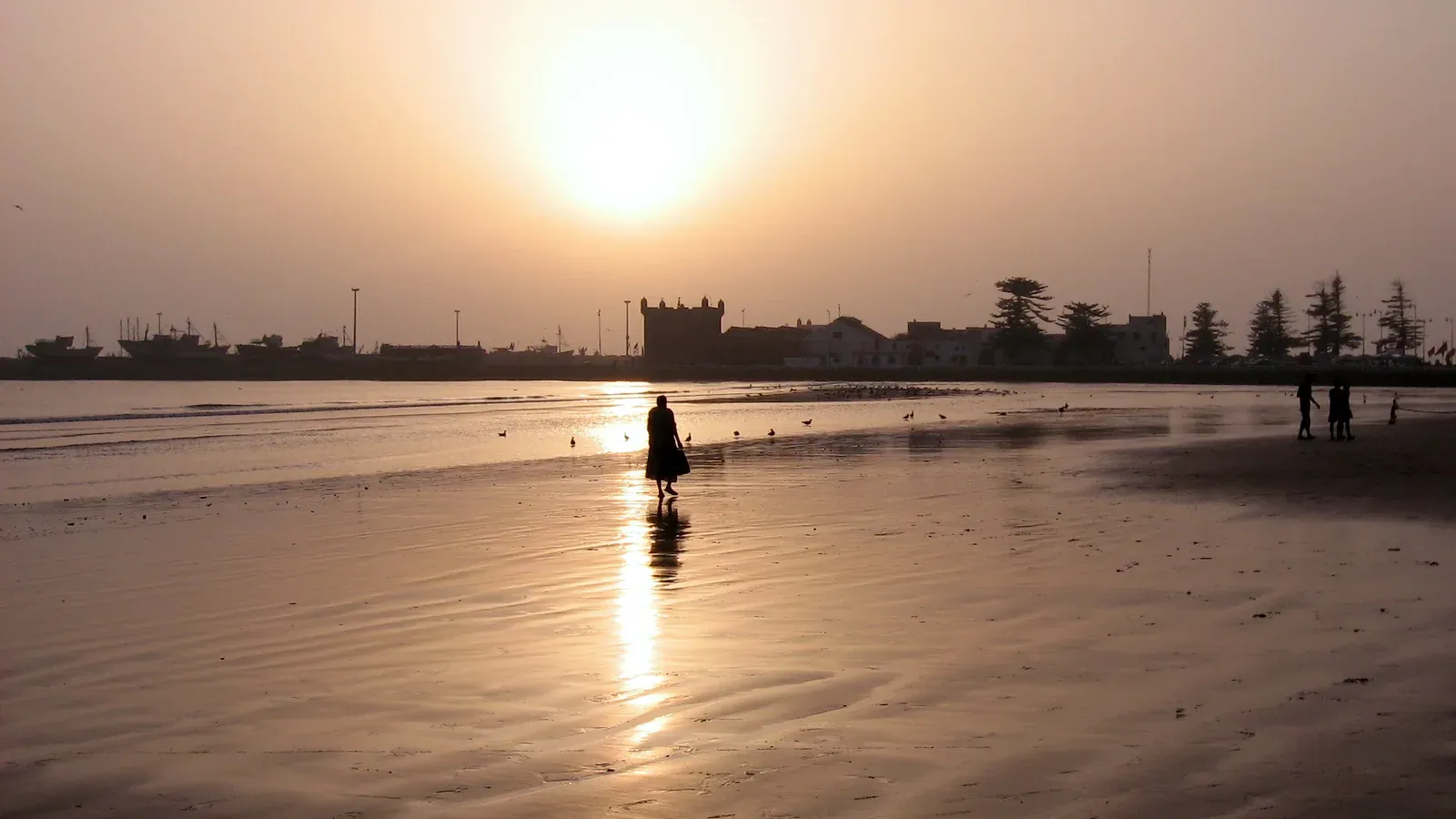
The lila and its logic
The ceremony recreates the first sacrifice and the genesis of the universe by calling the seven main manifestations of divine activity. It begins after an animal sacrifice with the aâda, an opening in which musicians play qraqab while performing a swirling acrobatic dance. The maâlem then burns incense and, on the guembri, calls saints and spirits called mluk, drawn from Islamic figures, historical saints and jinn.
Each of the seven families of mluk has its own colour, incense, rhythm and dance. Seven melodic and rhythmic cells set up seven suites, and dancers are covered in veils of seven colours. A moqadma, a priestess or clairvoyant, leads the dance and chooses the clothing and accessories each stage needs. Participants who enter the jedba, the trance state, dance to appease an offended spirit or to strengthen an existing bond. The guembri opens the treq, the fixed sequence of music, dance, colour and incense that carries the gathering through the realms of the mluk until the first light of dawn.
Because it is built for dancers in trance, a song repeats one phrase or a few lines for a very long time. What sounds like one 20-minute piece may be several chants, a suite for a spirit such as Sidi Moussa, Sidi Hamou or Sidi Mimoun.
Characteristics
Melody leans on the tonic and fifth, with quavering pitch play and flattened notes around the third, fifth and sometimes the seventh. The vocal lines follow speech patterns, as in much African music. Rhythm is distinctive for its interplay of triple and duple meters.
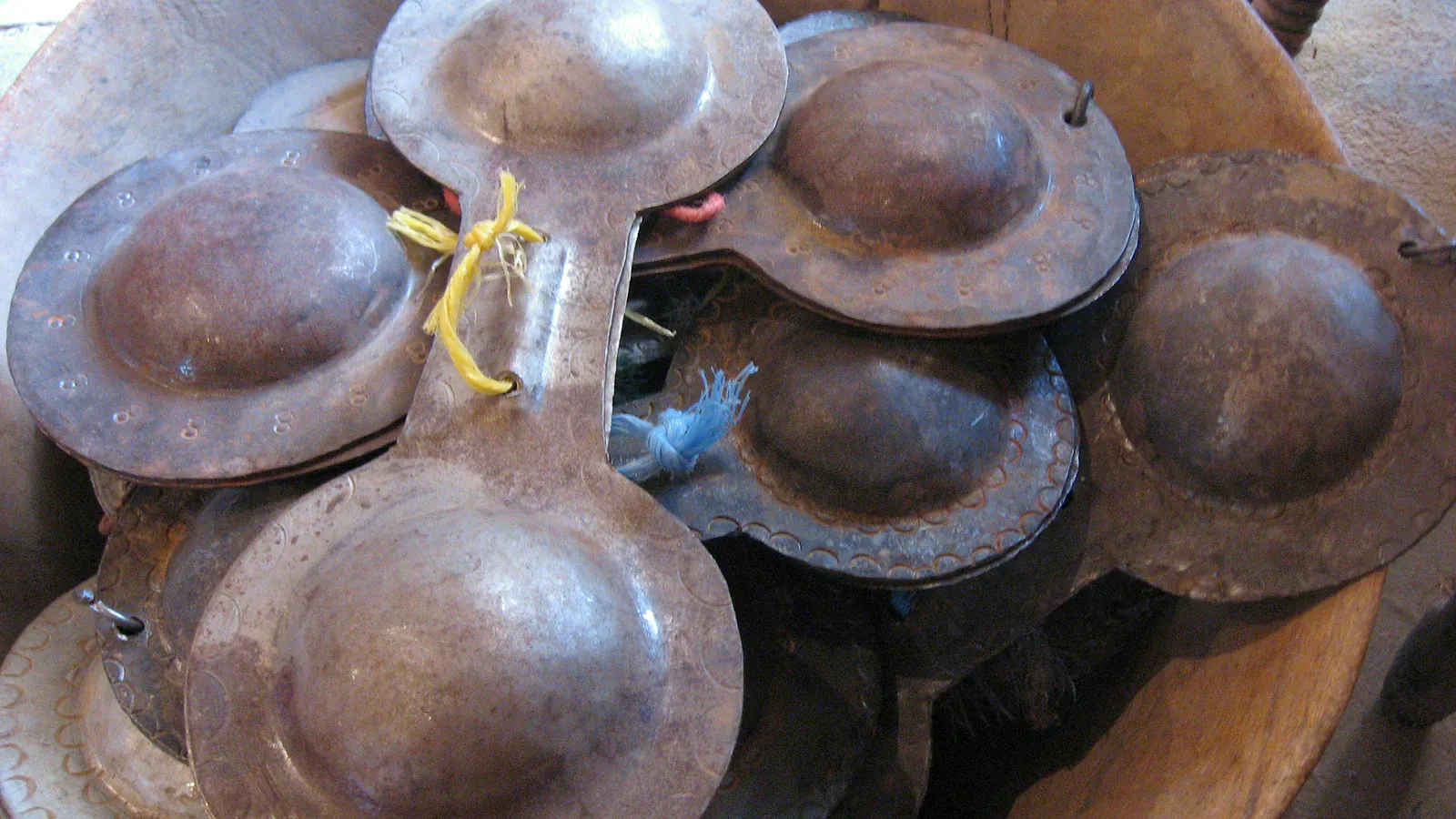
Instruments and production
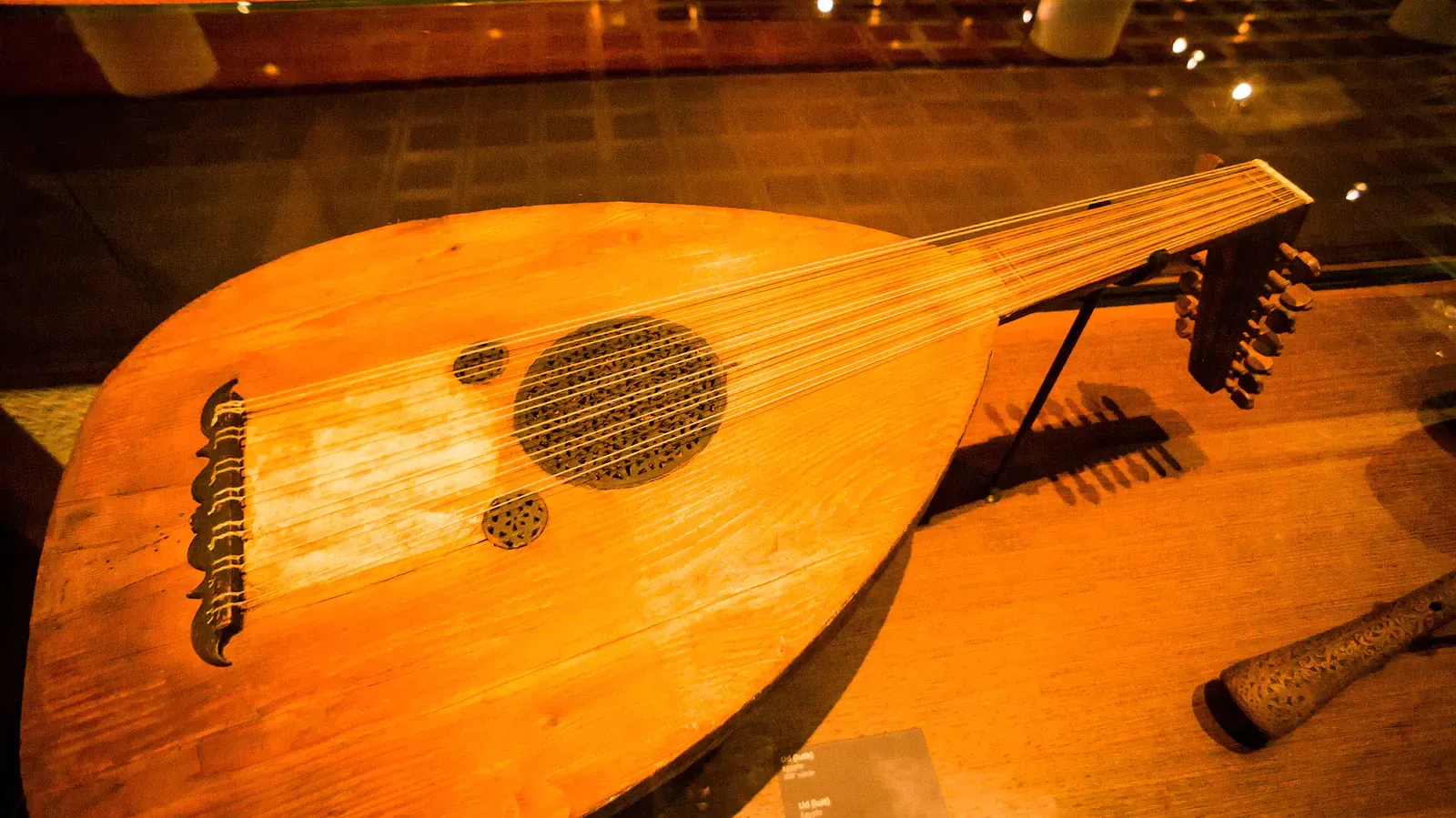
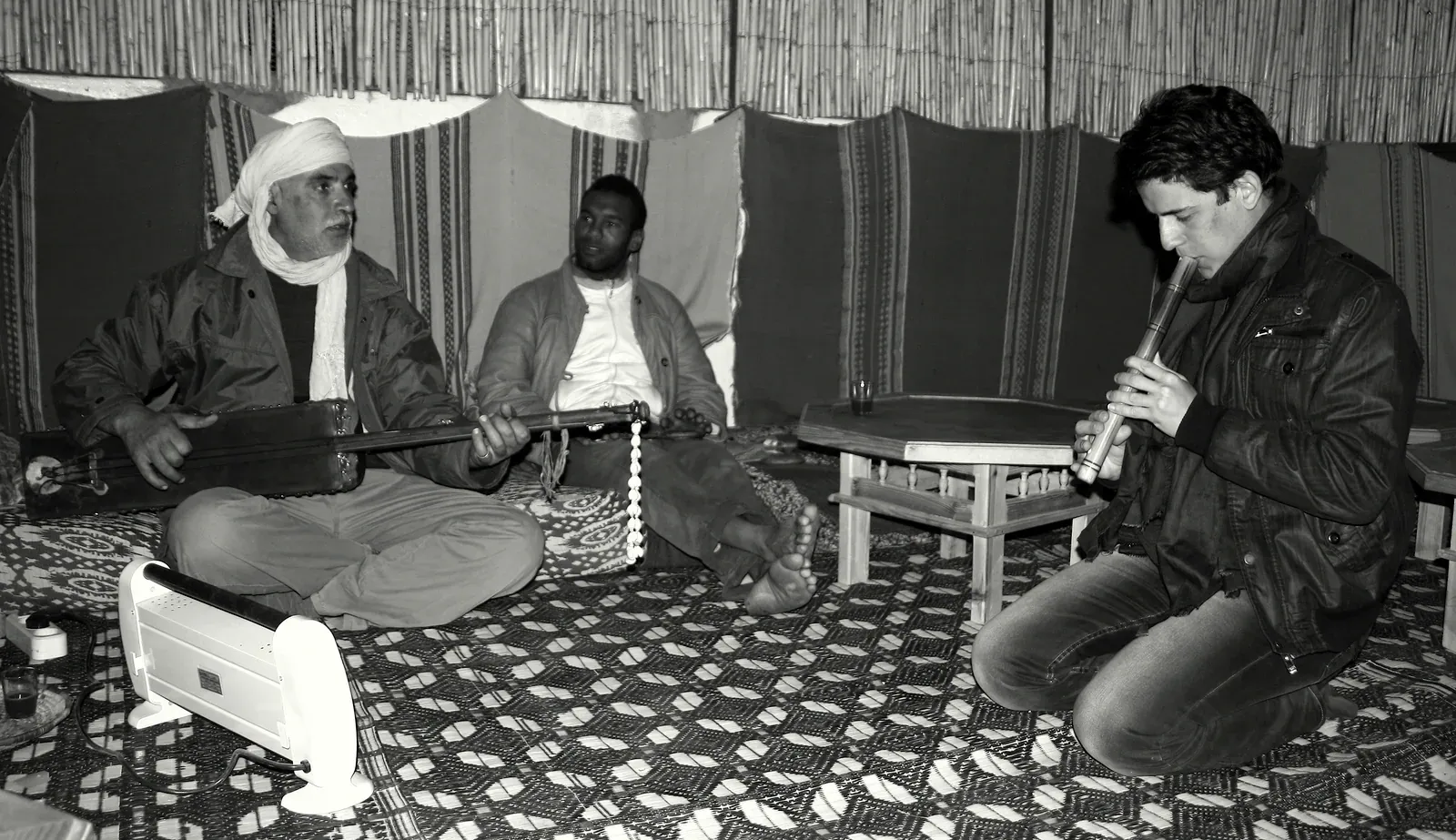
The guembri (also hajhuj or sintir) is a three-string bass lute with a hollowed log body covered in camel skin, and its strings are goat gut. Its closest relatives are West African lutes such as the Hausa halam, itself a direct ancestor of the banjo. A metal plate on the neck carries rings that add a buzz in time with the playing. Players pluck downward with the thumb and index finger and slap the skin for percussion, producing a throbbing drone with rapid pattern figures above it.
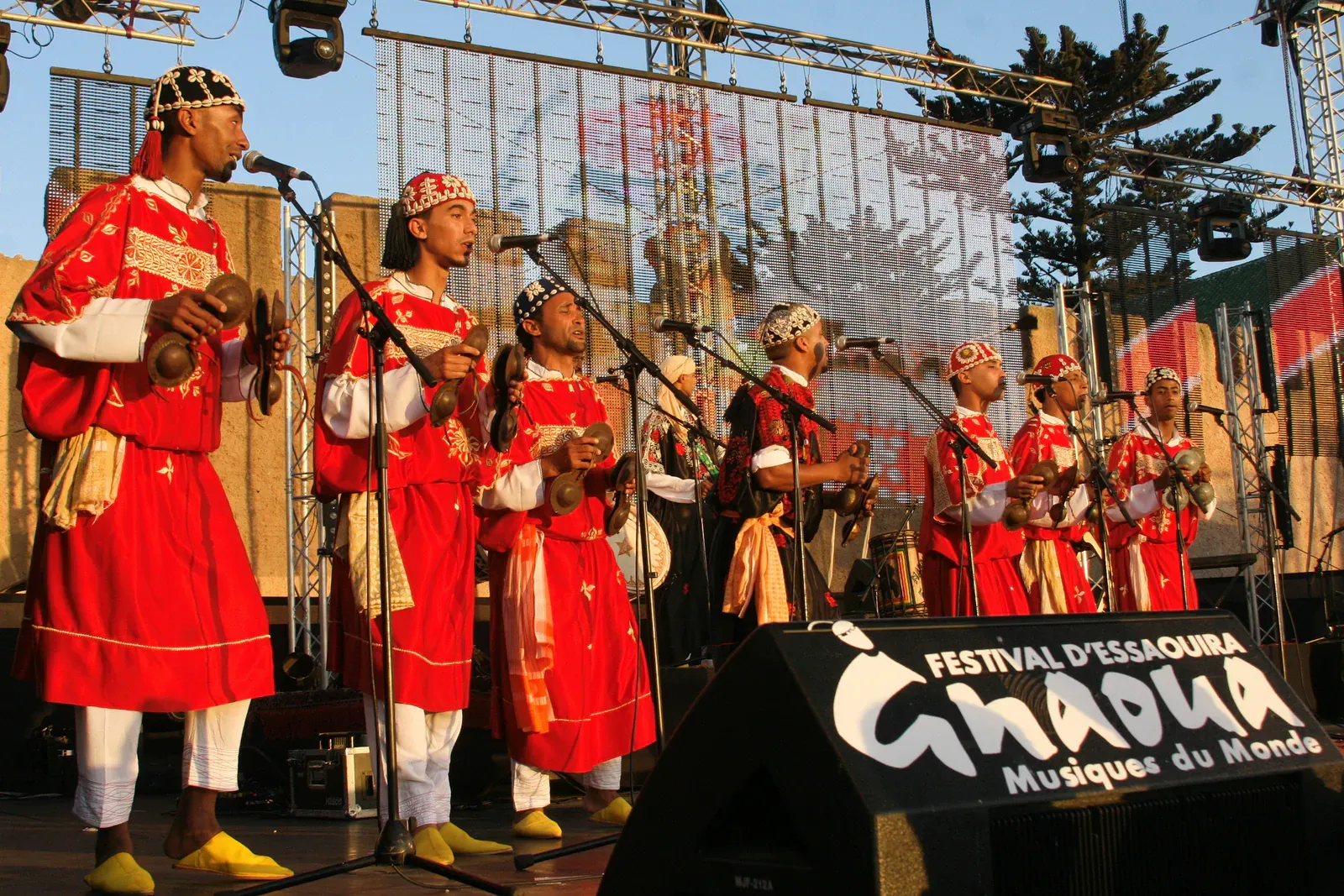
The qraqab give the chorus its rhythmic drive, and large drums called tbel appear in ritual music alongside them. Bowed lutes such as the gogo also belong to the tradition. Close relatives of gnawa exist in Algeria, where the music is called diwan, and in Tunisia, where it is called stambali.
Chaabi and jazz encounters, 1967 to 1986
In 1967 the American pianist Randy Weston ended a tour of Africa in Morocco and stayed for five years in Tangier, where he ran the African Rhythms Club; he later took part in the Essaouira festival. Around 1970 the Casablanca group Nass El Ghiwane, which grew out of avant-garde theatre, carried a trance aesthetic and Sufi poetry into protest song and became central to Moroccan chaabi; see Chaabi. In the 1970s the Moroccan label Fikriphone released both live lilas and studio sessions by Mahmoud Guinia, a maâlem from Essaouira.
Mainstream success
Hassan Hakmoun made his United States debut at Lincoln Center in 1987, settled in New York and worked with rock, jazz and fusion musicians; his album Gift of the Gnawa with percussionist Adam Rudolph and trumpeter Don Cherry appeared in 1991. He joined the WOMAD circuit in the early 1990s. In 1992 Guinia’s family ensemble travelled abroad for the first time, to Montreal’s anniversary festival, and in 1994 The Trance of Seven Colors paired the ensemble with the saxophonist Pharoah Sanders, a key figure of spiritual jazz.
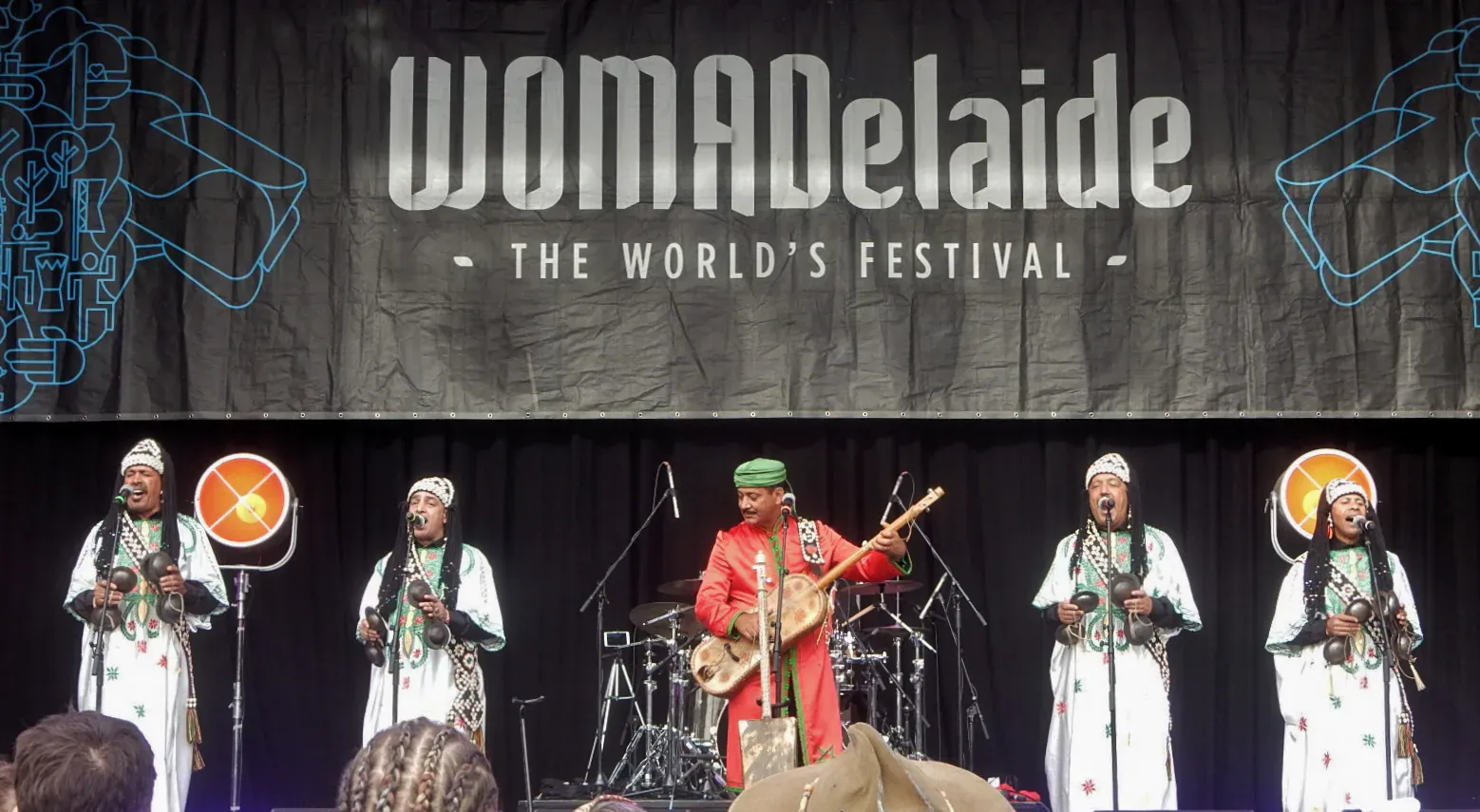
The Gnaoua World Music Festival in Essaouira, founded in 1998 by Neila Tazi, became the main meeting point. Free concerts there grew from about 20,000 listeners to over 200,000 by 2006, and guests have included Randy Weston, Pharoah Sanders, The Wailers and Omar Sosa. In the 1990s younger musicians formed modern bands that mixed gnawa with rap, reggae, jazz, blues and rai, among them Gnawa Impulse in Germany, Bab L’ Bluz in France and Morocco, and Gnawa Diffusion in Algeria. Hamid El Kasri opened the festival with Snarky Puppy in 2018 and played the BBC Proms with Jacob Collier, appearing on Collier’s Djesse Vol. 1; for related jazz currents see ethno jazz.
Culture
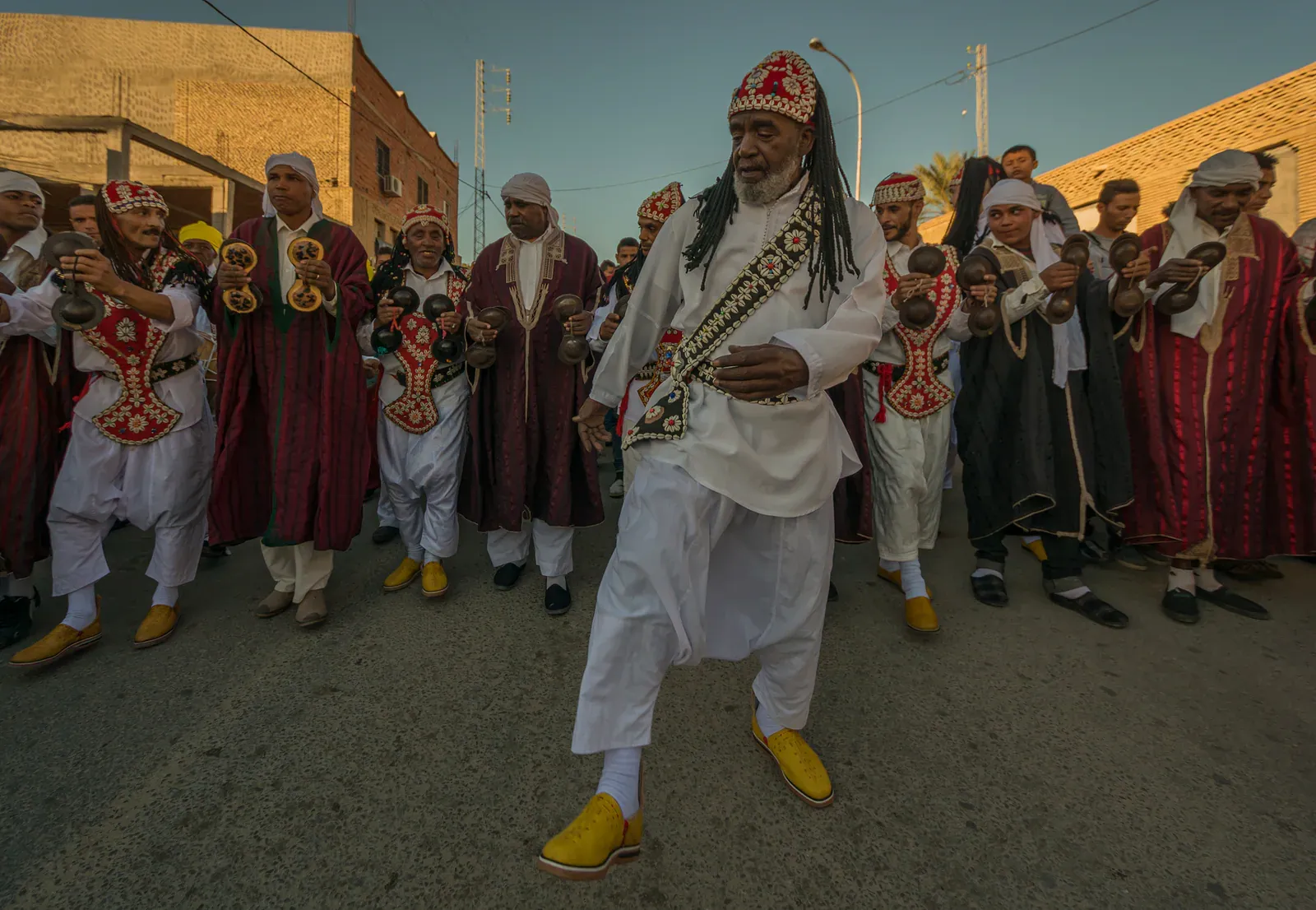
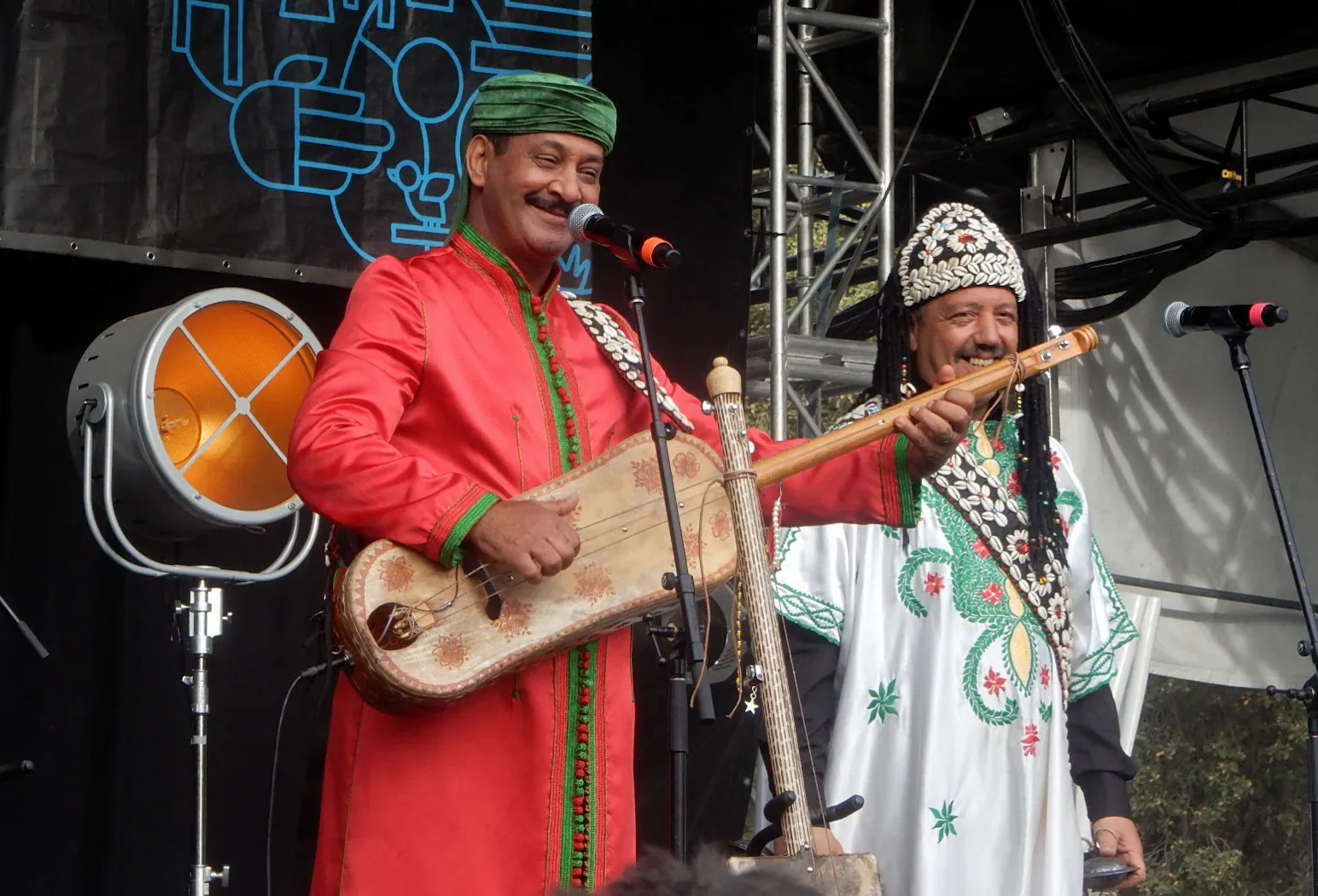
The ritual remains the core of the culture. Costume, incense and colour are part of the ceremony rather than decoration, and the stage versions use some of the same visual language. Many musicians belong to families that pass the maâlem’s role down: Mahmoud Guinia was the son of the maâlem Boubker Gania and the moqadma A’isha Qabral, and his sons Houssam and Mokhtar continue the Essaouira style. Mahmoud Guinia handed his guembri to his son Houssam at his last festival concert in May 2015 and died that August. Hamid El Kasri, from Ksar El Kebir, trained in the northern style and later blended it with southern rhythms.
Legacy
In 2019 UNESCO inscribed gnawa on its Intangible Cultural Heritage list at the committee session in Bogota, noting a well-preserved tradition passed between generations and a source of identity and community. Recent releases such as Mahmoud Guinia’s Colours of the Night, recorded in 2013 and issued in 2017, show how much archival material still reaches new audiences.
Misconceptions
Gnawa is not only a festival show. Concerts at Essaouira are a profane setting with slight religious or healing aspects, but many privately organised lilas keep their sacred, spiritual status.
Maleem is not a first name. The spelling on The Trance of Seven Colors turned the Arabic title maâlem, master, into what many listeners took for part of Mahmoud Guinia’s name.
A gnawa piece is not one song. The long result sounds continuous, but it is a series of chants addressed to individual spirits, each with its own rhythm and incense.
Frequently asked questions
What is gnawa music?
Gnawa music is Moroccan ritual and concert music from the descendants of enslaved West Africans. It is built on the guembri lute, iron qraqab castanets and call-and-response chant, and it serves the lila trance ceremony.
What instruments are used in gnawa music?
The central instruments are the three-string guembri played by the maâlem and the qraqab castanets played by the chorus, with large tbel drums in some settings.
What is a lila in gnawa?
A lila, also called derdeba, is an all-night ceremony that moves through seven suites for seven families of spirits, each with its own colour, incense, rhythm and dance, and ends at dawn.
Where can gnawa music be heard live?
The largest gathering is the Gnaoua World Music Festival in Essaouira each June; privately organised lilas follow the older ritual form.
Sound
Sound sheet
Anatomy of a track
| # | Part |
|---|---|
| 1 | Aâda: opening dance with qraqab |
| 2 | Guembri invocation of the first mluk |
| 3 | Seven suites for the seven families of spirits |
| 4 | Jedba: trance dance with incense and coloured veils |
| 5 | Dawn closing |
Signature sounds
- Guembri ostinato on the drone string
- Qraqab chorus in call and response
- Triple against duple rhythmic interplay
- Repeated short phrases extended into hour-long suites
Drums and percussion
- Qraqab
- Tbel
Techniques
- Brushless drop-thumb frailing
- Triple and duple interplay
- Call-and-response refrains
- Suites per spirit
Keys and modes
Tonic and fifth centred melody. Melody stresses the tonic and fifth, with quavering, flattened pitches around the third, fifth and sometimes seventh.
Tuning
Guembri with a drone string, an octave string and a string a fourth above the drone; no fixed concert pitch
Vocals
Maâlem lead voice over a chorus answering in short call-and-response refrains
Scenes
Where it happened
Where and when the sound lived: one bar per city on a shared timeline.
Africa
North America
Active scenes
Peak 4, 1998-2025
Atlantic port, home of the Guinia family and the yearly Gnaoua World Music Festival.
City where Nass El Ghiwane formed and where Guinia recorded his last studio album.
Northern city where Randy Weston lived for five years and ran his African Rhythms Club.
Hassan Hakmoun's base, where gnawa met jazz, rock and fusion bands.
Venues and places
Essaouira, 1998 to today. Four-day festival every June where maâlems play with jazz, reggae and rock guests.
New York, 1987 to today. Site of Hassan Hakmoun's 1987 United States debut.
Culture
Culture markers
- Lila (derdeba)
Overnight ceremony led by the maâlem and moqadma, opened with an animal sacrifice and a ritual dance.
Ritual - Seven colours and incenses
Each of the seven families of spirits has its own colour, incense, rhythm and dance, and dancers wear veils of seven colours.
Ritual - Jedba trance dance
Participants dance in ecstasy to appease or reinforce their bond with a spirit.
Dance - Aâda acrobatic dance
Musicians open the ceremony with a swirling acrobatic dance while playing the qraqab.
Dance
Media
Key media
- 1981Trances
by Ahmed El Maanouni. Documentary on Nass El Ghiwane that carries the trance aesthetic of gnawa to a global audience.
Film
Glossary
Terms on this page
Trance state in which participants dance to appease or strengthen their bond with the spirits.
All-night ceremony of prayer, trance and healing, also called derdeba, lasting from late evening to sunrise.
Master musician who leads a gnawa troupe, plays the guembri and sings.
Spirits drawn from Islamic figures, saints and jinn, each tied to a colour, incense, rhythm and dance.
Priestess or clairvoyant who leads the trance dance and manages the ritual accessories and clothing.
Strictly ordered path of music, dances, colours and incenses opened by the guembri through the seven realms of the mluk.
Middle Eastern and North African family