Memphis blues
Memphis blues is the blues of the Memphis area, from Beale Street songsters and jug bands in the 1910s to the loud electric sound made at Sun Studio after 1950.
Memphis, Tennessee, 1910
Blues family
Born
1910
Memphis, Tennessee
Links
10
Genres it drew on or shaped
Tempo
75-110 BPMLineage
Family tree
Grew out of
- Delta blues
Derived from
Influenced by
Memphis, Tennessee, 1910
Memphis blues
Timeline
Era by era
From the first sparks to today. Select a dot to read the story behind it.
- Beale Street and the first blues
1909 to 1926
- Songsters and jug bands on record
1927 to 1941
- Radio, Sun and the electric turn
1947 to 1959
- Rediscovery and heritage
1960 to today
Eras
Moments
- 1 Beale Street and the first blues, 1909 to 1926
- 2 Songsters and jug bands on record, 1927 to 1941
- 3 Radio, Sun and the electric turn, 1947 to 1959
- 4 Rediscovery and heritage, 1960 to today
1909
Beale Street and the first blues
W. C. Handy settles on Beale Street in 1909 and writes the campaign tune that becomes The Memphis Blues. Street musicians, medicine shows and vaudeville build the local style.
- 1909Handy writes Mr. CrumpW. C. Handy, newly based on Beale Street, writes a campaign song for Edward Crump that he later renames The Memphis Blues.
- 1912The Memphis Blues in printThe sheet music publication introduces Handy's 12-bar blues style and is credited as the inspiration for the foxtrot of Vernon and Irene Castle.
- 1916Beale Street BluesHandy writes the song that influences the change of the street's name from Beale Avenue to Beale Street.
- 1926Memphis Jug Band formsMusicians in the Memphis area gather around the singer and harmonica player Will Shade, who books their gigs and recording sessions.
1927
Songsters and jug bands on record
Frank Stokes, Furry Lewis, Memphis Minnie and the Memphis Jug Band record a danceable, witty guitar and jug band blues for Paramount, Vocalion and Victor.
- 1927Beale Street Sheiks record for ParamountFrank Stokes and Dan Sane first record under that name in August 1927, the start of a duet guitar style that later shaped Memphis Minnie.
- 1928Furry Lewis records Kassie JonesFurry Lewis cuts his ballad about the railroad engineer Casey Jones in Memphis; it is later reissued on the 1952 Anthology of American Folk Music.
- 1928Memphis Jug Band records Stealin', Stealin'The band records the song in Memphis on 15 September for Victor; the single follows in 1929.
1947
Radio, Sun and the electric turn
WDIA radio, Sam Phillips's studio and West Memphis clubs remake the sound. Rocket 88, Howlin' Wolf and Pat Hare's guitar bring loud, distorted electric blues.
- 1947WDIA goes on the airThe station begins on 7 June and soon becomes the first in the United States programmed entirely for African Americans, reaching the Mississippi Delta.
- 1949B.B. King on Beale StreetKing, a Beale Street regular, makes his first record for Bullet and signs with RPM; Sam Phillips produces many of his early sides.
- 1950Memphis Recording Service opensSam Phillips opens the studio at 706 Union Avenue on 3 January; it is later renamed Sun Studio.
- 1951Rocket 88Jackie Brenston and his Delta Cats, in truth Ike Turner's Kings of Rhythm, record it in March; it tops the Billboard R&B chart and is called the first rock and roll record.
- 1951Howlin' Wolf's first singleRecorded by Phillips and licensed to Chess, Moanin' at Midnight and How Many More Years appear in August; the B-side reaches number 4 on the R&B chart.
- 1952Sun Records foundedPhillips launches the label on 1 February; it first concentrates on African-American musicians before turning to rockabilly.
- 1952Howlin' Wolf leaves for ChicagoAt Leonard Chess's urging he relocates in late 1952, one of many Memphis bluesmen drawn north.
- 1954Cotton Crop BluesPat Hare's solo on James Cotton's single is the first recorded use of heavily distorted power chords, a forerunner of heavy metal.
1960
Rediscovery and heritage
The folk revival brings Furry Lewis back to record. Beale Street is declared a landmark and, in 1977, the Home of the Blues, and Memphis keeps the style alive as heritage.
- 1960Furry Lewis returns to recordAn album for the folk revival market brings the Beale Street veteran back on record after three decades.
- 1977Home of the BluesOn 15 December Congress declares Beale Street the Home of the Blues, though urban renewal had left it a near ghost town.
Listening path
Start listening
A short path from an easy way in to the deep end. Thumbnails come from YouTube; the player loads only when you press play.
- 01
Memphis Jug Band, 1928
Listen for the jug carrying the bass and the kazoo and guitar trading lines in a dance-ready jug band blues.
- 02
Furry Lewis, 1928
A single guitar and a talking vocal tell the ballad of an engineer, the songster tradition at its sharpest.
- 03
Memphis Minnie, 1941
Minnie's guitar and a second guitar carry a swaggering song that reached the National Recording Registry.
- 04
Jackie Brenston and his Delta Cats, 1951
Ike Turner's band plays a driving song about a car, often named the first rock and roll record.
- 05
Howlin' Wolf, 1951
Listen for Wolf's roaring voice and Willie Johnson's electric guitar riff in the Sun-studio sound at its fiercest.
Facts
| Family | Blues |
| Origin | Memphis, Tennessee, United States |
| Emerged | 1910s to 1930s; electric phase from the late 1940s |
| Status | Historical |
| Tempo | 75 to 110 BPM |
| Meter | 4/4 |
| Grew out of | Delta blues |
Memphis blues is the blues of the Memphis, Tennessee area. It took shape from the 1910s to the 1930s around Beale Street, as guitar songsters and jug bands mixed blues with vaudeville, medicine-show comedy and early jazz.
After the Second World War the same city produced a fierce, distorted electric blues at Sam Phillips’s studio. It belongs to the wider blues family.
Origins
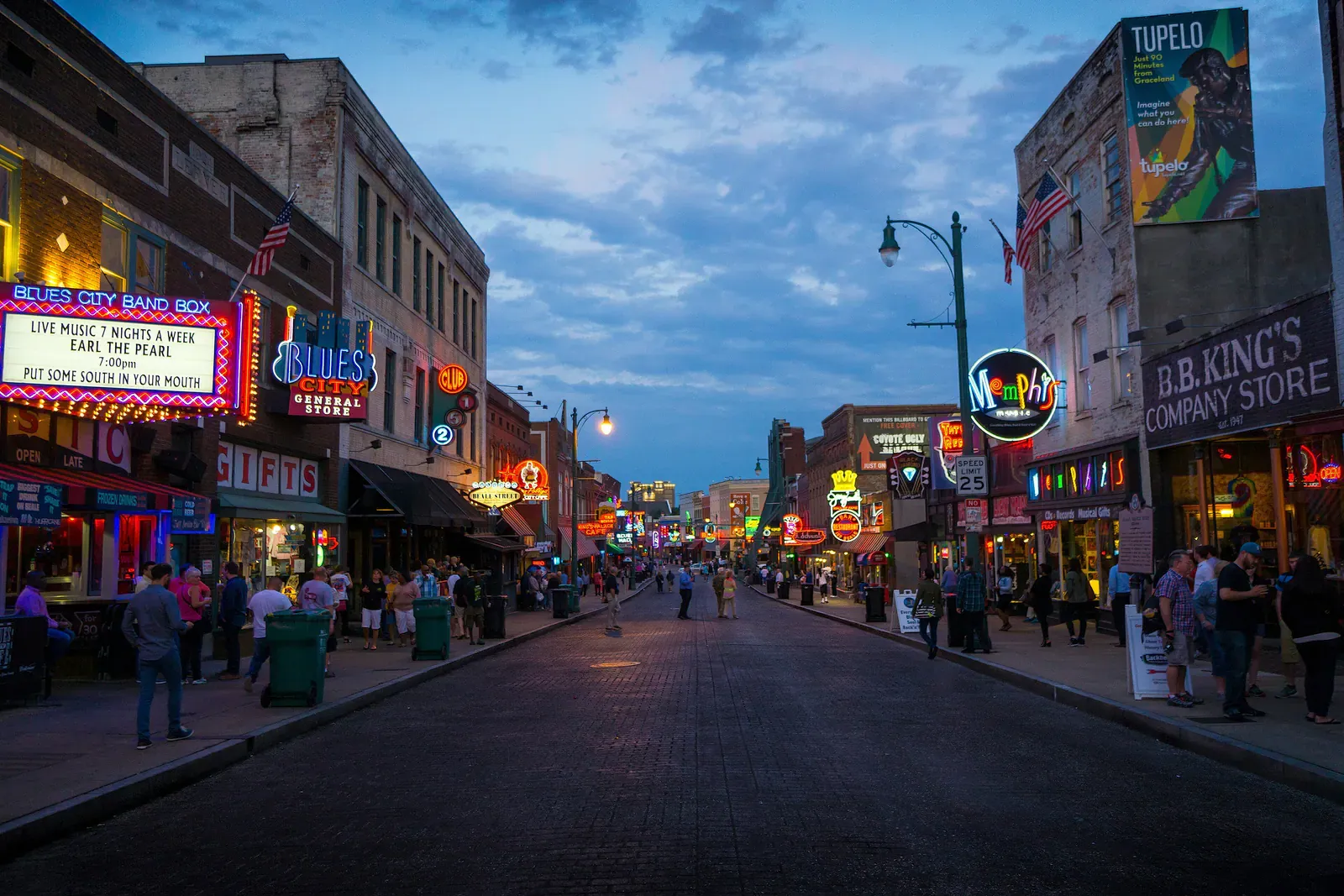
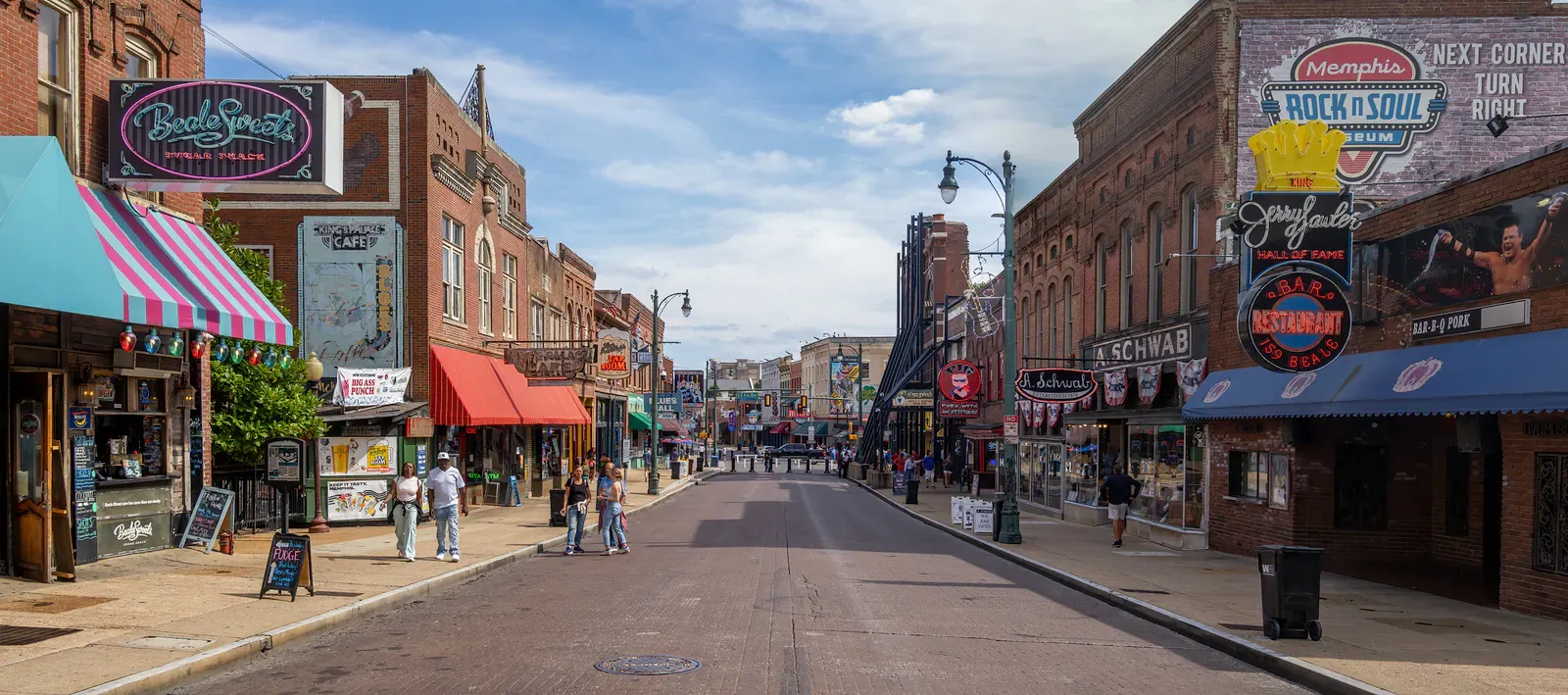
From the 1860s Black travelling musicians performed on Beale Street, and by the early 1900s it was lined with clubs, restaurants and shops, many Black-owned. In 1899 the landowner Robert Church paid for Church’s Park at 4th and Beale, with a 2,000-seat auditorium, a gathering place for musicians.
In 1909 the trumpeter W. C. Handy moved his band to Memphis and played the Beale Street clubs. That year he wrote a campaign song for the mayoral candidate Edward Crump, titled “Mr. Crump”, and later rewrote it as “The Memphis Blues”. The sheet music was published in 1912 and is regarded as the first blues to be written down. It introduced his 12-bar style and was credited as inspiring the foxtrot danced by Vernon and Irene Castle. In 1916 his “Beale Street Blues” helped change the street’s name from Beale Avenue to Beale Street.
Beale Street and the first blues, 1909-1926
Memphis blues of this period was show business as much as folk music. Singers and guitarists worked the streets and parks for tips, and they toured tent shows. Frank Stokes, regarded by many musicologists as the father of Memphis blues guitar, joined the Doc Watts Medicine Show as a songster, comedian and buck dancer in the mid-1910s. He and the guitarist Dan Sane busked on Beale and in Church’s Park. That training explains why the Memphis style is rhythmic, witty and polished rather than purely brooding.
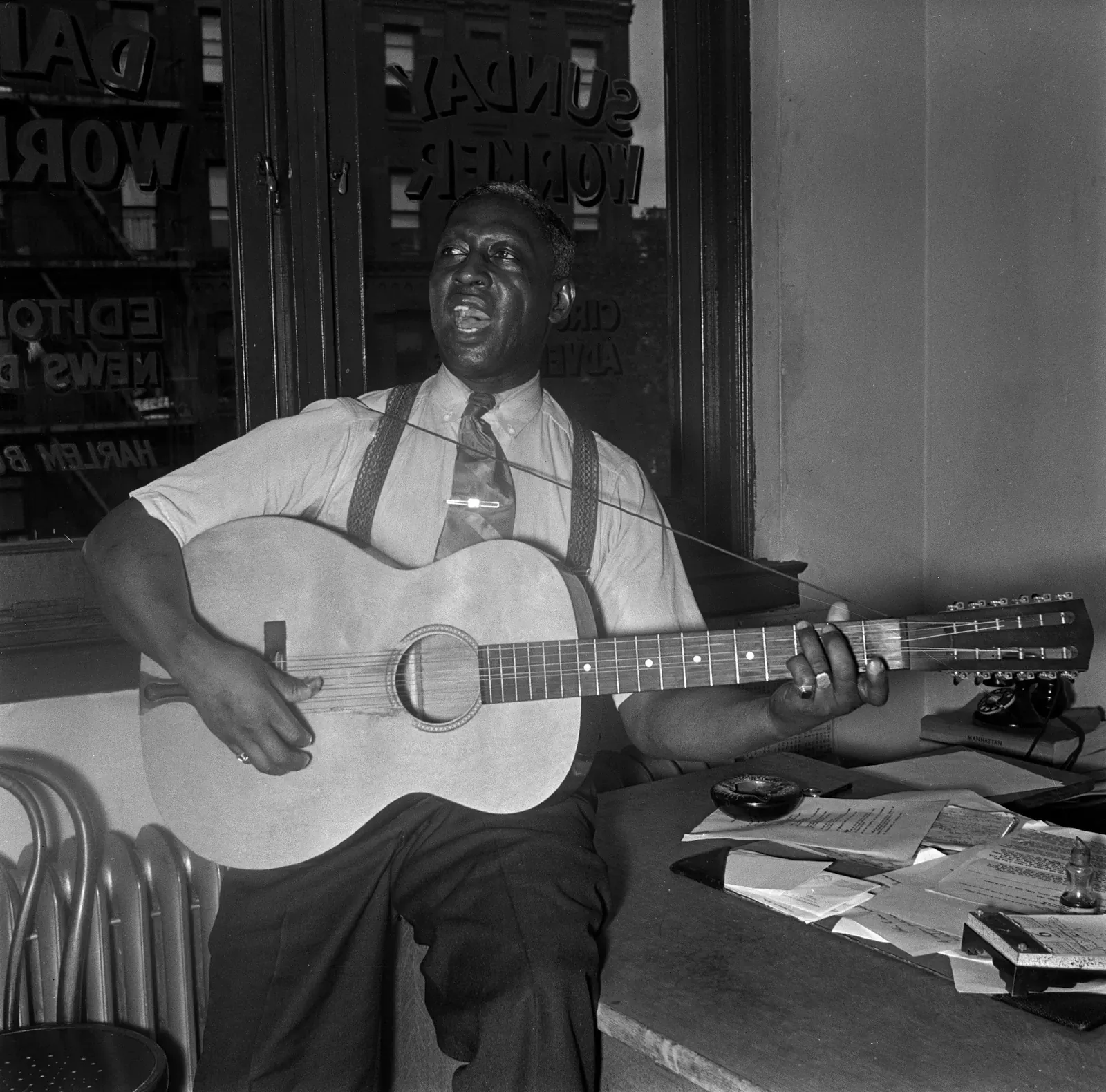
Walter “Furry” Lewis, a Handy protege on Beale Street, learned in the same milieu. The vaudeville link ties the style to ragtime and to the songsters of country blues.
Songsters and jug bands on record, 1927-1941
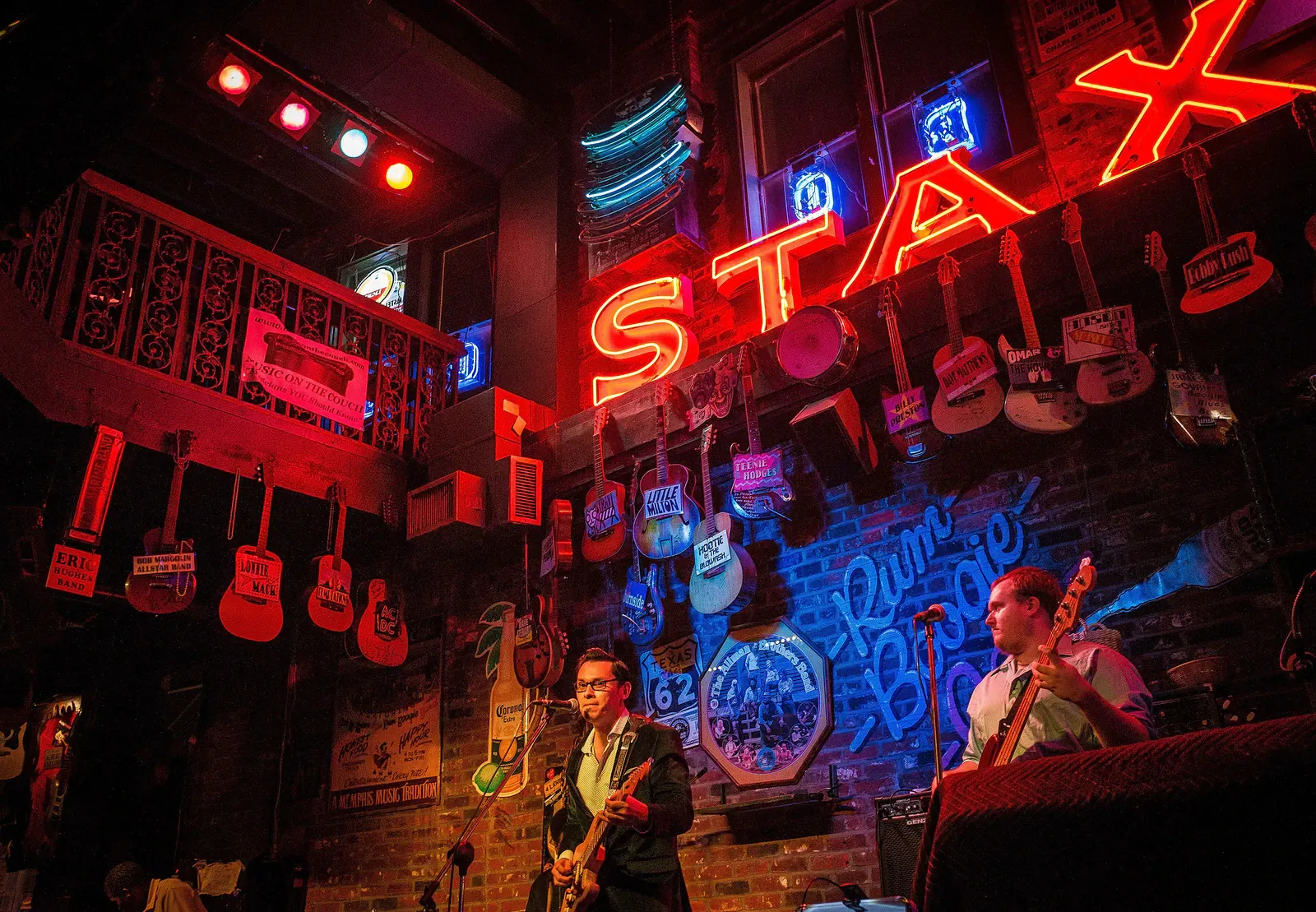
Recording began in earnest in 1927. Stokes and Sane, as the Beale Street Sheiks, first recorded for Paramount in August 1927, and Stokes eventually cut 38 sides for Paramount and Victor. The fluid interplay of their two guitars over a propulsive beat influenced the young Memphis Minnie, who adopted the duet approach with her husband Kansas Joe McCoy. Minnie recorded about 200 songs over three decades, among them “When the Levee Breaks” (1929), “Bumble Bee” and “Me and My Chauffeur Blues”.
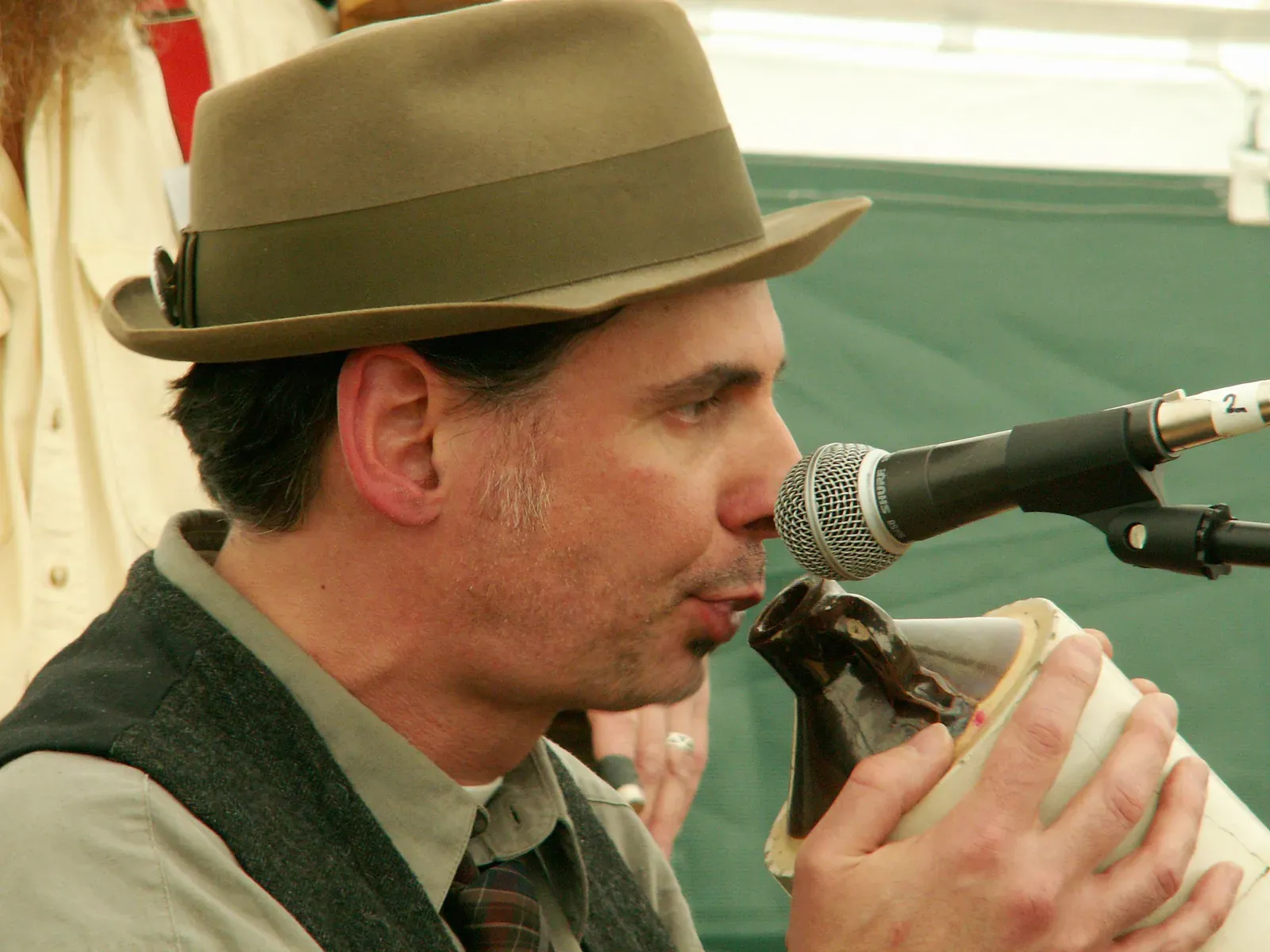
The other pillar was the jug band. Around 1926 musicians gathered around Will Shade, a singer, songwriter, guitarist and harmonica player, to form the Memphis Jug Band, which became the most recorded prewar jug band and made the first commercial recordings in Memphis. The sound combined harmonica, kazoo, fiddle and mandolin or banjolin with guitar, piano, washboard, washtub bass and a jug blown for bass. Gus Cannon’s Jug Stompers were equally popular. The repertoire ran from slow blues to jazz-flavoured dance numbers and comic songs. The band’s Memphis sides were issued by the Victor Talking Machine Company.
Radio, Sun and the electric turn, 1947-1959
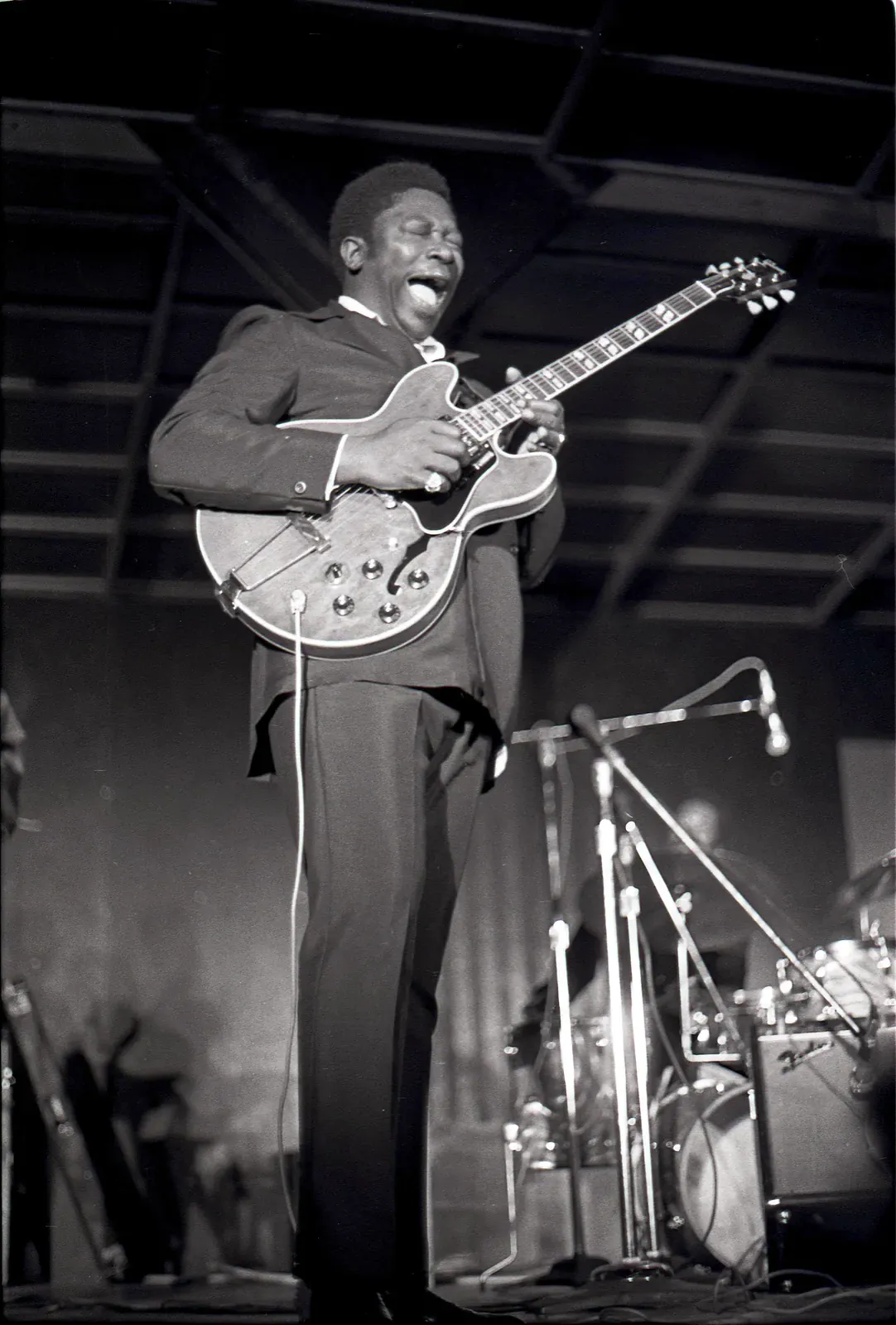
After the war many Delta musicians gravitated to Memphis. WDIA went on the air on 7 June 1947 and soon became the first station in the United States programmed entirely for African Americans. From 1954 its 50,000-watt signal reached the Delta. A young B.B. King, billed on Beale as the Beale Street Blues Boy, was part of the local scene and played with Bobby Bland and Johnny Ace in a group called the Beale Streeters.
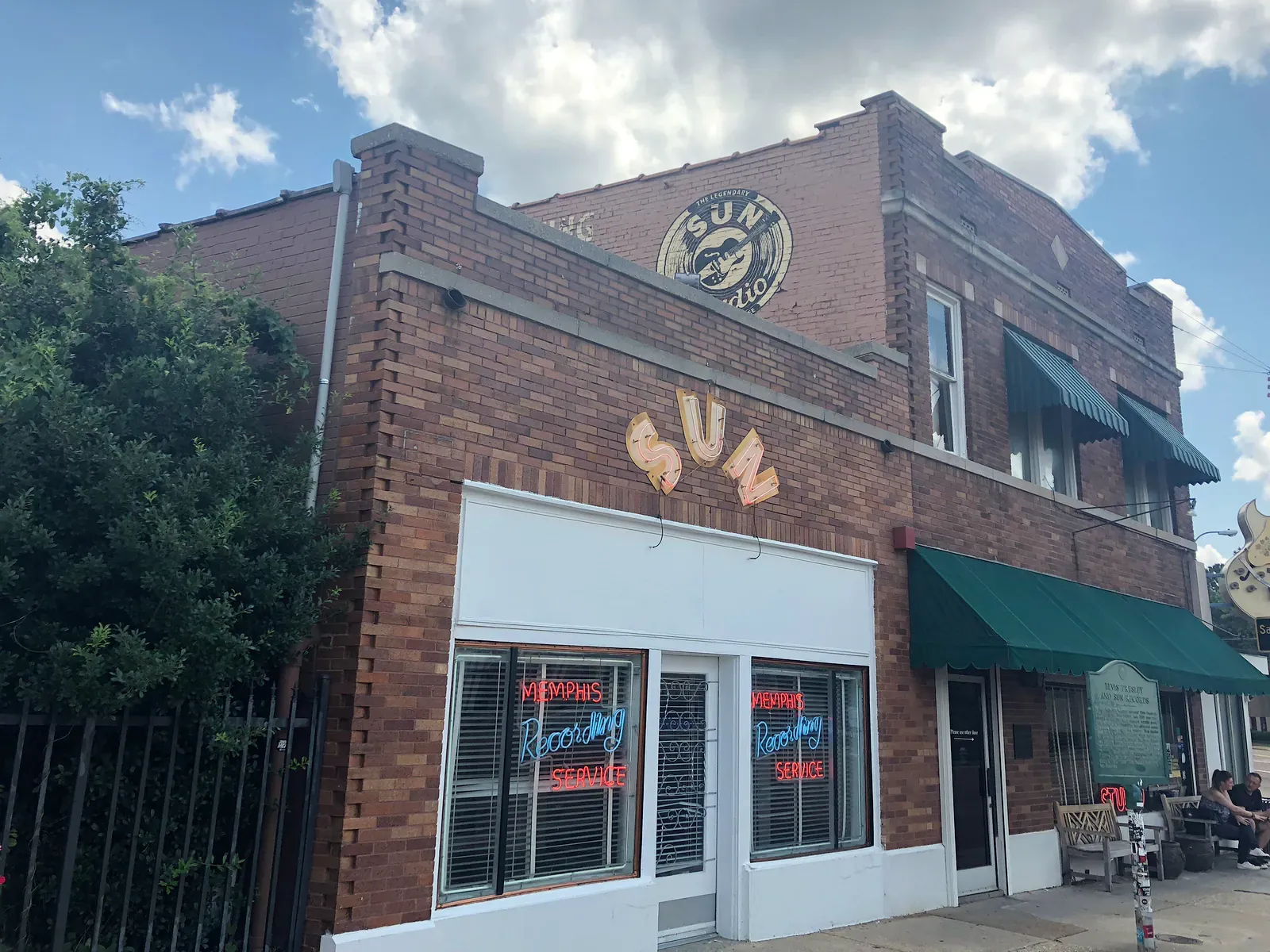
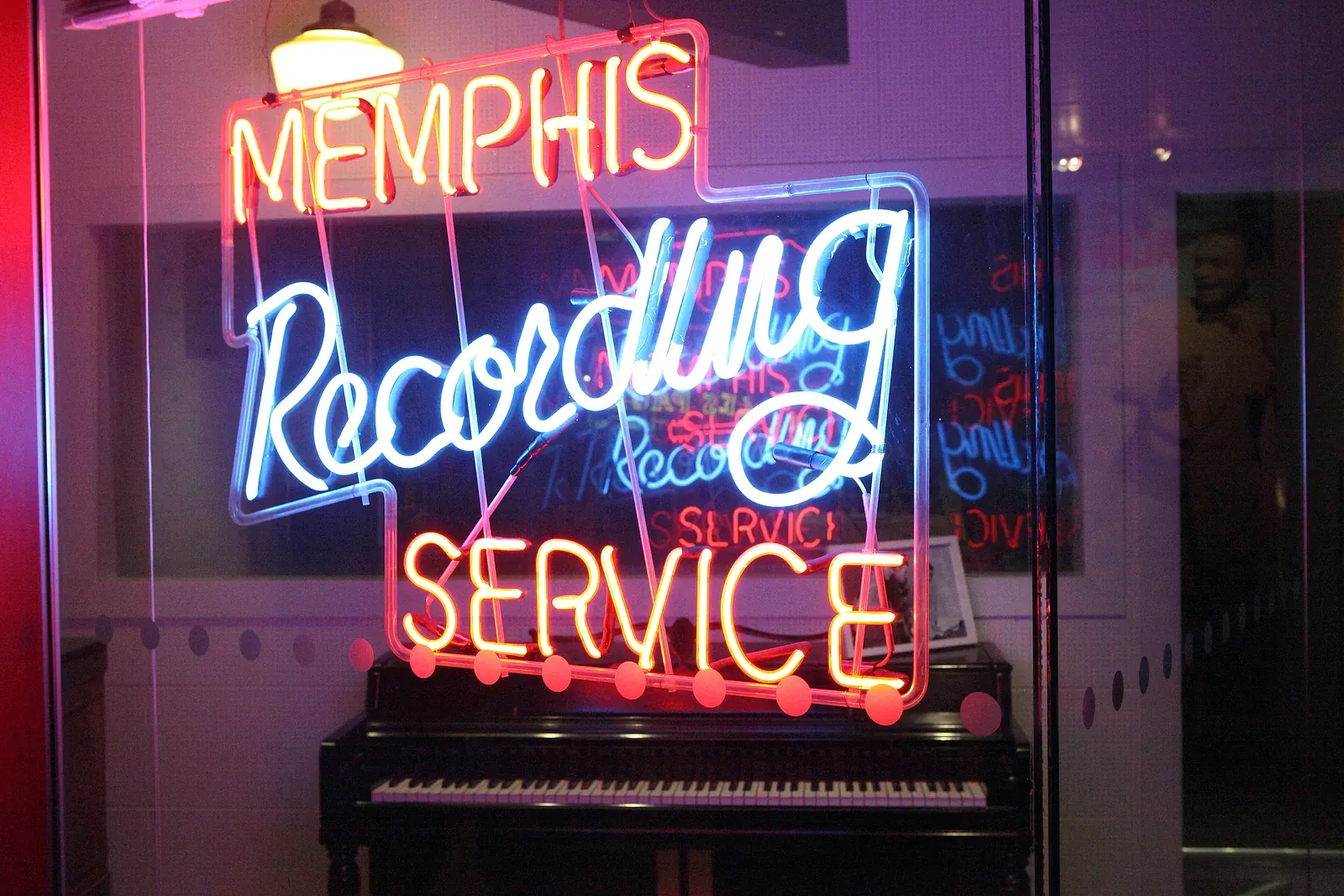
On 3 January 1950 Sam Phillips opened the Memphis Recording Service at 706 Union Avenue, later renamed Sun Studio. In 1951 the young talent scout Ike Turner heard Howlin’ Wolf in West Memphis and brought him to Phillips. Junior Parker, Little Milton, King and Rufus Thomas also recorded there in the early 1950s. Phillips founded Sun Records on 1 February 1952, and it first concentrated on African-American musicians before turning to country and rockabilly.
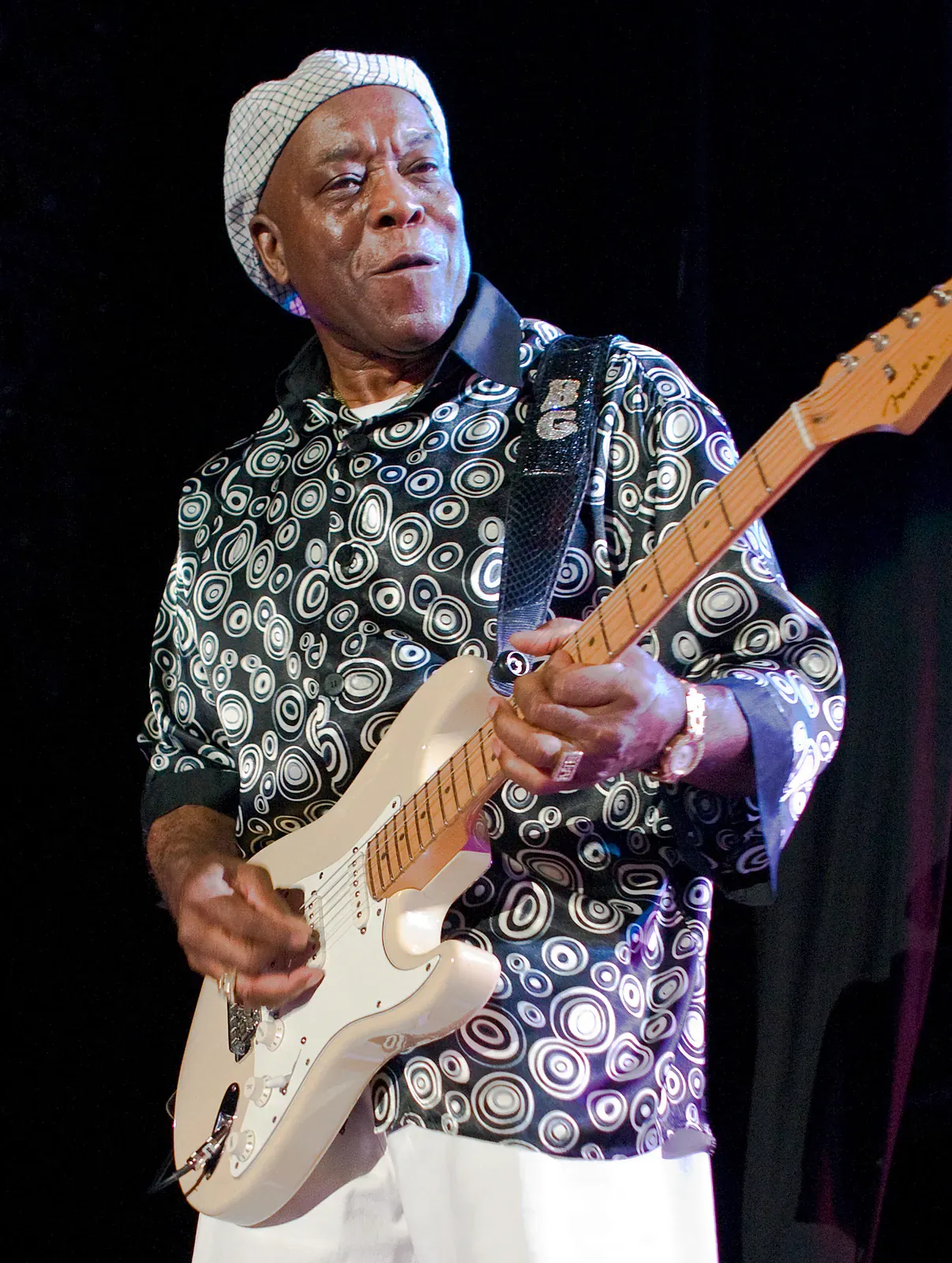
The electric Memphis sound was loud and rough: “explosive, distorted electric guitar work, thunderous drumming” and declamatory vocals. Pat Hare, who played behind Howlin’ Wolf, James Cotton and Muddy Waters, was among the first guitarists to use distortion on purpose. His solo on James Cotton’s “Cotton Crop Blues” (1954) is cited as the first recorded use of heavily distorted power chords, which the critic Robert Palmer called possibly the first heavy metal record. Wolf left for Chicago in late 1952, and the style’s centre of gravity moved north.
Characteristics
Prewar Memphis blues is danceable and syncopated, drawing on early jazz and folk styles as much as on rural blues. Guitars are often played in duets, and vocals are conversational, humorous or narrative, as in Furry Lewis’s “Kassie Jones”, a ballad about the railroad engineer Casey Jones.
The electric phase has a shuffle or boogie pulse, amplified harmonica, overdriven guitar and shouted lead vocals. Tempos are moderate, roughly 75 to 110 beats per minute on its landmark recordings.
Instruments and production
Before 1940 the core was the acoustic guitar, played solo or in pairs, with harmonica, fiddle, mandolin and the jug band’s percussion and bass substitutes. The Sun-era revolution was one of amplification: small amplifiers turned up past their limits produced the grit that became a trademark. Hare reportedly turned a small amplifier fully up until the speaker screamed.
Mainstream success
Memphis blues crossed over in two waves. Handy’s “The Memphis Blues” reached sheet-music buyers in 1912 and fed a national dance craze. The next came in 1951, when “Rocket 88”, credited to Jackie Brenston and his Delta Cats but played by Ike Turner’s Kings of Rhythm, reached number one on the Billboard R&B chart. Many writers regard it as the first rock and roll record, and it was inducted into the Blues Hall of Fame in 1991, the Grammy Hall of Fame in 1998 and the National Recording Registry in 2024. Phillips’s studio then turned to country and rockabilly artists, notably Elvis Presley, bringing a related sound to a far larger audience.
Notable recordings
“Stealin’, Stealin’” was recorded by the Memphis Jug Band on 15 September 1928 and released by Victor in 1929, and was widely covered in the 1960s folk revival.
“Rocket 88” was cut in March 1951 at Phillips’s studio, with Brenston singing and Turner’s group playing.
“How Many More Years” was the B-side of Howlin’ Wolf’s first Chess single, “Moanin’ at Midnight”, recorded by Phillips and licensed to Chess in August 1951. The B-side became the hit, reaching number 4 on the R&B chart. Willie Johnson’s guitar on it has been cited as an early use of the power chord.
Culture
In 1934 the local leader George Washington Lee published “Beale Street: Where the Blues Began”, the first book by a Black author advertised in the Book of the Month Club News.
By the 1960s many Beale businesses had closed, though the stretch from Main to 4th became a National Historic Landmark in 1966. Urban renewal later razed buildings and left it close to a ghost town until a redevelopment corporation formed in 1973.
Legacy
Memphis supplied a link from the Delta to rock and roll. Pat Hare’s guitar influenced rockabilly, and his playing on records by Muddy Waters and others influenced 1960s British blues rock bands. Furry Lewis was brought out of retirement in the folk revival, and Beale Street was named the Home of the Blues in 1977. Today the style survives chiefly as heritage in the street’s clubs, and its influence continues through electric blues and rock and roll.
Misconceptions
Memphis blues is sometimes treated as a synonym for Delta blues. The two overlap, but the Memphis prewar sound was urban, vaudeville-influenced and often jug band based. Another myth is that Handy invented the blues. He published the first blues to be written down, but he said himself that he adapted elements of black folk music already heard in the South. A third is that Sun Records only recorded white rockabilly artists. Sun began by concentrating on African-American musicians, and Howlin’ Wolf and B.B. King recorded there in the early 1950s.
Frequently asked questions
What is Memphis blues?
Memphis blues is a style of blues created from the 1910s to the 1930s by musicians in the Memphis area, such as Frank Stokes, Sleepy John Estes, Furry Lewis and Memphis Minnie. It was popular in vaudeville and medicine shows and is associated with Beale Street, and after the war it took on an electric form.
Who wrote the first Memphis blues song?
W. C. Handy published “The Memphis Blues” in 1912, after writing it in 1909 as “Mr. Crump”. It is the first blues to be written down.
What is the difference between Memphis blues and Chicago blues?
Memphis blues is the music made in and around Memphis, from jug bands to Sun Studio recordings. Chicago blues is the electric style developed in Chicago, where Howlin’ Wolf moved in 1952 after his Memphis sessions.
Is Rocket 88 the first rock and roll record?
Many writers consider it so. It was recorded in Memphis in March 1951 by Ike Turner’s band, credited to Jackie Brenston and his Delta Cats, and topped the R&B chart.
Sound
Sound sheet
Anatomy of a track
| # | Part | Bars |
|---|---|---|
| 1 | Intro (guitar or harmonica figure) | 4 |
| 2 | Vocal verses (12-bar blues) | 12 |
| 3 | Instrumental chorus | 12 |
| 4 | Final verse and tag | 12 |
Signature sounds
- Interlocking duet guitars
- Jug bass with kazoo and washboard
- Overdriven small-amp electric guitar
- Declamatory, shouted vocals over a shuffle
Techniques
- 12-bar blues form
- Duet guitar interplay
- Jug bass
- Distorted power chords
Keys and modes
Blues scale with flat third and seventh. Blue notes against a major harmony, as Handy described in the music he adapted from folk blues.
Vocals
Prewar songsters sing in a witty, conversational voice; the electric era favours fierce, declamatory vocals.
Scenes
Where it happened
Where and when the sound lived: one bar per city on a shared timeline.
North America
Active scenes
Peak 2, 1950-2025
Beale Street clubs, Church's Park, WDIA and the Union Avenue studio made the city the hub of Mississippi Delta migration.
Across the river in Arkansas, clubs hosted Howlin' Wolf and B.B. King, and Ike Turner scouted talent there for Phillips and Modern.
Venues and places
Memphis, 1899 to today. A park paid for by Robert Church at 4th and Beale, with a 2,000-seat auditorium where blues musicians gathered and busked.
Memphis, 1947 to today. A station that hired Black disc jockeys and early-career musicians and reached the Delta with a 50,000-watt signal from 1954.
Memphis, 1950 to today. Phillips's studio at 706 Union Avenue recorded Rocket 88, Howlin' Wolf, B.B. King, Junior Parker and Little Milton.
Culture
Culture markers
- Medicine shows and vaudeville
Songsters like Frank Stokes toured tent shows as singers, comedians and buck dancers, which shaped the entertaining, professional Memphis style.
Ritual - Busking at Church's Park
Duos such as Stokes and Sane played the street and park on Beale for tips before they recorded.
Ritual - Foxtrot
The Castles' foxtrot, a New York dance craze, was credited to Handy's The Memphis Blues in 1912.
Dance - Beale Street Blues Boy
The billing of the young B.B. King on Beale Street.
Slang
Media
Key media
- 1934Beale Street: Where the Blues Began
by George Washington Lee. A local leader's history of the street, the first book by a Black author advertised in the Book of the Month Club News.
Book - 1981Beale Street
by Alexis Krasilovsky, Ann Rickey and Walter Baldwin. A documentary on the street's residential, business, political and musical life from the 1920s to the early 1960s, with B.B. King and Rufus Thomas interviewed.
Film
Glossary
Terms on this page
The 1.8 mile Memphis street from the Mississippi River to East Street, home of the clubs where the style developed.
A string band using jug, washboard and kazoo to play blues, jazz, pop and novelty songs for dances.
Ike Turner's band, which recorded Rocket 88 in Memphis credited to saxophonist Jackie Brenston.
A travelling tent show of music and comedy used to sell patent remedies, and a training ground for early blues performers.
A two-note chord of root and fifth, strong when distorted, as heard in Pat Hare's 1954 playing.
A singer-guitarist whose repertoire spans blues, ballads, minstrel and pop songs rather than blues alone.
Blues family