Modern pagan music
Modern pagan music is music made for or shaped by contemporary paganism, from ritual chant to pagan folk, rock and metal, first heard in the 1930s.
United States, United Kingdom, Germany, Latvia, Norway, 1970
Religious family
Born
1970
United States, United Kingdom, Germany, Latvia, Norway
Subgenres
2
Documented branches
Links
7
Genres it drew on or shaped
Tempo
90-155 BPMLineage
Family tree
Grew out of
United States, United Kingdom, Germany, Latvia, Norway, 1970
Modern pagan music
Led to (2)
Timeline
Era by era
From the first sparks to today. Select a dot to read the story behind it.
- Interwar revivalism
1930 to 1939
- Goddess movement and ritual song
1975 to 1988
- Pagan rock and festival scenes
1989 to 2002
- Pagan folk and ancestral ambient
2003 to today
Eras
Moments
- 1 Interwar revivalism, 1930 to 1939
- 2 Goddess movement and ritual song, 1975 to 1988
- 3 Pagan rock and festival scenes, 1989 to 2002
- 4 Pagan folk and ancestral ambient, 2003 to today
around 1930
Interwar revivalism
Latvian Dievturība builds a choral and kokles repertoire for its services, while Norwegian composer Geirr Tveitt draws on Norse myth in the ballet Baldurs draumar.
- 1936Salaks leads Latvian pagan musicComposer Artūrs Salaks becomes musical leader of the Dievturība movement and calls his style the Latvian style.
- 1938Tveitt's Baldurs draumarGeirr Tveitt's ballet on Norse myth is shaped by his ties to a Germanic neopagan circle, a link that remains controversial.
1975
Goddess movement and ritual song
American pagans adopt folk-revival song and group chant for ritual, and Icelandic and Lithuanian pagan leaders turn to sung poetry and sutartinės.
- 1975Songs for the Old ReligionGwydion Pendderwen releases a folk album of songs for American witchcraft ritual.
- 1979Reclaiming is foundedThe feminist witchcraft tradition founded by Starhawk and Diane Baker makes chant and group song central to ritual.
- 1981Starwood Festival beginsThe summer neopagan and world music gathering becomes a recurring stage for pagan performers in the United States.
- 1981Dead Can Dance formsThe goth-born band later adds world music and mythic imagery and shapes a generation of pagan-leaning acts without claiming the label.
- 1982EddukvæðiSveinbjörn Beinteinsson, the first allsherjargoði of Ásatrúarfélagið, sings the Poetic Edda in the rímur style.
1989
Pagan rock and festival scenes
British gothic rock band Inkubus Sukkubus declares itself pagan first, Kūlgrinda forms in Lithuania, and Leipzig's Wave-Gotik-Treffen opens a stage for dark and neofolk acts.
- 1989Kūlgrinda forms in LithuaniaRomuva leaders Inija and Jonas Trinkūnas found a ritual folklore group that sings sutartinės.
- 1989Inkubus Sukkubus formsThe Cheltenham band presents itself as a pagan band above all else and plays both goth clubs and pagan events.
- 1992First official Wave-Gotik-TreffenThe first official edition is held in Leipzig; its Pagan Village later draws pagan festival goers.
- 1993Belladonna & AconiteInkubus Sukkubus's album brings the band a mainstream breakthrough in the United Kingdom.
- 1996Omnia forms in UtrechtThe Dutch band describes its music as neoceltic pagan folk.
- 1999Faun formsThe German band grows out of the neo-medieval scene and calls its style pagan folk.
2003
Pagan folk and ancestral ambient
Wardruna, Faun, Omnia and Heilung build concert acts on premodern instruments and archaic texts, reaching festival and arena crowds in Europe and North America.
- 2003Wardruna forms in BergenEinar Selvik, Gaahl and Lindy-Fay Hella start a project of Norse ritual music on historical instruments.
- 2005Castlefest starts in LisseThe Dutch medieval and fantasy festival becomes a regular stage for pagan folk bands.
- 2009Runaljod - Gap var GinnungaWardruna's first album opens a trilogy built around the runes.
- 2013Runaljod - YggdrasilWardruna's second album carries Fehu and Helvegen to a wide audience.
- 2013Faun's first mainstream successVon den Elben gives the band its breakthrough in Germany.
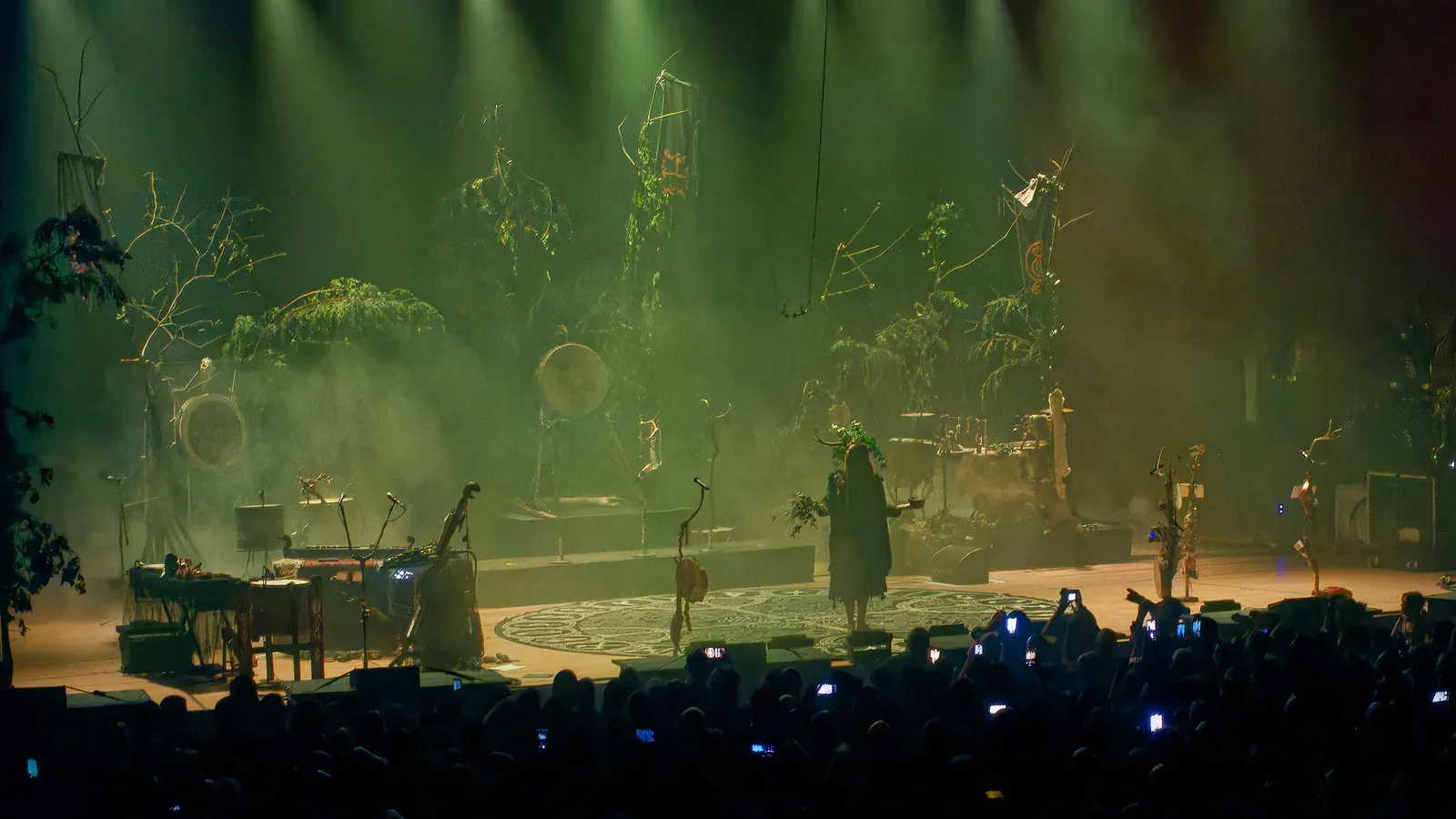
- 2014Heilung forms in CopenhagenThe Danish, Norwegian and German group bases its songs on Iron Age and Viking Age Germanic texts and runic inscriptions.
- 2017Lifa: Heilung Live at CastlefestA live album from the Dutch festival spreads Heilung's staged ritual show.
- 2019FuthaHeilung's studio album includes Hamrer Hippyer and reaches a large international audience.
Listening path
Start listening
A short path from an easy way in to the deep end. Thumbnails come from YouTube; the player loads only when you press play.
- 01
Wardruna, 2013
A rune song on frame drum and voice from the album that made Wardruna's ritual sound widely known.
- 02
Faun, 2016
Pagan folk with nyckelharpa, hurdy-gurdy and German lyrics, from the album Midgard.
- 03
Heilung, 2019
Heilung's chanted, drum-driven setting of Germanic texts, the sound of its stage show.
Facts
| Family | Religious |
| Origin | United States, United Kingdom, Germany, Latvia, Norway |
| Emerged | 1930s-1970s onward |
| Status | Active |
| Tempo | 90 to 155 BPM |
| Subgenres | 2 |
Modern pagan music, also called neopagan music, is music created for or influenced by contemporary paganism. It runs from ritual chants and song-prayers to pagan folk, pagan rock and the pagan themes of heavy metal, and it usually evokes pre-Christian imagery, mythology and nature.
It first took shape in the 1930s and is a loose family of scenes under the religious family rather than a single sound.
Origins
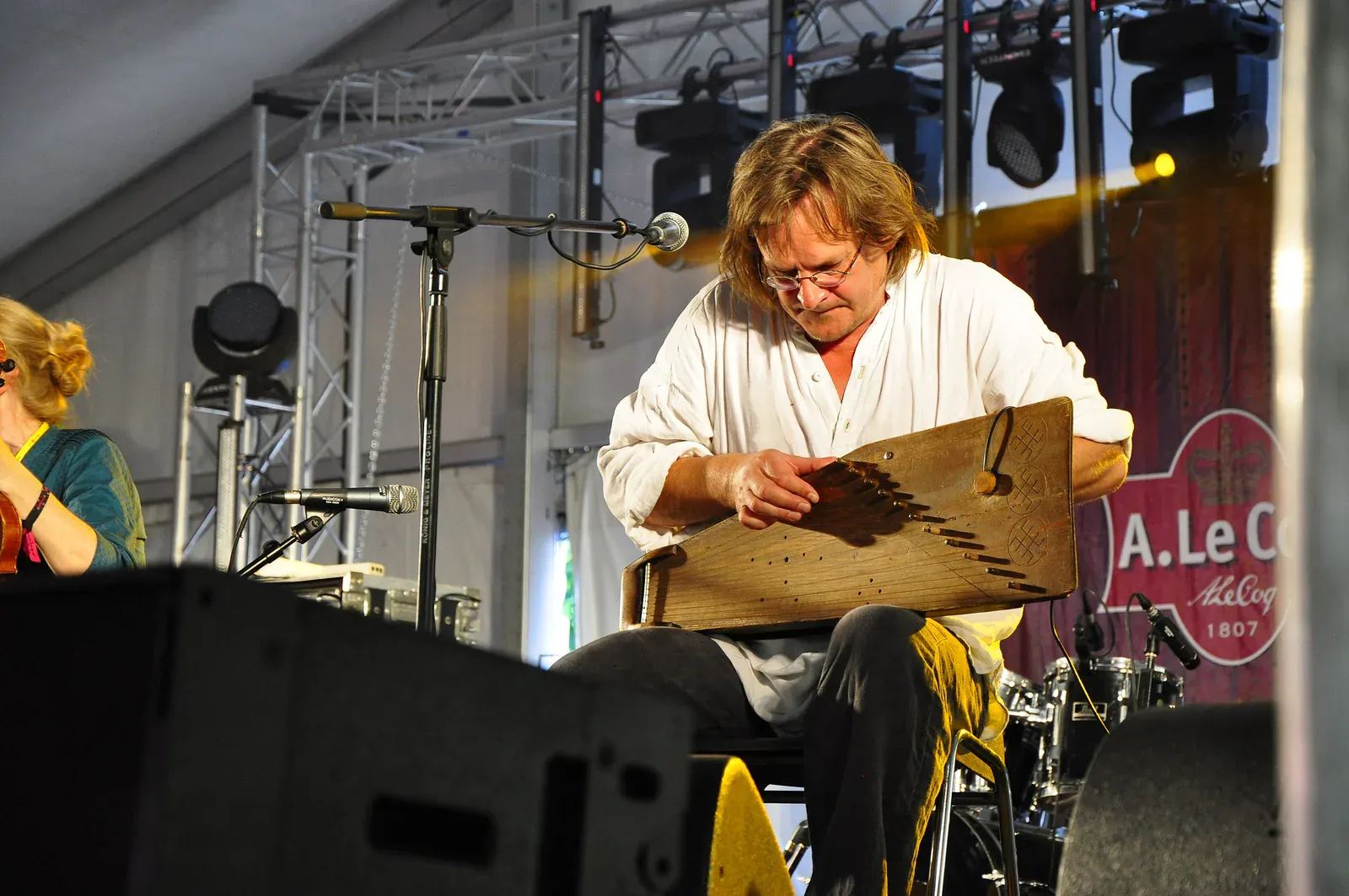
The earliest organised efforts came between the world wars. The Latvian movement Dievturība developed a musical life around the kokles, a Baltic zither, and around choral arrangements of folk songs for its calendar celebrations. Composer Artūrs Salaks became its musical leader in 1936 and called his diatonic, drone-based blend of archaic and new elements the Latvian style. In Norway, the composer Geirr Tveitt wrote the ballet Baldurs draumar in 1938 under the influence of a Germanic neopagan circle, a link that still makes his legacy controversial.
Ritual song and the Goddess movement, 1975-1988
A self-identified pagan music scene appeared in the United States in the 1970s. Gwydion Pendderwen, who released Songs for the Old Religion in 1975, set a pattern of folk and singer-songwriter material, and Charlie Murphy’s song Burning Times became popular in the early 1980s. Their style owed much to the British folk revival, especially acts such as Fairport Convention and Steeleye Span. The chant was equally important: short, repeated songs such as the Goddess chant became part of ritual itself, a practice that grew with the feminist Reclaiming tradition, founded in 1979. World music followed, partly from a wish to include other traditions, and drum circles settled on Middle Eastern malfuf rhythms, sometimes alternating with African clave. Records were sold in New Age shops and heard at gatherings such as the Starwood Festival, held every summer since 1981.
Pagan leaders elsewhere were musicians too. Sveinbjörn Beinteinsson, the first allsherjargoði of Iceland’s Ásatrúarfélagið, was a singer of rímur, the traditional alliterative song form, and in 1982 he released Eddukvæði, a sung Poetic Edda. In Lithuania, Romuva leaders Inija and Jonas Trinkūnas founded the group Kūlgrinda in 1989 to sing sutartinės, polyphonic song-chants, as part of ritual. Women’s music of the period also drew on the Goddess movement.
Pagan rock and the festival scenes, 1989-2002
Pagan rock grew out of British post-punk and gothic rock. Many younger pagans of the 1980s and 1990s preferred gothic rock to the tastes of the baby boom generation that then led pagan institutions, and by the mid 2000s the style had become part of the mainstream of those institutions. Inkubus Sukkubus, formed in Cheltenham in 1989, described itself as a pagan band above anything else. Its 1993 album Belladonna & Aconite brought a mainstream breakthrough in the United Kingdom, and its success encouraged other British bands to take up a pagan-goth identity. Dead Can Dance, formed in 1981, had a large effect on pagan listeners through its move from goth toward world music and mythology, although its members have not declared any allegiance to paganism.
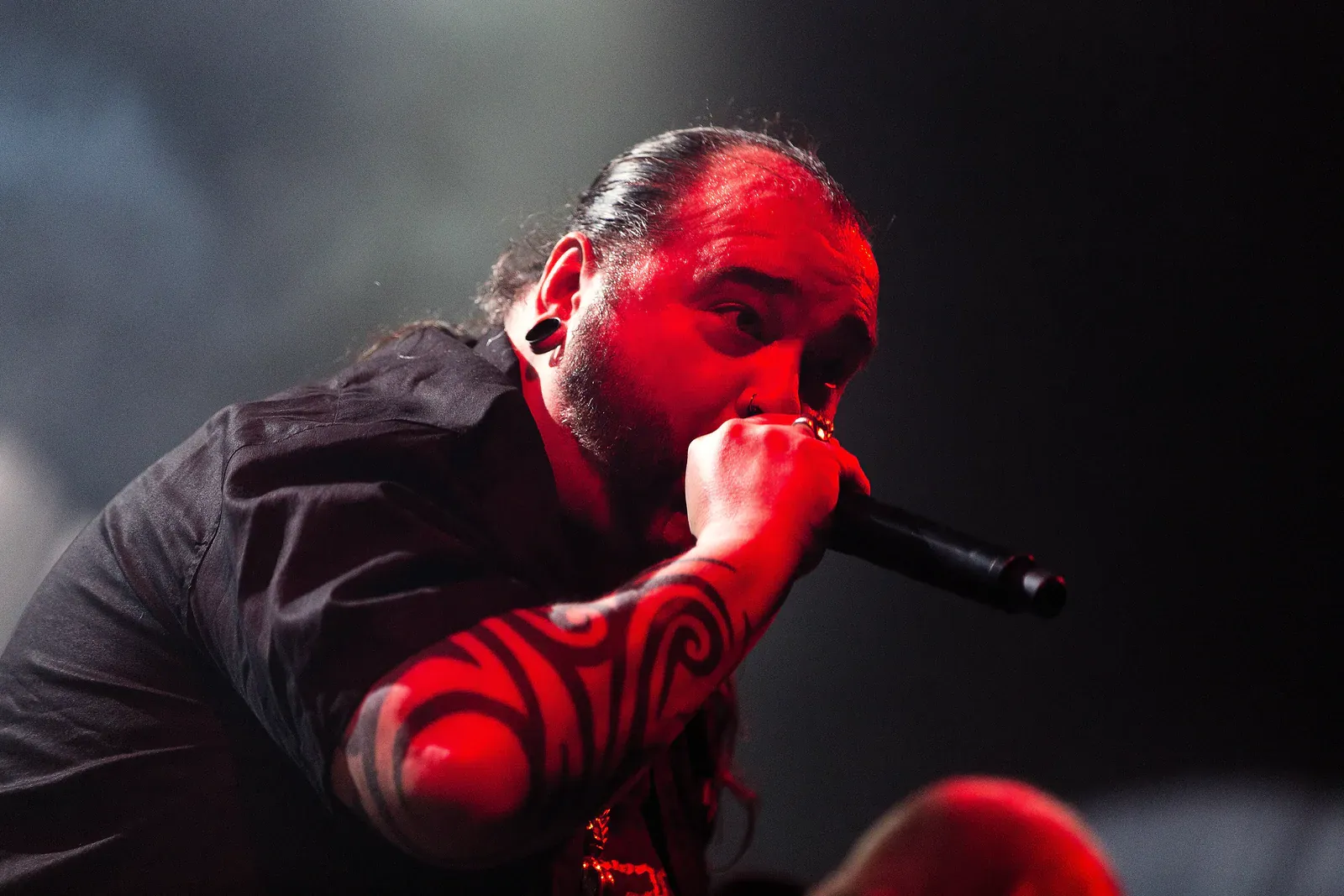
Festivals gave these bands a circuit. The first official Wave-Gotik-Treffen took place in Leipzig in 1992, and its Pagan Village later became a base for pagan visitors. Castlefest, begun in 2005 in the Dutch town of Lisse, added a medieval and fantasy setting.
Neofolk and pagan metal
Neofolk emerged from industrial music in the 1980s and overlaps with pagan music through its revivalist members, among them Robert N. Taylor, the band Sol Invictus and Fire + Ice. The scene is known for deliberate ambiguity and for contested politics, and several musicians moved between occult and pagan positions. Related pages cover folk metal, black metal and medieval music.
In heavy metal, Scandinavian bands from around 1990 replaced Satanic themes with paganism. Few of those musicians considered themselves religious, but black metal in particular developed an affinity for folk customs, as in a 1995 essay on the Wild Hunt that reached an English-language audience in the 1998 book Lords of Chaos. Bands that openly profess paganism include Arkona from Russia, Falkenbach from Germany and Skálmöld from Iceland.
Pagan folk, 1999-present
The German band Faun formed in 1999 and grew out of the neo-medieval scene into an eclectic mix of folk and electronic music. It named the result pagan folk, a term other bands, such as the Dutch group Omnia, took up. Pagan folk uses premodern instruments, medievalist costume and imagery, and modern elements to build an idealised picture of an archaic past that lives on in the present. Faun’s first mainstream success in Germany came in 2013.
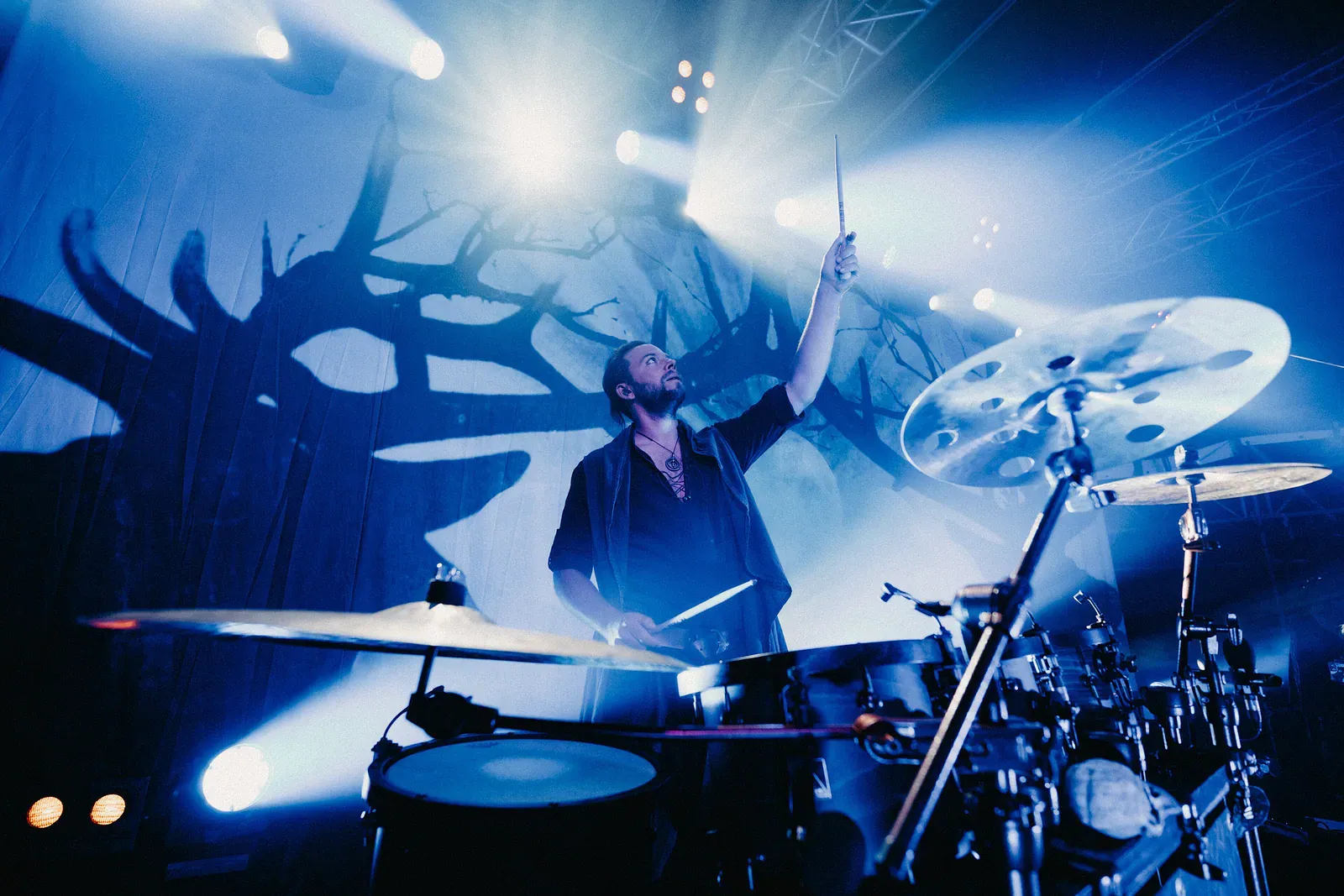
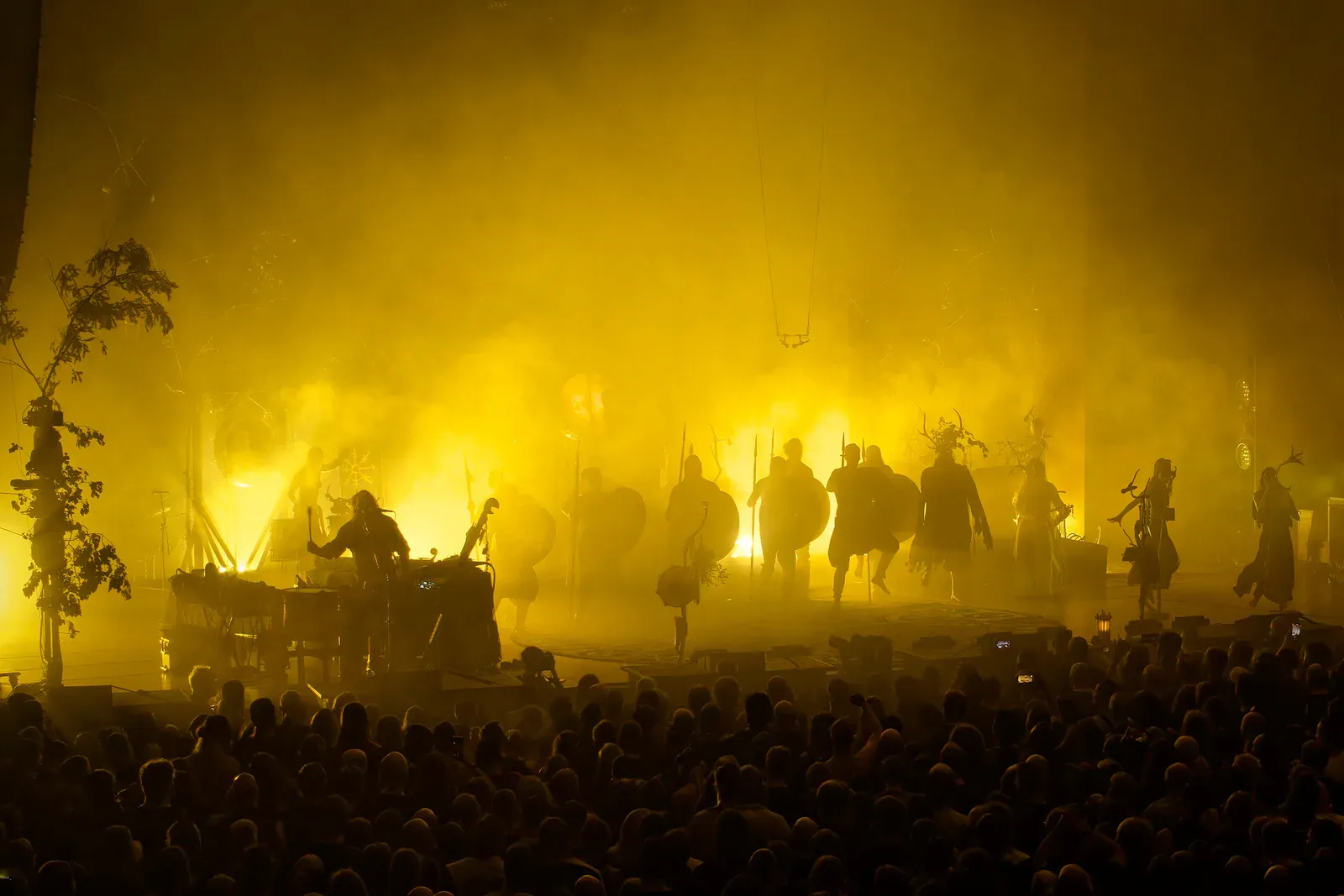
The Norwegian group Wardruna formed in Bergen in 2003. Its members come from metal backgrounds, and it has made ambient music on the runes and their meanings, using what it calls the oldest Nordic instruments, including harp, frame drum, mouth harp and goat horn, along with the sounds of trees, rocks and water. Its second album, Runaljod - Yggdrasil, appeared in 2013. Heilung formed in 2014 in Copenhagen, with members from Denmark, Norway and Germany, and bases its songs on texts and runic inscriptions from Iron Age and Viking Age Germanic peoples; its live album Lifa came from Castlefest in 2017, and its studio album Futha followed in 2019. The German musician Andrea Haugen, with projects such as Aghast and Hagalaz’ Runedance, works in a related vein centered on nature cycles and feminine mysteries. Regional scenes, such as Nordic folk music, supply much of the shared instrument pool.
Characteristics
The common thread is a function and a mood rather than a rhythm. Many works serve ritual or the seasons, draw on mythology and nature, and use archaic or reconstructed languages. Group singing and chant are frequent, and melodies are often modal or diatonic over drones. Tempo varies widely, from slow chants to dance numbers. The sound sheet above summarises tempos, scales and drums.
Instruments and production
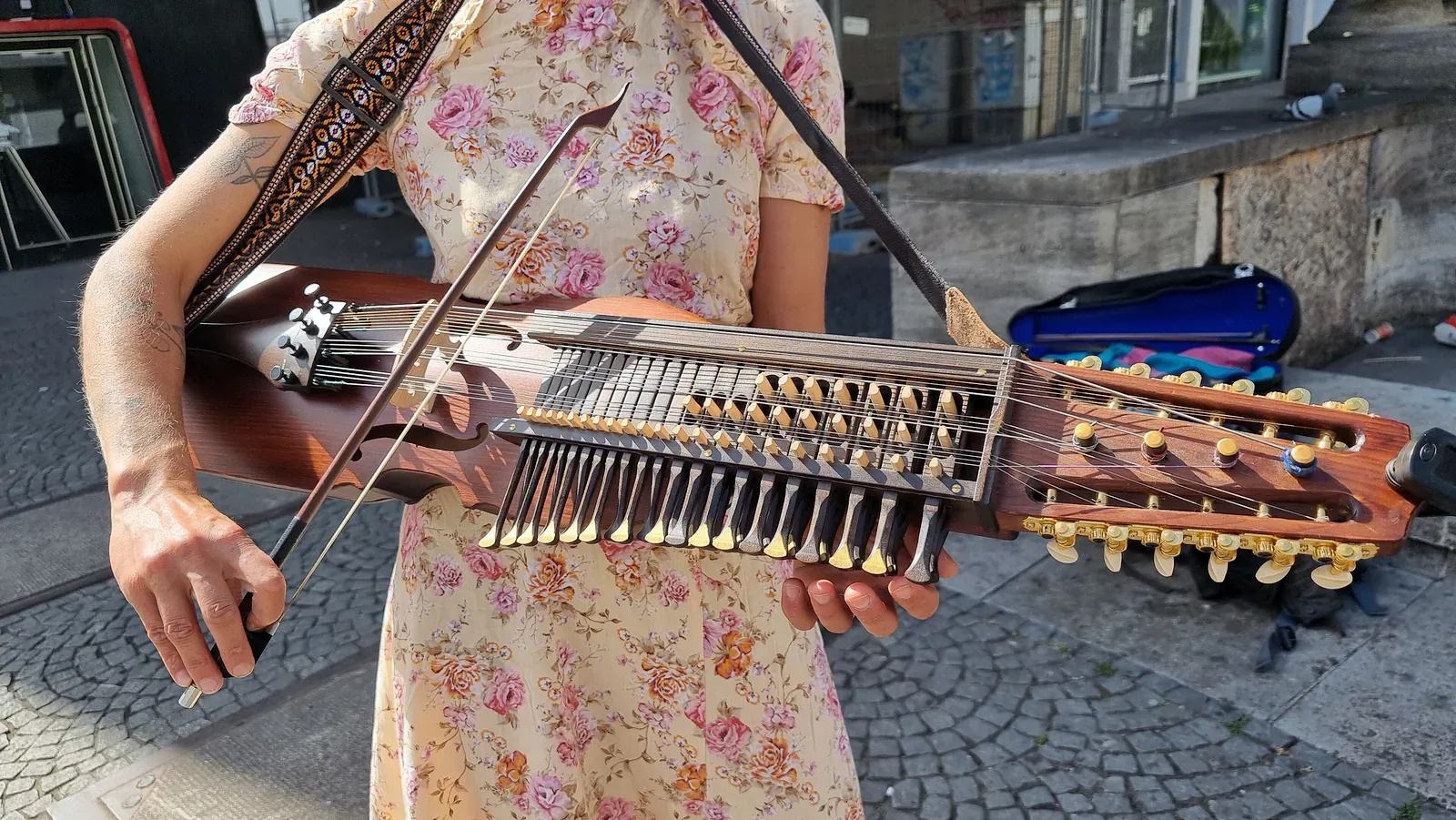
Instruments carry much of the identity. Faun uses Celtic harp, Swedish nyckelharpa, hurdy-gurdy, bagpipes, cittern and flutes, while Wardruna adds the lur, the Finnish jouhikko and deer-hide frame drums. American ritual circles brought in doumbeks, tars and djembes. Production ranges from recordings of natural sounds to electronic augmentation; the aim in pagan folk is an old sound heard through modern means.
Notable recordings
Wardruna’s Fehu, from Runaljod - Yggdrasil, shows the project’s core method: a rune named in the title, a frame drum pulse, and voices set in a spare ritual space. Faun’s Federkleid, from the 2016 album Midgard, places a nyckelharpa and hurdy-gurdy setting beside German lyrics. Heilung’s Hamrer Hippyer, in the version on Futha, chants Germanic text over heavy drums and reflects the band’s staged style. The Icelandic album Eddukvæði of 1982 is a plainer document of the same impulse: a pagan leader singing the Poetic Edda as it was once performed.
Culture
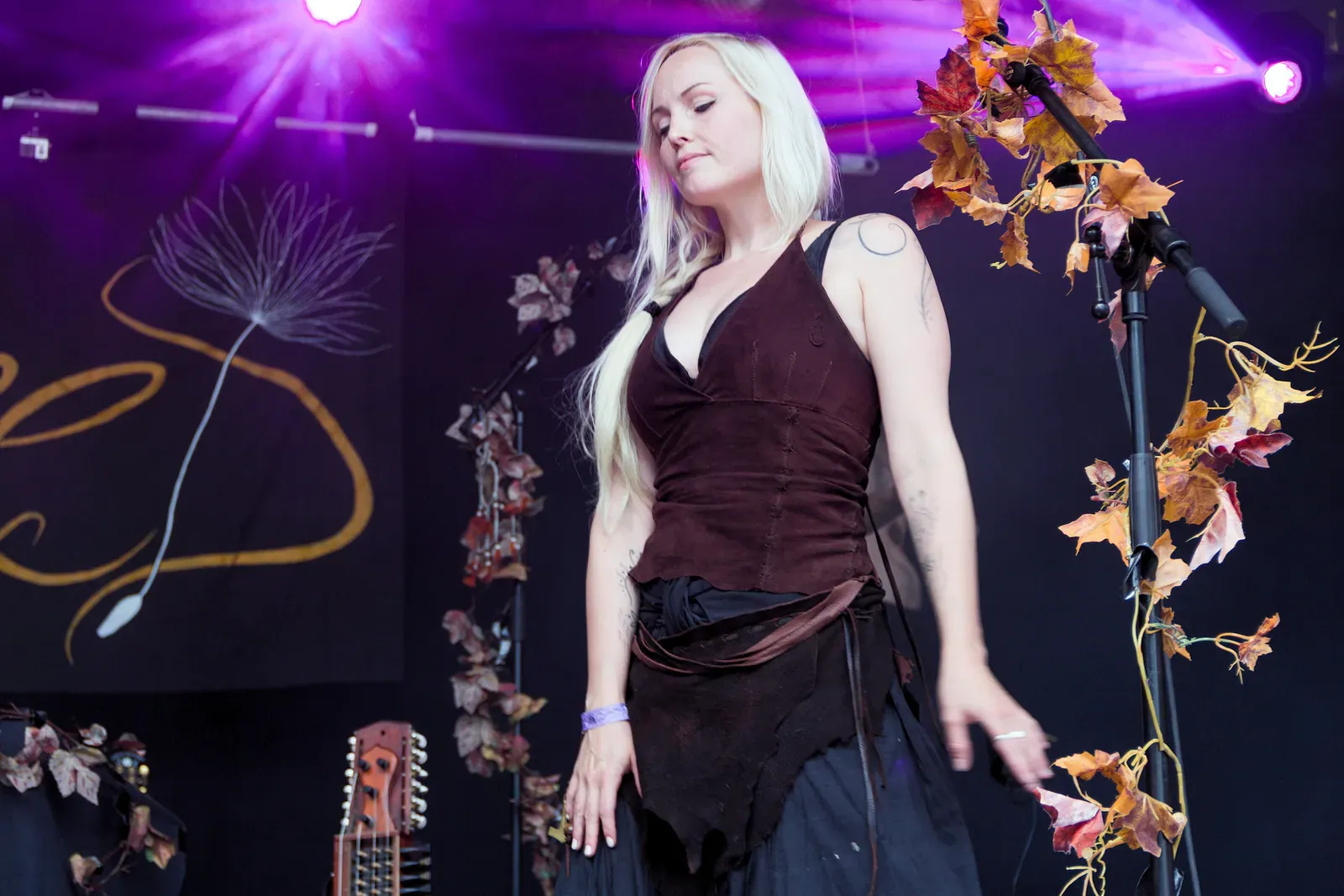
Ritual is the base of the culture. Circle chants, drum circles and the spiral dance of Reclaiming and feminist Wicca raise group energy and mark seasonal holidays. Festivals such as Starwood, the Wave-Gotik-Treffen and Castlefest host performances, rituals and workshops side by side. Medievalist costume is common on stage and in the audience.
Legacy
Modern pagan music turned a set of religious practices into a touring circuit. Its ritual chants entered ordinary pagan worship, its gothic and folk branches have their own festivals, and its Nordic reconstructions influence some metal bands. The same material continues to be debated for how it handles history and politics.
Misconceptions
Pagan music is not the same as pagan metal. Metal took on pagan themes only around 1990, and the metal strand is only one of several, beside chant, folk and gothic rock.
Pagan music is not performed only by practicing pagans. Few Scandinavian metal musicians who used pagan themes considered themselves religious, and the members of Dead Can Dance have not declared allegiance to paganism.
Pagan music is not ancient music. Its repertoire is a modern reconstruction: the Latvian style of the 1930s combined archaic and new elements, and pagan folk presents an idealised archaic past through modern means.
Frequently asked questions
What is modern pagan music?
Modern pagan music is music created for or influenced by contemporary paganism, including ritual chant, pagan folk, pagan rock and pagan-themed metal.
Which artists are linked to modern pagan music?
Wardruna, Heilung, Faun, Omnia and Inkubus Sukkubus are among the best known, together with early figures such as Gwydion Pendderwen and Sveinbjörn Beinteinsson.
What is pagan folk?
Pagan folk is folk-based music that combines premodern instruments, medievalist imagery and modern elements. The German band Faun coined the term, and Omnia also uses it.
Where is modern pagan music heard live?
Festivals such as the Wave-Gotik-Treffen in Leipzig, Castlefest in the Netherlands and the Starwood Festival in the United States host pagan performers, alongside ritual gatherings.
Sound
Sound sheet
Signature sounds
- Premodern and archaic instruments
- Chants and group singing
- Mythological and nature imagery
- Archaic or reconstructed languages
Drums and percussion
- Frame drum
- Doumbek
- Djembe
Techniques
- Circle chant
- Drone accompaniment
- Archaic-language singing
- Field sounds
- Electronic augmentation
Keys and modes
Diatonic and modal scales. Folk-derived melodies, often over drones, as in the Latvian style of Salaks.
Vocals
Unison group chants, folk-style solo song and lyrics in English or in archaic languages.
Scenes
Where it happened
Where and when the sound lived: one bar per city on a shared timeline.
Europe
Active scenes
Peak 6, 2014-2025
Home of Dievturība and its choral and kokles repertoire.
Base of Ásatrúarfélagið, whose leaders have sung and composed Edda settings.
Where Inkubus Sukkubus formed.
Where the band Omnia formed.
Where Wardruna formed.
Where Heilung formed.
Venues and places
Leipzig, 1992 to today. Dark-culture festival with a Pagan Village for pagan visitors.
Lisse, 2005 to today. Medieval and fantasy festival in the grounds of Keukenhof castle.
Culture
Culture markers
- Circle chants
Short sung chants, such as the Goddess chant, are part of the ritual itself.
Ritual - Drumming circles
Middle Eastern malfuf rhythms, sometimes alternating with African clave, became the standard.
Ritual - Spiral dance
Group dance of Reclaiming and feminist Wicca used to raise power in ritual.
Dance - Medievalist costume
Pagan folk acts and audiences wear archaic dress to match the imagery.
Fashion
Media
Key media
- 1982Rokk í Reykjavík
by Friðrik Þór Friðriksson. Documentary in which Sveinbjörn Beinteinsson performs in the rímur style.
Film - 1998Lords of Chaos
by Michael Moynihan and Didrik Søderlind. Its English edition carried the Wild Hunt essay linking black metal to pagan custom.
Book
Glossary
Terms on this page
Icelandic Norse pagan association whose leaders have also been singers and composers.
Latvian neopagan movement that built a musical life around kokles and choral song from the 1930s.
Dead Can Dance-inspired music combining gothic rock, world music and mythic themes.
Folk-based music with premodern instruments, medievalist imagery and modern elements that evokes an idealised archaic past.
Lithuanian pagan movement whose ritual group Kūlgrinda sings sutartinės.
Traditional Lithuanian polyphonic song-chants.
Religious family