Nhac vang
Nhac vang is the romantic Vietnamese popular song of South Vietnam in bolero and rumba rhythm, banned in 1975 and kept alive by exiles abroad.
Vietnam, around 1930
Southeast Asian family
Born
around 1930
Vietnam
Subgenres
1
Documented branches
Links
7
Genres it drew on or shaped
Tempo
75-135 BPMLineage
Family tree
Timeline
Era by era
From the first sparks to today. Select a dot to read the story behind it.
- Prewar song and Latin dance rhythms
1930 to 1954
- Saigon golden age
1955 to 1975
- Ban and exile
1976 to 1985
- Diaspora video era and return
1986 to today
Eras
Moments
- 1 Prewar song and Latin dance rhythms, 1930 to 1954
- 2 Saigon golden age, 1955 to 1975
- 3 Ban and exile, 1976 to 1985
- 4 Diaspora video era and return, 1986 to today
around 1930
Prewar song and Latin dance rhythms
Reformed songs of the 1930s and 1940s met rumba and bolero rhythms from Latin America. The first Vietnamese rumba song dates from 1949 and the first bolero from 1952.
- 1949First Vietnamese rumba songTrang son cuoc by Van Phung and Van Khoi is counted as the first Vietnamese song in rumba rhythm.
- 1952First Vietnamese bolero songNang chieu by Le Trong Nguyen is counted as the first Vietnamese song in bolero rhythm.
- 1952Duy Khanh wins a radio singing contestHe took first prize in a Hue radio contest with Trang thanh binh, then moved to Saigon to sing.
- 1954Partition and the refugee balladsAfter the 1954 division of the country, Lam Phuong became known for songs about the migration south, such as Chuyen do vi tuyen.
1955
Saigon golden age
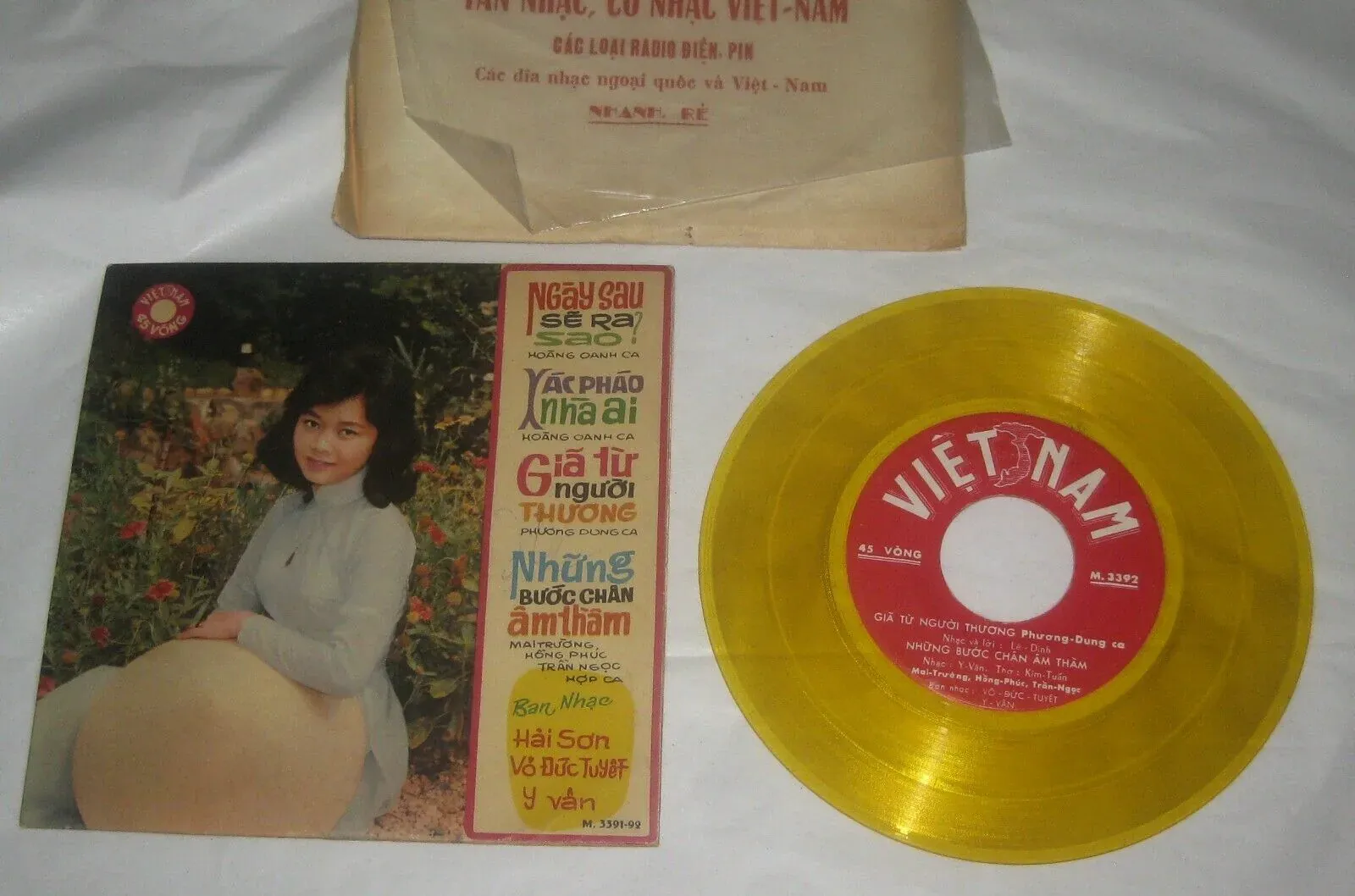
In South Vietnam the style took shape through record labels, radio and soldier songs. Continental, Shotguns and other labels pressed discs and tapes for a mass audience.
- 1960Continental label founded in SaigonHuynh Van Tu and Nguyen Van Dong started the label that later launched Giao Linh and the Thanh Tuyen and Che Linh duets.
- 1967Giao Linh signs with ContinentalA three-year exclusive contract made her a star within months.
- 1972Continental moves to cassette seriesThe label issued its themed cassette series from 1972, as imported tape took over from vinyl discs.
- 1975Fall of Saigon and the banNhac vang was banned in the new state, and listeners could be punished and their tapes confiscated.
1976
Ban and exile
After 1975 the music was banned at home. Singers were jailed or fled, and the industry restarted in the United States and France.
- 1980Che Linh escapes by boatAfter 28 months in prison he left Vietnam for Malaysia and later settled in Canada.
- 1982Asia founded in CaliforniaComposer Anh Bang started the production house in Westminster, California.
- 1984Thuy Nga founded in ParisTo Van Lai's company began the Paris By Night series, later made in Orange County.
1986
Diaspora video era and return
Cassettes, then video shows by Asia and Thuy Nga, kept the repertoire alive abroad. From the 2000s singers performed again in Vietnam.
- 1986Ban eased in VietnamLove songs could be written again, but the domestic industry had already collapsed.
- 1992Asia films its first live showDem Sai Gon 1 was recorded at Caesars Palace in Las Vegas.
- 1995Green music promoted against yellowVietnam's culture ministry pushed nhac xanh, music for the young, to turn listeners away from nhac vang, with little success.
- 2005Paris By Night 77The 30 Years Away from the Homeland show marked the 30th anniversary of 1975 and featured Nhu Quynh and Truong Vu.
- 2010Concerts at the Hanoi Opera HouseHuong Lan and Tuan Vu performed for half a month in August.
- 2018Asia ends productionRising costs and falling sales ended the diaspora show business; its last show honoured Pham Dinh Chuong.
Listening path
Start listening
A short path from an easy way in to the deep end. Thumbnails come from YouTube; the player loads only when you press play.
- 01
Giao Linh, 1999
A rumba-bolero story song, an easy way into the sombre Saigon style.
- 02
Giao Linh, 1992
A slow lament that shows the chest-voice delivery of the genre.
- 03
Như Quỳnh & Trường Vũ, 2005
A duet medley from the Paris By Night stage, the diaspora show format.
Facts
| Family | Southeast Asian |
| Origin | Vietnam |
| Emerged | Post-1954 |
| Status | Active |
| Tempo | 75 to 135 BPM |
| Meter | 4/4 |
| Grew out of | Nhac tien chien |
| Subgenres | 1 |
Nhac vang, “yellow music”, is the romantic popular song of South Vietnam, sung in a slow bolero, rumba or ballad rhythm over plain lyrics of love, poverty, home and soldiers.
It grew from the prewar song style called tan nhac, took its final shape in Saigon between 1955 and 1975, was banned after the fall of the city, and then lived on through cassettes and video shows made by exiles. It is part of the wider Southeast Asian family.
Origins
The base was the reformed Vietnamese song of the 1930s and 1940s, mixed with the lyrical folk songs of the Mekong Delta. On top of it came the dance rhythms that Latin America sent around the world: mambo, cha-cha, rumba, bolero and tango. Vietnamese radio played them, and composers found that a guitar and a dance beat were enough to make a song travel through the streets. A critic of 1954 already complained about the flood of such songs.
Two dates are cited for the start of the Latin turn. The first Vietnamese song in rumba rhythm is held to be Trang son cuoc, written by Van Phung and Van Khoi in 1949. The first in bolero rhythm is Nang chieu by Le Trong Nguyen, from 1952. The Vietnamese bolero is slower than its Cuban relative, and it sits close to Japanese enka and Korean trot in mood.
The name is political. It was coined in opposition to “red music”, the revolutionary song endorsed in the north, and it also points to the mostly yellow flag of the southern state. Bolero is only part of the style: many nhac vang songs use other rhythms, and some composers outside the genre also wrote in bolero.
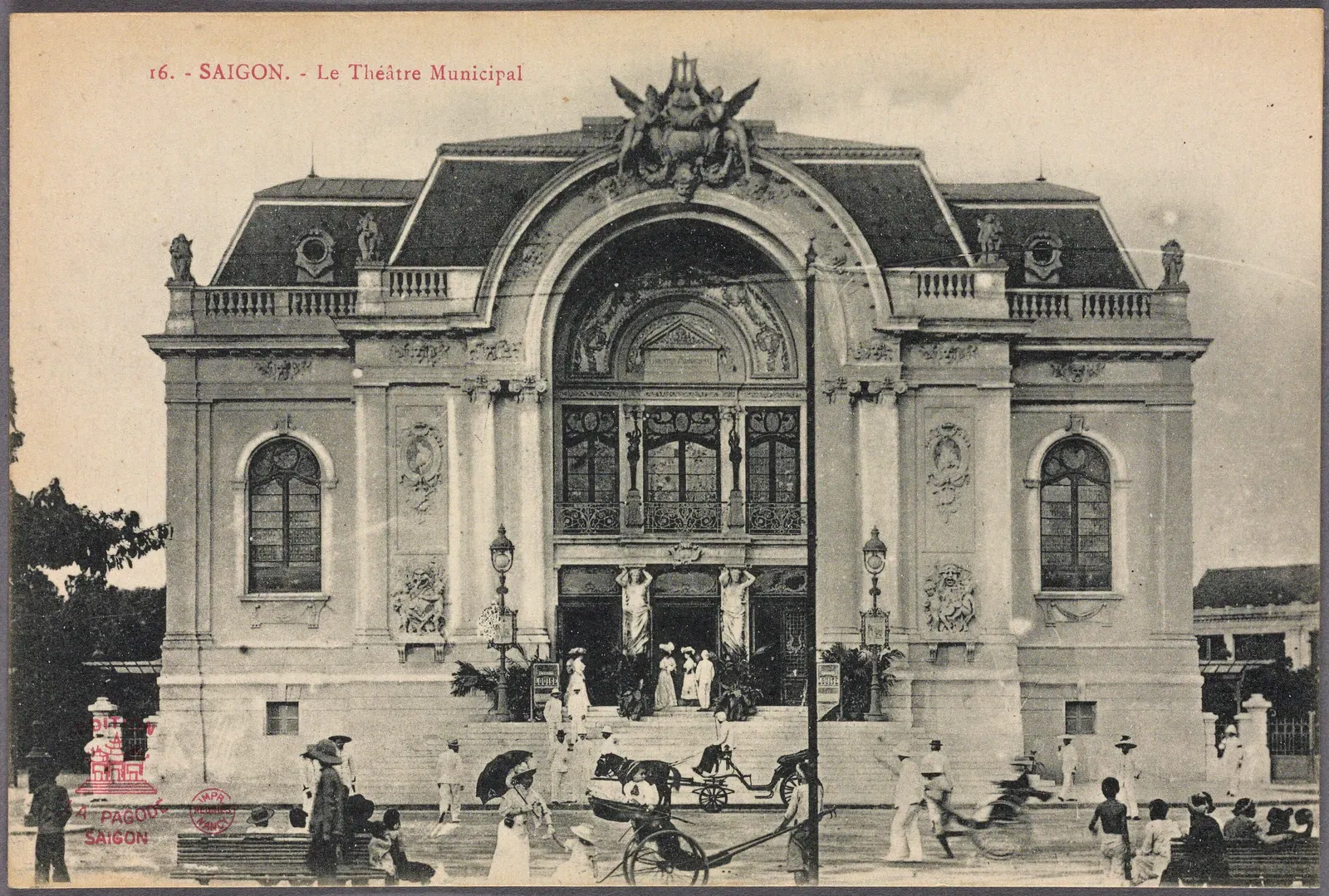
Saigon, 1955-1975
After the 1954 division of the country, the south became the centre of the style. Lam Phuong, who has more than 200 published songs, became known that year for Chuyen do vi tuyen and other songs about the migration south, then wrote army songs and, in the 1960s, hits such as Thanh pho buon. Record houses such as Huong Giang and Shotguns issued discs and tapes under the “nhac vang” banner.
The label that did most to shape the sound was Continental, founded in Saigon in 1960 by the businessman Huynh Van Tu and the composer Nguyen Van Dong. It pressed modern songs and, from 1966, the stage music of the south as well, so that the market for nhac vang and for cai luong theatre grew together. By 1972 it had agents in 44 provinces and had moved to themed cassette series as imported tape displaced vinyl.
Continental’s roster shows how the style made stars. Giao Linh, a ticket clerk at Air Vietnam, signed an exclusive contract in 1967 worth 150,000 dong, against a monthly wage of 4,600, and became a star within three months. Nguyen Van Dong was so strict that he had her record one song 48 times. The singer was nicknamed the queen of sorrow for her sombre delivery. The duets of Thanh Tuyen and Che Linh also rose there. Che Linh, a Cham singer from Ninh Thuan, was one of the “four pillars” of early male voices, with Duy Khanh, Nhat Truong and Hung Cuong.
Duy Khanh came from Quang Tri. He won a radio contest in Hue in 1952, moved to Saigon, and sang folk-flavoured songs before moving to the sentimental repertoire. Nhat Truong, a soldier-broadcaster, sang army songs on stage in uniform.
Ban and exile, 1975-1985
The ban came with the end of the war in 1975. The new state treated the music as decadent, listeners could be punished, and tapes were confiscated. Lam Phuong left on a ship on 30 April and wrote a song on deck about leaving home. Che Linh was held in prison for 28 months, escaped to Malaysia in 1980 and later settled in Canada. Duy Khanh stayed, was barred from singing for years, and led a troupe that sang red songs, before going to the United States in 1988.
The industry rebuilt itself abroad. In 1982 the composer Anh Bang started a cassette business in Westminster, California, which became the production house Asia. In 1984 To Van Lai founded Thuy Nga in Paris, and its Paris By Night shows later moved to Orange County. The ban at home eased in 1986, but by then the domestic industry had collapsed.
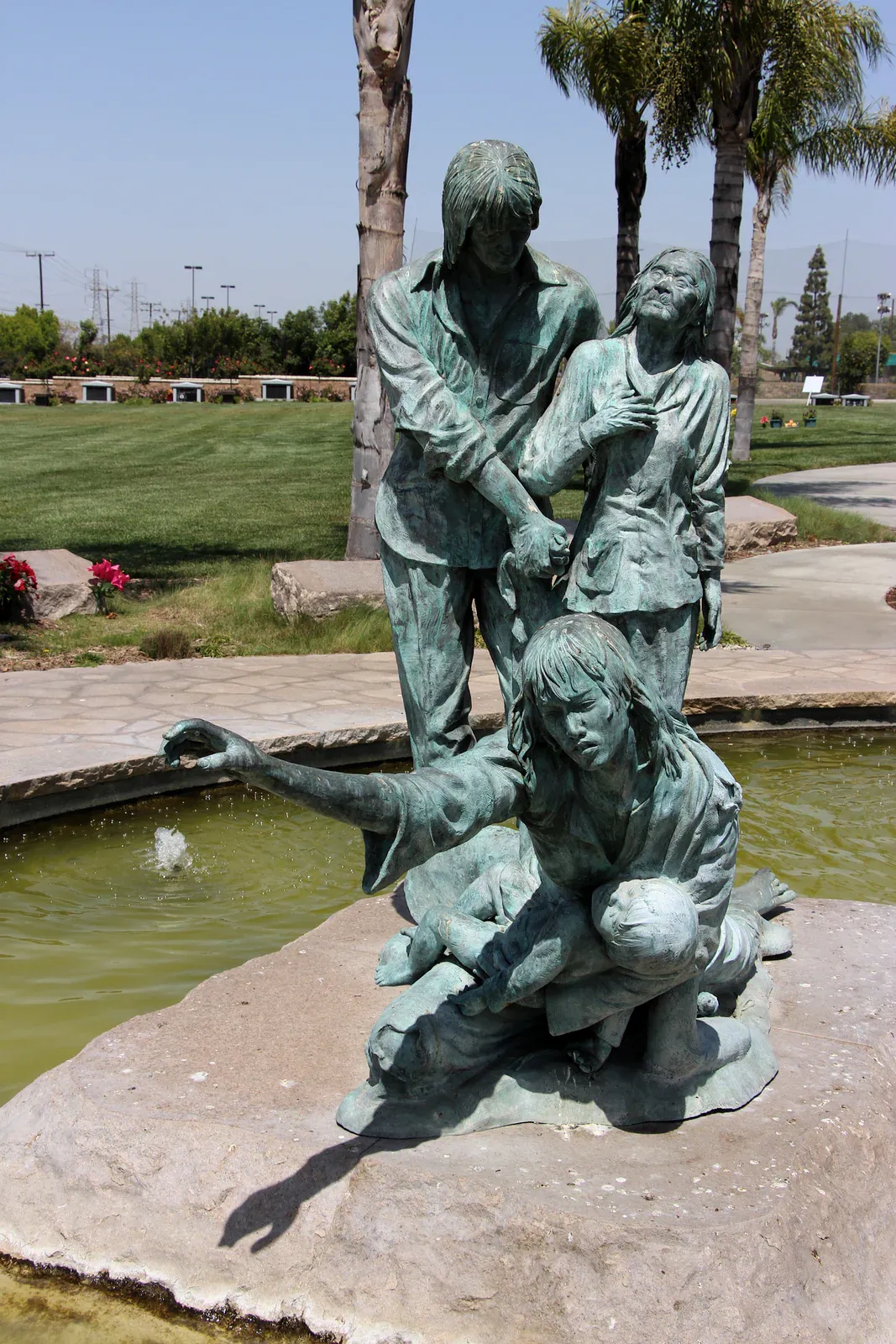
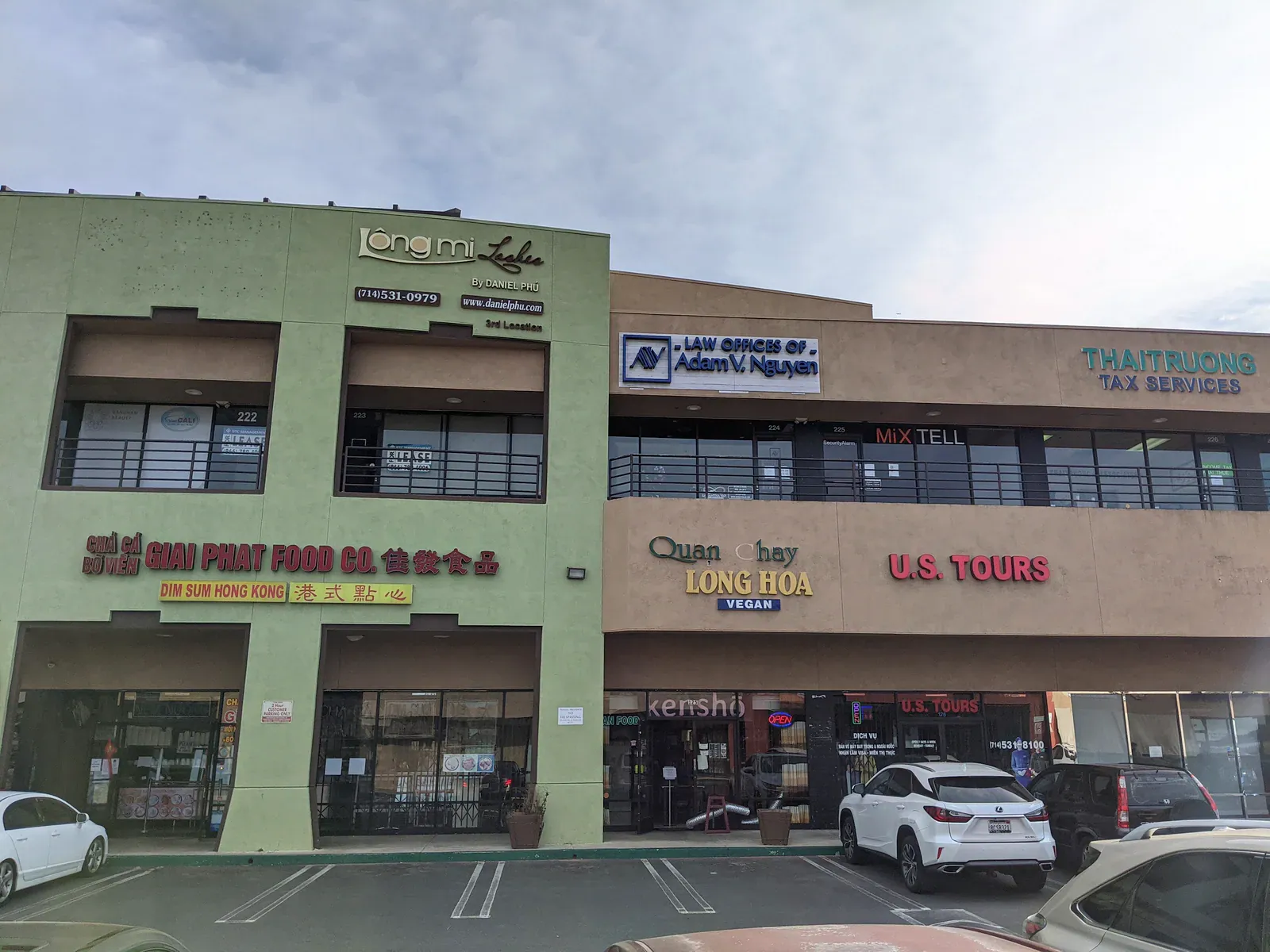
Diaspora and return, 1986 onward
Overseas, nhac vang became the main taste of Vietnamese listeners. Asia began filming location music videos in 1990 and recorded its first live show, Dem Sai Gon 1, at Caesars Palace in Las Vegas in August 1992. Singers of the young generation such as Nhu Quynh were made by these shows, and Paris By Night 77, filmed in 2005, marked the thirtieth anniversary of the fall of Saigon.
At home, the culture ministry promoted “green music” for the young in the 1990s to turn them from nhac vang, with little result. In August 2010 Huong Lan and Tuan Vu sang at the Hanoi Opera House for half a month. Overseas shows were still barred from sale in Vietnam, but bolero became popular again as exiled singers performed there and television singing contests revived banned songs. In the diaspora the audience aged, and production costs rose until Asia ended its shows in 2018, many of its singers moving to Thuy Nga.
Characteristics
Most songs are in 4/4 with little rhythmic change and a simple A-B-A form. Melodies lie in minor keys in a middle or low range, and the singer uses a chest voice with few high notes, a sweet delivery and carefully rounded words. The lyrics tell a personal story about heartbreak, hardship, the home village or the soldier at the front. The backing is a light orchestra, sometimes with folk instruments, and the melodic turns keep traces of the southern folk song.
Instruments and production
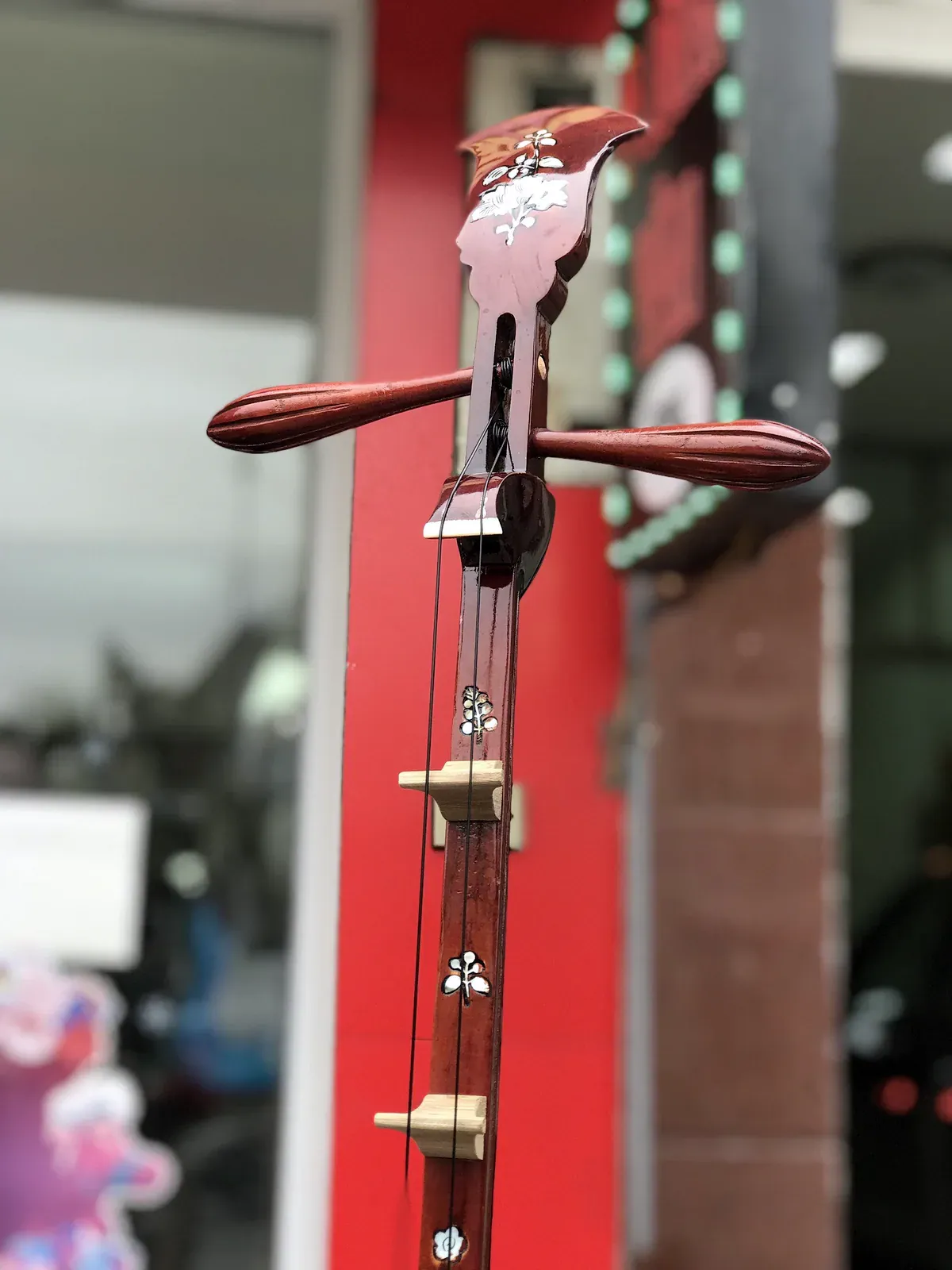
A cheap guitar, sometimes with a Hawaiian guitar, was enough to carry a Latin dance song through radio and street singing, and recordings were made with a light studio orchestra. The style spread on discs, then on cassettes, then on video. Many singers now perform old songs with newer instruments and mixed styles, so the sound often differs from the first recording.
Notable recordings
Giao Linh’s Chuyen do vi tuyen, a four-disc set of 2001, is named after Lam Phuong’s song of the 1954 refugees and gathers her catalogue. Che Linh’s albums of 1973 and 1974, Che Linh va tinh bo vo and Tieng hat Che Linh 1, show the sound just before the end of the Saigon years. Nhu Quynh’s Chuyen Hoa Sim of 1995 belongs to the next generation, singing the old songs for the diaspora. The Paris By Night 77 medley by Nhu Quynh and Truong Vu shows the show format that spread the repertoire.
Culture
The two nicknames of the market are part of the story. Songs judged refined were called “nhac sang”, and the sentimental mass songs “nhac sen”, terms born in the Saigon trade itself. Duets of a man and a woman sold many tapes, and soldier singers appeared in uniform.
Legacy
Nhac vang left a large repertoire of love songs that is still sung. It is one root of later V-pop, and its songs return in television singing contests in Vietnam, where banned titles are performed again.
Misconceptions
Nhac vang is not the same as bolero. Bolero is the most common rhythm but only one part, and songs in cha-cha, rumba and other beats belong to it too. The name does not describe a mood. It is a label of the Cold War, set against red music. The style is also not the same as every love song of the Saigon years: composers such as Trinh Cong Son, whom Khanh Ly sang, are usually counted as a separate stream. And it did not vanish in 1975, because the exile industry kept recording it for decades.
Frequently asked questions
What is nhac vang?
Nhac vang is the romantic popular song of South Vietnam, in slow bolero, rumba and ballad rhythms with plain lyrics about love, hardship and soldiers. It took shape in Saigon between 1955 and 1975.
Why is it called yellow music?
It was named in opposition to red music, the revolutionary song of the north, and it also points to the colour of the southern flag.
Is Vietnamese yellow music the same as Chinese yellow music?
No. The term is used in China for a different kind of popular music with separate origins.
Was nhac vang banned?
Yes. It was banned in 1975, listeners could be punished, and the ban eased in 1986. Concerts returned to Vietnam from the 2000s.
Sound
Sound sheet
Anatomy of a track
| # | Part |
|---|---|
| 1 | Verse A |
| 2 | Verse B |
| 3 | Return to A |
Signature sounds
- Slow, sad melody in bolero or rumba rhythm
- Plain colloquial lyrics of love, poverty, home or soldiers
- Chest voice with few high notes and rounded words
- Southern folk-song inflection in the melody
Techniques
- Chest-voice delivery
- Bolero and rumba rhythm
- Folk-song inflection
- Male-female duets
Keys and modes
Minor keys. Melodies sit in minor modes in a middle or low vocal range.
Vocals
Warm chest voice, narrative and plaintive, with clear diction.
Scenes
Where it happened
Where and when the sound lived: one bar per city on a shared timeline.
Asia
North America
Europe
Active scenes
Peak 3, 2010-2025
Capital of South Vietnam, home of Continental, radio studios and the tea rooms where singers worked.
Heart of Little Saigon, seat of Asia and Thuy Nga, and a settling place for exiled singers.
Where Thuy Nga started before moving production to California.
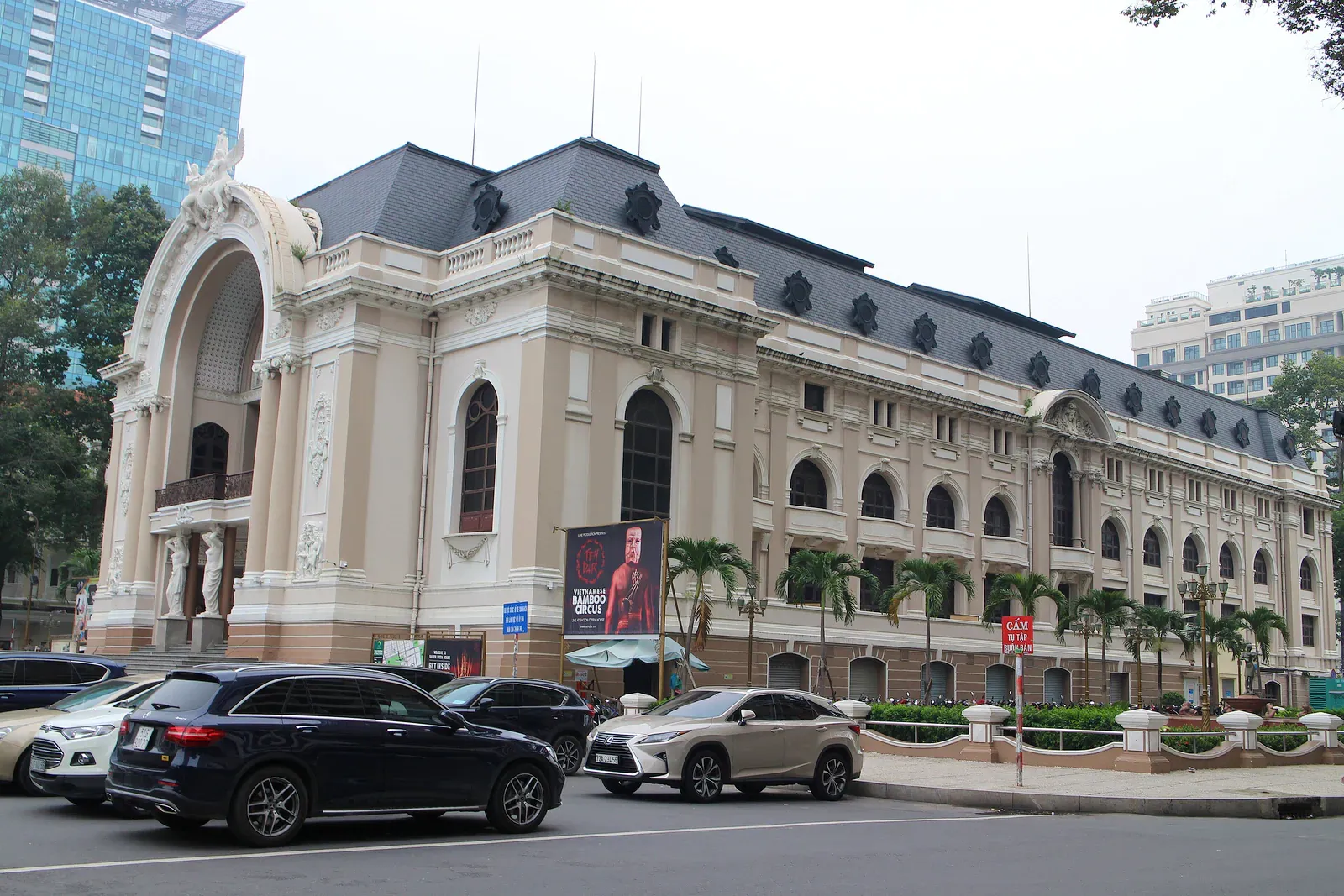
The Opera House staged a fortnight of nhac vang concerts in 2010.
Venues and places
Las Vegas, 1992 to today. Setting of Asia's first live video show, Dem Sai Gon 1.
Long Beach, 2005 to today. Filming site of Paris By Night 77.
Hanoi, 2010 to today. Host of the 2010 fortnight of concerts by Huong Lan and Tuan Vu.
Culture
Culture markers
- Yellow and red music
Nhac vang was named in opposition to nhac do, the music endorsed by the north, after the colours of the two flags.
Slang - Nhac sang and nhac sen
Terms born in the Saigon music market for refined pop versus sentimental mass pop.
Slang - Soldier uniforms on stage
Singers of soldier songs, such as Nhat Truong, Hung Cuong and Che Linh, often performed in military uniform.
Fashion
Media
Key media
- 1992Đêm Sài Gòn 1
by Asia Entertainment. First live-recorded video show of Asia, filmed in Las Vegas.
Film - 2005Paris By Night 77: 30 Năm Viễn Xứ
by Thúy Nga. Anniversary show filmed at Long Beach.
Film
Glossary
Terms on this page
Red music, songs of the north and the revolution, the opposite of nhac vang.
Soldier songs, a strand about army life and the home front, very popular in the 1960s.
Yellow music, the romantic popular song of South Vietnam in bolero, rumba and ballad rhythm.
Green music, songs for the young, promoted in the 1990s as an alternative.
New music, the Western-style song form that began in Vietnam in the 1930s.
Love songs of the Saigon period, a neighbouring label that overlaps with nhac vang.
Southeast Asian family