Third stream
Third stream is a hybrid of jazz and classical music named by Gunther Schuller in 1957, combining classical forms and instruments with improvisation.
Boston, 1957
Jazz family
Born
1957
Boston
Subgenres
1
Documented branches
Links
9
Genres it drew on or shaped
Tempo
75-135 BPMLineage
Family tree
Timeline
Era by era
From the first sparks to today. Select a dot to read the story behind it.
- Jazz meets the concert hall
1920 to 1956
- Naming and first recordings
1957 to 1962
- Orchestras and conservatories
1963 to 1980
- Dispersal into chamber jazz
1981 to today
Eras
Moments
- 1 Jazz meets the concert hall, 1920 to 1956
- 2 Naming and first recordings, 1957 to 1962
- 3 Orchestras and conservatories, 1963 to 1980
- 4 Dispersal into chamber jazz, 1981 to today
around 1920
Jazz meets the concert hall
Rhapsody in Blue, orchestral jazz and the Modern Jazz Quartet's fugues and chamber textures prepared both audiences before the term existed.
- 1952Modern Jazz Quartet formsJohn Lewis, Milt Jackson, Percy Heath and Kenny Clarke start a group that blends bebop with classical form and counterpoint.
- 1953MJQ records DjangoThe Modern Jazz Quartet cuts the slow, processional tribute to Django Reinhardt, released on Prestige.
1957
Naming and first recordings
Gunther Schuller coined the term at Brandeis in 1957. Music for Brass, Modern Jazz Concert, Sketches of Spain and Jazz Abstractions set the template.
- 1957Schuller names third streamIn a lecture at Brandeis University, Gunther Schuller describes music located between jazz and classical music.
- 1957Music for BrassSchuller leads a brass ensemble with works by himself, J.J. Johnson, John Lewis and Jimmy Giuffre.
- 1957Miles AheadGil Evans writes a large-ensemble set around Miles Davis, with French horns, tuba and woodwinds.
- 1958Modern Jazz ConcertCompositions by Schuller, Giuffre, George Russell, Charles Mingus, Harold Shapero and Milton Babbitt mix jazz and classical players.
- 1959Time OutDave Brubeck's quartet brings odd meters such as 5/4 and 9/8 to a wide audience.
- 1960Sketches of SpainMiles Davis and Gil Evans record an orchestral set built on Spanish and classical themes.
- 1960Jazz AbstractionsJohn Lewis presents compositions by Schuller and Jim Hall for jazz soloists with a string quartet.
- 1961Schuller defines the genreSchuller describes third stream as a genre about halfway between jazz and classical music, not a form of jazz.
- 1961FocusEddie Sauter writes a suite for Stan Getz and strings, released on Verve.
- 1962Orchestra U.S.A. foundedLewis and Schuller help launch a repertory orchestra to play third-stream scores.
1963
Orchestras and conservatories
Orchestra U.S.A. toured the concept while Schuller led the New England Conservatory from 1967 to 1977 and taught it to a generation of players.
- 1967Schuller leads the New England ConservatoryHe becomes president and holds the post until 1977, adding jazz and third-stream study.
- 1969ECM founded in MunichThe label's later chamber-jazz catalogue carries third-stream ideas into new decades.
1981
Dispersal into chamber jazz
The label faded as a movement, but the approach lived on in chamber jazz, ECM recordings and string-quartet jazz groups.
- 1981What third stream is notSchuller lists what he does not count as third stream, including jazz with strings and fugues played by jazz musicians.
- 2015Schuller diesThe composer, conductor and horn player dies on 21 June, aged 89.
Listening path
Start listening
A short path from an easy way in to the deep end. Thumbnails come from YouTube; the player loads only when you press play.
- 01
Modern Jazz Quartet, 1953
Slow processional theme where vibraphone and piano trade improvised lines over a composed frame.
- 02
Dave Brubeck Quartet, 1959
A 9/8 theme in a Turkish-influenced rhythm that gives way to swing for the solos.
- 03
Miles Davis, 1960
Gil Evans's orchestra frames Davis's trumpet in a long Spanish-flavored piece.
- 04
Stan Getz, 1961
Eddie Sauter's written string and woodwind parts surround Getz's tenor saxophone.
Facts
| Family | Jazz |
| Origin | Boston, United States |
| Emerged | 1957 |
| Status | Active |
| Tempo | 75 to 135 BPM |
| Meter | 4/4 |
| Subgenres | 1 |
Third stream is a music genre that sits about halfway between jazz and Western classical music. The composer Gunther Schuller coined the term in 1957 in a lecture at Brandeis University, and it describes works that bring classical forms and instrumentation together with improvisation.
Improvisation is the part that is generally treated as essential, which separates third stream from a classical piece with a swing feel. It belongs to the jazz family.
Origins
The idea was older than the name. George Gershwin’s Rhapsody in Blue had already shown that a concert piece could carry jazz riffs and a long cadenza, and orchestral jazz writers had been scoring for larger forces for decades. What changed in the 1950s was that musicians on both sides began to treat the exchange as a serious project rather than a novelty.
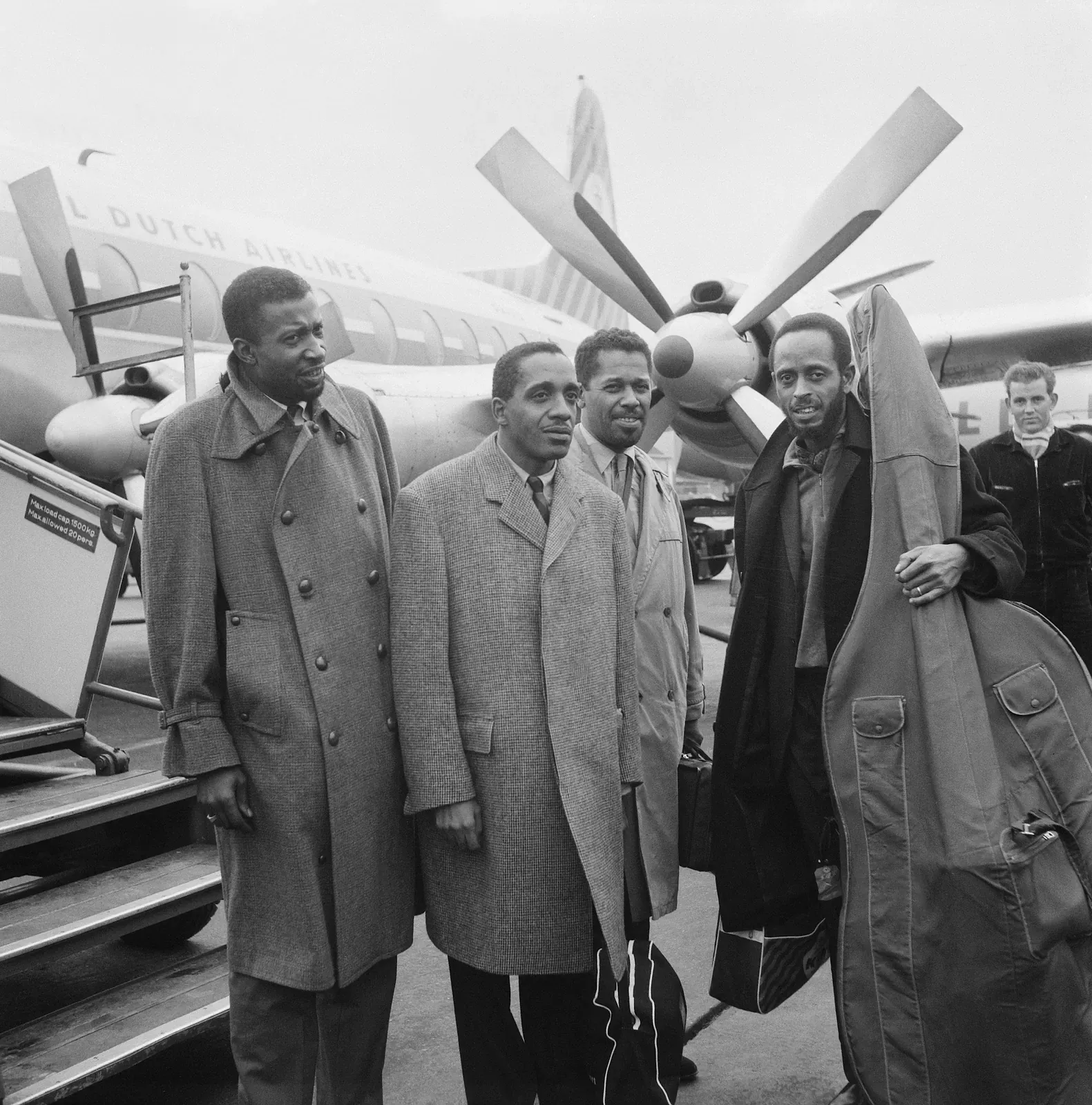
The Modern Jazz Quartet is the clearest early example. Pianist John Lewis, vibraphonist Milt Jackson, bassist Percy Heath and drummer Kenny Clarke formed it in 1952, growing out of the rhythm section of a Dizzy Gillespie big band. Lewis wrote counterpoint and fugues for the group, and the quartet appeared in concert dress and played in halls. Its 1953 recording “Django,” released on Prestige, is a slow, processional tribute to the guitarist Django Reinhardt in which the written frame holds open space for improvised solos.
Schuller was a horn player and composer who had worked in symphony orchestras and jazz groups. At Brandeis he called the music he had in mind a new synthesis and gave it a separate name so that jazz and classical music, the two mainstreams, could carry on unaffected. That year he led the recording sessions that became Music for Brass, with works by himself, J.J. Johnson, John Lewis and Jimmy Giuffre. A second set, Modern Jazz Concert (1958), mixed jazz and classical players in compositions by Schuller, Giuffre, George Russell, Charles Mingus, Harold Shapero and Milton Babbitt. The pieces were first performed at the Brandeis Festival of the Arts in 1957, and both albums were issued on Columbia.
The naming years, 1957-1962
Schuller sharpened the definition in 1961, calling third stream a new genre located about halfway between jazz and classical music, and insisting that “third stream jazz” was a contradiction. The label did not mean any mixture. In 1981 he listed what it is not: jazz with strings, jazz played on classical instruments, classical music played by jazz players, a bit of Ravel or Schoenberg inserted between bebop changes, or jazz in fugal form. He added that it was not designed to replace either tradition, only to be one option among many.
Several of the best-known records of the period came from the Columbia studios in New York. The arranger Gil Evans, who had been important to the development of cool jazz, wrote large-ensemble scores for Miles Davis with French horns, tuba and woodwinds. Miles Ahead appeared in 1957, and Sketches of Spain, released in 1960 and built on Spanish and classical themes, is widely counted as third stream. In 1960 John Lewis also presented Jazz Abstractions, with compositions by Schuller and Jim Hall for jazz soloists and strings, on Atlantic. Stan Getz joined Eddie Sauter for the suite Focus in 1961, and Jimmy Giuffre wrote Piece for Clarinet and String Orchestra the same year.
Composers influenced by Schuller’s comments included Don Ellis, Eddie Sauter, William Russo, Andre Hodeir, Lalo Schifrin, Teo Macero, Gary McFarland and Friedrich Gulda.
Orchestras and conservatories, 1963-1980
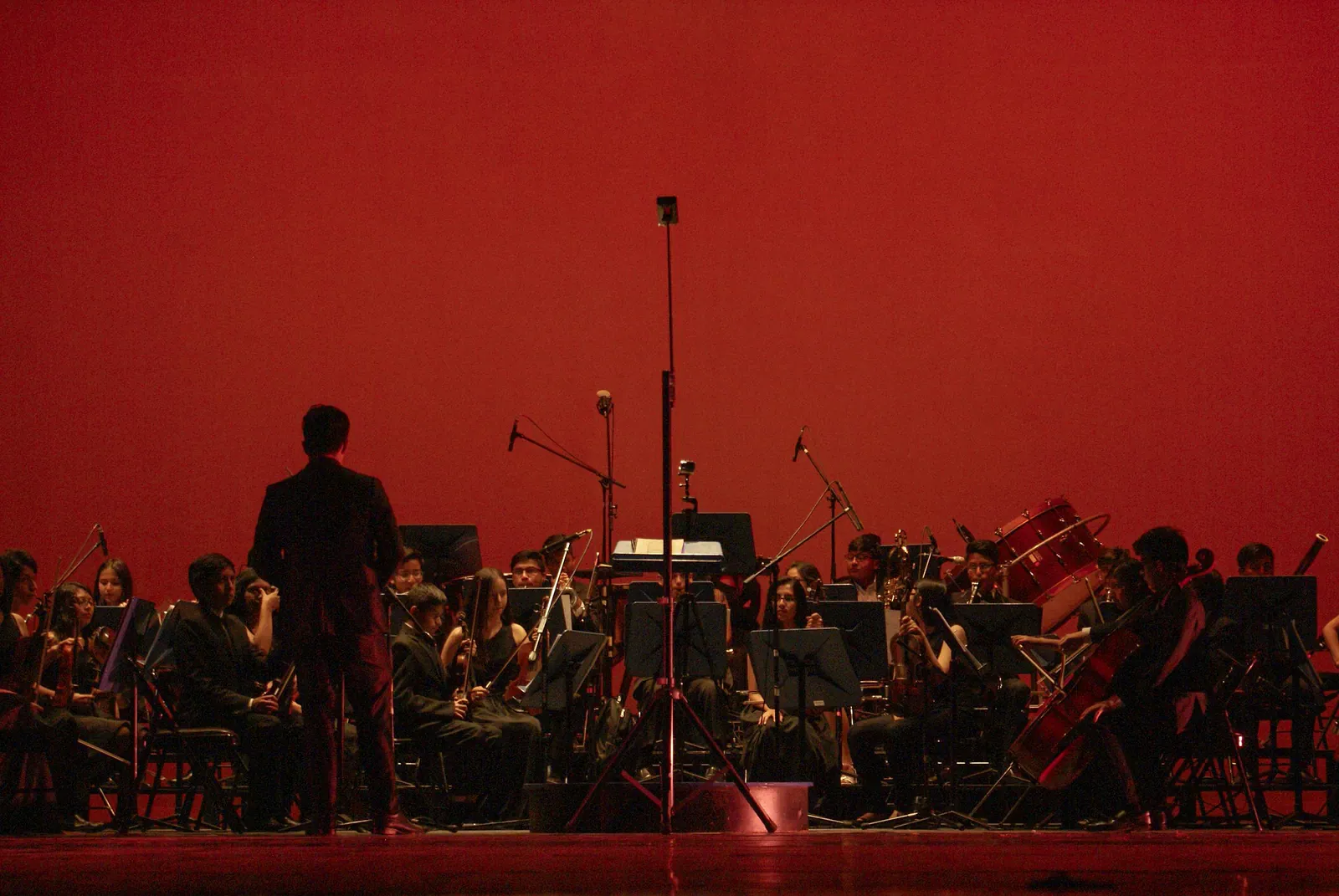
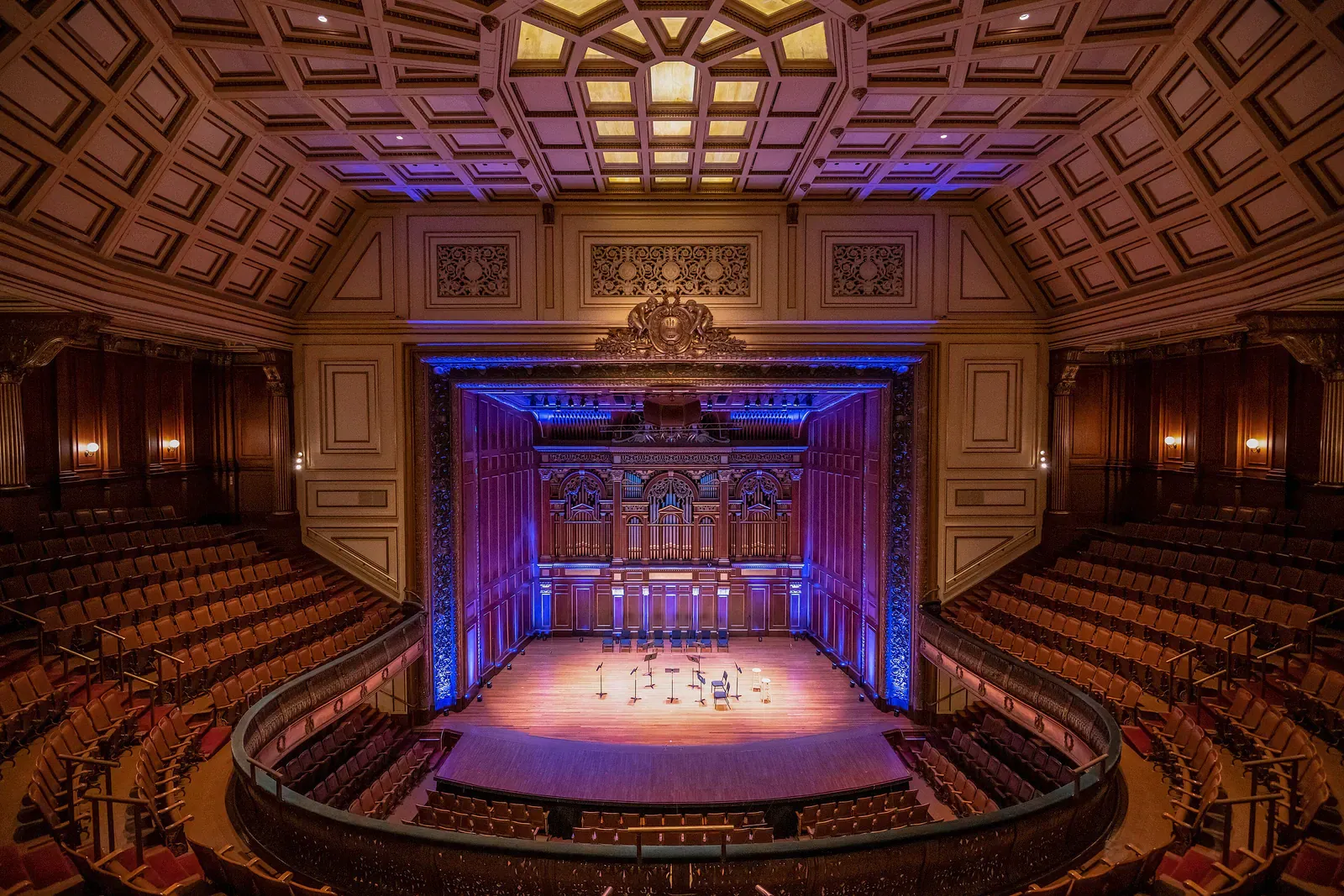
Third stream moved into institutions. Schuller was president of the New England Conservatory in Boston from 1967 to 1977 and worked to bring jazz study and other new programs into a classical school, so a generation of players learned to read both traditions.
Not everyone welcomed the project. Critics on both sides argued that drawing on two very different styles weakened each. Some jazz musicians treated it as an assault on their tradition, and jazz critics complained that the results were too serious and did not swing enough. Others rejected that view and called third stream an interesting development. It also arrived while jazz was seeking recognition as an art form and European music was still widely treated as the standard, which gave the debate a charged edge.
Characteristics
Third stream works are usually composed in advance, with improvised solos placed at points the score allows. Classical forms such as the fugue, sonata and suite organize the structure, and counterpoint replaces the head-solos-head pattern of a typical bebop set. The tempo range is wide, from slow processionals to brisk 4/4 swing, but the pulse is rarely the point; harmony and texture are. Many pieces use the modal ideas of George Russell’s Lydian Chromatic Concept, and a few use twelve-tone rows.
Instruments and production
The instrumentation borrows from the orchestra. French horn, tuba, flute, oboe, bassoon, bass clarinet and string sections sit beside the rhythm section, and the vibraphone and piano of the Modern Jazz Quartet take the roles of chamber-music voices. Recording was done in traditional studios on long-playing records, a format that could hold a suite or an extended work without a break. The sound is acoustic and transparent, with writing balanced so that a soloist can be heard over the written parts.
Notable recordings
“Django” shows the Modern Jazz Quartet method: a slow, formal theme in which composition and improvisation share a single mood. Dave Brubeck’s quartet, whose leader studied classical composition, used meters such as 5/4 and 9/8 on Time Out (1959). The 9/8 of “Blue Rondo a la Turk,” built on a Turkish dance rhythm, opens in a rhythm that gives way to straight swing for the solos.
“Solea,” the long track on Sketches of Spain, sets Davis’s trumpet against Evans’s orchestra over a Spanish-flavoured pulse. “I’m Late, I’m Late,” from Focus, goes the other way: Sauter writes the strings and winds as a complete background, and Getz plays the single improvised line over it.
Mainstream success
Third stream never became a commercial style in its own right. Its biggest audiences came through records that sat close to it, such as Sketches of Spain and Time Out, which reached listeners who would never have sought out a concert of Schuller’s works. As a movement it faded in the 1960s as free jazz and jazz-rock took over the headlines. The term stayed on as a reference label, and Schuller kept using it into his autobiography, A Life in Pursuit of Music and Beauty (2011).
Legacy
Third stream’s methods spread into several corners of music. Later artists linked to it include Jacques Loussier, Ron Carter, Eddie Daniels, Mary Lou Williams, Brad Mehldau, the Turtle Island Quartet and many artists on ECM, the Munich label founded in 1969, among them Eberhard Weber and Ralph Towner. In Italy, Bruno Tommaso, Gianluigi Trovesi and Giorgio Gaslini worked in the same space. Chamber jazz, which keeps the quiet, composed texture but drops the formal name, is the closest living descendant. Its neighbors include cool jazz, orchestral jazz and, on the classical side, classical crossover.

Misconceptions
One common belief is that any jazz with strings is third stream. Schuller excluded it by name: strings added to a standard jazz arrangement do not make a new genre. A second is that third stream is a branch of jazz. By his own definition there is no such thing as third stream jazz, because the point was to name a separate music between two mainstreams. A third is that any pairing of jazz and classical musicians counts. Classical music played by jazz players, or a classical piece with a bebop passage inserted, was ruled out in the same list.
Frequently asked questions
What is third stream music?
Third stream is a genre of music located about halfway between jazz and classical music, using classical forms and instruments and keeping improvisation. Gunther Schuller coined the term in 1957.
Who invented third stream?
Gunther Schuller named it in a 1957 lecture at Brandeis University. The Modern Jazz Quartet, Gil Evans and others were already working in the area, and Schuller’s recordings with John Lewis and others gave it a repertoire.
Is third stream the same as jazz fusion?
No. Jazz fusion combines jazz with rock and electric instruments. Third stream combines jazz with Western classical forms and orchestral or chamber instruments, and it was named in the 1950s, well before fusion.
Which albums are third stream?
Music for Brass (1957), Modern Jazz Concert (1958), Sketches of Spain (1960), Jazz Abstractions (1960) and Focus (1961) are among the works usually named.
Sound
Sound sheet
Anatomy of a track
| # | Part |
|---|---|
| 1 | Composed opening statement |
| 2 | Improvised solos over written backgrounds |
| 3 | Contrapuntal or fugal development |
| 4 | Recapitulation of the written theme |
Signature sounds
- Classical forms such as fugue and sonata
- Notated parts alongside improvised solos
- Chamber and orchestral instrumentation
- Concert-hall setting
Techniques
- Fugal counterpoint
- Notated ensemble with improvised solos
- Classical forms
- Orchestral voicing
Keys and modes
Modal and chromatic harmony. Lydian-based modes and, in some works, twelve-tone rows.
Tuning
12-TET, A=440
Vocals
Mostly instrumental.
Scenes
Where it happened
Where and when the sound lived: one bar per city on a shared timeline.
North America
Europe
Active scenes
Peak 3, 1957-1977
Schuller's base at the New England Conservatory, where third stream entered the curriculum.
Studios and halls where Gil Evans, John Lewis and Columbia produced most of the early records.
Western Massachusetts hub of the Music Inn summer school and festivals, with the Modern Jazz Quartet in residence.
Home of ECM, whose artists often cross jazz and classical boundaries.
Venues and places
Waltham, 1957 to today. Site of the 1957 Festival of the Arts where Schuller's first third-stream works premiered.
Lenox, 1956 to 1960. Summer venue where the Modern Jazz Quartet recorded live in 1956.
Boston, 1967 to 1977. Conservatory Schuller led, where jazz study entered a classical curriculum.
Culture
Culture markers
- Concert-hall presentation
Jazz played in halls with programs and silence between pieces, rather than clubs and dance floors.
Ritual - Third stream
Schuller's label, set against jazz and classical as the two mainstreams, and often disputed by both camps.
Slang - Score plus solo
Written scores that leave named spots for improvised solos.
Ritual
Media
Key media
- 1968Early Jazz: Its Roots and Musical Development
by Gunther Schuller. Schuller's musical history of early jazz, written by a composer who also performed it.
Book - 1989The Swing Era
by Gunther Schuller. Follow-up volume covering swing, by the same author.
Book - 2011A Life in Pursuit of Music and Beauty
by Gunther Schuller. Autobiography describing how he found jazz and set out to combine it with classical music.
Book
Glossary
Terms on this page
Small-ensemble jazz with a quiet, composed, classical-influenced texture.
Contrapuntal form where a theme enters in staggered voices, used by the Modern Jazz Quartet.
George Russell's 1953 theory of harmony based on jazz rather than European practice.
Schuller's name for music about halfway between jazz and classical music.
Method of composing with all twelve pitches in a fixed row, used by some third-stream composers such as Milton Babbitt.
Jazz family