Trot
Trot, or ppongjjak, is South Korea's oldest popular song form, a duple-metre style of ornamented vocals that took shape under Japanese rule in the 1920s.
South Korea, 1926
East Asian family
Born
1926
South Korea
Subgenres
2
Documented branches
Links
9
Genres it drew on or shaped
Tempo
110-130 BPMLineage
Family tree
Timeline
Era by era
From the first sparks to today. Select a dot to read the story behind it.
- Yuhaengchangga and colonial recordings
1926 to 1945
- War songs and US Army stages
1945 to 1960
- Lee Mi-ja, Nam Jin and the heyday
1960 to 1980
- Cassette medleys and decline
1980 to 2000
- Revival
2000 to 2020
- Television boom
2020 to today
Eras
Moments
- 1 Yuhaengchangga and colonial recordings, 1926 to 1945
- 2 War songs and US Army stages, 1945 to 1960
- 3 Lee Mi-ja, Nam Jin and the heyday, 1960 to 1980
- 4 Cassette medleys and decline, 1980 to 2000
- 5 Revival, 2000 to 2020
- 6 Television boom, 2020 to today
1926
Yuhaengchangga and colonial recordings
Korean songwriters adapted Japanese and Western popular song under Japanese rule, and the first original pentatonic hits reached shellac records.
- 1926Yun Sim-deok records In Praise of DeathOften regarded as the first yuhaengchangga record, set to the melody of Waves of the Danube.
- 1931Lee Aerisu records Traces of Castle RuinsReleased in 1932, a landmark early Korean-composed pentatonic song later covered by many trot singers.
- 1933Okeh company founded in KoreaThe record company promoted trot and produced many hits of the 1930s.
1945
War songs and US Army stages
Korean War songs of loss sat beside new swing, tango and blues influences absorbed by musicians playing the US Eighth Army clubs.
- 1954US Eighth Army moves to SeoulMusicians in its clubs met swing, jazz and country, and later modernised trot arrangements.
1960
Lee Mi-ja, Nam Jin and the heyday
Radio and television carried trot nationwide while the state banned songs it judged Japanese-tinged.
- 1964Lee Mi-ja records Camellia LadyTitle song of a film of the same name and the best-known trot hit of the decade.
- 1965Broadcasters drop Japanese-tinged songsSongs judged to resemble enka were disparaged as waesaek and removed from the air.
- 1968108 songs bannedA state ethics commission banned songs as obscene, vulgar or Japanese-tinged, Camellia Lady among them.
- 1971Nam Jin holds a solo recitalThe first solo concert of Korean popular music, held at the height of the Nam Jin and Na Hoon-a rivalry.
1980
Cassette medleys and decline
Folk, ballad and rock took the youth audience; trot survived on medley cassettes and adult venues.
- 1984Couples-only Party medley cassetteA 21-song trot medley that spawned dozens of imitators and the cassette medley sound.
- 1984Ppongjjak debateA newspaper dispute over whether trot was Japanese or Korean in origin.
- 1985Joo Hyun-mi debuts with Rainy Yeongdong BridgeA debut that made her a nationwide star after the medley boom.
- 1987Ban on Camellia Lady liftedThe long-standing ban on the song and others was ended.
2000
Revival
Young singers such as Jang Yoon-jeong and Hong Jin-young brought upbeat trot to a new audience.
- 2004Jang Yoon-jeong Eomeona! tops chartsCredited with re-popularising trot among younger listeners.
2020
Television boom
The audition show Mr. Trot and singers such as Lim Young-woong made trot a mainstream chart genre again.
- 2020Mr. Trot airs on TV ChosunThe audition show became the highest-rated cable programme in South Korean history by December 2020.
Listening path
Start listening
A short path from an easy way in to the deep end. Thumbnails come from YouTube; the player loads only when you press play.
- 01
Joo Hyun-mi, 1985
The debut hit; listen for the kkeokk-ki ornament and the fast medley-era beat.
- 02
Jang Yoon-jeong, 2004
The song that opened the revival; an upbeat duple-metre dance pulse.
- 03
Lim Young-woong, 2020
Release from the Mr. Trot winner whose ballad-leaning style marks the television boom.
Facts
| Family | East Asian |
| Origin | South Korea |
| Emerged | Early 20th century |
| Status | Active |
| Tempo | 110 to 130 BPM |
| Meter | Duple |
| Grew out of | Minyo (Korean folk song) |
| Subgenres | 2 |
Trot (Korean: teuroteu), also called ppongjjak, is the oldest form of Korean popular music, marked by a repetitive duple rhythm and ornamented vocals.
It formed under Japanese rule in the 1920s and 1930s from Korean, Japanese, American and European influences, and it grew into a mainstream national style after the Korean War. Love, parting and longing for home are its standard subjects. The style belongs to the East Asian family and is closely related to enka.
Origins
Before the 1920s little popular Western music circulated in Korea. In 1926 the soprano Yun Sim-deok recorded In Praise of Death for the Nitto label, fitting her own lyrics to the melody of Waves of the Danube, and the record is often counted as the first yuhaengchangga, the 1920s term for popular songs in Western style. A shortened form, yuhaengga, stayed in use for decades.
Original Korean composition arrived in the 1930s. Lee Aerisu’s Traces of Castle Ruins, recorded in 1931 and released in 1932, used the anhemitonic pentatonic scale that trot and early enka shared, and it became a landmark that later singers kept covering. The same year the first nationwide contest for new singers picked Go Bok-su, whose debut song Away From Home became a hit. The record company Okeh, founded in 1933, produced many of the decade’s successes. Comic songs called manyo, descended from Japanese storytelling routines, ran alongside the sentimental numbers.
Through the 1930s minor and pentatonic melodies dominated. After 1940 major keys appeared more often and rhythms grew cheerful, a shift that did not occur in Japanese enka and is considered peculiar to trot.
War songs and the US Army stages, 1945-1960
Liberation in 1945 and the Korean War of 1950 to 1953 left the record business thin, but songs recorded the national mood. Be Strong Geum-sun and Farewell Busan Station, both from 1953, told of refugees and the Hungnam evacuation, and Spring Days Are Passing, also 1953, became a standard lament.
New sounds arrived through the United States Eighth Army, moved from Japan to Seoul in 1954. Musicians hired for its clubs learned swing, jazz, tango, country and folk, and several became leading trot composers, among them Park Chun-seok, Lee Bong-jo and Kim Hee-gap. The drummer Bae Ho started at Camp Market. Their influence showed less in melodies than in titles, arrangements and a willingness to modernise. Albums on LP began to be produced in Korea in 1958.
Heyday, 1960-1980
Han Myeong-suk’s swing-style Yellow Shirt Man in 1961 made her a star, and in 1964 Lee Mi-ja recorded Camellia Lady, the title song of a film. Over a career with thousands of recordings she became the singer most associated with trot, and the song became its defining elegy.

The state was not an ally. In 1965 broadcasters stopped airing songs judged Japanese-tinged, called waesaek, and in 1968 an ethics commission banned 108 songs as obscene, vulgar or Japanese-tinged. Camellia Lady was on the list both times and was cleared only in 1987.
Radio and then television carried the genre nationwide, and television ownership rose from 6.4 percent of households in 1971 to 83.1 percent in 1980. Two singers born after liberation became the country’s first pop idols: Nam Jin, who gave Korean popular music its first solo recital in 1971, and Na Hoon-a, a songwriter-singer of the orthodox style known for vibrato and flexing ornament. Their fan rivalry defined the decade. Bae Ho, a bass-baritone nicknamed the Elvis of trot, died at 29 in 1971.
A second strand, sometimes called trot-go-go, came from former rock band singers. Cho Yong-pil’s Come Back to Busan Port in 1975 made a star of a musician better known for rock and ballads.
Medleys and decline, 1980-2000
Baby boomers who came of age in the 1980s preferred folk, ballads and rock, and trot lost its youth audience. It survived on cassette. In 1984 Couples-only Party, a 21-song medley alternating male and female voices, sold so well that about 50 imitation albums followed, and the medley sound became emblematic of the genre. The same year a newspaper dispute known as the ppongjjak debate asked whether trot was Japanese or Korean, a question that still has no concrete resolution.
Joo Hyun-mi debuted in 1985 with Rainy Yeongdong Bridge. Her 1988 song Sinsa-dong and the Man took Song of the Year awards from KBS and MBC with a fast diatonic style that critics call semi-trot, and its hostess-club imagery encouraged the label adult music, seongin-gayo. Kim Soo-hee and Sim Soo-bong kept the form alive through the decade.
In 1993, with Seo Taiji and Boys dominating pop, Shin Shin-ae’s The World Is a Wonderful World, built from two songs of the 1930s, reached the top four of the charts with a deadpan dance. At the end of the decade Epaksa tried techno-trot, mixing rapping, techno and dance.
Revival, 2000 onward
Young singers returned to the form in the 2000s. Jang Yoon-jeong’s Eomeona! topped the charts in 2004 and is widely credited with bringing trot back to young listeners, with Hong Jin-young, Park Hyun-bin and others following. K-pop acts such as Super Junior-T and Daesung helped renew interest in the style, and veterans like Jin Seong found late success.

The largest boom came in 2020. The audition show Mr. Trot ran on TV Chosun from January to March of that year and became the highest-rated cable programme in South Korean history by December. Its winner Lim Young-woong passed 10 billion streams on Melon and took two grand prizes at the 2022 Melon Music Awards. Major K-pop agencies have since blended trot with idol pop in new groups, among them SM Entertainment’s Mytro.
Characteristics
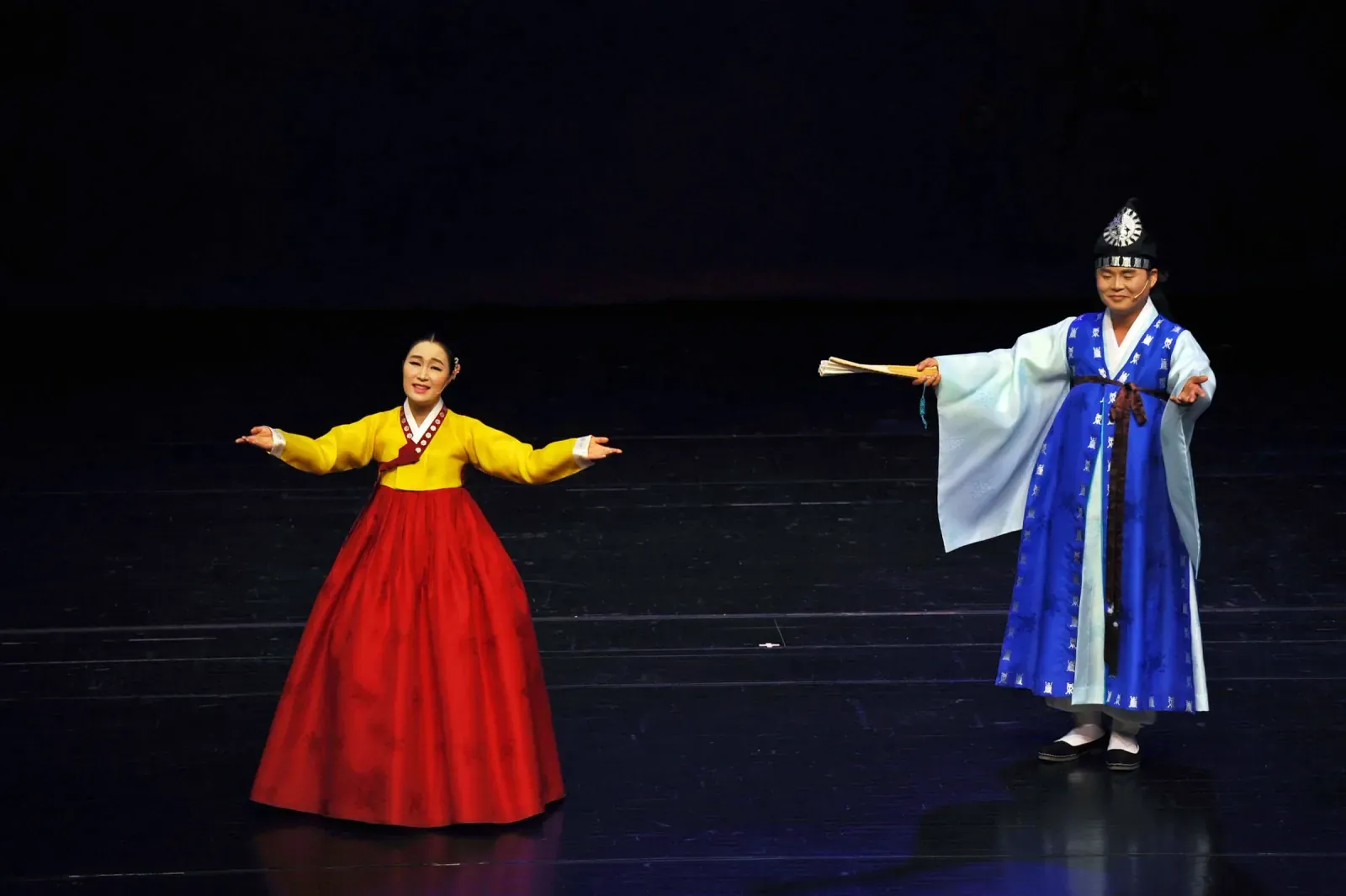
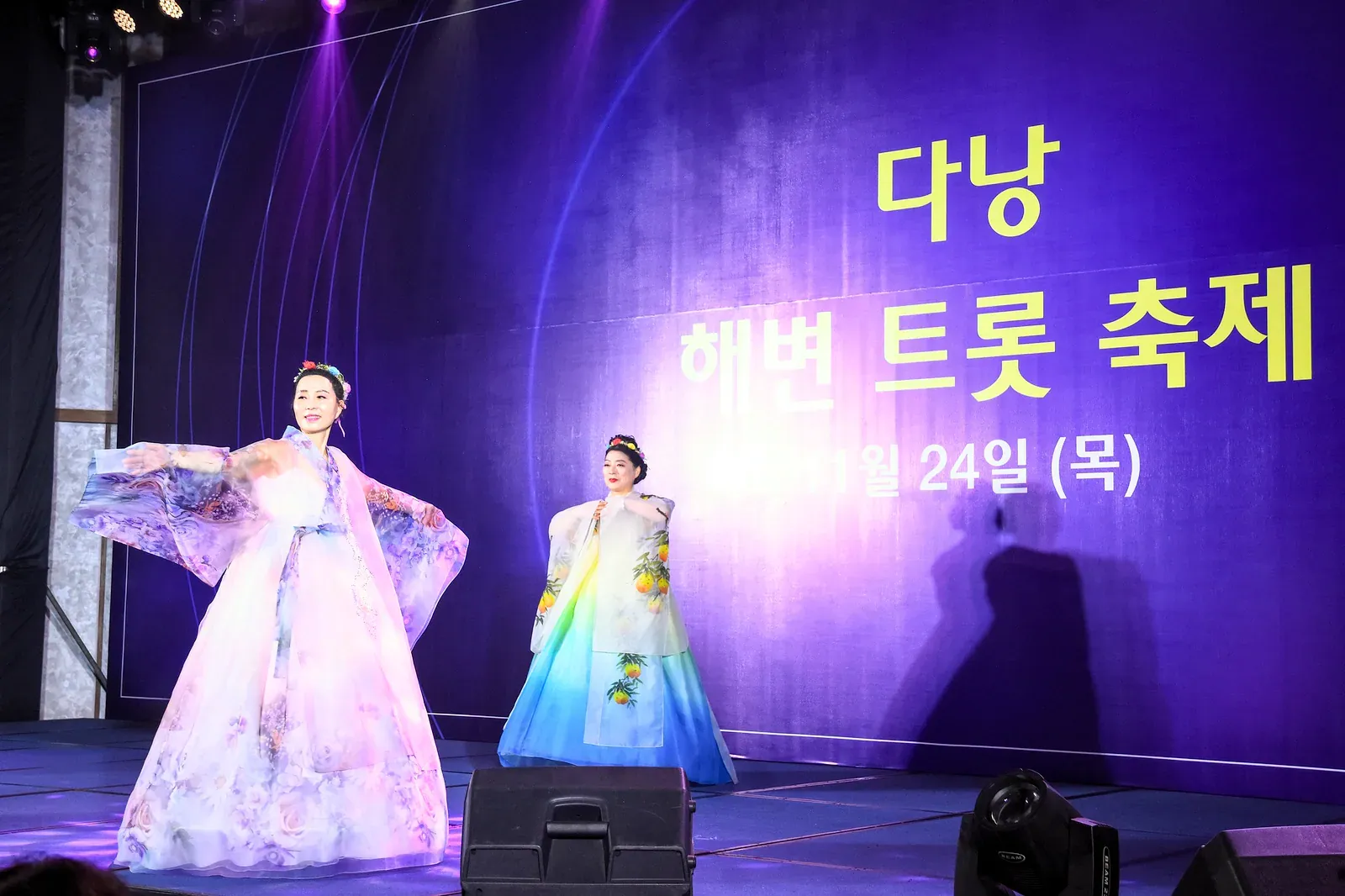
Songs are usually performed by one singer or a duet, accompanied by a band or orchestra, four female backing singers and dancers on television. The ornament kkeokk-ki splits a note into upper and lower neighbours before returning to pitch, and lower notes carry vibrato. The sound sheet above lists the scales, tempo and techniques. Lyrics centre on love and parting or homesickness, themes tied to the Korean notion of han, sorrow and resentment, and to the tragedies of the shinpa theatre imported from Japan in the 1910s. Since 1990 low-politeness sentence endings have appeared in lyrics more often.
Culture

Trot has carried several names. Ppongjjak is the nickname, jeontong-gayo (traditional popular song) is a newer self-confident label, and daejung-gayo is a broad term for all popular song. Trot is now sung mainly in South Korea. In the North it was displaced by propaganda forms, though the colonial-era repertory there is grouped as enlightenment-period song and was reintroduced in a television programme in the late 2000s.

Misconceptions
Trot is sometimes called a copy of Japanese enka. The two share roots, and the early songs used the same scales and duple metre, but trot went its own way after liberation, and its shift to major keys during the 1940s has no enka parallel. Whether it counts as authentically Korean has been disputed since the 1960s without concrete evidence for either side.
Trot is not only for older audiences. Singers in their twenties and thirties have driven recent revivals, and an adult label like seongin-gayo reflects only one phase of its history.
Trot is also not a single sound. Waltz, tango, swing, ballad and disco pieces all appear in the repertory, and the common thread is the duple pulse and the ornamented voice.
Frequently asked questions
What does trot mean in Korean music?
Trot names a genre of Korean popular song with a repetitive duple rhythm and ornamented singing. The word became widespread in the 1980s, and ppongjjak is its nickname.
Is trot the same as K-pop?
No. Trot is older, dating to the 1920s and 1930s, while K-pop as a global industry rose from the 1990s. The two overlap in the 2020s, when K-pop agencies and idols record trot-flavoured songs. See K-pop.
Who is the most famous trot singer?
Lee Mi-ja is widely regarded as the most influential trot singer of all time, with Nam Jin, Na Hoon-a, Joo Hyun-mi and Jang Yoon-jeong among the other leading names.
What is kkeokk-ki?
Kkeokk-ki is the signature vocal ornament of trot, a quick turn to upper and lower neighbour notes within a single beat. Few trot singers can do without it.
Sound
Sound sheet
Signature sounds
- Kkeokk-ki flexing on higher notes
- Fixed duple pulse
- Four-voice female backing chorus
- Medley arrangement of linked hits
Techniques
- Kkeokk-ki
- Low-register vibrato
- Duple-metre pulse
- Cassette medley
Keys and modes
Anhemitonic pentatonic minor. Dominant before the 1950s, shared with early enka.
Heptatonic major. Common after the Japanese occupation, with cheerful rhythms.
Vocals
Solo or duet lead with ornamented vibrato, on themes of love, parting and longing for home.
Scenes
Where it happened
Where and when the sound lived: one bar per city on a shared timeline.
Asia
Active scenes
Peak 1, 1954-2025
Capital where the US Army clubs, broadcasters and record companies concentrated the trot business.
Venues and places
Seoul, 1954 to today. Stages where trot musicians absorbed swing, jazz, tango and country.
Culture
Culture markers
- Lee Pan-sa-pan dance
The deadpan 1993 dance craze around Shin Shin-ae song The World Is a Wonderful World.
Dance - Ppongjjak
Onomatopoeic nickname for the repetitive trot beat, once a pejorative.
Slang
Media
Key media
- 1966MBC Ten Singers Match
by MBC. Annual year-end singing contest, mostly trot in the 1970s, still held today as the MBC Song Festival.
Radio - 1984Couples-only Party
by Various. The medley cassette that created the trot medley sound.
Compilation - 1987Disco Medley in Eight Dialects
by Mun Hee-ok. A medley album that followed the Couples-only success.
Compilation
Glossary
Terms on this page
Flexing ornament in which a note splits into upper and lower neighbours before returning to pitch.
1930s comic storytelling song style that grew from Japanese mandan.
Nickname for trot, imitating its repetitive rhythm; the name trot became widespread from the 1980s.
Adult song, a name for trot as music for older listeners.
Japanese-tinged, a label used to censor songs judged close to enka.
1920s name for popular songs in Western style, the ancestor of trot.
East Asian family