K-pop
K-pop is South Korea's idol-based pop, built on trainee-system groups that blend dance-pop, hip hop and R&B with synchronised choreography, from 1992 onward.
Seoul, 1992
Pop family
Born
1992
Seoul
Subgenres
4
Documented branches
Links
22
Genres it drew on or shaped
Tempo
100-160 BPMLineage
Family tree
Grew out of
Derived from
Derived from
Influenced by
Seoul, 1992
K-pop
Led to (5)
Timeline
Era by era
From the first sparks to today. Select a dot to read the story behind it.
- Rap dance and the teen market
1992 to 1995
- First-generation idols
1996 to 2002
- Asian expansion and the second generation
2003 to 2011
- Global reach
2012 to today
Eras
Moments
- 1 Rap dance and the teen market, 1992 to 1995
- 2 First-generation idols, 1996 to 2002
- 3 Asian expansion and the second generation, 2003 to 2011
- 4 Global reach, 2012 to today
1992
Rap dance and the teen market
Seo Taiji and Boys fused new jack swing, hip hop, techno and rock in 1992, and their teenage following redirected the Korean industry toward youth pop. Agencies SM, YG and JYP were founded within five years.
- 1992Seo Taiji and Boys debut on televisionThe trio performs I Know on an MBC talent show on 11 April, scores lowest with the jury, and the song and album become a hit anyway.
- 1995SM Entertainment is foundedLee Soo-man, educated in the US, founds the agency that develops the Korean idol system.
1996
First-generation idols
SM's H.O.T. and S.E.S. set the trainee-to-idol template, followed by Sechs Kies, Fin.K.L, Shinhwa and g.o.d. The 1997 financial crisis pushed agencies and the state toward export markets.
- 1996H.O.T. debutSM's five-member boy band, trained in singing, dancing, language and etiquette, is regarded as the first K-pop idol group; YG is founded the same year and JYP follows in 1997.
- 1997Asian financial crisisAgencies look abroad, with H.O.T. releasing a Mandarin-language album, and the government funds a cultural-export push.
2003
Asian expansion and the second generation
BoA and TVXQ found success in Japan, and Super Junior and Girls' Generation built large fan bases at home. Contract disputes in 2009 led regulators to publish standard contracts.
- 2007Girls' Generation formSM's nine-member girl group debuts with Into the New World and becomes one of the most influential girl groups.
- 2009Idol contract lawsuitTVXQ and a Super Junior member sue SM over working conditions; a court voids the TVXQ contract and regulators publish standard contract templates.
2012
Global reach
Psy's Gangnam Style, then BTS and Blackpink, took K-pop to worldwide charts and stadium tours. Companies now debut groups with foreign members and produce music overseas.
- 2012Gangnam StylePsy's single becomes the first YouTube video to reach one billion views and carries K-pop to a worldwide audience.
- 2014Law protecting young performersSouth Korea passes a law guaranteeing performers under 19 rest and curbing overtly sexualised performances.
- 2016Blackpink formYG's four-member girl group debuts in August and later becomes known as an ambassador of the girl crush concept.
- 2019South Korea ranks sixth in music marketsThe global industry federation lists the country as the sixth largest market, led by BTS and Blackpink.
- 2020BTS release DynamiteThe English-language disco-pop single, released 21 August, is the group's breakthrough on Western charts.
- 2024K-pop leads global unit salesThe industry federation names K-pop the leading genre in unit sales, with 17 of the top 20 global albums.
Listening path
Start listening
A short path from an easy way in to the deep end. Thumbnails come from YouTube; the player loads only when you press play.
- 01
Girls' Generation, 2009
Listen for the repeated hook and the tight group choreography of second-generation pop.
- 02
Super Junior, 2009
An SM boy-group hit built on a looping synth riff and a large-ensemble dance.
- 03
Psy, 2012
The video that took Korean pop to a worldwide audience; listen for the electro beat and rap verses.
- 04
Blackpink, 2018
A trap-leaning girl-crush single with a hard drop and rap verses.
- 05
BTS, 2020
Disco-pop in English that shows how the idol format adapts to Western charts.
K-pop is South Korean popular music, shaped from the early 1990s by teen idol acts, chiefly girl groups and boy bands, that combine dance-pop, hip hop, R&B and rock with synchronised choreography and heavy audiovisual production.
The word is short for Korean popular music and also names the industry that trains and markets these acts. It grew out of the Seoul pop market and by the 2020s was the leading genre in global unit sales.

Origins
The usual starting point is 1992, when the trio Seo Taiji and Boys performed I Know (Nan Arayo) on an MBC talent show on 11 April. The jury gave it the lowest score, yet the song and its self-titled album became a hit. Its new jack swing beats, rapped verses, pop chorus and lyrics about Korean social problems gave the market a format that others copied, and the group is credited with popularising rap in Korean pop. Hip hop and R&B acts such as Yoo Seung-jun, Jinusean, Solid, Deux, 1TYM and Drunken Tiger followed.
Earlier Korean pop had already absorbed Western influence, from the arrival of American culture in the 1940s to the folk and ballad eras that followed. The 1990s added Europop, hip hop, rock and electronic dance. Seo Taiji and Boys’ popularity with teenagers had a commercial effect as well: the industry started to aim at that age group. Lee Soo-man, who was educated in the United States, founded SM Entertainment in 1995. Yang Hyun-suk, a former member of Seo Taiji and Boys, started YG Entertainment in 1996, and Park Jin-young launched JYP Entertainment in 1997. These agencies, SM, YG and JYP, later became the core of the industry.
First-generation idols, 1996-2002
SM’s H.O.T. debuted in 1996 after training that covered singing, dancing, etiquette, language and dealing with the media. The group is regarded as the first K-pop idol group. Its song Candy offered a softer pop sound with upbeat melodies and energetic dance steps, a formula that many later groups adopted. Fans copied the members’ hairstyles and clothes, and merchandise ranged from sweets to perfume. SM also created S.E.S., and Sechs Kies, Fin.K.L, NRG, Baby Vox, Diva, Shinhwa and g.o.d followed.
The idol model borrowed from Japan, where performers are selected and trained by an agency, and the trainee method also echoed the Motown training approach, which JYP has cited as a model. The 1997 Asian financial crisis pushed the industry outward. H.O.T. released a Mandarin-language album and Diva an English-language album in Taiwan, and the government began spending on cultural infrastructure and a dedicated ministry department.
Asian expansion and the second generation, 2003-2011
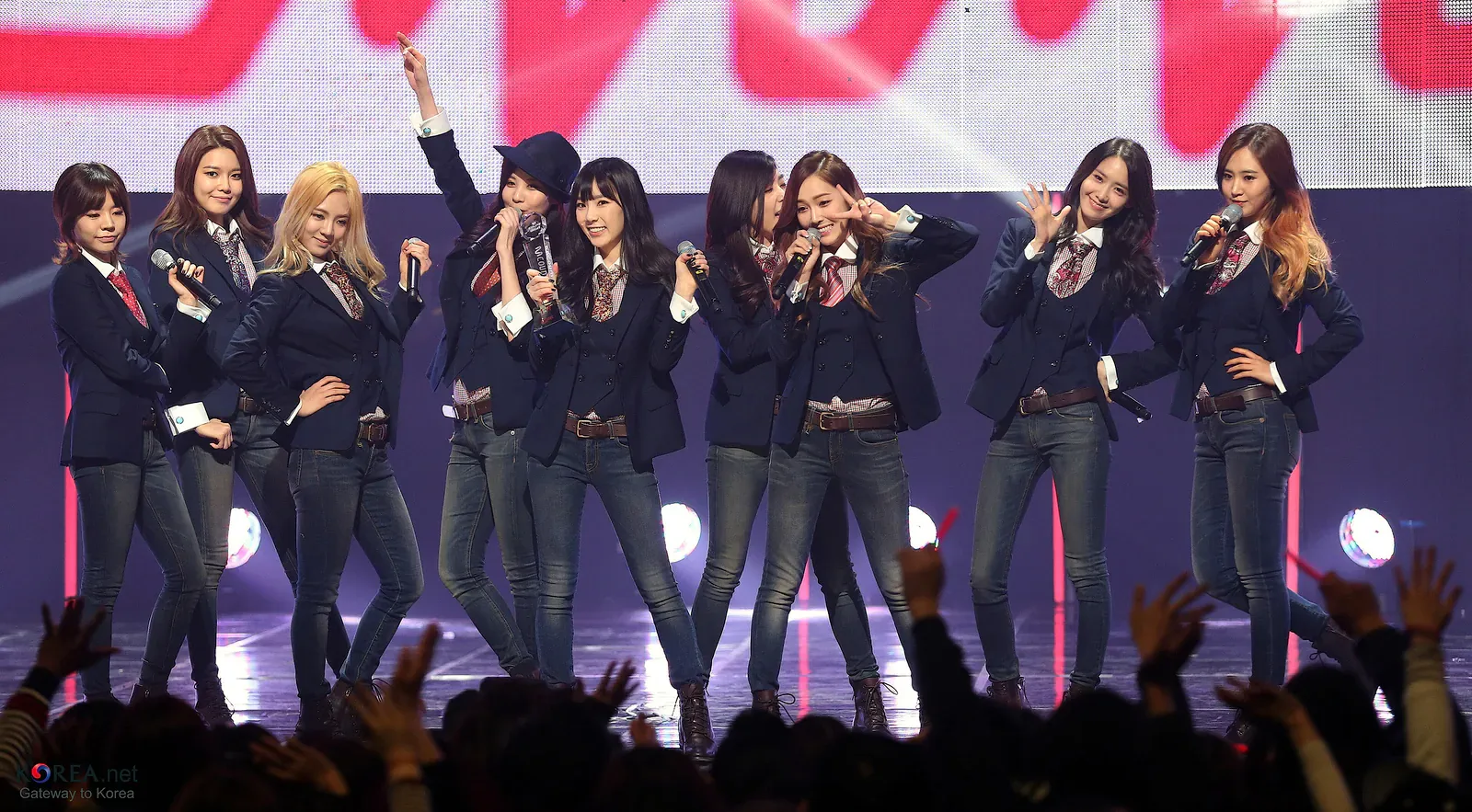
By the early 2000s, BoA and TVXQ had gained success in Japan, giving K-pop a route to overseas markets. In the late 2000s SM’s Super Junior scored a major hit with Sorry, Sorry (2009), and Girls’ Generation, formed in 2007 as a nine-member group, became one of the most influential girl groups with Gee the same year. Songs of this period leaned on short, repeated hooks and large-ensemble dance numbers.
The system’s costs surfaced in 2009, when TVXQ and a Super Junior member sued SM over working conditions that they said had damaged their health. A court voided the TVXQ contract, and the Fair Trade Commission then released standard contract templates. Further rules followed: a 2014 law protected performers under 19 from unhealthy labour practices and overtly sexualised performances, and 2017 regulations barred agencies from terminating trainee contracts at will or blocking trainees from seeking other agencies.
Global reach, 2012-present
Psy’s Gangnam Style (2012) became the first YouTube video to reach one billion views and showed that a Korean-language song could travel without a Western promotional push. The name comes from Seoul’s Gangnam District, where SM and JYP have headquarters in Apgujeong-dong and Cheongdam-dong.

Boy band BTS, from what is now HYBE, began as a hip hop group and widened its style to a range of genres. Dynamite (2020), recorded in English, was its breakthrough on Western charts. Blackpink, formed by YG in 2016, is widely called the biggest girl group in the world and is linked to the girl crush concept, which pairs strength and confidence with pop hooks. By 2019 South Korea was the sixth largest music market in the world, and in 2024 the international recording federation named K-pop the leading genre in global unit sales, with 17 of the 20 top albums worldwide.
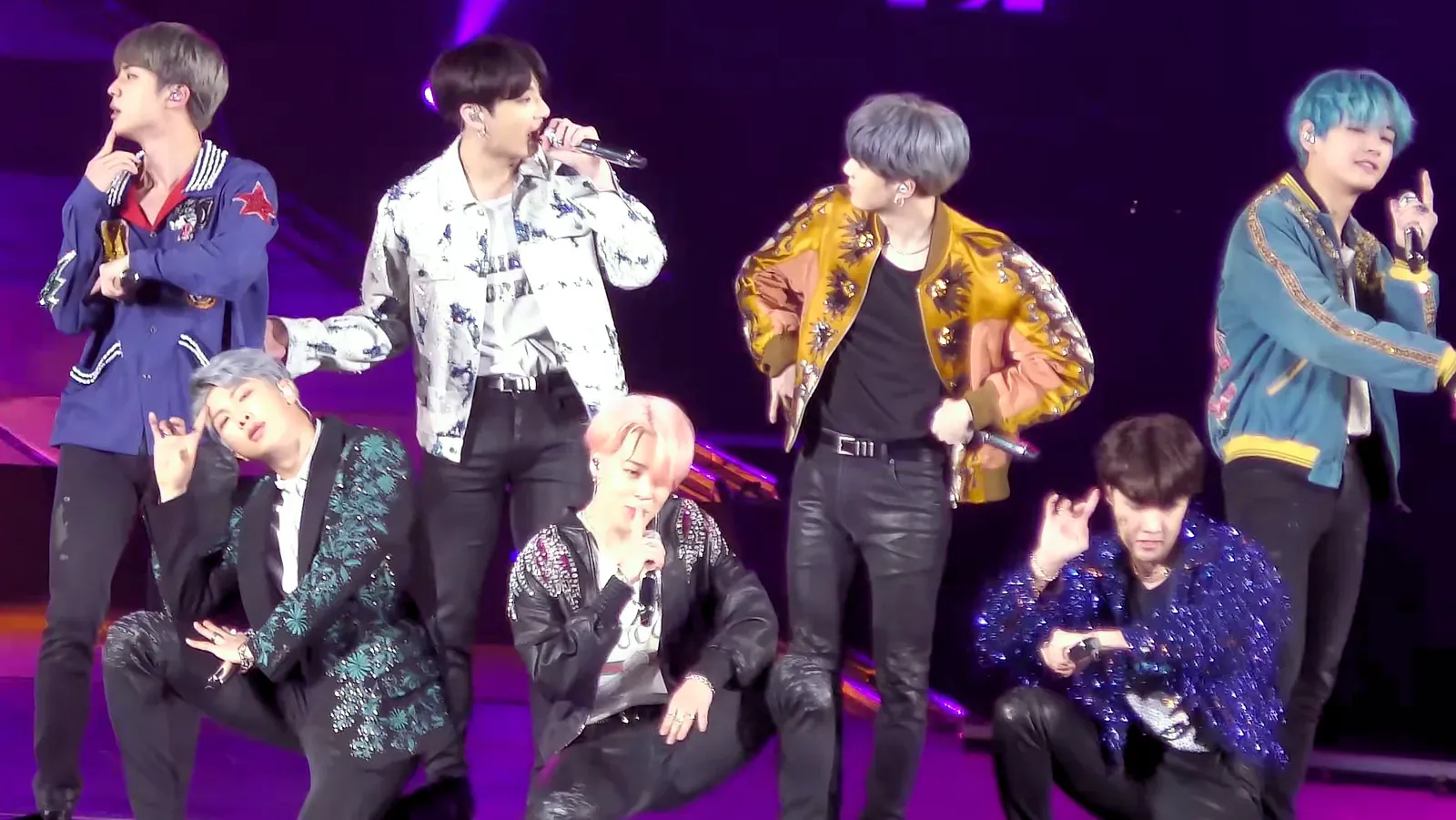
The 2020s have brought more artist autonomy and companies producing music overseas. Groups such as JO1 and Katseye are products of that globalisation.
Characteristics
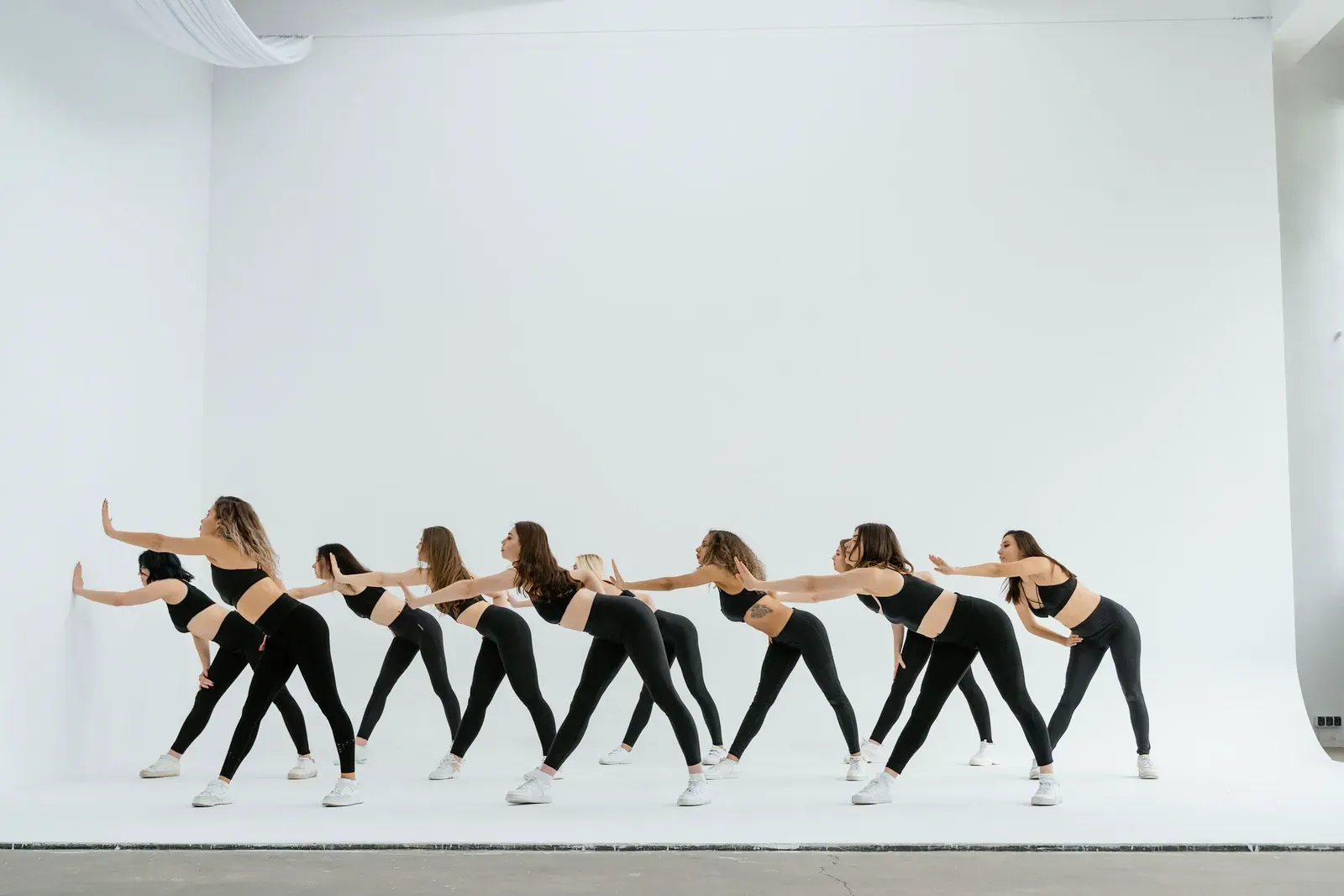
A K-pop single is built for performance as much as for listening. Songs often move between genres in one track, from dance-pop to hip hop to a ballad passage, and a rap break between choruses is common. Group members share lead, harmony and rap parts, with defined roles, and English phrases are common in hooks. Choreography is rehearsed to the beat and often centres on a repeatable signature move, which is why dance covers circulate widely. The sound sheet on this page lists tempo, keys and techniques.
Instruments and production
Production is studio-based: synthesizers and programmed drums or samples carry the beat, and vocal arrangements are layered around them. Songs are often assembled from several writers and producers, and Western songwriters have an increasing share. The “Koreanness” of the sound has been debated as the share of Western songwriters, non-Korean members and English-language songs has grown.
Mainstream success
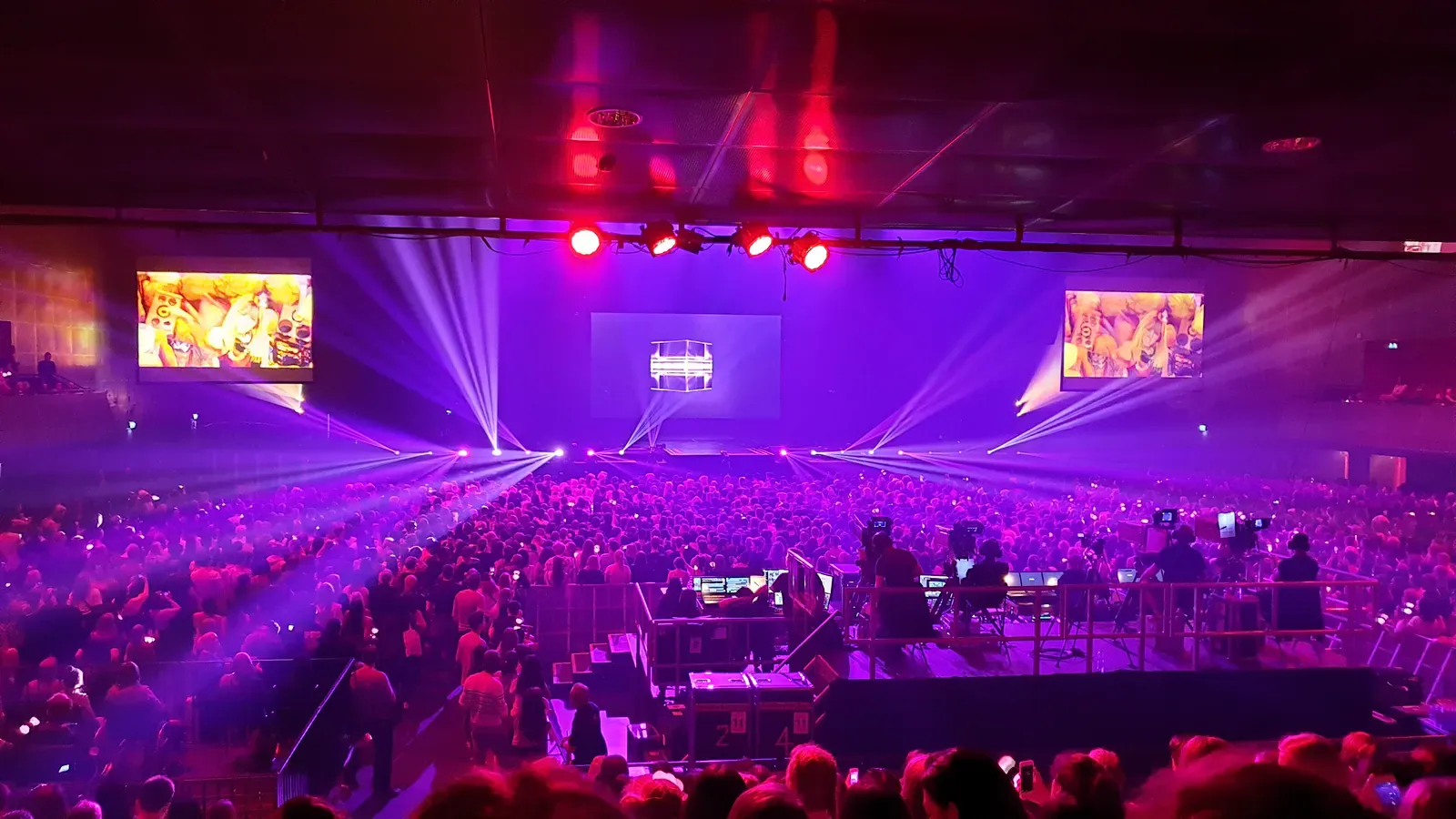
Charts and sales figures illustrate the rise. The industry grossed nearly 3.4 billion US dollars in the first half of 2012, up 27.8 percent on the previous year, and was named South Korea’s greatest export by a news magazine. By 2017 its revenue was estimated at 5 billion US dollars. The industry is dominated by four companies: SM, YG, JYP and HYBE.
Notable recordings
Nan Arayo (1992) is the founding recording, and its mix of rap, new jack swing and a catchy pop chorus set the template. Candy (1996) is the idol-era counterpart, since it fixed the cheerful, danceable tone of first-generation groups. Gangnam Style (2012) and Dynamite (2020) mark the two global breakthroughs, one a viral Korean-language comedy dance track, the other a deliberate English-language disco-pop single aimed at Western radio.
Culture
The trainee system is the best-known ritual of the scene. Recruits train for about three years on average in vocals, dance, languages and media handling, and companies treat each trainee as a large investment. The system has also drawn criticism for overwork, restrictive contracts described as slave contracts in one broadcaster’s report, and pressure on appearance and mental health. Fandom is organised around group names and colours, and merchandise and lightsticks are part of concert culture. Government support for cultural export links the music to South Korea’s wider soft power.
Legacy
K-pop turned an agency-led training model into a global export, and its audiovisual packaging, in which music, dance, fashion and video are planned together, has been copied well beyond Korea. Its effect is visible in the groups now debuted with foreign members and in the growth of the Korean music market. Related pages include the parent family pop, the Japanese idol-influenced style J-pop, dance-pop and contemporary R&B.
Misconceptions
One myth is that K-pop is a single musical style. It is better described as a hybrid: the same group may release dance-pop, hip hop, R&B, rock and ballad material, and the common element is the production and performance format rather than a fixed sound.
A second myth is that the idol system is purely a Korean invention. The business model drew on Japanese idol practice, and JYP has said he learned the trainee approach from the United States, referring to Motown, which Korea kept after it was dropped there.
A third myth is that K-pop began with Psy or BTS. The genre’s roots lie in 1992 with Seo Taiji and Boys and in 1996 with H.O.T., and by the early 2000s BoA and TVXQ were already successful abroad.
Frequently asked questions
What is K-pop?
K-pop is South Korean pop music, built around idol groups that blend dance-pop, hip hop and R&B with synchronised choreography. The term abbreviates Korean popular music and also refers to the industry that trains and promotes the acts.
When did K-pop start?
The genre is usually dated to 1992, when Seo Taiji and Boys debuted. H.O.T., formed by SM in 1996, is regarded as the first K-pop idol group.
Who are the biggest K-pop groups?
Well-known acts include Seo Taiji and Boys, H.O.T., Girls’ Generation, BTS and Blackpink, and Psy is the best-known solo name through Gangnam Style.
What is a K-pop trainee?
A trainee is a recruit who studies singing, dancing, languages and media skills at an agency, on average for three years, before debuting in a group.
Which companies lead K-pop?
Four companies dominate the industry: SM Entertainment, YG Entertainment, JYP Entertainment and HYBE.
Sound
Sound sheet
Anatomy of a track
| # | Part |
|---|---|
| 1 | Intro or hook teaser |
| 2 | Verse and pre-chorus |
| 3 | Chorus with signature dance move |
| 4 | Rap break or bridge, often in a different style |
| 5 | Final chorus, often with a key change |
Signature sounds
- Genre-switching sections inside one song
- Rap break between choruses
- Synchronised group choreography
- English phrases in the hook
Techniques
- Rap break
- Genre-switching structure
- Synchronised choreography
- English-phrase hooks
Keys and modes
Major and minor keys. Typical tracks sit in common pop keys, with a key change often saved for the last chorus.
Tuning
12-TET, A=440
Vocals
Multi-member groups share lead, harmony and rap parts, with each member assigned a role.
Scenes
Where it happened
Where and when the sound lived: one bar per city on a shared timeline.
Asia
Active scenes
Peak 2, 1995-2025
Seo Taiji and Boys' base and the home of all four major agencies, in the districts of Apgujeong, Cheongdam, Hapjeong and Yongsan.
SM and JYP have headquarters in Apgujeong-dong and Cheongdam-dong, and the district is Psy's birthplace and the name of his hit.
Culture
Culture markers
- Synchronised choreography
Groups perform tightly rehearsed routines built around a signature move for each single.
Dance - Trainee years
Recruits train for about three years in singing, dancing, language and media skills before debuting.
Ritual - Fan imitation of idol styles
Since H.O.T., fans have copied members' hairstyles and clothes, and agencies sell group merchandise.
Fashion
Glossary
Terms on this page
An act's return with a new release and promotion cycle.
The domestic Korean term for popular song, which K-pop later displaced in everyday usage.
A concept for girl groups built on strength and confidence rather than cuteness.
A pop performer selected and trained by an agency to sing, dance and appeal to fans.
A recruit in an agency's programme of vocal, dance, language and media training, three years on average, before a debut.
Pop family