Dance-pop
Dance-pop is uptempo, producer-driven pop made for clubs and radio, formed in the early 1980s from disco, post-disco and synth-pop.
United States, United Kingdom, 1980
Pop family
Born
1980
United States, United Kingdom
Subgenres
3
Documented branches
Links
26
Genres it drew on or shaped
Tempo
100-145 BPMLineage
Family tree
Timeline
Era by era
From the first sparks to today. Select a dot to read the story behind it.
- From post-disco to Hi-NRG
1980 to 1989
- House and new jack swing
1990 to 1997
- Auto-Tune and the teen pop wave
1998 to 2007
- Electropop, recession pop and disco revival
2008 to 2026
Eras
Moments
- 1 From post-disco to Hi-NRG, 1980 to 1989
- 2 House and new jack swing, 1990 to 1997
- 3 Auto-Tune and the teen pop wave, 1998 to 2007
- 4 Electropop, recession pop and disco revival, 2008 to 2026
around 1980
From post-disco to Hi-NRG
Club-minded pop emerges in New York and London: Madonna's debut on Sire, the Stock Aitken Waterman Eurobeat factory, and Janet Jackson's Control.
- 1977Paradise Garage opens in New YorkThe SoHo disco, with resident DJ Larry Levan, ran until 1987 and hosted a young Madonna.
- 1980Danceteria opens in New YorkThe nightclub, where DJ Mark Kamins later played Madonna's demo, ran in the city until 1986.
- 1982Madonna's Everybody singleReleased 6 October 1982 on Sire after Mark Kamins played the demo at Danceteria.
- 1983Madonna's debut album and HolidayThe album used a LinnDrum, Moog bass and Oberheim OB-X; Holiday became her first Dance Club Songs number one.
- 1984Stock Aitken Waterman begin their hit runEarly hits for Divine, Hazell Dean and Dead or Alive start a Hi-NRG and Eurobeat production line.
- 1986Janet Jackson's ControlTriplet swing beats and synthesized percussion by Jimmy Jam and Terry Lewis; five top-five Hot 100 singles.
- 1987Kylie Minogue's I Should Be So LuckyReleased 29 December 1987 by Mushroom and PWL, written and produced by Stock Aitken Waterman.
1990
House and new jack swing
Dance-pop absorbs house and R&B: Madonna's Vogue, Right Said Fred and Janet Jackson, while Stockholm's Cheiron Studios opens in 1992.
- 1990Madonna's VogueA house song with disco influences by Madonna and Shep Pettibone that topped charts in the US and UK.
- 1992Cheiron Studios founded in StockholmDenniz PoP and Tom Talomaa open the studio behind late-1990s hits for Backstreet Boys and Britney Spears.
- 1997Auto-Tune releasedAntares Audio Technologies released the pitch-correction software on 19 September 1997.
1998
Auto-Tune and the teen pop wave
Cher's Believe makes Auto-Tune a sound, Max Martin writes Britney Spears's debut, and Kylie Minogue and Madonna return to disco roots.
- 1998Madonna's Ray of LightWith producer William Orbit, the album brought electronica and techno-pop to mainstream dance-pop.
- 1998Britney Spears's ...Baby One More TimeWritten by Max Martin and released by Jive on 29 September 1998; topped charts in over 20 countries.
- 1998Cher's BelieveReleased 19 October 1998; its distorted Auto-Tune vocal became known as the Cher effect.
- 2000Cheiron closesAfter Denniz PoP's death in 1998, Talomaa and Max Martin reformed the company as Maratone.
- 2001Kylie Minogue's Can't Get You Out of My HeadWritten by Cathy Dennis and Rob Davis, it reached number one in 40 countries.
- 2005Confessions on a Dance FloorMadonna's album drew on ABBA, Giorgio Moroder, the Bee Gees and Donna Summer.
2008
Electropop, recession pop and disco revival
Lady Gaga, Rihanna and Katy Perry bring synth-pop and house to radio, then Dua Lipa's Future Nostalgia revives disco in 2020.
- 2008Lady Gaga's Just DanceDebut single released 8 April 2008, produced by RedOne; number one on the Hot 100 in January 2009.
- 2010Recession popJournalists tag early-2010s club-themed hits about feeling positive in hard times with this term.
- 2020Dua Lipa's Future NostalgiaReleased 27 March 2020 after lead single Don't Start Now; disco and funk beside electronic pop.
- 2024Grammy for Best Pop Dance Recording createdKylie Minogue won the first award with Padam Padam.
Listening path
Start listening
A short path from an easy way in to the deep end. Thumbnails come from YouTube; the player loads only when you press play.
- 01
Madonna, 1983
The record that started the style: club beat, cowbell, synthesized strings and a radio hook.
- 02
Cher, 1998
The mainstream breakthrough of Auto-Tune as a vocal effect on a dance-pop record.
- 03
Kylie Minogue, 2001
A signature track of the 2000s with nu-disco traces and a global number one.
- 04
Lady Gaga, 2008
The electropop-leaning club single that opened the late-2000s revival.
- 05
Dua Lipa, 2019
A funk-bass nu-disco hit that started the 2020 disco revival.
Facts
| Family | Pop |
| Origin | United States, United Kingdom |
| Emerged | Late 1970s-early 1980s |
| Status | Active |
| Tempo | 100 to 145 BPM |
| Meter | 4/4 |
| Grew out of | Disco, Post-disco, Bubblegum pop |
| Subgenres | 2 |
Dance-pop is uptempo pop written for the nightclub and for radio at once, with strong beats, uncomplicated verse-chorus structures and an emphasis on melody.
It emerged in the late 1970s and early 1980s from disco, post-disco and synth-pop, mainly in New York and London, and it is usually built by producers rather than by the singers who front it. It is part of the pop family and also goes by the names club-pop and EDM-pop.
Origins
By the late 1970s the word disco had become a liability for mainstream pop, and dance-floor music was relabelled club, dance, post-disco or dance-pop. Post-disco was more electronic and led by producers and DJs. Dance-pop kept that machinery but tied it to the pop song: an easy structure and a catchy tune over the strong beat of the club. The producer typically composed the record, then hired a singer to perform it.
The founding case is Madonna. She built a four-track dance demo with Stephen Bray and pitched it around New York clubs until Mark Kamins, the resident DJ at Danceteria, played “Everybody” and took her to Sire Records. Seymour Stein signed her for three twelve-inch singles, and “Everybody” came out on 6 October 1982. Her debut album followed on 27 July 1983 and used a LinnDrum, Moog bass and an Oberheim OB-X synthesizer. Its lead single “Holiday” gave her a first number one on the Dance Club Songs chart. Her insistence on involvement in every part of the work, as primary songwriter on the debut and co-producer by her third album, was unusual for a female dance-pop vocalist then.
New York and London, 1980-1989
Dance-pop sat close to Hi-NRG, and in London the Stock Aitken Waterman team ran it as a production line at PWL. Early hits for Divine, Hazell Dean and Dead or Alive in 1984 and 1985 led to Bananarama, Rick Astley and, in 1987, Kylie Minogue. “I Should Be So Lucky”, issued on 29 December 1987, topped the charts in the United Kingdom, Australia and Germany. The trio mixed Hi-NRG with Motown-style lyrics and Italo disco melodies, labelled Eurobeat between 1984 and 1989; the Italo disco page covers the continental side.
The other current came from American funk and R&B. Janet Jackson’s Control (4 February 1986), made with Jimmy Jam and Terry Lewis, combined synthesized percussion, rap vocals and a triplet swing beat that foreshadowed new jack swing, and gave her five top-five Hot 100 singles from one album, a first for a female artist. Paula Abdul took new jack swing to radio.
House and R&B, 1990-1997
By the 1990s dance-pop was a major genre. Madonna’s “Vogue” (20 March 1990), written with Shep Pettibone, is a house record with disco touches named for a dance popularized in New York in the late 1980s. It topped the charts in the United States and the United Kingdom. Right Said Fred and Taylor Dayne drew on house too, while Shanice followed the R&B line.
In Stockholm, Denniz PoP and Tom Talomaa founded Cheiron Studios in 1992. Its staff made records for the Backstreet Boys, Boyzone, Robyn and NSYNC, and Max Martin rose there.
Auto-Tune and teen pop, 1998-2007
Antares released the Auto-Tune pitch-correction software on 19 September 1997 to hide off-key notes. Cher’s “Believe” (19 October 1998), produced by Mark Taylor and Brian Rawling, pushed it until it became audible, a sound nicknamed the Cher effect. Madonna’s Ray of Light (1998), made with William Orbit, brought techno, trance and other electronica into the mainstream.
Max Martin also wrote “…Baby One More Time”, Britney Spears’s debut single on Jive, released on 29 September 1998. Spears, Christina Aguilera, the Backstreet Boys and NSYNC defined a late-1990s dance-pop that overlaps with teen pop. In the 2000s, Kylie Minogue, on Parlophone since 1999, went back to disco on Light Years and Fever, and Madonna did the same on Confessions on a Dance Floor (2005), drawing on ABBA, Giorgio Moroder, the Bee Gees and Donna Summer.
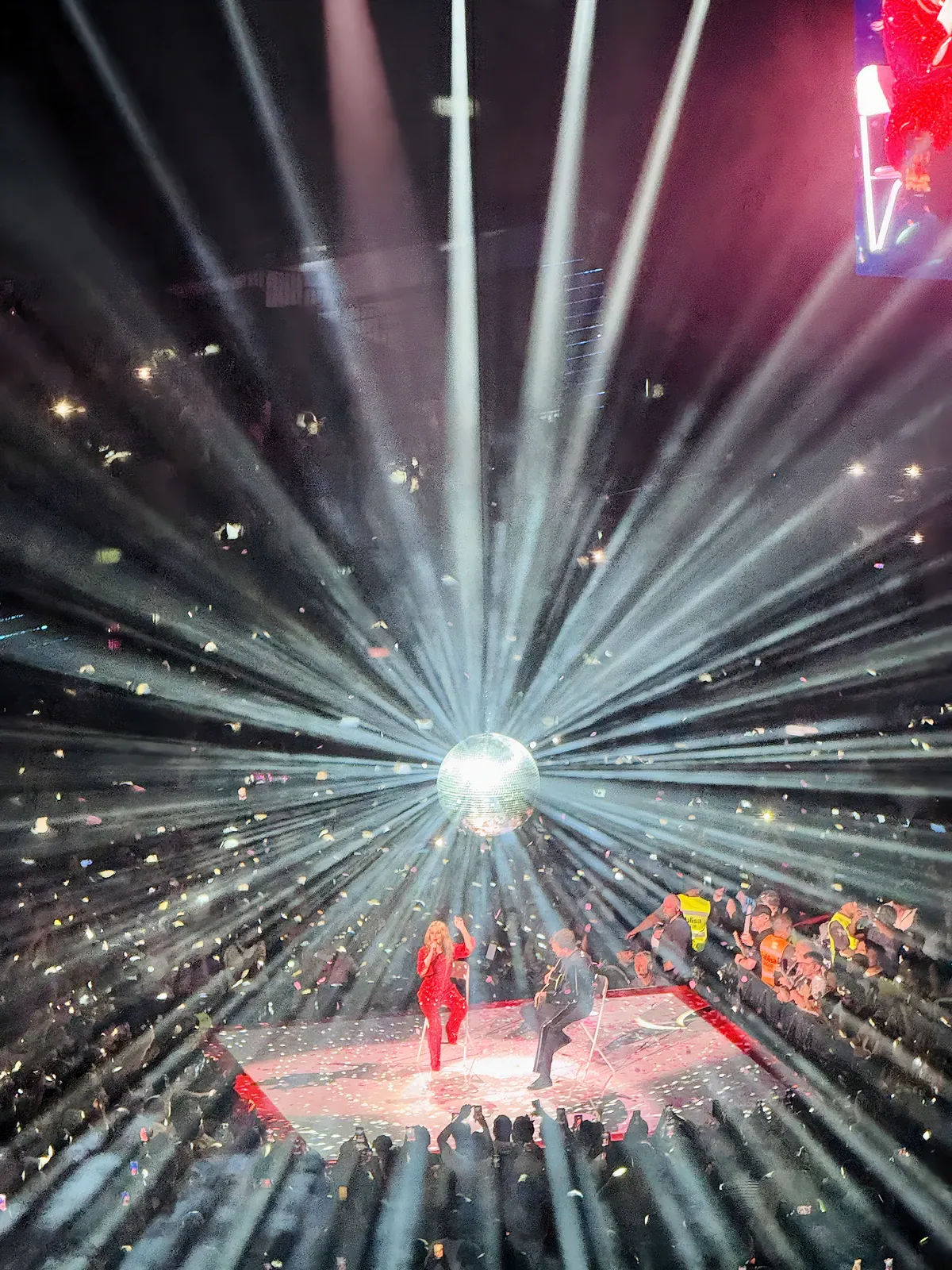
Electropop and recession pop, 2008-2019
The late 2000s sent dance-pop back toward its electronic roots. Lady Gaga’s debut single “Just Dance” (8 April 2008), produced by RedOne, spent almost five months on the Hot 100 before reaching number one in January 2009. Rihanna’s “Don’t Stop the Music” carried house elements, Kesha’s “Tik Tok” a video-game beat, and Katy Perry’s “Firework” mixed electropop and house.
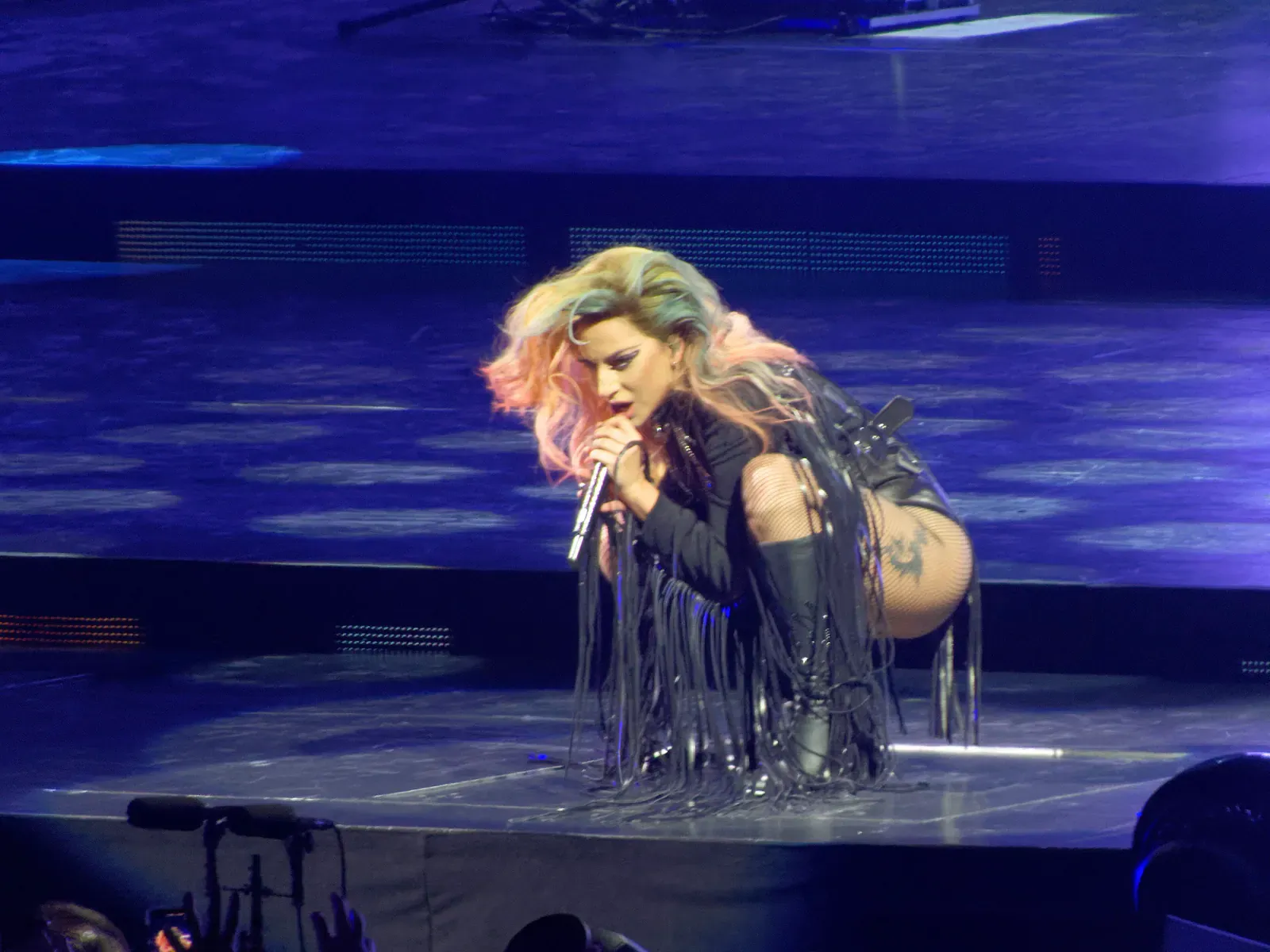
Journalists noticed that early-2010s hits about clubbing and feeling positive in hard times kept topping the charts, and called it recession pop, linking it to the 2008 financial crisis. Taylor Swift’s Red, 1989 and Reputation used Max Martin and Shellback.
Disco revival, 2020 to now
Dua Lipa’s Future Nostalgia (27 March 2020) fused disco, funk and electropop and topped the charts in 15 countries. Its lead single “Don’t Start Now”, a nu-disco song with a funk bassline, peaked at number two in both the United Kingdom and the United States and is regarded as the start of a disco revival. Lady Gaga returned to dance-pop on Chromatica.
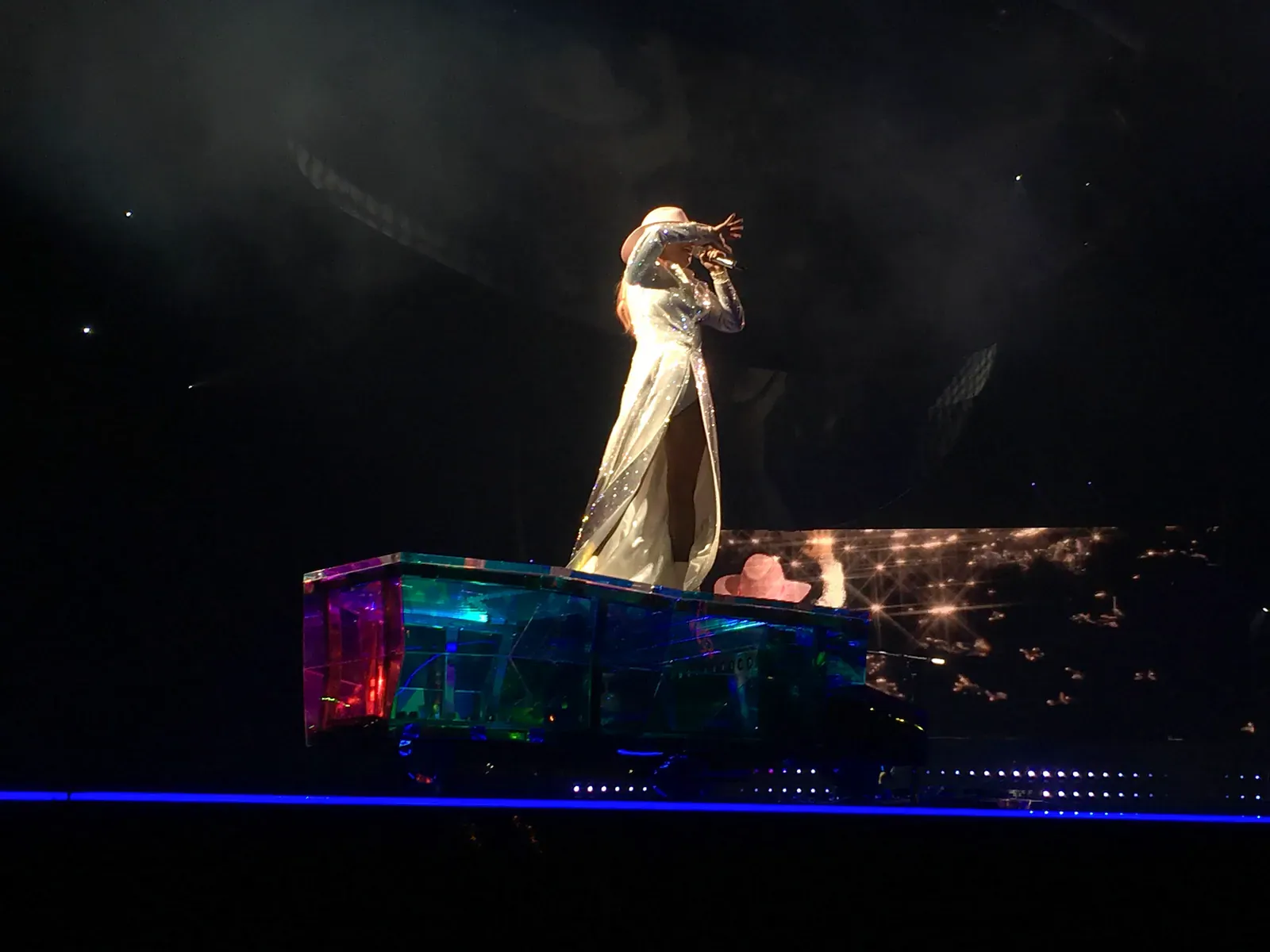
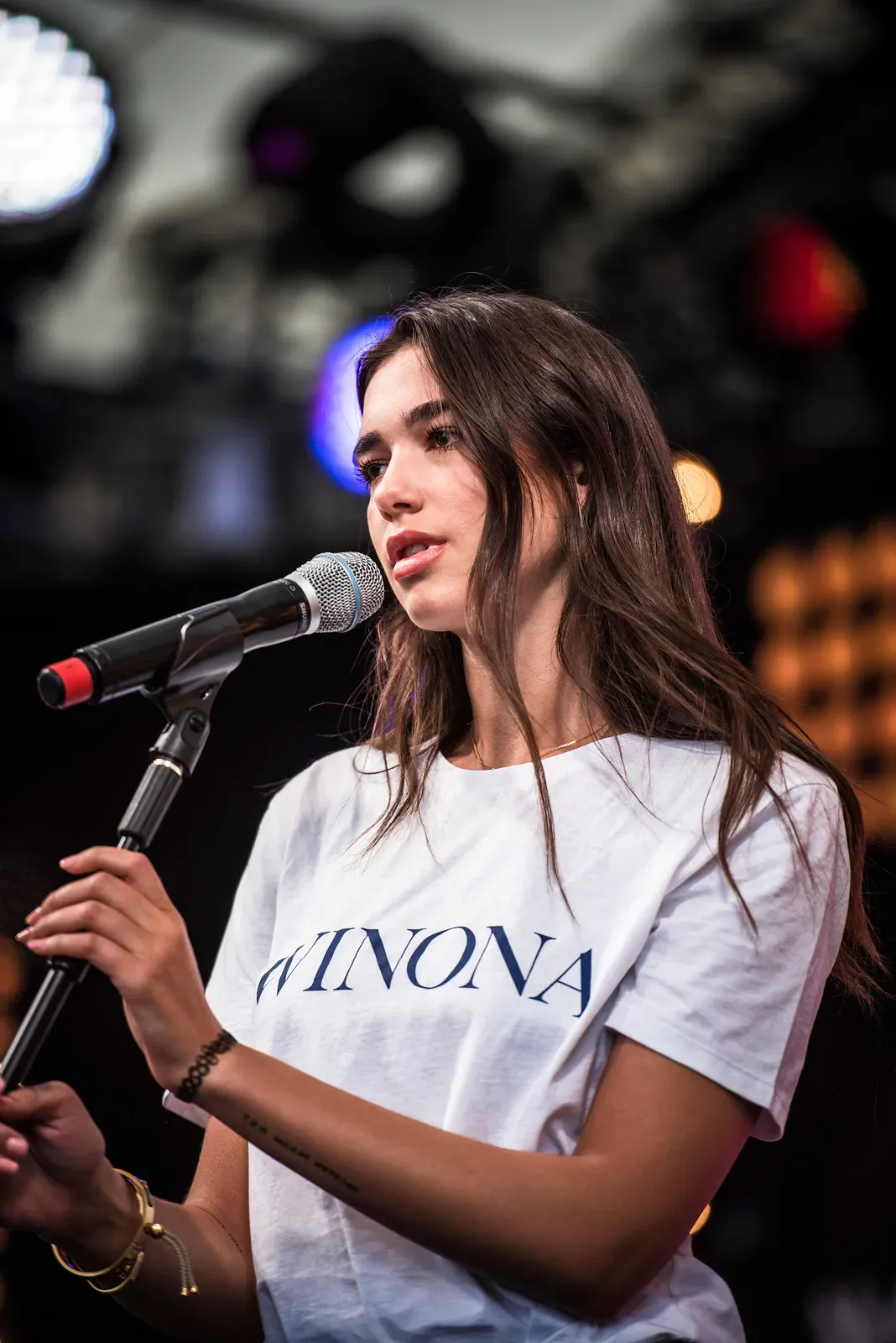
BTS’s “Dynamite” (2020) reached number one on the Hot 100 with an electronic dance beat, while Rina Sawayama and Charli XCX took a hyperpop route. In 2024 the Recording Academy created the Grammy Award for Best Pop Dance Recording, and Kylie Minogue won the first one with “Padam Padam”.
Characteristics
Dance-pop is up-tempo and dance-centred, with strong beats, prominent hooks and a structure suited to radio airplay. Lyrics are simple and production polished. Measured tempos run from about 100 to 145 beats per minute in 4/4, with most records between 115 and 135. The genre borrows from R&B, house, trance, techno, electropop, new jack swing, funk and pop rock, depending on producer and period.
Instruments and production
Early dance-pop used machines: a LinnDrum for the beat, Moog bass and Oberheim chords, plus synthesized strings, electronic claps and cowbell on “Holiday”. A four-on-the-floor kick carries the club function, while the structure follows pop with a hook-first chorus. Later decades added Auto-Tune as a deliberate vocal effect, funk basslines for the nu-disco revival and bass-heavy drums for the 2010s.
Mainstream success
“Believe” topped the charts in over 23 countries, sold more than 11 million copies and won Best Dance Recording at the 42nd Grammy Awards, Cher’s first Grammy; Warner Records released it and, later, Future Nostalgia. “…Baby One More Time” was the best-selling single of 1999 in the United Kingdom, and “Vogue” sold more than six million copies. Interscope issued “Just Dance”. Max Martin has 31 Billboard Hot 100 number ones as writer or co-writer.
Notable recordings
“Holiday” was almost not Madonna’s. Curtis Hudson and Lisa Stevens-Crowder wrote it for their group Pure Energy, whose label rejected the demo, and it was shopped around until John “Jellybean” Benitez brought it to Madonna, who needed another song. Recorded at Sigma Sound Studios in New York with a piano solo by Fred Zarr, it came out on Sire on 7 September 1983.
“Believe” began as a demo by Brian Higgins, Matthew Gray, Stuart McLennen and Timothy Powell. Warner chairman Rob Dickins liked only the chorus, so he brought in Steve Torch and Paul Barry to finish it. It was recorded at Dreamhouse Studio in West London.
Culture
Voguing gave “Vogue” its subject. Janet Jackson’s “Rhythm Nation” (1989) pairs rapid choreography with unisex military-style outfits; its video won two MTV Video Music Awards and was later echoed by Beyonce, Rihanna and Ciara. Kylie Minogue’s white jumpsuit in the “Can’t Get You Out of My Head” video became a fashion statement.
Legacy
Dance-pop turned the nightclub into a pop institution and made the producer the hit maker. K-pop groups such as BTS and Blackpink now reach the same charts with electronic dance beats, and disco and house revivals keep returning through it, from Fever to Future Nostalgia. The Grammy category created in 2024 recognises it as a form in its own right.
Misconceptions
Dance-pop is not simply disco under a new name. It descends from disco and post-disco but joins them to pop song structure and synth-pop, and in the early 1980s disco itself was an anathema to mainstream pop.
Auto-Tune did not begin as a vocal effect. The software was designed to correct off-key notes, and “Believe” popularized its deliberate use to distort vocals.
Dance-pop is not always the work of the singer. The usual model has producers write the record and then hire singers, which is why Madonna’s involvement in writing and co-producing stood out.
Frequently asked questions
What is dance-pop?
Dance-pop is uptempo pop designed for both nightclubs and contemporary hit radio, combining the strong beat of dance music with the easy structure and catchy melody of pop.
What BPM is dance-pop?
Measured dance-pop tracks run from about 100 to 145 beats per minute in 4/4. “Holiday” runs near 118, “Vogue” near 116, “Believe” near 133 and “Toxic” near 143.
Who started dance-pop?
Madonna is most often credited. Her 1982 single “Everybody” and her 1983 debut album set the template, while Stock Aitken Waterman built a Hi-NRG version in London at the same time.
Is dance-pop the same as electropop?
No. Electropop is a narrower, more synthesizer-based style that influenced dance-pop in the late 2000s. Dance-pop also borrows from house, R&B, funk and disco.
Sound
Sound sheet
Anatomy of a track
| # | Part | Bars |
|---|---|---|
| 1 | Intro | 8 |
| 2 | Verse | 16 |
| 3 | Chorus | 16 |
| 4 | Bridge or breakdown | 8 |
| 5 | Final chorus | 16 |
Signature sounds
- Four-on-the-floor kick
- Hook-first chorus built for radio
- Handclaps and synthesized strings
- Pitch-processed vocal hook
Drums and percussion
- LinnDrum
Synths and software
- Oberheim OB-X
- Auto-Tune
Techniques
- Pitch-processed vocals
- Four-on-the-floor kick
- Funk bassline over disco groove
- Producer-led writing
Tuning
12-tone equal temperament, A=440 Hz
Vocals
Polished lead vocals over simple lyrics, sometimes pitch-processed as an effect.
Scenes
Where it happened
Where and when the sound lived: one bar per city on a shared timeline.
North America
Europe
Active scenes
Peak 3, 1992-2025
Danceteria and Paradise Garage fed DJs and labels such as Sire, where Madonna was signed.
Home of PWL and the Stock Aitken Waterman Hi-NRG and Eurobeat hit factory.
Cheiron Studios and its successors produced the Max Martin era of pop.
Venues and places
New York, 1977 to today. SoHo discotheque with resident DJ Larry Levan that hosted a young Madonna.
New York, 1980 to today. Four-floor club where DJ Mark Kamins played Madonna's demo.
Stockholm, 1992 to today. Studio founded by Denniz PoP and Tom Talomaa that made hits for Britney Spears and Backstreet Boys.
Culture
Culture markers
- Voguing
Dance popularized in New York in the late 1980s that inspired Madonna's Vogue.
Dance - Rhythm Nation uniforms
Unisex military-style outfits and rapid choreography that Beyonce, Rihanna and Ciara later paid homage to.
Fashion - Kylie's white jumpsuit
The outfit in the Can't Get You Out of My Head video became a fashion statement.
Fashion - Recession pop
Colloquial tag for early-2010s club-themed pop hits.
Slang
Media
Key media
- 1989Janet Jackson's Rhythm Nation 1814
by Janet Jackson. Short film whose final segment was the Rhythm Nation video, with two MTV VMAs for dance and choreography.
Film
Glossary
Terms on this page
Deliberately distorted Auto-Tune vocals, after Believe.
Uptempo pop for clubs and radio, with strong beats and uncomplicated song structures.
Label for Stock Aitken Waterman's 1984-1989 style.
Fast uptempo disco and electronic dance music with staccato hi-hats and octave basslines.
Twenty-first-century revival of disco textures.
Early-2010s dance tracks about clubbing and optimism in hard times.
Pop family