Teen pop
Teen pop is dance-pop, pop and ballad music created for and marketed to preteens and teenagers, taking its modern form in the late 1980s and 1990s.
Orlando, 1987
Pop family
Born
1987
Orlando
Subgenres
1
Documented branches
Links
15
Genres it drew on or shaped
Tempo
80-130 BPMLineage
Family tree
Grew out of
Derived from
Derived from
Influenced by
Orlando, 1987
Teen pop
Led to (1)
Timeline
Era by era
From the first sparks to today. Select a dot to read the story behind it.
- Teen idol precedents
1948 to 1986
- First wave
1987 to 1991
- Golden era
1996 to 2002
- Online and global idols
2009 to today
Eras
Moments
- 1 Teen idol precedents, 1948 to 1986
- 2 First wave, 1987 to 1991
- 3 Golden era, 1996 to 2002
- 4 Online and global idols, 2009 to today
around 1948
Teen idol precedents
Teen-oriented pop existed from the late 1940s, with Frank Sinatra an early idol, and peaked in the early 1960s with Paul Anka, Frankie Avalon and Fabian. The Osmonds carried it into the 1970s.
- 1984New Kids on the Block form in BostonThe Dorchester vocal group that later led the first boy band wave of the late 1980s begins.
1987
First wave
Menudo, New Edition, Debbie Gibson, Tiffany and New Kids on the Block made dance-pop and ballads for teenagers a chart staple, until grunge and gangsta rap crossed over in North America in late 1991.
- 1987Debbie Gibson releases Out of the BlueThe debut album by a 16-year-old writer-producer becomes a triple-platinum success.
- 1988Foolish Beat reaches number oneGibson becomes the youngest artist to write, produce and perform a US number one single.
- 1988New Kids on the Block release Hangin' ToughThe album that turns the group into a teen phenomenon, with the title single following in 1989.
- 1991Grunge and gangsta rap cross overNorth American charts turn away from teen pop in late 1991, while Take That keeps the style alive in the UK until Britpop.
- 1992Cheiron Studios opens in StockholmDenniz PoP and Tom Talomaa found the studio whose producers write hits for Backstreet Boys, NSYNC and Britney Spears.
- 1993Backstreet Boys form in OrlandoThe group that becomes the best-known boy band of the late 1990s starts in Florida.
1996
Golden era
Spice Girls, Backstreet Boys, NSYNC and then Britney Spears and Christina Aguilera sold in huge numbers, shaped by the Stockholm producers around Cheiron Studios.
- 1996Spice Girls release WannabeThe debut single makes the group stars in the UK, with US success following in 1997 and a wave of teen pop acts in its wake.
- 1997Backstreet's Back releasedThe second Backstreet Boys album carries the group into the US mainstream.
- 1998Britney Spears releases ...Baby One More TimeThe debut single opens the career of the best-selling teenage artist of all time.
- 1999The pop Lolita waveBritney Spears, Christina Aguilera, Jessica Simpson and Mandy Moore break through within a year, and a crowd of short-lived imitators follows.
- 2005AKB48 is created in JapanThe group, formed to promote idol culture, grows into a network of sister groups at home and abroad.
2009
Online and global idols
Justin Bieber, One Direction, K-pop groups and Olivia Rodrigo built audiences through video sites and social media, and the idol model spread across Asia.
- 2009Justin Bieber releases My WorldThe debut EP makes him the first act with seven songs from a debut release on the Billboard Hot 100.
- 2010One Direction form on The X FactorThe British-Irish group becomes the most profitable boy band of all time.
- 2021Olivia Rodrigo releases drivers licenseThe former Disney actress goes viral on TikTok and renews teen pop's confessional songwriting.
Listening path
Start listening
A short path from an easy way in to the deep end. Thumbnails come from YouTube; the player loads only when you press play.
- 01
Debbie Gibson, 1988
First-wave dance-pop and ballad by a teenager who wrote and produced it herself.
- 02
New Kids on the Block, 1989
The group's breakthrough hit, a chanted chorus over a hip-hop-tinged beat.
- 03
Britney Spears, 1998
The Stockholm-produced single that launched the golden era's best-selling solo star.
- 04
Backstreet Boys, 1999
A harmony-led ballad that became a boy band standard of the Cheiron sound.
- 05
NSYNC, 2000
An uptempo, choreography-driven hit that shows the style at its peak.
Facts
| Family | Pop |
| Origin | Orlando, United States |
| Emerged | 1980s-1990s |
| Status | Active |
| Tempo | 80 to 130 BPM |
| Meter | 4/4 |
| Grew out of | Bubblegum pop, Dance-pop |
| Subgenres | 1 |
Teen pop is a branch of pop written, produced and marketed for preteens and teenagers, often performed by artists who are themselves teenagers at their breakthrough. It rests on dance-pop, mainstream pop and urban ballads, with catchy repeated choruses, polished vocals and a strongly visual image.
Its modern form took shape in the late 1980s, and the late 1990s are widely regarded as its golden era.
Origins
Music aimed at young listeners is older than the genre name. By the end of the swing era, in the late 1940s, Frank Sinatra was an early teen idol. The early 1960s, with Paul Anka, Frankie Avalon, Fabian and Ricky Nelson, became known as the golden age of pop idols, and in the 1970s the Osmonds, with Donny and Marie also succeeding on their own, were among the most popular youth acts.
The contemporary form dates from the mid to late 1980s. Menudo, New Edition, Debbie Gibson, Tiffany, Kylie Minogue and New Kids on the Block formed the first major wave after the countercultural 1960s and 1970s. The style draws on dance-pop production, with roots in bubblegum and some influence from contemporary R&B, new jack swing and synth-pop.
First wave, 1987-1991
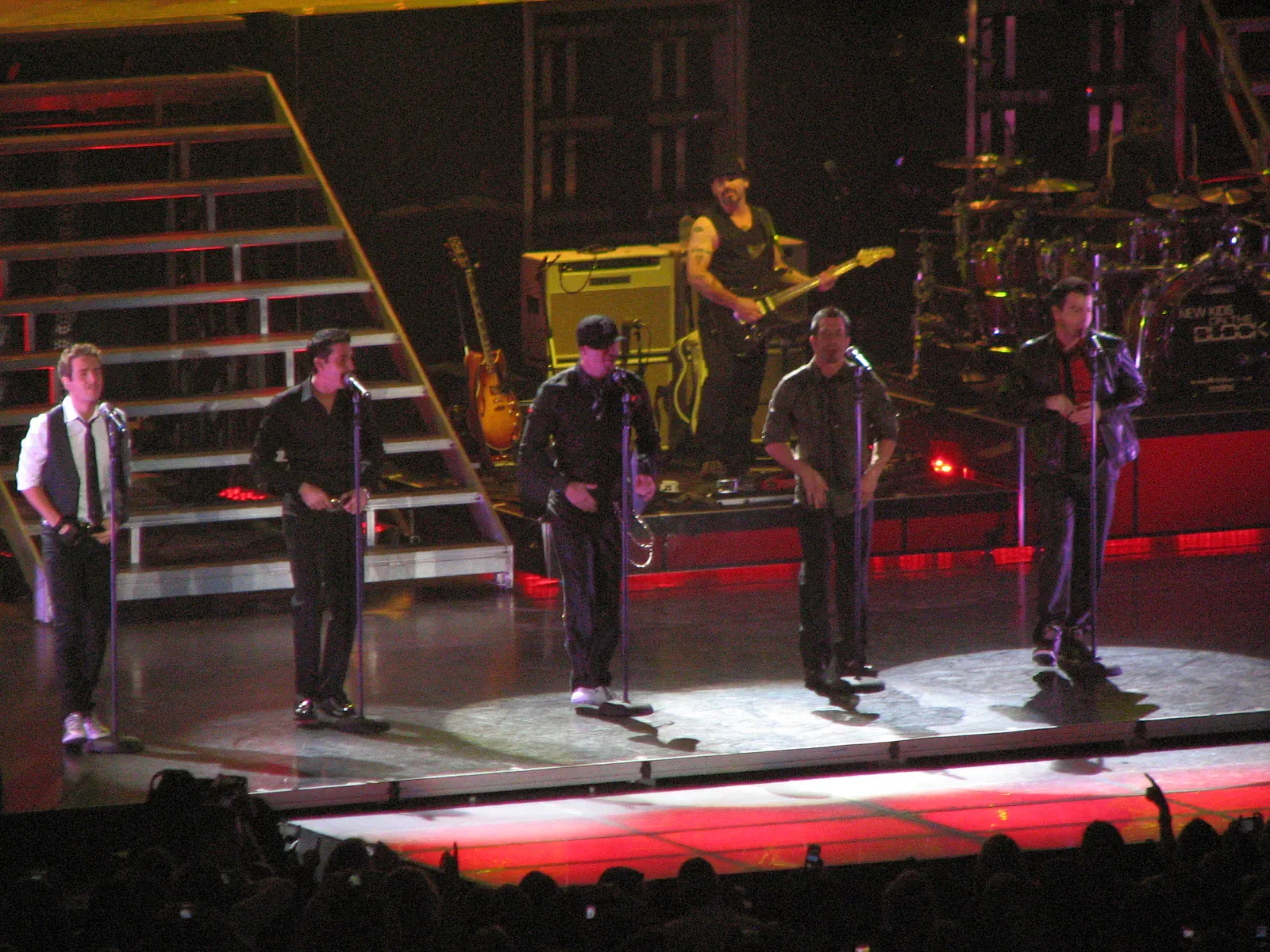
Debbie Gibson released her debut album Out of the Blue in 1987 at age 16, writing and largely producing it herself. Its single Foolish Beat reached number one in the United States in 1988, making her the youngest artist to write, produce and perform a chart-topper. The album was later certified triple platinum.
New Kids on the Block, formed in Dorchester, Massachusetts, released Hangin’ Tough in 1988, and the group became a merchandise and fan-club phenomenon. Their label, Columbia Records, and Gibson’s, Atlantic Records, were established majors rather than youth specialists.

The wave ended abruptly in North America when grunge and gangsta rap crossed over into the mainstream by late 1991. In the United Kingdom, Take That kept the style visible until Britpop took over in the mid-1990s.
Golden era, 1996-2002
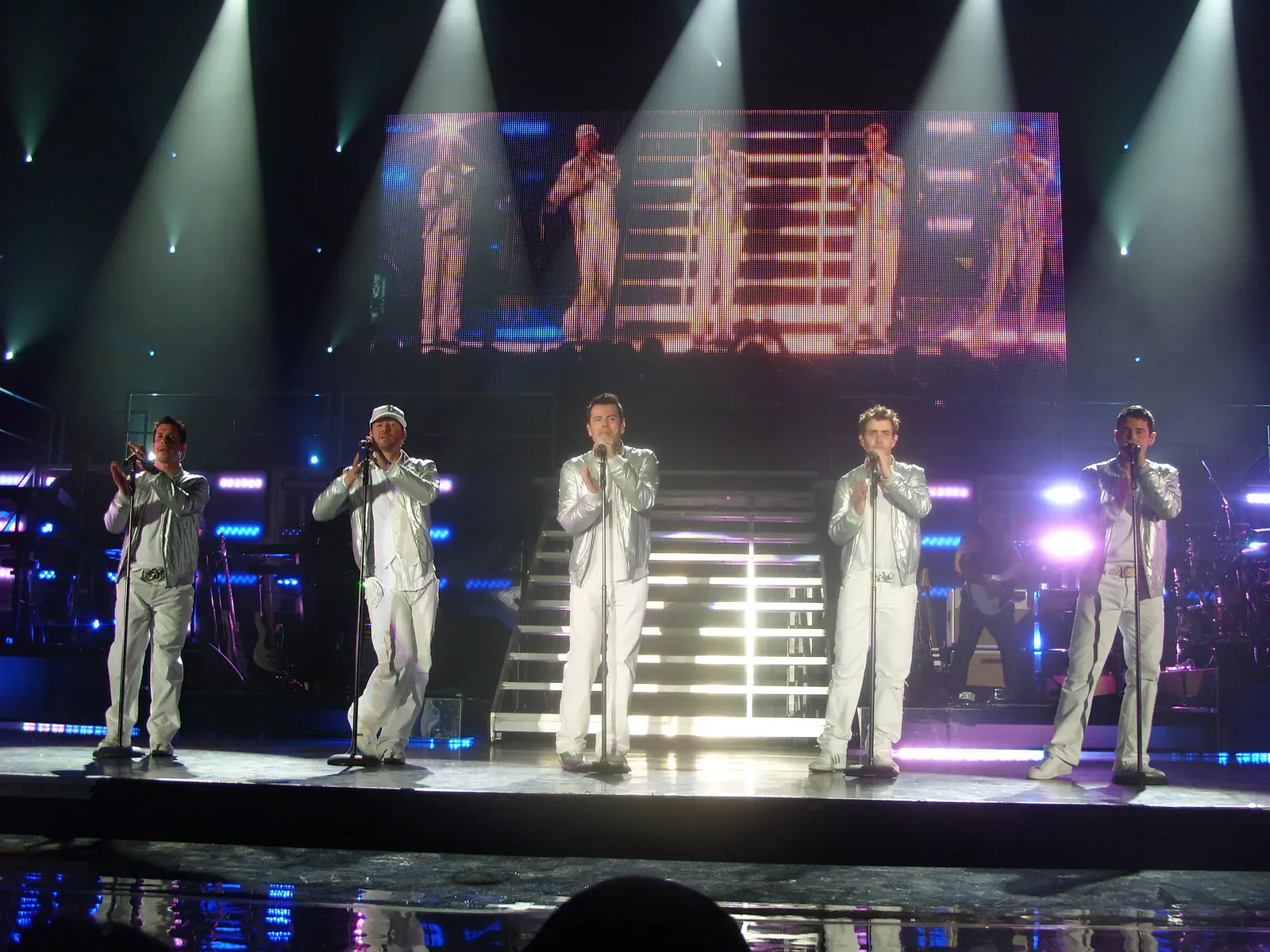
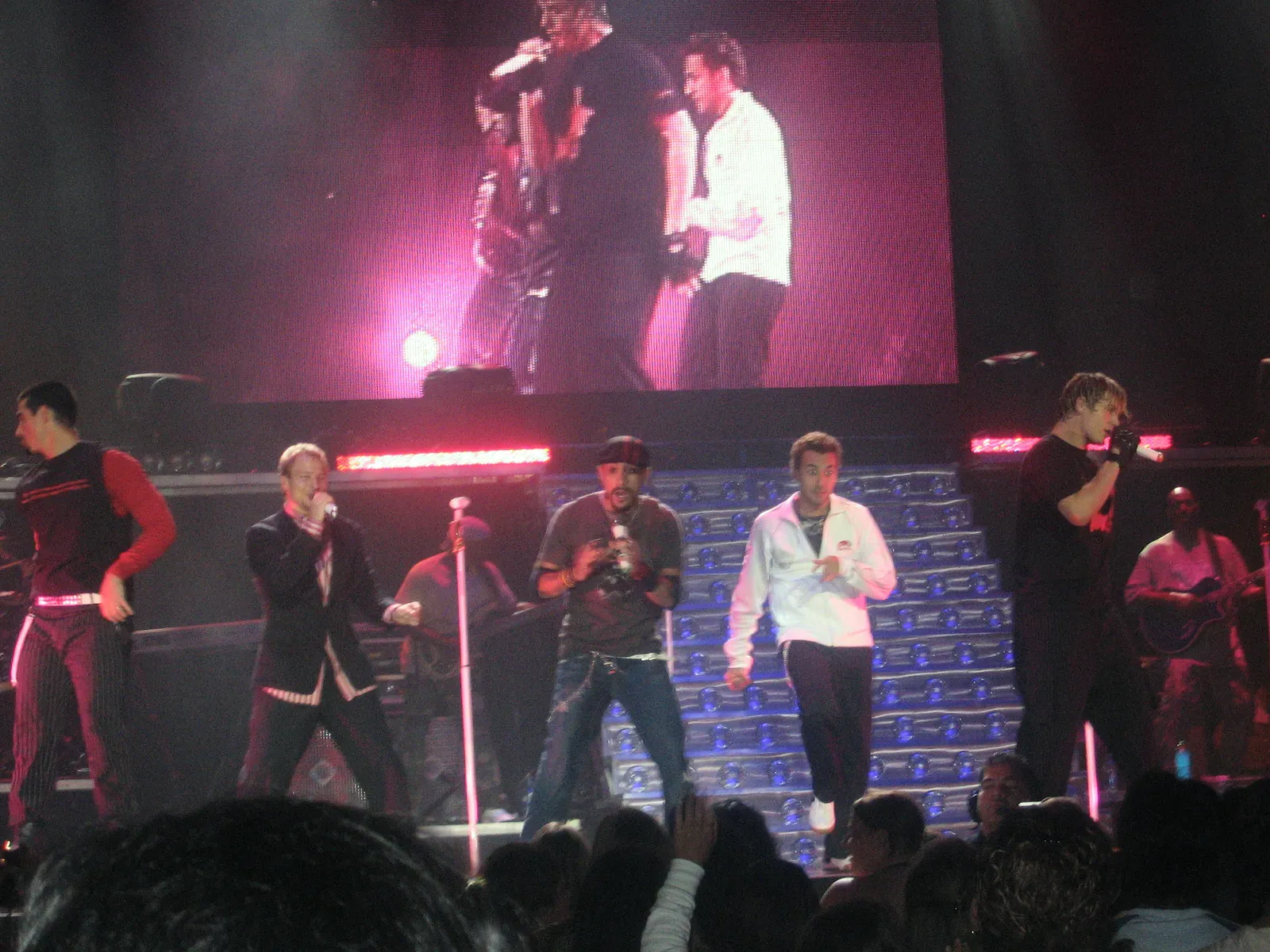
In 1996 the Spice Girls released Wannabe, which made them stars in the United Kingdom and, a year later, in the United States. In their wake came Hanson, Backstreet Boys, NSYNC, Robyn, All Saints, S Club 7, Five, B*Witched and Destiny’s Child. Backstreet Boys formed in Orlando in 1993 and broke through with their 1996 debut album and 1997’s Backstreet’s Back; NSYNC, also from Orlando, was formed in 1995 by Chris Kirkpatrick and first launched in Germany.
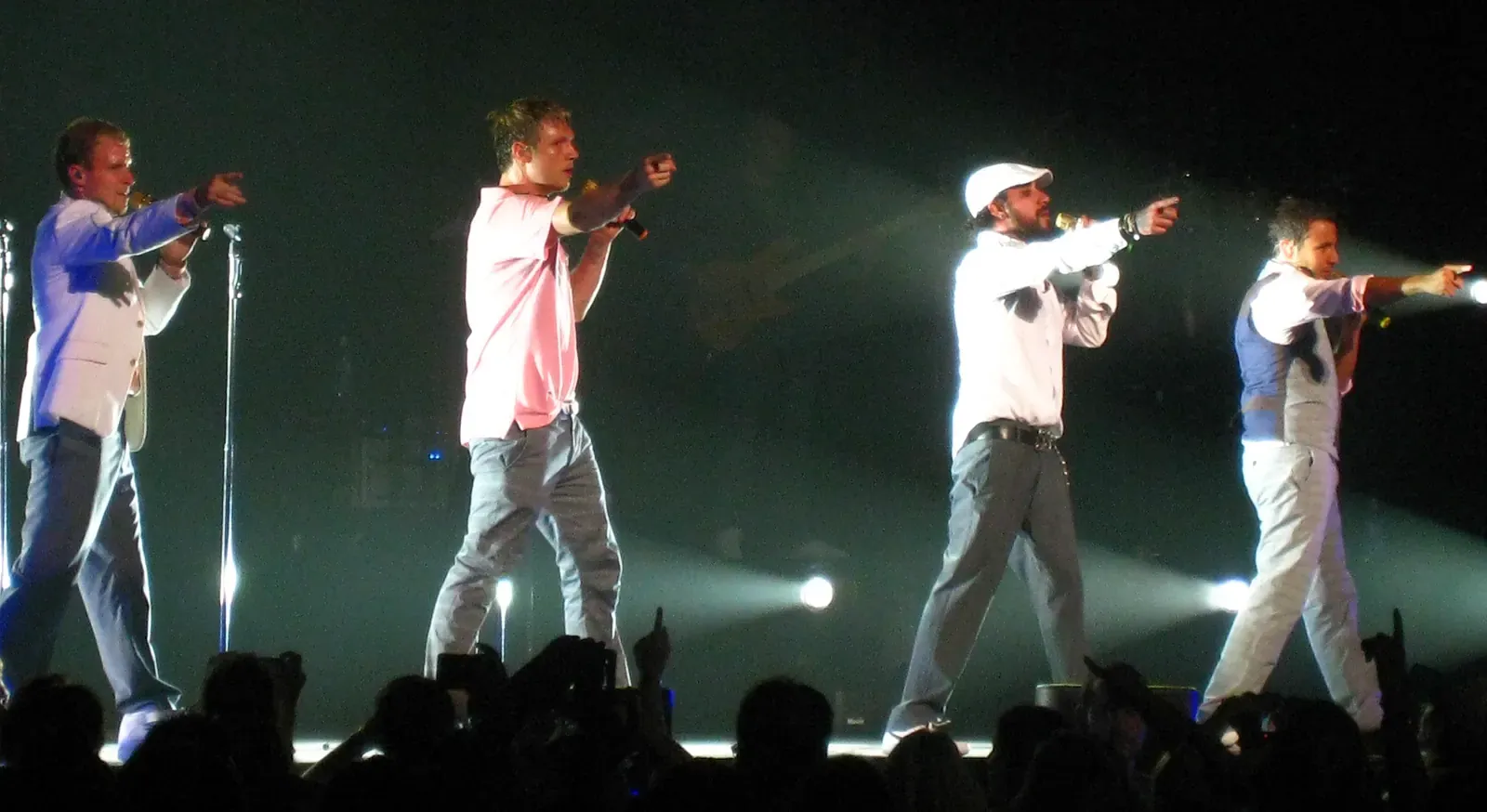
Solo performers followed. In 1999 Britney Spears, Christina Aguilera, Jessica Simpson and Mandy Moore broke through together in what became known as the pop Lolita trend, which was followed by many short-lived imitators. Spears’s …Baby One More Time, released in 1998, made her the best-selling teenage artist of all time and, in the view of many, revived teen pop. By 2001, Aaron Carter, A-Teens, 3LW, O-Town, B2K and Dream Street were also finding success.
The Cheiron sound
A large share of the late 1990s sound came from Cheiron Studios in Stockholm, founded in 1992 by Denniz PoP and Tom Talomaa. Producers there, including Denniz PoP and Max Martin, developed what became known as the Cheiron sound, heard on records by Backstreet Boys, NSYNC and Britney Spears. Jive Records became the key home for this generation of acts, releasing Backstreet Boys, NSYNC and Spears.
Characteristics
Teen pop borrows from R&B, rock, electronic music and hip-hop but stays within the mainstream pop frame. Typical tracks use a catchy repeated chorus, upbeat melodies and pitch-corrected vocals. Themes follow adolescence: love, growing up and parties. A study of fourteen teen-oriented pop albums found that 155 of the 169 songs concerned romantic love.
Image matters as much as sound. Performers are usually presented as a boy or girl next door and as an object of desire or aspiration, supported by stylish clothes, popular hairstyles and choreographed dance crazes.
Instruments and production
Production relies on programmed drums, synthesizers, layered vocals and pitch correction, with tempos that allow choreography. Group acts stack harmonies, while solo acts often rely on a single polished lead supported by doubled vocals. The arrangement leaves the performer at the front of the mix, in line with the aim of a direct appeal to listeners.
Culture
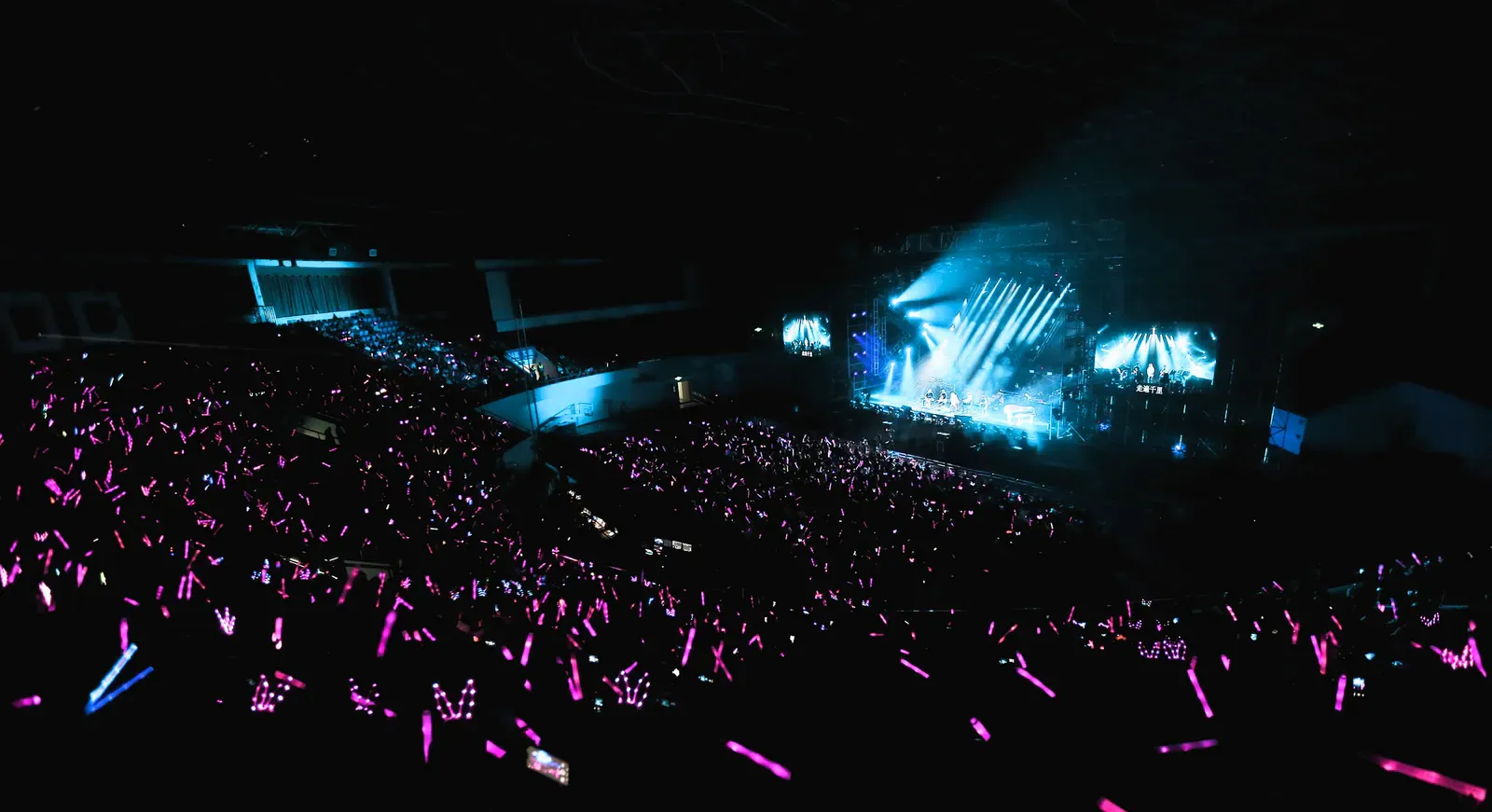
Teenage fans’ disposable income drives the market for singles, albums and merchandise. Fans often form a parasocial relationship with the artist, believing the performer cares about them and their fellow fans, and the bond shapes the culture of fan clubs, posters and concerts.
The genre has been criticised as inauthentic or overly commercial, and some authors have described it as more disposable and simpler than other forms. A common observation is the clash of presumed innocence and overt sexuality in its image. It has nevertheless remained a defining part of the music industry.
Mainstream success in the 2000s and 2010s
Success moved to new faces and new channels. In the mid to late 2000s, teenagers such as Rihanna and Chris Brown found success. Justin Bieber’s debut EP My World, released on 5 December 2009, made him the first artist with seven songs from a debut release on the Billboard Hot 100. Taylor Swift began as a teenage country artist in the mid-2000s and moved to mainstream pop.
One Direction, formed on the British series The X Factor in 2010, became the most profitable boy band of all time. In Japan, AKB48 was created in 2005 to promote idol culture, and in the late 2010s K-pop acts such as BTS and Blackpink reached international fame; see K-pop.
Legacy
The label of “teen” is flexible: artists who start as teenage stars often shift towards other pop styles as they age. Since the 2020s, Olivia Rodrigo has led a new wave, building on confessional songwriting and viral spread on TikTok after her 2021 single drivers license, with Tate McRae adding dance-pop and R&B elements.
Misconceptions
Teen pop is sometimes treated as a 1990s phenomenon only, but the pattern of youth-targeted pop has repeated since the 1940s and again in the 2010s and 2020s. It is also often described as a boy band genre, but solo performers such as Debbie Gibson, Britney Spears and Christina Aguilera are central to its history. A third myth is that the genre is purely marketing: the first wave included writer-producers such as Gibson, who wrote and produced her own chart-topper.
Frequently asked questions
What is teen pop?
Teen pop is pop music created for and marketed to preteens and teenagers, usually combining dance-pop, mainstream pop and ballads with catchy choruses and a strong visual image.
When did teen pop begin?
Teen-oriented pop existed from the late 1940s, but teen pop in its modern form began in the late 1980s with Debbie Gibson, New Kids on the Block and others, reaching its golden era in the late 1990s.
Who are the most important teen pop artists?
Key acts include Debbie Gibson, New Kids on the Block, Backstreet Boys, NSYNC and Britney Spears, with Justin Bieber, One Direction and Olivia Rodrigo representing later waves.
What is the Cheiron sound?
The Cheiron sound is the late 1990s Stockholm production style created at Cheiron Studios by Denniz PoP, Max Martin and colleagues for Backstreet Boys, NSYNC and Britney Spears.
Sound
Sound sheet
Anatomy of a track
| # | Part | Bars |
|---|---|---|
| 1 | Intro | 4 |
| 2 | Verse | 8 |
| 3 | Pre-chorus | 4 |
| 4 | Chorus | 8 |
| 5 | Bridge | 8 |
Signature sounds
- Catchy repeated chorus line
- Stacked backing vocals
- Pitch-corrected lead vocal
- Beat built for choreography
Drums and percussion
- Drum machine
Synths and software
- Auto-Tune
Techniques
- Repeated hook chorus
- Stacked harmonies
- Pitch correction
- Genre blending
Keys and modes
Major. Bright default for dance-pop verses and choruses.
Natural minor. Common for the emotional ballad side of the style.
Tuning
12-tone equal temperament, A=440 Hz
Vocals
Polished, youthful lead vocals and close group harmonies on themes of young romance.
Scenes
Where it happened
Where and when the sound lived: one bar per city on a shared timeline.
North America
Europe
Active scenes
Peak 3, 1993-2025
Home of New Kids on the Block, whose Dorchester roots shaped the first boy band wave.
Backstreet Boys and NSYNC both formed here, making it the late 1990s boy band base.
Cheiron Studios and its producers wrote and recorded the sound of late 1990s teen pop.
Culture
Culture markers
- Choreographed dance crazes
Group routines and signature moves are central to the visuals and marketing of teen pop acts.
Dance - Boy and girl next door image
Stylish clothes and popular hairstyles build an aspirational but approachable look.
Fashion - Fan clubs and merchandise
Teenage fans spend disposable income on singles, albums and merchandise, forming strong parasocial ties.
Ritual
Glossary
Terms on this page
A vocal group of young men, typically singing harmonies and dancing choreography.
The late 1990s Stockholm production style developed by Denniz PoP and Max Martin for Backstreet Boys, NSYNC and Britney Spears.
A one-sided bond in which fans feel the artist knows and cares about them personally.
A label for the late 1990s trend of teenage female pop singers marketed with a clash of innocence and overt sexuality.
A young performer marketed as an object of admiration or desire for adolescent fans.
Pop family