Arabic pop
Arabic pop is pan-Arab song that sets pop melody and production against regional Arabic styles, centred on Cairo and Beirut and built up from the 1970s.
Cairo, 1972
Pop family

Born
1972
Cairo
Subgenres
6
Documented branches
Links
12
Genres it drew on or shaped
Tempo
70-140 BPMLineage
Family tree
Grew out of
- Tarab
Derived from
Influenced by
MaqamDisco
Cairo, 1972
Arabic pop
Led to (6)
Timeline
Era by era
From the first sparks to today. Select a dot to read the story behind it.
- Film songs and cassettes
1970 to 1989
- Video and satellite
1990 to 1999
- Label-run stardom
2000 to 2009
- Streaming and singles
2010 to today
Eras
Moments
- 1 Film songs and cassettes, 1970 to 1989
- 2 Video and satellite, 1990 to 1999
- 3 Label-run stardom, 2000 to 2009
- 4 Streaming and singles, 2010 to today
around 1970
Film songs and cassettes
Pop grew out of the Egyptian film industry in Cairo, with Beirut a second centre. Songs spread on single records and then cassettes, and the first music videos arrived late in the 1970s.
- 1979Music videos reach Arab audiencesMusic videos and the broadcast channels that carried them let singers build a younger audience and spread pop across borders.
- 1983Amr Diab's debut album Ya TareeqThe Egyptian singer's first album begins the career that earned him the name King of Arabic Pop.
- 1987Rotana is foundedThe company grew into a label, satellite channels and a roster of more than 100 Arab pop artists.
1990
Video and satellite
Music videos and Arab satellite channels turned singers into regional stars. Amr Diab's 1996 album Nour El Ain, produced by Hamid Al Shaeri, took the style beyond the Arab world.
- 1992Studio El Fan launches ElissaThe Lebanese talent show features Elissa, whose career as a romantic pop singer begins that year.
- 1996Nour El AinAmr Diab's album fuses Egyptian pop with flamenco guitar, and becomes a success beyond the Middle East.
2000
Label-run stardom
Rotana and Alam El Phan ran labels, channels and booking for a roster of stars. Nancy Ajram, Haifa Wehbe and Elissa signed brand deals, and Gulf studios began producing Khaleeji pop.
- 2000Khaleeji pop takes shapeFrom 2000, studios in the Gulf states produce their own pop, a second pole beside Cairo and Beirut.
- 2000Tamally MaakAmr Diab's title track, composed by Sherif Tag, later tops a list of the best Arabic pop songs of the 21st century.
- 2001Pepsi signs Nawal Al ZoghbiBrand deals begin: Elissa follows in 2003 and Haifa Wehbe in 2005 for the same company.
- 2002Akhasmak AhNancy Ajram's lead single appears in December and the album Ya Salam follows on 24 February 2003.
- 2005Nancy Ajram fronts Coca-ColaShe becomes the official Coca-Cola representative, a sign of pop stars as brand faces.
- 2006Boos El Wawa videoHaifa Wehbe's playful song and provocative video spark region-wide debate over what pop may show.
2010
Streaming and singles
By the mid-2010s releases moved to streaming, which brought back the single. Artists reach audiences across the region directly, while weddings and live shows remain the main income.
- 2010Aa Bali HabibiElissa's single, released 16 June from the album Tesada'a Bemeen, is one of her best-known ballads.
Listening path
Start listening
A short path from an easy way in to the deep end. Thumbnails come from YouTube; the player loads only when you press play.
- 01
Amr Diab, 2000
The best-known Arabic pop dance hit; listen for the maqsum groove under pop keyboards.
- 02
Nancy Ajram, 2002
The lead single of Ya Salam; note the bright vocal and the percussion-led arrangement.
- 03
Haifa Wehbe, 2006
The playful song behind the 2006 video controversy; listen to the light, danceable beat.
Facts
| Family | Pop |
| Origin | Cairo, Egypt |
| Emerged | 1970s |
| Status | Active |
| Tempo | 70 to 140 BPM |
| Meter | 4/4 |
| Grew out of | Tarab |
| Subgenres | 6 |
Arabic pop is the popular song of the Arab world, a style that joins pop melody and production with elements of regional Arabic music.
It took shape in the 1970s around Cairo, where the film industry supplied its singers and songs, with Beirut as a second centre, and it grew into a region-wide business of labels, satellite channels and brand-backed stars. It belongs to the wider pop family and sits beside the roots styles of the Middle East and North Africa.
Origins
The first Arabic pop came out of the Egyptian film industry. Cairo’s studios, film stars and songwriters made the short song, called ughniyah (“song”), the standard pop form, and singers from across the Arab world moved there to be heard. Beirut grew into a second centre and the most liberal market in the region, a place where Western trends were tried out before the larger Arab audience.
The style descends from the long song forms of tarab, whose sustained, improvised vocal art Arabic pop shortened and set to a band. It borrowed melody and harmony from Western pop and disco, while keeping the maqam modes and percussion cycles of Arabic music. The result used Western instruments such as electric guitar and electronic keyboards next to the oud and darbuka.
Film songs and cassettes, 1970-1989
Through the 1970s and 1980s, pop spread on single records and then on cassettes, and singers were still launched through films and radio. In the late 1970s the first music videos and the broadcast channels that carried them let artists reach a younger audience and build a name across borders.
Amr Diab released his first album, Ya Tareeq, in 1983 and started the career that later earned him the title King of Arabic Pop. The Rotana company, founded in 1987, would become the largest label and channel group in the field.
Video and satellite, 1990-1999
The 1990s turned singers into regional stars. Music videos and Arab satellite channels let a song be seen as well as heard, and a talent show such as Studio El Fan in Lebanon could launch a career, as it did for Elissa in 1992.
Amr Diab’s 1996 album Nour El Ain, produced by Hamid Al Shaeri, fused Egyptian pop with flamenco guitar and found listeners well beyond the Arab world. It showed that Arabic pop could carry a recognisable sound abroad without giving up its melodic language.
Label-run stardom, 2000-2009
In the 2000s, labels such as Rotana and Alam El Phan ran entire careers. A label controlled the recordings, the videos, the channel and the booking of live shows, and a producer or composer often wrote the song for a chosen singer. Rotana alone ran six channels and held more than 100 of the leading Arab pop artists.
Amr Diab’s title track “Tamally Maak” (2000) became the decade’s defining dance-pop hit. Nancy Ajram released the single “Akhasmak Ah” in December 2002 and the album Ya Salam on 24 February 2003, and became a regional star. Brand deals followed the fame. Pepsi signed Nawal Al Zoghbi in 2001, Elissa in 2003 and Haifa Wehbe in 2005, and Nancy Ajram became the official Coca-Cola representative in 2005. Meanwhile, from about 2000, studios in the Gulf states began producing their own pop, Khaleeji pop, as a third pole beside Cairo and Beirut.
Streaming and singles, 2010 onward
By the mid-2010s releases moved to streaming services. That brought back the single, which could appear as soon as it was ready, and it let artists reach audiences across the region directly. Elissa’s single “Aa Bali Habibi”, released on 16 June 2010 from the album Tesada’a Bemeen, shows the long-lived romantic ballad at the centre of the genre. Haifa Wehbe was still releasing extended plays in 2025.
Characteristics
The primary style combines pop melody with elements of different regional Arabic styles. Most songs are in a minor key, and the lyrics dwell on longing, melancholy, strife and love. Words such as habibi (“my darling”) and qalbi (“my heart”) recur so often that they mark the genre. Explicit sexuality, alcohol and open politics are rare in the lyrics.
Songs are shorter than tarab pieces and follow a pop form of hook, verse, chorus and instrumental break. Melodies move through maqam modes such as nahawand, close to the Western natural minor, and hijaz, which uses tones outside Western tuning and suggests yearning. The tempo runs from slow ballads to dance numbers, in 4/4 time.
Instruments and production
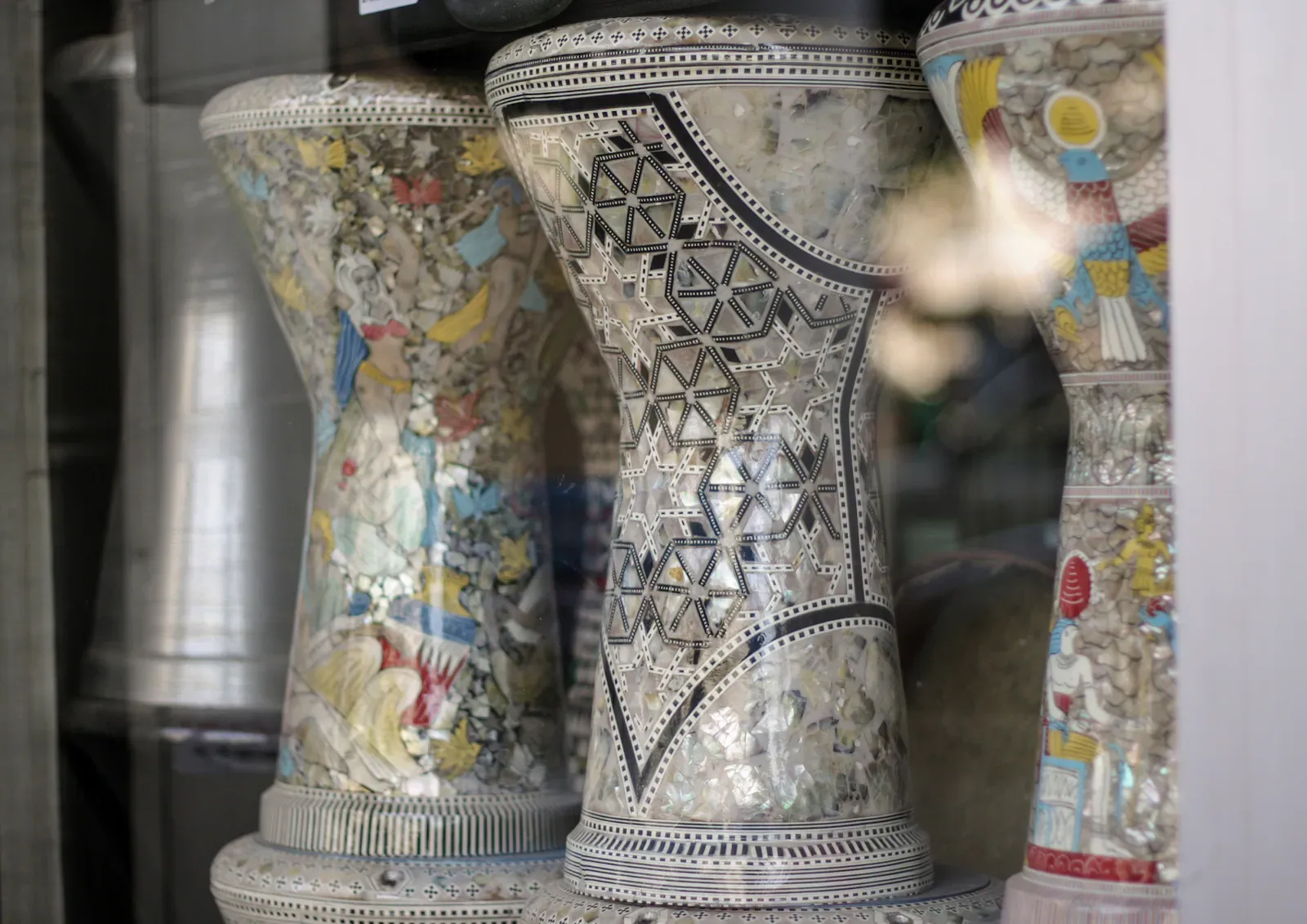
The band is Western: electronic keyboards, electric guitar, bass and a pop drum kit. Over it sit the oud, the qanun and the darbuka, which carry the Arabic colour. Percussion plays rhythmic cycles such as maqsum and saidi beside a pop backbeat.
Most recording takes place in studios, as in the West, although several live albums have been popular. A producer or composer traditionally builds the full song, from music to lyrics, whatever the talents of the performer.
Mainstream success
The business works very differently from the Western one. There are rarely managers, agents or press teams, because a label controls videos, channels and distribution and arranges endorsements and bookings. An aspiring singer sends a video demo to a satellite channel and waits to be seen by a label. There are no official charts or certifications, and heavy bootlegging means that artists cannot rely on royalties. Income comes instead from ringtone downloads, endorsements and live work.
Performances at weddings and private parties are common and pay well at every level of fame. Around 40 Arab music channels exist, and music television shows have been central to making stars.
Notable recordings
“Nour El Ain” (1996) combined the guitar of Spain with Egyptian pop and made Amr Diab a name outside the region. “Tamally Maak” (2000), composed by Sherif Tag, later topped a list of the best Arabic pop songs of the 21st century, with a rhythm built on a maqsum groove under pop keyboards.
“Boos El Wawa”, Haifa Wehbe’s 2006 song, is remembered for the debate around its video. Its playful lyric and provocative images set off region-wide argument about what pop videos may show, and became both a fan favourite and a target for critics.
Culture
Arabic pop is tied to the music video. Videos usually follow a story with dance scenes, and they are most popular among young people in the Levant and North Africa. The Gulf states are known to ban or censor videos they judge inappropriate, while Lebanon, Jordan, Syria, Tunisia and Morocco censor least. Egypt has banned overtly sexual and explicit videos.
Pop stars have become faces of consumer brands since the 2000s, a change that some critics see as removing the music from its cultural roots. Women in the genre have often caused controversy with their image, even when the content is mild by Western standards.
Legacy
Arabic pop created a common popular music for a region of many dialects and nations. It gave rise to national and regional variants, including Egyptian pop, Lebanese pop, Khaleeji pop, Arabizi pop and pop raï, and it set the template for the way Arab stars are made and sold. Regional collaboration between producers and studios is now easier than ever through the internet and social media.
Misconceptions
Arabic pop is sometimes said to be the same as classical Arabic music. Classical forms such as tarab have long, improvised vocal pieces, while pop uses shorter songs of a standard form with a band.
A second claim is that it sounds uniformly “Middle Eastern”. Production is mostly Western, and the Arabic character comes from the maqam melody, the percussion and a few instruments, which is why Gulf, Egyptian and Lebanese pop can sound quite different.
A third is that it is controlled by a single country. Cairo and Beirut began as its centres, and since 2000 Gulf studios have been producing pop of their own.
Frequently asked questions
What is Arabic pop?
Arabic pop is a style of pop music that joins pop melody with elements of regional Arabic music. It uses Western instruments such as electric guitar and keyboards beside the oud and darbuka, and mostly sings of love and longing in a minor key.
Where did Arabic pop begin?
It began in Cairo, as an outgrowth of the Egyptian film industry, with Beirut as a second centre. Since 2000, studios in the Gulf states have also produced Khaleeji pop.
Who are the biggest Arabic pop singers?
Amr Diab, known as the King of Arabic Pop, is the best-known figure. Nancy Ajram, Elissa, Haifa Wehbe and Kadim Al Sahir are among the other leading names.
What tempo is Arabic pop?
Most songs are in 4/4 time, and recordings range roughly from 70 to 140 beats per minute, from slow ballads to dance numbers.
Is there an Arabic pop chart?
No official charts or certifications exist, because of the informal nature of the business and widespread bootlegging.
Sound
Sound sheet
Anatomy of a track
| # | Part |
|---|---|
| 1 | Instrumental hook |
| 2 | Verse |
| 3 | Chorus |
| 4 | Instrumental break |
| 5 | Final chorus |
Signature sounds
- Maqsum or saidi groove under a pop backbeat
- Minor-key melody with maqam inflections
- Oud, qanun or strings over keyboards and guitar
- Romantic lyrics of longing, with words such as habibi
Drums and percussion
- Darbuka
- Riq
- Pop drum kit
Techniques
- Maqsum groove with pop backbeat
- Maqam melody
- Producer-built song
- Oud and qanun fills
Keys and modes
Maqam nahawand. Close to the Western natural minor, common in love songs.
Maqam hijaz. Uses tones outside Western tuning and conveys yearning.
Tuning
Western tempered pitch with Arabic quarter tones in vocals and oud
Vocals
Solo singers with emotive, melismatic phrasing on romantic themes of longing and love.
Scenes
Where it happened
Where and when the sound lived: one bar per city on a shared timeline.
Africa
Asia
Active scenes
Peak 3, 2000-2025
Main centre of Arabic pop, tied to the Egyptian film industry and to Alam El Phan and Mazzika.
Secondary centre and the most liberal market, where Lebanese stars and talent shows emerged.
Home of Rotana, the largest label and channel group, and part of the Gulf pole of Khaleeji pop.
Culture
Culture markers
- Habibi and qalbi
Romantic terms of endearment appear so often in lyrics that they mark the genre.
Slang - Wedding performances
Private weddings and parties pay well and are a major income for singers at every level.
Ritual - Storyline video
Videos usually carry a storyline with dance scenes, and broadcasters in some Gulf states censor those they judge inappropriate.
Artwork
Glossary
Terms on this page
Arabic for my darling, a word that recurs in romantic lyrics.
Rhythmic cycle played on percussion, such as maqsum and saidi in 4/4.
Gulf branch of Arabic pop produced in studios in the Gulf states since about 2000.
Arabic melodic mode with quarter tones; hijaz and nahawand are common in love songs.
Four-beat cycle with a dum on beats one and three and taks on the offbeats.
Arabic word for song; the name of the pop style that mixes pop melody with regional Arabic styles.
Pop family