Asian Underground
Asian Underground is a 1990s British South Asian dance movement that set tabla, sitar and Asian vocals over jungle, breakbeat and dub.
United Kingdom, 1995
South Asian family
Born
1995
United Kingdom
Links
5
Genres it drew on or shaped
Tempo
95-165 BPMLineage
Family tree
Grew out of
Derived from
United Kingdom, 1995
Asian Underground
Timeline
Era by era
From the first sparks to today. Select a dot to read the story behind it.
- Bhangra and sound-system roots
1982 to 1995
- Anokha nights in Hoxton
1996 to 1997
- Chart and prize breakthrough
1998 to 2002
- Dispersal into pop and R&B
2003 to today
Eras
Moments
- 1 Bhangra and sound-system roots, 1982 to 1995
- 2 Anokha nights in Hoxton, 1996 to 1997
- 3 Chart and prize breakthrough, 1998 to 2002
- 4 Dispersal into pop and R&B, 2003 to today
1982
Bhangra and sound-system roots
British bhangra producers wired folk rhythms to synthesizers from 1982, Nation Records opened in 1988, and Cornershop and Asian Dub Foundation formed in 1991 and 1993.
- 1982Punjabi DiscoKuljit Bhamra produced his mother Mohinder Kaur Bhamra on a Roland SH-1000 synthesizer and CR-8000 drum machine, the first bhangra album with electronic dance production.
- 1988Nation Records founded in LondonKath Canoville and Aki Nawaz started the label that later released Asian Dub Foundation.
- 1991Cornershop formed in Leicester
- 1993Asian Dub Foundation formed at a Farringdon workshopThe Conscious EP followed on Nation Records the same year.
- 1995Facts and FictionsAsian Dub Foundation's debut album after the Rebel Warrior single.
1996
Anokha nights in Hoxton
Talvin Singh, Sweety Kapoor and Sam Zaman ran weekly Anokha sessions at the Blue Note in Hoxton Square, and the 1997 compilation Anokha gave the scene its name and a major-label deal.
- 1996Anokha nights open at the Blue NoteWeekly sessions in Hoxton Square ran until 1999 and showcased fusion sounds by mostly South Asian artists.
- 1997Anokha - Soundz of the Asian UndergroundThe compilation, signed via Omni Records to Island Records, led to major-label deals for several of its artists.
- 1997Elephant Ride and Flight IC408State of Bengal's single carried a track that also appeared on Anokha.
- 1997Asian Dub Foundation signs to London Records
1998
Chart and prize breakthrough
Cornershop reached number one in 1998, Talvin Singh's OK won the Mercury Prize in 1999, Nitin Sawhney released Beyond Skin, and Panjabi MC's Mundian To Bach Ke became a global hit in 2002.
- 1998Brimful of Asha reaches number one in the UKThe Norman Cook remix of the Cornershop single topped the UK singles chart.
- 1998OK by Talvin SinghNine months in the making, with sessions that stretched from London MCs to a Madras orchestra.
- 1999Talvin Singh wins the Mercury Prize
- 1999Beyond SkinNitin Sawhney's Outcaste album built on nuclear weapons and identity.
- 2001Asian Dub Foundation re-scores La Haine live at the Barbican
- 2002Mundian To Bach Ke released as a singlePanjabi MC's bhangra-based track, first recorded in Birmingham for his 1998 album Legalised, became a worldwide hit.
2003
Dispersal into pop and R&B
The label faded as artists went solo or crossed into mainstream pop, while South Asian rhythms and samples spread into American hip hop and R&B productions.
Listening path
Start listening
A short path from an easy way in to the deep end. Thumbnails come from YouTube; the player loads only when you press play.
- 01
Cornershop, 1998
The chart-topping remix that put British Asian pop at number one.
- 02
Nitin Sawhney, 1999
A downtempo track from Beyond Skin, a gentle way into the electronic side of the scene.
- 03
Talvin Singh, 1998
Tabla and strings over fast breakbeats from the Mercury Prize album OK.
- 04
State of Bengal, 1997
The Anokha club favourite that earned its producer a major-label deal.
- 05
Asian Dub Foundation, 1997
The dub, jungle and punk side of the scene, an ode to the Indian Naxalite movement.
Facts
| Family | South Asian |
| Origin | United Kingdom |
| Emerged | 1990s, breakthrough with the 1997 compilation Anokha |
| Status | Historical |
| Tempo | 95 to 165 BPM |
| Grew out of | Hindustani classical music |
Asian Underground is a movement of South Asian diaspora musicians, centred on Britain in the 1990s, who blended South Asian music with electronic dance production. In this context “Asian” means South Asian: people of Indian, Pakistani, Bangladeshi and Sri Lankan descent.
The sound ranges from tabla-driven jungle to Bollywood-flavoured guitar pop, and the term came into wide use with the 1997 compilation Anokha - Soundz of the Asian Underground. Canadian, American and Dutch South Asian musicians are counted in the movement as well.
Origins
The roots lie in British bhangra, the Punjabi folk dance music that Asian communities reshaped in Britain during the 1980s. In 1982 Kuljit Bhamra produced the album Punjabi Disco, with vocals by his mother Mohinder Kaur Bhamra, on a Roland SH-1000 synthesizer and a Roland Compurhythm CR-8000 drum machine. It was the first album to join bhangra with electronic dance music, sold poorly at the time and gained a cult following after its rediscovery in the early 2000s.
A second root was London’s sound-system culture. Nation Records, founded in 1988 by Kath Canoville and Aki Nawaz, later released Asian Dub Foundation. That band formed in 1993 out of an education workshop in Farringdon, and its Conscious EP appeared on Nation that year. Cornershop, formed in Leicester in 1991, took a different route through indie rock and Hindi film song.
Hoxton and Anokha, 1996-1997
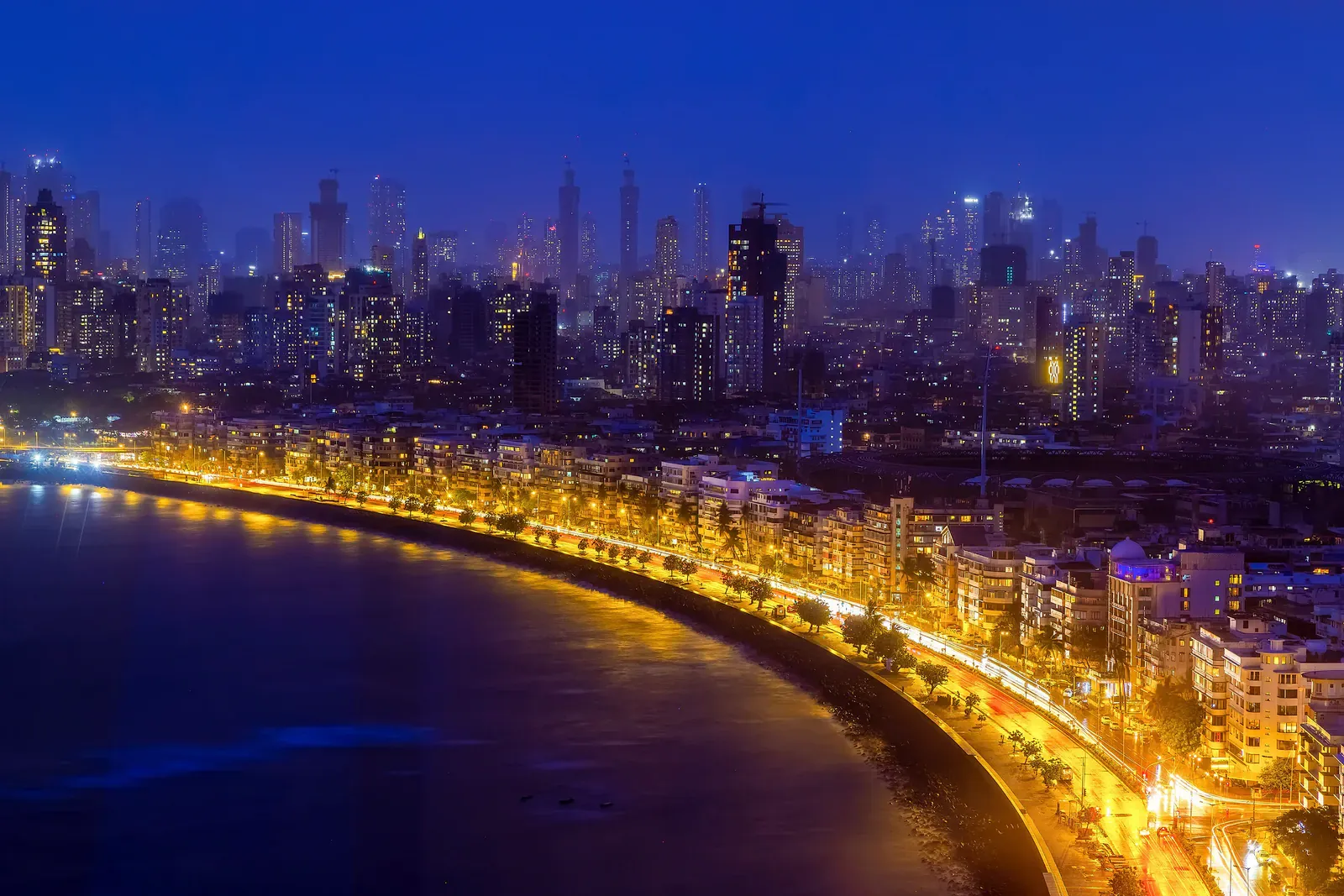
The scene found a room in Hoxton Square, in London’s East End. Between 1996 and 1999 Talvin Singh, the creative producer Sweety Kapoor and the DJ Sam Zaman, who worked as State of Bengal, hosted the Anokha nights at the Blue Note club. Anokha is a Hindi and Urdu word for unique, and the weekly sessions showcased new fusion sounds from mostly South Asian artists.
The 1997 compilation grew straight out of those nights. It was signed through the Omni Records imprint to Island Records, was marketed by Mango Records, a division of Island, and led to major-label deals for Singh, State of Bengal and the singer Amar. It also gave the loose network of producers, bands and DJs a shared name. State of Bengal’s “Flight IC408” and “Chittagong Chill” were on the compilation, and Björk heard his work at Anokha, took him as support on her Homogenic tour and had him remix her track “Hunter”.
Breakthrough, 1998-2002
Commercial success arrived quickly. Cornershop’s “Brimful of Asha”, in a remix by Norman Cook, reached number one on the UK singles chart in 1998, a year after its parent album When I Was Born for the 7th Time. Asian Dub Foundation had signed to London Records in 1997, toured with Primal Scream and then with the Beastie Boys, and its second album Rafi’s Revenge, which pushed a jungle and reggae core under punk energy, was nominated for a Mercury Prize.
The prize itself went to Talvin Singh. His debut album OK, which took nine months to make and drew on London MCs, Okinawan folk singers and the Madras Philharmonic Orchestra, won the Mercury in 1999. The same year Nitin Sawhney issued Beyond Skin on Outcaste, a concept album about nuclear weapons and identity. By then British Asian dance music had its own chart presence, helped by earlier crossover acts such as Apache Indian, whose “Boom Shack-A-Lak” (1993) turned up in several films, and UK Apache, whose “Original Nuttah” was one of the first jungle hits to reach the mainstream.
Panjabi MC’s “Mundian To Bach Ke”, first recorded in Birmingham for his 1998 album Legalised, extended the reach further. Released as a single in 2002, it became a worldwide success and sold around ten million copies.
Characteristics
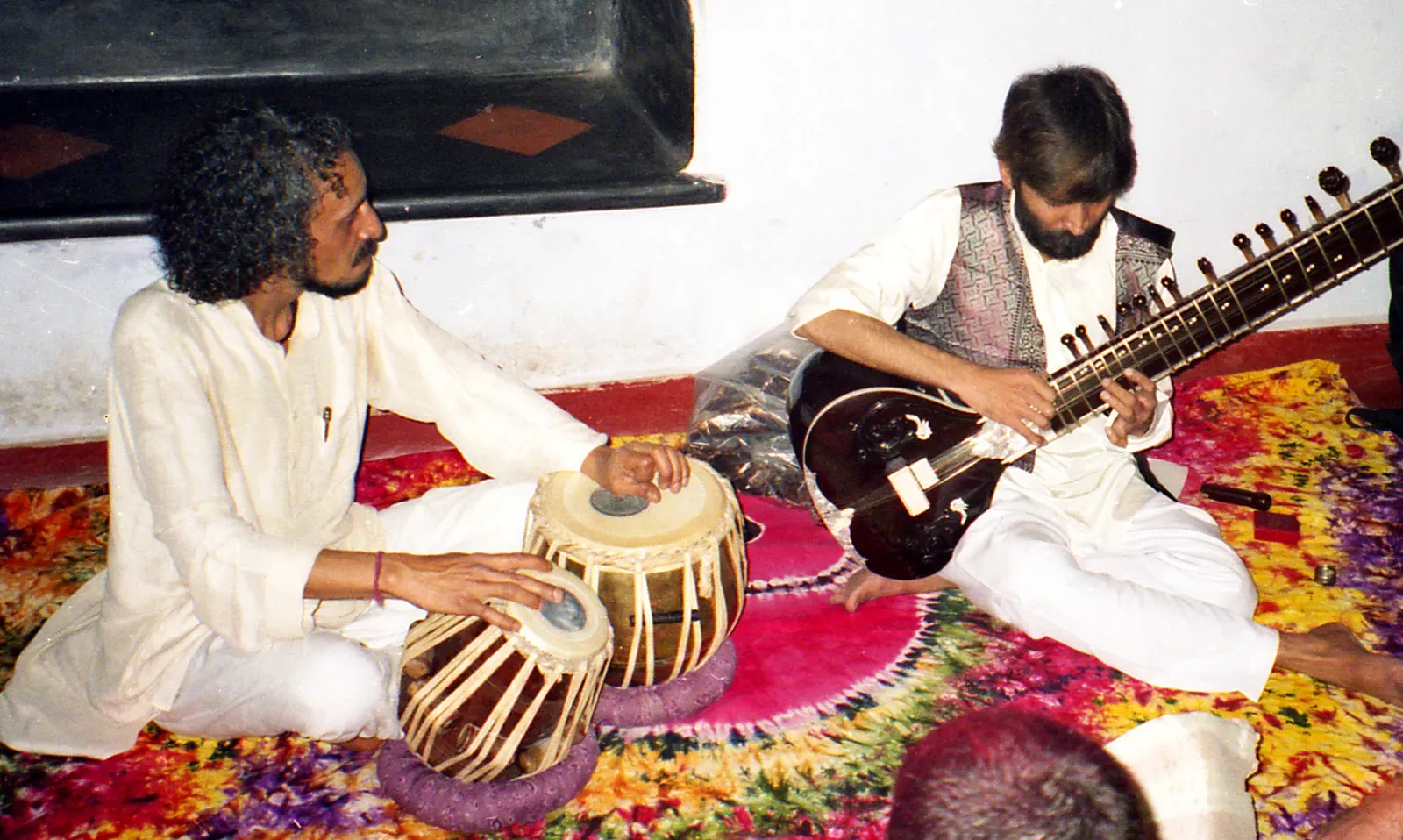
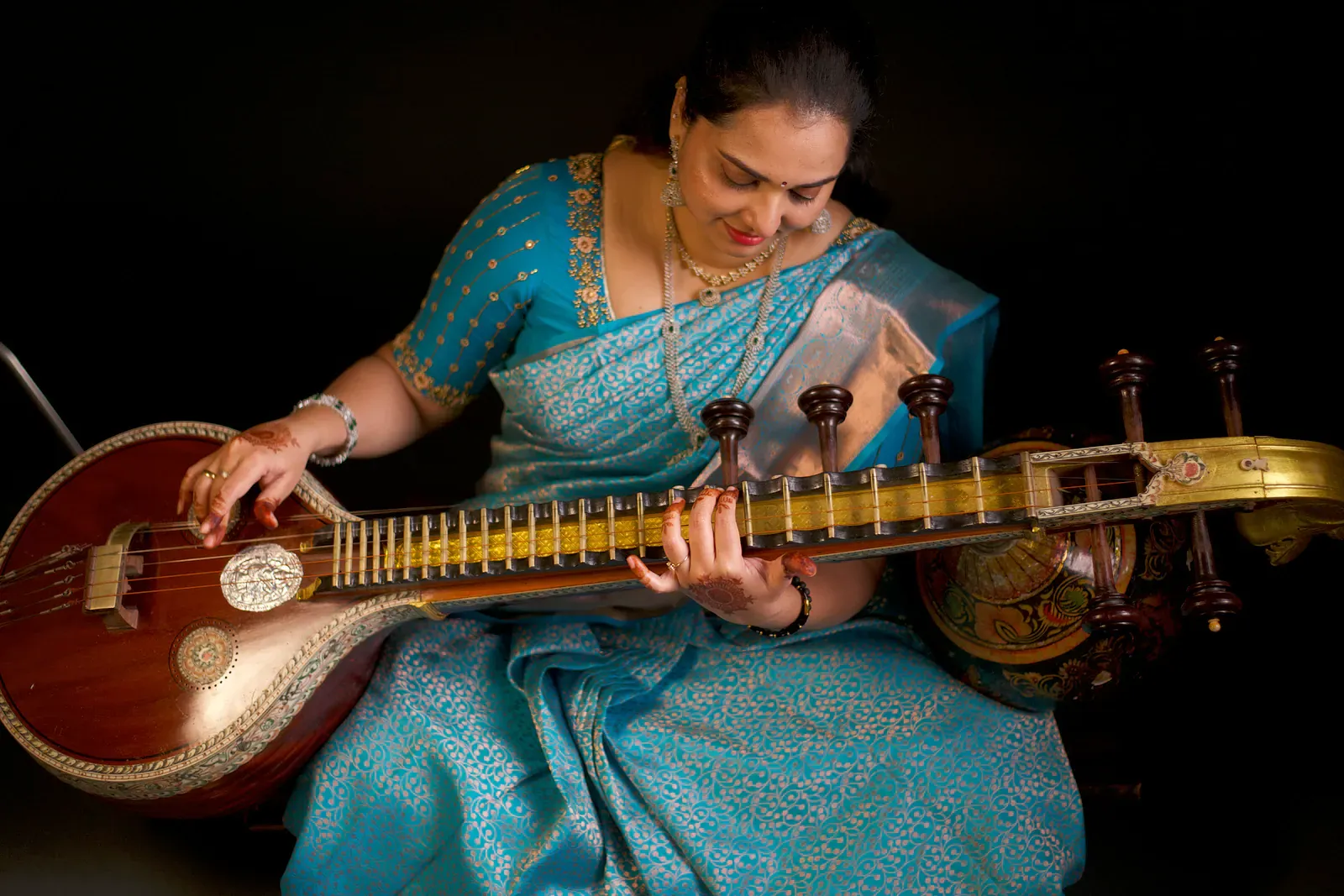
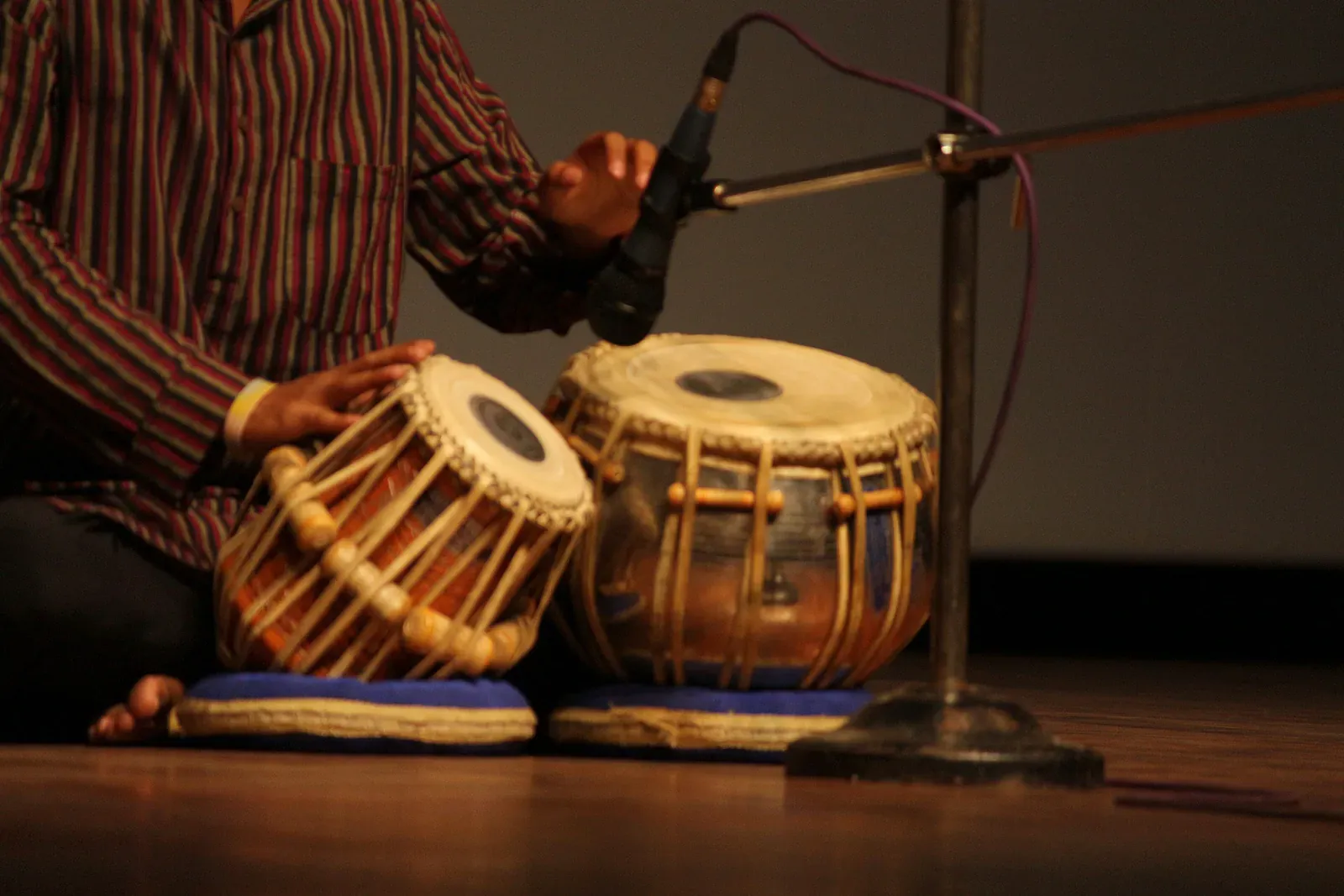
The defining pairing is a tabla or dhol rhythm with an electronic or live drum kit. Sitar and tabla are the primary instruments, and almost every act adds a drum kit or a synthesizer. The dholak, sarangi and bansuri appear too, and the voice, in Hindi, Urdu, Bengali or Punjabi or sampled from film song, carries emotion on many recordings.
Tempo follows the dance style underneath. “Mundian To Bach Ke” sits near 98 BPM, “Brimful of Asha” and “Naxalite” near 110, and State of Bengal’s “Flight IC408” and Singh’s “Traveller” run at jungle speeds around 160. The scene never fixed on one pulse, and the sounds can differ wildly, from Cornershop’s Bollywood-influenced Britpop to Panjabi MC’s bhangra-influenced jungle.
Instruments and production
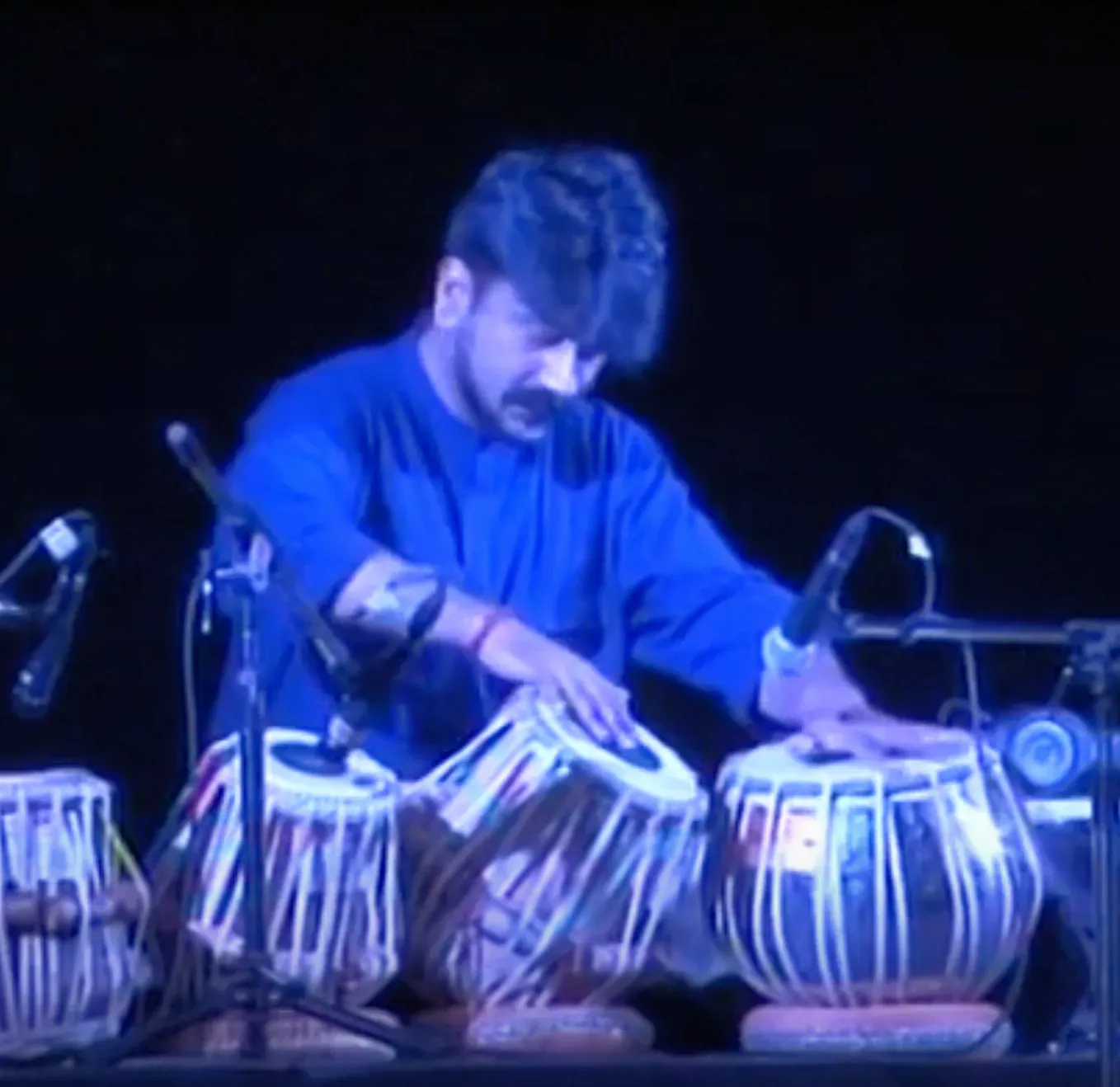
Singh traced his approach to childhood practice. He found the metronome dull, played tabla over electro beats instead, and later connected a miked tabla set to computers, processors and synthesizers. That became Tablatronics. Asian Dub Foundation worked differently: dub basslines, jungle drums and a guitar that borrowed from Indian traditions and punk. On OK, Indian classical instruments and Bollywood-style strings sit over drum and bass beats.
Notable recordings
“Brimful of Asha” is the movement’s biggest chart record. The remix by Norman Cook lifted a Leicester band’s Bollywood tribute to number one.
“Naxalite” by Asian Dub Foundation shows the harder side. It is an ode to the militant Naxalite movement in India, built on a jungle and reggae pulse, and appears on both R.A.F.I. and Rafi’s Revenge.
Singh’s “Traveller” shows the club side. It comes from OK and sets a fast breakbeat against Indian strings and drum patterns, the combination the Anokha floor had been testing for two years.
Culture
The movement lived in clubs. The weekly Anokha nights gave South Asian fusion acts a stage, and State of Bengal later took up a residency at the 333 in Hoxton on the Off Centre nights. The politics were plain. Asian Dub Foundation took the La Haine soundtrack and re-scored it live at the Barbican in 2001, and Fun-Da-Mental, the group of Nation Records co-founder Aki Nawaz, built an outspoken, Islamic-inflected identity under the nickname “the Asian Public Enemy”. The wider theme was diaspora identity: Sawhney wrote in the liner notes of Beyond Skin that his identity and history were defined only by himself.
Legacy
At first the music had little influence on Indian popular music, where it was filed as world music. After the late 1990s, artists such as Apache Indian and Bally Sagoo gained fame in India, and Panjabi MC’s success put British Asian acts on a footing with domestic Indian stars. The Rishi Rich Project, an act that fused bhangra and contemporary R&B, found success in India after its songs were used on Bollywood soundtracks.
The influence also ran west. Producers and artists in American hip hop, R&B and pop, among them Timbaland, Jay-Z, Snoop Dogg, Missy Elliott and Britney Spears, drew on South Asian rhythms and instruments in the 2000s, and Björk, Erasure and Siouxsie and the Banshees released singles or remixes with South Asian instrumentation. Asian Dub Foundation’s music appeared in the video game Need For Speed Underground, and former scene artists M.I.A. and Jay Sean went on to North American hits, with “Paper Planes” and “Down” the best-known examples. The term itself has largely passed into history, but the movement helped make a British Asian sound visible.
The movement sits within the wider South Asian family, and it leans on jungle and bhangra for its drums and its dance roots, with dub behind Asian Dub Foundation’s basslines.
Misconceptions
Asian Underground is not East Asian. The word “Asian” follows British usage and covers South Asian communities, so the music has nothing to do with Chinese, Japanese or Korean scenes.
It is not one sound. It is an umbrella term rather than a strict genre, and the same shelf holds Cornershop’s guitar pop, Singh’s tabla and strings, Asian Dub Foundation’s dub and punk, and Panjabi MC’s bhangra jungle.
It did not begin with the 1997 compilation either. The compilation gave a name to scenes that had been building since the early 1980s, from Punjabi Disco through Nation Records to the club nights in Hoxton.
Frequently asked questions
What is Asian Underground music?
Asian Underground is a 1990s movement of British South Asian musicians who combined traditional South Asian music with electronic dance music such as jungle, drum and bass and breakbeat. It is best known through Talvin Singh, Asian Dub Foundation, Nitin Sawhney, State of Bengal and Cornershop.
Which instruments define Asian Underground?
The sitar and the tabla are the primary instruments, almost always joined by an electronic or acoustic drum kit or a synthesizer. The dholak, sarangi and bansuri are used by some groups.
Is Asian Underground the same as bhangra?
No. Bhangra is Punjabi folk dance music, and in Britain it developed its own electronic form. Asian Underground borrowed from it, as in Panjabi MC’s work, but it also drew on classical music, jungle, dub, hip hop and indie rock.
What was Anokha?
Anokha was the weekly club night at the Blue Note in Hoxton Square, London, run from 1996 to 1999 by Talvin Singh, Sweety Kapoor and State of Bengal. Its 1997 compilation Anokha - Soundz of the Asian Underground gave the movement its name.
Sound
Sound sheet
Anatomy of a track
| # | Part |
|---|---|
| 1 | Tabla or sampled percussion intro |
| 2 | Breakbeat and bass groove under a South Asian melody |
| 3 | Breakdown with solo tabla or vocal |
Signature sounds
- Tabla patterns played over breakbeats
- Sitar, sarangi or bansuri lines over electronic bass
- South Asian vocal styles beside English-language rap or singing
Techniques
- Tabla over breakbeats
- Miked tabla into computers
- Dub basslines under South Asian rhythm
- Orchestral and Hindi-film string textures
Keys and modes
Raga-derived modes. Melodies drawn from Hindustani classical material, set over drum-driven electronic tracks
Vocals
South Asian vocal styles sung or sampled beside English-language rap and singing
Scenes
Where it happened
Where and when the sound lived: one bar per city on a shared timeline.
Europe
Active scenes
Peak 3, 1998-1999
Hoxton Square held the weekly Anokha nights at the Blue Note, the centre of the scene.
Cornershop formed here in 1991 and later brought a Bollywood-flavoured Britpop to the charts.
Panjabi MC recorded Mundian To Bach Ke here for his 1998 album Legalised.
Venues and places
London, 1996 to 1999. The Hoxton Square venue that hosted the weekly Anokha nights.
Culture
Culture markers
- Weekly Anokha club nights
Weekly sessions in Hoxton Square gave artists a room to play South Asian fusion sounds.
Ritual
Media
Key media
- 1997Anokha - Soundz of the Asian Underground
by Various. The first well-known use of the term, compiled by Talvin Singh and Sweety Kapoor.
Compilation
Glossary
Terms on this page
A Hindi and Urdu word meaning unique or unusual, used for the Hoxton club night and compilation.
In British usage, South Asian: people of Indian, Pakistani, Bangladeshi and Sri Lankan descent.
Punjabi folk dance music that evolved in Britain into an electronic dance style.
A pair of North Indian hand drums, the main rhythmic voice of the genre.
Talvin Singh's approach of connecting a miked tabla set to computers, processors and synthesizers.
South Asian family