Axé music
Axé is Bahian Carnival pop from Salvador, Brazil, born in the 1980s from trio elétrico guitar, samba-reggae drums and Caribbean rhythms.
Salvador, Bahia, 1985
Latin family
Born
1985
Salvador, Bahia
Links
15
Genres it drew on or shaped
Tempo
100-155 BPMLineage
Family tree
Timeline
Era by era
From the first sparks to today. Select a dot to read the story behind it.
- Trio elétrico and guitarra baiana
1950 to 1984
- Birth of axé
1985 to 1991
- National boom
1992 to 2004
- Carnival industry and heritage
2005 to today
Eras
Moments
- 1 Trio elétrico and guitarra baiana, 1950 to 1984
- 2 Birth of axé, 1985 to 1991
- 3 National boom, 1992 to 2004
- 4 Carnival industry and heritage, 2005 to today
1950
Trio elétrico and guitarra baiana
Dodô and Osmar put electric guitars on a truck in 1950 and started Salvador's street Carnival tradition, then in the 1970s Moraes Moreira added songs while the blocos afro built their own drum sound.
- 1950The first trio elétricoDodô and Osmar play electric guitars on a truck through Salvador's Carnival, starting the trio elétrico tradition.
- 1974Ilê Aiyê is foundedThe first bloco afro of Salvador forms in Liberdade, centring Black identity and a heavy Candomblé-rooted drum sound.
- 1979Olodum is foundedThe Pelourinho bloco afro becomes a training ground for new Bahian composers and a source of samba-reggae.
- 1980Chiclete com Banana formsThe Salvador band starts in bars and university parties before it turns to Carnival trios.
1985
Birth of axé
Luiz Caldas's Fricote in 1985 made Bahian Carnival pop a record seller, Chiclete com Banana and Margareth Menezes followed, and the Olodum drum sound entered the mix.
- 1985FricoteLuiz Caldas's LP Magia carries the hit Fricote, the record most often named as the start of axé as a pop genre.
- 1988Faraó (Divindade do Egito)Luciano Gomes's song, taken from the Olodum bloco, becomes Margareth Menezes's first hit and a Salvador anthem.
- 1990Elegibô abroadMargareth Menezes's album Elegibô is released internationally and carries the style to listeners outside Brazil.
- 1991Timbalada is foundedCarlinhos Brown and Tony Mola form a percussion group in Candeal, Salvador, between samba-reggae and axé.
1992
National boom
Daniela Mercury's O Canto da Cidade took axé to national charts in 1992, Banda Eva and Timbalada filled the airwaves, and Ivete Sangalo's solo career from 1999 made her its biggest star.
- 1992O Canto da CidadeDaniela Mercury's second album and its title song top the charts for months and take axé into the national mainstream.
- 1993Banda Eva becomes a bandThe Salvador Carnival block turns into a recording group and later launches Ivete Sangalo.
- 1999Ivete Sangalo goes soloAfter leaving Banda Eva she releases her first solo album and becomes one of Brazil's biggest Carnival performers.
2005
Carnival industry and heritage
Axé stars still lead Salvador Carnival circuits and arena tours while other Bahian styles share the bill, and in 2023 Margareth Menezes became Brazil's Minister of Culture.
- 2023Margareth Menezes becomes Minister of CultureThe axé singer joins Lula's government, putting a Bahian Carnival figure in national cultural leadership.
Listening path
Start listening
A short path from an easy way in to the deep end. Thumbnails come from YouTube; the player loads only when you press play.
- 01
Luiz Caldas, 1985
The song that started axé: electric guitar riff and a carnival refrain.
- 02
Margareth Menezes, 1988
Samba-reggae drums behind an axé voice, the sound of the late 1980s.
- 03
Daniela Mercury, 1992
The national breakthrough: listen for the call-and-response refrain.
- 04
Banda Eva, 1996
A slower groove with a pop melody from the band that launched Ivete Sangalo.
- 05
Ivete Sangalo, 2003
A fast, arena-scale Carnival song from axé's biggest solo star.
Facts
| Family | Latin |
| Origin | Salvador, Bahia, Brazil |
| Emerged | 1980s |
| Status | Active |
| Tempo | 100 to 155 BPM |
| Meter | 4/4 |
| Grew out of | Samba-reggae, Frevo de trio |
Axé is a style of Brazilian pop that grew out of the Carnival of Salvador, Bahia, in the 1980s. It blends the electric guitar riffs of the trio elétrico trucks with the heavy drums of the Black Carnival blocos and with reggae, merengue, frevo and forró.
The name comes from a Yoruba word for spiritual energy, used in Candomblé, and the music is built for dancing in the street behind a sound truck.
Origins
The roots of axé are older than the name. In 1950 Dodô and Osmar rolled through the Salvador Carnival with electric guitars on a truck, the first trio elétrico, and invented a small electric guitar called the guitarra baiana for the job. For the next two decades the sound stayed mostly instrumental. In the 1970s Moraes Moreira, who came from the band Novos Baianos, began to sing on the trucks and gave the format songs and lyrics.
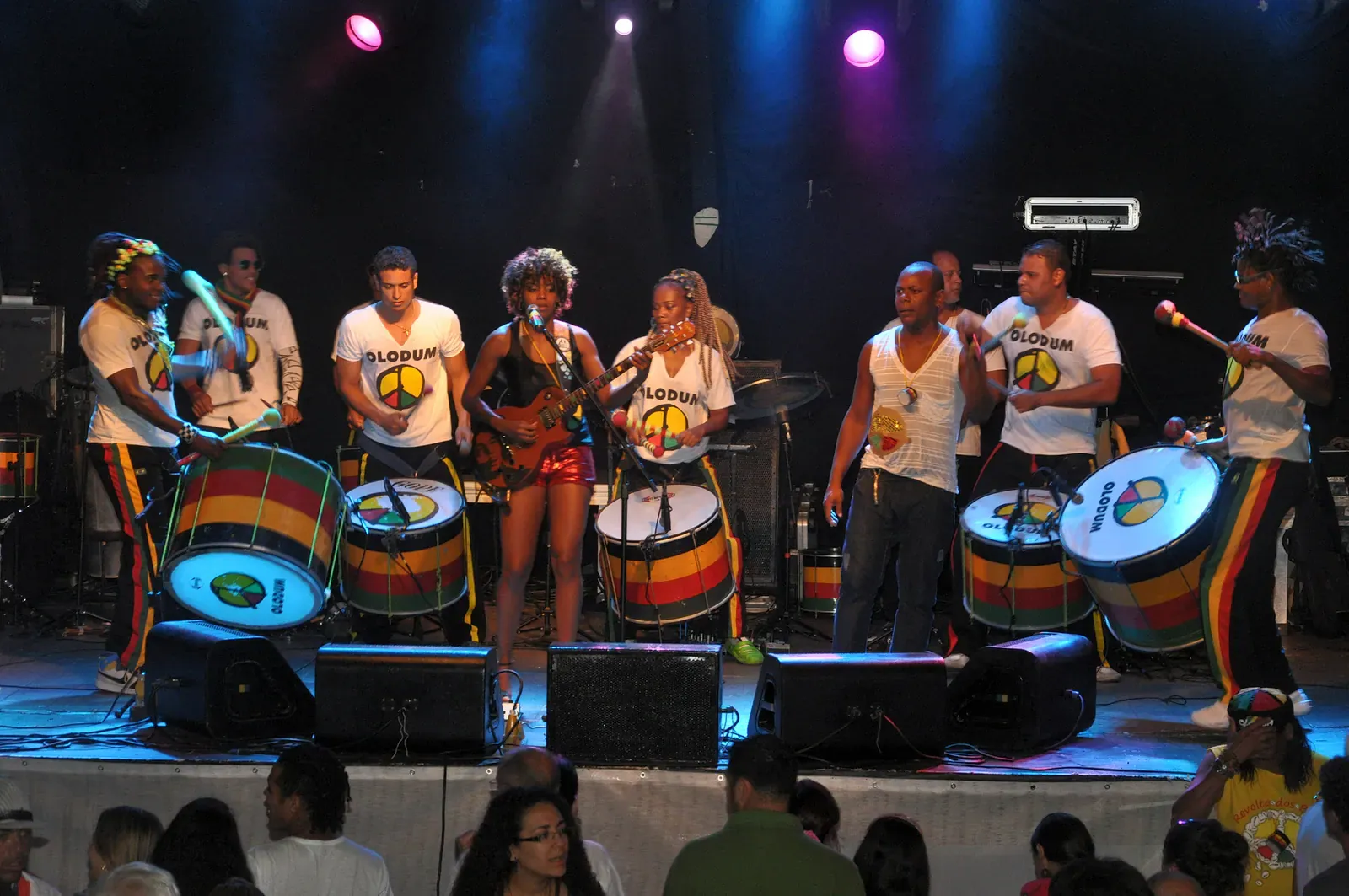
Another current ran in parallel. Blocos afro such as Ilê Aiyê, founded in 1974 in the Liberdade district, and Olodum, founded in 1979 in Pelourinho, answered the exclusion of Black Bahians from older Carnival clubs with drum ensembles based on Candomblé rhythm. Their style, called samba-reggae, mixed samba rhythms with the reggae pulse that reached Bahia through radio. Olodum rehearsals in Pelourinho became a proving ground for young composers and singers.
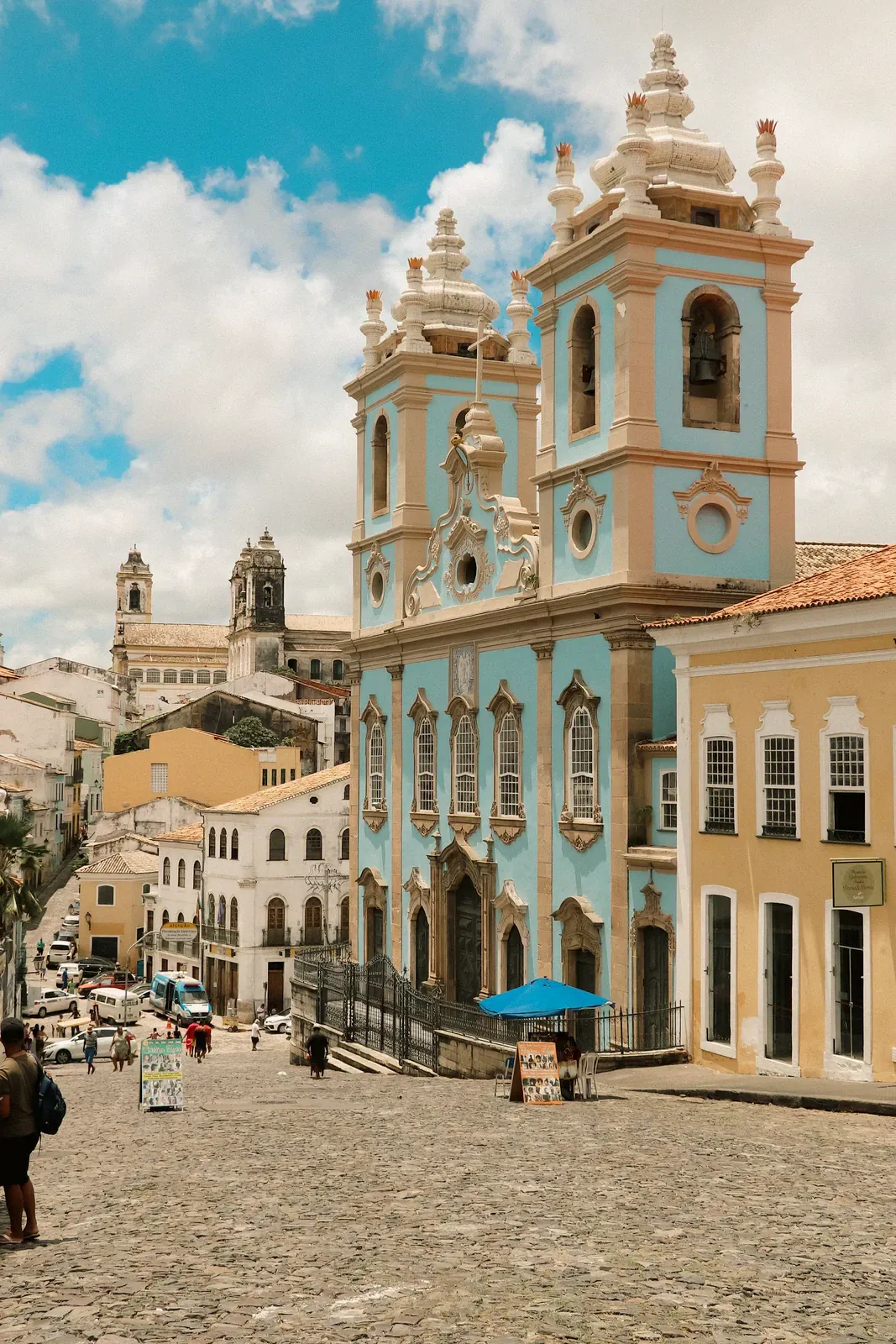
Salvador, 1985-1991
The word axé music was attached to the new pop in the late 1980s, but the record that opened the market is dated to 1985. Luiz Caldas, a guitarist and singer born in Feira de Santana, released the LP Magia with the single Fricote, a simple guitar-driven song about a woman with hard hair that took over Bahian radio and then national television. It showed that a Carnival rhythm could sell as a record.
Other bands were ready. Chiclete com Banana, formed in 1980 by Missinho Amorim, Bell Marques and others, had started in bars and university parties before moving to the trucks, and it became a mainstay of the Carnival circuit. Margareth Menezes took Faraó (Divindade do Egito), a song written for Olodum by Luciano Gomes, into the charts in 1988, and her album Elegibô reached listeners abroad in 1990. In 1991 the percussionist Carlinhos Brown and Tony Mola formed Timbalada in the Candeal neighbourhood, a drum group that sat between samba-reggae and axé.
Daniela Mercury and the national boom, 1992-2004
Daniela Mercury’s second album, O Canto da Cidade, came out in 1992 after she signed with Sony Music. The title song stayed at the top of the charts for months and became an anthem, and it is the usual marker for axé moving from a Bahian Carnival product to national pop. Her debut, known as Swing da Cor, had already given her a number-one hit in 1991 with Olodum. Over her career she has sold more than 11 million records.
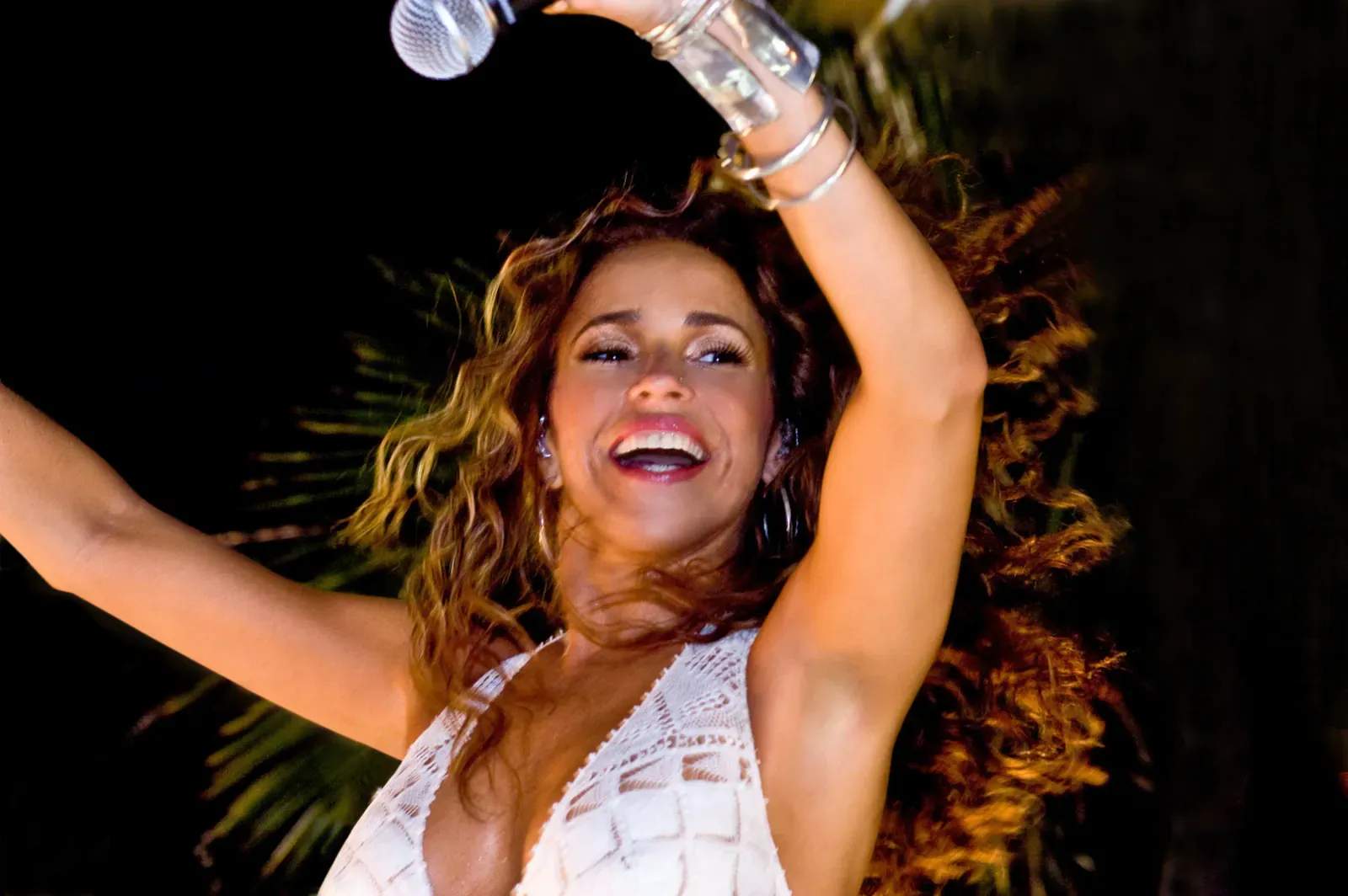
The success opened doors. Cheiro de Amor, Asa de Águia, Chiclete com Banana and Banda Eva reached national radio. Banda Eva had begun as a Carnival block and became a recording group in 1993; the lead singer who came from it, Ivete Sangalo, left to start a solo career in 1999. By the early 2000s she was the biggest name of the style, headlining arenas and the Carnival trucks, and Banda Eva had sold more than six million albums.
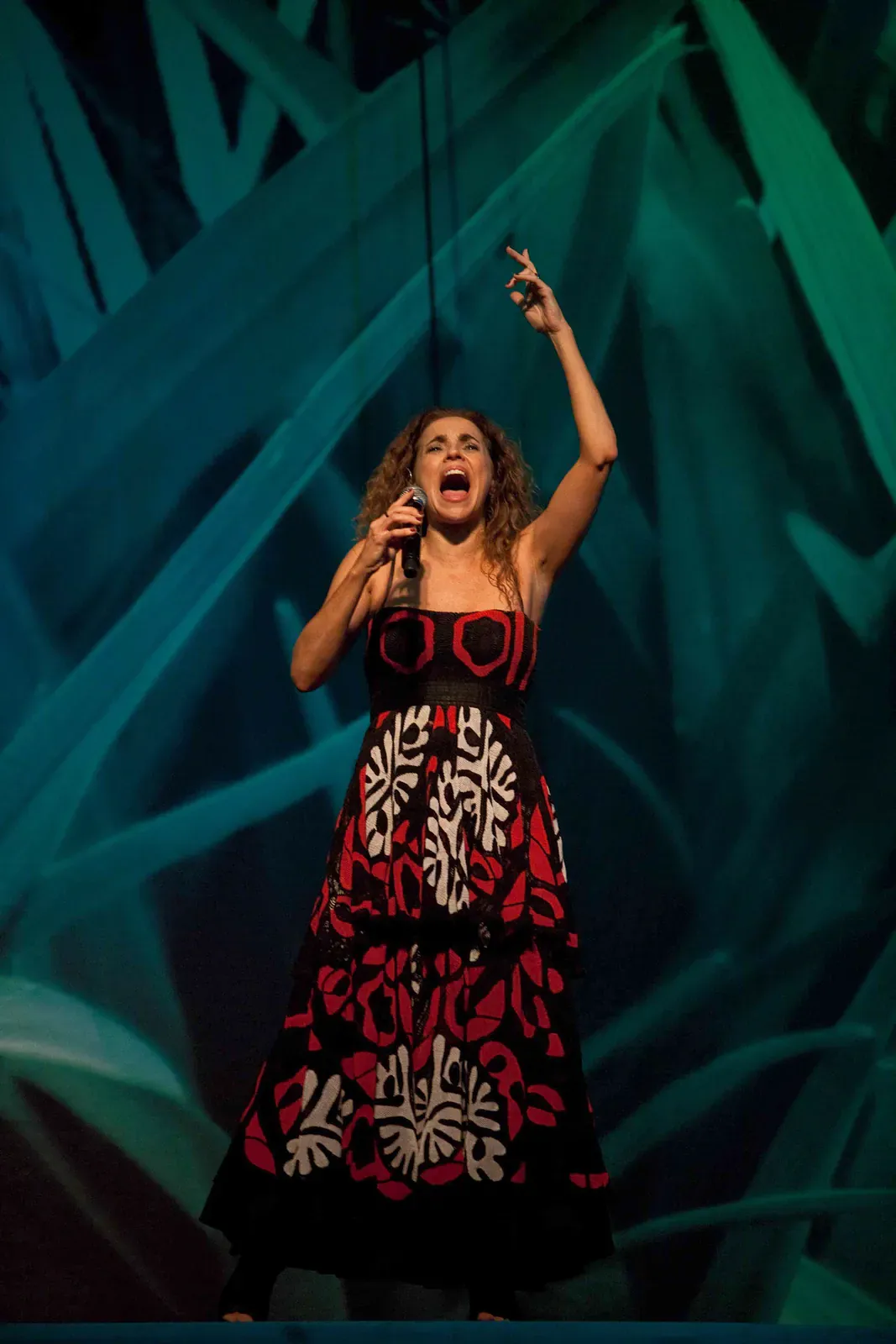
Characteristics
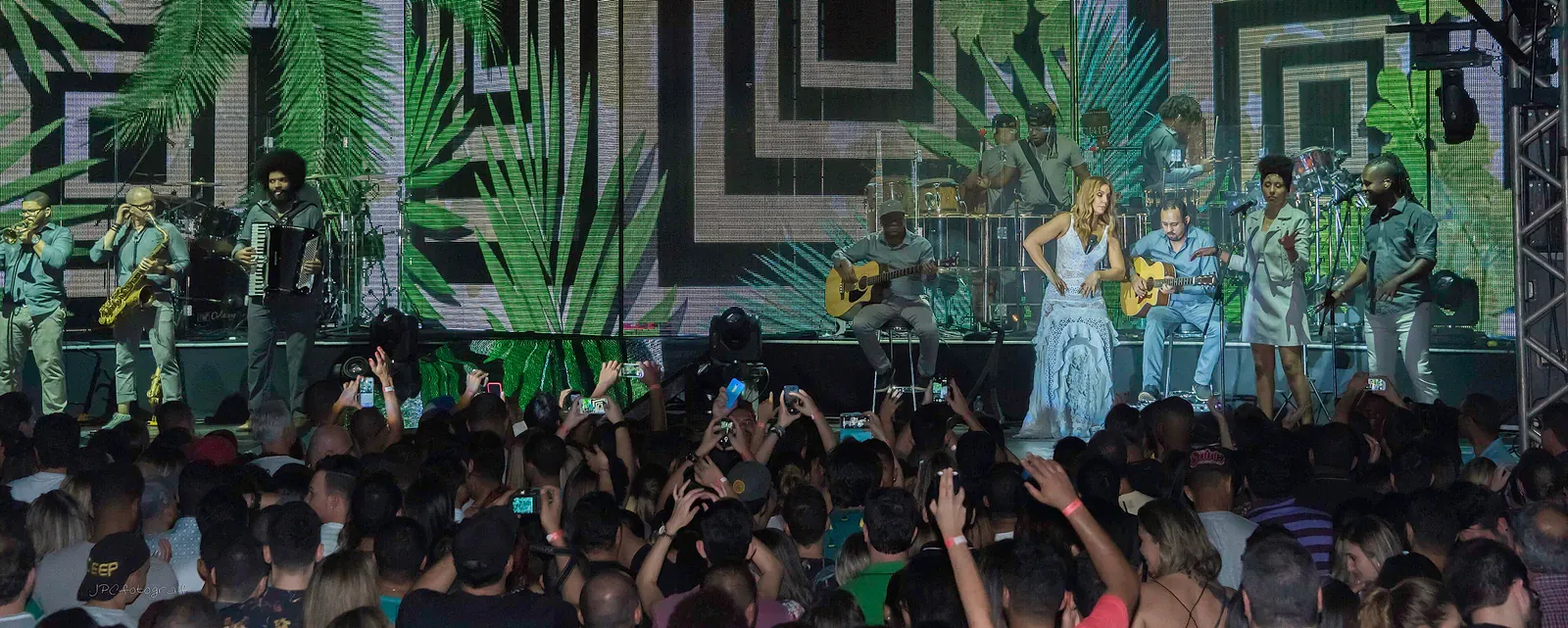
An axé band is a pop-rock group with a large percussion section. A typical line-up has a lead singer and backing singers, electric guitar, bass, drum kit, keyboards, congas, timbales and bloco afro drums, and sometimes a horn section. The rhythm is a dance pulse in 4/4, usually between about 100 and 155 beats per minute, with a heavy bloco afro groove underneath. Choruses are short chants meant to be answered by the crowd, and arrangements stop and restart so that dancers can respond.
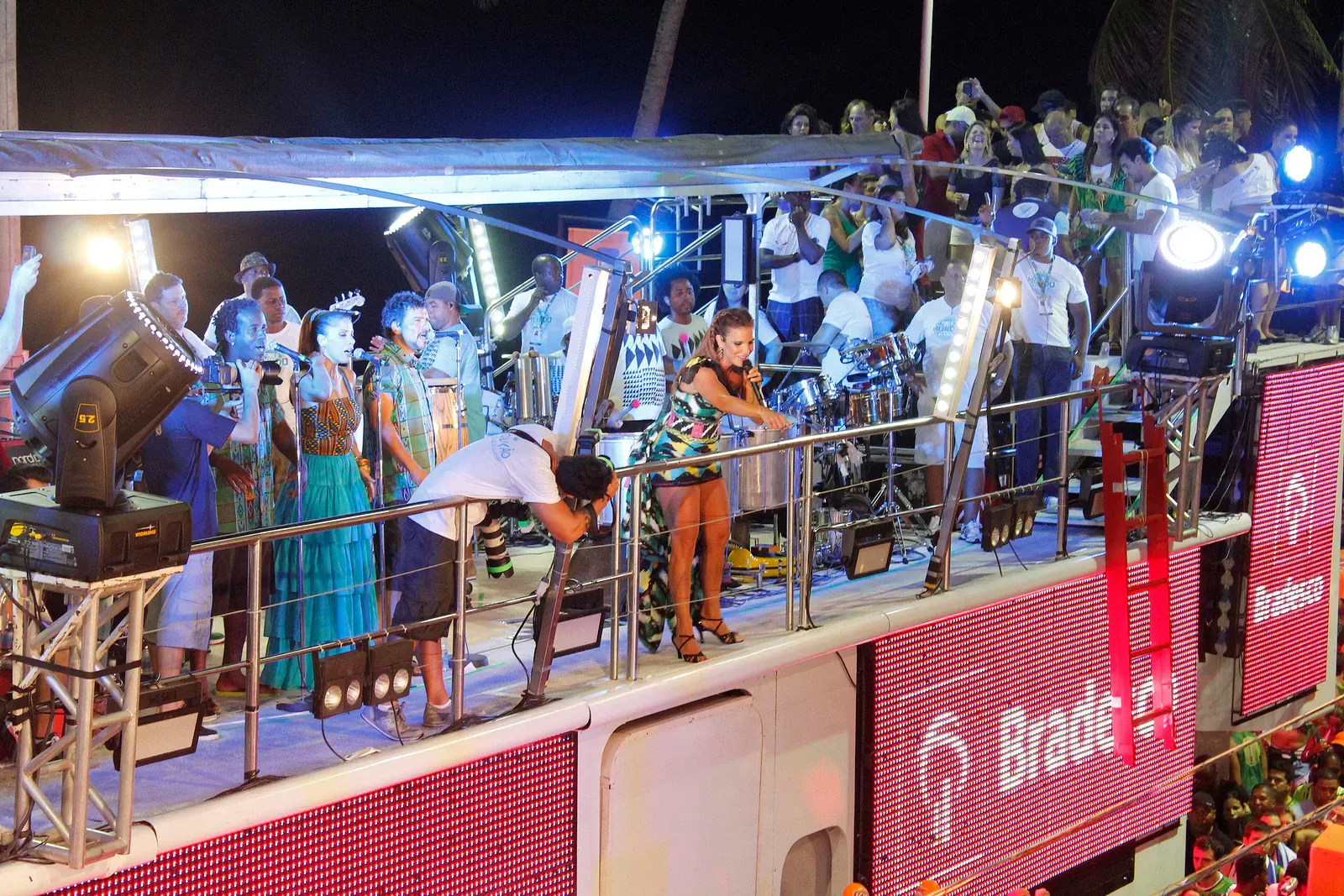
The form follows the street. Songs are built for a truck moving slowly through a crowd of thousands, so riffs are short, refrains are repeated and the band keeps the energy constant for hours.
Instruments and production
The guitarra baiana, a small electric instrument between a guitar and a mandolin, gave the early trucks their bright, fast lines, and it still shows up in riffs. Later bands added the rock and pop instruments of the 1980s: electric bass, drum kit and keyboards. Percussion comes from two traditions. The timbau and surdo drums of the blocos afro give the samba-reggae pulse, while congas and timbales add Caribbean-style fills drawn from merengue and salsa.
Culture
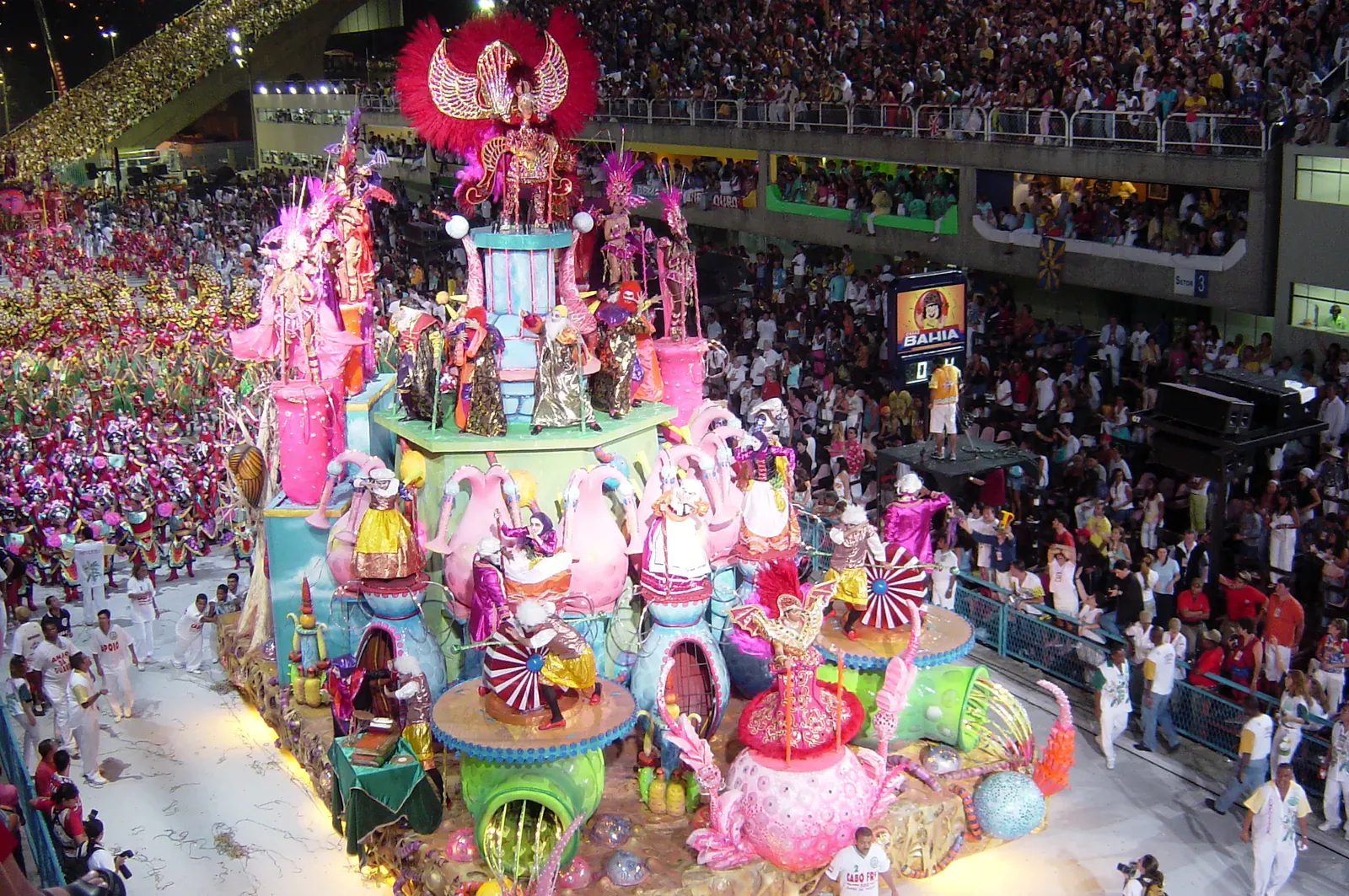
Axé belongs to Carnival in Salvador, which unfolds along routes such as the Barra-Ondina waterfront circuit. A bloco is a group that parades with a band, and its members wear a matching shirt called the abadá, which acts as a ticket to the roped-off area, or cordão, around the truck. Off-season versions called micaretas take place in other Bahian cities such as Feira de Santana.
The style also carries religious and political meaning. The word axé comes from Candomblé, and artists such as Gilberto Gil, Caetano Veloso and Daniela Mercury have used Afro-Brazilian symbols and themes in their songs. Blocos afro such as Ilê Aiyê and Olodum made the style a statement about Black identity in a city where Black Bahians had been shut out of earlier Carnival clubs.

Legacy
Axé stayed a Carnival staple while newer Bahian styles took part of the airplay. Stars of the 1990s still lead Salvador’s circuits and arena tours, and the genre’s reach is institutional too: in 2023 Margareth Menezes, one of its first singers, became Brazil’s Minister of Culture. Samba-reggae and the trio elétrico remain the two engines of the sound, and axé is one of the main ways Bahian music reaches the rest of the world. Related styles include forró, samba and reggae, and the broader story is told on the Latin music family page.
Misconceptions
Axé is not simply the same thing as samba-reggae. Samba-reggae is the drum style of the blocos afro, while axé is the pop genre that borrowed it and mixed it with rock, reggae and Caribbean sounds. It is also not only a Carnival fad of one decade: bands formed in the 1980s still tour, and the artists who emerged in the 1990s are among Brazil’s best-known performers. And the word is not a music-only term: it first named a Candomblé concept of life force, and it appears as a greeting in Bahian speech.
Frequently asked questions
What does axé mean in axé music?
Axé is a Yoruba-derived word for spiritual power or good energy, used in the Candomblé religion of Bahia. The music took the word as its name because of that celebratory sense and its link with Salvador’s Afro-Brazilian culture.
Who started axé music?
Luiz Caldas is usually credited with the first big record of the style, Fricote in 1985. Earlier figures set the stage: Dodô and Osmar built the trio elétrico in 1950, and Moraes Moreira added songs in the 1970s. Daniela Mercury’s 1992 album O Canto da Cidade made axé a national pop genre.
How fast is axé music?
Most axé songs sit between about 100 and 155 beats per minute in 4/4, with slower, groove-led songs near the bottom and festival numbers near the top.
Who are the most important axé artists?
Luiz Caldas, Chiclete com Banana, Daniela Mercury, Banda Eva and Ivete Sangalo are the central names. Olodum, Timbalada and Margareth Menezes shaped the drum sound and the early years.
Sound
Sound sheet
Anatomy of a track
| # | Part | Bars |
|---|---|---|
| 1 | Guitar riff and percussion intro | 8 |
| 2 | Verse | 16 |
| 3 | Call-and-response refrain | 8 |
| 4 | Percussion break | 8 |
| 5 | Final refrain, repeated | 16 |
Signature sounds
- Samba-reggae percussion groove
- Guitarra baiana or electric guitar riff
- Shouted call-and-response refrain
- Short horn and keyboard hits
Drums and percussion
- Timbau
- Drum kit
Techniques
- Samba-reggae groove
- Call-and-response refrain
- Stop-and-go break
Keys and modes
Major keys. Pop-style major progressions in the refrains, often with reggae offbeat guitar.
Tuning
12-TET, A=440
Vocals
Strong lead singer with backing singers, shouted chants and refrains.
Scenes
Where it happened
Where and when the sound lived: one bar per city on a shared timeline.
Latin America
Active scenes
Peak 2, 1985-2025
Capital of Bahia and home of the trio elétrico Carnival, the blocos afro and almost every axé band.
Birthplace of Luiz Caldas and a city with its own off-season Carnival, the micareta.
Venues and places
Salvador, 1950 to today. Waterfront Carnival route where the big trios elétricos and blocos parade.
Salvador, 1979 to today. Historic centre where Olodum's rehearsals draw young Bahian artists.
Culture
Culture markers
- Abadá
A matching shirt that works as the ticket to a bloco's rope-enclosed space.
Fashion - Cordão
A rope line carried by staff around a bloco's paying members, with the public outside.
Ritual - Axé
Greeting and Candomblé term for life force, spread by the genre name.
Slang
Glossary
Terms on this page
The shirt that serves as an entrance ticket to a bloco's roped-off area.
A Yoruba-derived word for spiritual energy that also names the genre.
A Carnival group that parades behind or with a band, usually its fans in matching shirts.
An off-season Carnival held in Bahian cities such as Feira de Santana.
Heavy bloco afro drum style of Salvador that blends samba rhythms with reggae and shaped axé.
A truck with a stage and amplified band that leads a crowd through the streets of Salvador at Carnival.
Latin family