Contemporary country
Contemporary country is the major-label, radio-driven mainstream of country music from 1989 onward, built in Nashville on rock, pop and hip-hop production.
Nashville, Tennessee, 1989
Country family
Born
1989
Nashville, Tennessee
Subgenres
2
Documented branches
Links
4
Genres it drew on or shaped
Tempo
75-175 BPMLineage
Family tree
Grew out of
Derived from
Derived from
Influenced by
Arena rockHip Hop
Nashville, Tennessee, 1989
Contemporary country
Led to (2)
Timeline
Era by era
From the first sparks to today. Select a dot to read the story behind it.
- Hat acts, line dancing and the sales boom
1989 to 1999
- Idol winners and pop crossovers
2000 to 2011
- Bro-country
2012 to 2017
- Streaming and blurred borders
2018 to today
Eras
Moments
- 1 Hat acts, line dancing and the sales boom, 1989 to 1999
- 2 Idol winners and pop crossovers, 2000 to 2011
- 3 Bro-country, 2012 to 2017
- 4 Streaming and blurred borders, 2018 to today
1989
Hat acts, line dancing and the sales boom
Garth Brooks, Brooks & Dunn and Shania Twain turn country into a stadium and mall business while FM radio and new chart rules favour polished singles.
- 1989Garth Brooks releases his debut albumThe self-titled album peaks at number 2 on the country albums chart and brings the first of the arena-scale careers of the decade.
- 1990Billboard's country chart goes airplay-onlySingles sales are dropped from the country chart method, so radio airplay alone decides a song's position.
- 1990Garth Brooks releases No FencesThe album carries Friends in Low Places and The Thunder Rolls and spends 23 weeks at number 1 on the country albums chart.
- 1990Garth Brooks joins the Grand Ole Opry
- 1991Ropin' the Wind debuts at number 1 on the Billboard 200Brooks's third album tops both the pop and country album charts in its first week, the first time a country singer had done so in about a decade.
- 1991Brooks & Dunn release Brand New ManThe debut album includes Boot Scootin' Boogie, a cover that became the duo's fourth consecutive number one and a line dance staple.
- 1992Alan Jackson records ChattahoocheeThe song, released as a single in 1993, wins the CMA awards for Single and Song of the Year.
- 1997Shania Twain releases Come On OverProduced by Mutt Lange, it becomes the best-selling country album and the best-selling studio album by a woman, with over 40 million copies sold.
- 1998Wide Open Spaces by the Dixie ChicksThe debut album is certified 12 times platinum and makes the trio one of the biggest country acts of the era.
2000
Idol winners and pop crossovers
Carrie Underwood and Taylor Swift bring television and pop audiences to Nashville labels, and country singles routinely reach the pop charts.
- 2005Big Machine Records is founded in Nashville
- 2005Carrie Underwood wins American Idol and releases Some HeartsA television talent show winner becomes a country radio star, and Before He Cheats from the album spends 64 weeks on the Hot 100.
- 2006Taylor Swift releases her debut albumReleased in October on Big Machine, it starts the label's run of country records written by a teenage songwriter.
2012
Bro-country
Florida Georgia Line's Cruise sets a digital sales record and a party-song formula of trucks, beer and beats borrowed from hip-hop dominates the radio.
- 2012Florida Georgia Line's CruiseThe debut single of the duo becomes the first country song certified Diamond and holds number 1 on Hot Country Songs for 24 weeks.
- 2013The term bro-country is coinedA critic in New York magazine uses it in August to describe songs about trucks, women and beer by Florida Georgia Line and others.
2018
Streaming and blurred borders
Streaming lifts Morgan Wallen to the top of the Hot 100, and Billboard's removal of Old Town Road and Beyonce's Cowboy Carter reopen the argument over what counts as country.
- 2019Billboard removes Old Town Road from the country chartThe song, which would have topped Hot Country Songs, is judged not country enough, and critics question how the genre's borders are policed.
- 2023Morgan Wallen's Last Night tops the Hot 100The single from One Thing at a Time spends 16 non-consecutive weeks at number 1 and leads the year-end chart.
- 2024Beyonce releases Cowboy CarterThe album rooted in country, with Dolly Parton and Willie Nelson as radio hosts, draws new attention to Black country artists.
Listening path
Start listening
A short path from an easy way in to the deep end. Thumbnails come from YouTube; the player loads only when you press play.
- 01
Brooks & Dunn, 1991
A line-dance staple from the early 1990s boom; listen for the rock drums under the honky-tonk boogie.
- 02
Alan Jackson, 1992
A fast, fiddle-driven hit that won Single and Song of the Year at the CMA awards.
- 03
Shania Twain, 1997
The crossover record: rock guitars and pop hooks that carried country to global audiences.
- 04
Carrie Underwood, 2005
A minor-key revenge song from an Idol winner that crossed to pop radio and stayed for 64 weeks.
- 05
Florida Georgia Line, 2012
The bro-country blueprint: a country hook, a loop-based beat and a party lyric.
Facts
| Family | Country |
| Origin | Nashville, Tennessee, United States |
| Emerged | 1990s to |
| Status | Active |
| Tempo | 75 to 175 BPM |
| Grew out of | Country pop, Neotraditional country |
| Subgenres | 2 |
Contemporary country is the mainstream, major-label side of country music from the late 1980s onward. It is made largely in Nashville, built for radio airplay and arena stages, and combines country vocals and instruments with rock drums, pop hooks and, later, hip-hop production.
It is an industry and era label more than a single sound, and it descends from country pop and neotraditional country.
Origins
The conditions came before the music. In the 1980s the expansion of FM radio moved country from rural AM stations to higher-fidelity FM signals in suburbs and cities, and producers began polishing records for a wider audience. In 1990 Billboard changed how it compiled its country chart: singles sales were dropped and only radio airplay decided a song’s position. Radio programmers now controlled success, and older stars such as Don Williams and George Jones saw their chart fortunes fall around 1991.
The performer who matched those conditions was Garth Brooks. His self-titled debut album appeared in 1989, and his second, No Fences (1990), spent 23 weeks at number 1 on the country albums chart and carried Friends in Low Places and The Thunder Rolls. Brooks blended neotraditional country with the singer-songwriter records of James Taylor and the arena rock of Billy Joel, Kiss and Queen. He sang with a wireless headset microphone and ran across the stage, importing rock theatrics into a format known for staid concerts. He joined the Grand Ole Opry in late 1990.
Nashville, 1989-1999
Ropin’ the Wind (1991) debuted at number 1 on both the Billboard 200 and the country albums chart, the first time a country singer had topped both since Kenny Rogers about a decade earlier. Brooks went on to break sales and concert attendance records through the decade.
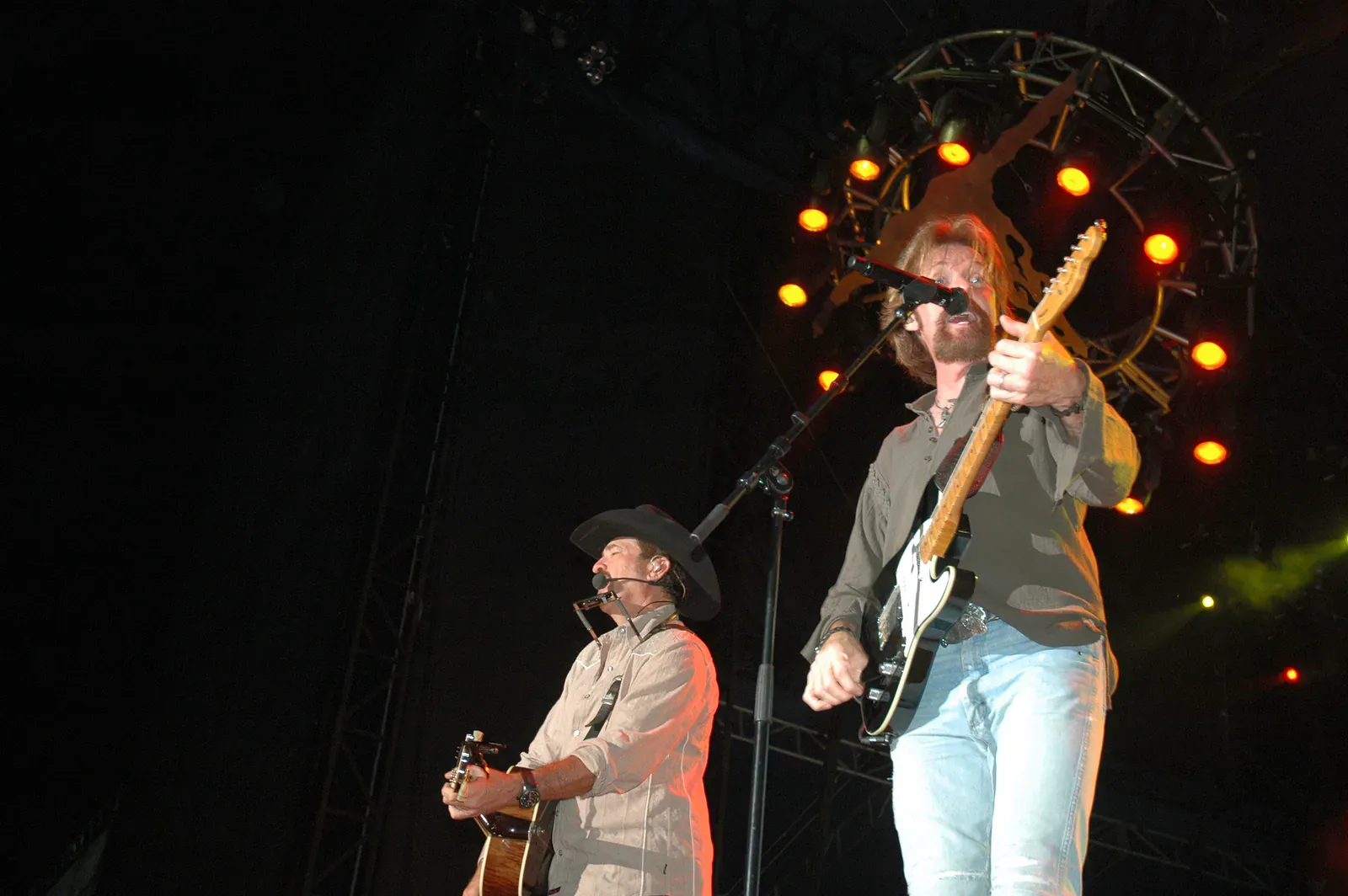
Brooks & Dunn, a duo of Kix Brooks and Ronnie Dunn, followed with Brand New Man (1991). Its cover of Boot Scootin’ Boogie, first recorded by Asleep at the Wheel in 1990, became their fourth consecutive number-one country single and fed a line-dancing craze that shaped country radio into the mid-1990s. The veteran guitarist Chet Atkins complained that line dancing was hurting the music.

Alan Jackson, a neotraditional singer who sold on the same radio format, recorded Chattahoochee for A Lot About Livin’ (and a Little ‘Bout Love) in 1992. Released as a single in May 1993 and co-written with Jim McBride, it won the CMA awards for Single of the Year and Song of the Year. Reba McEntire, Faith Hill and Martina McBride released platinum albums, and the Dixie Chicks’ debut, Wide Open Spaces (1998), was certified 12 times platinum.
The decade’s largest crossover was Shania Twain. Come On Over (1997), produced by her then-husband Mutt Lange, spawned 12 singles and has sold over 40 million copies, making it the best-selling studio album by a woman and the best-selling country album. An international edition in February 1998 toned down the country instrumentation, and critics questioned whether the record counted as country at all.

Idol and crossover years, 2000-2011
In 2005 Carrie Underwood won the fourth season of American Idol and released Some Hearts the same year. Its fourth single, Before He Cheats, written by Chris Tompkins and Josh Kear, topped Hot Country Songs for five weeks, reached number 8 on the Hot 100 and stayed on that chart for 64 weeks. A television talent show had become a route into the country mainstream.

Taylor Swift took a different road. She moved from Pennsylvania to Nashville at 14 for a songwriting contract, and signed to the new label Big Machine Records in 2005. Her self-titled debut, released in October 2006, set pop-rock songs among acoustic guitars, banjos and fiddles.
Bro-country, 2012-2017
Florida Georgia Line’s debut single Cruise (2012) became the first country song certified Diamond by the RIAA, with over seven million downloads, and spent a record 24 weeks at number 1 on Hot Country Songs. In August 2013 a critic in New York magazine coined the term bro-country to describe songs by the duo, Luke Bryan, Jason Aldean and Jake Owen about young women, alcohol, pickup trucks and parties.
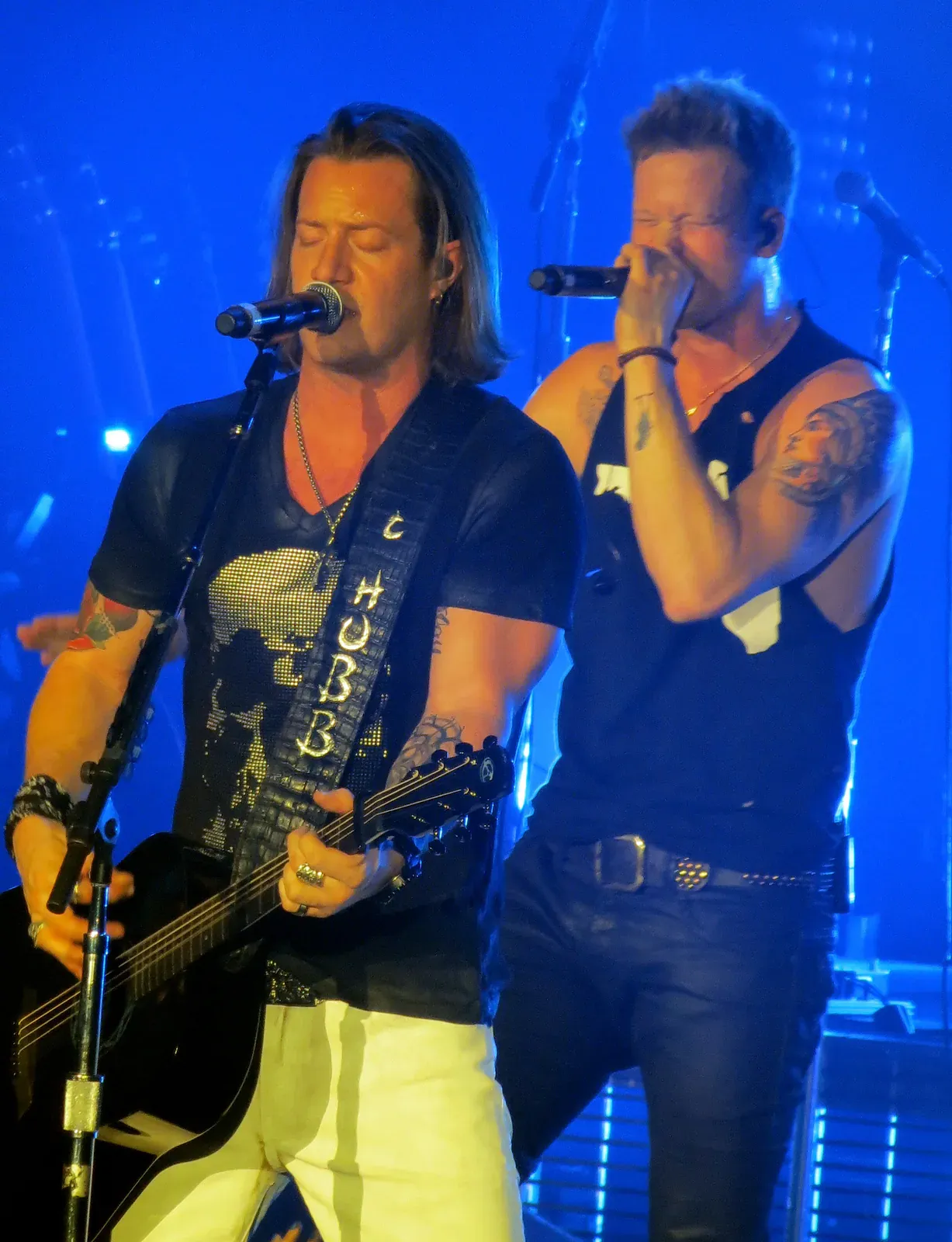
In 2013 Luke Bryan’s Crash My Party was the third best-selling album in the United States, ahead of Florida Georgia Line’s Here’s to the Good Times in sixth place, and an estimate from the mid-2010s put about 45 percent of country’s best-selling songs in the bro-country category. Musicians and critics spoke of a civil war between bro-country singers and traditional-leaning ones, and radio programmers tired of the formula before listeners did.
Streaming era, 2018 onward
Streaming weakened radio’s gatekeeping and let country records chart beside pop and rap. In March 2019 Lil Nas X’s Old Town Road charted on the Hot 100, Hot Country Songs and Hot R&B/Hip-Hop Songs at once, and Billboard then removed it from the country chart for not embracing enough elements of country music. The decision drew criticism about who the genre admits; the song’s roots are covered on the country rap page.
Morgan Wallen, a contestant on The Voice in 2014, signed to Big Loud and released Dangerous: The Double Album (2021), the first country album to spend its first seven weeks at number 1 on the Billboard 200. His One Thing at a Time (2023) spent 19 non-consecutive weeks at number 1, and its single Last Night led the Hot 100 for 16 non-consecutive weeks and topped the year-end Hot 100. In 2024 Wallen and Post Malone’s I Had Some Help became the first song to debut at number 1 on the Hot 100 and Hot Country Songs at the same time. Luke Combs won the CMA Entertainer of the Year award in 2021 and 2022. In March 2024 Beyonce released Cowboy Carter, an album rooted in country with Dolly Parton and Willie Nelson as radio hosts and a spotlight on Black country artists.
Characteristics
The defining trait is production scale: records are built for arenas and radio, with a chorus hook early in the song, a clean mix and rock drums and electric guitars at the centre. Country signifiers survive as a layer on top of that frame: a twang-tinged lead vocal, steel guitar and fiddle in intros and fills, and subject matter drawn from small towns, trucks, drinking, faith, love and heartbreak. It keeps borrowing from what dominates pop: arena rock in the 1990s, pop songwriting in the 2000s, loops and rap-like cadences in the 2010s.
Instruments and production
Rock drums and distorted electric guitar replaced the light shuffle of older country, while programmed drums and loops entered the studio in the 2010s. The pedal steel guitar moved from lead voice to atmosphere on ballads.
Culture
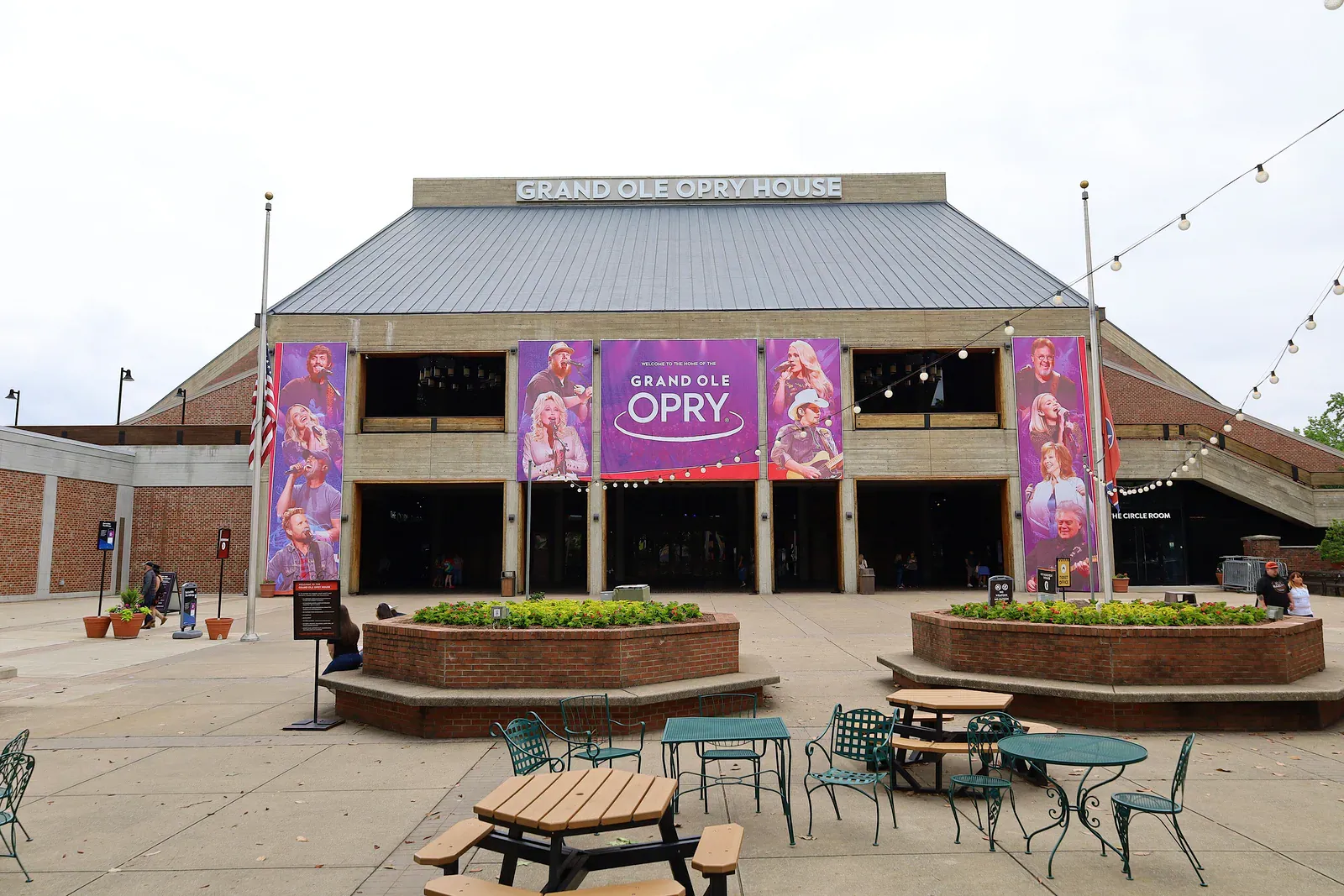
Nashville is the centre of the business. Labels such as MCA Nashville and Big Machine, the home of Swift, and the former Arista Nashville of Brooks & Dunn and Underwood, ran artist development, publishing and radio promotion from Music Row. The Grand Ole Opry, a weekly broadcast on WSM since 1925 and based at the Opry House since 1974, still marks acceptance in the format. Fans meet artists each June at CMA Fest, begun in 1972 as Fan Fair. The cowboy hat and boots became the hat acts’ uniform, and line dancing connected the music to clubs and dance halls.
Legacy
The period set the template of country as a national pop genre: stadium tours, crossover singles and television talent routes. It also made the question of authenticity permanent. Each wave, from line-dance hits to bro-country, drew complaints from older artists, and the outlaw country and neotraditional traditions remain its counterweights.
Misconceptions
One myth holds that Garth Brooks was the first country artist to top the pop album chart. Ropin’ the Wind was the first country album widely credited with debuting at number 1 on the Billboard 200, but Kenny Rogers had topped both the pop and country charts just over a decade earlier.
Another says bro-country was the whole sound of the 2010s. Estimates put about 45 percent of the best-selling songs in the category, so the rest of country radio sounded different, and some observers thought the genre had faded by 2015.
A third says Come On Over was a pop album sold as country. The original release used acoustic guitars, fiddles and pedal steel next to rock riffs; only the international edition of 1998 toned down the country instrumentation.
Frequently asked questions
What is contemporary country music?
Contemporary country is the commercial mainstream of country music from 1989 onward, produced mainly in Nashville and shaped by country radio, with rock, pop and hip-hop elements added to country vocals and instruments.
When did contemporary country start?
It is usually dated from 1989, when Garth Brooks released his first album, and from the 1990 change that made Billboard’s country chart depend on airplay alone.
How does contemporary country differ from neotraditional country?
Neotraditional country, led by singers such as George Strait and Randy Travis, returned to honky-tonk instrumentation in the 1980s. Contemporary country keeps some of that vocal style but adds arena-rock drums, electric guitars and pop production.
What is bro-country?
Bro-country is a 2010s form of country pop about trucks, alcohol and parties, influenced by hip-hop and hard rock. The term was first used in 2013 about Florida Georgia Line’s Cruise.
Sound
Sound sheet
Anatomy of a track
| # | Part | Bars |
|---|---|---|
| 1 | Intro (guitar riff) | 4 |
| 2 | Verse | 16 |
| 3 | Chorus | 8 |
| 4 | Bridge or guitar solo | 8 |
| 5 | Final chorus | 16 |
Signature sounds
- Rock drums and electric guitars under country vocals
- Chorus hook within the first minute for radio
- Country signifiers: steel guitar, fiddle, twang
- Loops and rap-style cadence in the 2010s
Drums and percussion
- Rock drum kit
- Programmed drum loops
Techniques
- Radio-format song length
- Rock arrangement
- Country signifiers
- Rap-style cadence
Keys and modes
Major keys. Most radio singles sit in major keys, with minor reserved for revenge and heartbreak songs such as Before He Cheats.
Vocals
Clear lead vocal with a country twang, harmony choruses and, in the 2010s, half-spoken verses.
Scenes
Where it happened
Where and when the sound lived: one bar per city on a shared timeline.
North America
Active scenes
Peak 1, 1989-2025
Music Row labels, publishers and studios, plus the Opry and downtown arenas, remain the production and marketing centre of country radio.
Venues and places
Nashville, 1974 to today. Home of the Opry broadcast since 1974, where Garth Brooks was inducted in 1990.
Culture
Culture markers
- Line dancing
Group dance to a set sequence of steps, hugely popular in early 1990s clubs and a driver of the upbeat singles of the era.
Dance - Cowboy hat and boots
The uniform of the hat acts, still worn by country stars on stage.
Fashion - CMA Fest
A four-day June festival in downtown Nashville begun in 1972 as Fan Fair, with autograph sessions and concerts.
Ritual
Media
Key media
- 1925Grand Ole Opry
by WSM. The weekly Nashville broadcast whose membership remains a mark of acceptance for country acts.
Radio
Glossary
Terms on this page
Country pop of the 2010s about trucks, drinking and partying, with beats and cadences taken from hip-hop and hard rock.
The format whose airplay chart decides a song's standing and shapes what labels release.
A country single that also charts on pop or adult-contemporary radio.
Trade slang for the clean-cut male singers in cowboy hats who dominated 1990s country radio.
Group dance to a set sequence of steps, whose popularity in the early 1990s shaped the choice of upbeat singles.
The Nashville district of record labels, publishers and studios that supplies most country radio songs.
Country family