Country soul
Country soul applies soul and gospel singing to country songs and songwriting, formed in the US South in the early 1960s around Ray Charles and Muscle Shoals.
Muscle Shoals, Alabama, 1962
Country family
Born
1962
Muscle Shoals, Alabama
Links
10
Genres it drew on or shaped
Tempo
80-130 BPMLineage
Family tree
Grew out of
Derived from
Influenced by
Muscle Shoals, Alabama, 1962
Country soul
Timeline
Era by era
From the first sparks to today. Select a dot to read the story behind it.
- Alabama studios and Modern Sounds
1961 to 1965
- Nashville charts and Muscle Shoals
1966 to 1971
- Spread into other styles
1972 to today
Eras
Moments
- 1 Alabama studios and Modern Sounds, 1961 to 1965
- 2 Nashville charts and Muscle Shoals, 1966 to 1971
- 3 Spread into other styles, 1972 to today
1961
Alabama studios and Modern Sounds
Arthur Alexander cut country-flavoured soul at the new FAME studio in 1961, and Ray Charles's 1962 album of country standards brought the idea to a mass audience.
- 1961Arthur Alexander records You Better Move On at FAMECut above a drugstore in Florence, Alabama, before FAME moved to Muscle Shoals.
- 1962Modern Sounds in Country and Western MusicRay Charles's country album, recorded in February and released in March on ABC-Paramount.
- 1962I Can't Stop Loving You goes goldThe album and its lead single were each certified gold by the RIAA in 1962.
- 1962Nashville publishers become a hot source of songsThe album's success raised demand for Nashville songwriters and publishers by the end of 1962.
- 1965RCA offers Charley Pride a contractProducer Jack Clement's demo reached Chet Atkins, who offered the contract.
1966
Nashville charts and Muscle Shoals
Charley Pride and Bobbie Gentry reached country and pop charts, while Candi Staton and others brought soul voices to country songs at FAME in Muscle Shoals.
- 1966Pride's first large show in DetroitMany of the 10,000 country fans at Olympia Stadium first learned he was Black when he walked on stage.
- 1967Pride plays the Grand Ole OpryThe first Black performer there since DeFord Bailey, who last appeared in 1941.
- 1967Bobbie Gentry's Ode to Billie JoeReleased in July on Capitol; it topped the Billboard Hot 100 and reached the country top 20.
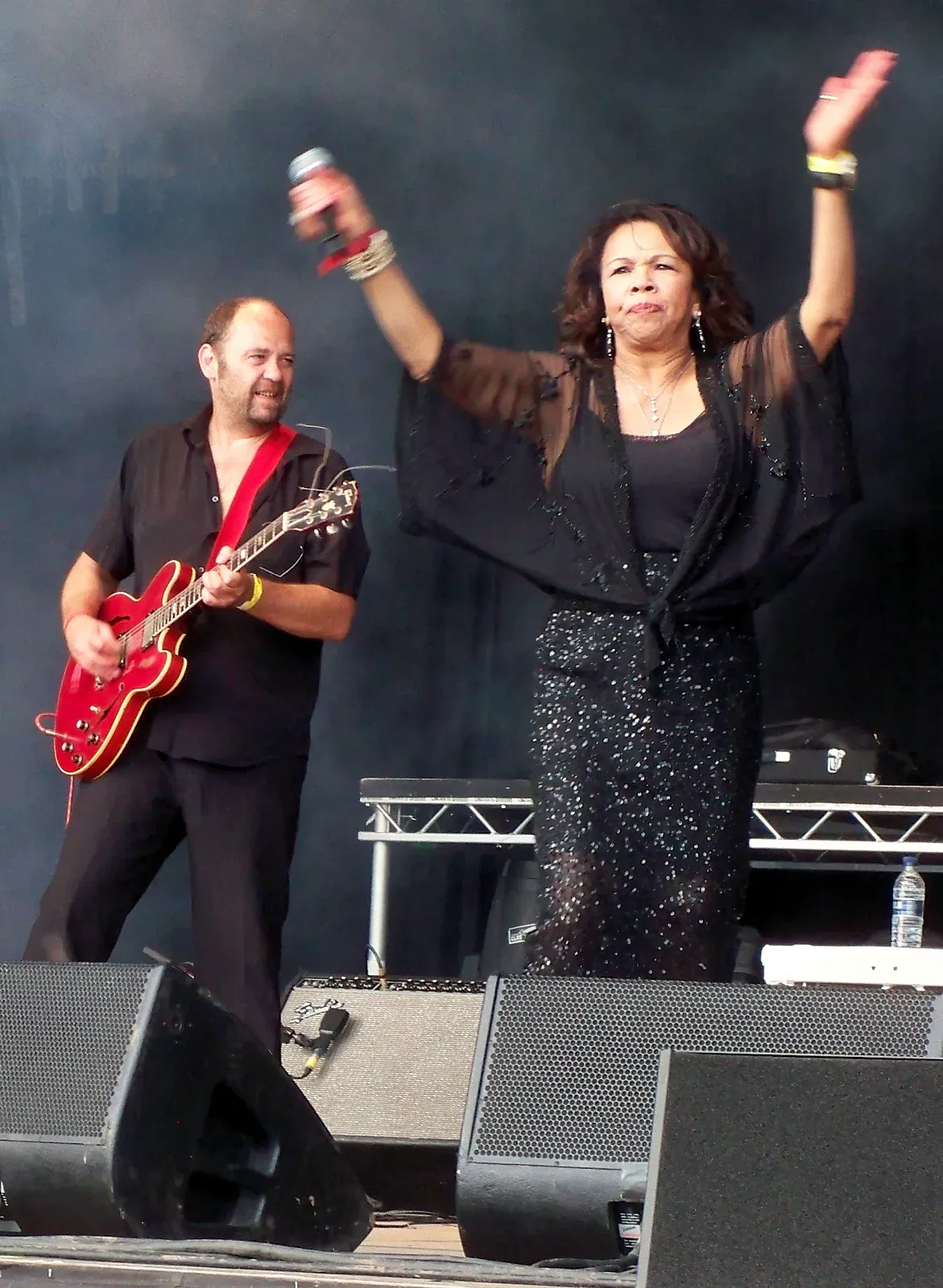
- 1968Candi Staton starts her solo career at FAMEClarence Carter introduced her to Rick Hall, who produced her as a Southern soul singer.
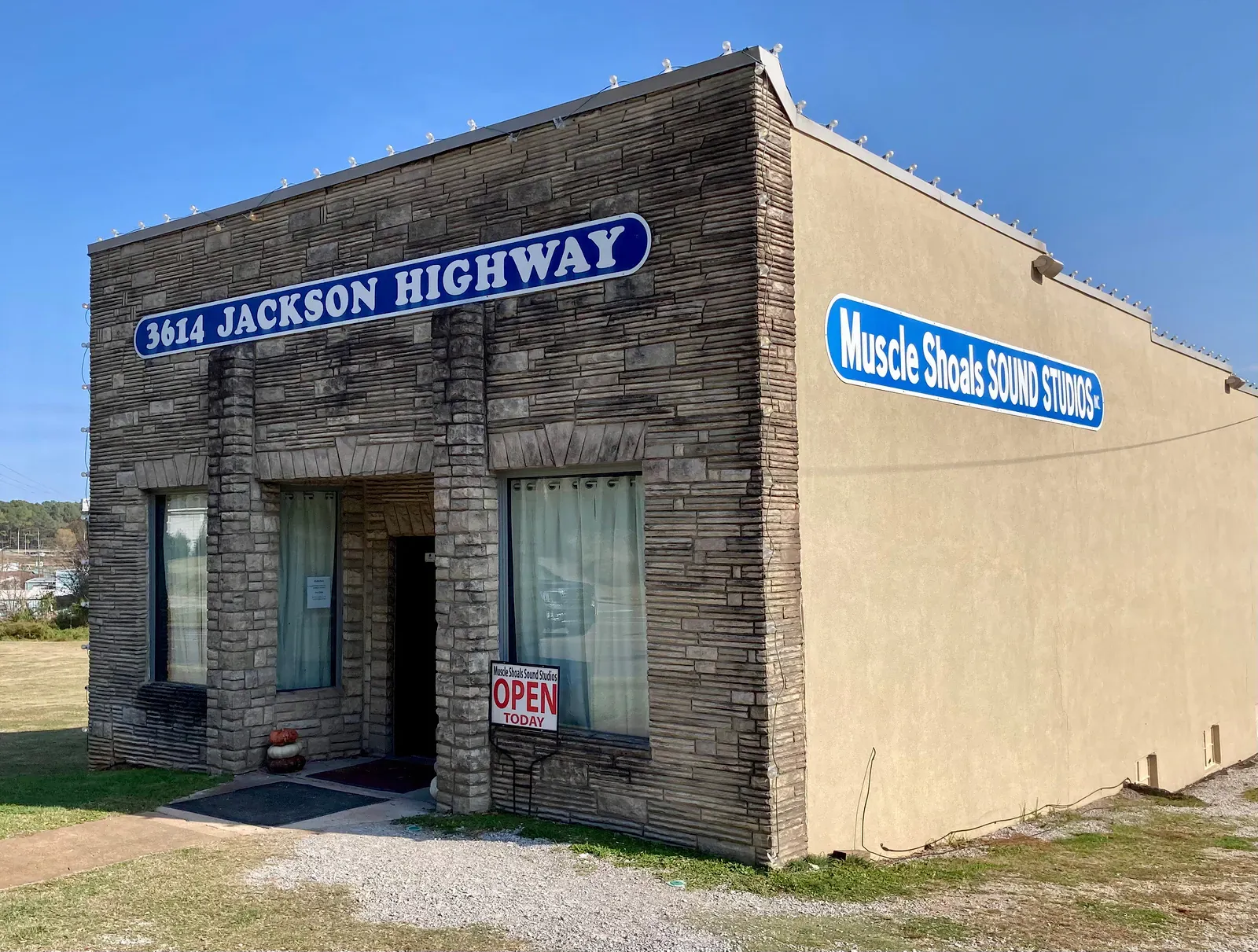
- 1969The Muscle Shoals Rhythm Section opens its own studioFour session players left FAME and founded Muscle Shoals Sound Studio in Sheffield, Alabama.
- 1969Pride begins a run of number-one country singlesEight singles reached number one on the country chart between 1969 and 1971.
- 1970Candi Staton covers Stand by Your ManHer cover of Tammy Wynette's song became the best-known US record of her early career.
- 1971Pride named CMA Entertainer of the Year
1972
Spread into other styles
Later artists moved toward disco, gospel and country-rock, while the crossover became a recognised thread of both traditions.
Listening path
Start listening
A short path from an easy way in to the deep end. Thumbnails come from YouTube; the player loads only when you press play.
- 01
Ray Charles, 1962
The countrypolitan ballad that carried Modern Sounds to a mass audience; listen for the strings and gospel-edged vocal.
- 02
Arthur Alexander, 1962
An early soul record cut at FAME in Alabama, a template for the Muscle Shoals sound.
- 03
Candi Staton, 1970
A country standard reinterpreted by a Southern soul singer.
- 04
Charley Pride, 1971
A country number one that also reached the pop chart, sung by a Black country star.
Country soul is the meeting of country songs and soul delivery: country repertoire and song forms sung with gospel-trained phrasing over horns, organ and a Southern studio rhythm section.
It took shape in the American South in the early 1960s, in Alabama studios and in Ray Charles’s 1962 country album, and belongs to the country family. The term is also used as a synonym for Southern soul, a usage this page leaves to the R&B family; here it means the crossover that country hosts.
Origins
The first records came out of a small studio above a drugstore in Florence, Alabama. In 1961 the singer-songwriter Arthur Alexander cut “You Better Move On” there, at the young FAME studio, and the record was released on Nashville’s Dot Records. It became a soul and R&B chart hit and set the studio on its way. Alexander’s songs were later covered by the Beatles and the Rolling Stones, and critics have called him a country-soul pioneer, though he stayed little known and spent years driving a bus before a late return to performing.
Ray Charles gave the idea a mass audience. He recorded Modern Sounds in Country and Western Music in February 1962 at Capitol Studios in New York and United Western Recorders in Hollywood, and ABC-Paramount released it that March. Charles produced it with Sid Feller, with saxophonist Hank Crawford, a string section conducted by Marty Paich and big-band arrangements by Gil Fuller and Gerald Wilson. The songs were country and Western standards, among them two by Hank Williams, recast in R&B, pop and jazz forms. Charles argued that country lyrics and the blues were the same thing, “very earthy”, and he treated them that way.
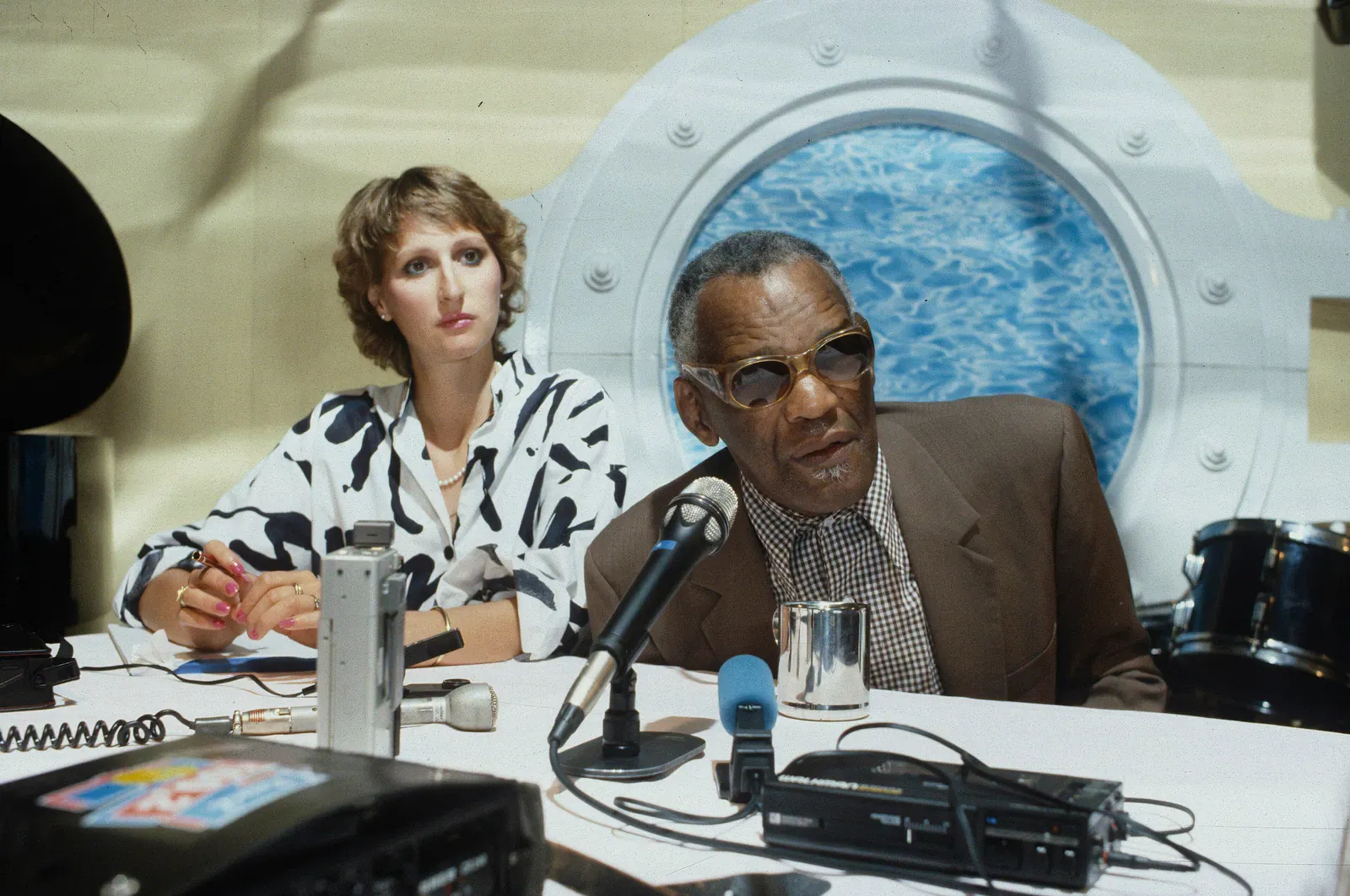
Modern Sounds and the first crossover, 1962 to 1966
The album and its four hit singles brought Charles airplay on both R&B and country radio. “I Can’t Stop Loving You”, a countrypolitan ballad with lush arrangements, sat 11th on the track list because Feller judged it the weakest song, and became the top-selling single; it and the album were certified gold in 1962. Nashville noticed: by the end of that year, country publishers were described as the hottest source of material in the record business. Candi Staton and Solomon Burke were among the singers the album influenced, and Willie Nelson and Buck Owens cited it later.
The record also carried a social meaning. It appeared at the height of the civil rights movement and put a Black artist’s reading of the most segregated of American formats on both sets of radio stations. Charles was among the first Black musicians to hold complete artistic control of his recording career.
Country charts and Muscle Shoals, 1966 to 1971
The next step was a Black performer inside country itself. Charley Pride had visited Sun Studio in Memphis in 1958 and, after a demo by producer Jack Clement reached Chet Atkins, signed to RCA in 1965. His first singles did not chart, and early promotional copies carried the name “Country Charley Pride”. “Just Between You and Me” reached number nine on the country chart in February 1967. At his first large show, at Olympia Stadium in Detroit in 1966, many of the 10,000 fans learned his race only when he walked on stage. In 1967 he became the first Black performer at the Grand Ole Opry since DeFord Bailey, who had last appeared in 1941.
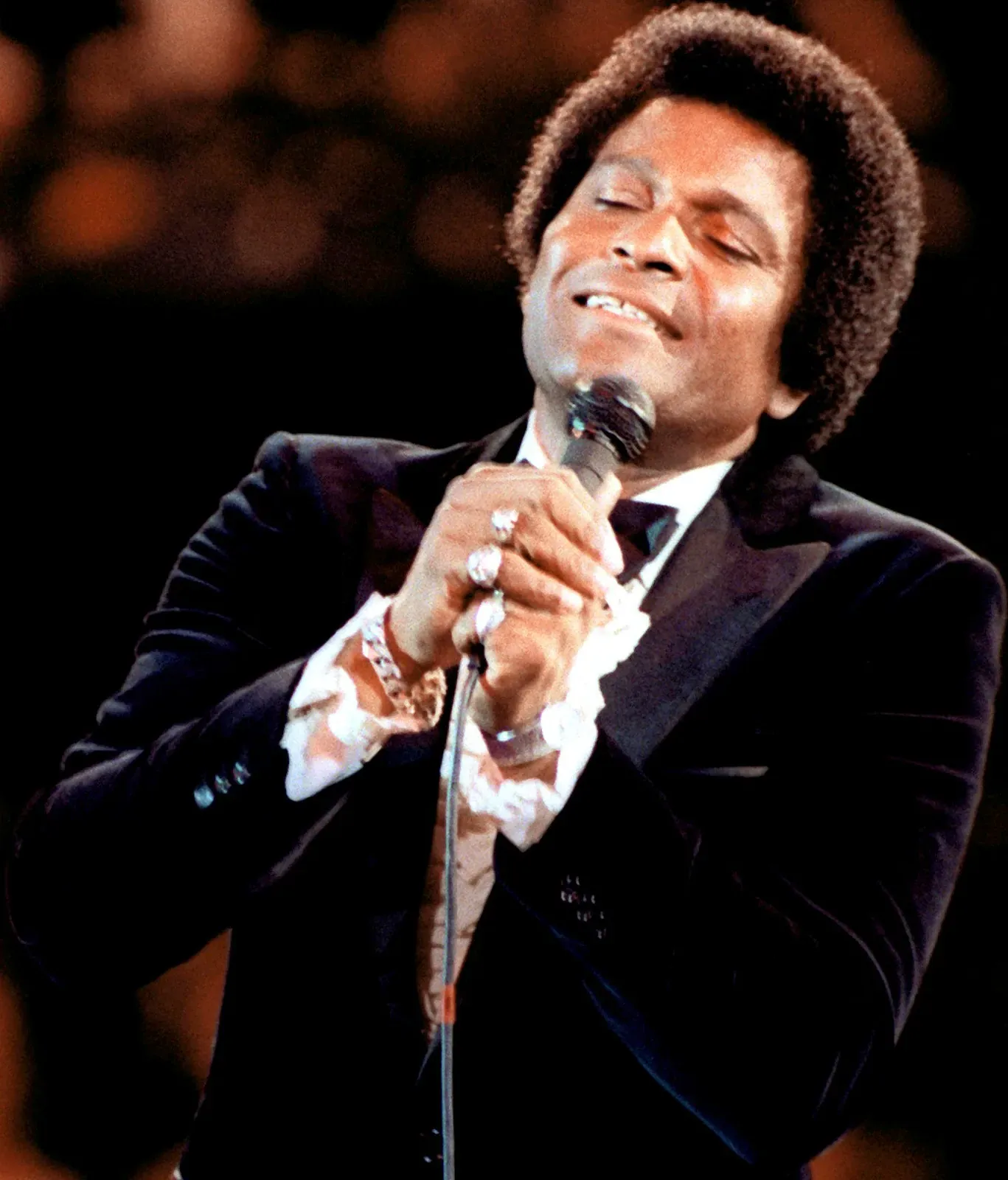
Pride’s run through 1969 to 1971 followed the countrypolitan sound of strings and choruses, and his compilation The Best of Charley Pride sold over a million copies in 1969. He was named Entertainer of the Year by the Country Music Association in 1971 and elected to the Country Music Hall of Fame in 2000.
Alabama was building its own side of the story. FAME’s founder Rick Hall produced Southern soul singers there, and in 1968 Clarence Carter introduced Candi Staton to Hall, who launched her solo career. Her 1970 version of Tammy Wynette’s “Stand by Your Man” was arranged by Jimmie Haskell and Harrison Calloway, and she went on to cut 16 R&B hits for FAME. In 1969 the studio’s house rhythm section left to found Muscle Shoals Sound Studio in Sheffield, Alabama; the same players, known as the Swampers, backed soul stars including Wilson Pickett, Percy Sledge and Aretha Franklin.
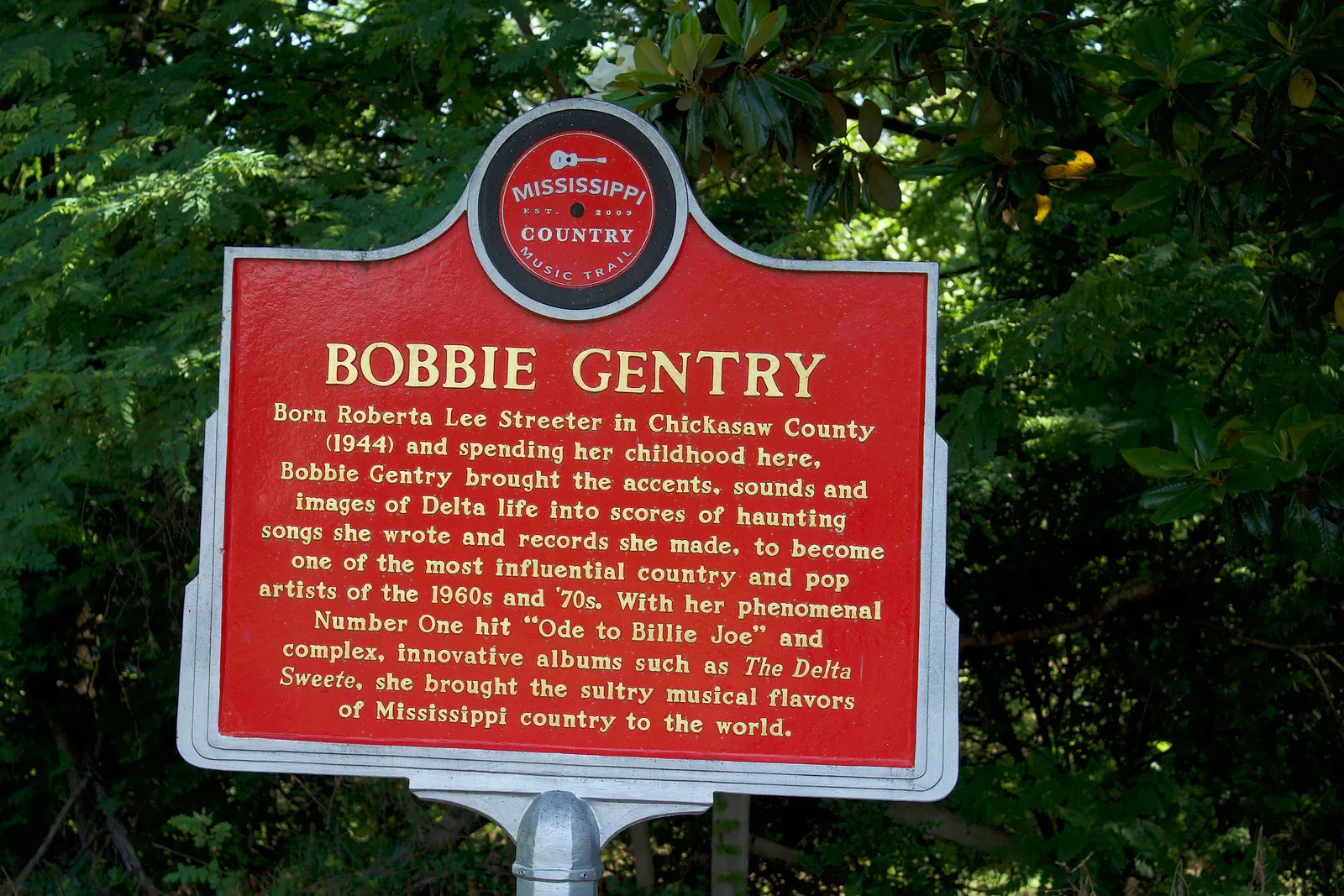
Bobbie Gentry reached the same listeners from the country side. “Ode to Billie Joe”, released by Capitol Records in July 1967, is a half-spoken Mississippi Delta narrative over sparse acoustic guitar with strings behind it. It topped the Billboard Hot 100 within weeks and also entered the Hot R&B top 10 and the country top 20. Gentry was one of the first women to write and produce her own material in the United States.
Characteristics
The music sits on country songs: heartbreak ballads, narrative lyrics, familiar forms. The soul layer arrives in the voice and the band. Singers shout and bend notes in the manner of Black gospel, and arrangements use strings and backing choruses, or horns and organ over a Southern rhythm section. Tempos are moderate; canonical recordings run from about 80 to 130 beats per minute, from the slow Charles ballads to Pride’s mid-tempo country. The piano blues of Charles and the string arrangements of the Nashville sound are the two models most later records follow.
Instruments and production
Production came from two traditions. New York and Los Angeles sessions used orchestral strings and big-band charts; the Alabama sessions used a small rhythm section of drums, bass, guitar and keyboards, then horns and organ. Both kept the vocal in front and the country lyric intact. Because many records were covers of songs already known on country radio, arrangements did the identifying work, replacing a fiddle-and-steel sound with a soul groove or a studio orchestra.
Notable recordings
“You Better Move On” shows the earliest form: a country-shaped song with an R&B performance, cut in a small Alabama room. “I Can’t Stop Loving You” is the best-known: Charles’s gospel outbursts break up a ballad that otherwise sits close to the Nashville sound. “Kiss an Angel Good Mornin’”, Pride’s single released in 1971, shows the form from the country side, a number one on the country chart that also reached pop listeners. “Stand by Your Man” in Staton’s hands treats a country standard as a vehicle for soul feeling.
Culture
The style was always tied to questions of race in American music. Charles’s audience grew among white listeners without costing him his Black audience, and Pride said the labels attached to him changed over the years while his situation barely did. Other Black country performers followed, including O. B. McClinton, who grew up near Memphis and released country albums from 1972. Joe Tex and Dobie Gray, in the same period, mixed country with soul and gospel, and Gray’s “Drift Away” was one of the biggest hits of 1973. The Muscle Shoals sound itself is documented in the 2013 film Muscle Shoals.
Legacy
Country soul never became a single scene with its own label or festival circuit. Its effect was in the permission it gave: a Black singer could take country songs to pop audiences, and a country artist could use the strings, charts and soul feeling that radio now accepted. The Alabama studios remained a gathering place for soul, rock and country players for decades. The Library of Congress selected Modern Sounds in Country and Western Music for the National Recording Registry in 2026.
Misconceptions
Country soul and Southern soul are the same. The names overlap, and “country soul” is used both ways, but Southern soul is the Stax, Memphis and Muscle Shoals R&B tradition, while this page’s sense is the crossover with country songs and charts.
Ray Charles invented the fusion in 1962. Alexander’s records at FAME predate the album. Charles’s contribution was scale and control: a full album of country material, produced his way, that reached a mass audience.
Charley Pride hid his race from radio. The first RCA singles went out without a photograph, but Pride disputed that this was deliberate, and said the real difficulty was getting promoters to book a Black country singer.
Frequently asked questions
What is country soul?
Country soul is a blend of country songs and songwriting with soul and gospel singing, horns, organ and Southern studio grooves, developed from the early 1960s.
Who made the first country soul records?
Arthur Alexander recorded “You Better Move On” at FAME in 1961, a year before Ray Charles’s Modern Sounds in Country and Western Music brought the idea to a wide audience.
Is country soul the same as Southern soul?
The terms overlap, but Southern soul is the R&B tradition of Memphis and Muscle Shoals, while country soul in this sense is the crossover hosted by country, seen in the work of Ray Charles, Charley Pride and Bobbie Gentry.
Which labels were important to country soul?
Dot Records released Alexander’s early hits, RCA Records built Pride’s career, and Capitol Records released Gentry’s “Ode to Billie Joe”.
Sound
Sound sheet
Signature sounds
- Gospel-edged vocal over a country ballad
- String section and backing chorus
- Country standards reworked in R&B and pop forms
- Horns and organ behind a Southern rhythm section
Techniques
- Gospel outbursts
- Reworked standards
- Half-spoken narrative
- Countrypolitan strings
Keys and modes
Major keys. Canonical recordings sit in E, F, A and B major.
Vocals
Gospel-trained soul phrasing on country lyrics of heartbreak, from baritone ballads to shouted outbursts.
Scenes
Where it happened
Where and when the sound lived: one bar per city on a shared timeline.
North America
Active scenes
Peak 3, 1969-2025
FAME Studios made the Alabama town a recording centre for soul singers and country songs.
The home of the country publishers, labels and Opry that the soul crossover drew on.
Muscle Shoals Sound Studio, founded by the former FAME rhythm section.
Venues and places
Muscle Shoals, 1961 to today. Rick Hall's studio, where Arthur Alexander and later Candi Staton recorded.
Sheffield, 1969 to today. Founded by four session players who left FAME.
Detroit, 1966 to today. Site of Charley Pride's first large show.
Culture
Culture markers
- Concept album of reworked standards
Modern Sounds recast country standards in R&B, pop and jazz forms under Ray Charles's artistic control.
Artwork - Grand Ole Opry guest spots
Pride played the Opry in 1967 and Ray Charles appeared at its 58th anniversary in 1983.
Ritual
Media
Key media
- 2013Muscle Shoals
by Greg Camalier. Documentary on Rick Hall, the Muscle Shoals Rhythm Section and the Muscle Shoals sound.
Film
Glossary
Terms on this page
Soul singing applied to country songs or country songwriting, and also a name for Southern soul.
Smooth country-pop style with strings and choruses that Ray Charles used on I Can't Stop Loving You.
The groove of the Alabama session players around FAME Studios.
Polished 1950s country style with strings and background vocals, aimed at wider sales.
Another name for the Muscle Shoals Rhythm Section.
Country family