Latin pop
Latin pop is pop music sung in Spanish or Portuguese, shaped by Madrid, Miami and San Juan from the 1970s and carried worldwide by crossover stars.
Madrid, 1970
Pop family

Born
1970
Madrid
Subgenres
3
Documented branches
Links
12
Genres it drew on or shaped
Tempo
75-125 BPMLineage
Family tree
Grew out of
- Bolero
Derived from
Influenced by
Madrid, 1970
Latin pop
Led to (3)
Timeline
Era by era
From the first sparks to today. Select a dot to read the story behind it.
- Balladeers and boy bands, 1968-1984
1968 to 1984
- Miami and the first crossover, 1984-1994
1984 to 1994
- The late-1990s boom, 1995-2002
1995 to 2002
- Global and streaming era, 2003-present
2003 to today
Eras
Moments
- 1 Balladeers and boy bands, 1968-1984, 1968 to 1984
- 2 Miami and the first crossover, 1984-1994, 1984 to 1994
- 3 The late-1990s boom, 1995-2002, 1995 to 2002
- 4 Global and streaming era, 2003-present, 2003 to today
1968
Balladeers and boy bands, 1968-1984
Julio Iglesias carried Spanish-language ballads across Europe and into Miami while Menudo, formed in Puerto Rico in 1977, turned teenage pop into a Latin American mass market.
- 1968Julio Iglesias wins the Benidorm Song FestivalLa vida sigue igual won the festival and gave Iglesias a Columbia recording deal and his first album, Yo canto.
- 1970Gwendolyne at EurovisionIglesias represented Spain in Amsterdam and finished fourth, then topped charts across Europe.
- 1977Menudo formed in Puerto RicoProducer Edgardo Diaz assembled five boys and released the first album, Los Fantasmas, the same year.
- 1979Julio Iglesias moves to MiamiHe signed with CBS International and began recording in several languages from Florida.
- 1981Menudo's Quiero serThe album launched the group to international stardom across Latin America.
1984
Miami and the first crossover, 1984-1994
Miami Sound Machine and Gloria Estefan reached the US Top 10 with Latinized dance-pop and ballads, a blend that then dominated Latin pop through the 1990s.
- 1984Julio Iglesias's 1100 Bel Air PlaceHis English-language album sold over three million copies in the United States; the Willie Nelson duet reached the Top 5 of the Hot 100.
- 1985Miami Sound Machine's CongaThe band's first Hot 100 hit reached number 10 in the United States and became Gloria Estefan's signature song.
- 1993Los del Rio record MacarenaThe Spanish duo first released the song on A mi me gusta; a 1995 Miami remix made it a global hit.
1995
The late-1990s boom, 1995-2002
Ricky Martin, Shakira, Enrique Iglesias and Alejandro Sanz broke through in Spanish, then Martin and Shakira crossed to English and the first Latin Grammy ceremony was held in 2000.
- 1995Ricky Martin's A medio vivir and MariaMaria mixed Latin and African rhythms instead of a ballad, topped charts in 20 countries and became his first international hit.
- 1995Shakira's Pies descalzosHer third album sold over 5 million copies and topped charts in eight countries.
- 1995Enrique Iglesias debuts on FonovisaHis self-titled first album began a run that made him the best-selling Spanish-language act of the decade.
- 1996Macarena tops the Hot 100 for 14 weeksThe Bayside Boys mix, with added English lyrics, spent August to November at number one and set off a dance craze.
- 1997Latin Recording Academy establishedThe Recording Academy created a Latin counterpart to run awards for Spanish and Portuguese music.
- 1997Alejandro Sanz's MasThe album with Corazon partio brought the Madrid singer international success after four albums.
- 1998Shakira records Donde estan los ladrones? in MiamiMade at Gloria and Emilio Estefan's studio, it sold over 7 million copies and topped the US Latin albums chart for 11 weeks.
- 1999Ricky Martin's Grammy performance and English debutAfter the Grammy show his album Ricky Martin debuted at number one with 661,000 first-week copies; Livin' la Vida Loca held the Hot 100 for five weeks.
- 2000First Latin Grammy AwardsHeld on 13 September at the Staples Center in Los Angeles and broadcast by CBS as a mostly Spanish-language prime-time show.
- 2001Shakira's Laundry ServiceHer first English-language album peaked at number three on the Billboard 200 and went multi-platinum.
2003
Global and streaming era, 2003-present
Spanish-language pop spread to every market, with collaborations across reggaeton, flamenco and pop and Despacito reaching number one in 47 countries in 2017.
- 2005La Tortura by Alejandro Sanz and ShakiraThe duet reached number one on several charts and paired the Madrid songwriter with the Colombian singer.
- 2017Despacito reaches number one in 47 countriesIt became the first Spanish-language song to top the Hot 100 since Macarena and stayed 16 weeks.
Listening path
Start listening
A short path from an easy way in to the deep end. Thumbnails come from YouTube; the player loads only when you press play.
- 01
Gloria Estefan and Miami Sound Machine, 1985
The dance-pop hit that opened the Miami crossover; listen for the percussion over the synth bass.
- 02
Alejandro Sanz, 1997
The Madrid songwriter's flamenco-tinged breakthrough; listen for the guitar and the pop chorus.
- 03
Ricky Martin, 1999
The record that took Latin pop to number one in the US; listen for the brass and salsa accents.
- 04
Shakira, 2001
Her English-language breakthrough; listen for the Andean-flavoured melody inside a pop-rock arrangement.
- 05
Luis Fonsi feat. Daddy Yankee, 2017
The streaming-era hit that revived Spanish-language pop worldwide; listen for the reggaeton pulse.
Facts
| Family | Pop |
| Origin | Madrid, Spain |
| Emerged | 1970s |
| Status | Active |
| Tempo | 75 to 125 BPM |
| Meter | 4/4 |
| Grew out of | Bolero |
| Subgenres | 2 |
Latin pop, also called pop latino or pop en español, is pop music performed mainly in Spanish or Portuguese. It uses the structures and production of international pop, with memorable melodies, regular rhythm and broad appeal, and adds colour from Latin American and Iberian traditions.
It took shape from the 1970s in Madrid, Mexico City, San Juan and Miami, and reached a worldwide audience in the late 1990s.

Origins
The genre is defined by language and market more than by one rhythm. Spanish-language pop existed before the label did: Sergio Mendes brought Latin-flavoured pop to a global audience in the mid-1960s, and the romantic ballads of Julio Iglesias and Roberto Carlos defined the 1970s. Iglesias won the Benidorm Song Festival in 1968 with “La vida sigue igual”, signed to Columbia’s Spanish branch and released his first album, Yo canto. He finished fourth for Spain at the 1970 Eurovision Song Contest with “Gwendolyne” and went on to record in several languages.
A second root was teenage pop. Producer Edgardo Díaz formed Menudo in Puerto Rico in 1977, and the group’s 1981 album Quiero ser made it a Latin American phenomenon. Its members left at around 17 and were replaced by younger singers, so more than fifty boys passed through the band, among them Ricky Martin (1984 to 1989) and Draco Rosa.
Balladeers and boy bands, 1968-1984
Spanish pop of this period leaned on the ballad, a slow, string-backed song about love. Iglesias moved to Miami in 1979 and signed with CBS International. His English-language hit “Begin the Beguine” reached number one in the United Kingdom, and his 1984 album 1100 Bel Air Place sold more than three million copies in the United States, helped by a duet with Willie Nelson that reached the Top 5 of the Hot 100. The slower side of the genre grew in parallel as the Latin ballad, which shares many of the same singers.
Miami and the first crossover, 1984-1994
The genre’s first major crossover star was Gloria Estefan. Miami Sound Machine had recorded since 1977 for small Miami labels and Discos CBS International, then released its first Epic album in 1984. The follow-up Primitive Love (1985) produced three Hot 100 Top 10 hits, including “Conga”, which reached number 10, and “Words Get in the Way”, a ballad that topped the adult contemporary chart and showed the band could handle both modes. Let It Loose (1987) sold three million copies in the United States and gave the group a number one with “Anything for You”.
The sound came from the club. Tejano acts had brought synthesizers and slicker production to border-region styles, and New York and Miami clubs produced Latin freestyle, dance music built on drum machines and synthesizers. Latin pop kept Latin rhythms for its uptempo numbers but took its melody from mainstream pop. This blend of Latinized dance-pop and adult contemporary balladry dominated the genre through the 1990s. In 1993 the Spanish duo Los del Río recorded “Macarena” for the album A mí me gusta, a song that would take three years to reach number one.
The late-1990s boom, 1995-2002
Several careers turned at once in 1995. Ricky Martin’s “María”, a mix of Latin and African rhythms rather than a ballad, topped charts in 20 countries after a label executive warned him it would end his career. Shakira’s Pies descalzos sold more than five million copies and reached the top of the charts in eight countries. Enrique Iglesias began on the Mexican label Fonovisa and, with his first three Spanish albums, became the best-selling Spanish-language act of the decade. Alejandro Sanz had released four albums before Más (1997), with “Corazón partío”, carried his flamenco-influenced ballads abroad.
The English-language crossover followed. “Macarena” had been remixed in Miami by the Bayside Boys with English lyrics, and in 1996 it spent 14 weeks at number one on the Hot 100, selling more than 14 million copies across its versions. Martin performed at the 1999 Grammy Awards, and his English debut Ricky Martin, led by “Livin’ la Vida Loca” (written by Draco Rosa and Desmond Child), entered the Billboard 200 at number one with 661,000 copies in its first week. The single held the Hot 100 for five weeks, and a Spanish version and the follow-up “Bella” kept the Spanish market in step. Shakira recorded her fourth album, Dónde están los ladrones?, in the Estefans’ Miami studio in 1998. Encouraged by Gloria Estefan, she then wrote her first English-language album, Laundry Service (2001), which peaked at number three in the United States.
The industry institutionalised the moment. The Latin Recording Academy was founded in 1997, and the first Latin Grammy Awards took place on 13 September 2000 at the Staples Center in Los Angeles, the first prime-time show on US network television presented mainly in Spanish.
Global and streaming era, 2003-present
After 2000 the genre worked across borders. Thalía, Paulina Rubio, Jennifer Lopez and Marc Anthony joined the crossover class, and English-language pop singers recorded Spanish versions of their own songs. Sanz and Shakira paired for “La Tortura” in 2005, which topped several charts. In 2017 “Despacito”, by Luis Fonsi with Daddy Yankee and written with Erika Ender, reached number one in 47 countries. It was the first Spanish-language song to top the Hot 100 since “Macarena” and tied the record for the longest stay there at 16 weeks. Its reggaeton pulse reflects the overlap with reggaeton, which remains a separate genre.
Characteristics
Language is the test: a Latin pop record is pop first, with fusion of Latin or Hispanic folk styles characteristic but secondary. It stays distinct from rock en español, regional Mexican, tropical music, reggaeton and dance, though it takes from all of them. Two strands run through it, the dance-pop single and the sweeping ballad, and many artists work in both. Songs are built on hooks, regular rhythm and chorus-led form shared with the wider pop family, and the vocal is almost always the centre.
Instruments and production
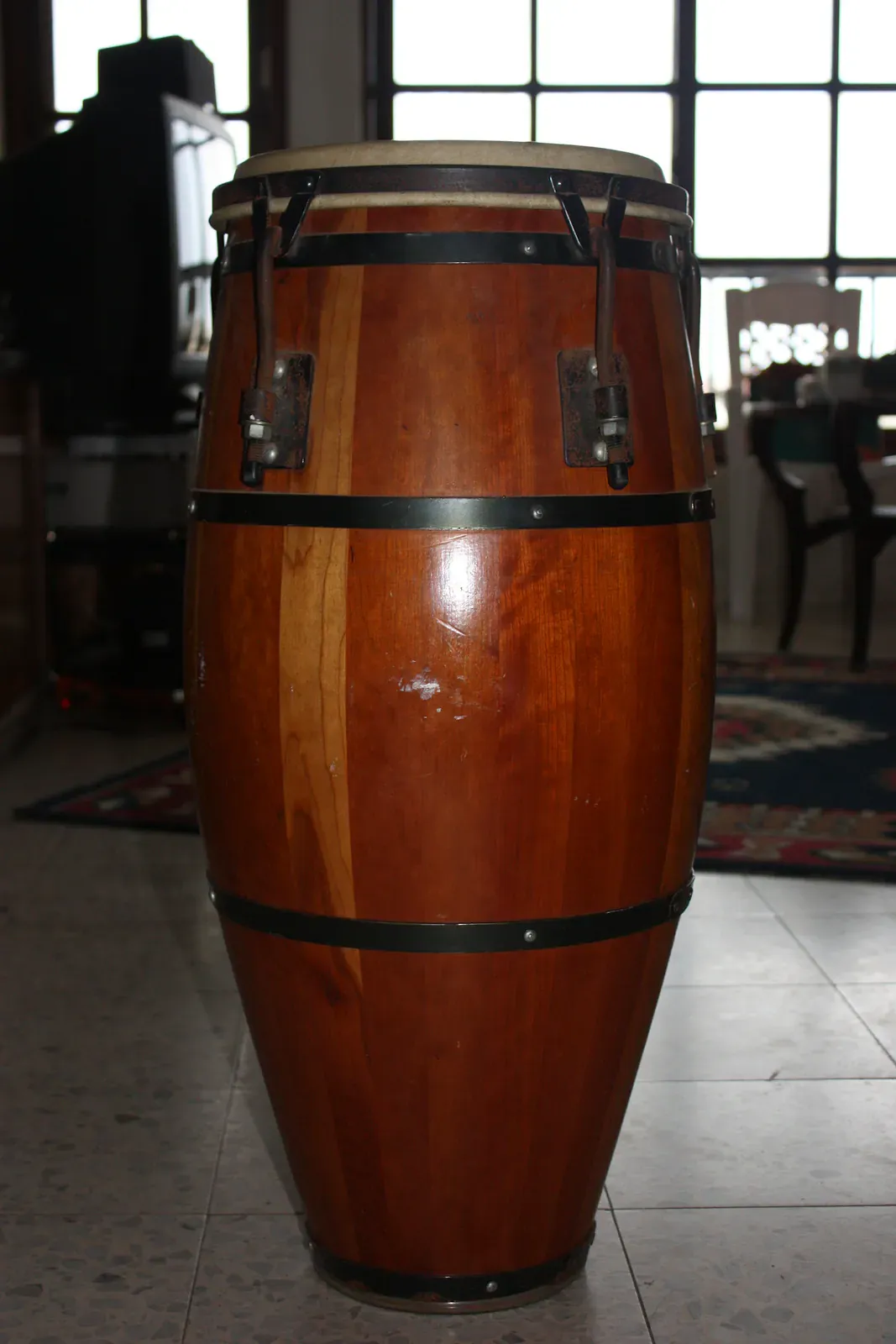
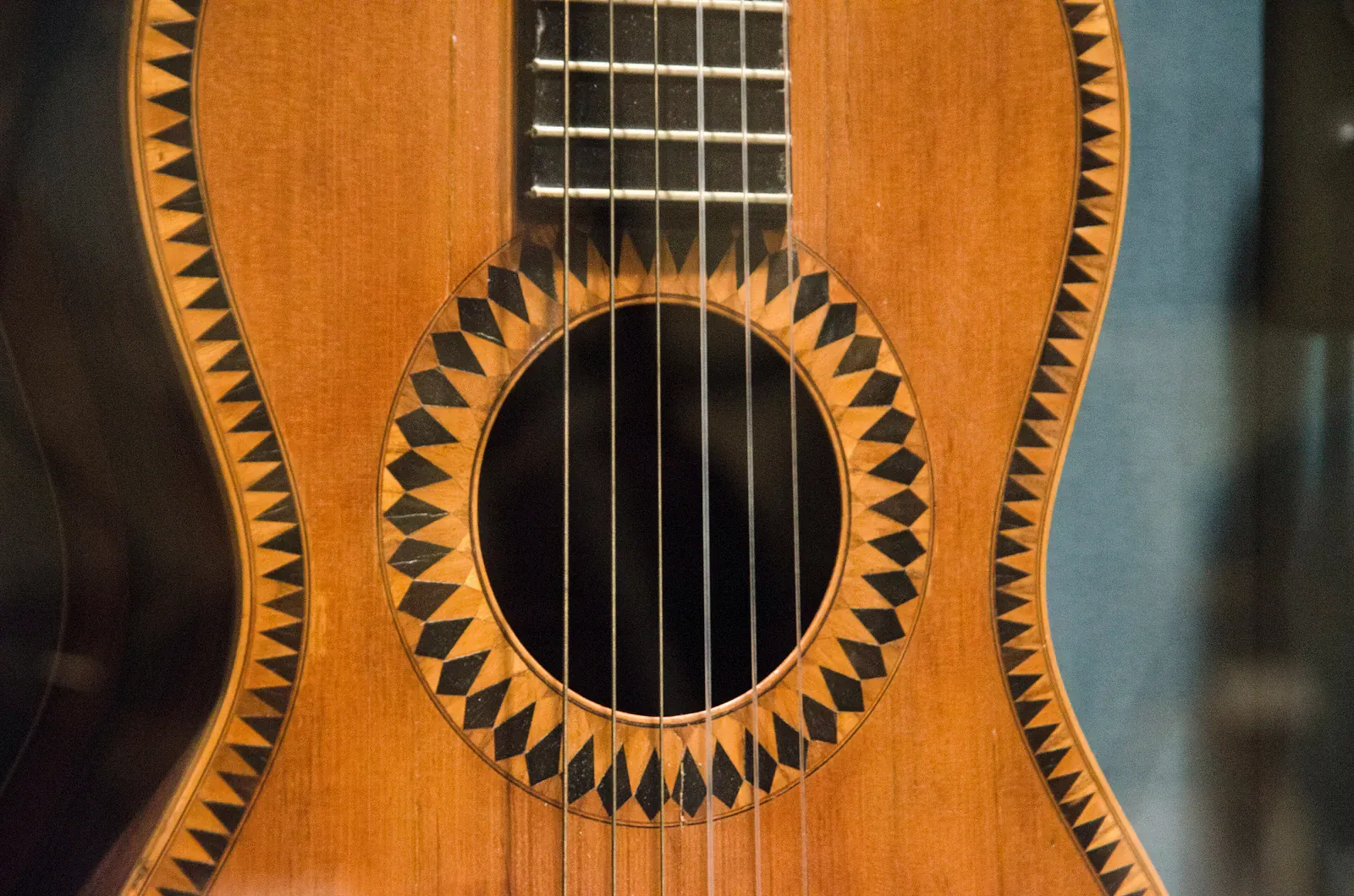
Production followed mainstream pop. Synthesizers and drum machines, inherited from freestyle and Tejano records, carried 1980s dance-pop, with hand percussion on top for Latin accents. Ballads used strings, and Sanz’s records lean on flamenco-style guitar. “Livin’ la Vida Loca” mixes elements of salsa, surf and ska, and Laundry Service blends Andean, Middle Eastern and tango sounds into pop-rock. Emilio Estefan’s Miami studio and production work shaped Shakira’s records and many of the Miami hits.
Notable recordings
“Conga” (1985) is the template: a percussive Latin dance track that made the US Top 10 in English. “Livin’ la Vida Loca” (1999) is the commercial peak of the crossover, with brass and a sinister lyric about an irresistible woman, issued by Columbia and reaching number one in more than 20 countries. “Corazón partío” (1997) shows the Spanish side: a guitar-led pop song from Madrid.

Culture
The genre has a strong fan culture. Menudomania, also called Menuditis, was compared to Beatlemania in the early 1980s. Dance followed hits: the Macarena dance became a craze in late 1996 and 1997, which helped the song’s run at number one. Awards are central: the Latin Grammys, held since 2000 and broadcast by Univision since 2005, set the industry’s yearly calendar.
Legacy
The late-1990s boom showed that Spanish-language acts could sell to mass audiences abroad, in English and in Spanish. Streaming then made the language itself a draw: “Despacito” was credited with doing more for Spanish-language music in the global market than any hit since “La Bamba” in 1987 and “Macarena” in 1995. Latin pop artists keep moving between ballads, dance and reggaeton, and English-language pop acts now record Spanish versions of their own songs.
Misconceptions
Latin pop is not a rhythm. It is often assumed to mean salsa or cumbia, but it is pop in Spanish or Portuguese that may include Latin rhythms. Another myth credits Ricky Martin with starting the crossover in 1999, yet Gloria Estefan reached the US Top 10 in 1985 and Julio Iglesias sold more than three million English-language albums in 1984. A third says “Despacito” was the first Spanish-language number one in the United States; “Macarena” held the top of the Hot 100 for 14 weeks in 1996.
Frequently asked questions
What is Latin pop?
Latin pop is pop music sung in Spanish or Portuguese. It follows international pop structures and production and adds Latin American or Iberian rhythms and styles.
Who is called the king of Latin pop?
Ricky Martin is widely called the King of Latin Pop. His 1999 English-language debut, led by “Livin’ la Vida Loca”, was the first album by a male Latin act to debut at number one on the Billboard 200.
Is reggaeton Latin pop?
Reggaeton is treated as a separate genre, although Latin pop songs such as “Despacito” borrow its rhythm and feature its performers.
Who were the first Latin pop crossover stars?
Gloria Estefan and Miami Sound Machine were the first major crossover act, with “Conga” reaching the US Top 10 in 1985. Julio Iglesias and, in the 1990s, Ricky Martin, Enrique Iglesias and Shakira followed.
Sound
Sound sheet
Signature sounds
- Spanish-language lead vocal over international pop production
- Latin percussion accents on a pop backbeat
- Sweeping ballad choruses with strings
- Spanish and English versions of the same single
Drums and percussion
- Latin hand percussion
Techniques
- Latinized dance-pop
- Sweeping ballad build
- Bilingual releases
- Genre blending
Tuning
12-tone equal temperament, A=440
Vocals
Spanish-language lead vocals, from soft ballad delivery to dance-pop shouts, often with an English version for crossover.
Scenes
Where it happened
Where and when the sound lived: one bar per city on a shared timeline.
Europe
Caribbean
North America
Latin America
Active scenes
Peak 4, 1990-2025
Home of the Estefans and, from 1979, Julio Iglesias; the base where Shakira recorded Donde estan los ladrones? in 1998.
Birthplace of Julio Iglesias, Enrique Iglesias and Alejandro Sanz, the Spanish centre of the genre.
Where Menudo formed in 1977 and where Ricky Martin and Luis Miguel were born.
Shakira's birthplace; Sony Music Colombia signed her and her first hits came from the Colombian market.
Venues and places
Miami, 1998 to today. Gloria and Emilio Estefan's studio, where Shakira recorded Donde estan los ladrones? with Emilio as executive producer.
Culture
Culture markers
- Macarena dance
A dance craze in late 1996 and 1997 that carried the song to 14 weeks at number one.
Dance - Menudomania
Fan fever for Menudo in the early 1980s, also called Menuditis.
Slang - Leaving at 17
Menudo let members go at about 17 and replaced them with younger singers, so more than fifty passed through the group.
Ritual
Media
Key media
- 1969La vida sigue igual
by Julio Iglesias. Film in which Iglesias played a fictionalized version of his own life, named after his Benidorm-winning song.
Film
Glossary
Terms on this page
When a Spanish-language artist records in English to reach the mainstream US and UK markets.
Award from the Latin Recording Academy for Spanish and Portuguese recordings, first held in 2000.
Fan fever for Menudo in the early 1980s, also called Menuditis and compared to Beatlemania.
Spanish for Latin pop, also called pop en espanol: pop sung in Spanish or Portuguese.
A Spanish recording of an English single, such as Bella, the Spanish version of She's All I Ever Had.
Pop family