Ballad
The traditional ballad is a narrative song in rhymed quatrains from England, Scotland and Ireland, collected by Child and revived on 1960s folk records.
England, around 1250
Folk family
Born
around 1250
England
Links
7
Genres it drew on or shaped
Tempo
80-140 BPMLineage
Family tree
Timeline
Era by era
From the first sparks to today. Select a dot to read the story behind it.
- Oral song and broadsides
1250 to 1764
- Antiquarian collections
1765 to 1898
- Fieldwork and the American survival
1899 to 1951
- Folk revival and folk rock
1952 to today
Eras
Moments
- 1 Oral song and broadsides, 1250 to 1764
- 2 Antiquarian collections, 1765 to 1898
- 3 Fieldwork and the American survival, 1899 to 1951
- 4 Folk revival and folk rock, 1952 to today
around 1250
Oral song and broadsides
Narrative songs passed on by memory in England, Scotland and Ireland, with the oldest English example, Judas, written down in the 13th century. Most surviving texts date to the 17th and 18th centuries and many reached print as cheap broadside sheets.
- 1250Judas manuscriptThe earliest recognizable English ballad in form survives in a 13th-century manuscript.
- 1495Robin Hood ballads printedWynkyn de Worde prints a collection of Robin Hood ballads, the oldest detailed ballad material.
1765
Antiquarian collections
Percy's Reliques in 1765, Walter Scott's Minstrelsy of the Scottish Border from 1802 and Francis James Child's five volumes of 305 English and Scottish ballads, 1882 to 1898, turned an oral repertoire into a fixed canon.
- 1765Percy's ReliquesBishop Thomas Percy publishes Reliques of Ancient English Poetry, an early printed collection of popular ballads.
- 1802Minstrelsy of the Scottish BorderWalter Scott publishes the first volumes of his Border ballad collection, issued in three volumes over 1802 and 1803.
- 1882Child begins publishingHarvard professor Francis James Child starts issuing The English and Scottish Popular Ballads, completed in 1898.
1899
Fieldwork and the American survival
Cecil Sharp and Maud Karpeles collected British-origin ballads in the Southern Appalachians in 1916 to 1918. Some 300 ballads sung in North America trace back to Scottish traditional or broadside songs.
- 1916Sharp in the AppalachiansCecil Sharp and Maud Karpeles begin collecting British-origin ballads in the Southern Appalachian mountains, working until 1918.
1952
Folk revival and folk rock
Harry Smith's 1952 anthology, the 1956 MacColl and Lloyd sets, Joan Baez's Vanguard albums and British folk rock groups such as Fairport Convention and Pentangle put Child ballads on commercial records.
- 1952Anthology of American Folk MusicHarry Smith's three-volume set on Folkways opens with a ballads section of 1926 to 1933 records.
- 1956MacColl and Lloyd Child ballad setsFour albums of 72 Child ballads sung by Ewan MacColl and A. L. Lloyd.
- 1961Joan Baez, Vol. 2Barbara Allen (Child 84) on a Vanguard album that reached number 13 on the Billboard album chart.
- 1969Liege and LiefFairport Convention's album with Matty Groves and Tam Lin, built from traditional British material.
- 1970Cruel SisterPentangle's most folk-based album, with every track a version of a traditional song.
- 2003An Echo of HoovesJune Tabor records an album made entirely of Child ballads.
Listening path
Start listening
A short path from an easy way in to the deep end. Thumbnails come from YouTube; the player loads only when you press play.
- 01
Joan Baez, 1961
Child ballad 84 sung to her own guitar, the best-known folk-revival reading.
Facts
| Family | Folk |
| Origin | England, United Kingdom |
| Emerged | Late Middle Ages |
| Status | Active |
| Tempo | 80 to 140 BPM |
A ballad, in its traditional sense, is a narrative song: a self-contained story told in plain verse, usually in four-line stanzas, and passed on by memory rather than by notation.
The form was characteristic of England, Scotland and Ireland from the late Middle Ages until the 19th century and later spread across Europe, North America and Australia. It belongs to the folk family, and the slow popular love song that now carries the same name is a separate later meaning, covered under the sentimental ballad.
Origins
The word comes from the medieval French chanson balladée, or ballade, a dancing song named from the Latin for “to dance”. Ballads were first written to accompany dances, in couplets with refrains in alternate lines that the dancers sang in time with the steps. The story-telling side probably owes more to Scandinavian and Germanic narrative poetry, and the tunes were influenced by the Minnelieder of the German Minnesang. The oldest English example recognizable as a ballad in form, Judas, survives in a 13th-century manuscript.
References to ballads about Robin Hood in Piers Plowman show they were being sung from at least the late 14th century, and Wynkyn de Worde printed a collection of Robin Hood ballads around 1495. The age of the songs is easy to overstate. Only a handful of the ballads Child later gathered can be traced to before 1600, most date to the 17th and 18th centuries, and few of the surviving tunes are as old as the words.
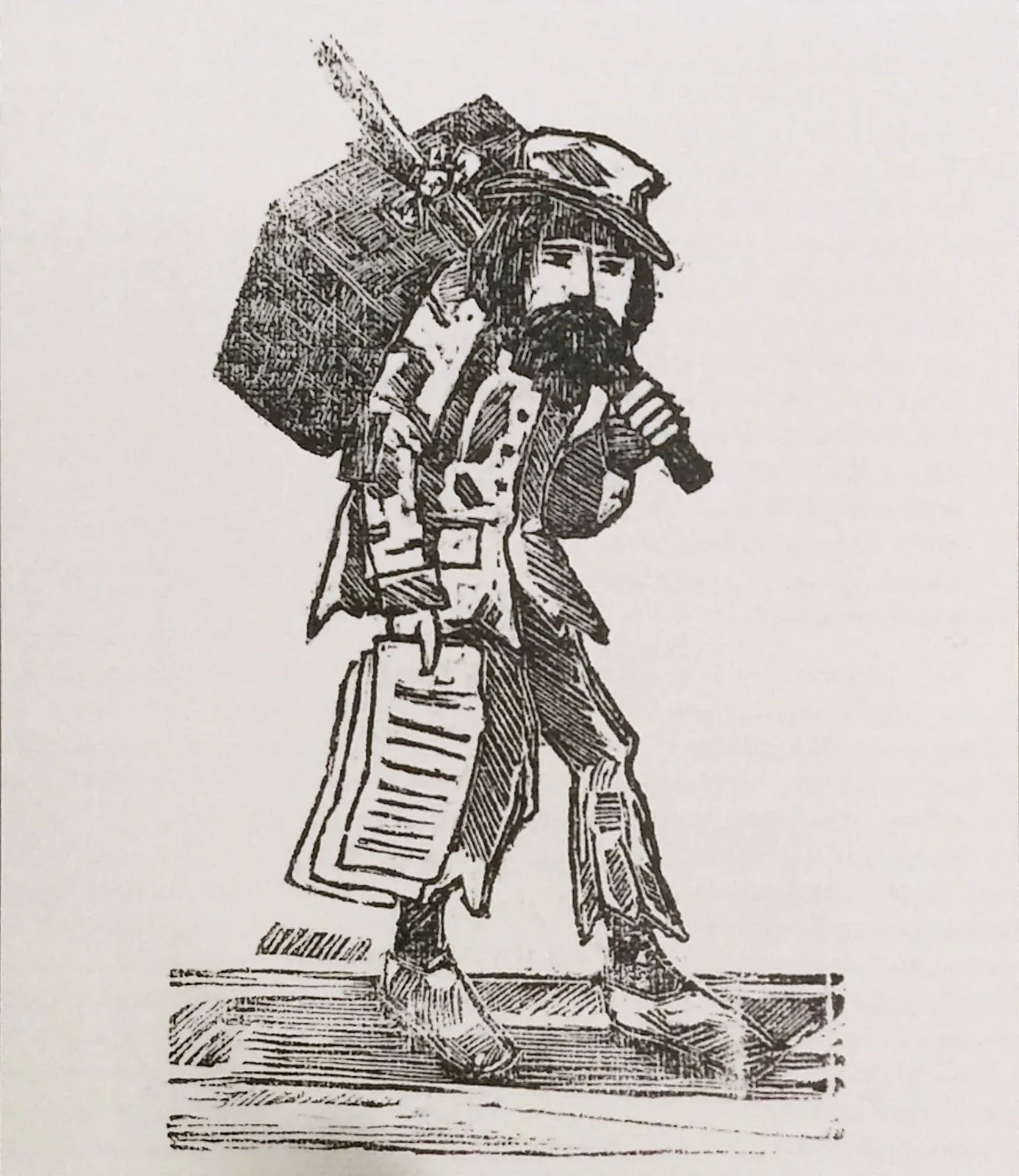
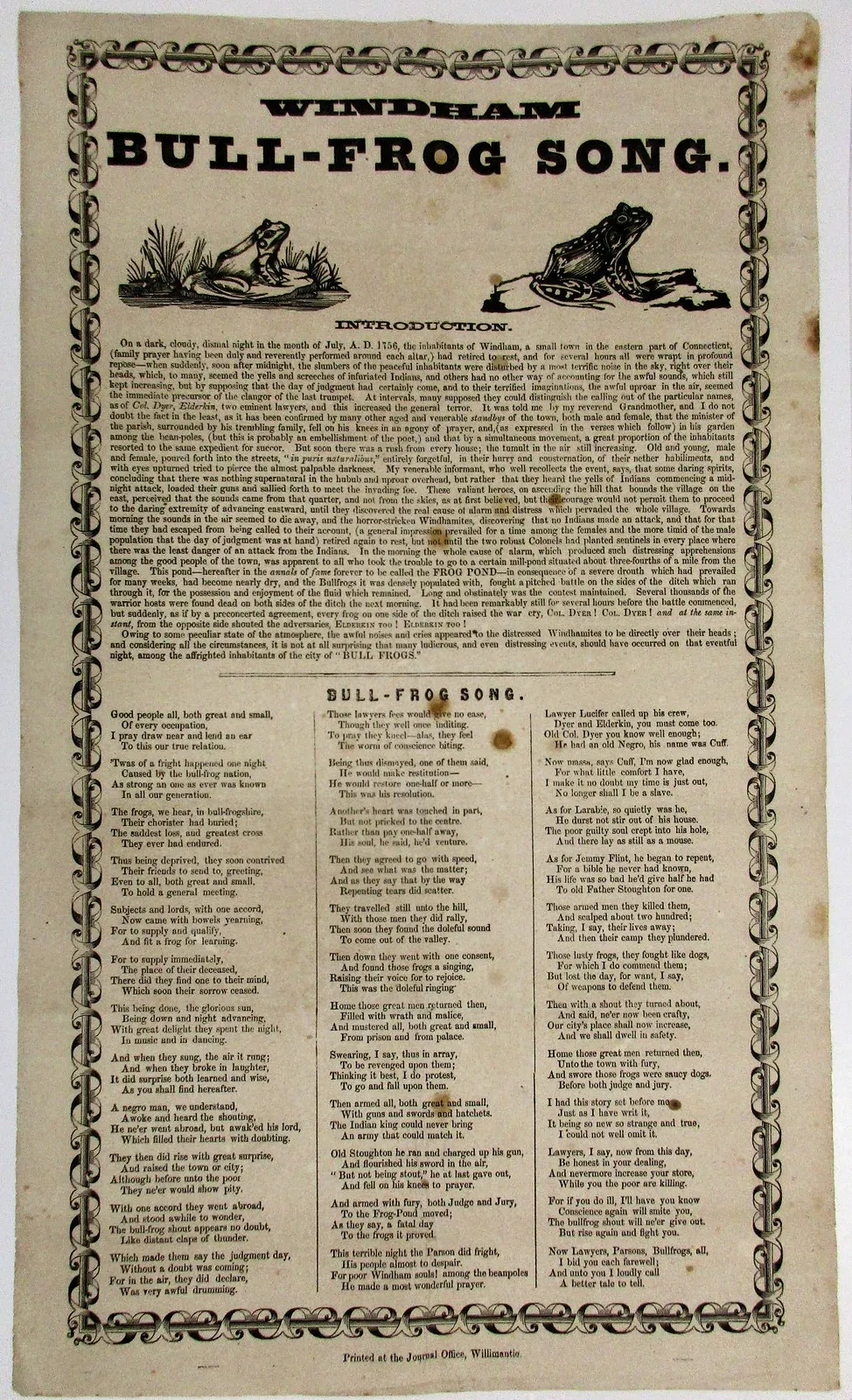
Printing changed the repertoire. Many ballads were sold as broadsides, single sheets printed on one side that were among the most common forms of print in Britain, Ireland and North America between the 16th and 19th centuries. They were cheap to produce, often carried a woodcut and were sold on the street by pedlars.
Collectors and the Child canon, 1765-1898
Interest in the songs grew in the 18th century, perhaps prompted in part by social change such as the enclosure of common land, since many ballads concern rural labourers. Thomas Percy published Reliques of Ancient English Poetry in 1765. Samuel Pepys and Robert Harley had already put together large collections of printed ballads. In Scotland, Walter Scott began collecting while a student at Edinburgh and published Minstrelsy of the Scottish Border in 1802 and 1803, while Robert Burns worked with James Johnson on the Scots Musical Museum. Scott argued for removing “obvious corruptions” to restore a supposed original text, a view later scholars rejected because every recitation is a new composition.
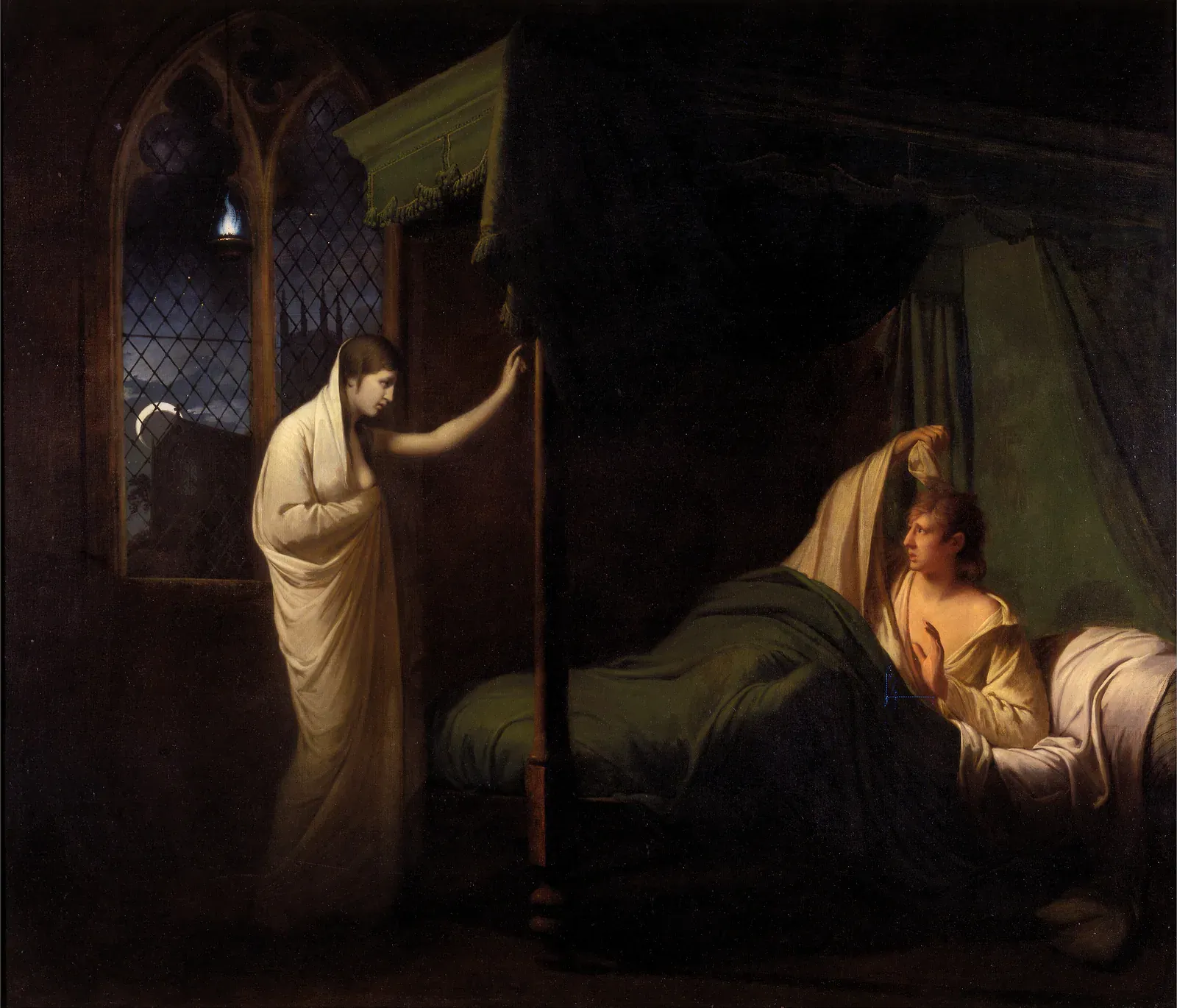
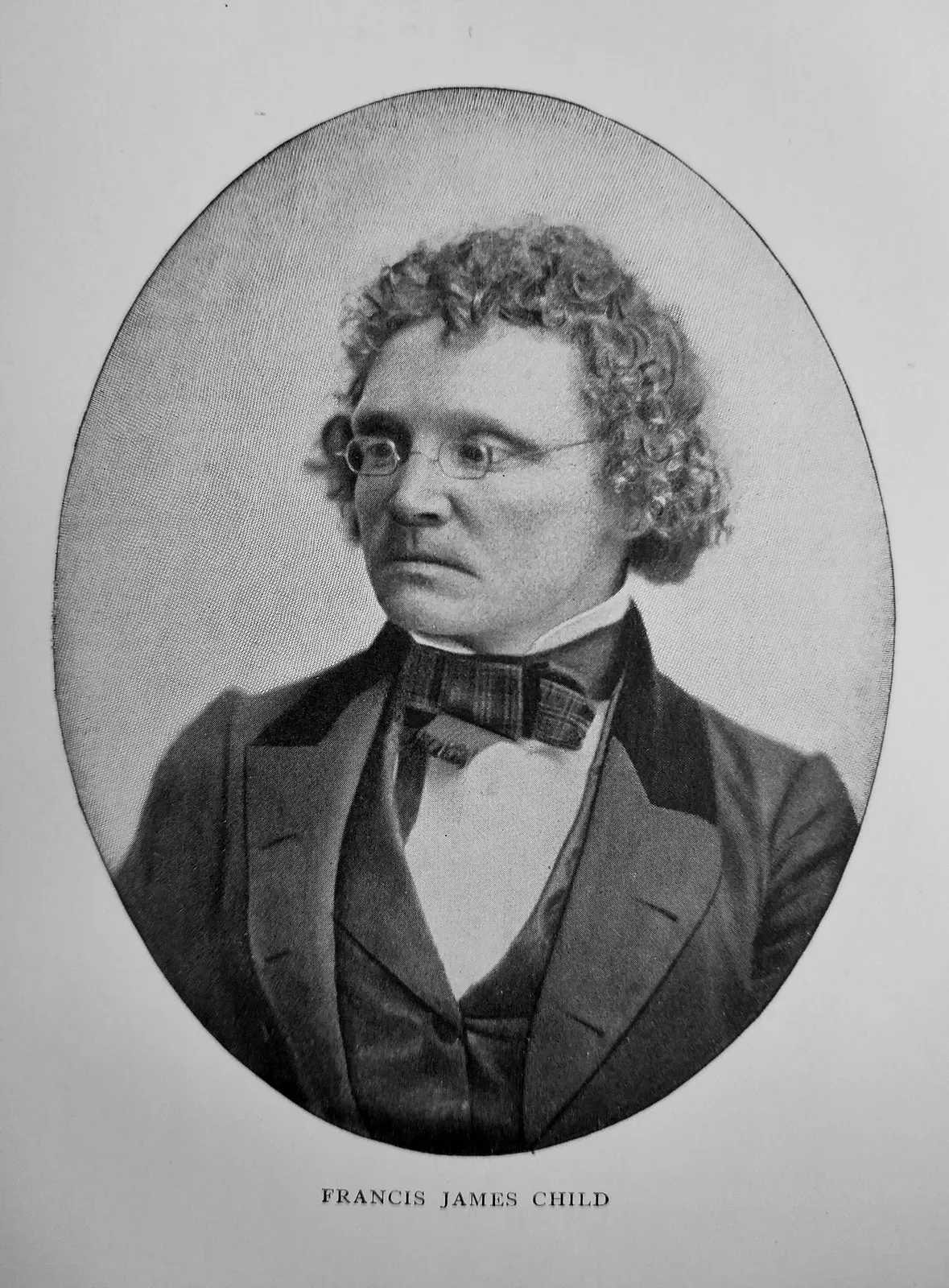
The decisive work was done by Francis James Child, a Harvard professor who became its first professor of English in 1876. His The English and Scottish Popular Ballads appeared in five volumes between 1882 and 1898 and fixed 305 ballads, each with a Child number and its variants set side by side. Child died before writing a commentary, so how he chose and rejected songs is uncertain. The Child ballads tend to be darker than other ballads, with supernatural visitors, forbidden love, family feuds, outlaws and murder as recurring subjects.
Fieldwork and the American survival, 1899-1951
Ballads crossed the Atlantic with settlers. Around 300 ballads sung in North America have been identified as descending from Scottish traditional or broadside songs, and The Streets of Laredo is the same song as The Unfortunate Rake, found in England, Ireland and Scotland. A further 400 or so originated in America, among them The Ballad of Davy Crockett and Jesse James, and these tend to show more interest in occupations and a more journalistic tone than their British cousins. The blues ballad, a fusion of Anglo-American and Afro-American styles, produced anti-heroes such as John Henry and Casey Jones, usually with banjo and guitar.
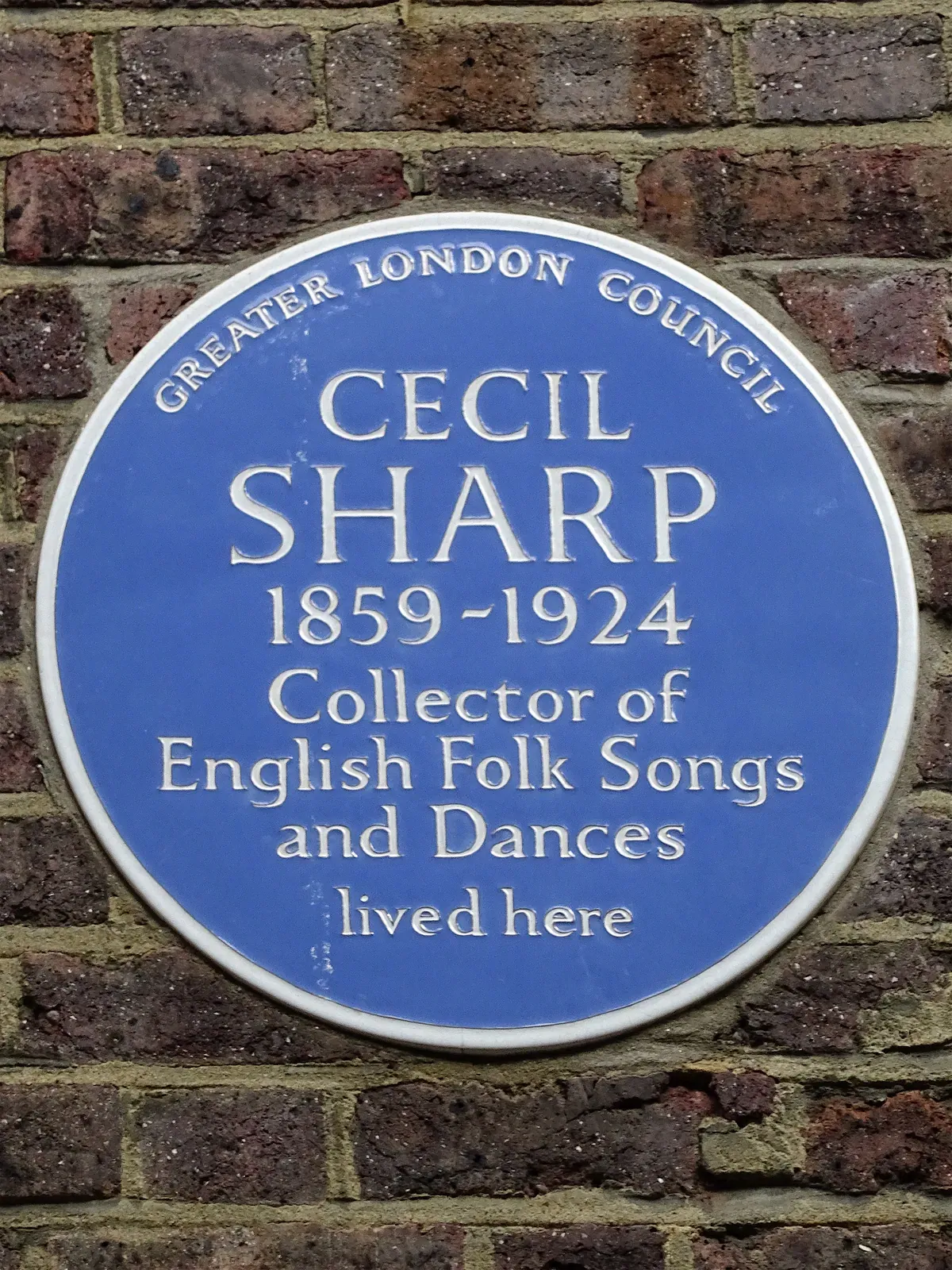
The English collector Cecil Sharp, who had co-founded the English Folk Dance Society in 1911, went to the Southern Appalachians with his collaborator Maud Karpeles in 1916. Over three expeditions to 1918 they gathered British-origin ballads that were still being sung there, following earlier work by Olive Dame Campbell and others.
Folk revival and folk rock, from 1952
The mid-century revival put the ballads on records. Harry Smith’s Anthology of American Folk Music, issued by Folkways in August 1952, opened with a ballads section and became a reference point for the 1950s and 1960s revival. Burl Ives had already recorded two Child ballads on an album in 1949. In 1956 Ewan MacColl and A. L. Lloyd released four albums of 72 Child ballads, the first large recorded survey of the canon.
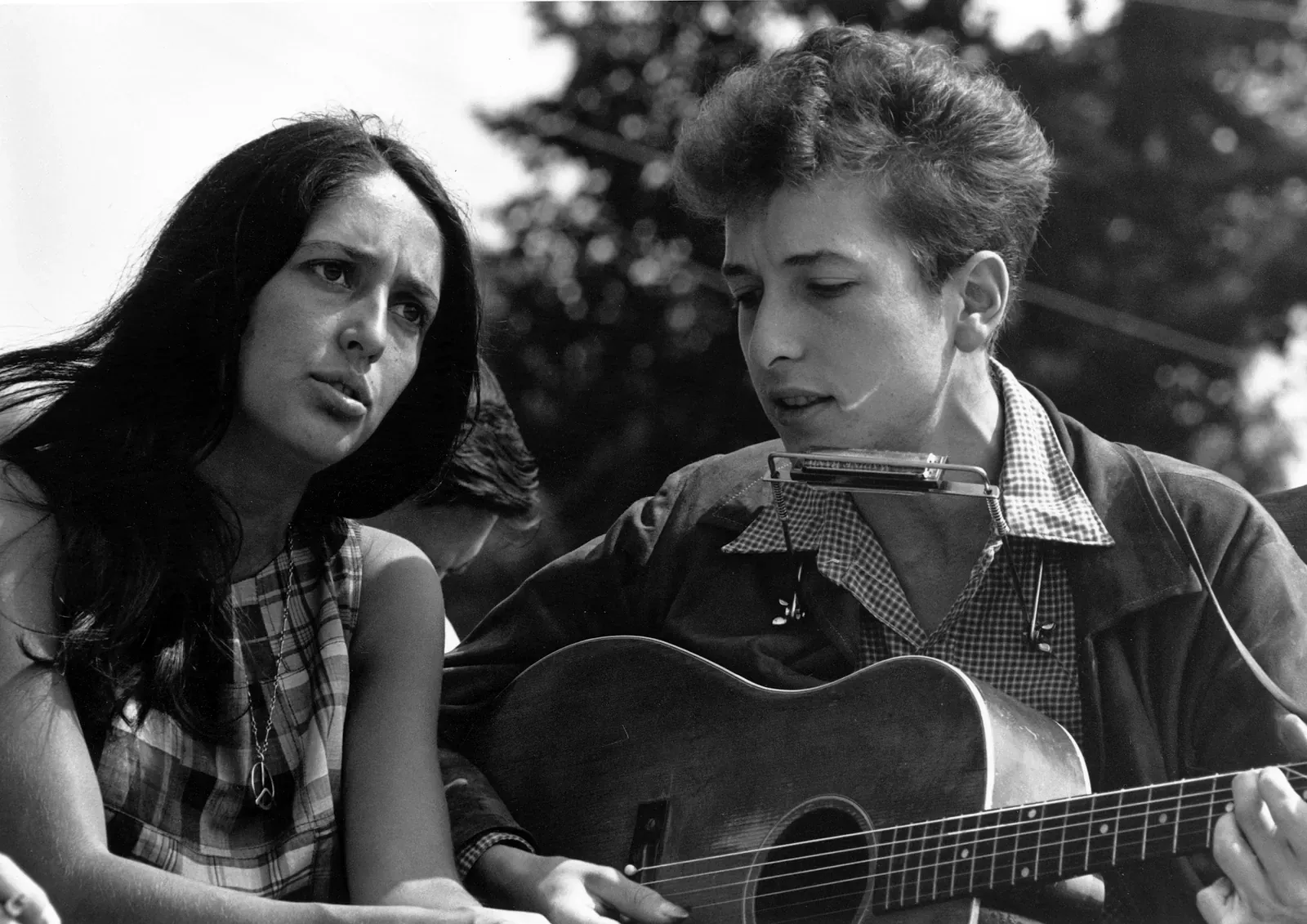
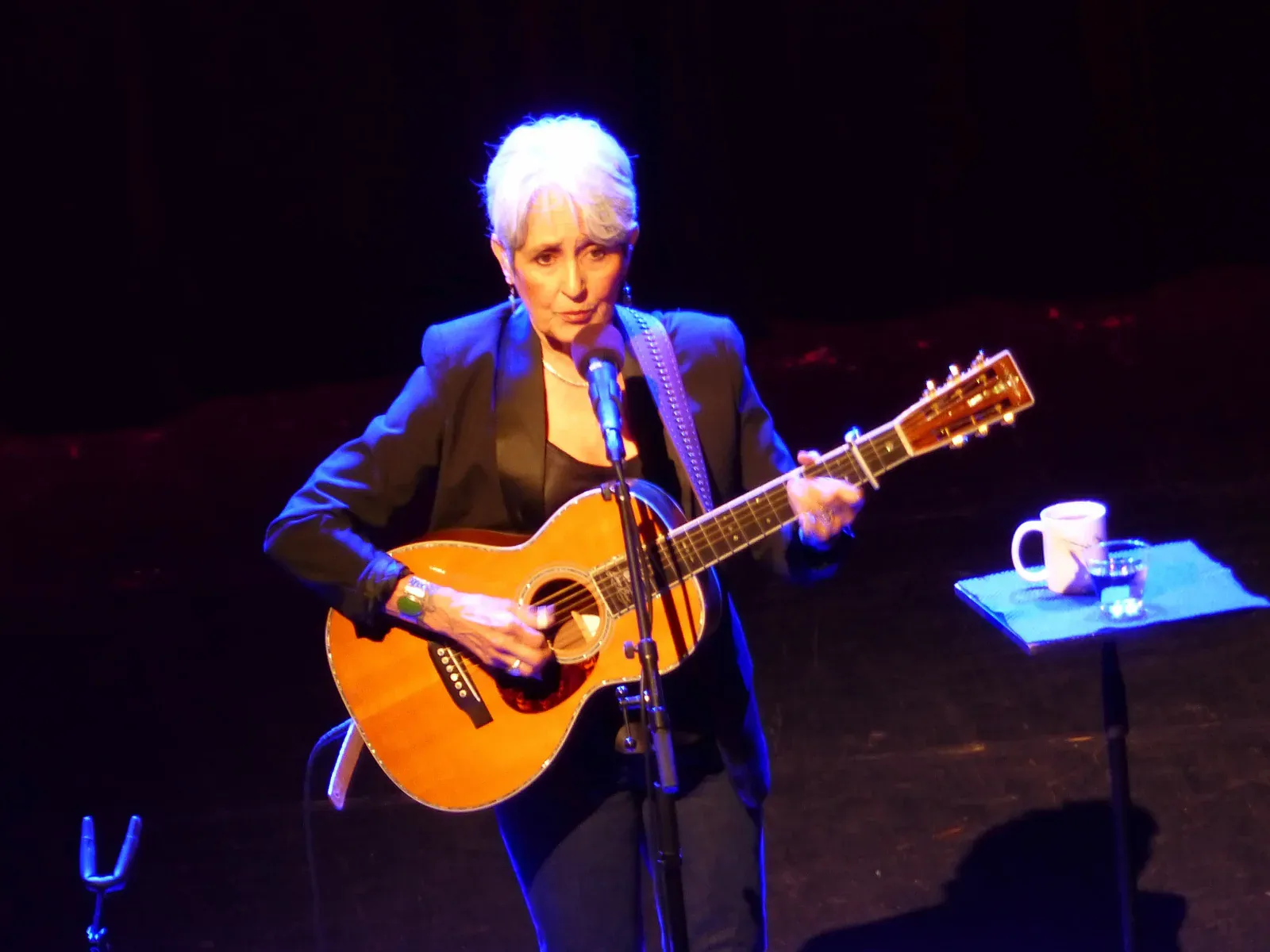
Joan Baez did most to take them to a wide audience. She sang ten Child ballads across her first five albums, and the second, Joan Baez, Vol. 2, was released by Vanguard in 1961, reached number 13 on the Billboard album chart and was nominated for a Grammy. Shirley Collins and Martin Carthy kept the English repertoire at the centre of the British revival, and in 2003 June Tabor recorded an entire album of Child ballads.
In Britain, Fairport Convention, Pentangle and Steeleye Span drew heavily on the Child ballads and turned them into the repertoire of folk rock. The wider folk revival and the national traditions of English folk, Scottish folk, Irish traditional music and American folk each hold their own share of the repertoire.
Characteristics
Ballads have no prescribed structure, but many use four-line stanzas of alternating eight- and six-syllable lines, known as ballad meter, with the second and fourth lines rhymed. A story is told concisely and through imagery rather than description, and the subject may be tragic, historical, romantic or comic. Repetition is common: a refrain, a repeated fourth line, or a whole stanza that returns. The songs are strophic, so one tune carries every verse.
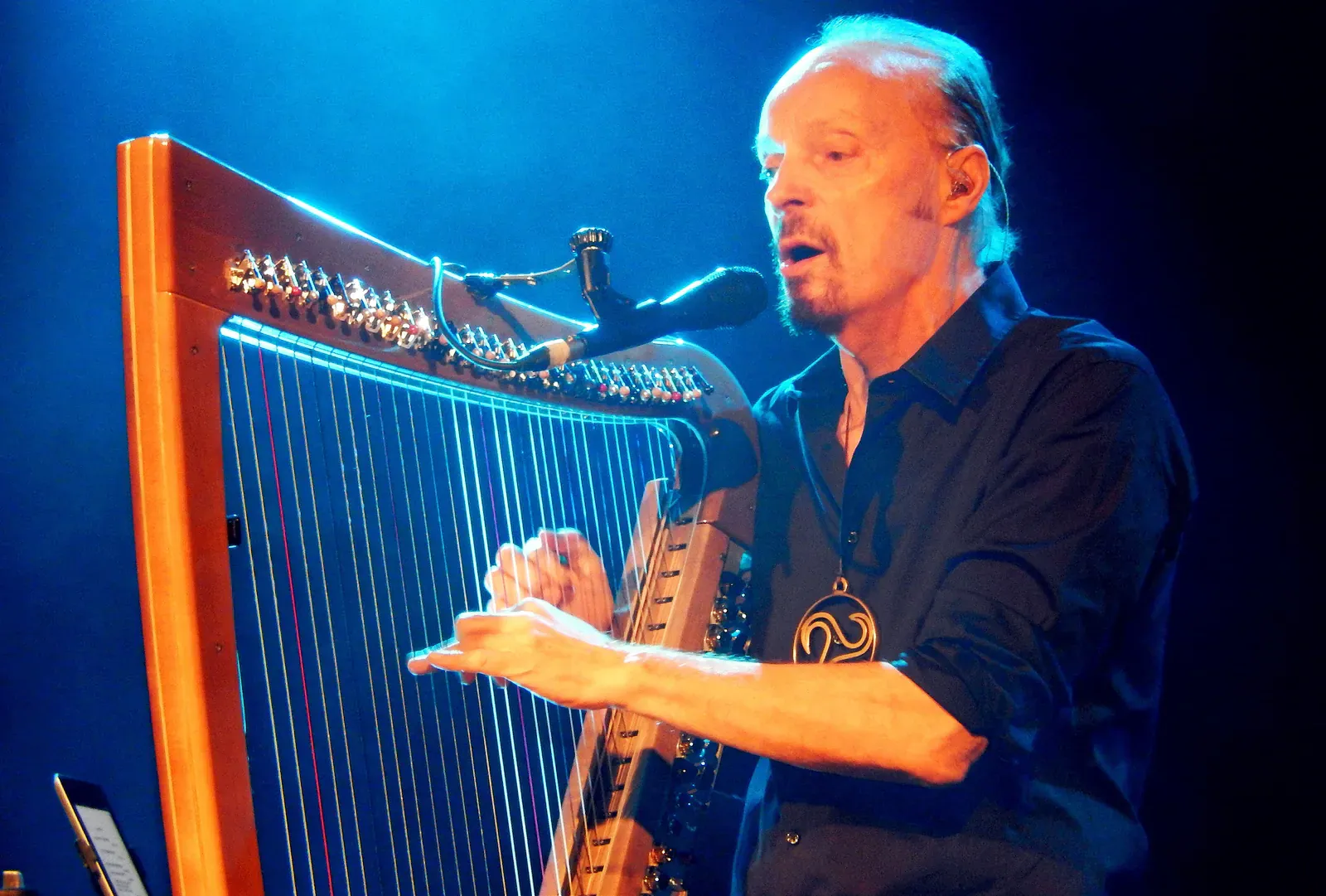
Because the songs travelled orally, they have no known author and no correct version, and each exists in many variants. The language usually follows the dialect of the region. Scottish ballads keep supernatural elements, such as the journey to the fairy kingdom in Tam Lin, and Robin Hood is the hero of many English ones. Tempo varies widely with the singer. Recordings of the best-known ballads run from roughly 80 beats per minute for a slow unaccompanied reading to about 140 for a brisk guitar setting.
Notable recordings
Baez’s Barbara Allen (Child 84) is the best-known revival reading: a young woman’s cold refusal of a dying man, sung to her own guitar. Fairport Convention’s Matty Groves, on the 1969 album Liege and Lief, took a murder ballad of adultery and a jealous husband and gave it an electric band, Sandy Denny’s lead vocal and Dave Swarbrick’s violin. The album was the first on which all songs were adapted from traditional British and Celtic material or written in that style, and it was later voted the most influential folk album at the BBC Radio 2 Folk Awards in 2006.
Pentangle’s Cruel Sister, released in November 1970 on Transatlantic, was their most folk-based album, with every track a version of a traditional song, produced by Bill Leader, known for recording folk musicians. Its Lord Franklin, sung by John Renbourn, is a version of the ballad about Sir John Franklin’s lost expedition to find the Northwest Passage, also called Lady Franklin’s Lament.
Legacy
Child ballads turn up well outside folk. Lead Belly sang The Maid Freed from the Gallows as Gallis Pole, and Led Zeppelin used it as Gallows Pole on their third album. Versions of Barbara Allen have been recorded by the Everly Brothers and Art Garfunkel.
Misconceptions
A ballad is not necessarily a slow love song. That sense arose only in the later 19th century and now covers any sentimental pop or rock slow number, whereas the traditional ballad is defined by story and stanza form, and many are bloody or comic.
Ballads are also not all medieval relics. Child’s own collection shows that the majority date to the 17th and 18th centuries, and the tunes are often younger than the words.
Finally, there is no single authentic text to be restored. Collectors such as Scott treated variants as corruptions, yet recomposition in performance is how the form works.
Frequently asked questions
What is a ballad in music?
A ballad is a narrative song, usually in rhymed four-line stanzas, that tells one self-contained story. Traditional ballads were transmitted orally in England, Scotland and Ireland and later in North America.
What is a Child ballad?
A Child ballad is one of the 305 English and Scottish traditional ballads, with their American variants, collected by Francis James Child between 1882 and 1898. Each has a Child number, such as 84 for Barbara Allen.
How is a traditional ballad different from a power ballad?
A traditional ballad is defined by its story and stanza form and was passed on by ear, while the slow love songs of pop and rock took the same word in the later 19th century. The sentimental ballad is a popular song form, not a descendant in style.
Which artists sing traditional ballads?
Revival singers and groups such as Joan Baez, Ewan MacColl, Shirley Collins, Martin Carthy, Fairport Convention and Pentangle recorded many of the Child ballads.
Sound
Sound sheet
Signature sounds
- Four-line stanzas with rhymed second and fourth lines
- A self-contained story told in plain narrative
- Repeated refrain or repeated fourth lines
- Many variants of one song
Techniques
- Strophic repetition
- Oral variation
- Refrain and repeated lines
Keys and modes
E. Key of Fairport Convention's Matty Groves.
F. Key of Shirley Collins's and Jean Ritchie's Barbara Allen.
Vocals
Solo narrative singing of a self-contained story, unaccompanied or with light guitar or fiddle.
Scenes
Where it happened
Where and when the sound lived: one bar per city on a shared timeline.
Europe
North America
Active scenes
Peak 3, 1911-2025
Walter Scott, a collector since his student days at the university, published Minstrelsy of the Scottish Border here.
At Harvard, Child became the university's first professor of English in 1876 and turned to the ballad collection.
Cecil Sharp co-founded the English Folk Dance Society in 1911, later part of the English Folk Dance and Song Society.
Culture
Culture markers
- Dance refrains
Early ballads accompanied dances, with refrains sung by the dancers in time with the steps.
Dance - Woodcut broadsides
Printed ballad sheets carried woodcut illustrations and were sold cheaply by pedlars.
Artwork
Media
Key media
- 1765Reliques of Ancient English Poetry
by Thomas Percy. Early printed collection of popular ballads that inspired later collectors.
Book - 1802Minstrelsy of the Scottish Border
by Walter Scott. Three-volume Border ballad collection issued 1802 and 1803.
Book - 1882The English and Scottish Popular Ballads
by Francis James Child. Five volumes published 1882 to 1898 that fixed the canon of 305 ballads.
Book
Glossary
Terms on this page
Four-line stanza alternating eight and six syllables, usually with the second and fourth lines rhymed.
Single sheet printed on one side with a ballad, news or rhyme, sold cheaply from the 16th to the 19th century.
Index number from Francis James Child's collection of 305 English and Scottish ballads; Barbara Allen is Child 84.
Repeated line or lines, which began as the part sung by dancers in the early dance-song ballads.
One of many versions of the same ballad, since oral transmission means no ballad has a single correct text.
Folk family