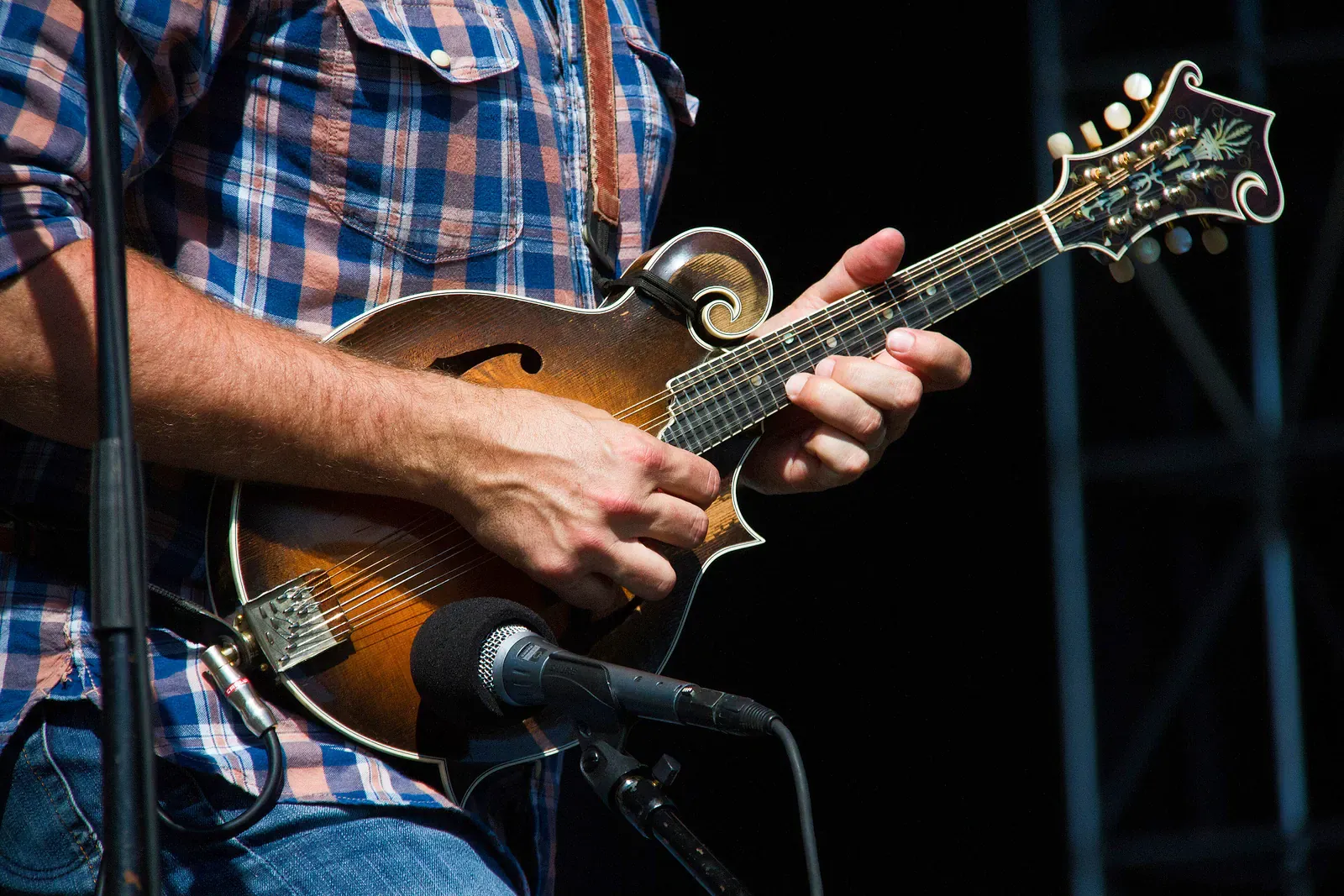
Hillbilly music
Hillbilly music was the record-industry name for white rural Southern music from the mid-1920s to the 1950s, the first commercial phase of country music.
Appalachia, 1925
Country family
Born
1925
Appalachia
Subgenres
4
Documented branches
Links
13
Genres it drew on or shaped
Tempo
95-140 BPMLineage
Family tree
Grew out of
- Old-time music
Derived from
- Appalachian music
Derived from
- String band music
Derived from
Influenced by
Appalachia, 1925
Hillbilly music
Led to (7)
Timeline
Era by era
From the first sparks to today. Select a dot to read the story behind it.
- First records and radio barn dances
1922 to 1926
- Bristol, Camden and the first singing stars
1927 to 1932
- Opry radio and singer-led acts
1933 to 1943
- Hillbilly boogie and the rename
1944 to 1958
Eras
Moments
- 1 First records and radio barn dances, 1922 to 1926
- 2 Bristol, Camden and the first singing stars, 1927 to 1932
- 3 Opry radio and singer-led acts, 1933 to 1943
- 4 Hillbilly boogie and the rename, 1944 to 1958
1922
First records and radio barn dances
Fiddlers recorded for Victor in 1922 and Okeh in 1923, Vernon Dalhart sold a million with a 1924 Victor record, and the WSM Barn Dance began in Nashville in 1925, proving a market for rural Southern music.
- 1892Hillbilly appears in printThe word is first recorded in The Railroad Trainmen's Journal in July 1892, long before it named a kind of record.
- 1922Robertson and Gilliland record for VictorFiddlers Eck Robertson and Henry Gilliland cut Arkansas Traveler and Sallie Gooden on 30 June, issued in 1923, an early country instrumental record.
- 1923Fiddlin' John Carson records for OkehIn Atlanta, Carson cuts The Little Old Log Cabin in the Lane; 500 pressed copies sell out in weeks and convince Ralph Peer of the market.
- 1924Dalhart's Prisoner's SongVernon Dalhart's Victor single of The Prisoner's Song and Wreck of the Old 97 becomes the first country record to sell a million.
- 1924Uncle Dave Macon's first recordsMacon and fiddler Sid Harkreader record 18 songs for Vocalion in New York from 8 July.
- 1925Electrical recordingThe new method lets quieter instruments such as guitars be heard and makes field recording trips practical.
- 1925Al Hopkins names the musicPianist Al Hopkins, leader of the Hill Billies, coins the label hillbilly music, which then persists into the 1950s.
- 1925WSM Barn Dance begins in NashvilleThe radio show, later the Grand Ole Opry, starts on 28 November with 77-year-old fiddler Uncle Jimmy Thompson.
1927
Bristol, Camden and the first singing stars
Ralph Peer's 1927 Bristol sessions brought out Jimmie Rodgers and the Carter Family. Rodgers recorded Blue Yodel No. 1 in Camden that November, and the genre's first nationwide stars were singers rather than string bands.
- 1927Bristol sessionsVictor producer Ralph Peer records artists in Bristol, Tennessee, including the commercial debuts of Jimmie Rodgers and the Carter Family.
- 1927Rodgers records Blue Yodel No. 1At a second session in Camden, New Jersey, Jimmie Rodgers cuts T for Texas, which makes him a national star.
1933
Opry radio and singer-led acts
Record sales fell in the Depression while barn dance radio grew. The Grand Ole Opry's star system favoured singers such as Roy Acuff, whose 1938 Wabash Cannonball moved the music from hoedown bands to a singer-led format.
- 1933Jimmie Rodgers diesRodgers dies of tuberculosis on 26 May, aged 35, after about 120 recorded songs.
- 1938Roy Acuff's Wabash CannonballRoy Acuff and His Crazy Tennesseans record the railroad song in November; Acuff goes on to host the NBC Opry hour in 1939.
1944
Hillbilly boogie and the rename
Billboard dropped the word hillbilly in 1944 and adopted country and western in 1949, while hillbilly boogie fed rockabilly. The Country Music Association formed in 1958, and the old term faded.
- 1944Billboard drops the word hillbillyThe magazine's chart is retitled folk songs and blues, then country and western in 1949.
- 1945Hillbilly boogie takes offFrom late 1945 releases such as the Delmore Brothers' Freight Train Boogie turn a trickle of boogie records into a flood.
- 1958Country Music Association foundedThe trade body's name helps retire hillbilly in favour of country and western.
Listening path
Start listening
A short path from an easy way in to the deep end. Thumbnails come from YouTube; the player loads only when you press play.
- 01
Jimmie Rodgers, 1927
The record that made Rodgers a star; listen for the yodel breaks between blues verses.
- 02
The Carter Family, 1928
Listen for Maybelle Carter's melody on the bass strings with strums over it.
- 03
Uncle Dave Macon, 1924
A vaudeville banjo showpiece from the first Opry star.
- 04
Roy Acuff, 1938
A singer-led railroad song from the late hillbilly era, the Opry sound at its peak.
Facts
| Family | Country |
| Origin | Appalachia, United States |
| Emerged | 1920s to 1950s |
| Status | Historical |
| Tempo | 95 to 140 BPM |
| Meter | 4/4 |
| Grew out of | Old-time music, Appalachian music, String band music |
| Subgenres | 3 |
Hillbilly music was the recording industry’s name for white rural Southern music in the United States, used from the mid-1920s until country and western replaced it in the 1950s. Its core was the fiddle and banjo string band, the guitar-accompanied ballad, close harmony and the yodel.
It is the first commercial phase of the country family, and the word is now widely felt to be an insult.
Origins
Settlers from England, Lowland Scotland and Ulster carried ballads and dance tunes into the Appalachians over some three centuries, and these fed old-time string band music. Blues, gospel hymns and vaudeville songs were added by the 1920s. The word hillbilly itself is older than the music: it first appears in print in 1892 and by 1900 described a poor, independent mountain dweller. As a musical label it dates from 1925, when pianist Al Hopkins named his band the Hill Billies. Ralph Peer, an Okeh recording director, spread it across catalogues after hearing Southerners use it.
First records and radio, 1922-1926
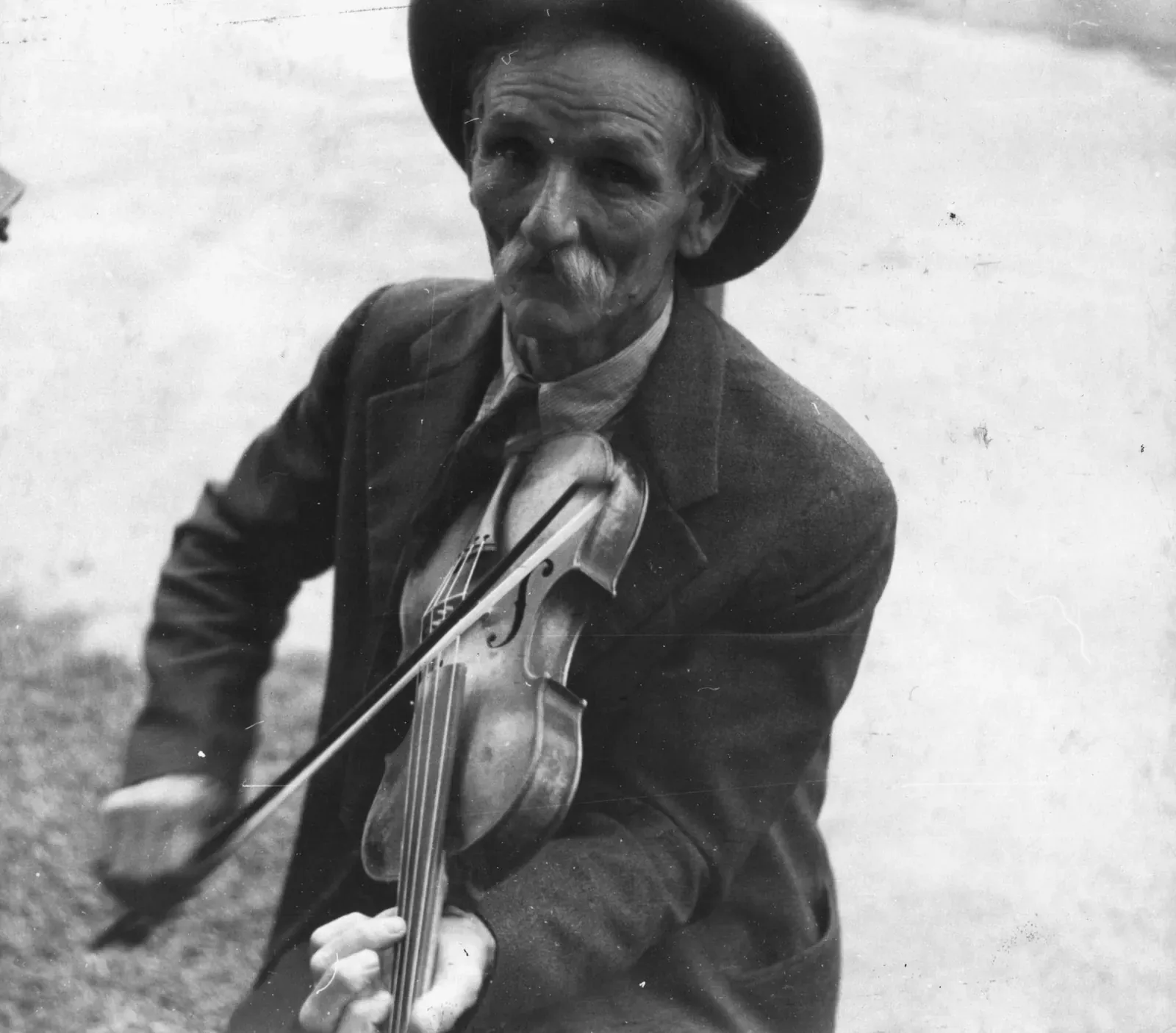
In June 1922 fiddlers Eck Robertson and Henry Gilliland recorded Arkansas Traveler and Sallie Gooden for Victor, issued in 1923. The first big vocal result came in June 1923 in Atlanta, where Fiddlin’ John Carson cut The Little Old Log Cabin in the Lane for Okeh. Peer thought the quality poor, but the 500 copies pressed sold out within weeks, and he saw a market. Carson later sold more than a million copies of two further records.
Vernon Dalhart, a trained light-opera singer from Texas, proved the market was national. His 1924 Victor coupling of The Prisoner’s Song and The Wreck of the Old 97 was the first country record to sell a million. Uncle Dave Macon, a vaudeville banjoist, made his first records for Vocalion in July 1924 and in 1926 became the first real star of the WSM Barn Dance, which began in Nashville on 28 November 1925. Electrical recording, introduced in 1925, let quieter instruments such as guitars be heard and made field recording trips practical.
Bristol and the Victor era, 1927-1932
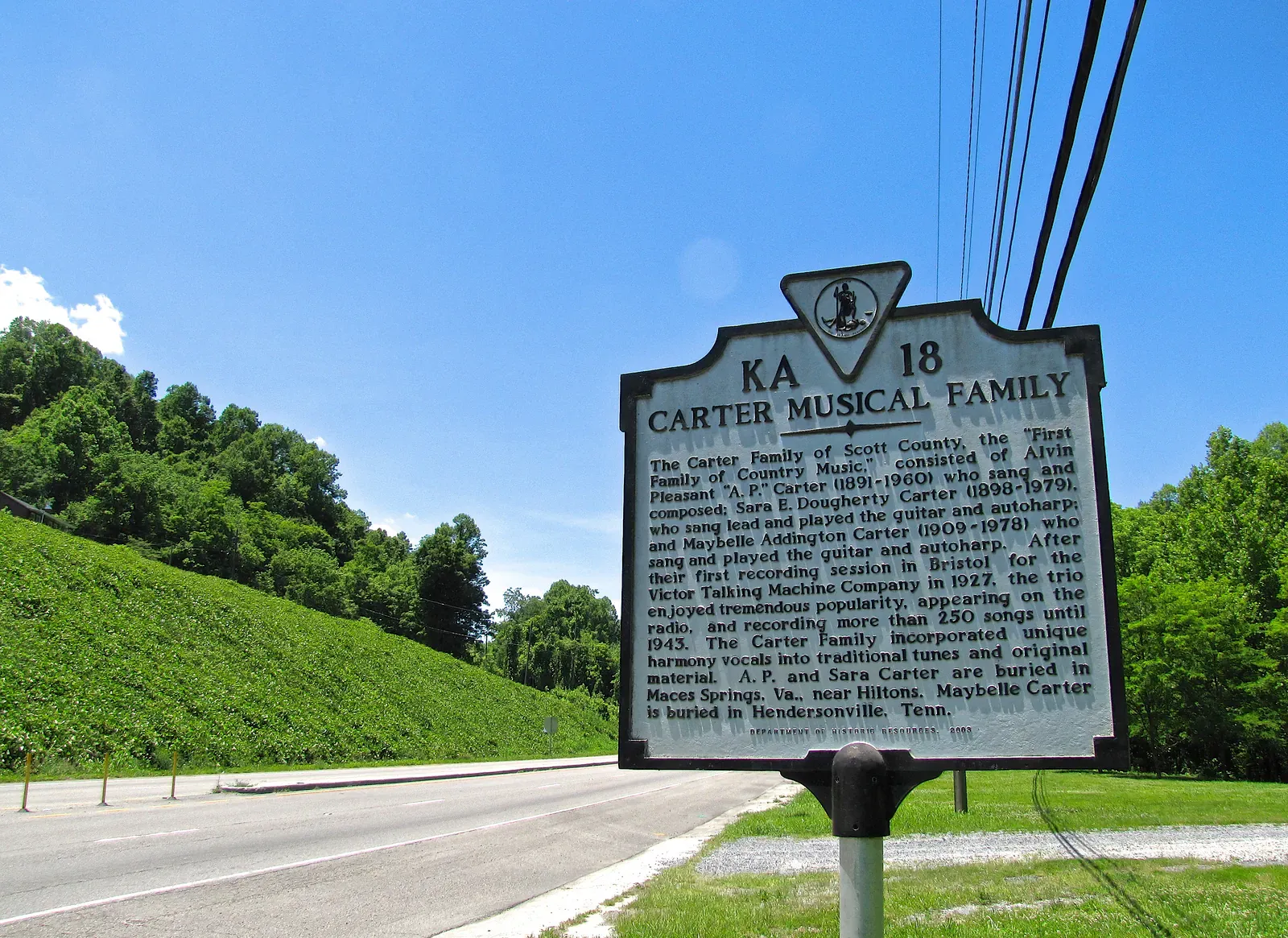
Peer, now at the Victor Talking Machine Company, toured the South in 1927 to record rural talent that could not travel to New York, paying $50 a side plus a royalty. He kept the publishing rights, an arrangement that shaped later record contracts. The Bristol sessions, on the Tennessee and Virginia border, included the commercial debuts of Jimmie Rodgers and the Carter Family, whose first session was on 1 August.
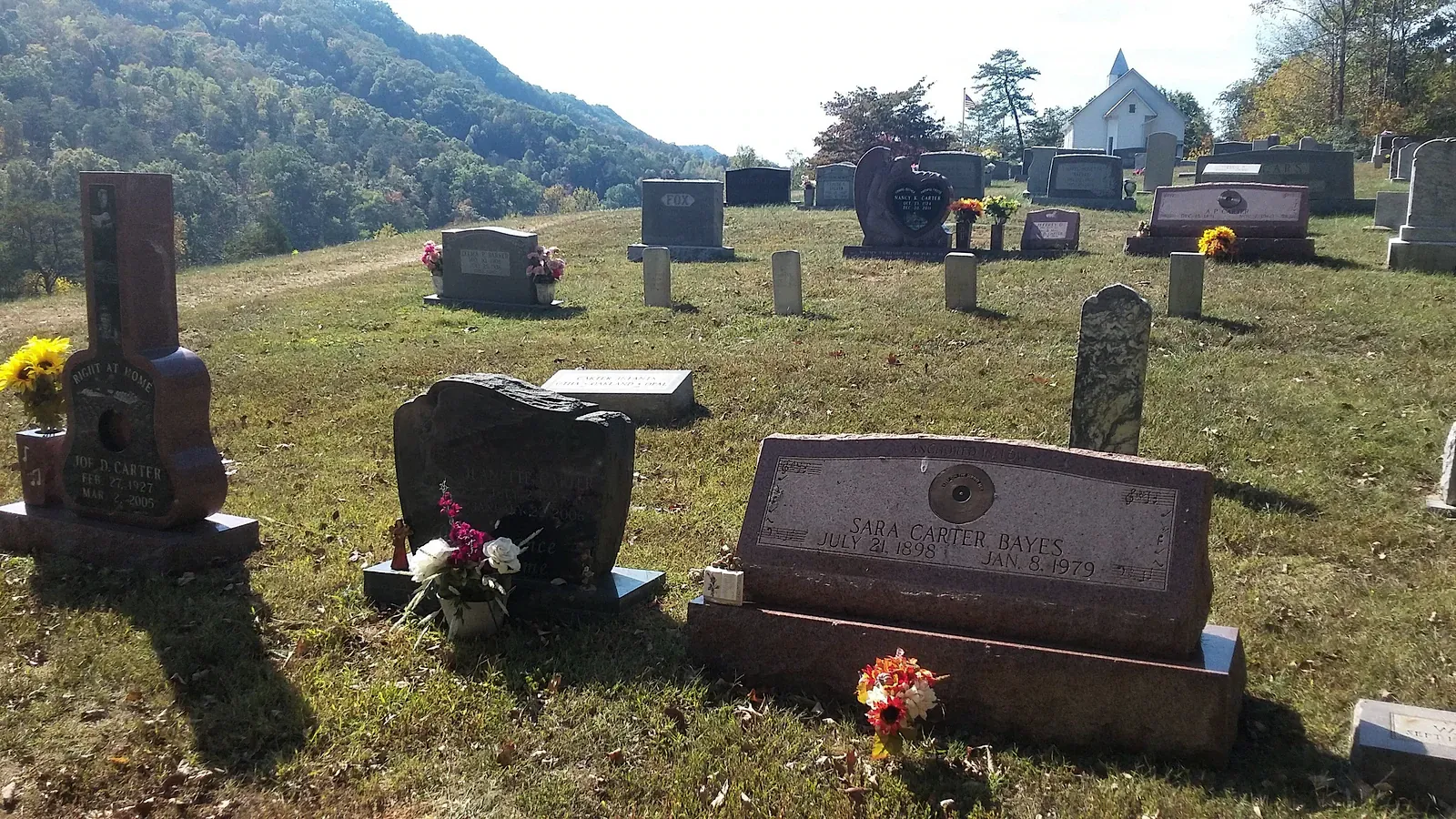
Rodgers had recorded solo after his band deserted him. A second session in Camden, New Jersey, on 30 November produced Blue Yodel No. 1 and made him a national star. He died of tuberculosis on 26 May 1933, aged 35, after about 120 recorded songs. The Carters recorded some 300 songs for the next 17 years. The Opry took its name on 10 December 1927.
Opry radio and singer-led acts, 1933-1943
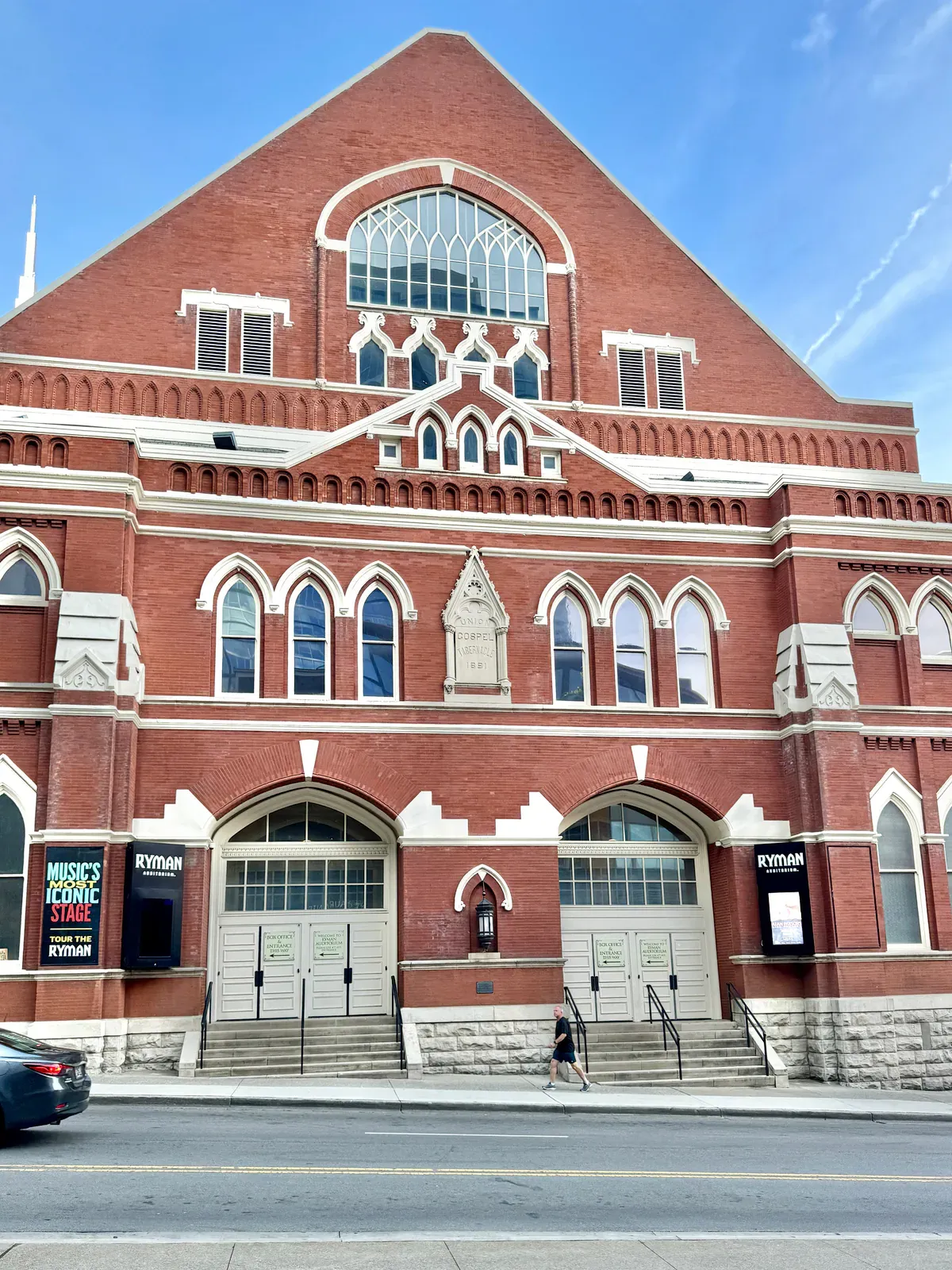
Record sales fell in the Depression, while radio barn dances spread north to Chicago and west to California. The Opry became the centre of the music, with an NBC network hour from 1939 hosted by Roy Acuff, and it moved to the Ryman Auditorium in June 1943. Acuff, whose Wabash Cannonball was recorded in November 1938, is often credited with moving the music from hoedown bands to a singer-led format. Drums were disliked by early performers as too loud; Bob Wills added them to his band by 1935 against Opry opposition.
Hillbilly boogie and the rename, 1944-1958
Billboard dropped hillbilly in 1944 for folk songs and blues, then adopted country and western in 1949. From late 1945 hillbilly boogie, such as the Delmore Brothers’ Freight Train Boogie, grew from a trickle to a flood and pointed toward rockabilly. By the end of the war bluegrass had emerged with Bill Monroe, Lester Flatt and Earl Scruggs. Hank Williams and many fans disliked the label, and when the Country Music Association formed in 1958 the old word faded.
Characteristics
Songs mixed sentimental parlour ballads, comic vaudeville numbers, blues, traditional folk songs and new compositions; ethnomusicologist Norm Cohen sorted Rodgers’ catalogue into those five groups. Subjects were railroads, prisons, disasters, mothers and home. The Wreck of the Old 97 retells a real derailment in Virginia in 1903 that killed 11 crew. Vocals ranged from plain solo delivery to close family harmony, as in the Carters’ simple arrangements, and Rodgers’ yodel, set in 4/4 rather than alpine 3/4, tied the music to the blues.
Instruments and production
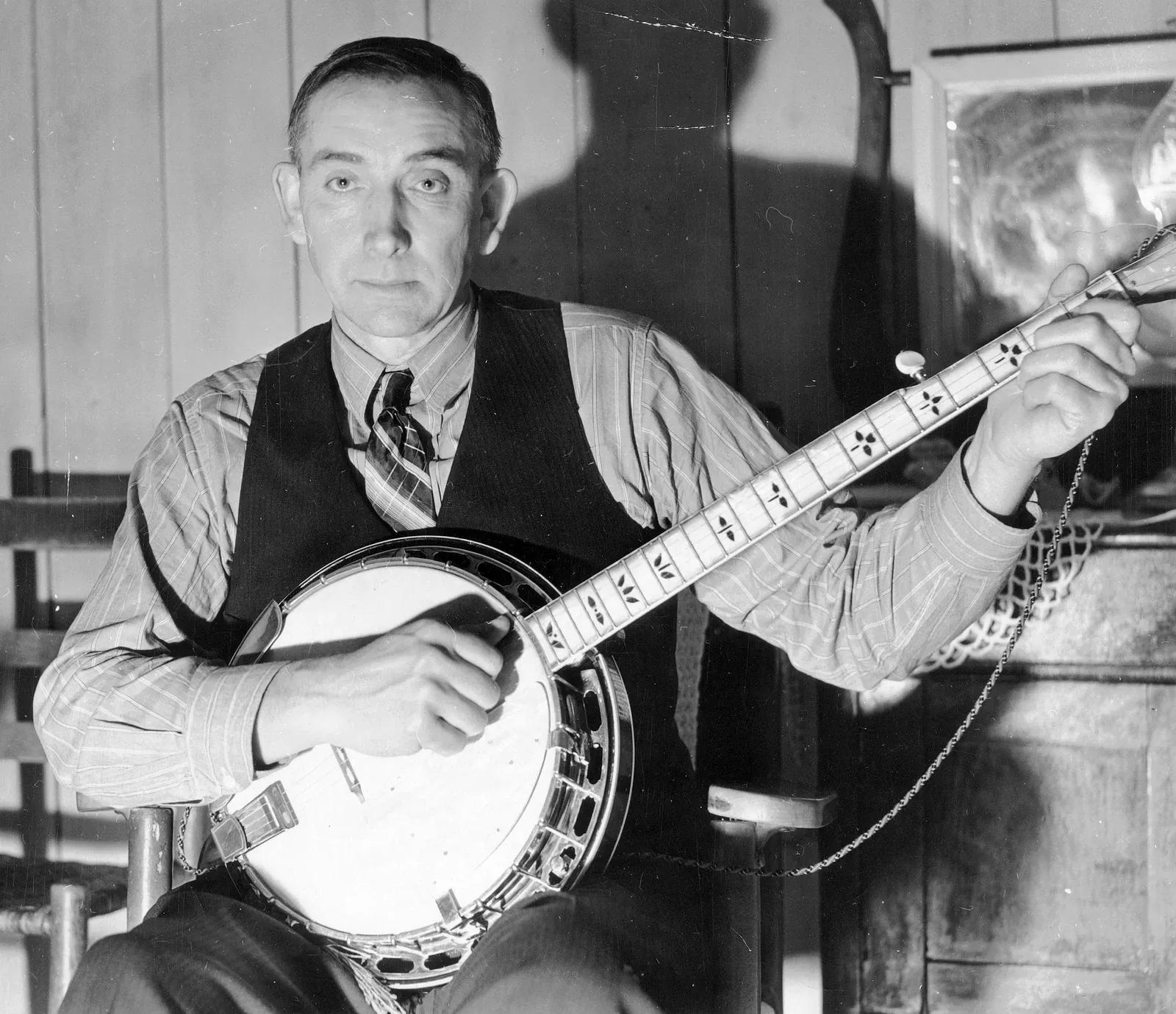
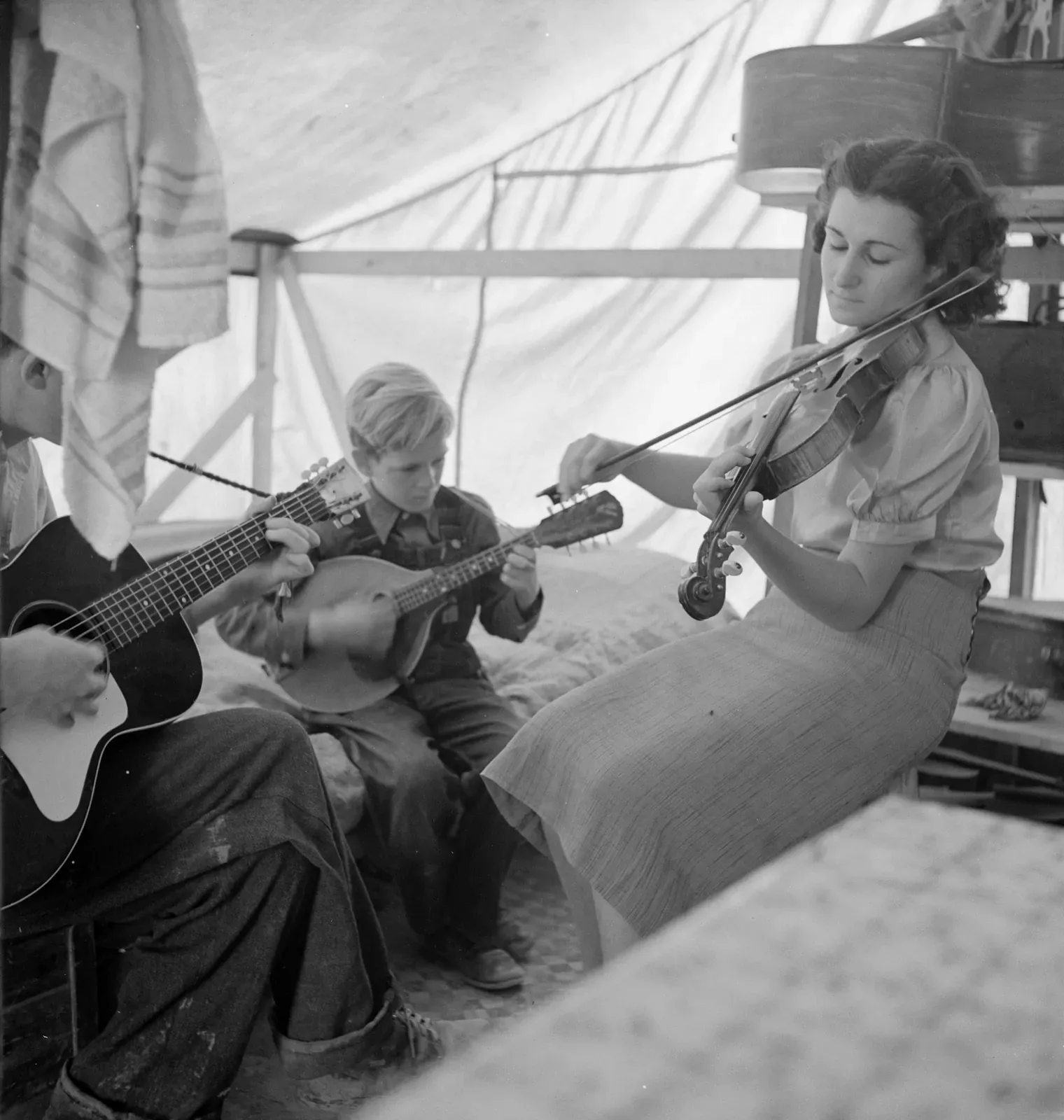
String bands built around fiddle, banjo, guitar and often mandolin played melody together, without improvised solo breaks. Before the Carter Family the guitar was rarely a lead instrument; Maybelle Carter’s thumb-picked bass melody with brushed strums became widely copied. Hawaiian steel guitar entered country music as early as 1922. The acoustic horn gave way to microphones after 1925.
Mainstream success
Hillbilly records sold well for the era: Dalhart’s million, Carson’s two million-sellers and Rodgers’ Blue Yodel No. 1, which became his best seller. The Hill Billies were first to play New York, first to play for a president and first to appear in a movie short. Radio gave stars a national audience, and singing cowboys such as Gene Autry extended it through film. A genuine crossover came in 1951, when Tony Bennett’s pop version of Hank Williams’ Cold, Cold Heart introduced Williams’ songwriting to mainstream audiences. The backlash was cultural rather than commercial, as the term carried a stereotype of ignorance and violence.
Notable recordings
Carson’s 1923 record was made in an empty building on Nassau Street in Atlanta with the old acoustic horn. Okeh dealer Polk Brockman had spotted Carson in a newsreel of a fiddlers’ contest and talked Peer into the session. The record was first sold from the stage at a fiddlers’ convention.
Dalhart took The Prisoner’s Song from a folk song he heard from his cousin Guy Massey and paired it with The Wreck of the Old 97 on a Victor single released in the autumn of 1924. Buyers wanted the Prisoner’s Song most, and the record passed a million.
Blue Yodel No. 1 (T for Texas), recorded in Camden, is a twelve-bar blues with guitar only, a yodel between stanzas, and a title that gave him the name America’s Blue Yodeler. It started a series of thirteen Blue Yodels.
Culture
Fiddlers’ conventions, such as the Mountain City convention of 1925, were where local players built followings. Radio barn dances brought the same atmosphere to living rooms on Saturday nights. Rodgers dressed as a railroad brakeman and later in cowboy hats and western clothes, choosing outfits by the audience. Between the 1930s and 1950s many Appalachians moved to Chicago, Cleveland, Akron and Detroit along the so-called Hillbilly Highway, taking the music with them.
Legacy
Hillbilly music split into bluegrass, honky-tonk, western swing, rockabilly and the pop-facing Nashville sound, and almost every country performer cites Rodgers or the Carters. Doc Watson, Clarence White and Norman Blake all name Maybelle Carter as inspiration. Bristol is formally recognised by the US Congress as the birthplace of country music, and a museum there opened in 2014. Neighbouring styles that shared its early records include western and country blues.
Misconceptions
One myth is that Appalachians called their own music hillbilly music. They did not; the term was an industry label applied from outside. A second is that Rodgers and the Carters made the first country records, when Robertson, Carson and Dalhart had recorded years earlier. A third is that the music was untouched folk song. Dalhart trained for opera, Rodgers drew on jazz, blues, vaudeville and Hawaiian music, and many hillbilly performers recorded blues; Gennett even filed a 1927 recording by Black fiddler Jim Booker as made for hillbilly and sold it to white buyers.
Frequently asked questions
What is hillbilly music?
Hillbilly music is the name the record industry gave to white rural Southern music in the 1920s and 1930s, built on string bands, ballads and yodelling. It is the early form of country music.
Why was hillbilly music renamed country music?
Billboard dropped hillbilly in 1944 and adopted country and western in 1949. The word was felt to be an insult, and the Country Music Association’s 1958 founding fixed the new name.
Who made the first hillbilly record?
Fiddlers Eck Robertson and Henry Gilliland recorded the first country instrumental in 1922. Fiddlin’ John Carson’s 1923 Atlanta record is the first widely counted vocal one.
How is hillbilly music different from country music?
They overlap in time and repertoire. Hillbilly music names the commercial phase to about 1958, led by string bands and singers like Rodgers, before electric instruments and drums became standard in country.
Sound
Sound sheet
Signature sounds
- Fiddle and banjo string band
- Yodel breaks between verses
- Guitar melody on the bass strings with brushed strums
- Railroad, prison and parlour ballads
Techniques
- Carter scratch
- Blue yodel
- Banjo frailing
- Unison string band playing
Tuning
Fiddles and banjos often set to cross-tunings for one key, held through a whole session
Vocals
Solo ballads and sentimental songs, close harmony trios and duets, and yodel breaks.
Scenes
Where it happened
Where and when the sound lived: one bar per city on a shared timeline.
North America
Active scenes
Peak 3, 1927-1957
Home of Fiddlin' John Carson and the Okeh dealer who brought the first field recording trip south.
WSM's barn dance, later the Grand Ole Opry, made the city the centre of the music.
A Tennessee and Virginia border town, site of the 1927 sessions called the birthplace of country music.
Venues and places
Nashville, 1925 to today. Fifth-floor studio where the WSM Barn Dance began on 28 November 1925.
Nashville, 1943 to today. The Opry moved here in June 1943 and stayed for decades.
Culture
Culture markers
- Fiddlers' conventions
Contests such as the 1925 Mountain City convention were where players built local followings and where early records were sold.
Ritual - Saturday night barn dance radio
Shows like the Opry spread from the South north to Chicago and west to California in the Depression.
Ritual - Railroad and cowboy stage dress
Jimmie Rodgers wore railroad attire as the Singing Brakeman and later cowboy hats and western clothes.
Fashion - The hillbilly label
Many performers and fans disliked the term; Hank Williams was among those offended.
Slang
Media
Key media
- 1940Grand Ole Opry
by Republic Pictures. A feature with George D. Hay, Roy Acuff and Uncle Dave Macon, holding rare footage of Macon.
Film - 1981The Smithsonian Collection of Classic Country Music
by Various. Anthology that reissued Carson, Dalhart, Macon and Carter Family recordings.
Compilation
Glossary
Terms on this page
A radio variety show of country music, such as the WSM Barn Dance in Nashville.
Jimmie Rodgers' 12-bar blues form with a yodel between verses, in 4/4 rather than the 3/4 of alpine yodelling.
Maybelle Carter's guitar style of a thumb-picked bass melody with brushed strums on the higher strings.
Country songs on a boogie-woogie pulse, popular from 1945 and a step toward rockabilly.
The recording-industry label for Southern white rural music, used from the mid-1920s until country and western replaced it.
A small group of fiddle, banjo, guitar and often mandolin playing dance tunes.
Country family