Kwaito
Kwaito is a South African dance music from Soweto and Johannesburg, built on slowed-down house beats, deep basslines and chanted vocals from about 1990.
Soweto, 1990
African family
Born
1990
Soweto
Subgenres
6
Documented branches
Links
21
Genres it drew on or shaped
Tempo
95-110 BPMLineage
Family tree
Timeline
Era by era
From the first sparks to today. Select a dot to read the story behind it.
- Township house roots
1985 to 1993
- Kalawa and the first stars
1994 to 1999
- Mainstream peak
2000 to 2009
- Offshoots and revival
2010 to today
Eras
Moments
- 1 Township house roots, 1985 to 1993
- 2 Kalawa and the first stars, 1994 to 1999
- 3 Mainstream peak, 2000 to 2009
- 4 Offshoots and revival, 2010 to today
around 1985
Township house roots
Imported slowed-down house, pantsula dance culture and township slang meet in Soweto and Johannesburg shebeens and clubs as apartheid ends.
- 1990Kwaito takes shape in SowetoHouse records from abroad are slowed down and layered with township slang in Johannesburg.
- 1993Boom Shaka release It's About TimeThe group debuts with a single on the new Kalawa label and is later seen as the first kwaito group.
- 1993Kalawa label foundedOskido and Don Laka start Kalawa, which merges with the Trompies label Jazmee soon afterwards.
1994
Kalawa and the first stars
Boom Shaka, Arthur Mafokate, Trompies and TKZee turn kwaito into the sound of the first democratic years, and Kalawa Jazmee becomes its main label.
- 1994Boom Shaka's Kwere KwereThe group's debut album arrives the year of South Africa's first democratic election.
- 1994Arthur Mafokate debutsWindy Windy includes the hit Amagents Ayaphanda.
- 1995Trompies release Sigiya NgengomaThe Soweto group's debut album comes out.
- 1997TKZee top the charts with PalafalaThe Soweto trio's single leads South African charts at the end of the year.
- 1998ShiboboTKZee's Shibobo becomes a chart-topping dance hit.
2000
Mainstream peak
Mandoza, Zola and Mapaputsi sell in the hundreds of thousands, Ghetto Ruff and others dominate radio and charts, and criticism of lyrics grows.
- 2000Mandoza's NkalakathaThe album becomes the biggest seller of his career at about 350,000 units.
- 2001Mapaputsi's IzinjaHis debut single wins Best Kwaito Song at the 2002 Metro FM Awards and sells about 150,000 copies.
- 2005Sika Lekhekhe banned from radioThe state broadcaster bans Arthur Mafokate's song and he reshoots the video after viewer complaints.
2010
Offshoots and revival
Durban house, gqom and amapiano draw on kwaito, while the original sound lives on through reissues and anniversary shows.
- 2016Mandoza diesThe kwaito star dies on 18 September at 38.
Listening path
Start listening
A short path from an easy way in to the deep end. Thumbnails come from YouTube; the player loads only when you press play.
- 01
Boom Shaka, 1996
An early kwaito dance track from the group seen as the first of the genre; listen for the slow house pulse and chanted hook.
- 02
Arthur Mafokate, 1995
The song that came to stand for freedom of expression after apartheid, over a heavy sampled bassline.
- 03
TKZee, 1998
The chart-topping single that took kwaito to national radio.
- 04
Mandoza, 2000
The anthem of the peak years, carried by a shouted refrain.
Kwaito is a South African dance music that took shape in Soweto and Johannesburg between the late 1980s and the 1990s. It sets slowed-down house beats under deep, looped basslines and chanted or rapped vocals in township slang and local languages.
It became the sound of the first generation to grow up after apartheid and is part of the African music family, with roots in house.
Origins
The name comes from the Afrikaans word “kwaai”, which once meant angry or fierce and in township slang came to mean cool. M’du Masilela, one of the pioneers, explained that when house music became popular the people of the ghetto called it kwaito because the tracks were hot and kicking. A related street word, “amakwaitosi”, means gangster, and the music has long been tied to ghetto life.
The sound itself began with imported house records. In the early 1990s house reached Cape Town through raves and clubs such as Club Eden and then Johannesburg venues such as 4th World. Township producers slowed it down, so kwaito runs at tempos close to early 1990s New York house, and laid township samples and local voices over the loops. Pantsula, a synchronized township dance culture from the 1980s, supplied part of the audience and the attitude, and earlier township styles such as township bubblegum and marabi sat in the background.
Cost mattered as much as taste. Township schools had little money for music classes, and kwaito needed no theory, rehearsal rooms or costly instruments. A drum machine, a sampler and a voice were enough, so young people with few resources could make records.
Johannesburg, 1990-1999
Early figures included Mdu Masilela, Mandla “Spikiri” Mofokeng, Arthur Mafokate and Sandy B, with groups such as Boom Shaka, Trompies, TKZee and Bongo Maffin. Boom Shaka, formed in 1993 around Lebo Mathosa, Thembi Seete, Theo Nhlengethwa and Junior Sokhela, are usually called the first kwaito group and were the first to build dance moves around the music. Their debut single “It’s About Time” came out in 1993 and the album “Kwere Kwere” in 1994, the year of South Africa’s first democratic election.
Labels shaped the scene. Kalawa was started in the early 1990s by Oskido, Don Laka and Christos Katsaitis, with Boom Shaka as its first signing, and then joined with the Trompies label Jazmee; the result, Kalawa Jazmee, became the genre’s best-known house of records. Ghetto Ruff, TS and Afrotainment were among the other companies that found kwaito talent. Trompies released their debut “Sigiya Ngengoma” in 1995, Arthur Mafokate issued “Windy Windy” in 1994, and TKZee, three school friends from Soweto, topped national charts at the end of 1997 with “Palafala” and in 1998 with “Shibobo”. Bongo Maffin, formed in Johannesburg in 1996 by Jah Seed, added the voice of Thandiswa Mazwai.
Freedom of speech was part of the point. Arthur Mafokate’s “Kaffir” is often named as a track that showed the new freedom of expression of the post-apartheid years, and many anti-apartheid chants were reused as lyrics. Boom Shaka drew criticism from politicians for their version of the national anthem set to a kwaito beat.
Mainstream peak, 2000-2009
By the turn of the century kwaito was the dominant sound of South African pop. Mandoza’s “Nkalakatha”, the title track of his 2000 album, made him a star, and the album sold about 350,000 copies, the biggest of his career. Mapaputsi’s debut single “Izinja” in 2001 sold about 150,000 copies, won Best Kwaito Song at the Metro FM Awards in 2002 and was followed by a South African Music Award for its video in 2003. Zola, who also acted in the television series Yizo Yizo, starred in the film Tsotsi in 2005 and recorded for Ghetto Ruff. The television talent show Jam Alley gave a platform to young performers including Mandoza and Zola.
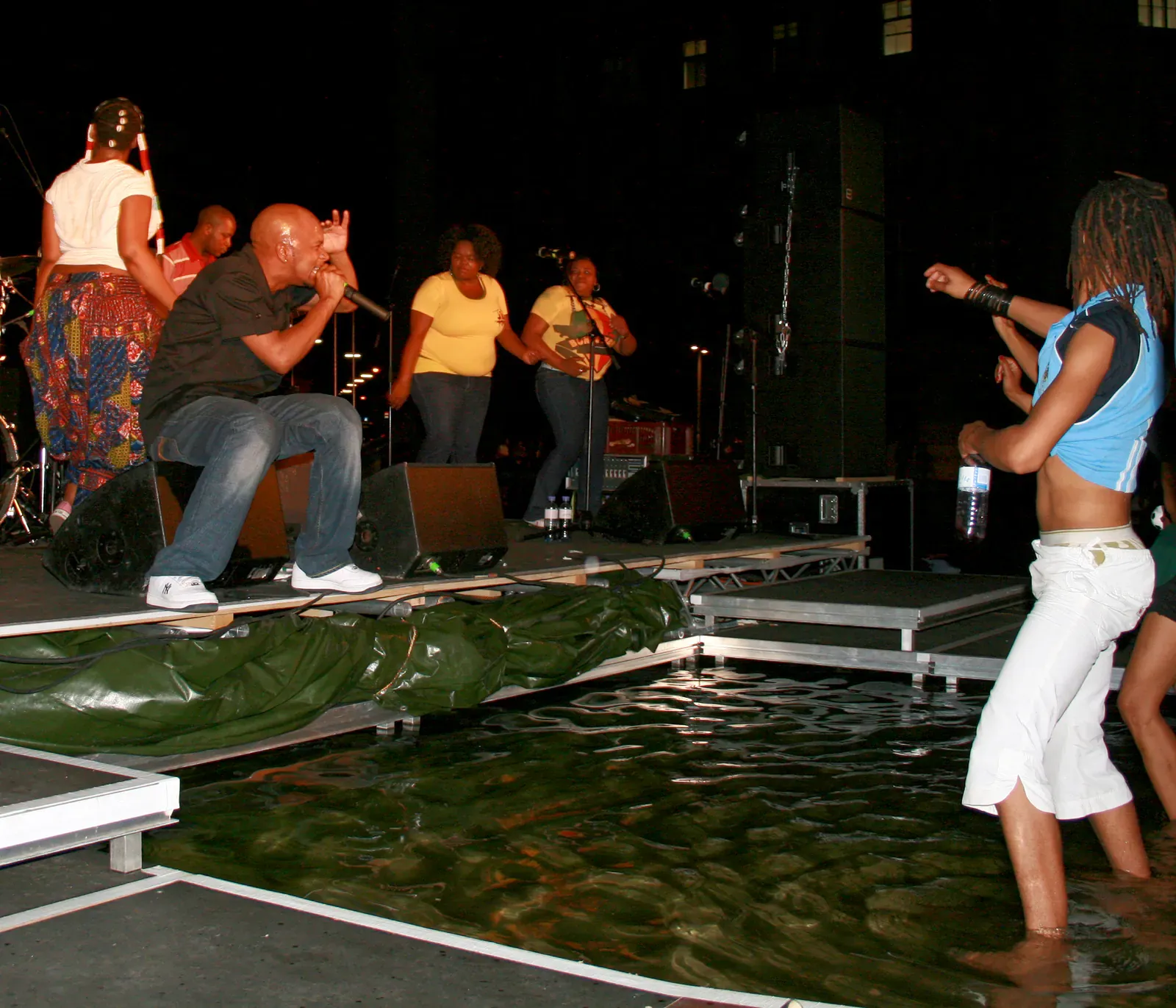
Growth also brought quarrels. Arthur Mafokate’s 2005 single “Sika Lekhekhe” was banned by the state broadcaster SABC for sexually suggestive content, and he had to reshoot the video after viewer complaints. Brenda Fassie, Thandiswa Mazwai, Thembi Seete, Lebo Mathosa and Mshoza meant that women held a visible place in a male-led style.
Characteristics
Kwaito is slow by dance-music standards, and its tracks cluster around a tempo in the mid-90s to just over 100 BPM. The drum patterns follow house, played with a looser feel, over a heavy synthesized bass and short, melodic loops. Vocals are chanted, shouted or rapped rather than sung, often as call and response, in tsotsitaal and Zulu, Sotho and other languages mixed with English. Lyrics deal with township life, poverty, love, parties and, in the early years, freedom.
Instruments and production
Early kwaito depended on a drum machine, a sampler and a synthesizer or keyboard, often run from a small home setup. Producers looped samples of South African and international records and set them against a bass line with plenty of room around it. The aim was a groove that a township crowd could dance to for hours rather than a build-and-drop structure.
Notable recordings
“Kaffir” by Arthur Mafokate is the track most often used to explain what kwaito stood for: a blunt title that treated the new freedom of speech as something to shout about. “Shibobo” by TKZee turned a Soweto trio into chart regulars and carried the style onto national radio. “Nkalakatha” by Mandoza gave kwaito a refrain that crowds shouted back and sold in the hundreds of thousands.
Culture
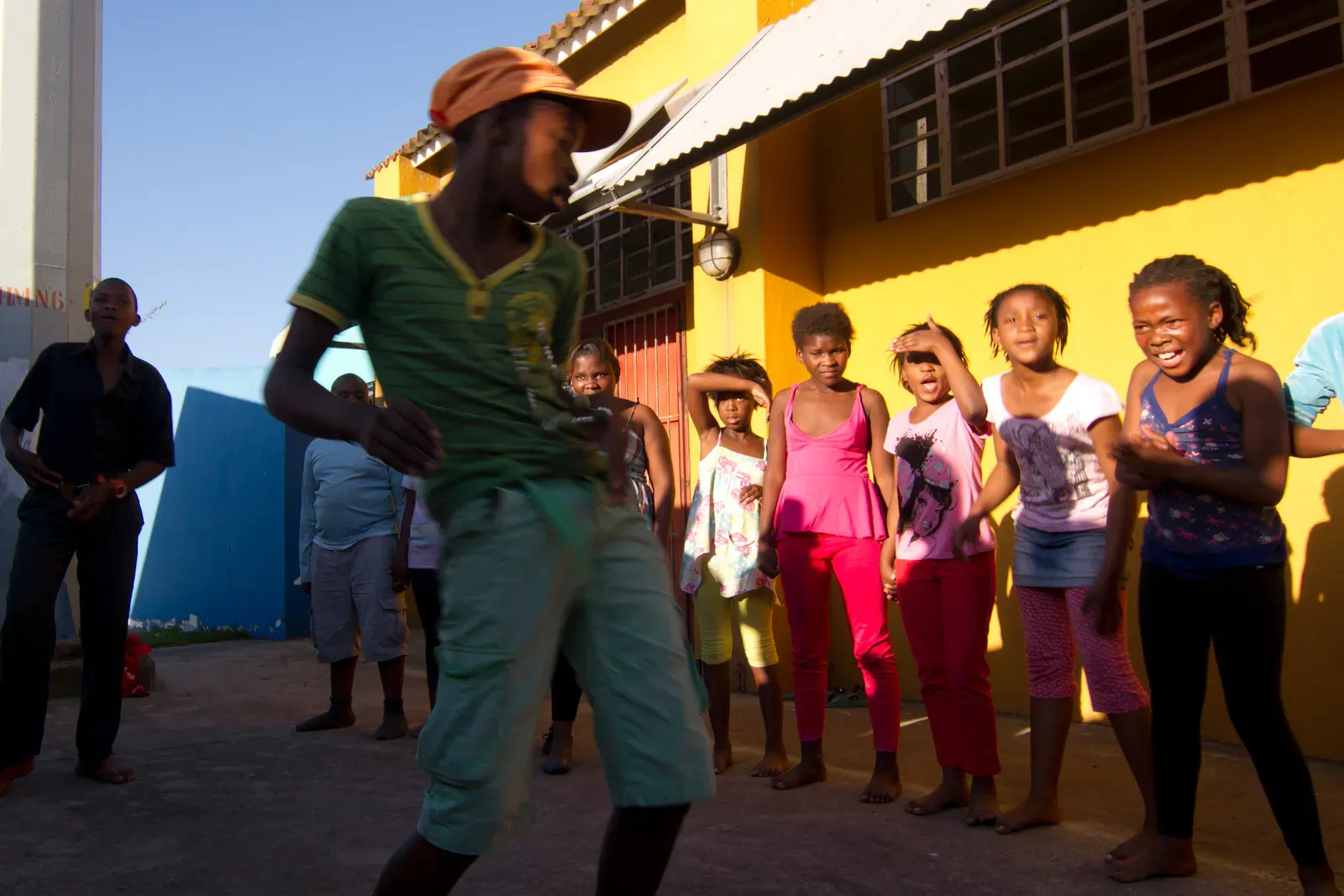
Kwaito grew out of shebeens, the township taverns where people have gathered to drink and dance since the 1950s, and house parties as much as licensed clubs. It is a whole subculture, with its own fashion, slang and dances, and pantsula remains a major thread: a male-led dance with tightly synchronized group routines, which gave its name to the 1988 film “Mapantsula”, the first anti-apartheid film about black South Africans.
Offshoots and legacy
Kwaito also split into branches. Durban kwaito, also called kwaito house or Durban house, emerged between the 1990s and early 2000s with faster tempos and more varied house influences. Sandy B’s 1994 album “AmaJovi Jovi” was the first kwaito release from KwaZulu-Natal to find national success, and later names such as DJ Tira and Big Nuz are tied to the Durban sound. It influenced bacardi house and then gqom, while guz, kwai-jazz, skhanda rap and new age kwaito are other recognised spin-offs, and amapiano, which appeared in the early 2020s, draws on kwaito among other sources.
Misconceptions
Kwaito is sometimes called South African hip-hop, but its core is house rhythm and a chanted delivery, even though rap runs through it and some artists crossed freely. It is also not a protest music only: although anti-apartheid chants were reused, much of it celebrates freedom, parties and township style. And it is not a single sound; the Johannesburg original, the faster Durban style and later spin-offs differ in tempo and texture.
Frequently asked questions
What does kwaito mean?
Kwaito comes from “kwaai”, an Afrikaans word for angry or fierce that township youth used to mean cool. The genre is named after hot, kicking house tracks.
How fast is kwaito?
Kwaito is slower than most house, with canonical tracks running from the mid-90s to about 110 beats per minute. Durban kwaito is faster.
Who were the first kwaito artists?
Boom Shaka are usually named as the first kwaito group, and early pioneers include Mdu Masilela, Spikiri, Arthur Mafokate, Trompies, TKZee and Bongo Maffin.
How is kwaito different from house?
Kwaito borrows house drum patterns but plays them slower and puts chanted vocals in township languages over deep, looped basslines.
Sound
Sound sheet
Anatomy of a track
| # | Part | Bars |
|---|---|---|
| 1 | Intro (drum loop) | 8 |
| 2 | Verse (chanted) | 16 |
| 3 | Hook | 8 |
| 4 | Breakdown | 8 |
Signature sounds
- Slowed house kick
- Deep looped bassline
- Chanted call-and-response vocals
Drums and percussion
- Drum machine
Techniques
- Slowed house tempo
- Looped sampling
- Call-and-response chants
Keys and modes
Minor-key bass loops. Short minor riffs repeat under the vocals.
Vocals
Chanted or rapped lines in tsotsitaal, Zulu, Sotho and English.
Scenes
Where it happened
Where and when the sound lived: one bar per city on a shared timeline.
Africa
Active scenes
Peak 3, 1994-2025
Clubs and studios of the inner city and Kalawa Jazmee's base.
Township where most early kwaito acts, such as Trompies, TKZee and Arthur Mafokate, grew up.
Home of the faster Durban kwaito and house that later fed gqom.
Culture
Culture markers
- Pantsula
Synchronized township dance from the 1980s that kwaito groups took on stage.
Dance - Tsotsitaal
Township slang of mixed languages used in kwaito lyrics.
Slang - Kwaai
Afrikaans word for cool or fierce, the likely root of the genre name.
Slang
Glossary
Terms on this page
Township street language used in kwaito lyrics.
Afrikaans slang for cool, from which the genre name comes.
Male-led township dance style with synchronized group moves.
Township tavern where people drink, dance and hear new music.
Township slang mixing Afrikaans, English and African languages.
African family